

Synopsis
Covers the whole plot, including the ending.
- Difficulty
- Medium
- Pacing
- Variable
- Mood
- Epic, War-torn, Adventurous, Desperate, Hopeful
- Read it if
- You want to continue the epic journey of The Lord of the Rings with a focus on war, strategy, and the deepening struggle against evil, and you enjoy multiple intertwining plotlines.
- Skip it if
- You prefer a single, linear narrative or are looking for a standalone story. This is the middle part of a trilogy.
The Two Towers Plot Summary
Covers the whole plot, including the ending.
The Departure of Boromir and the Capture of Merry and Pippin
After the battle at Amon Hen and Boromir's death, the Fellowship is broken. Frodo and Sam have left for Mordor, while Merry Brandybuck and Peregrin Took are captured by Uruk-hai and Orcs from Isengard, led by Grishnákh. Boromir, badly wounded defending the hobbits, dies in Aragorn's arms, admitting his failure. Aragorn, Legolas Greenleaf, and Gimli, son of Glóin, must decide what to do. They honor Boromir by sending his body down the Anduin in a boat. The three then choose to chase the Orcs who took Merry and Pippin, leaving Frodo's fate to him, starting the chase across Rohan.
The Riders of Rohan and the Ents
Merry and Pippin suffer a difficult journey as Orc prisoners, seeing their internal conflicts. During an attack by the Riders of Rohan, led by Éomer, the hobbits escape into the old, mysterious Fangorn Forest. There, they meet Treebeard, an Ent, one of Middle-earth's oldest living beings. Treebeard, slow to act at first, becomes convinced of Saruman's betrayal after hearing the hobbits' stories. Meanwhile, Aragorn, Legolas, and Gimli track the Orcs across Rohan's plains. They meet Éomer and his Riders, who say they killed all the Orcs but saw no hobbits, leading to a moment of sadness before Aragorn finds hobbit tracks going into Fangorn.
The White Rider and the Golden Hall
Entering Fangorn, Aragorn, Legolas, and Gimli meet an old man in white, at first thinking he is Saruman. To their surprise and relief, it is Gandalf, returned from the dead as Gandalf the White, stronger and wiser. He explains his fight with the Balrog and his return. Gandalf reveals that Merry and Pippin are safe with the Ents. The four then ride to Edoras, Rohan's capital, where King Théoden has been controlled by his dishonest advisor, Gríma Wormtongue, a secret servant of Saruman. Gandalf breaks Saruman's spell, restoring Théoden's will and mind. Gríma is exposed and banished, fleeing to Isengard.
The March of the Ents and the Ride to Helm's Deep
Free from Saruman's control, King Théoden decides to lead his people to the old fortress of Helm's Deep for safety and battle, instead of fighting Saruman's army in open war. Aragorn, Legolas, and Gimli go with him. Meanwhile, Merry and Pippin, having convinced Treebeard and the other Ents of Saruman's tree-cutting and betrayal, see the Ents awaken. The Ents, with Huorns, gather their strength and begin their slow march on Isengard, determined to get revenge on Saruman for destroying their old lands and his part in the growing darkness.
The Battle of Helm's Deep
At Helm's Deep, the Rohirrim, only a few thousand, face Saruman's large army of ten thousand Uruk-hai, Dunlendings, and Orcs. The battle is fierce and long, with many losses on both sides. Aragorn and Gimli fight bravely, inspiring the defenders. The Uruk-hai break the outer wall using explosives. Just when all seems lost, Gandalf returns at dawn, leading help: Éomer and his remaining Riders, along with thousands of Huorns from Fangorn. The combined force defeats Saruman's army, driving many into the silent woods of the Huorns. This is a clear win for Rohan and a major blow to Saruman.
Isengard Destroyed
After the win at Helm's Deep, Gandalf, Théoden, Aragorn, Legolas, and Gimli ride to Isengard. They find the fortress completely destroyed by the Ents. The walls are broken, the dams shattered, and the valley flooded, with Saruman's war machines and trees gone. Treebeard and the Ents have finished their revenge, now guarding the tower of Orthanc, where Saruman and Gríma Wormtongue are trapped. Gandalf confronts Saruman, offering him a chance to change, but Saruman refuses, showing his continued pride and corruption. Gandalf breaks Saruman's staff, taking away his power as a wizard.
Frodo and Sam's Journey to the Black Gate
While events in Rohan happen, Frodo Baggins and Samwise Gamgee continue their dangerous trip to Mordor. They travel through the rocky lands of Emyn Muil, tired and burdened by the Ring. They are ambushed by Gollum, who had been following them since Moria. Frodo, showing unexpected kindness, ties Gollum with the elven rope and makes him promise loyalty and guide them to Mordor. Gollum leads them through the desolate Dead Marshes, a place with the ghost-like faces of dead warriors, slowly bringing them closer to the Black Gate.
The Black Gate and Ithilien
Gollum leads Frodo and Sam to the Black Gate of Mordor, but they find it heavily guarded and impossible to pass. Gollum suggests another, secret path through a place called Cirith Ungol. As they turn south, they find a group of Gondorian rangers in Ithilien, led by Faramir, Boromir's younger brother. Faramir's men ambush a group of Haradrim, and Frodo and Sam are captured. Faramir questions them, learning about their quest and the Ring. Despite his initial desire to take the Ring to Minas Tirith for Gondor's defense, Faramir resists, showing himself to be more noble than his brother.
Henneth Annûn and the Release
Faramir takes Frodo and Sam to his hidden refuge, Henneth Annûn, a cave behind a waterfall. There, he questions them further and sees the Ring's power. He learns of Boromir's death and his wish for the Ring, which makes him sad. Faramir, unlike Boromir, understands the Ring's corrupting power and that it should not be used. He resists taking the Ring for himself or for Gondor, recognizing Frodo's burden. Showing great kindness and foresight, Faramir gives them supplies and lets them continue their journey with Gollum as their guide, pointing them towards the pass of Cirith Ungol.
Gollum's Treachery and Shelob's Lair
Frodo, Sam, and Gollum continue their journey east from Ithilien, nearing Mordor. Gollum, increasingly obsessed with the Ring and driven by his deceit, leads them towards the pass of Cirith Ungol, promising a secret way in. However, his real plan is to betray Frodo to the giant spider, Shelob, hoping to get the Ring from Frodo's unconscious body. As they climb the dark, winding path, the air feels heavy with fear. They enter Shelob's Lair, a place of old evil and darkness. Frodo is ambushed and stung by Shelob, appearing dead to Sam, who is left to face the monster alone.
Principal Figures
Frodo Baggins
Protagonist
The Ringbearer, tasked with destroying the One Ring in Mordor.
Frodo is a hobbit of the Shire, burdened with the immense responsibility of carrying the One Ring. Throughout 'The Two Towers,' he grapples with the Ring's increasing psychological and physical toll, becoming more gaunt and weary. He displays remarkable courage and resilience, often relying on his inner strength and the unwavering loyalty of Sam. His compassion, particularly towards Gollum, is a defining trait, though it sometimes puts him in greater danger. He understands the unique burden he carries and the necessity of his mission, even as it breaks him.
Relationships: Samwise Gamgee (Master and loyal servant/friend); Gollum (Captor and reluctant guide, object of pity and distrust)
Samwise Gamgee
Supporting
Frodo's loyal companion and gardener.
Sam is a hobbit and Frodo's steadfast companion, gardener, and protector. He embodies unwavering loyalty, common sense, and practical courage. He frequently provides the emotional and physical support Frodo needs, often literally carrying his master through difficult terrain. Sam distrusts Gollum implicitly and is fiercely protective of Frodo. His simple, good-hearted nature and down-to-earth perspective are a crucial counterpoint to Frodo's increasing weariness and the Ring's insidious influence. He often acts as the voice of hope and determination.
Relationships: Frodo Baggins (Master and deeply loyal friend)
Aragorn
Protagonist
The heir of Isildur and a Ranger of the North.
Aragorn is the rightful King of Gondor, though he initially travels as a Ranger. He is a skilled warrior, wise leader, and compassionate individual. In 'The Two Towers,' he fully embraces his role as a leader, inspiring the Rohirrim and demonstrating his strategic prowess at Helm's Deep. He grapples with the weight of his destiny and the need to defend the free peoples. His humility, strength, and unwavering commitment to justice make him a beacon of hope.
Relationships: Legolas Greenleaf (Close companion and fellow member of the Fellowship); Gimli (Close companion and growing friend, despite racial differences); Gandalf (Respected mentor and ally); King Théoden (Ally and advisor, earns his respect)
Gandalf the White
Supporting
The resurrected wizard, now more powerful and radiant.
Gandalf returns from his battle with the Balrog as Gandalf the White, having been sent back with enhanced power and purpose. He is no longer the Grey Pilgrim but a beacon of light and hope, wielding greater authority and insight. He plays a pivotal role in freeing King Théoden from Saruman's influence and rallying the forces of Rohan. His wisdom, strategic mind, and direct intervention are crucial to the victories at Helm's Deep and Isengard. He embodies the forces of good actively combating the Shadow.
Relationships: Aragorn (Ally and respected comrade); King Théoden (Advisor and liberator); Saruman (Enemy and former colleague)
Gollum / Sméagol
Antagonist/Supporting
A wretched creature corrupted by the Ring, now guiding Frodo and Sam.
Gollum is a creature twisted and corrupted by centuries of possessing the One Ring. He is driven by an insatiable lust for 'his Precious,' exhibiting a fractured personality oscillating between the pathetic, fearful Sméagol and the cunning, malicious Gollum. He acts as Frodo and Sam's guide, but his true intention is to betray them and reclaim the Ring. He is a tragic figure, a living embodiment of the Ring's destructive power, yet Frodo shows him a degree of pity.
Relationships: Frodo Baggins (Captor, reluctant master, and object of Gollum's conflicted feelings); Samwise Gamgee (Object of hatred and distrust)
King Théoden
Supporting
The King of Rohan, initially under Saruman's sway.
Théoden is the King of Rohan, initially depicted as an old, weakened man, seemingly prematurely aged and mentally subdued by the insidious influence of Gríma Wormtongue, Saruman's spy. Once freed by Gandalf, he undergoes a remarkable transformation, regaining his strength, wisdom, and warrior spirit. He leads his people with courage and resolve, especially during the defense of Helm's Deep, demonstrating the inherent nobility and bravery of the Rohirrim.
Relationships: Gandalf (Liberator and advisor); Aragorn (Trusted ally and respected warrior); Éomer (Nephew and heir); Gríma Wormtongue (Traitorous advisor)
Merry Brandybuck
Supporting
A hobbit of the Fellowship, captured by Orcs.
Merry is a hobbit of the Shire, known for his intelligence and resourcefulness. After being captured by Orcs, he, along with Pippin, escapes into Fangorn Forest. There, he plays a crucial role in awakening Treebeard and the Ents to Saruman's treachery. He demonstrates a growing maturity and courage, quickly adapting to dangerous situations and learning about the wider world beyond the Shire. He becomes a keen observer and a voice of reason among the hobbits.
Relationships: Pippin Took (Close friend and fellow captive); Treebeard (New acquaintance and catalyst for Ent action)
Pippin Took
Supporting
A hobbit of the Fellowship, captured by Orcs.
Pippin is the youngest and most impetuous of the hobbits, initially prone to lightheartedness and mischief. His capture by Orcs, along with Merry, forces him to confront the harsh realities of war. He grows significantly during his time with Merry and the Ents, showing increasing bravery and a developing sense of responsibility. While still retaining some of his youthful curiosity, he becomes a more serious and observant character, contributing to the Ents' decision to march on Isengard.
Relationships: Merry Brandybuck (Close friend and fellow captive); Treebeard (New acquaintance and catalyst for Ent action)
Treebeard
Supporting
The oldest of the Ents, a shepherd of trees.
Treebeard is the eldest of the Ents, ancient, slow-moving, and deeply connected to the forests he guards. He is a wise and patient being, but his anger, once roused, is formidable. He initially views the world with a detached perspective, but Merry and Pippin's tales of Saruman's destruction of Fangorn awaken his wrath. He becomes a powerful force against Saruman, leading the Ents in the destruction of Isengard, demonstrating the raw power of nature when provoked.
Relationships: Merry Brandybuck (Hobbit friend, helps convince him to act); Pippin Took (Hobbit friend, helps convince him to act)
Faramir
Supporting
A Captain of Gondor and Boromir's younger brother.
Faramir is a noble and wise Captain of Gondor, leading a company of rangers in Ithilien. Unlike his elder brother Boromir, Faramir possesses a deeper understanding of the Ring's corrupting power and resists its temptation, even when it is within his grasp. He is a skilled leader and warrior, but also a scholar and dreamer, valuing wisdom and compassion over brute force. He demonstrates integrity and foresight, choosing to aid Frodo's quest rather than seizing the Ring for Gondor's immediate defense.
Relationships: Frodo Baggins (Brief captor, then ally and protector); Samwise Gamgee (Brief captor, then ally and protector); Boromir (Brother (deceased))
Saruman
Antagonist
The White Wizard, corrupted by ambition and Sauron.
Saruman is a powerful wizard, once the head of the White Council, but now corrupted by his ambition for power and his use of the palantír, which connects him to Sauron. He has transformed Isengard into an industrial fortress, breeding Uruk-hai and devastating the surrounding forests. He manipulates King Théoden through Gríma Wormtongue and seeks to dominate Rohan. His intelligence and former wisdom are now twisted into cunning and treachery, making him a formidable and insidious foe.
Relationships: Gandalf (Former colleague, now bitter enemy); Gríma Wormtongue (Servant and spy); King Théoden (Victim of his manipulation)
Themes & Insights
The Corrupting Power of the Ring
The One Ring's harmful power is a main theme, especially through Frodo's growing burden and Gollum's sad life. Frodo becomes thin and tired, always fighting the Ring's mental attack, which makes him doubt Sam and his own mind. Gollum shows what the Ring does over time, his whole being changed by owning it. Even good characters like Faramir are tested by its appeal, though he successfully resists. This theme shows how too much power corrupts, and how even good intentions can be twisted by its influence.
“It is a burden that I must bear to the end. I cannot share it. No, I cannot share it.”
Loyalty and Fellowship
Even though the original Fellowship broke, loyalty remains a strong force. Samwise Gamgee's steady dedication to Frodo is the emotional heart of their journey, often literally carrying Frodo when he weakens. Aragorn, Legolas, and Gimli show their bond by chasing Merry and Pippin without giving up. The Rohirrim, once free from Saruman's spell, show strong loyalty to King Théoden and their land. This theme highlights the strength found in friendship and shared goals against huge odds, and how personal connections can inspire great acts of bravery.
“I can't carry it for you, but I can carry you and the Ring as well. Come on!”
Hope in Despair
Throughout 'The Two Towers,' characters face challenges that seem impossible, yet hope continues. The win at Helm's Deep, against a much larger force, shows this. Gandalf's return as Gandalf the White symbolizes new hope and divine help. Even in the bleakness near Mordor, Frodo and Sam hold onto the small chance of success, driven by their duty. This theme suggests that even in the darkest times, the courage to keep going and belief in good can lead to unexpected wins, and that small acts of defiance can start bigger movements.
“There never was much hope. Just a fool's hope, perhaps. But now there is a new hope for the world.”
The Destruction of Nature vs. Industrialization
Saruman's change of Isengard into a deforested, industrial wasteland contrasts with the natural world of the Ents and Fangorn Forest. Saruman's constant tree-cutting and mining for his war machine show the destructive effect of uncontrolled industry and misused power. The Ents' slow but powerful anger against Isengard is nature's strong response, highlighting the value of the natural world and the results of its exploitation. This theme acts as an environmental warning, showing the spiritual and physical cost of destroying nature.
“A wizard should know better! There is a wizard in Isengard who has taken up with foul folk, and has a mind of metal and wheels.”
The Nature of Good and Evil
The book looks at the complexities of good and evil beyond simple terms. Faramir's resistance to the Ring's temptation, different from Boromir's failure, shows that even within noble families, choices define who someone is. Gollum, though evil, still makes Frodo feel pity, suggesting that even corrupted beings keep a bit of their former selves. Saruman's fall from a powerful good wizard to a servant of evil shows that even those dedicated to good can be corrupted by ambition. This theme emphasizes the constant struggle within people and the world, and that good often comes from compassion and self-sacrifice, while evil comes from greed and desire for power.
“Do not trouble your hearts overmuch with all that has happened. We shall be going north, and we shall not forget you.”
Plot Devices & Literary Techniques
The Palantír
A seeing stone used for communication and surveillance.
The Palantír is an ancient, magical seeing stone. Saruman uses one at Orthanc to communicate with Sauron, leading to his corruption and fall. After the Ents destroy Isengard, Pippin foolishly looks into the Orthanc-stone, briefly connecting with Sauron, which reveals his presence to the Dark Lord and provides critical information about the enemy's movements to Gandalf. It serves as a dangerous tool of communication and a symbol of forbidden knowledge and the perilous consequences of seeking power through dark means.
Gollum as a Guide
A reluctant and treacherous guide for Frodo and Sam.
Gollum is compelled by Frodo to guide him and Sam to Mordor. This device serves multiple purposes: it provides a path through otherwise impassable terrain (Emyn Muil, Dead Marshes, Cirith Ungol), adds constant tension and moral dilemma regarding his trustworthiness, and highlights the Ring's corrupting power through his conflicted nature. His ultimate betrayal, leading Frodo into Shelob's lair, is a direct result of his obsession with the Ring, making him an instrument of both progress and peril for the hobbits.
The Ents' Awakening
Ancient tree-herders roused to action against Saruman.
The Ents, led by Treebeard, are ancient, slow-moving tree-like beings who have long remained neutral in the affairs of Middle-earth. Merry and Pippin's tales of Saruman's deforestation and industrial destruction of Fangorn Forest rouse them to wrath. Their decision to march on Isengard and destroy it is a powerful force of nature's vengeance. This device symbolizes the awakening of ancient forces against modern destruction and provides a crucial, unexpected blow to Saruman's power, allowing the forces of good to focus on Sauron.
Gandalf's Resurrection and Transformation
The wizard returns as a more powerful, radiant figure.
Gandalf's return as Gandalf the White, after his apparent death battling the Balrog, is a pivotal turning point. This device serves to elevate his power, wisdom, and authority, making him a more direct and decisive force against the rising darkness. His reappearance provides a crucial infusion of hope and leadership, enabling the Rohirrim to overcome Saruman's forces at Helm's Deep and ultimately break Saruman's power at Isengard, symbolizing the triumph of good over evil and divine intervention.
The Two Towers Quotes
“For like a shaft, clear and cold, the thought pierced him that in the end the Shadow was only a small and passing thing: there was light and high beauty for ever beyond its reach.”
“There are some things that it is better not to know.”
“Where there's life there's hope, and need of victuals.”
“He that breaks a thing to find out what it is has left the path of wisdom.”
“Even the smallest person can change the course of the future.”
“Many folk like to know what is happening; and they do not mind being told if they can do nothing to help.”
“It's a dangerous business, Frodo, going out your door. You step onto the road, and if you don't keep your feet, there's no knowing where you might be swept off to.”
“The world is indeed full of peril, and in it there are many dark places; but still there is much that is fair, and though in all lands love is now mingled with grief, it still grows, perhaps, the greater.”
“Despair is only for those who see the end beyond all doubt. We do not.”
“Fair speech may hide a foul heart.”
“The counsel of the wise you may at least hear, though you do not heed it.”
“There is no escape from the doom that is laid upon us.”
“Go not to the Elves for counsel, for they will say both no and yes.”
“His grief was not for the things that were, but for things that might have been.”
Quiz
10 questions on the plot and the characters. Each answer comes with a short explanation.
Question 1
Which two members of the Fellowship are captured by Orcs at the beginning of 'The Two Towers' after the battle at Amon Hen?
- Frodo and Sam
- Merry and Pippin
- Aragorn and Legolas
- Gimli and Boromir
Show answer
B. Merry and Pippin Merry and Pippin are captured by Orcs, specifically Uruk-hai from Isengard, after the battle at Amon Hen, leading to the chase by Aragorn, Legolas, and Gimli.
Question 2
What is the name of the Ent who first encounters Merry and Pippin in Fangorn Forest?
- Finglas
- Quickbeam
- Treebeard
- Leaflock
Show answer
C. Treebeard Treebeard, also known as Fangorn, is the oldest living Ent and the one who first finds and takes care of Merry and Pippin in Fangorn Forest.
Question 3
Which kingdom's people are being oppressed and misled by Gríma Wormtongue, under the influence of Saruman?
- Gondor
- Rohan
- Dale
- Lórien
Show answer
B. Rohan Gríma Wormtongue is a corrupted advisor to King Théoden of Rohan, weakening the kingdom from within under Saruman's orders.
Question 4
What is the primary reason Frodo initially distrusts Gollum, despite Gollum's oath?
- Gollum constantly tries to steal their food.
- Gollum frequently attempts to lead them into Orc ambushes.
- Frodo senses Gollum's inherent deceitfulness and the corrupting influence of the Ring on him.
- Gollum refuses to speak about his past.
Show answer
C. Frodo senses Gollum's inherent deceitfulness and the corrupting influence of the Ring on him. Frodo, being the Ringbearer, has a unique insight into the Ring's power and its corrupting effect, making him acutely aware of Gollum's treacherous nature, which is deeply intertwined with his longing for the Ring.
Question 5
What pivotal event occurs at Isengard towards the end of 'The Two Towers' due to the actions of the Ents?
- Saruman escapes and joins forces with Sauron.
- The Ents destroy the dam and flood Isengard, trapping Saruman in Orthanc.
- Gandalf defeats Saruman in a magical duel.
- The Rohirrim successfully besiege Orthanc and capture Saruman.
Show answer
B. The Ents destroy the dam and flood Isengard, trapping Saruman in Orthanc. After the Entmoot, the Ents decide to march on Isengard, breach its defenses, and flood the valley, effectively neutralizing Saruman's power and trapping him in his tower, Orthanc.
Question 6
What is the name of the great fortress where the Rohirrim make their stand against Saruman's forces in the climactic battle?
- Minas Tirith
- Helm's Deep
- Edoras
- Orthanc
Show answer
B. Helm's Deep The Battle of Helm's Deep is the major confrontation in 'The Two Towers' where the Rohirrim, aided by Aragorn, Legolas, Gimli, and Gandalf, defend the fortress of the Hornburg against Saruman's Uruk-hai army.
Question 7
What specific item does Samwise Gamgee carry that proves crucial in their journey through Ithilien and later in Cirith Ungol?
- A map of Mordor
- Lembas bread
- A hidden Elvish blade
- A magical compass
Show answer
B. Lembas bread Sam carries a good supply of Lembas bread, the Elvish waybread, which sustains Frodo and him through their arduous journey and is noted for its ability to provide sustenance with very little quantity.
Question 8
What is the significance of the Palantír found by Pippin at Isengard?
- It reveals the location of the Ring to Sauron.
- It allows Saruman to communicate with the Ents.
- It is a seeing-stone that allows communication and vision over vast distances, but also connection to Sauron if used carelessly.
- It grants the user temporary invisibility.
Show answer
C. It is a seeing-stone that allows communication and vision over vast distances, but also connection to Sauron if used carelessly. The Palantír is one of the seven seeing-stones of ancient Númenor. Pippin looks into the one found at Orthanc, attracting Sauron's attention and revealing some of Sauron's plans, but also putting himself and the company in danger.
Question 9
How does Faramir, Boromir's brother, differ from his brother in his reaction to the One Ring when he captures Frodo and Sam?
- Faramir immediately tries to take the Ring for himself, just like Boromir.
- Faramir is tempted but ultimately resists the Ring's power, understanding its true nature and danger.
- Faramir is completely oblivious to the Ring's power and its significance.
- Faramir attempts to destroy the Ring himself, rather than take it to Mordor.
Show answer
B. Faramir is tempted but ultimately resists the Ring's power, understanding its true nature and danger. Unlike Boromir, who succumbed to the Ring's temptation, Faramir understands that the Ring is too perilous to be used for good and resists its allure, ultimately letting Frodo and Sam go to continue their quest.
Question 10
What is the primary thematic difference highlighted between Saruman's approach to power and Gandalf's throughout 'The Two Towers'?
- Saruman seeks to conquer through direct military might, while Gandalf relies on stealth and deception.
- Saruman believes in controlling and dominating nature and others for his own will, while Gandalf empowers others and works with nature.
- Saruman aims to destroy the Ring, while Gandalf seeks to wield it.
- Saruman values ancient lore above all else, while Gandalf dismisses it as irrelevant.
Show answer
B. Saruman believes in controlling and dominating nature and others for his own will, while Gandalf empowers others and works with nature. Saruman's transformation involves a desire for absolute control, manipulating and destroying nature (like the trees of Fangorn) and enslaving beings for his industrial war machine. Gandalf, conversely, inspires and aids others, respects the natural world, and seeks to empower free peoples rather than dominate them.
The Two Towers FAQ
What are the main plotlines that unfold in 'The Two Towers' after the Fellowship is broken?
The book primarily follows two distinct plotlines: Frodo and Sam's perilous journey with Gollum towards Mordor to destroy the One Ring, and the adventures of Aragorn, Legolas, and Gimli as they pursue the Uruk-hai who captured Merry and Pippin, eventually leading them to the war in Rohan and the Ents.
Who are the key new characters introduced or given significant roles in 'The Two Towers'?
Key new characters include Éomer, a Marshal of Rohan; Éowyn, his sister and a shieldmaiden; Théoden, the King of Rohan; Treebeard, the oldest of the Ents; and Gríma Wormtongue, Saruman's treacherous advisor. Gollum also becomes a central, complex character as he guides Frodo and Sam.
What major battles or conflicts take place in this installment?
'The Two Towers' features two pivotal conflicts: the Battle of Helm's Deep, where the Rohirrim, aided by Aragorn, Legolas, and Gimli, defend against Saruman's Uruk-hai army; and the destruction of Isengard by the Ents, orchestrated by Merry and Pippin, which neutralizes Saruman's power base.
How does the narrative structure differ from 'The Fellowship of the Ring'?
Unlike the more unified journey of the Fellowship in the first book, 'The Two Towers' splits into two largely separate narratives, each focusing on a different group of characters. This allows for deeper exploration of individual character arcs and parallel developments in the larger war against Sauron and Saruman.
What is the significance of the 'Two Towers' in the title?
While Tolkien himself offered multiple interpretations, the most commonly accepted 'Two Towers' refer to Orthanc (Saruman's tower in Isengard) and Minas Morgul (a fortress of Sauron's forces). Other interpretations include Barad-dûr (Sauron's Dark Tower) and Cirith Ungol, or even Minas Tirith. They symbolize the opposing forces of evil and, potentially, the struggle between them.
What subtle clues about Gollum's past with the Ring are revealed before his full backstory is known?
Frodo notices Gollum's strange attachment to the Ring, calling it 'my precious,' and his conflicting internal monologues, hinting at a long, corrupting relationship. His knowledge of hidden paths and his physical degradation also suggest a long period of isolation and the Ring's influence, prior to his full history being revealed in later books or appendices.
Are there any deeper connections between the Ents' slow nature and the broader themes of the book?
The Ents' extreme slowness and their deliberation reflect a deep respect for nature and the ancient ways, contrasting sharply with Saruman's destructive industrialization. Their awakening to action emphasizes that even the oldest and most patient beings can be roused to defend what they love, highlighting themes of environmentalism and the consequences of unchecked ambition.
How does the Palantír's role in Orthanc foreshadow later events or reveal Saruman's downfall?
The Palantír found in Orthanc, though only briefly used by Pippin, reveals Saruman's direct communication with Sauron, confirming his complete subservience and treachery. It also subtly foreshadows its later importance in 'The Return of the King' when Aragorn uses it to confront Sauron directly, demonstrating a different kind of strength and will.
What psychological toll does the Ring take on Frodo in this book, particularly concerning his relationship with Sam and Gollum?
The Ring's burden increasingly isolates Frodo, making him more suspicious and irritable, especially towards Sam. He begins to see a reflection of himself in Gollum, understanding the creature's addiction, which creates a complex mix of pity and distrust. This bond with Gollum, though unsettling, becomes crucial to their journey's progression.
Analyze the psychological impact of Gríma Wormtongue's manipulation on King Théoden.
Gríma's manipulation psychologically cripples Théoden by feeding him despair, eroding his self-confidence, and isolating him from loyal advisors like Éomer. This constant verbal poisoning makes Théoden appear frail and aged beyond his years, effectively neutralizing his leadership until Gandalf's intervention breaks the spell and restores his will.
How does the concept of 'hope' evolve for the characters facing overwhelming odds in 'The Two Towers'?
Hope in 'The Two Towers' shifts from a broad, unified ideal to a more personal, tenacious resolve. For Frodo, it becomes the grim determination to simply continue, while for Aragorn and the Rohirrim, it's the courage to fight despite slim chances. Gandalf embodies a renewed, almost miraculous hope, inspiring others when all seems lost.
What internal conflict does Faramir face regarding the Ring, and how does it distinguish him from Boromir?
Faramir grapples with the temptation of the Ring but ultimately resists its corrupting influence, demonstrating remarkable self-control and wisdom. Unlike Boromir, who succumbed to the desire for power to defend Gondor, Faramir understands the Ring's inherent evil and refuses to use it, proving his integrity and moral strength.
Is Gollum truly a villain, or a tragic figure, and how does 'The Two Towers' support either interpretation?
Gollum is presented as a deeply tragic figure, utterly enslaved by the Ring, rather than purely villainous. While his deceit and lust for the Ring are undeniable, his internal struggle and moments of genuine desire for friendship with Frodo highlight the Ring's corrupting power, making him a victim as much as an antagonist.
To what extent is Frodo's apparent 'failure' to fully trust Sam near the end of the book a sign of the Ring's power or a character flaw?
Frodo's moments of distrust towards Sam are primarily a manifestation of the Ring's overwhelming power, which magnifies paranoia and isolation. While Frodo has always been somewhat reserved, the Ring exploits these tendencies, making him vulnerable to Gollum's manipulations and momentarily clouding his judgment regarding Sam's unwavering loyalty.
How does the portrayal of good versus evil in 'The Two Towers' move beyond simple black and white, particularly concerning Saruman?
Saruman's descent into evil is not instantaneous but a gradual corruption of a once-wise wizard, showing that even those dedicated to good can be twisted by ambition and power. His industrialization of Isengard and his use of deceit against Rohan illustrate a more nuanced evil that exploits rather than merely destroys, blurring the lines between moral choices.
What is the role of 'fate' versus 'free will' in the characters' journeys, particularly regarding the unexpected interventions of the Ents or Gandalf?
The narrative suggests a delicate balance between fate and free will. While characters make choices that drive the plot, such as Merry and Pippin's escape leading to the Ents, there are also seemingly fated or providential interventions, like Gandalf's return as Gandalf the White, which suggest a larger, guiding force at play, often interpreted as divine intervention.
Can the ending of 'The Two Towers' for Frodo and Sam, especially their encounter with Shelob, be seen as a form of 'darkest hour' before the climax?
Absolutely. The ending of 'The Two Towers' with Frodo's capture by Shelob and Sam's belief that Frodo is dead represents their absolute lowest point. It's a classic 'darkest hour' scenario, designed to evoke maximum despair and to set up a seemingly insurmountable obstacle right before the final push, heightening the tension for the last book.
How does the environmental destruction caused by Saruman compare to the more subtle corruption of Sauron?
Saruman's evil is explicitly tied to the physical destruction of nature, seen in the felling of Fangorn Forest and the industrialization of Isengard, representing a more immediate, tangible threat to the natural world. Sauron's corruption, while equally devastating, is more about spiritual and moral decay, turning hearts to darkness and enslaving minds, making his evil more insidious and far-reaching.
About the author
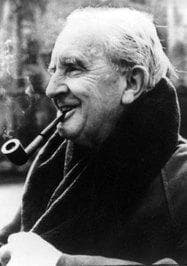
J.R.R. Tolkien was an English writer and philologist, best known for his high-fantasy works. His notable books include "The Hobbit, or There and Back Again," "The Fellowship of the Ring," and "The Return of the King," which are foundational texts in the fantasy genre. He also authored "The Silmarillion" and a boxed set featuring "The Hobbit" and "The Lord of the Rings."
Similar books
- The Fellowship of the Ring
J.R.R. Tolkien
4.4 (2.4M) average on GoodreadsFantasyThe direct predecessor, continuing the same story and characters.
- A Game of Thrones
George R.R. Martin
4.5 (2M) average on GoodreadsFantasyFeatures multiple character perspectives and intertwining plotlines in a large-scale fantasy war.
- The Mists of Avalon
Marion Zimmer Bradley
4.1 (192k) average on GoodreadsFantasyEpic fantasy with multiple perspectives, though with a different thematic focus.
- A Clash of Kings
George R.R. Martin
4.4 (788k) average on GoodreadsFantasyWhile both utilize multi-POV narratives and depict large-scale warfare, Martin's work is characterized by a grittier realism, overt political machinations, and a more explicit exploration of moral relativism and human fallibility. Tolkien's narrative, though complex, maintains a clearer distinction between good and evil, and his world's magic is more subtle and inherent.
- The Great Hunt
Robert Jordan
4.2 (228k) average on GoodreadsFantasyBoth share an epic scope and detailed world-building, but Jordan often features a faster plot progression and a greater emphasis on a systematic magic system and prophecies. Tolkien's magic is more organic and less codified, and his pacing is generally more deliberate, allowing for deeper immersion in the world's history and cultures.
- Harry Potter and the Sorcerer's Stone
J.K. Rowling
4.5 (7M) average on GoodreadsFantasyRescued from a miserable life under the stairs, an orphaned boy discovers he's a wizard destined for a magical school, where he uncovers a dangerous secret tied to the dark wizard who murdered his parents.



Enjoyed the summary?
A summary gives you the shape of the book. The book itself has the detail, the examples and the voice.
Find The Two Towers on AmazonAs an Amazon Associate, BookBrief earns from qualifying purchases. How we're funded