
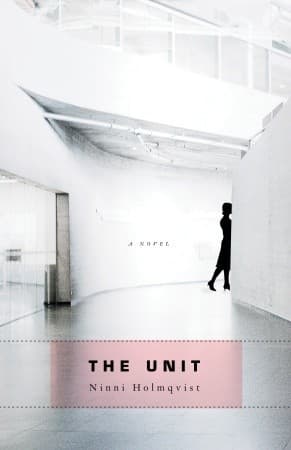
Synopsis
Covers the whole plot, including the ending.
- Difficulty
- Medium
- Pacing
- Moderate
- Mood
- Dystopian, Melancholy, Thought-provoking, Romantic
- Read it if
- You enjoy dystopian fiction that explores societal ethics, human dignity, and the profound impact of love under extreme circumstances.
- Skip it if
- You prefer fast-paced thrillers or stories with clear-cut heroic escapes and happy endings.
The Unit Plot Summary
Covers the whole plot, including the ending.
Arrival at the Second Reserve Bank Unit
Dorrit Weger, a 50-year-old single, childless woman without a 'progressive' job, arrives at the Second Reserve Bank Unit for biological material. She is one of society's 'dispensable' individuals, destined to live her final years in comfort while contributing her organs. The Unit is luxurious, offering private apartments, gourmet food, and recreational activities. Dorrit observes other residents, all fitting the same criteria: women over 50, men over 60, single, and childless. She gets a comprehensive tour, including medical facilities where residents have regular health checks and 'donations.' Despite the grim purpose, Dorrit finds the environment pleasant and the staff attentive, initially feeling peace and resignation.
Settling into the Routine
Dorrit quickly settles into the Unit's routine. Her days are filled with leisurely activities like reading in the library, attending discussion groups, and enjoying the gardens. She makes acquaintances with some residents, including the outgoing Marianne. Residents are encouraged to participate in 'tests' and 'studies' for pharmaceutical companies, presented as enriching. These often involve new medications or psychological evaluations. Dorrit also undergoes her first 'donation' – a blood transfusion. The process is clinical and efficient, and the staff maintains a reassuring demeanor, emphasizing the residents' societal contribution. Dorrit reflects on her past life, feeling a quietude she hadn't experienced before.
The First Organ Donation
After some time, Dorrit learns it is time for her first major organ donation: a kidney. The news is delivered gently, as a matter of course. She undergoes pre-operative procedures, and while she feels apprehension, her ingrained resignation to the Unit's purpose largely overrides any strong protest. The operation is successful, and she recuperates in the Unit's infirmary, receiving excellent care. During her recovery, she observes other residents who have also undergone donations, some appearing more frail. This experience brings the reality of her situation into sharper focus, yet the comfort and care temper her fear, making the process feel less like a death sentence and more like a necessary, unpleasant contribution.
Meeting Johannes
A new resident, Johannes, arrives at the Unit. He is a quiet, intellectual man, a former university lecturer. Dorrit is drawn to his reserved demeanor and thoughtful presence, a contrast to some of the more boisterous residents. They first interact during a poetry reading in the library, where they discover a shared appreciation for literature. Their conversations deepen over subsequent days, often in the garden or during meals. Johannes expresses a similar quiet acceptance of their situation, but also a deeper philosophical understanding of their societal role. This new connection begins to stir feelings in Dorrit that she believed had long since atrophied, challenging her carefully constructed resignation.
A Budding Romance
Dorrit and Johannes's relationship blossoms into a quiet romance. They spend increasing amounts of time together, sharing meals, discussing books, and simply enjoying each other's company. Their connection provides companionship and intimacy that Dorrit hadn't experienced in years. For the first time since entering the Unit, Dorrit feels genuinely happy and alive. This newfound joy, however, is tinged with the dread of their impending fate. The Unit, once a place of peaceful resignation, now becomes a test for their love, making the prospect of future donations and eventual death more painful and unjust. Their love makes life worth living, but also highlights its precariousness.
The Reality of the Unit's Purpose Intensifies
As Dorrit and Johannes's relationship deepens, the Unit's purpose becomes harder to ignore. They witness the gradual decline of other residents who undergo multiple donations. Some individuals become weaker, their energy fading, their conversations more sporadic. Marianne, for instance, seems to age rapidly after her second major donation. The couple often discusses their fears and the unfairness of their situation, finding solace in each other's presence but no real answers. Johannes, with his intellectual background, tries to rationalize their society's utilitarian logic, but even he struggles to reconcile it with their personal experience of love and value. The contrast between their personal happiness and the grim future intensifies their emotional burden.
The Second Donation and Growing Despair
Dorrit receives notification for her second major donation, this time a lung. The news shatters the fragile peace she had found with Johannes. The prospect of further physical diminishment, and the looming reality of their eventual 'final donation,' becomes unbearable. Johannes is equally devastated, his quiet acceptance replaced by anger and helplessness. They cling to each other, their conversations now filled with whispers about 'what if' and 'if only.' The Unit, once a comfortable prison, now feels like an active threat. Dorrit undergoes the procedure, and while she recovers, the emotional toll is immense. Her body feels weaker, and her spirit is increasingly burdened by the knowledge that each donation brings her closer to the end, and further from Johannes.
Planning an Escape?
The despair following Dorrit's second donation pushes them to consider escape. They begin to have hushed, secretive conversations, mostly fueled by Johannes's analytical mind and Dorrit's newfound will to live. They discuss the Unit's security, the perimeter, and the near-impossibility of blending back into a society that considers them expendable. While no concrete plan emerges, the act of discussing it is a radical defiance of the Unit's control and their prior resignation. These conversations, though fraught with fear, reignite a spark of hope and a sense of agency they thought they had lost. They know the odds are stacked against them, but the alternative—passive acceptance of their demise—is now intolerable.
A Glimmer of Hope and a Cruel Twist
A unique opportunity arises: The Unit announces a 'special project' requiring a couple for a long-term psychological study in a separate, even more luxurious facility. Dorrit and Johannes are chosen, a rare stroke of luck that seems to offer a reprieve, a chance to buy more time together. They are overjoyed, seeing it as a temporary escape from the donation cycle. However, their joy is short-lived. Just as they are preparing to leave, the Unit's administration informs them that due to a 'medical necessity,' Johannes is required for an immediate, urgent donation – his heart. The cruel twist is devastating; their brief hope is brutally extinguished, and they are ripped apart just as they imagined a future.
Johannes's Final Donation and Dorrit's Despair
Johannes is taken for his final donation. Dorrit is left behind, shattered. The Unit's staff, polite and efficient, offer condolences, but their detached professionalism highlights the system's cold indifference. Dorrit experiences profound grief and despair, feeling the full weight of the Unit's oppressive purpose. The luxurious apartment, once a sanctuary for their love, now feels like a tomb. Her will to live, so recently rekindled, is extinguished, replaced by a deep emptiness. She retreats into herself, the vibrant woman who found love replaced by a shell. Her days become a monotonous wait for her own inevitable end, devoid of the meaning Johannes had brought her.
The Aftermath and Lingering Questions
In the months following Johannes's death, Dorrit lives a solitary existence within the Unit. She avoids most social activities, preferring the quiet solitude of her apartment or the library. She continues to undergo minor tests and occasional blood donations, but her spirit is broken. She reflects deeply on the nature of their society, the ethics of the Unit, and the value of a life deemed 'dispensable.' The comfort and luxury of her surroundings now feel like a mockery. She thinks about the 'outside' world, wondering if the younger, 'productive' generations ever consider the lives of those within the Unit. Her resignation returns, but this time it is a bleak, hopeless acceptance, colored by the memory of lost love and the injustice of their fate.
Principal Figures
Dorrit Weger
Protagonist
A single, childless woman deemed 'dispensable' by society, who finds love in the Unit.
Dorrit is a 50-year-old woman, initially resigned to her fate of being sequestered in the Unit. Before entering, she lived a quiet, somewhat unremarkable life, working as a proofreader. She is intelligent, observant, and reflective, though she initially lacks a strong sense of self-worth or purpose. Her emotional life is subdued until she meets Johannes. She is a meticulous observer of her surroundings and the people within the Unit, often internalizing her thoughts and feelings.
Relationships: Johannes (Love interest, profound emotional connection); Marianne (Acquaintance, fellow resident in the Unit)
Johannes
Supporting
A quiet, intellectual man and former lecturer who becomes Dorrit's love interest in the Unit.
Johannes is a man over 60, a former university lecturer who shares Dorrit's 'dispensable' status. He is intellectual, thoughtful, and initially displays a similar quiet resignation to his fate. He approaches their situation with a philosophical detachment, trying to understand the societal logic behind the Unit. His gentle nature and shared interests quickly draw Dorrit to him. His love for Dorrit awakens in him a profound desire to live, challenging his intellectual acceptance of their predetermined end.
Relationships: Dorrit Weger (Love interest, profound emotional connection)
Marianne
Supporting
An outgoing and gossipy resident of the Unit, who befriends Dorrit.
Marianne is a fellow resident of the Unit, an older woman who is more outwardly social and gossipy than Dorrit. She embraces the Unit's amenities and social life, often providing Dorrit with insights into the other residents and the Unit's daily workings. She represents a different approach to coping with their situation – one of distraction and social engagement, rather than quiet reflection. Her physical decline after donations serves as a stark reminder of the Unit's true purpose.
Relationships: Dorrit Weger (Acquaintance, fellow resident in the Unit)
The Staff
Mentioned
The polite, efficient, and detached personnel who manage the Unit.
The Unit's staff are uniformly polite, professional, and efficient. They maintain a cheerful and reassuring demeanor, ensuring the residents' comfort and well-being while facilitating their donations. They embody the system's insidious nature: seemingly benevolent on the surface, yet utterly ruthless in their execution of its purpose. They are never given names or individual personalities, serving as an extension of the cold, bureaucratic logic of the society.
Relationships: Dorrit Weger (Caregiver/administrator); Johannes (Caregiver/administrator)
The 'Outside' Society
Antagonist/Mentioned
The unseen, utilitarian society that deems certain individuals 'dispensable.'
The 'outside' society is the unseen force that dictates the existence of the Unit. It operates on a utilitarian philosophy, valuing productivity, youth, and family contribution above all else. Individuals deemed 'single, childless, and without jobs in progressive industries' are considered superfluous and are sent to the Unit. This society, while never directly interacting with the residents, is the ultimate antagonist, creating and maintaining the system that condemns them. Its rules and values are ingrained in the Unit's structure and the staff's behavior.
Relationships: Dorrit Weger (Oppressor/beneficiary of her sacrifice); Johannes (Oppressor/beneficiary of his sacrifice)
Themes & Insights
The Value of Human Life vs. Utilitarianism
The central theme explores the conflict between the inherent value of an individual life and a society's utilitarian calculation that deems some lives 'dispensable.' The Unit provides luxurious comfort, yet its ultimate purpose is to harvest organs, raising questions about what truly constitutes 'care' and 'contribution.' Dorrit's journey, from quiet acceptance to fierce love and despair, shows how a system designed for the 'greater good' can dehumanize individuals. Her love for Johannes makes her life priceless to her, directly contrasting with society's assessment of her worth.
“We're here to contribute. That's what they tell us. But what if our contribution is simply our bodies, and nothing else?”
Love and Connection in the Face of Death
This theme explores how human connection, particularly romantic love, can transform one's perception of life and death. Dorrit and Johannes's relationship brings joy and meaning to their final years, making their predetermined end more painful. Their love reawakens a will to live and challenges the resignation they initially felt. The Unit, designed to make death comfortable, ironically makes life unbearable once love enters the equation, as it provides something too precious to lose.
“It was as if life, having been drained out of me for so long, suddenly rushed back in with a force that threatened to break me.”
Conformity and Resistance
The novel examines the subtle ways individuals conform to oppressive systems, even when those systems are designed for their demise. Dorrit and other residents initially accept their fate, finding comfort in the Unit's pleasant conditions. The system is pervasive and seemingly benevolent, making overt resistance seem futile or ungrateful. However, the emergence of love between Dorrit and Johannes sparks a quiet, internal resistance, leading them to contemplate escape, even if it remains largely a fantasy. This shows that true resistance can arise from the most personal human experiences.
“Sometimes, the greatest rebellion is simply choosing to want more.”
The Illusion of Choice and Benevolence
The Unit is presented as a benevolent institution, offering comfort and care, and residents are framed as 'contributing' to society. However, this benevolence masks a ruthless system of forced organ donation. Residents are given the 'choice' to enter, but society has already rendered them obsolete, leaving them no viable alternative. The pleasantries, gourmet food, and recreational facilities are all part of an elaborate illusion designed to make their slow demise more palatable, showing how oppressive systems can use comfort to disarm and control.
“They gave us everything we could want, except the one thing that mattered: a future.”
Identity and Self-Worth in a Disposable Society
The book explores how identity and self-worth are shaped by societal values. By being deemed 'dispensable' based on their marital status, childlessness, and employment, the residents of the Unit have their identities stripped away. Dorrit initially struggles with a lack of purpose, but her connection with Johannes restores her sense of self-worth. The Unit's system reduces individuals to their biological material, forcing characters to confront what makes a life valuable beyond societal utility. This theme questions whether true worth can be assigned by external metrics.
“We were the ones who didn't fit into the grand design, the loose threads that needed to be neatly clipped.”
Plot Devices & Literary Techniques
The Second Reserve Bank Unit (The Unit)
A luxurious, dystopian facility for 'dispensable' individuals.
The Unit is the primary setting and a central plot device. It functions as a gilded cage, providing comfort and amenities while systematically harvesting organs from its residents. Its pleasant exterior and professional staff create a deceptive sense of benevolence, making the residents' fate seem less brutal. The Unit's design highlights the insidious nature of the dystopian society, where oppression is sugar-coated with luxury and presented as a form of societal contribution. It is both a physical place and a symbol of societal control and dehumanization.
Organ Donations
The systematic, required removal of organs from residents.
Organ donations are the core mechanism of the Unit's purpose and the driving force of the plot's tension. Each donation serves as a grim milestone, marking the residents' inevitable decline and bringing them closer to their 'final donation.' These procedures are presented clinically and efficiently by the staff, devoid of emotional weight, which further emphasizes the dehumanizing nature of the system. For Dorrit, each donation becomes increasingly agonizing after she finds love, transforming from a resigned acceptance to a terrifying countdown to separation and death.
The 'Dispenseable' Classification
A societal classification for individuals deemed unproductive and expendable.
This classification is the foundational plot device that establishes the dystopian world and justifies the Unit's existence. By labeling individuals as 'single, childless, and without jobs in progressive industries' as expendable, society creates a rationale for their sequestration and organ harvesting. This device highlights themes of societal value, productivity, and the arbitrary nature of worth. It forces characters like Dorrit to internalize their perceived lack of value, only to challenge it later through personal connection. It sets the stage for the entire conflict.
The Love Story
The unexpected romance between Dorrit and Johannes.
The love story between Dorrit and Johannes functions as a catalyst for emotional and thematic development. It shatters Dorrit's initial resignation and introduces a profound sense of purpose and a will to live that directly conflicts with the Unit's design. This romance intensifies the tragedy of their situation, transforming their quiet acceptance into desperate longing and a desire for escape. It is the emotional core that exposes the true cruelty of the system, making the comfortable Unit an unbearable prison.
The Unit Quotes
“The feeling of being useful, of contributing to something greater than oneself, was a powerful anesthetic.”
“We were not prisoners, not exactly. We were just… no longer free.”
“It was the slow, insidious erosion of self that was the most terrifying.”
“Love, it turned out, was not a luxury for the old and the useless. It was a necessity.”
“The system was designed to be humane, they said. And perhaps, in its own twisted way, it was.”
“To be without purpose was to be without worth, and in this society, worth was everything.”
“The small rebellions were the most important. The ones no one else saw.”
“Memory was a dangerous thing in a place where your future was already decided.”
“We were the unwanted, the superfluous, given a final, elegant purpose.”
“The quiet acceptance was perhaps the most unsettling thing of all.”
“Every new donation brought a fresh wave of fear, a reminder of what awaited us.”
“It was a life, yes, but a life curated, managed, and ultimately, owned.”
“The greatest cruelty was not the end, but the slow, deliberate stripping away of everything that made you, you.”
“Even in the darkest corners, a flicker of connection could ignite a hope that felt almost dangerous.”
Quiz
10 questions on the plot and the characters. Each answer comes with a short explanation.
Question 1
What is the primary reason individuals like Dorrit are admitted to the Second Reserve Bank Unit?
- They have committed a crime and are serving a sentence.
- They are single, childless, over a certain age, and lack jobs in 'progressive industries'.
- They are seeking voluntary retirement in a luxurious facility.
- They are suffering from a terminal illness and require hospice care.
Show answer
B. They are single, childless, over a certain age, and lack jobs in 'progressive industries'. The text explicitly states that 'women over the age of fifty and men over sixty-single, childless, and without jobs in progressive industries--are sequestered for their final few years'.
Question 2
What is the ultimate purpose of the Unit for its residents, as described in the book's premise?
- To provide a peaceful retirement community with full medical care.
- To house them until they can find new employment in progressive industries.
- To contribute themselves for drug/psychological testing and eventually donate their organs.
- To re-educate them on societal values and integration.
Show answer
C. To contribute themselves for drug/psychological testing and eventually donate their organs. The text clearly states, 'In the Unit they are expected to contribute themselves for drug and psychological testing, and ultimately donate their organs, little by little, until the final donation.'
Question 3
Despite the grim reality, what is Dorrit's initial perception of her living conditions inside the Unit?
- She finds them to be severely restrictive and uncomfortable.
- She considers them rather consoling and peaceful.
- She is constantly fearful and anxious about her fate.
- She views them as a temporary setback before she can return to her old life.
Show answer
B. She considers them rather consoling and peaceful. The description notes, 'Dorrit finds herself living under very pleasant conditions: well-housed, well-fed, and well-attended. She is resigned to her fate and discovers her days there to be rather consoling and peaceful.'
Question 4
What specific event transforms Dorrit's resignation and peacefulness into an 'unbearable' situation?
- She discovers a serious flaw in the Unit's medical procedures.
- She realizes the Unit's true intentions for its residents.
- She meets a man inside the Unit and falls in love.
- She is chosen for the 'final donation' much sooner than expected.
Show answer
C. She meets a man inside the Unit and falls in love. The text states, 'But when she meets a man inside the Unit and falls in love, the extraordinary becomes a reality and life suddenly turns unbearable.'
Question 5
What is the core paradox presented by the society and the Unit's operations?
- They claim to value individual freedom but force residents into specific roles.
- They espouse an ethos of 'taking care of others' while systematically harvesting organs.
- They offer luxurious accommodations but provide inadequate food and medical care.
- They encourage social interaction but isolate residents from each other.
Show answer
B. They espouse an ethos of 'taking care of others' while systematically harvesting organs. The text highlights this paradox: 'Despite the ruthless nature of this practice, the ethos of this near-future society and the Unit is to take care of others'.
Question 6
What criteria define the 'outsiders' who are sent to the Unit?
- Those with severe health conditions requiring specialized care.
- Individuals who openly criticize the government's policies.
- Single, childless individuals over a certain age who are not employed in 'progressive industries'.
- People who have retired early and wish to live a life of leisure.
Show answer
C. Single, childless individuals over a certain age who are not employed in 'progressive industries'. The text specifies that 'women over the age of fifty and men over sixty-single, childless, and without jobs in progressive industries--are sequestered for their final few years; they are considered outsiders.'
Question 7
What is the primary conflict Dorrit faces after falling in love?
- Whether to accept her fate or attempt an escape.
- How to hide her relationship from the Unit's staff.
- Convincing the Unit to release her and her partner.
- Dealing with jealousy from other residents in the Unit.
Show answer
A. Whether to accept her fate or attempt an escape. The final sentence states, 'Dorrit is faced with compliance or escape, and...well, then what?' indicating her central dilemma.
Question 8
The term 'biological material' used in the description for Unit residents implies what about their societal status?
- They are highly valued for their intellectual contributions.
- They are seen as resources or commodities rather than full individuals.
- They are being preserved for future scientific study.
- They are undergoing a process of biological rejuvenation.
Show answer
B. They are seen as resources or commodities rather than full individuals. Referring to humans as 'biological material' dehumanizes them, suggesting they are valued for their physical components (organs for donation) rather than their personhood or societal contributions, aligning with the Unit's function.
Question 9
What does the phrase 'life suddenly turns unbearable' suggest about the nature of love in this dystopian setting?
- Love is forbidden and punishable within the Unit.
- Love makes the prospect of forced organ donation and death much harder to accept.
- Love complicates the Unit's logistical operations for organ harvesting.
- Love provides a new purpose, making the Unit's amenities seem insufficient.
Show answer
B. Love makes the prospect of forced organ donation and death much harder to accept. Before love, Dorrit was 'resigned to her fate' and found her days 'consoling and peaceful.' Falling in love gives her something to live for and cherish, making the impending 'final donation' and loss of life profoundly more painful and 'unbearable.'
Question 10
The 'nicely furnished apartment' and 'state of the art recreation facilities' within the Unit serve what thematic purpose?
- They are a genuine attempt by the society to provide comfort to its elderly.
- They are a form of psychological manipulation, masking the Unit's true, grim purpose.
- They represent the society's advanced technological capabilities.
- They are a reward for individuals who have contributed significantly to society.
Show answer
B. They are a form of psychological manipulation, masking the Unit's true, grim purpose. The pleasant conditions serve to make the residents 'resigned to her fate' and find their days 'consoling and peaceful' despite the ultimate goal of organ harvesting. This façade of comfort makes the harsh reality more palatable and easier to accept for the residents, serving as a form of manipulation.
The Unit FAQ
What is the core premise of 'The Unit' and why are people like Dorrit placed there?
The core premise is a near-future society where 'outsiders' – single, childless women over fifty and men over sixty without progressive jobs – are sequestered in 'The Unit'. They are deemed unproductive and are expected to contribute their biological material, including organs, until their final donation, all under the guise of societal care and comfort.
How does Dorrit initially react to her new life inside the Second Reserve Bank Unit?
Initially, Dorrit is largely resigned to her fate. She finds the conditions surprisingly pleasant, with a comfortable apartment, good food, and social activities. She even describes her days as rather consoling and peaceful, adapting to the routine and the companionship of others in similar circumstances.
What is the 'final donation' and how does it relate to the Unit's purpose?
The 'final donation' refers to the ultimate and fatal organ extraction, signifying the complete end of a resident's life within the Unit. It is the culmination of the Unit's purpose: to systematically harvest biological material from its residents for the benefit of 'productive' society, thereby making their 'useless' lives serve a final purpose.
Who are the 'Productives' in this society, and how do they view the Unit's residents?
The 'Productives' are the deemed valuable members of society: those with children, partners, and jobs in progressive industries. They view the Unit's residents, the 'outsiders,' as a biological resource, necessary for maintaining their own health and societal well-being, justifying the Unit's existence through a utilitarian ethos of 'taking care of others'.
What specific event shatters Dorrit's peaceful resignation and forces her to re-evaluate her situation?
Dorrit's peaceful resignation is shattered when she meets and falls in love with a man inside the Unit. This extraordinary personal connection makes her life, previously seen as merely comfortable and winding down, suddenly vibrant and precious, turning her previously accepted fate into something unbearable.
Are there any clues or subtle details that hint at the Unit's true, darker purpose even before residents fully understand it?
Subtle clues include the constant medical check-ups, the euphemistic language of 'donations,' and the age and marital status criteria for entry, which subtly point to a systematic harvesting program rather than genuine retirement. The residents' shared status as 'outsiders' also hints at a dehumanizing classification by the broader society.
How does the architecture or layout of the Unit subtly reinforce its function or the residents' status?
While described as nicely furnished and comfortable, the Unit's design likely features an underlying institutional uniformity, controlled access, and a lack of true personal autonomy, which subtly reinforces its function as a holding facility. The 'state-of-the-art recreation facilities' might also serve as a gilded cage, distracting from the ultimate purpose.
Are there any background details about how this society came to adopt such a system?
The novel suggests this system arose from a societal ethos prioritizing utility, efficiency, and collective well-being over individual rights for those deemed 'unproductive.' It's implied to be a logical, albeit extreme, extension of a focus on progress and resource management, where those without a clear societal role are repurposed.
How does Dorrit's initial acceptance of her fate reflect common psychological defense mechanisms?
Dorrit's initial acceptance reflects psychological defense mechanisms such as denial, rationalization, and adaptation. She minimizes the horror by focusing on the comforts, rationalizing her situation as inevitable, and adapting to the routine to reduce cognitive dissonance, making an unbearable reality more palatable.
What psychological impact does the 'caring' facade of the Unit have on its residents?
The 'caring' facade of the Unit creates a complex psychological impact, fostering a sense of security and gratitude that can mask the underlying brutality. It can lead to Stockholm Syndrome-like tendencies or a deep-seated denial, making it harder for residents to rebel or even acknowledge the true horror of their situation due to the pleasant surroundings.
How does falling in love reawaken Dorrit's sense of self and agency?
Falling in love reawakens Dorrit's sense of self by providing a profound personal connection and a reason to live beyond mere existence. It restores her sense of individual value and agency, transforming her from a passive recipient of fate into someone with a renewed desire for life and a will to fight for it.
What is the psychological cost of the Unit's system for the 'Productives' who benefit from it?
While not explicitly stated, the psychological cost for 'Productives' could involve desensitization, moral complacency, and a collective denial of the system's cruelty. They might experience a subtle erosion of empathy, creating a society that prioritizes its own comfort at the expense of human dignity, potentially leading to a shallow existence devoid of true compassion.
Is the novel a critique of utilitarianism, and if so, what specific aspects does it target?
Yes, 'The Unit' strongly critiques utilitarianism by showcasing its extreme application, where the 'greatest good for the greatest number' justifies the systematic dehumanization and sacrifice of a minority. It targets the notion that human life can be quantified and repurposed based on perceived societal utility, highlighting the dangers of such a cold, rationalistic approach.
How does the book challenge traditional notions of 'care' and 'comfort'?
The book radically challenges 'care' and 'comfort' by presenting them as tools of control and manipulation. The residents are 'cared for' and 'comfortable' only so long as they contribute to the system, revealing these terms as cynical facades for exploitation rather than genuine compassion, subverting their positive connotations.
What is the significance of the Unit's residents being 'single, childless, and without jobs in progressive industries'?
This specificity is highly significant, marking those without direct contributions to future generations or current economic progress as expendable. It highlights society's narrow definition of value, suggesting that worth is tied to reproduction, partnership, and economic productivity, and that those outside these parameters are deemed 'outsiders' and thus disposable.
Does 'The Unit' offer any hope for resistance or change, or is it a purely dystopian portrayal?
While deeply dystopian, Dorrit's awakening and her subsequent actions introduce a glimmer of hope, suggesting that individual human connection and the will to live can challenge even the most oppressive systems. The ending, however, leaves the ultimate outcome ambiguous, forcing the reader to confront the difficult choices and potential futility of resistance.
How does the novel explore themes of aging and societal value in its near-future setting?
The novel starkly explores themes of aging by presenting a society that devalues and discards its elders once they are no longer deemed 'productive' in conventional terms. It questions a society that ties human worth solely to youth, fertility, and economic output, highlighting the vulnerability of those who fall outside these narrow definitions as they age.
What is the moral dilemma presented to Dorrit regarding compliance versus escape?
Dorrit's moral dilemma is whether to passively comply with her comfortable but ultimately fatal existence in the Unit, or to risk everything for a chance at true life and freedom, even if that escape is uncertain or dangerous. This choice is amplified by her newfound love, making the prospect of compliance unbearable and the desire for escape paramount.
About the author
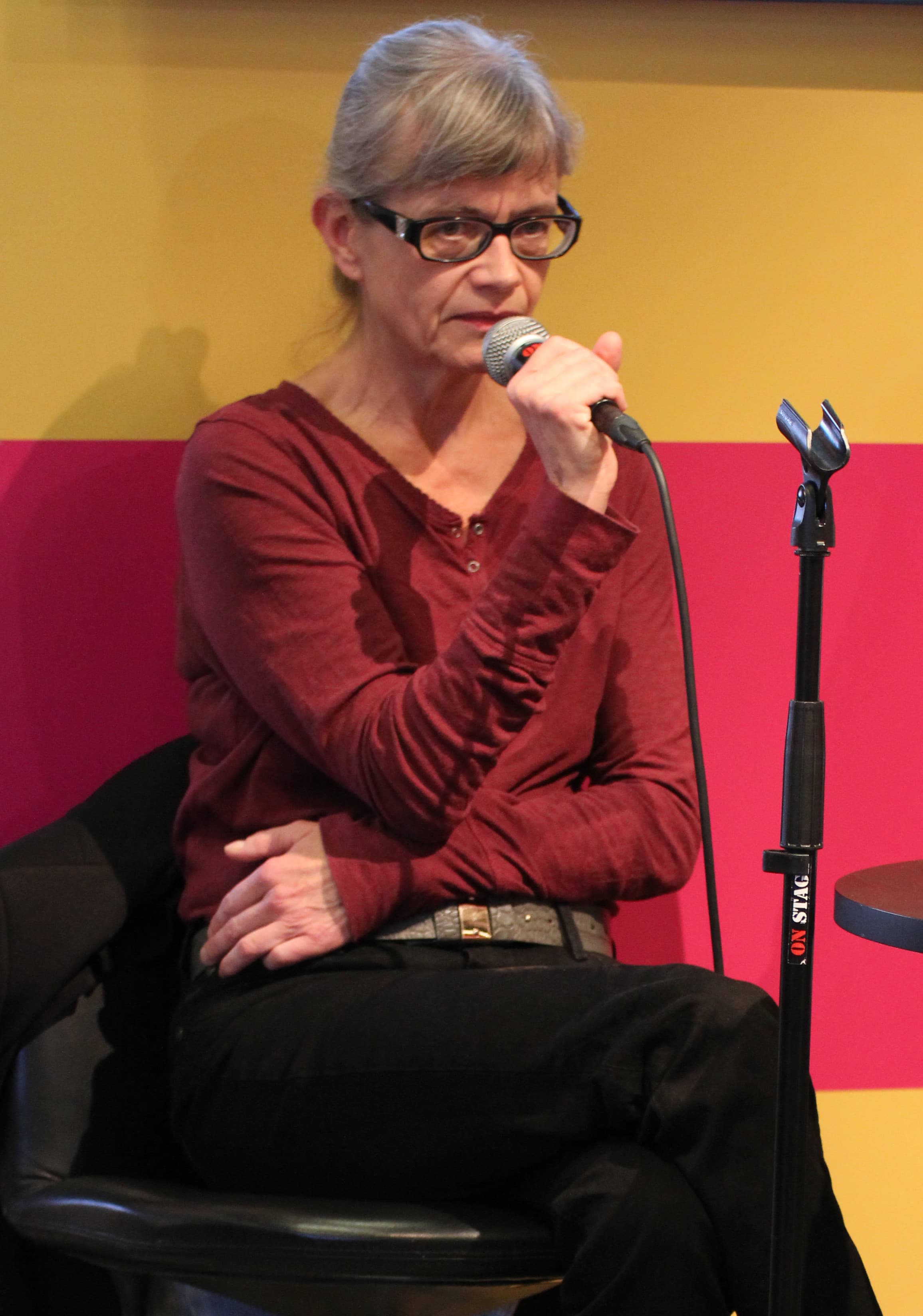
Ninni Holmqvist is a Swedish author known for her fiction, particularly her novel "The Unit." This work explores themes of individuality and societal norms within a dystopian setting, reflecting on the value of human life. Holmqvist's writing often delves into complex moral questions and the human condition.
Similar books
- Never Let Me Go
Kazuo Ishiguro
3.8 (471k) average on GoodreadsLiterary FictionExplores a society where individuals are raised for organ donation, focusing on quiet despair and human connection.
- The Handmaid's Tale
Margaret Atwood
4.1 (1.5M) average on GoodreadsFantasyFeatures a dystopian society where individuals are stripped of autonomy and forced into roles for the state's benefit.
- Brave New World
Aldous Huxley
4.0 (1.4M) average on GoodreadsFantasyDepicts a future society that controls individuals for the 'greater good' through comfort and subtle oppression.
- The Hunger Games
Suzanne Collins
4.3 (6.4M) average on GoodreadsFantasyIn a future where children fight to the death on live television, Katniss Everdeen volunteers for the arena, turning a death sentence into a fight for survival and a spark of rebellion.
- 1984
George Orwell
4.2 (3.1M) average on GoodreadsPoliticsIn a future where surveillance and thought control are absolute, a man's search for truth clashes with the Party, showing that hope can be a form of rebellion.
- Divergent
Veronica Roth
4.2 (2.9M) average on GoodreadsFantasyIn a society divided by virtues, a sixteen-year-old's difference from the norm starts a rebellion that threatens her world.






Enjoyed the summary?
A summary gives you the shape of the book. The book itself has the detail, the examples and the voice.
Find The Unit on AmazonAs an Amazon Associate, BookBrief earns from qualifying purchases. How we're funded