

Synopsis
Covers the whole plot, including the ending.
- Difficulty
- Medium
- Pacing
- Moderate
- Mood
- Atmospheric, Haunting, Melancholy, Reflective
- Read it if
- You enjoy atmospheric historical fiction with a strong mystery element, exploring themes of family secrets, mental health institutions, and societal expectations in the past.
- Skip it if
- You prefer fast-paced thrillers or stories with clear-cut villains and heroes, or if you are sensitive to themes of confinement and historical injustices.
The Vanishing Act of Esme Lennox Plot Summary
Covers the whole plot, including the ending.
A Shocking Revelation: Esme Lennox's Existence
Iris Lockhart runs a vintage clothing shop in Edinburgh. Her life is interrupted by a phone call from Cauldstone Hospital's social services. She learns that her great-aunt, Esme Lennox, has been a patient there for sixty-one years and is now being discharged due to healthcare policy changes. This news shocks Iris, as her grandmother, Kitty, always said she was an only child. Iris struggles with the sudden appearance of this unknown relative and the idea of bringing a woman who has spent her adult life institutionalized into her home.
First Encounters and Unsettling Mysteries
Iris goes to Cauldstone Hospital to meet Esme. She finds a woman who is physically weak but has a sharp, though sometimes confused, mind. Esme sees a family resemblance in Iris, especially to Iris's deceased father, which confirms her existence. During their first talks, Esme makes unclear comments about her past and confinement, hinting at injustices and secrets, but her memories are broken. Iris senses an untold history and sadness around Esme, which makes her want to understand why her great-aunt was locked away for so long and why her family erased her from their history.
Childhood in India and the Return to Scotland
The story goes back to Esme's childhood in colonial India. She and her younger sister, Kitty, grew up in a privileged but isolated home. Esme is shown as a lively, unusual child, often disagreeing with her parents' strict rules, especially her mother's. She finds comfort in her imagination and with their Indian servants. When the family returns to Scotland, Esme struggles to adjust to the colder weather and the strict social rules of Edinburgh society. Her free spirit is seen as a problem by her parents, who care about appearances and finding good marriages for their daughters, especially for the more obedient Kitty.
A Life of Conformity for Kitty
Kitty's perspective shows her as a child who wanted her parents' approval and social acceptance. She saw Esme's rebellious nature with both admiration and fear, understanding that Esme's defiance often brought her parents' disapproval. Kitty learned early to follow the rules, trying to be the 'good daughter' to secure her place in their strict social system. Her goal was to marry well and have a respectable life, which was very different from Esme's apparent lack of interest in such expectations. This difference in their personalities and desires sets the stage for the sad events that will separate them.
The Pressure of Society and a Fateful Dance
As Esme grows into a young woman, her nonconformity becomes too much for her parents. She resists the social pressure to marry and shows a growing independence that is considered improper for a woman of her status. At a social dance, something unsettling happens involving Esme and a young man, though the exact details are unclear. This event, along with her history of 'difficult' behavior and her parents' desire to avoid scandal, leads to their drastic decision. Her family, especially her mother, sees her as an embarrassment and a threat to Kitty's future.
The Betrayal and Committal
Soon after the dance incident, Esme's parents take her to Cauldstone Hospital under false pretenses. She believes she is visiting a friend or going for an outing. Instead, she is forcibly admitted, a process helped by a doctor who seems to agree with her parents' wishes instead of doing a full assessment. Esme's protests and pleas are ignored, and she is sedated and confined. This moment of betrayal starts her sixty-one-year incarceration, effectively removing her from the family's public story and leaving her with a strong feeling of injustice and abandonment.
Iris Seeks Answers from Kitty
Iris is determined to understand the truth and confronts her grandmother, Kitty, about Esme. Kitty reacts with hostility and denial, sticking to the made-up story of being an only child. She refuses to acknowledge Esme's existence or the reasons for her committal, becoming agitated and defensive when the topic comes up. Iris realizes that Kitty is either deeply traumatized by the past or involved in the cover-up. Her grandmother's silence makes Iris more determined to put together Esme's story, knowing that Kitty has important information but will not share it.
Uncovering the Past Through Fragments
Iris starts looking through old family documents, letters, and hospital records for clues about Esme's past. She also has careful conversations with Esme, who, despite her broken memories, offers glimpses into her experiences in the asylum and her childhood. Iris discovers that Esme was diagnosed with vague 'hysteria' and other unclear mental conditions, common for the time, which often served as excuses for institutionalizing inconvenient women. The more Iris learns, the more she suspects that Esme's confinement was less about mental illness and more about social control and family reputation.
The Revelation of the 'Incident'
Through Esme's clearer memories and a hidden letter, Iris finally finds out the truth behind Esme's committal. The 'incident' at the dance was not just unusual behavior, but a sexual assault by Kitty's fiancé, Alistair. Esme, traumatized, told her mother, who, instead of protecting her daughter, saw only scandal and the potential ruin of Kitty's good marriage. To protect Kitty and the family's reputation, Esme was silenced and institutionalized, becoming a scapegoat for a crime she endured.
Confrontation and Reconciliation
With the full truth, Iris confronts Kitty one last time. The revelation of Alistair's crime and her mother's involvement finally breaks Kitty's denials. Overwhelmed by her past and the injustice to her sister, Kitty breaks down, expressing her own guilt, fear, and the difficult situation she felt she was in. This painful confrontation leads to some understanding and a fragile reconciliation between grandmother and granddaughter, and implicitly, an acknowledgment of Esme's suffering. Iris promises to ensure Esme's remaining years are lived with dignity and freedom.
Principal Figures
Esme Lennox
Protagonist
Iris's great-aunt, institutionalized for sixty-one years for a fabricated mental illness.
Esme is a spirited, unconventional woman who, as a child, chafed against the rigid social expectations of her Anglo-Indian upbringing. Her free-spirited nature and refusal to conform to societal norms ultimately led to her unjust institutionalization at Cauldstone Hospital. Despite decades of confinement, she retains a sharp mind, though her memories are fragmented and often traumatic. She is observant, sometimes mischievous, and carries a profound sense of betrayal and longing for her lost life. Her existence and her story drive the central mystery of the novel.
Relationships: Iris Lockhart (great-aunt and great-niece; Esme finds a confidante and advocate in Iris); Kitty Lennox/Kitty Lockhart (sister; their relationship is complex, marked by love, envy, and ultimately, betrayal and a strained reconciliation); Alistair (Kitty's fiancé, who sexually assaults Esme, leading to her institutionalization)
Iris Lockhart
Protagonist
Esme's great-niece, who uncovers the truth of Esme's past and the family's secrets.
Iris is a modern, independent woman in Edinburgh, running a vintage clothing shop. Her life is upended by the discovery of Esme's existence. Initially hesitant, she becomes driven by a strong sense of justice and familial responsibility to understand Esme's story. She is compassionate, persistent, and determined to uncover the truth, even when faced with resistance from her grandmother, Kitty. Iris represents the contemporary perspective, contrasting with the restrictive past, and acts as the catalyst for the family's reckoning.
Relationships: Esme Lennox (great-niece and great-aunt; Iris becomes Esme's primary caregiver and champion); Kitty Lockhart (grandmother; their relationship is strained by Kitty's secrecy and Iris's quest for truth); Godfrey (married boyfriend; a complicated and ultimately unresolved romantic relationship)
Kitty Lennox / Kitty Lockhart
Supporting
Esme's younger sister and Iris's grandmother, who actively participates in the cover-up of Esme's past.
Kitty is Esme's younger sister, who grew up seeking her parents' approval and societal acceptance. She is more compliant and conventional than Esme, ultimately benefiting from Esme's removal. While she undoubtedly loved Esme in her youth, her fear of scandal and her desire for a respectable life led her to complicity in Esme's institutionalization and the subsequent erasure of her sister from family history. As an older woman, she is guarded, defensive, and haunted by the past, desperately clinging to the fabricated narrative she has maintained for decades.
Relationships: Esme Lennox (sister; complex relationship marked by love, envy, and betrayal); Iris Lockhart (grandmother and granddaughter; their relationship is strained by Kitty's secrets); Alistair (fiancé; his actions lead to the family's drastic measures against Esme)
Alistair
Antagonist
Kitty's fiancé, whose sexual assault on Esme leads to Esme's institutionalization.
Alistair is Kitty's fiancé, a seemingly respectable young man from a good family. He represents the hidden darkness beneath the veneer of polite society. His act of sexual assault against Esme is the direct catalyst for her committal, highlighting the vulnerability of women in that era and the lengths families would go to protect their reputation over their daughters' well-being. He is a pivotal, though largely unseen, character whose actions cast a long shadow over the Lennox family.
Relationships: Kitty Lennox (fiancé); Esme Lennox (victim/perpetrator)
Mrs. Lennox (Esme and Kitty's Mother)
Supporting
Esme and Kitty's strict, reputation-obsessed mother, who orchestrates Esme's committal.
Mrs. Lennox is a formidable and socially ambitious woman, obsessed with maintaining appearances and securing advantageous marriages for her daughters. She views Esme's unconventional nature as a threat to the family's reputation and Kitty's prospects. Her decision to institutionalize Esme, rather than protect her, reveals her cold pragmatism and the extreme pressure placed on women to conform in her era. She is the primary architect of Esme's tragedy, prioritizing social standing over maternal love.
Relationships: Esme Lennox (mother; abusive and betraying); Kitty Lennox (mother; favors Kitty for her conformity)
Mr. Lennox (Esme and Kitty's Father)
Supporting
Esme and Kitty's father, who passively allows Esme's institutionalization.
Mr. Lennox is depicted as somewhat less dominant than his wife, but equally complicit in Esme's fate through his inaction and acquiescence. He is concerned with family honor and avoids conflict, allowing his wife to make the drastic decision to commit Esme. While perhaps less actively malicious than Mrs. Lennox, his failure to intervene or protect his daughter makes him a significant contributor to her suffering. He represents the patriarchal authority that enabled such injustices.
Relationships: Esme Lennox (father; allows her betrayal); Mrs. Lennox (husband; defers to her authority in family matters)
Dr. Greville
Supporting
The doctor who signs Esme's committal papers without proper assessment.
Dr. Greville is the doctor who examines Esme and signs the papers for her involuntary committal to Cauldstone. He is portrayed as either negligent or willfully complicit, readily accepting the family's narrative of Esme's 'madness' without a thorough, objective assessment. He represents the medical establishment's role in perpetuating injustices against women who did not conform, often under the guise of 'hysteria' or other vague mental illnesses.
Godfrey
Mentioned
Iris's married boyfriend, representing her own complicated romantic life.
Godfrey is Iris's married boyfriend, with whom she has a long-standing, somewhat stagnant relationship. He is a minor character whose presence highlights Iris's current life circumstances and her own struggles with commitment and unconventional relationships. His role is primarily to provide context for Iris's personal life before Esme's arrival, contrasting with the profound family drama that soon consumes her.
Relationships: Iris Lockhart (boyfriend; a complicated, ongoing romantic entanglement)
Themes & Insights
The Oppression of Women and Social Conformity
The novel shows the strict social expectations for women in the early 20th century. Esme's 'madness' is largely her refusal to fit into the roles her class and gender dictated – to be quiet, marriageable, and silent. Her lively nature, independence, and even her trauma are seen as unacceptable, leading to her institutionalization. The book shows how women's voices were silenced and their freedom denied for family reputation and social order, revealing the patriarchal structures that allowed such injustices.
“What does a woman do, when she's supposed to be a wife and a mother, but she's not, not really? What does she do with herself?”
Family Secrets and Their Destructive Power
The story centers on a family secret – Esme's existence and the real reasons for her committal. This secret harms the family, appearing in Kitty's lifelong denial and Iris's father's unspoken burden. The novel shows how secrets, meant to protect reputation, instead create deep trauma, guilt, and a broken sense of identity across generations. Uncovering the truth, though painful, offers a way towards healing and freedom for Esme and Iris.
“A family secret is a poison, you see, it kills you slowly.”
Memory, Truth, and Narrative
The novel explores how memory is subjective and fragmented, especially through Esme's unclear recollections and Kitty's selective forgetting. Iris's search is a journey to put together a clear story from these broken memories, old documents, and unspoken truths. The book shows how personal and group stories can be changed and hidden, and how telling one's story, or having it told, is important for confirming existence and reclaiming identity. The 'truth' is not simple but a complex mix of different views.
“Memory is a strange thing. It can be a comfort, but it can also be a torment.”
Justice and Injustice
At its heart, the book explores injustice. Esme loses her freedom, identity, and life for a crime committed against her and for not fitting into social norms. Her institutionalization shows the lack of legal and social help for women in her time. Iris's mission is for justice, not through legal means, but by acknowledging Esme's suffering and validating her story, offering a form of belated redemption.
“They took away my name. They took away my family. They took away everything.”
Plot Devices & Literary Techniques
Dual Timeline/Alternating Perspectives
The narrative shifts between Iris's present-day investigation and Esme's past experiences.
The novel employs a dual timeline structure, alternating between Iris Lockhart's present-day efforts to understand Esme's story and flashbacks to Esme's childhood and early adulthood. This allows the reader to experience the unfolding mystery alongside Iris while simultaneously gaining insight into the historical context and the events that led to Esme's confinement. The shifting perspectives, occasionally including Kitty's, create a rich, layered narrative that slowly builds suspense and reveals the full complexity of the family's secrets.
Unreliable Narrator/Fragmented Memory
Esme's memories are often jumbled and incomplete, requiring the reader to piece together the truth.
Esme's perspective is crucial, but her memories are understandably fragmented and occasionally contradictory due to her age, trauma, and decades of institutionalization. This forces both Iris and the reader to actively engage in interpreting her words and piecing together the true sequence of events. The unreliability of memory, particularly when trauma is involved, becomes a central theme, highlighting the difficulty of recovering lost histories and the subjective nature of truth.
The Asylum (Cauldstone Hospital)
A symbolic setting representing confinement, societal control, and forgotten lives.
Cauldstone Hospital is more than just a setting; it functions as a powerful symbol of societal control, the silencing of inconvenient women, and the burying of uncomfortable truths. Its stark, institutional walls physically confine Esme, but also metaphorically represent the mental and emotional confinement imposed by her family and society. The asylum embodies the 'vanishing act' of Esme Lennox, a place where inconvenient individuals were hidden away and forgotten, and where their identities were systematically erased.
The Vintage Clothing Shop
A symbolic setting representing the past, hidden stories, and the reclamation of identity.
Iris's vintage clothing shop serves as a subtle but significant plot device. It is a place where old garments, each with its own history and story, are given new life. This mirrors Iris's work in uncovering Esme's past and giving voice to her forgotten story. The shop symbolizes the way that the past, even when seemingly discarded, can be re-examined, valued, and integrated into the present, much like Esme's life is brought back into the family narrative.
The Vanishing Act of Esme Lennox Quotes
“The past is a foreign country, but the future is an even more alien one.”
“There are some things that, once seen, can never be unseen. And some things that, once heard, can never be unheard.”
“Madness, as it turned out, was not a sudden descent, but a slow, almost imperceptible erosion.”
“The truth, like a river, finds its way eventually, no matter how many dams you build.”
“It was as if she had been erased, not just from records, but from memory itself.”
“We are all made of stories, and if you take away someone's story, what is left?”
“The line between sanity and insanity was not a line at all, but a shifting, permeable membrane.”
“Sometimes the greatest kindness you can offer someone is to listen, truly listen, without judgment.”
“A house can hold a thousand secrets, but it can also bear witness to a thousand forgotten joys.”
“The silence was not empty; it was full of all the things left unsaid.”
“How many lives are lived in the shadows, simply because someone else decided they didn't fit?”
“Grief, she found, was not a single emotion, but a symphony of them, each one playing its own discordant tune.”
“It was a strange thing, to inherit a life that wasn't yours, to pick up the threads of someone else's unfinished story.”
“The past, it seemed, was not a place you could ever truly leave behind; it clung to you like a second skin.”
Quiz
10 questions on the plot and the characters. Each answer comes with a short explanation.
Question 1
What is the name of the hospital from which Esme Lennox is released after sixty years?
- Blackwood Asylum
- Cauldstone Hospital
- St. Jude's Infirmary
- Willow Creek Sanatorium
Show answer
B. Cauldstone Hospital Esme Lennox is released from Cauldstone Hospital, where she was institutionalized for over sixty years, a key detail that sets the entire plot in motion.
Question 2
Who is Iris Lockhart to Esme Lennox?
- Her niece
- Her great-niece
- Her granddaughter
- Her cousin
Show answer
B. Her great-niece Iris Lockhart is Esme's great-niece. Esme is the sister of Iris's grandmother, Kitty, making Iris her great-niece. This relationship is central to Iris's role in uncovering the family secrets.
Question 3
What kind of business does Iris Lockhart own?
- A bookstore
- A coffee shop
- A vintage clothing shop
- An antique furniture store
Show answer
C. A vintage clothing shop Iris Lockhart owns and operates a vintage clothing shop. This detail provides insight into her character and lifestyle before Esme's arrival disrupts it.
Question 4
What significant family secret does Esme's existence reveal about Iris's grandmother, Kitty?
- Kitty was adopted.
- Kitty had another sibling she never mentioned.
- Kitty had previously been institutionalized herself.
- Kitty was secretly married before Iris's grandfather.
Show answer
B. Kitty had another sibling she never mentioned. Iris's grandmother, Kitty, always claimed to be an only child. Esme's release proves this to be a lie, revealing that Kitty had a sister whom the family deliberately concealed.
Question 5
What physical feature does Iris observe in Esme that connects her to Iris's deceased father?
- The color of her eyes
- The shape of her hands
- The shadow of her face
- A specific birthmark
Show answer
C. The shadow of her face Iris notes that she can see the 'shadow of her dead father in Esme’s face.' This physical resemblance immediately confirms the familial connection and deepens the mystery for Iris.
Question 6
What overarching theme does the story explore regarding Victorian asylums and social norms?
- The advancement of psychiatric medicine.
- The importance of community support for mental health.
- The oppression of women and the misuse of asylums to control them.
- The positive role of institutions in maintaining social order.
Show answer
C. The oppression of women and the misuse of asylums to control them. The book delves into 'the seedy past of Victorian asylums' and the 'imposition of social mores,' particularly highlighting how women who defied expectations or were deemed inconvenient could be easily confined.
Question 7
Initially, how does Iris's grandmother, Kitty, react to the news of Esme's existence and release?
- She expresses joy at reconnecting with her sister.
- She denies Esme's existence entirely.
- She maintains her claim of being an only child, indicating a cover-up.
- She immediately offers to take Esme into her own home.
Show answer
C. She maintains her claim of being an only child, indicating a cover-up. Kitty always maintained she was an only child, and her reaction to Esme's reappearance would likely be consistent with this long-held deception, indicating a deep-seated family secret.
Question 8
Why is Esme labeled 'harmless' upon her release, and what does this imply about her condition?
- She has fully recovered from her mental illness and is cured.
- She is deemed sane enough to coexist with the world, suggesting a functional but possibly still fragile state.
- She has been heavily medicated to the point of being docile.
- Her records were simply lost, and they don't know her true condition.
Show answer
B. She is deemed sane enough to coexist with the world, suggesting a functional but possibly still fragile state. The text states Esme 'has been labeled harmless - sane enough to coexist with the rest of the world.' This implies a state of being functional, but not necessarily 'cured,' and certainly not without the potential to reveal 'dangerous truths.'
Question 9
What is the primary internal conflict Iris faces when considering taking Esme in?
- She fears Esme will interfere with her relationship with her married boyfriend.
- She worries about the financial burden Esme might impose.
- She is concerned about the 'dangerous truths' and life-altering secrets Esme might bring.
- She feels she is too busy with her shop to care for an elderly relative.
Show answer
C. She is concerned about the 'dangerous truths' and life-altering secrets Esme might bring. The prompt explicitly states, 'If Iris takes her in, what dangerous truths might she inherit?' This highlights Iris's apprehension about the profound impact Esme's secrets will have on her life and understanding of her family.
Question 10
The book's description mentions 'the way truth can change everything.' How does this concept apply most directly to Iris's initial situation?
- It refers to the truth about her boyfriend's commitment issues.
- It highlights how the truth of Esme's existence upends Iris's understanding of her family history.
- It suggests the truth about her vintage clothing shop's profitability.
- It relates to a truth about the staff at Cauldstone Hospital.
Show answer
B. It highlights how the truth of Esme's existence upends Iris's understanding of her family history. The sudden revelation of Esme, a previously unknown great-aunt, shatters Iris's established family narrative and forces her to confront a hidden past, fundamentally altering her perception of her own history and identity.
The Vanishing Act of Esme Lennox FAQ
What is 'The Vanishing Act of Esme Lennox' about?
The novel centers on Iris Lockhart, who discovers the existence of her great-aunt Esme Lennox when Esme is released from a psychiatric hospital after sixty years. Iris's grandmother, Kitty, had always claimed to be an only child, making Esme's sudden appearance a catalyst for uncovering long-buried family secrets and the dark history of Victorian asylums.
Why should I read 'The Vanishing Act of Esme Lennox'?
You should read this book for its haunting exploration of family secrets, the oppressive social mores of the past, and the devastating impact of institutionalization. Maggie O'Farrell masterfully weaves a mystery that delves into the darker aspects of the human heart, offering a compelling narrative about truth, memory, and freedom.
What is the background/setting of 'The Vanishing Act of Esme Lennox'?
The story primarily unfolds in two interwoven timelines: contemporary Edinburgh, where Iris lives and works, and the early to mid-20th century Scotland, particularly focusing on the Victorian-era Cauldstone Hospital and the Lennox family estate, which provides a stark contrast between societal expectations and the reality of Esme's life.
What writing style does the author use?
Maggie O'Farrell employs a lyrical and evocative writing style, characterized by its intricate structure that shifts between multiple perspectives and timelines. Her prose is rich with sensory details and psychological depth, creating an atmospheric and often melancholic tone that enhances the mystery and emotional impact of the story.
What minor details add significant meaning?
The recurring motif of vintage clothing in Iris's shop subtly mirrors the unearthed layers of the past and the forgotten stories of women like Esme. Also, the physical descriptions of Cauldstone Hospital, with its imposing architecture and stark interiors, underscore the dehumanizing nature of the asylum system and Esme's long confinement.
What are some subtle foreshadowing moments?
Early mentions of Kitty's insistence on being an only child, coupled with her guarded demeanor, subtly hint at a significant hidden past. The vague, unsettling details about Esme's 'condition' in the hospital papers also foreshadow the deeper, more sinister reasons behind her institutionalization, which are not mental illness but societal control.
What unexpected character connections exist?
The most significant unexpected connection is between Iris and Esme, as Iris discovers she is Esme's great-niece, a relative whose existence was completely hidden from her and her family for decades. This connection forces Iris to confront her own family's complicity in Esme's fate and re-evaluate her understanding of her grandmother, Kitty.
What are unspoken character motivations?
Kitty's unspoken motivation for denying Esme's existence and maintaining the family secret stems from a complex mix of shame, self-preservation, and perhaps a desire to protect her own children from the scandal. Her actions are driven by the rigid social expectations of her era, where reputation could dictate a woman's entire life.
What psychological complexities do characters exhibit?
Esme exhibits complex psychological traits stemming from her prolonged institutionalization and the trauma of her past, blurring the lines between genuine eccentricity and the effects of her unjust confinement. Kitty, on the other hand, displays the psychological burden of guilt and secrecy, manifesting as a controlled and somewhat cold demeanor.
What are the major emotional turning points?
A major emotional turning point is when Iris finally confronts Kitty with the truth about Esme, shattering the carefully constructed facade of their family history. Another key moment is when Esme begins to share her fragmented memories, allowing Iris and the reader to piece together the tragic events that led to her confinement.
How do relationship dynamics evolve?
The relationship between Iris and her grandmother Kitty becomes increasingly strained and then irrevocably altered as Iris uncovers the truth about Esme. Simultaneously, Iris's relationship with Esme slowly develops from one of cautious curiosity to profound empathy and a sense of familial duty, as Iris becomes Esme's advocate and confidante.
Which parts remain ambiguous or open-ended?
While the core mystery of Esme's past is resolved, the lasting impact of her institutionalization on her fully recovered mental state remains somewhat ambiguous. The extent to which Esme can truly heal and reintegrate into modern society after such profound trauma is left for the reader to ponder, reflecting the enduring scars of her experience.
What are controversial scenes or decisions?
The most controversial decision is the family's choice to have Esme committed to Cauldstone Hospital under false pretenses, effectively erasing her from their lives due to societal scandal rather than genuine mental illness. The specific events leading to her commitment, particularly the accusation of inappropriate behavior, are highly contentious and highlight the oppressive social norms of the time.
'The Vanishing Act of Esme Lennox' ending explained: how it ends & what it means
The novel concludes with Iris having brought Esme home, having pieced together the full, tragic story of Esme's past – including her unjust commitment to the asylum. The ending signifies a form of justice and freedom for Esme, as her truth is finally acknowledged, and she is no longer 'vanished'. For Iris, it means accepting the complex, imperfect history of her family and finding a deeper connection to her lineage, even if it's painful. It highlights the power of truth to liberate, even after decades of suppression.
About the author

Maggie O'Farrell is a British author known for her fiction, including "The Vanishing Act of Esme Lennox" and "The Hand That First Held Mine." Her works often explore themes of memory, identity, and the complexities of human relationships. O'Farrell has received various accolades for her writing, contributing to her recognition in contemporary literature.
Similar books
- The Silent Patient
Alex Michaelides
4.1 (507k) average on GoodreadsThrillerFeatures a mystery surrounding a woman committed to a psychiatric facility and a protagonist trying to uncover the truth.
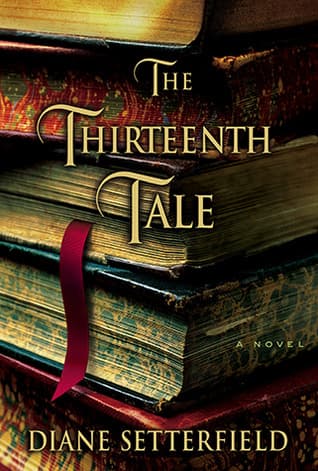
- The Thirteenth Tale
Diane Setterfield
4.0 (272k) average on GoodreadsFantasyExplores dark family secrets, a reclusive older woman's story, and a younger woman piecing together the past.
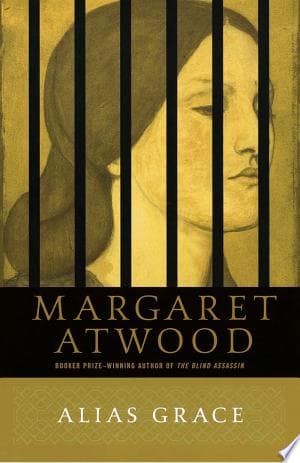
- Alias Grace
Margaret Atwood
4.0 (111k) average on GoodreadsLiterary FictionDelves into the life of a woman confined for a crime, exploring historical societal attitudes towards women and mental health.
- The Little Stranger
Sarah Waters
3.5 (44k) average on GoodreadsHistorical FictionBoth novels explore historical houses and psychological unease, but O'Farrell's focuses more on direct intergenerational trauma and the systemic injustice against women, whereas Waters' leans into more gothic ambiguity and a haunting that may or may not be supernatural, with less emphasis on societal critique of mental health institutions.
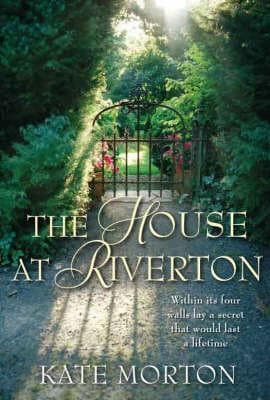
- The House at Riverton
Kate Morton
3.9 (103k) average on GoodreadsHistorical FictionBoth employ dual timelines to uncover a family secret related to a grand house. However, O'Farrell's novel delves deeper into the psychological torment and specific historical injustices faced by its female protagonist, Esme, making the 'mystery' more about understanding human suffering and societal failings than a complex web of plot twists and revelations, which Morton often emphasizes.
- To Kill a Mockingbird
Harper Lee
4.3 (4.5M) average on GoodreadsHistorical FictionIn the 1930s Jim Crow South, Harper Lee writes about racial injustice, moral growth, and the quiet courage of a lawyer father, Atticus Finch, as seen through his young daughter's eyes.



Enjoyed the summary?
A summary gives you the shape of the book. The book itself has the detail, the examples and the voice.
Find The Vanishing Act of Esme Lennox on AmazonAs an Amazon Associate, BookBrief earns from qualifying purchases. How we're funded