

Synopsis
Covers the whole plot, including the ending.
- Difficulty
- Medium
- Pacing
- Slow
- Mood
- Atmospheric, Suspenseful, Mysterious, Reflective, Dark
- Read it if
- You enjoy historical mysteries, psychological thrillers, and deep character studies, especially those that explore the complexities of memory, truth, and identity within a meticulously researched historical setting.
- Skip it if
- You prefer fast-paced plots with clear-cut resolutions and definitive answers to central mysteries.
Alias Grace Plot Summary
Covers the whole plot, including the ending.
Dr. Jordan Arrives to Interview Grace Marks
In 1859, Dr. Simon Jordan, a young American mental health expert, arrives in Kingston, Canada, to interview Grace Marks, a domestic servant convicted of the 1843 murders of her employer, Thomas Kinnear, and his housekeeper, Nancy Montgomery. Grace, now a prisoner working as a domestic in the Kingston Penitentiary warden's house, says she does not remember the murders. Dr. Jordan is hired by a group of spiritualists and reformers, led by Reverend Verringer and Mr. Mackenzie, who think Grace may be innocent or suffering from a mental illness, hoping to get her a pardon. Dr. Jordan plans to record Grace's story to find the truth behind her alleged amnesia and her role in the double homicide.
Grace's Early Life and Journey to Canada
Grace begins her story, describing her poor childhood in Ulster, Ireland, as the oldest of ten children in a struggling family. Her father, a violent alcoholic, often beat her and her siblings. At twelve, the family decided to move to Canada, enduring a difficult journey across the Atlantic on a crowded, disease-ridden ship. During the voyage, Grace's mother dies, and her body is thrown overboard, leaving Grace to care for her younger siblings. The harsh realities of their new life in Canada are clear, with the family struggling to find work and a home, forcing Grace to seek employment as a domestic servant.
First Servitude and Mary Whitney's Influence
Grace gets her first job as a housemaid at Mrs. Alderman Parkinson's home in Toronto. There, she befriends Mary Whitney, an older, lively housemaid who teaches Grace about domestic service and warns her about the dangers and expectations for young women. Mary becomes Grace's closest friend and guide, sharing her dreams of marriage and a better life. Grace is affected by Mary's sudden death from a botched abortion, an event that leaves her emotionally scarred and fearful. Mary's spirit, Grace believes, remains, and her influence continues to shape Grace's perceptions and decisions.
Moving to the Kinnear Household
After the Parkinson family moves, Grace seeks new employment and, despite concerns about the isolated location, accepts a position at Thomas Kinnear's rural farm in Richmond Hill. She works alongside Kinnear's demanding and often cruel housekeeper, Nancy Montgomery, who is also Kinnear's mistress. Grace quickly notices the tense atmosphere in the house, especially the animosity between Nancy and the stable hand, James McDermott. McDermott, a resentful and aggressive man, often argues with Nancy and sees her as an obstacle to his own ambitions within the household.
Growing Tensions and Ill-Treatment
Life at the Kinnear farm becomes difficult for Grace. Nancy Montgomery, jealous and insecure about her position, constantly criticizes Grace, overworks her, and treats her badly. Grace is often caught between Nancy and McDermott's bitter disputes, witnessing their growing hatred for each other. Kinnear, a weak man, mostly ignores the domestic problems, allowing Nancy's behavior. Grace, isolated and without allies, feels trapped in a situation where she is always watched and vulnerable to her superiors' whims. The tension in the house steadily builds, leading to a tragic outcome.
The Day of the Murders
Grace's memory of the murder day is fragmented. She recalls McDermott's growing agitation and his threats against Nancy. She describes being ordered by McDermott to help him, though her exact involvement is unclear. Grace remembers Nancy being tied up and strangled, and Kinnear being shot. She says she was terrified and acted under duress, fearing for her own life. She describes a chaotic scene, the violence, and her flight with McDermott. Her account of these hours has significant gaps, which Dr. Jordan notes as he tries to understand the truth.
Flight and Capture
After the murders, Grace and McDermott flee the Kinnear farm, taking some of Kinnear's possessions, including money and a horse and buggy. They travel together for a short time, trying to avoid capture. Their flight is disorganized and desperate. Eventually, they are found and arrested in the United States. They are brought back to Canada, where they are both charged with the murders of Thomas Kinnear and Nancy Montgomery. The sensational nature of the crimes and the involvement of a young, seemingly innocent-looking servant girl quickly capture public attention.
The Trial and Conviction
McDermott and Grace are tried separately for the murders. McDermott's trial is quick; he is found guilty and hanged. Grace's trial is a public event, with much debate about her true nature – was she a willing accomplice, an innocent dupe, or a victim of coercion? Despite her claims of amnesia and coercion by McDermott, the jury finds her guilty. However, because of her youth and perceived vulnerability, her sentence is changed from hanging to life imprisonment. She is sent to Kingston Penitentiary, where she spends many years, sometimes working as a domestic in the warden's house, which is where Dr. Jordan finds her.
Dr. Jordan's Growing Obsession and Frustration
As Dr. Jordan continues his interviews, he becomes interested in Grace, finding her mysterious. He struggles with the inconsistencies in her story, her calm manner, and her continued amnesia about the murders. He tries various psychological techniques, including hypnosis, but Grace's memories remain elusive. At the same time, Dr. Jordan feels drawn to Grace, having unsettling dreams and developing an unprofessional attraction. His professional objectivity begins to waver as his personal life also becomes complicated, with a strained relationship with his landlady and an unfulfilled desire for a family. He is frustrated by his inability to understand Grace.
The Hypnosis Session and Mary Whitney's Voice
In a session, Reverend Verringer brings in a spiritualist, Dr. DuPont, to conduct a public hypnosis session with Grace. Under hypnosis, Grace's manner changes, and she begins speaking in a voice that claims to be Mary Whitney, Grace's deceased friend. 'Mary' describes the murders, stating that she, through Grace's body, killed Nancy Montgomery out of revenge for Nancy's mistreatment and for 'spoiling' Kinnear. 'Mary' also implies McDermott's involvement and his violent nature. This revelation, whether genuine possession or a manifestation of Grace's repressed trauma, affects everyone present, including Dr. Jordan, who is left more confused about Grace's true guilt or innocence.
Grace's Release and New Life
Years later, after Dr. Jordan has left Kingston and his report is inconclusive, Grace is pardoned. This decision is influenced by the reformers' efforts, public interest in her case, and perhaps the ambiguity surrounding the hypnosis session. She goes to live in the United States with Mr. Jerome du Pont (the former Dr. DuPont, now a respected citizen), who takes her in as a domestic servant. She later marries Jamie Walsh, a man she knew from the Kinnear farm who had testified against her but later felt remorse. Grace finds peace and stability in her new life, living quietly. She never fully clarifies her role in the murders, leaving the truth unclear.
Alias Grace Characters
Grace Marks
Protagonist
A young domestic servant, convicted of double murder, whose true guilt remains ambiguous.
Grace Marks is the central figure, convicted of the 1843 murders of Thomas Kinnear and Nancy Montgomery. Intelligent, observant, and seemingly meek, Grace presents a complex and often contradictory personality. She claims to have no memory of the murders, attributing her amnesia to trauma or a 'blankness.' Throughout her interviews with Dr. Jordan, she weaves a detailed narrative of her life, revealing her resilience, her capacity for observation, and her deep-seated anxieties. Her calm demeanor and the inconsistencies in her story make her an enigma, leaving both Dr. Jordan and the reader to question her true culpability and sanity. She is deeply affected by her past, particularly the death of Mary Whitney.
Relationships: Dr. Simon Jordan (Interviewer/subject, developing an unprofessional fascination); Mary Whitney (Closest friend and mentor, whose spirit she believes influences her); Nancy Montgomery (Employer's mistress and victim, source of much animosity); James McDermott (Fellow servant and co-accused, source of fear and coercion); Thomas Kinnear (Employer and victim); Jamie Walsh (Former farmhand who testifies against her, later her husband)
Dr. Simon Jordan
Supporting
A young American psychiatrist tasked with evaluating Grace Marks.
Dr. Simon Jordan is a young, ambitious American physician specializing in the burgeoning field of mental illness. He is hired to interview Grace Marks and determine if she is truly innocent or insane, hoping to make a name for himself. Initially detached and objective, he becomes increasingly entangled in Grace's story and his own growing, unprofessional fascination with her. His scientific approach is challenged by Grace's evasiveness and the spiritualist theories surrounding her. He struggles with his own desires, his strained relationship with his landlady, and the pressure to produce a definitive diagnosis, ultimately failing to fully unravel Grace's mystery. He represents the limitations of 19th-century psychology.
Relationships: Grace Marks (Interviewer/subject, developing an unprofessional fascination); Mrs. Humphrey (His landlady, with whom he has an ambiguous, frustrated relationship); Reverend Verringer (Part of the committee that hired him)
Nancy Montgomery
Antagonist/Victim
Thomas Kinnear's housekeeper and mistress, whose murder is central to the plot.
Nancy Montgomery is Thomas Kinnear's housekeeper and mistress, and one of the two murder victims. She is depicted as a proud, demanding, and insecure woman, often cruel to Grace and in constant conflict with James McDermott. Her past as a prostitute and her precarious social standing make her desperate to maintain her position with Kinnear. She is jealous of Grace's youth and beauty, and she constantly fears losing Kinnear's affection. Her volatile temper and vindictive nature contribute significantly to the tense atmosphere at the Kinnear farm, making her a target for the resentment of those around her.
Relationships: Thomas Kinnear (Employer and lover); Grace Marks (Subordinate, whom she mistreats); James McDermott (Fellow servant, with whom she has a hostile relationship)
James McDermott
Antagonist
The stable hand at Kinnear's farm and co-accused in the murders, eventually hanged.
James McDermott is the stable hand at Thomas Kinnear's farm and Grace's co-accused. He is portrayed as a resentful, aggressive, and often drunken man who feels entitled to a better life. He harbors deep animosity towards Nancy Montgomery, viewing her as an obstacle to his own advancement and as an undeserving mistress. He is the instigator of the murders, though his exact coercion of Grace remains debated. His violent nature and quick temper make him a dangerous figure. He is found guilty and hanged, providing a stark contrast to Grace's commuted sentence and subsequent survival.
Relationships: Nancy Montgomery (Object of his hatred and victim); Grace Marks (Fellow servant, whom he coerces or involves in the murders); Thomas Kinnear (Employer and victim)
Mary Whitney
Supporting
Grace's vivacious and worldly friend from her first position, whose spirit may possess Grace.
Mary Whitney is Grace's closest friend and mentor during her first domestic service at the Parkinson household. She is older, more experienced, and worldly, teaching Grace the ropes of servant life and warning her about men and societal expectations. Mary dreams of a better life and is spirited and independent. Her sudden death from a botched abortion profoundly impacts Grace, leaving her deeply traumatized. Grace believes Mary's spirit lingers and, in a crucial hypnosis session, 'Mary' seemingly speaks through Grace, taking responsibility for Nancy Montgomery's murder, adding a supernatural dimension to the mystery.
Relationships: Grace Marks (Closest friend and mentor)
Thomas Kinnear
Victim
Grace's employer and one of the two murder victims.
Thomas Kinnear is Grace's employer and the owner of the farm where the murders occur. He is a relatively wealthy man, but depicted as weak-willed and largely oblivious to the domestic tensions between Nancy Montgomery, James McDermott, and Grace. He is Nancy's lover and seems to tolerate her demanding nature, but does little to intervene in the escalating conflicts within his household. His passivity allows the volatile situation to fester, ultimately leading to his own murder by a gunshot. He is a catalyst for the tragedy, though not an active antagonist.
Relationships: Nancy Montgomery (Mistress and housekeeper); Grace Marks (Servant); James McDermott (Stable hand)
Reverend Verringer
Supporting
A reformer and spiritualist who champions Grace's case.
Reverend Verringer is a prominent member of the committee that hires Dr. Jordan. He is a spiritualist and a reformer who believes Grace Marks may be innocent or mentally afflicted, and advocates for her pardon. He is keen on exploring supernatural explanations for Grace's amnesia, eventually bringing in Dr. DuPont for a hypnosis session. He represents the spiritualist and reformist movements of the era, contrasting with Dr. Jordan's more scientific, albeit nascent, approach. His belief in Grace's potential innocence helps to keep her case in the public eye.
Relationships: Grace Marks (Advocate); Dr. Simon Jordan (Collaborator in Grace's evaluation); Dr. DuPont/Jerome du Pont (Brings him in for the hypnosis session)
Mrs. Humphrey
Supporting
Dr. Jordan's landlady, with whom he has a strained, suggestive relationship.
Mrs. Humphrey is Dr. Jordan's landlady in Kingston. She is a widow who provides him with lodging and meals. She develops a subtle, unrequited attraction to Dr. Jordan, often making suggestive remarks and attempting to draw him into a more intimate relationship. Her presence highlights Dr. Jordan's social awkwardness and his internal struggles with desire and propriety. She represents a domestic distraction and a foil to Dr. Jordan's professional focus, and her own loneliness mirrors aspects of Dr. Jordan's unfulfilled life. Their interactions add a layer of personal tension to Dr. Jordan's narrative.
Relationships: Dr. Simon Jordan (Landlady/tenant, with unrequited romantic interest)
Jamie Walsh
Supporting
A young farmhand who testifies against Grace, later marries her.
Jamie Walsh is a young farmhand at the Kinnear property who developed a crush on Grace. He testified against Grace during her trial, recounting details that implicated her, though he later expressed remorse for his role. He is a simple, earnest man who suffers a head injury that affects his mental state. After Grace's release, he finds her and proposes marriage, offering her a chance at a quiet, stable life away from public scrutiny. His eventual marriage to Grace provides her with a sense of normalcy and a degree of closure, despite the unresolved questions of her past.
Relationships: Grace Marks (Acquaintance, later husband)
Jerome du Pont (Dr. DuPont)
Supporting
A spiritualist medium who conducts a pivotal hypnosis session with Grace.
Initially introduced as Dr. DuPont, a mesmerist and spiritualist medium, he is brought in by Reverend Verringer to conduct a hypnosis session with Grace. During this session, Grace appears to channel the spirit of Mary Whitney, leading to a dramatic 'confession.' Later, after Grace is pardoned, he reappears as Mr. Jerome du Pont, a respectable citizen in the United States, who takes Grace into his home as a domestic servant. He provides Grace with a safe haven and a new start, demonstrating a consistent, if perhaps self-serving, interest in her welfare.
Relationships: Grace Marks (Hypnotist, later benefactor and employer); Reverend Verringer (Collaborator in the hypnosis session)
Alias Grace Themes
Identity and Truth
The novel questions Grace Marks's identity: is she a killer, an innocent victim, or mentally ill? Her own amnesia and the conflicting testimonies make it impossible for Dr. Jordan, and the reader, to know the 'truth' of her involvement. The narrative explores how identity forms through storytelling, memory, and public perception, rather than being fixed. Grace's quiet demeanor often hides deeper complexities, challenging the simple labels society tries to put on her, leaving her true self and culpability unclear.
“I think of all the things that have been written about me, and all the things that have been said, and how I have been made over and over again into a patchwork girl, with a bit of this and a bit of that.”
Gender, Class, and Social Justice
Atwood explores the difficult position of women, especially working-class women like Grace, in 19th-century society. Grace's vulnerability as a domestic servant, her lack of legal rights, and societal double standards are central to her story. Her conviction is influenced by her gender and class; a 'pretty' servant girl is either an innocent dupe or a monstrous temptress. The novel critiques the justice system's biases and the limited options for women, showing how their lives often depend on men and societal expectations. The reformers' efforts to pardon Grace show the beginnings of social justice movements.
“A person can be a prisoner of the past, or she can be a prisoner of the present. But she cannot be both.”
Memory and Storytelling
Grace's story is presented as a series of recollections to Dr. Jordan, showing how subjective and often unreliable memory is. Her claims of amnesia for the murders make both Dr. Jordan and the reader question what is remembered, what is repressed, and what is made up. The novel shows how personal stories are shaped by the teller, the listener, and the context, becoming a performance rather than a direct account of events. The inconsistencies and gaps in Grace's story show that truth itself can be fluid, especially when filtered through trauma and time.
“But memory is a strange thing. It is not a record, but a storyteller.”
Psychology vs. Spiritualism
The novel contrasts the new field of psychology, shown through Dr. Jordan's scientific methods, with the spiritualist beliefs of the era. Dr. Jordan tries to find a rational, medical explanation for Grace's condition, while Reverend Verringer and Dr. DuPont seek answers through mesmerism and the possibility of spirit possession. The dramatic hypnosis scene, where Grace appears to channel Mary Whitney, blurs the lines between these two approaches, suggesting that the human mind may contain forces beyond scientific understanding or that psychological trauma can appear in seemingly supernatural ways. This tension reflects the intellectual debates of the 19th century.
“They want to know what is inside my head. They think my head is like a box, and if they can just find the key, it will open, and they will see what is in it.”
Plot Devices & Literary Techniques
Unreliable Narrator
Grace Marks's narrative is subjective, incomplete, and potentially deceptive.
Grace Marks serves as the primary narrator, recounting her life story to Dr. Jordan. However, her claim of amnesia regarding the murders, coupled with subtle inconsistencies and her careful crafting of her own image, makes her an unreliable narrator. The reader is never entirely sure if Grace is truly innocent, a master manipulator, or genuinely suffering from fragmented memories. This device creates suspense and forces the reader to actively interpret her story, mirroring Dr. Jordan's own struggle to ascertain the truth.
Epistolary Elements (Letters and Reports)
Interspersed documents provide external perspectives and counterpoints to Grace's narrative.
The novel includes excerpts from letters, newspaper articles, medical reports, and Dr. Jordan's own notes and letters. These documents serve to provide external perspectives on Grace's case, revealing public opinion, legal details, and Dr. Jordan's internal thoughts and frustrations. They often contradict or complicate Grace's personal narrative, highlighting the multiple, often conflicting, 'truths' surrounding the murders and Grace's character. This device adds layers of historical context and critical distance to the story.
Symbolism of Quilting/Sewing
Grace's needlework symbolizes her crafting of identity and the piecing together of her fragmented life.
Grace is frequently depicted engaging in needlework, particularly quilting. This acts as a powerful symbol. The act of piecing together disparate fabric scraps to form a coherent whole mirrors Grace's attempt to piece together her fragmented memories and construct a coherent narrative of her life. It also symbolizes the 'patchwork' identity others impose on her. Her control over the needlework contrasts with her lack of control over her fate, and the intricate patterns can suggest both order and hidden complexities within her mind.
Doppelgänger/Spirit Possession
The presence of Mary Whitney's 'spirit' or alter ego complicates Grace's culpability.
The concept of a doppelgänger or spirit possession is introduced through Mary Whitney. Mary's influence on Grace is profound, and the dramatic hypnosis session where Grace appears to channel Mary's voice, confessing to the murder, introduces the possibility of a split personality or genuine possession. This device blurs the lines of individual responsibility, suggesting that another entity or a repressed part of Grace's psyche could be responsible for the crimes, further obscuring the question of Grace's true guilt.
Alias Grace Quotes
“No one is more dangerously insane than one who is able to reason logicaly about his own insanity.”
“When you are in a story, you can't see the end of it. When you're outside a story, it's all clear.”
“A word after a word after a word is power.”
“I have been to the Land of the Dead, and I have seen the future, and it is a city.”
“The past is a mirror, it reflects your present.”
“We are all of us in a story, and we cannot get out.”
“To be a woman, you must be a storyteller, a weaver of narratives.”
“Knowledge is a dangerous thing, but ignorance is worse.”
“Sometimes I think I am the story, or the story is me.”
“It is not the truth that matters, but the story that is told.”
“The things that are not said are often the most important.”
“Memory is a strange thing. It can be a comfort, or a torment.”
“All stories are ghost stories.”
“You can never tell what is going on inside another person.”
Quiz
10 questions on the plot and the characters. Each answer comes with a short explanation.
Question 1
In what year does the primary narrative of Grace Marks's conviction and imprisonment take place?
- 1839
- 1843
- 1851
- 1867
Show answer
B. 1843 The book description explicitly states, 'It's 1843, and Grace Marks has been convicted for her involvement in the vicious murders.' This sets the stage for the main timeline of her imprisonment and Dr. Jordan's interviews.
Question 2
Who are the two victims Grace Marks is accused of murdering?
- Her employer, Mr. Parkinson, and his wife
- Her employer, Mr. Kinnear, and his housekeeper and mistress, Nancy Montgomery
- Her fellow servant, Mary Whitney, and the stable boy, Jamie Walsh
- Her father and stepmother
Show answer
B. Her employer, Mr. Kinnear, and his housekeeper and mistress, Nancy Montgomery The book description clearly states Grace was 'convicted for her involvement in the vicious murders of her employer and his housekeeper and mistress.' In the novel, these individuals are Thomas Kinnear and Nancy Montgomery.
Question 3
What is the profession of the expert engaged to interview Grace Marks in an attempt to unlock her memories?
- A lawyer specializing in criminal defense
- A journalist investigating the case
- An expert in the burgeoning field of mental illness
- A priest seeking her confession
Show answer
C. An expert in the burgeoning field of mental illness The description identifies him as 'An up-and-coming expert in the burgeoning field of mental illness,' who is engaged by reformers and spiritualists to seek a pardon for Grace.
Question 4
Why do a group of reformers and spiritualists engage the expert to interview Grace Marks?
- To prove her guilt and ensure her continued incarceration
- To write a book about her notorious case for profit
- To seek a pardon for Grace, believing she might be innocent or insane
- To gather evidence for a new trial based on legal technicalities
Show answer
C. To seek a pardon for Grace, believing she might be innocent or insane The text states that the expert 'is engaged by a group of reformers and spiritualists who seek a pardon for Grace.' Their motivation is to understand her state of mind and potentially secure her release.
Question 5
Grace Marks claims to have no memory of the murders. What literary device does this introduce into the narrative?
- Foreshadowing, hinting at future events
- An unreliable narrator, challenging the reader's perception of truth
- Anachronism, placing events out of their historical context
- Deus ex machina, a sudden plot resolution
Show answer
B. An unreliable narrator, challenging the reader's perception of truth Grace's claim of no memory makes her an unreliable narrator, forcing both Dr. Jordan and the reader to question the veracity of her statements and the true nature of her involvement, a common theme in Atwood's work and the mystery genre.
Question 6
What is the primary method the expert uses to try and 'unlock' Grace's memories?
- Hypnosis and dream analysis
- Interrogation under duress
- Repeated, structured conversations where Grace recounts her life story
- Examining physical evidence from the crime scene
Show answer
C. Repeated, structured conversations where Grace recounts her life story The description notes the expert 'listens to her story while bringing her closer and closer to the day she cannot remember.' This implies a series of interviews and conversations where Grace narrates her past.
Question 7
The novel explores the themes of innocence, guilt, madness, and identity. Which of these is most directly challenged by Grace's claim of amnesia regarding the murders?
- The socio-economic conditions of Irish immigrants in Canada
- The reliability of memory and the nature of truth
- The efficacy of the 19th-century penal system
- The burgeoning field of photography as a means of documentation
Show answer
B. The reliability of memory and the nature of truth Grace's amnesia directly questions whether her memories are truly absent, repressed, or feigned, thus challenging the reliability of memory and what constitutes 'truth' in her narrative and the legal proceedings.
Question 8
The book is described as 'Captivating and disturbing.' What aspect of the narrative most contributes to its 'disturbing' quality?
- The detailed descriptions of 19th-century fashion trends
- The ambiguity surrounding Grace's true nature and the events of the murders
- The mundane daily life of a domestic servant
- The straightforward resolution of the mystery by the end of the novel
Show answer
B. The ambiguity surrounding Grace's true nature and the events of the murders The unsettling aspect of the novel stems from the persistent ambiguity: is Grace a cunning murderer, an innocent victim of circumstance, or genuinely afflicted by mental illness? This lack of a clear answer, combined with the violent nature of the crimes, makes it disturbing.
Question 9
Given the book's classification as 'Mystery' and Grace's claim of no memory, what is the primary mystery the novel seeks to uncover?
- The identity of the true murderer, separate from Grace
- The full, unvarnished truth of what happened on the day of the murders and Grace's role in them
- The financial motives behind the murders
- The location of hidden treasure on the Kinnear estate
Show answer
B. The full, unvarnished truth of what happened on the day of the murders and Grace's role in them The core mystery isn't necessarily 'whodunit' in the traditional sense, but rather 'what exactly happened' and 'what was Grace's true state of mind and level of culpability?' The doctor's goal is to 'unlock her memories' to get to this truth.
Question 10
Margaret Atwood is known for her exploration of female identity and societal constraints. How does 'Alias Grace' primarily contribute to this theme, as suggested by the description?
- By portraying Grace as a successful businesswoman in a male-dominated era
- By showcasing Grace's struggle against a rigid patriarchal system that judges and confines her
- By depicting a utopian society where women have equal rights and opportunities
- By focusing on Grace's romantic entanglements and social climbing
Show answer
B. By showcasing Grace's struggle against a rigid patriarchal system that judges and confines her Grace's story, as a female servant accused of murder in the 19th century, is inherently tied to societal constraints. Her identity is scrutinized, judged, and interpreted by male figures (the doctor, the courts), highlighting the power imbalance and limited agency of women in that era.
Alias Grace FAQ
What is Alias Grace about?
Alias Grace tells the story of Grace Marks, a young Irish immigrant and domestic servant in 19th-century Canada, who was convicted of the sensational 1843 murders of her employer, Thomas Kinnear, and his housekeeper, Nancy Montgomery. The novel explores her life in prison, her contested guilt, and her sessions with Dr. Simon Jordan, a psychiatrist attempting to unlock her repressed memories of the crime.
Why should I read Alias Grace?
You should read Alias Grace for its masterful blend of historical fiction, psychological mystery, and feminist commentary. Atwood meticulously reconstructs a real-life Victorian murder case, offering a nuanced exploration of memory, identity, class, and gender roles, all while keeping the reader guessing about Grace's true culpability.
What is the background/setting of Alias Grace?
The novel is set in Upper Canada (present-day Ontario) in the mid-19th century, specifically focusing on Kingston Penitentiary and the rural Kinnear farm. It vividly portrays the social stratification, harsh living conditions for immigrants and servants, and the nascent fields of psychology and spiritualism during the Victorian era.
What writing style does the author use?
Margaret Atwood employs a rich, evocative prose style, often shifting between Grace's first-person narrative (recounting her life story to Dr. Jordan) and third-person perspectives. Her writing is characterized by meticulous historical detail, sharp psychological insight, and a subtle, often ironic, wit, mirroring the ambiguity surrounding Grace's character.
What minor details add significant meaning?
The recurring motif of Grace's quilting, with each patch representing a segment of her fragmented memory or a person in her life, adds significant meaning. The patterns and colors she chooses subtly reflect her emotional state and the hidden narratives she weaves, acting as a metaphor for the construction of her own story and identity.
What are some subtle foreshadowing moments?
Early descriptions of Nancy Montgomery's flirtatious nature and her increasing possessiveness over Thomas Kinnear subtly foreshadow the escalating tensions and jealousies that eventually lead to the murders. Grace's childhood experiences with death and violence, particularly the tragic journey from Ireland, also hint at her capacity to endure or be complicit in brutal events.
What unexpected character connections exist?
An unexpected connection is between Grace and Mary Whitney, her closest friend and fellow servant. Mary's tragic death and her strong, rebellious spirit profoundly influence Grace, shaping her perceptions of men, justice, and survival, and arguably manifesting in Grace's later actions or dissociation.
What are unspoken character motivations?
An unspoken motivation for Dr. Jordan is his desire for professional recognition and to prove his theories about mental illness, which sometimes overshadows his genuine concern for Grace. For Grace, an unspoken motivation might be a deep-seated need for control and agency, subtly asserted through her carefully constructed narrative and her ambiguous responses.
What psychological complexities do characters exhibit?
Grace exhibits profound psychological complexities, including possible dissociative amnesia, a split personality (if the 'Mary Whitney' possession is interpreted literally), and a highly developed ability to adapt and perform roles. Dr. Jordan struggles with his own repressed desires and professional ambitions, revealing the limitations and biases of nascent psychological practice.
What are the major emotional turning points?
A major emotional turning point for Grace is the death of her friend Mary Whitney, which shatters her sense of security and exposes her to the harsh realities of her social standing and vulnerability. For Dr. Jordan, a turning point is his growing frustration and personal entanglement with Grace, leading to his own emotional breakdown and departure.
How do relationship dynamics evolve?
The relationship between Grace and Dr. Jordan evolves from a formal doctor-patient dynamic into a complex, almost intimate intellectual dance, charged with unspoken tension and manipulation. Grace's relationships with other prisoners and her lawyer, Mr. MacKenzie, also shift, revealing her capacity for both genuine connection and calculated detachment.
Which parts remain ambiguous or open-ended?
The central ambiguity is Grace's true guilt or innocence in the murders of Thomas Kinnear and Nancy Montgomery. The novel deliberately leaves it unclear whether Grace was an accomplice, a victim of circumstance, genuinely amnesiac, or a cunning manipulator, forcing the reader to weigh the evidence and Grace's various narratives.
What are controversial scenes or decisions?
The scene depicting the 'séance' where Grace appears to be possessed by the spirit of Mary Whitney is highly controversial. It either provides a supernatural explanation for Grace's actions and memory loss, or it's a masterful performance by Grace, or a genuine psychological phenomenon, leaving its interpretation up for debate.
Alias Grace ending explained: how it ends & what it means
The novel ends with Grace, many years after the initial events, living a quiet life in the United States, having been pardoned and married to Jamie Walsh, a man who witnessed the murders. She reflects on her past, meticulously sewing a quilt from pieces of her old dresses, including one belonging to Nancy Montgomery. The ending does not definitively reveal her guilt or innocence, but rather emphasizes her survival and the fragmented nature of memory and identity, suggesting that the 'truth' is a construct, much like her quilt.
About the author
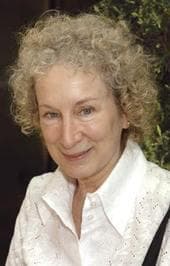
Margaret Eleanor Atwood is a Canadian poet, novelist, literary critic, essayist, teacher, environmental activist, and inventor. Since 1961, she has published eighteen books of poetry, eighteen novels, eleven books of non-fiction, nine collections of short fiction, eight children's books, two graphic novels, and a number of small press editions of both poetry and fiction. Atwood has won numerous awards and honors for her writing, including two Booker Prizes, the Arthur C. Clarke Award, the Governor General's Award, the Franz Kafka Prize, Princess of Asturias Awards, and the National Book Critics and PEN Center USA Lifetime Achievement Awards. A number of her works have been adapted for film and television.
Similar books
- The Secret History
Donna Tartt
3.9 (2k) average on GoodreadsPoliticsExplores complex characters and a central mystery with an academic, reflective tone.
- Beloved
Toni Morrison
3.9 (325k) average on GoodreadsLiterary FictionDeals with the psychological aftermath of trauma and memory in a historical context.
- The Thirteenth Tale
Diane Setterfield
4.0 (272k) average on GoodreadsFantasyFeatures a young woman unraveling a dark family history through interviews and storytelling.
- The Secret Life of Bees
Sue Monk Kidd
4.1 (1.1M) average on GoodreadsHistorical FictionWhile both Alias Grace and The Secret Life of Bees feature young female protagonists navigating challenging circumstances and seeking belonging, Atwood's novel is far more complex in its engagement with historical fact and the ambiguity of truth. Kidd's novel offers a more straightforward narrative of self-discovery and found family, with a clearer moral compass, whereas Atwood deliberately blurs the lines of morality and reality, challenging the reader to interpret Grace's actions without a definitive answer. Alias Grace is also significantly more concerned with the systemic injustices of its historical period than Kidd's more personal journey.
- The Old Man and the Sea
Ernest Hemingway
3.8 (831k) average on GoodreadsLiterary FictionA Cuban fisherman's long struggle with a giant marlin becomes a story of endurance and dignity, now retold for young adults with illustrations, phonetic guides, and writing prompts in Traditional Chinese.
- One Hundred Years of Solitude
Gabriel García Márquez
4.1 (753k) average on GoodreadsLiterary FictionThrough the multi-generational story of the Buendía family, a mythical town deals with the repeating patterns of time, love, and solitude, as the extraordinary mixes with the ordinary.





Enjoyed the summary?
A summary gives you the shape of the book. The book itself has the detail, the examples and the voice.
Find Alias Grace on AmazonAs an Amazon Associate, BookBrief earns from qualifying purchases. How we're funded