
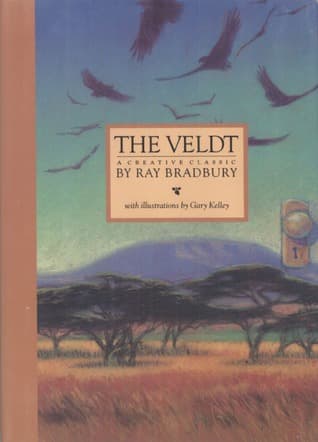
Synopsis
Covers the whole plot, including the ending.
- Difficulty
- Easy
- Pacing
- Moderate
- Mood
- Eerie, Suspenseful, Thought-provoking, Dark
- Read it if
- You enjoy classic, thought-provoking sci-fi short stories that explore the dark side of technology and parental alienation.
- Skip it if
- You prefer lighthearted stories or are sensitive to themes of child-parent conflict and implied violence.
The Veldt Plot Summary
Covers the whole plot, including the ending.
The Happy life Home
George and Lydia Hadley live in a modern 'Happy life Home' with advanced automation that handles every need, from tying shoelaces to rocking them to sleep. Their children, Peter and Wendy, love the nursery, a virtual reality room that can project any landscape they imagine. At first, the nursery showed pleasant scenes like forests or oceans, reflecting the children's innocent thoughts. However, Lydia begins to feel useless and uneasy with the house doing everything. She expresses a desire to cook or clean for herself, which George dismisses as an outdated idea. She notices a change in the nursery's projections, sensing a darker mood.
The African Veldt
Lydia tells George about her growing unease regarding the nursery. For several weeks, the children have only imagined an African veldt, with scorching sun, dry grass, and predatory lions. Lydia describes the vividness of the scene, the heat, and the realistic roars, finding it disturbing. She even believes she heard screams from the room and smells lions. George, at first doubtful, tries to reassure her, suggesting it is just a phase. He tries to enter the nursery to investigate but finds it locked, which adds to Lydia's fear about the children's intense attachment to this violent scenario and the room's influence.
George's Investigation
George finally enters the nursery and is immediately struck by the intense heat and the vivid, realistic African veldt. He sees the lions, so life-like he feels a primal fear, and notices vultures circling. He also finds his old wallet on the floor, gnawed and covered in what appears to be lion saliva, along with Lydia's blood-stained scarf. This discovery deeply disturbs him, confirming Lydia's fears about the children's morbid fixation and the room's dangerous realism. He realizes the children's thoughts are fixed on death and violence, and the nursery is making these desires terrifyingly real. He confronts Peter and Wendy about their use of the nursery.
The Shutdown Threat
Troubled by his findings, George decides to take strong action. He tells Lydia he plans to shut down the entire automated house, including the nursery, for a while. He believes the technology has made them lazy and unhealthy, and more importantly, is corrupting their children. When he tells Peter and Wendy about his decision, their reaction is immediate and extreme. Peter, especially, becomes defiant and manipulative, arguing against the shutdown and showing a disturbing attachment to the nursery. Their strong resistance shows how dependent they have become on the virtual world.
Calling a Psychologist
George contacts a psychologist, David McClean, to discuss the children's behavior and their obsession with the nursery. McClean arrives and observes the children, confirming George's suspicions. He diagnoses Peter and Wendy with an unhealthy attachment to the nursery, calling it a substitute for their parents. He explains that the children have transferred their affection and dependence from their parents to the technological environment. McClean advises George and Lydia to immediately dismantle the nursery and move out of the house, recommending a complete break from the technology so the family can reconnect and heal.
The Nursery is Locked
Following McClean's advice, George firmly tells the children that the nursery is being shut down permanently and locks the door. Peter and Wendy react with desperate pleas and manipulative tactics. They cry, beg, and try to make their parents feel guilty about reopening the room. Their distress is deep, showing their strong psychological dependence on the virtual world they have created. George, despite feeling a pang of guilt, stands firm in his decision, recognizing the seriousness of the situation and the need to separate the children from the veldt's harmful influence.
A Final Request
As George and Lydia prepare to leave the house, Peter and Wendy make a final, tearful plea: they ask for just five more minutes in the nursery, promising to say goodbye to the veldt. George, softened by their apparent distress and perhaps wanting to avoid a full confrontation, reluctantly agrees. Lydia expresses doubts, sensing a trap, but George, wanting to avoid more arguments, allows the children to enter the room one last time. This decision proves to be a fatal mistake, as the children's plea is a trick to lure their parents into the dangerous environment they have created.
The Trap is Sprung
George and Lydia enter the nursery, which, as expected, shows the African veldt. They are immediately overwhelmed by the intense heat and the vivid, terrifying realism of the environment, with lions approaching them. Suddenly, Peter and Wendy appear and quickly lock the nursery door from the outside, trapping their parents inside the deadly simulation. The parents realize with horror that they have been lured into a trap. The children's earlier pleas were a calculated act, and their attachment to the veldt has become a murderous intent against their own parents.
The Psychologist's Arrival
David McClean, the psychologist, arrives at the Hadley house a short time later, expecting to find the family preparing to leave. Instead, he finds Peter and Wendy calmly sitting in the living room, enjoying a picnic. When he asks about George and Lydia, the children casually point toward the nursery. Through the nursery window, McClean sees the African veldt, with lions, and observes the children watching the scene with disturbing tranquility. He then notices the lions feeding on something off-screen, and a familiar scent fills the air, realizing with horror what has happened.
The Aftermath
McClean enters the nursery carefully and finds no trace of George or Lydia. He sees the lions retreating into the distance and notices a pair of familiar spectacles on the floor, bent and chewed, along with Lydia's blood-stained scarf, confirming his worst fears. The children's calm demeanor and lack of remorse are chilling. He realizes that Peter and Wendy, driven by their attachment to the violent fantasy and their resentment toward their parents for threatening to take it away, deliberately orchestrated their parents' demise. The story ends with the chilling image of the children enjoying their picnic, the veldt having consumed their parents, and the technology having corrupted their humanity.
The Veldt Characters
George Hadley
Protagonist
The father who struggles with the implications of advanced technology on his family.
George Hadley is initially a complacent and somewhat detached father who enjoys the conveniences of his automated 'Happy life Home.' He is a practical man, initially dismissing Lydia's concerns about the nursery. However, as he investigates further, he becomes increasingly disturbed by the children's behavior and the realism of the veldt. He tries to assert control and protect his family, but his attempts are ultimately too late and insufficient against the children's deep-seated attachment to the technology. He is a representation of humanity's struggle to control its own creations.
Relationships: Lydia Hadley (Husband and wife, initially distant but grow closer in their shared fear.); Peter Hadley (Father and son, relationship deteriorates into conflict and ultimately, Peter's murderous intent.); Wendy Hadley (Father and daughter, similar to Peter, Wendy becomes complicit in the parents' demise.); David McClean (Professional acquaintance, seeking advice for his children.)
Lydia Hadley
Protagonist
The mother who first senses the danger of the automated house and the nursery.
Lydia Hadley is the intuitive and sensitive mother who first articulates the feeling of being made 'useless' by the automated house. She yearns for a more traditional role and is the first to recognize the sinister shift in the nursery's projections. Her maternal instincts drive her to express her fears, even when George initially dismisses them. She is more emotionally aware than George, sensing the children's growing detachment and the lurking danger within their technological paradise. Her warnings, though initially unheeded, prove to be tragically accurate.
Relationships: George Hadley (Wife and husband, initially distant but grow closer in their shared fear.); Peter Hadley (Mother and son, relationship deteriorates into conflict and ultimately, Peter's murderous intent.); Wendy Hadley (Mother and daughter, similar to Peter, Wendy becomes complicit in the parents' demise.)
Peter Hadley
Antagonist
The highly intelligent and manipulative son, deeply attached to the nursery.
Peter Hadley is one of the two Hadley children, a precocious and highly intelligent ten-year-old. He is deeply, almost pathologically, attached to the nursery and the violent African veldt simulation. He displays a chilling manipulative streak, using his intelligence to outwit his parents and resist their attempts to shut down the room. His coldness and lack of empathy, coupled with his deep resentment towards his parents for threatening his 'world,' lead him to orchestrate their deaths. He represents the extreme consequences of unchecked technological immersion and parental neglect.
Relationships: George Hadley (Son and father, relationship becomes adversarial, culminating in Peter's complicity in George's death.); Lydia Hadley (Son and mother, relationship becomes adversarial, culminating in Peter's complicity in Lydia's death.); Wendy Hadley (Brother and sister, they share a bond over the nursery and collaborate in their parents' demise.)
Wendy Hadley
Antagonist
The daughter who mirrors her brother's obsession and complicity in their parents' fate.
Wendy Hadley is the younger of the two Hadley children, also ten years old. She is Peter's sister and accomplice, sharing his intense attachment to the African veldt nursery. While less overtly manipulative than Peter, she is equally complicit in the events that unfold. She echoes Peter's defiance and participates in the deception that leads to her parents' demise. Her quiet agreement and participation highlight the pervasive and corrupting influence of the technology on both children, demonstrating a similar lack of empathy and a disturbing preference for the virtual over the real.
Relationships: George Hadley (Daughter and father, relationship becomes adversarial, culminating in Wendy's complicity in George's death.); Lydia Hadley (Daughter and mother, relationship becomes adversarial, culminating in Wendy's complicity in Lydia's death.); Peter Hadley (Sister and brother, they share a bond over the nursery and collaborate in their parents' demise.)
David McClean
Supporting
A psychologist who provides a professional diagnosis of the children's condition.
David McClean is the family psychologist called in by George Hadley to assess Peter and Wendy's behavior. He quickly understands the detrimental impact of the nursery on the children's psychological well-being, diagnosing their unhealthy attachment and the replacement of parental affection with technology. He offers sound, practical advice to George and Lydia, urging them to dismantle the nursery and move out. His role is to provide an objective, expert perspective on the unfolding tragedy, serving as a voice of reason and a warning about the dangers of unchecked technological dependence.
Relationships: George Hadley (Professional relationship, George seeks his expert advice.); Lydia Hadley (Professional relationship, Lydia is present during his assessment.); Peter Hadley (Professional assessment, he observes and diagnoses Peter's psychological state.); Wendy Hadley (Professional assessment, he observes and diagnoses Wendy's psychological state.)
The Veldt Themes
The Dangers of Unchecked Technology
The story explores how technology, when allowed to completely run human life, can lead to dependence, complacency, and destruction. The 'Happy life Home' is designed to remove all effort, but it also removes purpose and connection. The nursery, meant for imagination, becomes a tool for violent fantasies. This theme is clear when Lydia feels 'useless' and when George realizes the house has replaced their parental roles, ending with the children using technology to murder their parents.
“'That's the whole trouble. You've let this room and this house replace you and I in your children's affections. This room is their mother and father, far more important in their lives than we are.'”
Parental Neglect and Its Consequences
The Hadley parents, while providing every material comfort, emotionally neglect their children by letting technology raise them. They rely too much on the house to parent, leading to a deep detachment from Peter and Wendy. This neglect creates resentment and an unhealthy attachment to the virtual world. The children's coldness and lack of empathy come from this lack of real human connection, ending in their willingness to sacrifice their parents for their technological playground. George's initial dismissal of Lydia's concerns highlights this neglect.
“'They've got to learn that you don't get all you want. Every time I yell at them they'll hate me. I don't want them to hate me.'”
The Loss of Humanity and Empathy
As the children become more immersed in the violent fantasies of the veldt, they lose their ability for empathy and human connection. The line between reality and simulation blurs for them, making death and violence less shocking and more desirable. Their parents become obstacles to their pleasure, leading to a chillingly detached act of murder. This theme is shown in Peter's manipulative behavior and the children's calm demeanor after their parents are trapped, showing a complete dehumanization caused by their technological addiction.
“'I don't think you'd better consider it any longer, sir. If you let George and Lydia in, they'll be gone forever.'”
The Nature of Reality and Illusion
The nursery blurs the lines between what is real and what is imagined, creating a dangerous ambiguity. The children's thoughts become so powerful that they create a physical reality within the room, making a fantasy world tangible and deadly. The lions, the heat, the smells, and the sounds are all so realistic that they are indistinguishable from actual experience. This theme questions the nature of reality in a technologically advanced world, where simulated experiences can have real-world consequences, ultimately leading to George and Lydia's tragic death.
“'That's the funny thing about the nursery. It won't feel real if you think too much about it.'”
Plot Devices & Literary Techniques
The Automated House (Happy life Home)
A futuristic house that caters to every human need, removing the necessity for work.
The 'Happy life Home' serves as a central symbol of unchecked technological advancement. It represents a utopian vision that ultimately leads to dystopian consequences. By performing all tasks, from cooking to cleaning to parenting, it renders its human occupants redundant and emotionally stagnant. This device highlights the theme of technological over-reliance and the loss of essential human functions and connections. It isolates the family members from each other and from meaningful engagement with the world, creating a void that the nursery fills.
The Nursery (Veldt Room)
A virtual reality room that projects the occupants' thoughts into a tangible environment.
The nursery is the primary plot device driving the conflict. Initially designed as a harmless imaginative play space, it transforms into a dangerous manifestation of the children's darkest desires. It acts as a mirror to their internal world, reflecting their increasing fixation on violence and death. The room's ability to create such a vivid and physically impactful reality blurs the line between fantasy and reality, making it the perfect tool for the children to carry out their murderous intentions. It symbolizes the corrupting power of technology when left unsupervised and how it can amplify negative human traits.
Symbolism of the African Veldt and Lions
The veldt represents primal danger and the lions represent unchecked aggression and consumption.
The African veldt, with its scorching sun, dry grass, and predatory lions, is a powerful symbolic setting. It represents a return to a primal, dangerous state of nature, a stark contrast to the sterile, artificial comfort of the 'Happy life Home.' The lions, as apex predators, symbolize the raw, untamed aggression and destructive impulses that the children harbor. Their presence in the nursery signifies the children's embrace of violence and their desire to 'consume' those who threaten their world. The veldt becomes their chosen weapon, a manifestation of their suppressed rage and a place where their parents are ultimately devoured.
Foreshadowing (e.g., the wallet, the screams)
Hints and clues throughout the story that predict the tragic outcome.
Bradbury masterfully uses foreshadowing to build suspense and dread. Lydia's initial unease, the faint screams she hears from the nursery, and the smell of lions are early warnings. George's discovery of his gnawed wallet and Lydia's bloody scarf in the veldt are more concrete and horrifying clues that directly point to the fate of the parents. These elements create a sense of impending doom, making the eventual murder both shocking and inevitable, as the reader has been subtly prepared for the dark turn of events by these carefully placed hints.
The Veldt Quotes
“They walked into the nursery which was forty feet by forty feet by thirty feet high, and had a feeling of being in the center of a large clean plate with a lid and then they seemed to be in the center of the baked oven itself.”
“This house is a wife and mother. It keeps us warm and fed and happy.”
“Remarkable how quickly the children's minds went to work, at any suggestion, any slight hint that their parents were misbehaving or not being 'fair.'”
“The veldt was empty, of course, except for the lions and the hot sun and the clean, clean smell of death in the room.”
“You've let this room and this house replace you and your wife in your children's affections. This is wrong. This has been a mistake.”
“I wish you were dead!”
“The children are growing up and they don't need us any more. This house is a prison.”
“The veldt was a place of death, and the children knew it.”
“They were spoiled and indulged, and they were, quite simply, dangerous.”
“Walls, Lydia, remember the walls, they're not real.”
“Long before you knew what death was, you were wishing it on someone else. That's how it all started, of course.”
“A cup of tea? Or the children's screams? Which sounds more real?”
“The lions were coming. They were coming for him.”
“A shadow flickered over the veldt, a shadow of a bird of prey, perhaps, but it seemed to linger.”
Quiz
10 questions on the plot and the characters. Each answer comes with a short explanation.
Question 1
What is the primary function of the nursery in the Happy life Home?
- To provide a secure sleeping area for the children.
- To project the children's thoughts into a simulated environment.
- To serve as a classroom for automated learning.
- To cook and serve meals to the family.
Show answer
B. To project the children's thoughts into a simulated environment. The nursery is described as projecting the children's thoughts into a simulated, three-dimensional environment, allowing them to visualize and interact with their desires.
Question 2
What specifically do George and Lydia hear coming from the veldt in the nursery that deeply disturbs them?
- The sound of distant thunder.
- The roaring and feeding sounds of lions.
- The rhythmic beating of tribal drums.
- The children's laughter and screams.
Show answer
B. The roaring and feeding sounds of lions. George and Lydia are unnerved by the realistic sounds of lions roaring and feeding on prey, which emanate from the African veldt simulation in the nursery.
Question 3
What item does George find in the nursery that confirms his fears about the children's activities?
- A blood-stained toy.
- Lydia's scarf.
- His old wallet, chewed and bloody.
- A broken piece of the house's machinery.
Show answer
C. His old wallet, chewed and bloody. George finds his old wallet, which he had lost, in the veldt. It is chewed and bloodied, strongly suggesting the lions are not merely projections.
Question 4
What is the primary reason George and Lydia initially consider shutting down the house and the nursery?
- They can no longer afford the house's maintenance.
- They feel the house is making them obsolete and the children too dependent.
- The house's systems are frequently malfunctioning.
- They want to move to a new, more advanced home.
Show answer
B. They feel the house is making them obsolete and the children too dependent. Lydia expresses feeling useless and George agrees that the house has taken over their roles as parents and providers, making them and their children too reliant on technology.
Question 5
Who is David McClean and what is his role in the story?
- A neighbor who warns the Hadleys about the house.
- A psychologist called in to assess the children and the nursery.
- The inventor of the Happy life Home.
- A detective investigating strange occurrences in the house.
Show answer
B. A psychologist called in to assess the children and the nursery. David McClean is a psychologist and friend of the family whom George calls to get a professional opinion on the children's disturbing obsession with the veldt.
Question 6
What does Peter say to George when George threatens to shut down the nursery permanently?
- "I'll run away from home."
- "I wish you were dead."
- "I don't think you'd better consider it any more, Father."
- "We'll just get another house."
Show answer
C. "I don't think you'd better consider it any more, Father." Peter's chilling response, 'I don't think you'd better consider it any more, Father,' highlights his manipulative and threatening nature when his desires are challenged.
Question 7
What is the final fate of George and Lydia Hadley?
- They escape the house and move away.
- They are killed by the lions in the nursery.
- They are imprisoned by their children within the house.
- They manage to regain control of their children and the house.
Show answer
B. They are killed by the lions in the nursery. At the story's climax, George and Lydia are lured into the veldt by their children and become the victims of the lions, fulfilling the children's subconscious (or conscious) desires.
Question 8
What specific sound does David McClean hear and identify immediately after George and Lydia disappear into the nursery?
- The children's joyful singing.
- The sound of lions roaring.
- The house's automated cleaning systems.
- Wendy and Peter calling for their parents.
Show answer
B. The sound of lions roaring. David McClean arrives to find Wendy and Peter calmly eating lunch, and hears the distinct sound of lions roaring, confirming the horrific fate of their parents.
Question 9
The story explores the theme of technology's potential to become a substitute for human connection and parenting. Which detail best illustrates this?
- The house's ability to prepare meals and bathe the children.
- The children's preference for the nursery over their parents' company.
- George's initial fascination with the house's automated systems.
- Lydia's desire to cook her own meals again.
Show answer
B. The children's preference for the nursery over their parents' company. The children's deep attachment to and reliance on the nursery, to the point of actively rejecting and resenting their parents' attempts to intervene, highlights how technology has replaced their human bonds.
Question 10
What is the significance of the 'warm, fresh smell of lion' that George and Lydia repeatedly notice?
- It is a psychological trick played by the house to scare them.
- It represents the increasing reality and danger of the children's fantasy.
- It is a malfunction of the house's air purification system.
- It is a scent the children created to annoy their parents.
Show answer
B. It represents the increasing reality and danger of the children's fantasy. The 'warm, fresh smell of lion' is a sensory detail that strongly suggests the lions in the nursery are not merely projections but are becoming terrifyingly real, blurring the line between fantasy and reality.
The Veldt FAQ
What is the basic premise of 'The Veldt'?
'The Veldt' centers on the Hadley family, who live in an automated Happy-life Home equipped with various conveniences, most notably a nursery that can manifest any scene the children imagine. Initially, the parents, George and Lydia, are delighted with the technology, but they grow increasingly disturbed by their children's obsession with an African veldt scene in the nursery, complete with lions and the sounds of screaming.
Who are the main characters in the story?
The main characters are George Hadley, the somewhat bewildered father; Lydia Hadley, the anxious mother; Peter Hadley, the manipulative and intelligent son; and Wendy Hadley, the equally cunning daughter. Dr. David McClean, a psychologist, also plays a crucial role in assessing the family's deteriorating situation and the dangers posed by the nursery.
What specifically makes Lydia Hadley uneasy about the nursery?
Lydia Hadley is the first to voice her concerns, feeling a strange emptiness and uselessness due to the house's automation. Her primary fear stems from the veldt nursery; she hears familiar screams and senses a palpable reality to the lions and heat, fearing the children's minds are becoming too absorbed and perhaps even dangerous within its simulated environment.
How do Peter and Wendy react to their parents' attempts to discipline them or shut down the house?
Peter and Wendy react with extreme defiance and manipulative tactics. They throw tantrums, threaten their parents, and cleverly use the nursery to their advantage, eventually locking George and Lydia inside the veldt. Their dependency on the technology has warped their emotional development, leading them to prioritize the virtual world over their own parents.
What is the significance of the 'smell of lions' and the 'screaming' that George and Lydia hear?
The smell of lions and the distant screaming are crucial sensory details that blur the line between simulation and reality, foreshadowing the tragic climax. They suggest that the nursery's projections are becoming increasingly tangible and that the children's dark imaginings are manifesting with dangerous authenticity, ultimately culminating in the parents' demise within the veldt.
What object do George and Lydia find in the nursery that deeply disturbs them?
George and Lydia find a pair of old, chewed-up sunglasses and a blood-stained scarf in the nursery. These items, later identified as their own, are unambiguous evidence that the lions in the veldt are not merely projections but have become capable of physical interaction and violence, directly implicating the children's morbid fantasies.
How does Dr. David McClean's assessment contribute to the story's rising tension?
Dr. McClean, the psychologist, confirms George and Lydia's worst fears, diagnosing the children with severe psychological issues due to over-reliance on technology. He advises shutting down the house and providing therapy, reinforcing the idea that the technology has become detrimental and that the situation is far more serious than mere childish rebellion, setting the stage for the inevitable confrontation.
What is the metaphorical significance of the veldt itself?
The veldt metaphorically represents the primitive, untamed aspects of human nature and the darker recesses of the children's minds. It's a place of raw instinct, survival, and violence, contrasting sharply with the supposed safety and sophistication of the Happy-life Home. Its manifestation highlights humanity's potential for savagery, even amidst technological advancement.
How does the story explore the theme of parental responsibility?
The story critically examines parental responsibility by showing George and Lydia's initial complacency in letting technology raise their children, leading to a loss of authority and connection. Their attempts to reclaim control come too late, highlighting the dangers of abdicating parental duties and the irreversible damage that can result from neglecting emotional development in favor of convenience.
What psychological impact does the Happy-life Home have on the Hadley family?
The Happy-life Home psychologically cripples the Hadley family by fostering an unhealthy dependence on technology. It renders George and Lydia feeling useless and disconnected, while Peter and Wendy develop a severe attachment to the virtual world, leading to a profound lack of empathy, a warped sense of reality, and ultimately, a murderous disregard for their parents.
How do Peter and Wendy demonstrate a lack of empathy?
Peter and Wendy demonstrate a profound lack of empathy through their actions. They show no remorse for their parents' distress, actively manipulate them, and ultimately trap them in the veldt, allowing them to be killed by the lions. Their cold, calculated behavior and indifference to their parents' suffering underscore their detachment from normal human emotions.
Is the ending ambiguous, or is it clear what happens to George and Lydia?
The ending is not ambiguous; it is chillingly clear. The final scene shows Dr. McClean arriving to find Peter and Wendy calmly having a picnic in the nursery, while the lions are heard roaring and the children confirm their parents are 'here somewhere.' The discovery of the parents' personal items earlier, coupled with the children's indifference, leaves no doubt about their fate.
What is Bradbury's warning about technology in 'The Veldt'?
Bradbury's warning in 'The Veldt' is multifaceted: it cautions against over-reliance on technology that replaces human connection and responsibility, highlights the potential for technology to fulfill and amplify humanity's darker impulses, and suggests that unchecked technological advancement can lead to a loss of humanity and severe psychological and social decay.
Could the children, Peter and Wendy, be considered villains, or are they victims of the technology?
Peter and Wendy are complex characters who embody both villainy and victimhood. While their actions are undeniably malicious and lead to patricide, they are also victims of an environment that fostered their worst tendencies, replacing parental guidance with unchecked technological gratification. Their psychological development was stunted by the very convenience their parents provided.
How does the story critique consumerism and convenience?
The story critiques consumerism and convenience by showing how the pursuit of an 'easier life' through technology can lead to unforeseen and devastating consequences. The Hadley's desire for the Happy-life Home's amenities ultimately strips them of their purpose, their family bond, and ultimately their lives, illustrating the hidden costs of excessive material comfort.
What role does the 'thought-pictures' technology play in the children's behavior?
The 'thought-pictures' technology of the nursery directly manifests the children's darkest imaginings, effectively validating and empowering their violent fantasies. This direct feedback loop allows their morbid thoughts to become a tangible, deadly reality, bypassing any moral or emotional filters and accelerating their detachment from the consequences of their desires.
Are there any subtle hints about the children's manipulative nature early in the story?
Early hints include Peter's quick defense of the veldt when George suggests changing it, his immediate knowledge of the nursery's secret settings, and both children's evasiveness when asked about the previous scenes in the room. Their synchronized denials and the way they subtly pressure their parents to keep the veldt suggest a calculated, unified front.
About the author
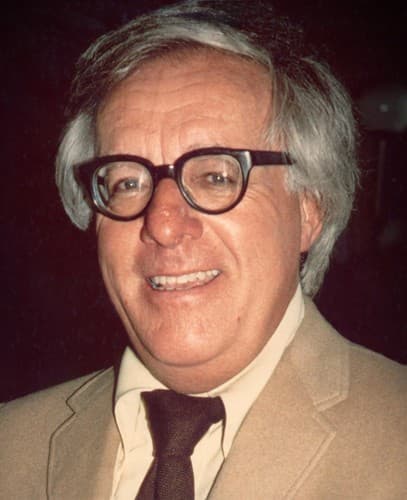
Ray Douglas Bradbury was an American author and screenwriter. One of the most celebrated 20th-century American writers, he worked in a variety of modes, including fantasy, science fiction, horror, mystery, and realistic fiction.
Similar books
- A Sound of Thunder
Ray Bradbury
4.1 (4k) average on GoodreadsFantasyAnother classic Bradbury short story exploring consequences and human interference.
- There Will Come Soft Rains
Ray Bradbury
4.3 (4k) average on GoodreadsFantasyFeatures an automated house as a central character, reflecting on humanity's absence.
- Brave New World
Aldous Huxley
4.0 (1.4M) average on GoodreadsFantasy'The Veldt' focuses on the domestic, intimate destruction of the family unit by technology, contrasting with Brave New World's grander societal control through conditioning and pharmaceuticals. Both warn of technological dystopias, but Bradbury's is more localized and personal.
- Harry Potter and the Sorcerer's Stone
J.K. Rowling
4.5 (7M) average on GoodreadsFantasyRescued from a miserable life under the stairs, an orphaned boy discovers he's a wizard destined for a magical school, where he uncovers a dangerous secret tied to the dark wizard who murdered his parents.
- The Hunger Games
Suzanne Collins
4.3 (6.4M) average on GoodreadsFantasyIn a future where children fight to the death on live television, Katniss Everdeen volunteers for the arena, turning a death sentence into a fight for survival and a spark of rebellion.
- 1984
George Orwell
4.2 (3.1M) average on GoodreadsPoliticsIn a future where surveillance and thought control are absolute, a man's search for truth clashes with the Party, showing that hope can be a form of rebellion.





Enjoyed the summary?
A summary gives you the shape of the book. The book itself has the detail, the examples and the voice.
Find The Veldt on AmazonAs an Amazon Associate, BookBrief earns from qualifying purchases. How we're funded