
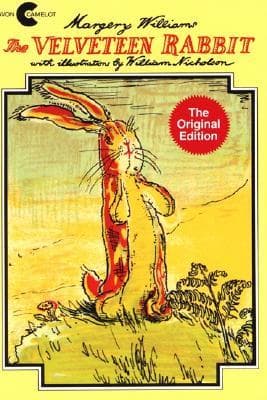
Synopsis
Covers the whole plot, including the ending.
- Difficulty
- Easy
- Pacing
- Slow
- Mood
- Heartwarming, Poignant, Magical, Gentle
- Read it if
- You enjoy classic children's literature with a poignant message about love, loss, and transformation, or if you appreciate allegorical tales that resonate with both young and old.
- Skip it if
- You prefer fast-paced, action-oriented stories or are looking for complex character development and intricate plotlines typical of modern fantasy novels.
The Velveteen Rabbit Plot Summary
Covers the whole plot, including the ending.
The Arrival and Initial Neglect
The Velveteen Rabbit arrives in the Boy's nursery for Christmas. At first, he feels unimportant and is ignored by the Boy, who prefers mechanical toys like the clockwork mouse or the tin train. The Rabbit stays in a toy cupboard, feeling alone and wanting attention. He watches other toys with awe and envy, especially the new ones that brag about their parts. He wants to be loved and played with, but his simple, cloth nature seems different from the fancier toys.
The Skin Horse's Wisdom
One day, the Velveteen Rabbit is next to the Skin Horse, the oldest and wisest toy. The Skin Horse, loved until he is worn out, explains what it means to become 'Real.' He tells the Rabbit that becoming Real does not depend on how you are made, but on a child's love. It takes a long time, and by then, you are usually shabby and have lost your eyes, but these things do not matter because once you are Real, you cannot be 'unReal' again. This talk gives the Velveteen Rabbit hope and a new goal.
Becoming the Boy's Favorite
One night, the Boy's Nana cannot find the lost toy dog and quickly gives the Velveteen Rabbit to the Boy to sleep with. From that moment, the Rabbit is the Boy's constant friend. They play in the garden, have tea parties, and sleep together every night. The Boy's love changes the Rabbit; his velveteen fur wears down, his whiskers rub off, and his seams loosen. He no longer cares about being new or beautiful; he feels the Boy's affection and knows he is truly loved. This fulfills the Skin Horse's prediction of becoming Real.
Adventures and Imaginary Worlds
The Boy and the Velveteen Rabbit have many adventures. They explore the 'jungle' under the dining-room table, go to 'strange countries' in the garden, and whisper secrets at night. The Rabbit learns about the world through the Boy's eyes and imagination. He feels a deep bond with the Boy, a connection beyond his toy form. These experiences solidify his path to becoming Real, as each shared moment of play and affection makes him feel more alive, even as his look changes from constant use.
The Wild Rabbits' Encounter
One summer evening, while the Boy and the Velveteen Rabbit play in the garden, wild rabbits come out of the woods. They hop around the Boy, watching him and his toy. One wild rabbit asks the Velveteen Rabbit why he cannot hop like them. The Velveteen Rabbit, though he wishes he could, cannot. He feels a bit sad and unsure, realizing he is not quite like them, nor entirely like the Boy. This meeting makes him question his 'Realness' and his place, showing the difference between a toy and a living creature.
The Boy Falls Ill
Trouble comes when the Boy gets scarlet fever. The Velveteen Rabbit stays with him through the long illness, giving comfort. The Boy's feverish hold on the Rabbit is constant, and the Rabbit picks up all the germs. The doctor says all germ-filled items must be burned to stop the disease from spreading. This includes the Velveteen Rabbit, despite the Boy's pleas to keep him. This news breaks the Rabbit's world as he faces being destroyed.
A Tear and a Magical Flower
After the Boy recovers and goes to the seaside, the Velveteen Rabbit is left in a sack with other contaminated toys, set for burning. Lying alone and sad, the Rabbit cries a single, real tear. He regrets his fate and the end of his good life with the Boy. From where his tear falls, a beautiful flower grows, and from its petals comes a small, shiny Fairy. This is the Nursery Magic Fairy, who watches over all toys that children love.
The Fairy's Gift of Reality
The Nursery Magic Fairy tells the Velveteen Rabbit that she has come because he became Real in the Boy's eyes. Now, it is time for him to become Real to everyone. She gently kisses the Rabbit, and he feels a wonderful change. His velveteen fur softens, his seams vanish, and he can move and breathe on his own. He is no longer just a toy; he is a living, breathing rabbit, changed by love and magic into a true wild creature, able to hop and play like the wild rabbits he once envied.
Joining the Wild Rabbits
The Fairy takes the changed Velveteen Rabbit to the edge of the woods. She places him among a group of wild rabbits. He feels a sense of belonging and joy as he finds he can run, jump, and twitch his nose like them. The wild rabbits, at first careful, accept him. He plays with them, experiencing the freedom and life of his new existence. This marks his full change from a loved toy to a living being, fulfilling the promise of becoming 'Real' in every way.
A Glimpse of the Past
The next spring, the Boy plays in the garden again. He sees two wild rabbits come from a burrow near his house. One, he notices, looks much like his old Velveteen Rabbit, with a familiar nose twitch. He mentions it but does not fully understand the magical change. The Rabbit, now truly Real and happy in the woods, sees the Boy. But he no longer needs to be held or played with. He has found a new way of life, forever changed by the Boy's love and the Fairy's magic.
Principal Figures
The Velveteen Rabbit
Protagonist
A humble toy rabbit who yearns to become 'Real' through love.
The Velveteen Rabbit begins as a simple, unloved Christmas toy in the Boy's nursery, feeling inferior to the more sophisticated mechanical toys. His deepest desire is to become 'Real,' a state he learns from the Skin Horse is achieved through a child's unwavering love. He endures neglect, then experiences profound joy and transformation as the Boy's most cherished companion. Despite becoming shabby and worn, his spirit remains hopeful. His journey culminates in a magical transformation into a living rabbit, a testament to the power of love and childhood affection.
Relationships: The Boy (Beloved owner, source of his 'Realness'); Skin Horse (Wise mentor, explains the concept of 'Real'); Nursery Magic Fairy (Magical benefactor, completes his transformation)
The Boy
Supporting
The child whose love makes the Velveteen Rabbit 'Real'.
The Boy is a typical child, initially drawn to flashy, new toys but eventually forming a deep, unconditional bond with the Velveteen Rabbit. His innocent and steadfast love is the catalyst for the Rabbit's transformation. He is imaginative, engaging in elaborate games with the Rabbit, and fiercely protective of his beloved toy, even when ill. His illness and subsequent recovery lead to the Rabbit's temporary discard but ultimately pave the way for his magical rebirth. He represents the pure, transformative power of childhood affection.
Relationships: The Velveteen Rabbit (Cherished toy, constant companion); Nana (Caregiver, indirectly brings the Rabbit into his life)
The Skin Horse
Supporting
An old, wise toy who explains the meaning of 'Real'.
The Skin Horse is the oldest and wisest toy in the nursery, having experienced the long process of becoming 'Real' through a previous child's love. He is faded, worn, and missing parts, but possesses an inner contentment and understanding. He serves as a mentor to the Velveteen Rabbit, patiently explaining that 'Realness' is not about how one is made, but about being loved so much that one's physical imperfections cease to matter. His wisdom provides the central philosophical insight of the story.
Relationships: The Velveteen Rabbit (Confidante, mentor); Other Toys (Observer of their superficiality)
Nana
Supporting
The Boy's nursemaid, who gives the Rabbit to the Boy.
Nana is the Boy's practical and somewhat gruff nursemaid. She is the one who, in a moment of need when the Boy's favorite toy dog is lost, hands the Velveteen Rabbit to the Boy. This seemingly small act is pivotal, as it initiates the Rabbit's journey of becoming 'Real'. Later, it is Nana who, following the doctor's orders, insists on the burning of the contaminated toys, including the Velveteen Rabbit, unknowingly setting the stage for his magical transformation.
Relationships: The Boy (Caregiver); The Velveteen Rabbit (Unwitting catalyst for his 'Realness' and later his discard)
The Nursery Magic Fairy
Supporting
A magical being who completes the Velveteen Rabbit's transformation.
The Nursery Magic Fairy is a benevolent, ethereal being who appears from a flower that sprouts from the Velveteen Rabbit's tear. She is the guardian of all toys that have been truly loved by children and explains that her purpose is to take such toys and make them 'Real' not just to their owners, but to everyone. Her magical kiss transforms the Velveteen Rabbit into a living creature, fulfilling his deepest wish. She represents the ultimate, tangible manifestation of the magic of love.
Relationships: The Velveteen Rabbit (Magical benefactor)
The Wild Rabbits
Supporting
Living rabbits who represent true 'Realness' in the natural world.
The wild rabbits are a group of actual, living rabbits that the Velveteen Rabbit encounters in the garden. They are agile, free, and represent the natural world that the Velveteen Rabbit, as a toy, cannot fully join. Their inability to recognize him as 'Real' highlights his initial limitations. Later, after his transformation by the Fairy, they become his new family, symbolizing his complete acceptance into the natural, living world. They represent the ultimate state of 'Realness' he aspires to.
Relationships: The Velveteen Rabbit (Future companions, initial source of self-doubt)
The Mechanical Toys
Mentioned
Proud, new toys who initially scorn the Velveteen Rabbit.
These toys, such as the clockwork mouse and the tin train, are initially the Boy's favorites due to their elaborate mechanisms and newness. They are snobbish and look down upon simpler toys like the Velveteen Rabbit, boasting about their modernity and 'Realness' based on their construction. They represent superficiality and the fleeting nature of novelty, contrasting sharply with the enduring love that makes the Velveteen Rabbit truly 'Real'.
Relationships: The Velveteen Rabbit (Initial antagonists, sources of his insecurity)
The Boy's Father
Mentioned
A minor character who suggests burning the contaminated toys.
The Boy's Father is mentioned briefly when he supports the doctor's recommendation to burn all items that might be contaminated with scarlet fever germs. While a minor character, his practical decision, though made with good intentions, directly leads to the Velveteen Rabbit's discard and subsequent magical intervention. He represents the adult world's logical, if sometimes heartless, approach to practical matters.
Relationships: The Boy (Parent); The Velveteen Rabbit (Unwittingly contributes to his fate)
Themes & Insights
Love and Transformation
The main theme is how love changes things. The Velveteen Rabbit's journey from a toy to a 'Real' being depends on the Boy's love. It is not about being new or beautiful, but about being loved so much that imperfections become marks of honor. The Boy's love wears the Rabbit out, but in doing so, makes him truly alive. This leads to his magical physical change into a living rabbit. This shows that true love brings deep, lasting change.
“Generally, by the time you are Real, most of your hair has been loved off, and your eyes drop out and you get loose in the joints and very shabby. But these things don't matter at all, because once you are Real you can't be ugly, except to people who don't understand.”
Identity and Self-Discovery
The Velveteen Rabbit's journey is about identity. He starts unsure of his place, comparing himself to flashier toys. From the Skin Horse, he learns that 'Realness' is an inner state achieved through love, not outer looks. His time with the Boy, and later with the wild rabbits, makes him face what it means to be alive. His eventual change into a living rabbit is the full realization of this self-discovery. His inner 'Realness' finally matches his outer form.
“What is REAL?" asked the Rabbit one day, when they were lying side by side in the nursery. "Does it mean having things that buzz inside you and a stick-out handle?”
The Nature of Reality
The book looks at different kinds of 'reality.' At first, mechanical toys define reality by their complex parts. The Skin Horse introduces a deeper, spiritual reality found through love, where looks do not matter. The Boy's love makes the Rabbit 'Real' emotionally, changing him in spirit. Finally, the Nursery Magic Fairy gives him physical reality, allowing him to exist as a living creature in nature. This shows that reality has many sides, with emotional and magical parts as valid as physical ones.
“Real isn't how you are made," said the Skin Horse. "It's a thing that happens to you. When a child loves you for a long, long time, not just to play with, but REALLY loves you, then you become Real.”
Loss and Renewal
The story includes themes of loss and new beginnings. The Velveteen Rabbit loses his newness, then faces losing his life when he is deemed contaminated and set for burning. This moment of sadness, however, starts his magical renewal. His tear calls the Fairy, leading to his full change into a living rabbit. This cycle shows that endings can lead to new starts. Even in moments of great loss, there can be rebirth and a new kind of existence.
“He was a Velveteen Rabbit, and he had no idea that a tear could be so powerful.”
Childhood and Imagination
Childhood and imagination are central to the story. The Boy's imaginative play turns the nursery and garden into jungles and strange places, giving the Velveteen Rabbit life and purpose. It is in this world of make-believe that the Rabbit feels the love that makes him 'Real' to the Boy. The story celebrates a child's mind to bring objects to life and create meaning. It shows how imagination is not just play, but a strong force that can shape reality for those involved.
“He was a toy, and yet he was not a toy. He was a secret, living thing in the heart of the Boy.”
Plot Devices & Literary Techniques
Personification
Giving human qualities to inanimate objects (toys).
Personification is a core device, making the toys, especially the Velveteen Rabbit and the Skin Horse, relatable characters. They possess thoughts, feelings, hopes, and fears, allowing readers to empathize with their desires and struggles. This device is crucial for conveying the Rabbit's yearning for 'Realness' and the Skin Horse's wisdom. By making the toys sentient, the story can explore complex themes like love, identity, and loss through their experiences, blurring the line between inanimate object and living being from the toys' perspective.
Symbolism (The Velveteen Rabbit)
The Rabbit as a symbol for the transformative power of love.
The Velveteen Rabbit himself is a powerful symbol. He initially represents innocence, vulnerability, and the desire for belonging. As he becomes worn and shabby through love, he symbolizes how true affection values character and experience over superficial appearance. His transformation into a living rabbit symbolizes the ultimate fulfillment and spiritual rebirth that love can bring, suggesting that love doesn't just change us internally, but can fundamentally alter our very being, making us truly 'alive' in the deepest sense.
The Skin Horse's Wisdom
A narrative device for exposition and thematic explanation.
The Skin Horse serves as a wise elder figure, a narrative device used to directly explain the central concept of 'Realness' to the Velveteen Rabbit (and thus to the reader). His exposition provides the philosophical backbone of the story, defining what it means to be truly loved and how that love leads to an enduring, internal reality. Without the Skin Horse's explanation, the Rabbit's journey would lack its profound meaning, making him crucial for establishing the story's core theme and guiding the protagonist's understanding.
The Nursery Magic Fairy
A magical deus ex machina that resolves the protagonist's fate.
The Nursery Magic Fairy acts as a benevolent deus ex machina, appearing at a moment of despair to provide a magical resolution. Her sudden arrival, triggered by the Rabbit's genuine tear, offers a fantastical solution to the seemingly insurmountable problem of the Rabbit's destruction. She embodies the 'Nursery Magic' that transforms the internal 'Realness' achieved through love into an external, physical reality, providing a happy, magical ending that transcends the limitations of the mundane world.
Contrast (New vs. Old/Loved)
Highlighting the difference between superficial newness and profound love.
The story frequently uses contrast to emphasize its themes. The initial contrast between the new, mechanical toys (who boast of their mechanisms) and the simple Velveteen Rabbit highlights the superficiality of material value. This is further contrasted with the Skin Horse, who is old and worn but deeply 'Real' due to past love. This device underscores the central message that true value and 'Realness' come from enduring love and experience, not from being new, flashy, or perfectly intact.
The Velveteen Rabbit Quotes
“Real isn't how you are made. It's a thing that happens to you.”
“It doesn't happen all at once. You become Real. It takes a long time. That's why it doesn't happen often to people who break easily, or have sharp edges, or who have to be carefully kept.”
“Generally, by the time you are Real, most of your hair has been loved off, and your eyes drop out and you get loose in the joints and very shabby. But these things don't matter at all, because once you are Real you can't be ugly, except to people who don't understand.”
“Once you are Real you can't become unreal again. It lasts for always.”
“The Boy loved him with all the love that good children have in their hearts. He loved him so hard that he loved all his whiskers off, and the pink lining of his ears turned grey, and his brown spots faded. He loved him till he became a shabby, shapeless thing.”
“He was a toy no longer, but a Fairy Rabbit, fresh from the dew-wet grass and sweet-scented clover.”
“What is REAL? asked the Rabbit one day, when they were lying side by side in the nursery, before Nana came to tidy the room.”
“He thought that he was a very important rabbit, and he was quite proud of himself.”
“And he didn't mind how many times he was thrown down, or how many bumps he got, because he knew that, being loved, he was safe.”
“The little Rabbit was so happy that he nearly burst.”
“Weeks passed, and the little Rabbit grew very shabby and brown and dingy from all the cuddling and being carried about.”
“For the Skin Horse had been real a long time, and his muzzle was worn smooth and his brown glass eyes had dropped out, but he was wise.”
“But the little Rabbit never forgot that he had been a toy.”
“And because he was Real, he could hear and understand everything.”
Quiz
10 questions on the plot and the characters. Each answer comes with a short explanation.
Question 1
What does the Skin Horse tell the Velveteen Rabbit is required for a toy to become 'Real'?
- Being made of expensive materials and having many features.
- Being loved by a child for a very long time, until all your fur is rubbed off and your joints are loose.
- Performing a heroic act of bravery to save the child.
- Being blessed by a magical fairy at birth.
Show answer
B. Being loved by a child for a very long time, until all your fur is rubbed off and your joints are loose. The Skin Horse explains that 'Real isn't how you are made... It's a thing that happens to you when a child loves you for a long, long time.' This love makes a toy worn and shabby, but truly real.
Question 2
Which specific illness does the Boy contract that leads to the Velveteen Rabbit being deemed unhygienic?
- Measles
- Scarlet Fever
- Chickenpox
- Pneumonia
Show answer
B. Scarlet Fever The Boy falls ill with scarlet fever. Due to the contagious nature of the illness, all his toys and books that had been in his room, including the Velveteen Rabbit, were ordered to be burned.
Question 3
Who is the first toy to explain the concept of 'Real' to the Velveteen Rabbit?
- The Tin Soldier
- The Clockwork Mouse
- The Skin Horse
- The Wooden Lion
Show answer
C. The Skin Horse The Skin Horse, being the oldest and wisest toy in the nursery, explains the profound meaning of becoming 'Real' to the young and inexperienced Velveteen Rabbit.
Question 4
What happens to the Velveteen Rabbit's appearance as the Boy loves him more and more?
- His fur becomes brighter and his eyes sparkle more.
- He grows larger and gains new features.
- His fur is rubbed bald, his whiskers fall off, and his seams become loose.
- He gains the ability to talk and move on his own.
Show answer
C. His fur is rubbed bald, his whiskers fall off, and his seams become loose. The story emphasizes that becoming 'Real' through love means physical deterioration. The Velveteen Rabbit becomes 'shabby and worn, and bald in patches,' but this is a sign of his growing reality.
Question 5
Why do the other mechanical toys in the nursery look down on the Velveteen Rabbit?
- Because he is too new and hasn't been played with much.
- Because he is a simple, stuffed toy with no moving parts or fancy mechanisms.
- Because he is too quiet and doesn't participate in their games.
- Because he is constantly boasting about the Boy's love.
Show answer
B. Because he is a simple, stuffed toy with no moving parts or fancy mechanisms. The more sophisticated, mechanical toys consider themselves superior due to their moving parts and intricate designs, viewing the Velveteen Rabbit as a simple, 'common' toy.
Question 6
What is the primary theme explored through the Velveteen Rabbit's journey?
- The importance of material possessions.
- The power of imagination and make-believe.
- The transformative power of love and its ability to bring true existence.
- The fleeting nature of childhood friendships.
Show answer
C. The transformative power of love and its ability to bring true existence. The central theme is how love, particularly a child's love, is the ultimate force that transforms something inanimate into something 'Real,' giving it true being and meaning, even if it means physical wear and tear.
Question 7
Where does the Velveteen Rabbit find himself after being discarded due to the Boy's illness?
- In a forgotten box in the attic.
- In the garden, waiting to be burned with other contaminated items.
- Thrown into the trash bin outside the house.
- Given away to another child.
Show answer
B. In the garden, waiting to be burned with other contaminated items. After the Boy recovers from scarlet fever, the Velveteen Rabbit is placed in the garden with other items to be disinfected or burned, as he is considered 'full of germs.'
Question 8
What significant event occurs while the Velveteen Rabbit is in the garden, feeling sad and alone?
- He is found by a kind gardener who cleans him up.
- He encounters other wild rabbits who initially mock him.
- The Boy secretly comes out to retrieve him.
- He suddenly transforms into a new, pristine toy.
Show answer
B. He encounters other wild rabbits who initially mock him. While lying in the garden, a wild rabbit hops by and questions the Velveteen Rabbit's inability to hop like a real rabbit, highlighting his sadness and longing to be truly real.
Question 9
Who intervenes to save the Velveteen Rabbit from being burned and completes his transformation?
- The Boy's mother, who has a change of heart.
- The Nursery Magic Fairy.
- The Skin Horse, who uses his wisdom.
- A friendly squirrel who carries him away.
Show answer
B. The Nursery Magic Fairy. Just as the Velveteen Rabbit sheds a tear, the Nursery Magic Fairy appears from a flower. She tells him that because he was truly loved, she can make him 'Real' to everyone.
Question 10
After his transformation, how does the Velveteen Rabbit return to see the Boy?
- He appears as a new, perfect toy in the nursery.
- He becomes a wild rabbit and eventually sees the Boy playing in the garden.
- He is bought back by the Boy's parents from a toy store.
- He whispers to the Boy in a dream.
Show answer
B. He becomes a wild rabbit and eventually sees the Boy playing in the garden. The fairy transforms him into a real, live rabbit. Later, he joins the wild rabbits in the woods and returns to the garden, where the Boy sees him but doesn't recognize him as his old toy, only as a beautiful wild rabbit.
The Velveteen Rabbit FAQ
What is "The Velveteen Rabbit" about?
"The Velveteen Rabbit" tells the story of a toy rabbit who longs to become 'real' through the love of his owner, a young boy. It explores themes of love, loss, and the transformative power of affection, as the Rabbit experiences the joy of being cherished and the pain of being discarded, ultimately finding a magical path to true existence.
Why should I read "The Velveteen Rabbit"?
You should read "The Velveteen Rabbit" for its timeless message about the profound nature of love and what it truly means to be 'real.' It's a poignant story that resonates with readers of all ages, offering comfort and insight into the cycle of attachment, loss, and the enduring magic of connection.
What is the background/setting of "The Velveteen Rabbit"?
The story is primarily set within a child's nursery, a vibrant and imaginative world populated by various toys. It transitions to the garden and woods, representing the outside world and the Rabbit's journey from a beloved plaything to a creature of nature, highlighting the distinct environments of human and magical existence.
What are the most memorable quotes?
One of the most memorable quotes is from the Skin Horse: "'Real isn't how you are made,' said the Skin Horse. 'It's a thing that happens to you. When a child loves you for a long, long time, not just to play with, but REALLY loves you, then you become Real.'" This quote encapsulates the central theme of the book.
What writing style does the author use?
Margery Williams Bianco employs a gentle, lyrical, and somewhat melancholic prose style. Her language is simple yet profound, perfectly suited for a children's story that tackles deep philosophical themes. She uses vivid descriptions and anthropomorphism to bring the toys to life, making their emotions palpable.
What minor details add significant meaning?
The detail of the Velveteen Rabbit losing his 'whiskers' and having his 'tail rubbed off' by the Boy's constant cuddling signifies the physical manifestation of being loved 'real.' These wear-and-tear marks aren't flaws but badges of honor, proving his journey towards becoming real.
What are some subtle foreshadowing moments?
The Skin Horse's initial explanation of what it means to be 'real' subtly foreshadows the Rabbit's eventual transformation. His wisdom, gained through his own experience of being loved, sets the stage for the Rabbit's journey and the magic that will ultimately grant him life.
What unexpected character connections exist?
The most significant unexpected connection is between the Velveteen Rabbit and the wild rabbits in the woods. Initially, the wild rabbits mock him for not being 'real,' but his eventual transformation, aided by the Nursery Magic Fairy, allows him to join their world, forming a new, magical kinship.
What are unspoken character motivations?
The Velveteen Rabbit's unspoken motivation is a deep-seated yearning for acceptance and belonging, not just as a toy, but as a living being. This desire drives his interactions with the Skin Horse and his perseverance through the trials of being loved and then discarded.
What psychological complexities do characters exhibit?
The Velveteen Rabbit exhibits a complex psychological journey from naive longing to existential despair, and finally to a transcendent understanding of self. He experiences the joy of reciprocal love with the Boy, the pain of abandonment when he is deemed 'scarlet fever contaminated,' and the wonder of rebirth.
What are the major emotional turning points?
A major emotional turning point is when the Boy becomes sick with scarlet fever, leading to the Rabbit being deemed infectious and destined for burning. This moment of impending loss and separation is deeply poignant, highlighting the vulnerability of their bond and the pain of their forced parting.
How do relationship dynamics evolve?
The relationship between the Velveteen Rabbit and the Boy evolves from a simple owner-toy dynamic to a profound bond of mutual affection and dependence, making the Rabbit 'real' in the Boy's eyes. After their separation, the Rabbit forms a new, magical relationship with the Nursery Magic Fairy and eventually with the wild rabbits.
Which parts remain ambiguous or open-ended?
The exact nature of 'Nursery Magic' remains somewhat ambiguous. While it's presented as a benevolent force that grants toys life, its origins and the specific criteria for its intervention are not fully explained, leaving a sense of wonder and mystery around the transformation process.
What are controversial scenes or decisions?
The decision to burn the Velveteen Rabbit and other toys due to scarlet fever contamination, while practical for the time, can be seen as controversial and heartbreaking. It represents a harsh reality of loss and the disposable nature of objects, even those deeply loved, contrasting sharply with the magical elements of the story.
"The Velveteen Rabbit" ending explained: how it ends & what it means
The book ends with the Velveteen Rabbit, saved from being burned by the Nursery Magic Fairy, transforming into a real rabbit. He then joins the wild rabbits in the woods, visiting the Boy's garden once more. This ending signifies that true love can lead to profound transformation and a new, authentic existence, even if it means moving on from the original source of that love.
About the author
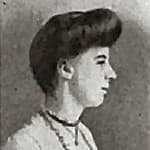
Margery Williams Bianco was an English-American author known for her children's literature. She is best recognized for her classic tale, The Velveteen Rabbit, which explores themes of love and the transformative power of childhood. Her works primarily focus on fiction for young readers.
Similar books
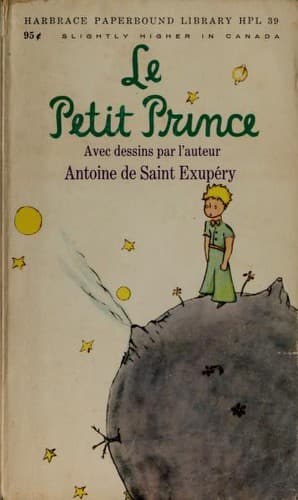
- The Little Prince
Antoine De Saint Exupéry
A philosophical children's book that uses simple language to convey deep truths about love, companionship, and what it means to be 'tamed' or 'real'.
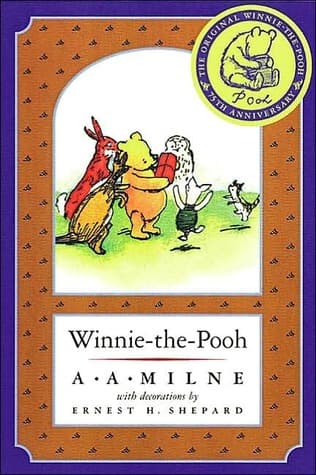
- Winnie-the-Pooh
A.A. Milne
4.3 (270k) average on GoodreadsFantasyFeatures beloved toys brought to life through a child's imagination, focusing on themes of friendship and the magic of childhood.
- Harry Potter and the Sorcerer's Stone
J.K. Rowling
4.5 (7M) average on GoodreadsFantasyRescued from a miserable life under the stairs, an orphaned boy discovers he's a wizard destined for a magical school, where he uncovers a dangerous secret tied to the dark wizard who murdered his parents.
- The Hunger Games
Suzanne Collins
4.3 (6.4M) average on GoodreadsFantasyIn a future where children fight to the death on live television, Katniss Everdeen volunteers for the arena, turning a death sentence into a fight for survival and a spark of rebellion.
- 1984
George Orwell
4.2 (3.1M) average on GoodreadsPoliticsIn a future where surveillance and thought control are absolute, a man's search for truth clashes with the Party, showing that hope can be a form of rebellion.
- Divergent
Veronica Roth
4.2 (2.9M) average on GoodreadsFantasyIn a society divided by virtues, a sixteen-year-old's difference from the norm starts a rebellion that threatens her world.




Enjoyed the summary?
A summary gives you the shape of the book. The book itself has the detail, the examples and the voice.
Find The Velveteen Rabbit on AmazonAs an Amazon Associate, BookBrief earns from qualifying purchases. How we're funded