
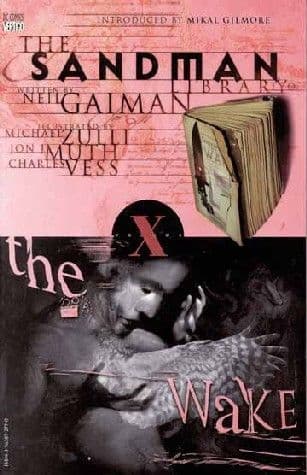
Synopsis
Covers the whole plot, including the ending.
- Difficulty
- Medium
- Pacing
- Moderate
- Mood
- Reflective, Melancholy, Grand, Conclusive, Poetic
- Read it if
- You have read the previous volumes of The Sandman and want to experience the grand, emotional conclusion to Dream's saga.
- Skip it if
- You haven't read any other Sandman comics; this volume is the culmination of a long, complex narrative and will make little sense as a standalone.
The Wake Plot Summary
Covers the whole plot, including the ending.
The First Wake
After Lord Morpheus's death, the Endless prepare for his wake. Death, his older sister, arranges things. Destiny arrives, watching the events. Despair is present, showing the shared sadness, while Delirium tries to stay focused through the grief. Destruction, long gone, does not appear. Meanwhile, Lyta Hall, still recovering from losing her son Daniel, does not know Daniel is now the new Dream, having taken on the essence of the Dreaming. Daniel, now with white skin and eyes, is confused and overwhelmed by his new duties and the size of his realm, trying to understand his predecessor's legacy and his own place.
A Gathering of Worlds
The Necropolis Litharge, a large, old city of the dead, becomes the meeting place for beings from all existence. Gods, demons, mythical figures, and abstract ideas arrive to mourn Dream. Among them are Bast, Odin, Loki, Azazel, and even the Corinthian, now brought back and serving the new Dream. Each arrival shows Lord Morpheus's great influence and the many relationships he had. The diverse attendees highlight the universal effect of his death, showing that his realm and actions touched almost every part of creation, from the highest heavens to the deepest hells.
The Eulogies and Remembrances
During the wake, various beings give eulogies and personal memories of Lord Morpheus. Some speak of his strictness, while others remember unexpected kindness or deep wisdom. Loki tells a tale of cleverness, while Bast speaks of old agreements and how their realms connect. Even the Corinthian, surprisingly, offers a unique view of Dream's role as creator and punisher. These different accounts paint a varied picture of the dead Dream, showing how he was seen differently by those who met him, often reflecting their own experiences and interpretations of his cosmic duties and personal qualities.
The New Dream's Burden
Daniel Hall, as the new Dream, struggles to understand the size of the Dreaming and his responsibilities. He feels the collective dreams of all beings, the endless libraries, the creatures of nightmare and fantasy, all within him. He is still a child, yet he has the power of an Endless. He watches the wake, a quiet and somewhat distant figure, trying to connect his former life as Lyta Hall's son with his current cosmic existence. The change is overwhelming, and he finds comfort only in the quiet advice of Matthew, the raven, who acts as a guide and a link to his predecessor's legacy, helping him through his new reality.
The End of the Wake
As the wake ends, the many mourners begin to leave the Necropolis Litharge, returning to their own realms and duties. The Endless remain, thinking about the big change in their group. Death shows a quiet understanding of her brother's choice, while Destiny notes the certain progress of fate. Despair goes back to her realm of shadows, and Delirium, though still chaotic, seems to grasp the finality of the event. The guests' departure marks not just the end of the ceremony, but a turning point in the cosmic order, with a new Dream now in place and the universe slowly adjusting to the shift in power and presence.
Hob Gadling's Immortality
Hob Gadling, the man Dream made immortal centuries ago, continues his long life through history. He thinks about his meetings with Lord Morpheus, their centuries of talks, and his unique existence. He has seen empires rise and fall, felt many joys and sorrows, and dealt with the loneliness that often comes with eternal life. His story contrasts Dream's death, showing the human wish for endless life versus the Endless's acceptance of their own cycles and duties. Hob's view offers a human way to see the cosmic events, highlighting how Dream's decisions affected individual lives.
The Story of the Emperor Norton
The story moves to Joshua Abraham Norton, a real eccentric who declared himself Emperor of the United States and Protector of Mexico in 19th-century San Francisco. His story shows how belief, even in the most fantastical forms, can shape reality and give a kind of power. The citizens of San Francisco, by accepting his delusion, effectively gave him a kingdom. This comments on the nature of dreams, stories, and the shared unconscious, showing how human imagination can appear and influence the world, even without the direct help of the Endless.
Shakespeare's Bargain Revisited
William Shakespeare, now an old and famous playwright, thinks about the deal he made with Lord Morpheus years ago. Dream had given him the ability to write plays that would last through time, showing humanity's true nature, in exchange for two plays for the Dreaming. Shakespeare thinks about the fame and artistic fulfillment he gained, but also the great cost: a deeper understanding of human suffering and life's short nature, which often left him sad. He realizes that while he got what he wanted, the knowledge he gained also brought a heavy emotional weight, a common theme when dealing with the Endless.
The Tempest: A Final Performance
Shakespeare stages his final play, 'The Tempest,' which is his second and last contracted work for Dream. The play, with its themes of magic, illusion, forgiveness, and giving up power, reflects many of the main themes of the Sandman saga. As Prospero gives up his magic, Shakespeare also feels a sense of release and completion. The new Dream (Daniel) and Matthew, among others, watch the performance. Through the play, Shakespeare deals with the nature of storytelling, the power of imagination, and the bittersweet acceptance of an ending, understanding that all dreams, even the greatest, must end.
The End of the Story
After 'The Tempest,' Shakespeare finishes his work and prepares for the end of his own life. He has kept his promise, explored human experience through his art, and now accepts his death. The story then broadly considers stories, dreams, and the Endless. It highlights the repeating nature of existence – how old dreams die and new ones are born, how stories last even as their tellers fade. The ending suggests that while individuals may pass, the ideas they embody, like Dream itself, are eternal, constantly reborn and reinterpreted, ensuring that the Dreaming continues, always changing yet always present.
Principal Figures
Dream (Lord Morpheus)
Protagonist (deceased)
The personification of dreams, stories, and reality.
Lord Morpheus, also known as Dream of the Endless, is the embodiment of all dreams, imagination, and stories. He is ancient, powerful, and often appears stern, aloof, and bound by his responsibilities and the rules of the Endless. His realm is the Dreaming, a vast and ever-changing landscape shaped by the minds of all sentient beings. Morpheus is driven by a profound sense of duty, often prioritizing cosmic order over personal feelings, which leads to both his greatness and his eventual undoing. His long existence has seen him interact with gods, demons, and mortals, leaving a profound impact across countless realities.
Relationships: Death (Elder sister, confidante, and guide); Destiny (Eldest brother, observer of fate); Despair (Younger sister, often silent and withdrawn); Delirium (Youngest sister, chaotic and unpredictable); Destruction (Brother, long-absent and self-exiled); Matthew (His raven, trusted companion and advisor); Hob Gadling (Centuries-long friend and conversational partner); William Shakespeare (Human artist with whom he made a bargain)
Death
Supporting
The kind and empathetic personification of death.
Death is the second eldest of the Endless, appearing as a cheerful, gothic young woman. Unlike her grim siblings, she is kind, compassionate, and possesses a profound understanding of life and its inevitable end. She is responsible for guiding souls to the afterlife, and she performs her duty with grace and empathy, often offering comfort to the dying. Death is the only Endless Morpheus truly confides in, and she acts as his moral compass and a voice of reason. She embodies the universal truth that all things, even gods, must eventually cease to be, and she accepts this with a gentle wisdom.
Relationships: Dream (Younger brother, whom she loves and understands deeply); The Endless (Family, whom she cares for and guides)
Daniel Hall (The New Dream)
Protagonist
The child who inherits the mantle of Dream.
Daniel Hall was the son of Lyta Hall and Hector Hall (who briefly served as Sandman in the Dreaming). Born in the Dreaming, he was kidnapped by Loki and Puck, leading to Morpheus's rescue and the subsequent events of 'The Kindly Ones.' Upon Morpheus's death, Daniel, still a child, becomes the new Dream. He is physically similar to the original Dream but has white skin and eyes, representing a fresh start. He is initially overwhelmed by his new identity and the immense power and responsibility it entails, struggling to understand his predecessor's legacy while forging his own path as the new Lord of Dreams.
Relationships: Lyta Hall (Biological mother); Matthew (Advisor and companion); The Endless (New family members)
Matthew
Supporting
Dream's loyal raven and former human.
Matthew was once a human named Matthew Cable, who died and found himself in the Dreaming, where Morpheus offered him the choice to become his raven. Loyal and often cynical, Matthew serves as Dream's eyes and ears in the waking world and a constant companion. He is a pragmatic and sometimes irreverent foil to Dream's more stoic nature, offering a human perspective on the cosmic events. After Morpheus's death, Matthew continues his service to the new Dream, Daniel, providing guidance and a link to the previous Lord of Dreams. He is a witness to both the mundane and the fantastical, often providing exposition and commentary.
Relationships: Dream (Morpheus) (Master and friend); Dream (Daniel) (New master and guide)
Hob Gadling
Supporting
An immortal man who chose not to die.
Hob Gadling is a man granted immortality by Dream centuries ago, after declaring that he simply did not want to die. He meets Dream once every hundred years at the same tavern, and their conversations track the changes in humanity and Hob's own evolving perspective on his endless life. Hob is resilient, adaptable, and a survivor, having lived through countless historical periods, experiencing both prosperity and hardship. His story highlights the human desire for eternal life and the often-unforeseen consequences of such a wish, showing that even immortality can bring its own form of loneliness and reflection.
Relationships: Dream (Morpheus) (Centuries-long acquaintance and occasional confidante)
William Shakespeare
Supporting
A playwright who made a bargain with Dream for his art.
William Shakespeare is a renowned human playwright who made a bargain with Lord Morpheus. In exchange for the ability to write plays that would truly capture the human spirit and resonate through the ages, Shakespeare agreed to write two plays for the Dreaming. He is a man driven by ambition and a profound understanding of human nature, which is both his gift and his burden. His plays, particularly 'A Midsummer Night's Dream' and 'The Tempest,' serve as pivotal moments in the larger Sandman narrative, exploring themes of reality, illusion, and the power of storytelling. He grapples with the cost of his genius and the insights granted by Dream.
Relationships: Dream (Morpheus) (Contractual partner and source of inspiration)
Destiny
Supporting
The eldest of the Endless, bound to his book of all that is and will be.
Destiny is the eldest of the Endless, a blind figure who carries a large, chained book that contains every event that has ever happened and ever will happen. He is stoic, quiet, and rarely interferes, serving as an impartial observer of fate. His presence at the wake signifies the predetermined nature of Dream's death and the unfolding of the cosmic plan. Destiny embodies the concept of inevitability and the fixed order of existence, highlighting that even the Endless are subject to a larger framework of reality. He offers no comfort, only the silent confirmation of what must be.
Relationships: The Endless (Siblings, whose fates are all recorded in his book)
The Corinthian
Supporting
A nightmare who was destroyed and later reborn to serve the new Dream.
The Corinthian is a nightmare created by Dream, characterized by rows of teeth where his eyes should be. He was destroyed by Morpheus for straying from his purpose and causing chaos in the waking world. However, he is later resurrected by the new Dream, Daniel, and now serves as a more controlled and loyal agent of the Dreaming. He is cunning, observant, and possesses a unique perspective on the nature of fear and dreams. His presence at the wake, and his subsequent role, highlights the cyclical nature of creation and destruction within the Dreaming, and the potential for redemption or re-purposing.
Relationships: Dream (Morpheus) (Creator and destroyer); Dream (Daniel) (New master)
Themes & Insights
The Nature of Endings and Beginnings
The volume focuses on Lord Morpheus's death and Daniel becoming the new Dream. This theme explores the idea that endings are not final but lead to new beginnings. The wake shows this, as mourners gather not just to mourn, but to recognize a shift in the cosmic order. William Shakespeare's story also reflects this, as his final play, 'The Tempest,' talks about giving up power and starting new journeys, marking the end of his creative deal and his life. Even Hob Gadling's immortality, in contrast, highlights how humans struggle with endings versus the cosmic acceptance of cycles.
“'Stories are like that. They don't end. They just change course.”
The Price of Desire and Power
This theme is clearest in William Shakespeare's story and his deal with Dream. Shakespeare achieved his wish for artistic lastingness and deep insight, but it came at the cost of a deeper, often sad, understanding of human suffering and life's short nature. Similarly, Lord Morpheus's great power and devotion to his duties eventually led to his own end and sacrifice. The various attendees at the wake also show this, as many recall Dream's power and its often-hard effects on their lives. Even Daniel, as the new Dream, immediately feels the great burden and responsibility that comes with his new power.
“'You got what you wanted, Will. That's the important thing. But it's never quite what you think it will be, is it?”
The Power of Stories and Dreams
The Sandman universe is built on the power of stories and dreams. The wake itself is a collection of stories and memories of Dream. The tale of Emperor Norton I shows how shared belief, a form of collective dream, can create a real world, even for a self-declared monarch. William Shakespeare's entire life is spent creating stories that shape and reflect humanity, influencing the Dreaming itself. The new Dream, Daniel, inherits a realm made of stories, nightmares, and fantasies, showing that these intangible creations are basic to existence and hold great power over reality and perception.
“'We are all of us, in the end, but stories. Just make sure yours is a good one.”
Identity and Transformation
Daniel Hall's change into the new Dream is the main example of this theme. He must leave his human identity and take on a cosmic one, dealing with his predecessor's legacy while making his own way. This is a big change, making him understand what it means to be an Endless. The Corinthian's return also speaks to change, as he comes back with a new purpose and more control. Even Hob Gadling, through his centuries of life, constantly changes his identity as he adapts to new times and experiences, while keeping his core self. Morpheus's death itself is a change of the Dream entity.
“'Who are you now? You are not him. And you are not the child you were.”
Plot Devices & Literary Techniques
The Wake
A grand gathering that serves as a narrative framework for reflection and transition.
The wake for Lord Morpheus acts as a framing device for the first half of the volume. It allows for the introduction of a vast array of characters from across the Sandman universe, each offering a unique perspective on the deceased Dream. This gathering facilitates exposition through eulogies and personal recollections, filling in gaps about Morpheus's past and the complex web of his relationships. Crucially, it also serves as the formal transition point for Daniel Hall to assume his role as the new Dream, symbolizing the end of one era and the beginning of another within the Endless's existence.
Flashbacks and Embedded Narratives
Stories within the main story that provide context and thematic depth.
The volume frequently employs flashbacks and embedded narratives, such as the detailed accounts of Hob Gadling's long life, the story of Emperor Norton I, and the revisit to William Shakespeare's bargain. These stories serve to expand the thematic scope of the main plot, illustrating concepts like the nature of immortality, the power of belief, and the cost of ambition. They provide historical context for Dream's actions and influence, showing his impact on individual lives and the broader tapestry of reality. These narratives enrich the world-building and offer diverse perspectives on the central themes of the series.
The Plays of William Shakespeare
Literary works that mirror and comment on the overarching narrative.
William Shakespeare's plays, particularly 'The Tempest,' function as a powerful plot device. 'The Tempest' specifically mirrors the themes of endings, transformation, the relinquishing of power, and the nature of illusion that are central to 'The Wake.' Prospero's decision to give up his magic reflects Morpheus's own sacrifice and the transition to the new Dream. The plays serve as a meta-commentary on the power of storytelling itself, blurring the lines between fiction and reality within the Sandman universe, and demonstrating how human art can reflect and even influence cosmic events and the Endless themselves.
The Endless's Nature as Anthropomorphic Personifications
The literal embodiment of fundamental concepts, driving their actions and influencing the universe.
The Endless – Dream, Death, Destiny, Despair, Delirium, and the absent Destruction – are not merely powerful beings, but the literal embodiment of the concepts they represent. This device dictates their personalities, motivations, and the scope of their influence. Dream's adherence to rules, Death's compassion, Destiny's unyielding knowledge of fate – these are inherent to their being. This device ensures that their individual stories are inextricably linked to universal truths, making their interactions and the cosmic shifts profoundly significant. Their nature explains why Dream's death is not just a personal tragedy but a fundamental alteration of reality itself, necessitating a new Dream.
The Wake Quotes
“I am the Lord of this world. I am the Lord of the dreaming, of all stories and all dreams and all nightmares. I am the Lord of Beginnings and of Endings. I am Morpheus, Lord of Dream.”
“The price of getting what you want, is getting what you once wanted.”
“Dreams, you see, are not real, but they are true.”
“You get what anybody gets. You get a lifetime.”
“Everything changes. Everything dies. Everything is born. Everything begins again.”
“Sometimes, you have to choose between what is right and what is easy.”
“To absent friends, lost loves, old gods, and the season of mists; and may each and every one of us always find ourselves safe home.”
“Things need to be done. And sometimes, you're the one who has to do them.”
“It is a fool's errand to attempt to understand the ways of the Endless.”
“Stories are webs, to be woven and unweaved.”
“The waking world is a dream from which we are trying to wake up.”
“The stars are not alive, but they are eternal.”
“There are no easy answers. Only choices.”
“Every story is a journey, and every journey is a story.”
Quiz
10 questions on the plot and the characters. Each answer comes with a short explanation.
Question 1
Which major event precipitates the storyline of 'The Wake'?
- The imprisonment of Dream by Roderick Burgess
- The return of Lucifer to Hell
- The death of Lord Morpheus
- The marriage of Death to Destruction
Show answer
C. The death of Lord Morpheus 'The Wake' directly follows the death of Lord Morpheus, also known as Dream of the Endless, which occurred at the end of the previous volume, 'The Kindly Ones'.
Question 2
Who is the new aspect of Dream that attends the wake, having been born from the vortex created by Morpheus's death?
- Daniel Hall
- Orpheus
- Matthew the Raven
- Lyta Hall
Show answer
A. Daniel Hall Daniel Hall, the son of Lyta Hall and the ghost Hector Hall, is reborn as the new Dream of the Endless, taking on a white form and the sigils of office.
Question 3
What is the primary purpose of the gathering of beings from across the cosmos in 'The Wake'?
- To celebrate the birth of a new galaxy
- To mourn the passing of Lord Morpheus
- To elect a new ruler for the Dreaming
- To prepare for an impending cosmic war
Show answer
B. To mourn the passing of Lord Morpheus The central event of the first part of 'The Wake' is the funeral and subsequent wake for the deceased Lord Morpheus, attended by countless beings from various realms.
Question 4
Which character, a former resident of the Dreaming, is notably absent from the initial gathering but appears later to reconnect with Daniel?
- Merv Pumpkinhead
- Lucien, the Librarian
- Fiddler's Green
- Cain
Show answer
C. Fiddler's Green Fiddler's Green, who left the Dreaming to explore the waking world, returns towards the end of the main wake narrative to acknowledge the new Dream.
Question 5
What does the epilogue featuring William Shakespeare reveal about his relationship with Dream?
- That Dream inspired all of Shakespeare's greatest works without his knowledge.
- That Shakespeare made a bargain with Dream to gain his storytelling talent in exchange for writing two plays for the Endless.
- That Shakespeare was an incarnation of Dream in the waking world.
- That Shakespeare owed Dream a debt for saving his life.
Show answer
B. That Shakespeare made a bargain with Dream to gain his storytelling talent in exchange for writing two plays for the Endless. The epilogue 'The Tempest' details the final fulfillment of Shakespeare's bargain with Dream, where he wrote 'A Midsummer Night's Dream' and 'The Tempest' in exchange for his unique talent.
Question 6
What is the significance of the Dream King's death in the context of the Endless and their functions?
- It proves that the Endless are truly immortal and cannot be destroyed.
- It demonstrates that the Endless can die, but their function will always be replaced by a new aspect.
- It signifies the end of all dreams in the universe.
- It means that Destiny will now take over the role of Dream.
Show answer
B. It demonstrates that the Endless can die, but their function will always be replaced by a new aspect. Morpheus's death and Daniel's subsequent rebirth as the new Dream reinforces the idea that while individual aspects of the Endless can perish, their fundamental functions are eternal and will always find a new vessel.
Question 7
Which of the following characters does NOT attend the wake for Morpheus?
- Death
- Destiny
- Despair
- Destruction
Show answer
D. Destruction Destruction, who abandoned his realm centuries ago, does not attend the wake. His siblings, Death, Destiny, Despair, Delirium, and Desire, are all present.
Question 8
The final issues of 'The Wake' (issues #73-75) are titled 'An Epilogue: The Tempest'. What is the overarching theme explored in this segment regarding the nature of storytelling and desire?
- The fleeting nature of fame and the inevitability of death.
- The power of art to transcend reality and create new worlds.
- The cost of ambition and the bittersweet fulfillment of desires, often with unforeseen consequences.
- The cyclical nature of creation and destruction in the universe.
Show answer
C. The cost of ambition and the bittersweet fulfillment of desires, often with unforeseen consequences. The Shakespeare epilogue highlights the 'price of getting what you want,' as mentioned in the book description. Shakespeare achieved unparalleled fame and talent but paid a significant, perhaps isolating, price through his bargain with Dream.
Question 9
What is the significance of the appearance of various historical and mythological figures, such as Thor and Odin, at Morpheus's wake?
- It demonstrates that Morpheus was a god in his own right, worshipped by many pantheons.
- It highlights the vast reach and influence of Dream's realm across all cultures and mythologies, as he was a fundamental aspect of their existence.
- It foreshadows a future crossover event with other mythological universes.
- It implies that these figures are merely dreams themselves, not real entities.
Show answer
B. It highlights the vast reach and influence of Dream's realm across all cultures and mythologies, as he was a fundamental aspect of their existence. The diverse assembly of beings, from gods to common mortals and mythical creatures, underscores Dream's universal importance. Dreams are a fundamental part of all conscious existence, making Morpheus's role central to countless realities.
Question 10
How does Matthew the Raven react to the emergence of Daniel Hall as the new Dream, and what does this signify about the continuity of the Dreaming?
- He immediately rejects Daniel, believing him to be an impostor.
- He is initially wary but eventually accepts Daniel, symbolizing the enduring nature of Dream's function and the loyalty of his subjects.
- He leaves the Dreaming in despair, believing it can never be the same without Morpheus.
- He attempts to usurp Daniel's position, believing himself more worthy.
Show answer
B. He is initially wary but eventually accepts Daniel, symbolizing the enduring nature of Dream's function and the loyalty of his subjects. Matthew, despite his deep attachment to the original Dream, ultimately accepts Daniel. This acceptance, along with that of the other residents of the Dreaming, signifies that while the individual changes, the role and the realm of Dream continue.
The Wake FAQ
What is the central event that kicks off the narrative of 'The Wake'?
The central event is the wake for Lord Morpheus, also known as Dream of the Endless, following his self-sacrifice in the previous volume. This gathering brings together a vast array of beings from across creation to mourn and reflect on his passing, marking a significant transition for the Dreaming and the universe.
Who are some of the key attendees at Dream's wake, and what do their reactions reveal?
Key attendees include his siblings Death, Delirium, and Destiny, along with numerous mythological figures like Odin, Bast, and various demons and mortals. Their reactions range from profound grief to detached observation, highlighting Morpheus's multifaceted relationships and the varied impact he had on different realms and individuals.
What role does Daniel Hall play in the immediate aftermath of Morpheus's death?
Daniel Hall, the child of Lyta Hall and Hector Hall (the former Sandman), inherits the mantle and power of Dream of the Endless. He is reborn as the new Dream, arriving at the wake in a pristine white form, signifying a new beginning and a continuation of the Endless's role, albeit with a different personality and perspective.
How does the story transition from the wake itself to the subsequent chapters?
After the wake, the narrative shifts focus, first exploring the philosophical implications of Morpheus's death and Daniel's ascension, then delving into various standalone stories. These include a tale of a mortal seeking to escape death and an extended epilogue featuring William Shakespeare, connecting the broader themes of dreams, stories, and reality.
What is the significance of the 'wake' as a concept beyond just a funeral?
The 'wake' serves not only as a funeral but also as a time of awakening and reflection for the universe. It's a moment for characters to confront change, understand the cyclical nature of existence, and acknowledge the enduring power of stories and dreams even in the face of ultimate loss. It signifies a transition rather than an end.
What subtle hints are given about Daniel's future as the new Dream?
Daniel's pristine white appearance and his immediate, yet quiet, assumption of the responsibilities of Dream suggest a more detached and perhaps less melancholic iteration of the Endless. His very existence as a former mortal child hints at a potential for greater empathy or a different understanding of humanity compared to Morpheus, though this is largely left for future interpretation.
How does the character of Hob Gadling connect to the themes of Morpheus's legacy in 'The Wake'?
Hob Gadling, the immortal man, appears at the wake, embodying the enduring nature of life and memory. His presence underscores Morpheus's own journey through time and his fascination with humanity, serving as a living testament to the long-term impact of Dream's decisions and relationships, particularly his agreement to meet Hob every century.
What is the implied significance of the various mythological figures present at the wake, beyond their mourning?
Their presence highlights the interconnectedness of all pantheons and belief systems under the umbrella of the Endless. It subtly reinforces the idea that even gods and powerful entities are subject to the fundamental forces of the universe, and that Morpheus's domain touched and influenced every corner of existence, regardless of their own power.
What hidden meaning can be found in the story of the Emperor of the Land of Night and Day?
The Emperor's tale, where he tries to avoid death, serves as a poignant counterpoint to Morpheus's acceptance of his own demise. It illustrates the futility of escaping the inevitable and reinforces Death's dominion over all beings, emphasizing the universal truth that even the most powerful cannot evade their end, a lesson Morpheus himself had to learn.
How does Morpheus's decision to sacrifice himself reflect his psychological evolution throughout the series?
Morpheus's sacrifice demonstrates a profound psychological evolution from his initial rigid, often cruel persona. It shows his capacity for selflessness and a deeper understanding of the consequences of his actions, particularly regarding his son Orpheus. This act signifies his ultimate growth, accepting that change and new beginnings are sometimes necessary, even if it means his own end.
What psychological impact does the concept of a new Dream (Daniel) have on the established order of the Endless?
The arrival of Daniel as the new Dream introduces an element of psychological uncertainty and adaptation for the other Endless. It forces them to confront the impermanence of even their own forms and personalities, challenging their fixed identities and raising questions about the nature of their existence and the role of individual consciousness within their archetypal functions.
How does Delirium's reaction to Morpheus's death provide insight into her own character?
Delirium's profound and childlike grief, combined with flashes of her former wisdom as Delight, showcases the depth of her emotional capacity and her unique understanding of the universe. Her sorrow is raw and unfiltered, revealing her vulnerability and the genuine love she held for her brother, despite their often strained relationship.
What psychological struggles does William Shakespeare face in the epilogue, and how do they relate to Morpheus?
Shakespeare grapples with the weight of his bargain with Morpheus, the price of his genius, and the emotional toll of bringing his stories to life. He experiences a profound sense of exhaustion and disillusionment, realizing that fulfilling his ambition has come at the cost of personal peace, a psychological echo of Morpheus's own burdens of responsibility.
Is Daniel Hall truly a 'new' Dream, or merely a continuation of Morpheus in a different form?
This is a key interpretive question. While Daniel possesses Morpheus's power and domain, his origin as a mortal child and his distinct white form suggest a new entity, not just a reincarnation. He embodies a different kind of Dream, perhaps less burdened by past mistakes and more open to change, leading to a debate about the nature of identity and continuity within the Endless.
What is the ultimate message of 'The Wake' regarding the nature of endings and new beginnings?
'The Wake' suggests that endings are never truly absolute but are integral parts of a continuous cycle of change and renewal. Morpheus's death leads to Daniel's birth, and the end of one story opens the door for countless others. It emphasizes that while individuals may pass, the concepts they embody, like Dream, endure and adapt.
How does Shakespeare's epilogue serve as a commentary on the nature of storytelling and artistic creation?
Shakespeare's story highlights the immense power and often painful cost of artistic creation. It suggests that true genius comes with a heavy burden, demanding personal sacrifice and an almost Faustian bargain with inspiration (represented by Morpheus). It explores the idea that stories, once told, take on a life of their own, shaping and sometimes consuming their creators.
Does 'The Wake' offer a definitive conclusion to The Sandman saga, or does it leave room for further interpretation?
While 'The Wake' provides a definitive ending to Morpheus's personal journey and concludes the primary narrative arc of The Sandman, it deliberately leaves room for further interpretation regarding Daniel's future and the ongoing existence of the Endless. It's an ending that feels conclusive for its protagonist but expansive for its universe, inviting readers to ponder the endless possibilities that remain.
How does the depiction of Death in 'The Wake' reinforce her role and philosophy?
Death's presence at the wake, marked by her characteristic calm and empathy, reinforces her role not as a grim reaper but as a compassionate guide. Her interactions, particularly with Daniel, underscore her philosophy that death is a natural and necessary part of life, a transition rather than an end to be feared, providing comfort and perspective amidst grief.
About the author
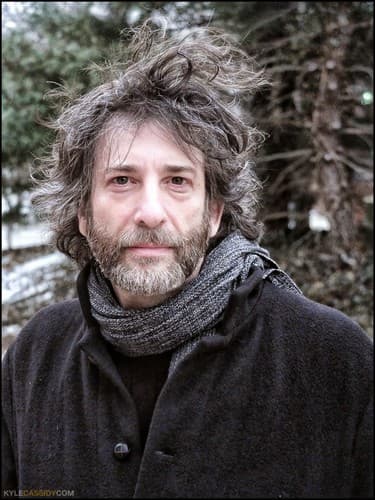
Neil Richard MacKinnon Gaiman is an English author of short fiction, novels, comic books, graphic novels, audio theatre, and a screenwriter. His works include the comic book series The Sandman and the novels Good Omens, Stardust, Anansi Boys, American Gods, Coraline, and The Graveyard Book. He has won numerous awards, including the Hugo, Nebula, and Bram Stoker awards, as well as the Newbery and Carnegie medals. He is the first author to win both the Newbery and the Carnegie medals for the same work, The Graveyard Book (2008). In 2013, The Ocean at the End of the Lane was voted Book of the Year in the British National Book Awards. It was later adapted into a critically acclaimed stage play at the Royal National Theatre in London.
Similar books
- American Gods
Neil Gaiman
4.1 (758k) average on GoodreadsFantasyExplores mythology, gods, and the power of belief with a similar philosophical depth and rich prose.
- Watchmen
Alan Moore
4.4 (487k) average on GoodreadsFantasyA seminal graphic novel that, like Sandman, elevates the medium with complex characters, philosophical themes, and intricate storytelling.
- A Memory of Light
Robert Jordan
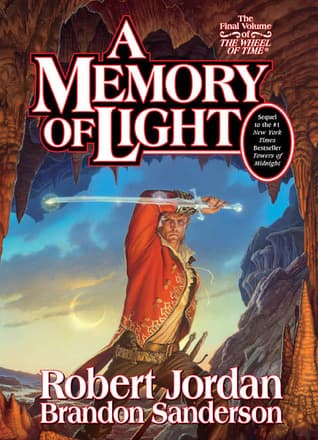
4.5 (109k) average on GoodreadsFantasyJordan's conclusion to The Wheel of Time prioritizes a grand, action-packed resolution with massive battles and the fulfillment of prophecy. 'The Wake' is more contemplative, character-driven, and philosophical, focusing on emotional closure and metaphysical concepts rather than large-scale conflict.
- The Return of the King
J.R.R. Tolkien
4.5 (679k) average on GoodreadsFantasyTolkien's ending is deeply concerned with the political and social reconstruction of Middle-earth and the bittersweet departure of its magical elements. Gaiman's 'The Wake' focuses less on rebuilding a physical world and more on the continuity of abstract concepts (dreams, stories, the Endless), providing closure while affirming the eternal, evolving nature of narratives, unlike Tolkien's more definitive end for Middle-earth.
- Harry Potter and the Sorcerer's Stone
J.K. Rowling
4.5 (7M) average on GoodreadsFantasyRescued from a miserable life under the stairs, an orphaned boy discovers he's a wizard destined for a magical school, where he uncovers a dangerous secret tied to the dark wizard who murdered his parents.
- The Hunger Games
Suzanne Collins
4.3 (6.4M) average on GoodreadsFantasyIn a future where children fight to the death on live television, Katniss Everdeen volunteers for the arena, turning a death sentence into a fight for survival and a spark of rebellion.





Enjoyed the summary?
A summary gives you the shape of the book. The book itself has the detail, the examples and the voice.
Find The Wake on AmazonAs an Amazon Associate, BookBrief earns from qualifying purchases. How we're funded