
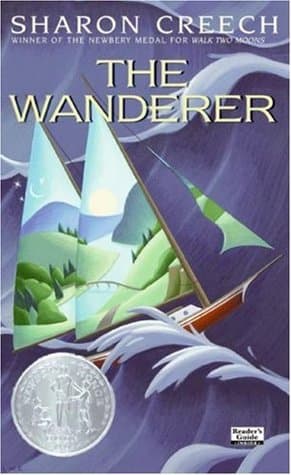
Synopsis
Covers the whole plot, including the ending.
- Difficulty
- Medium
- Read it if
- You enjoy introspective coming-of-age stories, narratives centered on sailing and the sea, or books that explore themes of found family, grief, and self-discovery through a blend of journal entries and third-person narration.
- Skip it if
- You prefer fast-paced plots with minimal introspection, are not interested in maritime settings, or dislike stories that unfold gradually through multiple perspectives.
The Wanderer Quotes
“Maybe the sea is like a big old wise man, and it tells stories to those who listen.”
“Sometimes you have to get lost to find out where you're really going.”
“The wind whispers secrets, if you just know how to hear them.”
“We are all wanderers, even when we think we are standing still.”
“There's a map inside every one of us, even if we don't always know how to read it.”
“The best stories are the ones you live, not just read.”
“Home isn't a place, it's a feeling. And sometimes, you carry it with you.”
“The ocean doesn't care about your plans. It has its own.”
“Every wave is a new beginning, a chance to start fresh.”
“It's not about how fast you get there, but what you see along the way.”
“Silence can speak louder than any words, if you just listen with your heart.”
“Sometimes the greatest courage is just to keep going, even when you don't know where.”
“The stars are like pinpricks in the blanket of night, showing us there's always light, even in the darkest times.”
“We are all connected, like threads in a big, invisible tapestry.”
“Fear is just a shadow. You can walk right through it.”
Quiz
10 questions on the plot and the characters. Each answer comes with a short explanation.
Question 1
What is the primary mode of narration used in 'The Wanderer'?
- First-person narration from a single character's perspective.
- Third-person omniscient narration.
- Alternating first-person entries from Sophie and Cody's travel logs.
- A series of letters exchanged between characters.
Show answer
C. Alternating first-person entries from Sophie and Cody's travel logs. The book is structured as alternating travel log entries written by Sophie and Cody, giving readers insight into both of their experiences and perspectives.
Question 2
Which character struggles with proving himself to his father and the crew during the voyage?
- Sophie
- Uncle Stew
- Cody
- Uncle Dock
Show answer
C. Cody The book description explicitly states that Sophie's cousin Cody isn't sure he has the strength to prove himself to the crew and to his father.
Question 3
What is the ultimate destination of The Wanderer's voyage?
- America
- England
- Ireland
- France
Show answer
B. England The book's synopsis states that Sophie sets sail for England, making it the ship's intended destination.
Question 4
The sea is personified in the opening lines, 'The sea, the sea, the sea. It rolled and rolled and called to me. Come in, it said, come in.' What does this personification primarily represent for Sophie?
- A sense of impending danger and fear.
- A call to adventure and the promise of self-discovery.
- A longing for her past and what she left behind.
- A desire for quiet contemplation and solitude.
Show answer
B. A call to adventure and the promise of self-discovery. The description states, 'Sophie hears the sea calling, promising adventure,' directly linking the sea's call to the theme of adventure for her.
Question 5
Beyond the physical journey across the sea, what metaphorical journey are the passengers of The Wanderer undertaking?
- A quest for lost treasure.
- A search for their places in the world.
- An escape from their responsibilities.
- A mission to deliver important cargo.
Show answer
B. A search for their places in the world. The synopsis states that the passengers 'search for their places in the world,' highlighting the philosophical and personal journey alongside the literal one.
Question 6
What kind of challenges do Sophie and Cody document in their travel logs, besides personal struggles?
- Political unrest in the ports they visit.
- Daily challenges of surviving at sea.
- Navigating complex family feuds.
- Dealing with pirate attacks.
Show answer
B. Daily challenges of surviving at sea. The description mentions that 'Through Sophie's and Cody's travel logs, we hear stories of the past and the daily challenges of surviving at sea,' indicating the practical difficulties of the voyage.
Question 7
How does the author utilize the dual perspective of Sophie and Cody to enhance the themes of spirituality and philosophy in the novel?
- By having Sophie focus solely on practical navigation while Cody reflects on abstract ideas.
- By presenting contrasting internal monologues that explore different facets of self-discovery and connection to the vastness of the sea.
- By using Cody's entries to introduce historical facts about sailing, while Sophie's are purely emotional.
- By showing how their differing opinions on religion cause conflict throughout the journey.
Show answer
B. By presenting contrasting internal monologues that explore different facets of self-discovery and connection to the vastness of the sea. The alternating logs allow for two distinct internal journeys, with Sophie often drawn to the sea's spiritual call and Cody grappling with self-worth and his place, both contributing to the broader themes of self-discovery and finding meaning.
Question 8
The phrase 'The sea, the sea, the sea' is repeated. What literary device is this, and what is its effect in the context of the book's opening?
- Alliteration; it creates a harsh, unsettling tone.
- Anaphora; it emphasizes the overwhelming presence and allure of the sea.
- Onomatopoeia; it mimics the sound of the waves crashing.
- Hyperbole; it exaggerates the size of the ocean.
Show answer
B. Anaphora; it emphasizes the overwhelming presence and allure of the sea. The repetition of 'The sea' at the beginning of successive clauses is anaphora. Its effect is to create a strong emphasis, drawing the reader into the sea's pervasive and captivating presence, which is central to Sophie's motivation.
Question 9
Given the book's focus on 'searching for their places in the world' and 'stories of the past,' what philosophical concept is most strongly explored through the characters' experiences?
- Determinism, suggesting fate is predetermined.
- Existentialism, emphasizing individual freedom, responsibility, and the search for meaning in a meaningless world.
- Utilitarianism, focusing on actions that maximize overall happiness.
- Rationalism, asserting that reason is the primary source of knowledge.
Show answer
B. Existentialism, emphasizing individual freedom, responsibility, and the search for meaning in a meaningless world. The core theme of 'searching for their places in the world' and the personal journeys of self-discovery, coupled with confronting past stories and daily challenges, strongly aligns with existentialist thought, where individuals define their own meaning and identity.
Question 10
How might the 'practical applications' of 'The Wanderer' extend beyond simply enjoying the story?
- It provides a detailed guide for navigating a sailboat across the Atlantic.
- It can inspire readers to reflect on their own personal journeys of self-discovery and finding purpose.
- It offers instructions on how to write an effective travel log or journal.
- It serves as a historical document detailing 19th-century seafaring practices.
Show answer
B. It can inspire readers to reflect on their own personal journeys of self-discovery and finding purpose. Given the themes of 'spirituality, philosophy' and characters 'searching for their places in the world,' the book's practical application lies in inspiring personal introspection and reflection on one's own life journey.
The Wanderer FAQ
What is the main plot of 'The Wanderer'?
'The Wanderer' follows Sophie, who embarks on a sea voyage to England with her uncles and cousins, recording her experiences and family stories in a travel log. Her cousin Cody also chronicles his struggles with self-doubt and the challenges of life at sea. The journey becomes a quest for self-discovery for both.
Does 'The Wanderer' explore themes of spirituality?
Yes, 'The Wanderer' delves into themes of spirituality through the characters' reflections on their place in the world and their connection to the vastness of the sea. The ocean often symbolizes a deeper calling and a sense of destiny for Sophie, guiding her journey both physically and introspectively.
What role does the sea play in the characters' development?
The sea acts as a powerful catalyst for the characters' development, challenging them physically and emotionally while also inspiring profound introspection. It pushes Sophie and Cody to confront their fears, understand their family history, and ultimately discover their inner strength and purpose.
How is 'The Wanderer' different from other coming-of-age sea adventures?
'The Wanderer' distinguishes itself by presenting the narrative through dual travel logs from Sophie and Cody, offering intimate, contrasting perspectives on the same journey. It places a strong emphasis on family dynamics, the power of storytelling, and philosophical introspection rather than just external adventure.
What kind of challenges do the characters face at sea?
The characters face a range of challenges at sea, including the practical demands of sailing, harsh weather conditions, and the close quarters of ship life. Beyond the physical, they grapple with internal struggles such as self-doubt, family tensions, and the mysteries of their past.
Does 'The Wanderer' work as a philosophical exploration?
Absolutely, 'The Wanderer' deeply works as a philosophical exploration, prompting readers to consider themes of identity, belonging, and the search for meaning. The vastness and unpredictability of the ocean serve as a metaphor for life's journey and the constant quest for one's place within it.
Who are Sophie and Cody, and what are their individual journeys?
Sophie is an adventurous young girl who hears the sea calling to her, eager to explore and connect with her family's past. Cody is her cousin, who struggles with self-doubt and the pressure to prove himself, particularly to his father. Their individual journeys are intertwined, each seeking their own place and understanding.
Is 'The Wanderer' suitable for young adult readers interested in philosophy?
Yes, 'The Wanderer' is highly suitable for young adult readers interested in philosophy. Its accessible narrative style, combined with deep thematic explorations of self-discovery, identity, and the meaning of life, offers a thoughtful and engaging experience for this audience.
What is the significance of the title 'The Wanderer'?
The title 'The Wanderer' signifies the physical journey across the ocean, but more profoundly, it represents the characters' internal quest for identity and belonging. Each character, in their own way, is wandering through life, searching for their true self and their place in the world, guided by the call of the sea.
About the author

Sharon Creech is an American author known for her contributions to children's and young adult literature. Her notable works include "Walk Two Moons," "Love That Dog," "Chasing Redbird," "Hate That Cat," "Granny Torrelli Makes Soup," and "The Great Unexpected." Creech's writing often explores themes of identity, family, and the power of storytelling.
Similar books
- Island of the Blue Dolphins
Scott O'Dell
3.8 (292k) average on GoodreadsChildren'sFeatures a young protagonist navigating solitude and survival in a natural, isolated setting, fostering self-reliance.
- Holes
Louis Sachar
4.0 (970k) average on GoodreadsChildren'sConnects past and present narratives to reveal character growth and the formation of unexpected bonds among young people.
- Walk Two Moons
Sharon Creech
4.0 (151k) average on GoodreadsChildren'sComparing The Wanderer to Creech's own Walk Two Moons reveals her consistent strengths in character-driven narratives and the exploration of loss and grief. Both novels feature protagonists on journeys that mirror internal quests for understanding their mothers and their identities. However, Walk Two Moons is more overtly about a physical road trip across America, with a clear destination and a more traditional plot structure involving a 'story within a story' that directly parallels the protagonist's own life. The Wanderer, while also a journey, is less about a fixed destination and more about the ongoing process of navigating life's unpredictability, using the sea as a constant, shifting metaphor. Walk Two Moons also has a more pronounced element of humor and quirky secondary characters, while The Wanderer maintains a more contemplative and at times melancholic tone, focusing on the intimate dynamics of a small crew rather than a broader cast of characters encountered along a journey.
- Eat, Pray, Love
Elizabeth Gilbert
3.6 (1.5M) average on GoodreadsLifestyleA heartbroken writer leaves her conventional life for a year-long global search for pleasure in Italy, spiritual devotion in India, and unexpected love and balance in Bali.
- Educated
Tara Westover
4.5 (796k) average on GoodreadsBiographyRaised in the Idaho mountains by fundamentalist survivalists, a young woman forges her own path to education, battling fierce family loyalty and personal demons to discover a world beyond her isolated upbringing.
- The Poisonwood Bible
Barbara Kingsolver
4.1 (659k) average on GoodreadsLiterary FictionA zealous missionary's rigid faith clashes with the Belgian Congo's wilderness and people, unraveling his family through the eyes of his five unforgettable women.





Enjoyed the summary?
A summary gives you the shape of the book. The book itself has the detail, the examples and the voice.
Find The Wanderer on AmazonAs an Amazon Associate, BookBrief earns from qualifying purchases. How we're funded