

Synopsis
Covers the whole plot, including the ending.
- Difficulty
- Medium
- Pacing
- Moderate
- Mood
- Atmospheric, Suspenseful, Melancholy, Introspective
- Read it if
- You enjoy historical mysteries with a strong psychological element and parallel narratives exploring jealousy and marital tension.
- Skip it if
- You prefer fast-paced thrillers or are uncomfortable with themes of infidelity and domestic strife.
The Weight of Water Plot Summary
Covers the whole plot, including the ending.
The Research Trip to the Isles of Shoals
Jean, a newspaper photographer, goes on a sailing trip to the Isles of Shoals with her husband, Thomas, their daughter, Billie, and Thomas's brother, Rich, and his girlfriend, Adaline. The trip's purpose is for Jean to research the infamous 1873 Smuttynose Island axe murders for a historical feature coinciding with a modern local murder. Jean wants to uncover the truth behind the historical event, hoping to find new material that challenges the widely accepted narrative of Louis Wagner's guilt. The confined space of the boat, the isolated setting of the islands, and Jean's intense research strain the already fragile group dynamics, especially between Jean and Thomas, whose marriage is under unspoken stress.
The Discovery of Maren's Manuscript
While on Smuttynose Island, exploring the old dwelling where the murders occurred, Jean finds a hidden cache of papers. These documents are a meticulously written, first-person narrative penned by Maren Hontvedt, the sole survivor and key witness of the 1873 murders. This manuscript offers a different perspective from the official accounts, suggesting a more complex and intimate web of relationships and motives than previously understood. Jean is captivated by Maren's voice and her detailed recollection of the events, believing she has found the key to unlocking the true story of that tragic night, a story the public has never heard.
Maren's Arrival on Smuttynose
Maren Hontvedt's narrative begins with her journey from Norway to the remote Isles of Shoals in 1872, seeking a new life and joining her older sister, Karen Christensen, and Karen's husband, John, on Smuttynose Island. Maren is a young, intelligent, and observant woman, initially overwhelmed by the harsh, isolated beauty of the island and the close-knit, yet often insular, fishing community. She quickly adapts to the demanding island life, assisting with chores and becoming an integral part of the small household. Her arrival, however, subtly shifts the dynamics within the Christensen home, particularly with the introduction of a new, attractive young woman into a confined space.
The Introduction of Louis Wagner
Maren's account details her introduction to Louis Wagner, a German fisherman who occasionally works with John Christensen. Wagner is depicted as charismatic, yet somewhat volatile. He is immediately drawn to Maren, and a tentative courtship begins to develop between them. Maren, initially flattered by his attention, finds herself both attracted to and wary of Wagner. His presence adds a layer of romantic tension and potential conflict to the isolated island community, particularly as he is often seen as an outsider, despite his working relationship with John and the other fishermen.
The Growing Jealousy and Suspicion
As Jean reads Maren's manuscript, the historical narrative mirrors her own deteriorating marital situation. Maren's story, with themes of infidelity, jealousy, and betrayal, amplifies Jean's simmering suspicions about Thomas and Adaline. The close quarters on the boat, combined with Thomas's increasingly distant behavior and Adaline's flirtatious manner, feed Jean's paranoia. She starts observing their interactions with heightened scrutiny, interpreting innocent gestures as clandestine signals. The lines between the historical drama and her present-day anxieties blur, making her increasingly distrustful and emotionally volatile, convinced of an affair between her husband and his brother's girlfriend.
The Night of the Murders: Maren's Account
Maren's manuscript reaches its climax, describing the horrific night of March 6, 1873. Her detailed account portrays the brutal attack by an axe-wielding assailant. The accepted historical narrative identifies Louis Wagner as the sole perpetrator. However, Maren's version introduces a shocking and deeply personal twist. She describes not just one attacker, but two, and implicates someone far closer to her than Wagner. Maren reveals that she was forced to participate in the cover-up, coerced into identifying Wagner as the lone killer to protect a different individual, whose motive was rooted in a complex web of jealousy and illicit desire within the small island community. This revelation completely upends Jean's understanding of the historical event.
The Confrontation and Aftermath
Fueled by the parallels between Maren's story and her own suspicions, Jean confronts Thomas about his perceived affair with Adaline. The confrontation is explosive, marked by accusations, denials, and deep-seated resentment. Thomas, exhausted by Jean's paranoia and the strain of the trip, struggles to defend himself against her increasingly aggressive interrogations. The argument escalates, exposing the cracks in their marriage that have been developing for years. The emotional intensity of the scene on the boat mirrors the violence described in Maren's manuscript, highlighting the destructive power of suspicion and jealousy in both narratives. The family vacation descends into a personal and painful marital crisis.
Maren's Secret and Its Burden
Following the murders, Maren lives with the burden of her secret, the truth of what truly transpired on Smuttynose Island. Her manuscript details the psychological toll of her complicity in the cover-up, the fear of exposure, and the moral compromises she made to survive and protect the real culprit. She describes her life after the trial, marked by a pervasive sense of guilt and isolation, even as she became the celebrated 'heroine' who identified Louis Wagner. The narrative reveals how the trauma and the secret shaped her future, her relationships, and her perception of justice, leaving her forever haunted by the events of that night and the choices she was forced to make.
The Truth Revealed and Its Impact
As Jean finishes Maren's manuscript, the full, devastating truth of the 1873 murders is laid bare. The revelation that Louis Wagner was not the sole killer, and that Maren was coerced into lying, impacts Jean deeply. The historical injustice resonates with her own feelings of betrayal and the unraveling of her marriage. The manuscript's raw honesty forces Jean to confront not only the historical falsehoods but also uncomfortable truths about her own relationships. She realizes the destructive power of unchecked jealousy and the potential for misinterpretation, whether in historical accounts or personal interactions. The ending of Maren's story leaves Jean with sadness and a new, clearer understanding of the complexities of truth and deception.
Returning to Shore
The sailing trip concludes, and Jean, Thomas, Billie, Rich, and Adaline return to the mainland. The journey has left a mark on all of them, particularly Jean and Thomas. The unspoken tensions have erupted, and the revelations, both historical and personal, have fractured their relationships. Jean is left to grapple with the aftermath of her discoveries and the potential dissolution of her marriage. The weight of water, both the literal ocean separating the islands and the metaphorical depth of human secrets and emotions, settles upon them. The future of Jean and Thomas's relationship is uncertain, but the experience has forced them to confront the issues that had long simmered beneath the surface of their lives.
The Weight of Water Characters
Jean
Protagonist
A newspaper photographer haunted by a historical murder and her own marital struggles.
Jean is a keen, intelligent newspaper photographer who takes her work seriously, using it as a means to understand the world and, perhaps, escape her own anxieties. She is observant and detail-oriented, which serves her well in her research. However, she is also insecure and prone to jealousy, particularly regarding her husband, Thomas. Her dedication to uncovering the truth of the Smuttynose murders becomes intertwined with her personal suspicions, blurring the lines between professional curiosity and personal paranoia. She seeks clarity but often finds herself entangled in deeper emotional turmoil.
Relationships: Thomas (Husband, strained and suspicious relationship); Billie (Daughter, loving but often overlooked amidst parental conflict); Adaline (Perceived rival, object of Jean's jealousy); Maren Hontvedt (Subject of research, a historical figure whose story mirrors Jean's)
Thomas
Supporting
Jean's husband, a musician struggling with his career and his wife's insecurities.
Thomas is a musician, characterized by a more artistic and perhaps less grounded temperament than Jean. He is initially portrayed as loving and patient, but also somewhat detached and passive in the face of Jean's growing paranoia. He struggles with his own career and feels the weight of his family responsibilities. His interactions with Adaline, while possibly innocent, fuel Jean's jealousy. He is weary of his wife's suspicions and the emotional distance that has grown between them, leading him to a breaking point during the trip.
Relationships: Jean (Wife, strained and suspicious relationship); Billie (Daughter, caring father); Rich (Brother, close bond); Adaline (Brother's girlfriend, subject of Jean's jealousy)
Maren Hontvedt
Protagonist (historical narrative)
The sole survivor of the 1873 Smuttynose murders, whose hidden manuscript reveals the truth.
Maren is a young Norwegian immigrant who comes to Smuttynose Island seeking a new life. She is intelligent, observant, and resilient, quickly adapting to the harsh island environment. She develops a complex relationship with Louis Wagner and is caught in a web of family secrets and illicit desires. As the sole survivor and witness to the brutal murders, she is forced to make a terrible choice to protect someone, bearing the immense psychological burden of her secret for decades. Her manuscript is a raw, honest confession of the truth.
Relationships: Karen Christensen (Sister, victim of the murders); John Christensen (Brother-in-law, victim of the murders); Louis Wagner (Suitor, wrongly accused and convicted of the murders); Island community (Isolated and close-knit, source of both support and suspicion)
Louis Wagner
Supporting (historical narrative)
A German fisherman wrongly accused and executed for the Smuttynose murders.
Louis Wagner is a German fisherman who occasionally works on Smuttynose Island. He is depicted as charismatic and somewhat volatile, a charmer with a rough edge. He is attracted to Maren and pursues her. Despite his flaws, Maren's manuscript reveals that he was not the sole perpetrator of the murders and was, in fact, framed or coerced into taking the blame for a more complex crime. His conviction and execution represent a tragic miscarriage of justice, making him a symbol of how easily truth can be distorted.
Relationships: Maren Hontvedt (Object of his affection); John Christensen (Fishing associate); Karen Christensen (Sister of Maren, victim)
Adaline
Supporting
Rich's girlfriend, whose presence on the boat fuels Jean's jealousy.
Adaline is Rich's girlfriend, a younger woman who is part of the sailing trip. She is portrayed as attractive, carefree, and perhaps a bit naive to the complexities of the marital tensions around her. Her interactions with Thomas, while possibly innocuous, are interpreted by Jean through the lens of her own insecurities and the historical narrative she is researching. She serves as a catalyst for Jean's paranoia, embodying the perceived threat to Jean's marriage, whether intentionally or not.
Relationships: Rich (Boyfriend); Thomas (Subject of Jean's suspicion regarding an affair); Jean (Object of Jean's jealousy)
Rich
Supporting
Thomas's brother, who provides a more stable, albeit sometimes oblivious, presence.
Rich is Thomas's brother and Adaline's boyfriend. He appears to be a more grounded and perhaps less emotionally volatile character than Thomas. He is generally supportive and tries to maintain a peaceful atmosphere on the boat, though he often seems oblivious to the simmering tensions between Jean and Thomas. He represents a contrast to the emotional turmoil of the central couple, offering a different perspective on relationships, though he is not immune to the overall strain of the trip.
Relationships: Thomas (Brother, close bond); Adaline (Girlfriend); Jean (Sister-in-law)
Billie
Supporting
Jean and Thomas's young daughter, an innocent observer of the adult drama.
Billie is Jean and Thomas's young daughter. She is an innocent and perceptive child, often picking up on the unspoken tensions between her parents. She provides moments of childlike wonder and distraction, but also serves as a poignant reminder of the stakes of her parents' disintegrating marriage. Her presence underscores the potential collateral damage of adult conflicts and adds a layer of vulnerability to the story.
Karen Christensen
Mentioned
Maren's older sister, one of the victims of the 1873 murders.
Karen is Maren's older sister, married to John Christensen. She is one of the two women brutally murdered on Smuttynose Island in 1873. Through Maren's manuscript, Karen is revealed to have been involved in a complex web of relationships and secrets, which ultimately contributed to the tragic events of that night. Her death is central to the historical mystery Jean is trying to solve.
Relationships: Maren Hontvedt (Sister); John Christensen (Husband)
John Christensen
Mentioned
Karen's husband, the other victim of the 1873 murders.
John Christensen is Karen's husband and Maren's brother-in-law, also a victim of the 1873 murders. He is a fisherman on Smuttynose Island. Maren's manuscript reveals his role in the complex emotional dynamics leading up to the murders, suggesting that his actions or relationships may have played a part in precipitating the tragedy. His death is the other central piece of the historical puzzle.
Relationships: Karen Christensen (Wife); Maren Hontvedt (Brother-in-law)
The Weight of Water Themes
The Elusiveness of Truth
The novel explores how truth can be obscured, manipulated, and reinterpreted, both historically and personally. Jean's quest to uncover the 'real' story of the Smuttynose murders reveals that official narratives often simplify complex realities. Maren's manuscript alters the accepted truth of the 1873 murders, exposing a cover-up driven by personal motives and societal pressures. In parallel, Jean grapples with the 'truth' of her husband's fidelity, where appearances and her own paranoia cloud her judgment, showing that even in intimate relationships, truth can be subjective and difficult to ascertain. The book suggests that absolute, objective truth is often unattainable, leaving characters to grapple with their own versions of reality.
“What is true? What is untrue? How can we know?”
Jealousy and Betrayal
Jealousy is a central destructive force in both narrative strands. In Maren's historical account, jealousy, particularly over romantic entanglements, is the underlying motive for the brutal murders and the subsequent cover-up. The confined island setting amplifies these intense emotions. In the contemporary plot, Jean's intense jealousy over Thomas's interactions with Adaline corrodes her marriage, leading to suspicion, paranoia, and ultimately, confrontation. The novel illustrates how jealousy can distort perception, breed mistrust, and lead to irreparable damage in relationships, highlighting its timeless and destructive nature across different eras and social contexts.
“Jealousy, she thought, was a disease of the heart, a cancer that ate away at everything good.”
The Weight of Secrets and Guilt
The burden of keeping a secret and the accompanying guilt is a dominant theme. Maren lives for decades with the knowledge of the true perpetrator of the murders and her complicity in framing Louis Wagner. Her manuscript is an act of expiation, an attempt to unburden herself of this psychological weight. The consequences of her secret manifest in her isolated life and her inability to truly connect with others. While less dramatic, Jean also carries the unspoken secrets of her marital unhappiness and growing suspicions, which weigh heavily on her and contribute to her emotional volatility. The novel suggests that secrets, particularly those involving moral compromises, can shape and haunt a person's life.
“A secret is a heavy thing to carry, and it grows heavier with each passing year.”
Isolation and Confinement
Both the physical and emotional aspects of isolation and confinement are explored. The remote Isles of Shoals, particularly Smuttynose Island, provide a stark setting for the historical murders, where a small community is cut off from the mainland, intensifying interpersonal dynamics and making escape impossible. This physical isolation mirrors the emotional confinement of Maren, trapped by her secret and her difficult choices. In the contemporary narrative, the sailing boat itself is a confined space, forcing Jean and her family into close quarters and amplifying their existing marital tensions. This confinement prevents escape from uncomfortable truths and forces characters to confront their relationships head-on, much like the characters in Maren's story.
“On an island, there is no place to hide. No place to run.”
Plot Devices & Literary Techniques
Dual Narrative Structure
Alternating between a contemporary story and a historical manuscript.
The novel employs a dual narrative, interweaving Jean's present-day research trip and marital strife with Maren Hontvedt's first-person historical manuscript detailing the 1873 murders. This structure allows for thematic parallels to be drawn between the two timelines, enriching the exploration of themes like jealousy, truth, and betrayal. The historical narrative provides context and foreshadowing for Jean's personal struggles, while Jean's modern perspective adds a layer of commentary and interpretation to Maren's story. The manuscript's gradual unfolding creates suspense, revealing the historical truth alongside Jean's own emotional unraveling.
Frame Story
Jean's contemporary story frames Maren's historical account.
Jean's journey to the Isles of Shoals and her discovery of Maren's manuscript form a frame story around the inner, historical narrative. This device allows the reader to experience the historical events through the lens of Jean's research and her personal reactions, highlighting the impact of history on the present. The frame narrative not only sets up the historical mystery but also provides the emotional context for its reception, as Jean's own life begins to mirror the historical drama she uncovers. It emphasizes how the past continues to resonate and influence contemporary lives and relationships.
Foreshadowing and Parallels
Hints and similarities between the historical and contemporary plots.
The novel frequently uses foreshadowing and draws explicit parallels between the 1873 murders and Jean's contemporary marital issues. Maren's account of jealousy, infidelity, and violence on a confined island directly mirrors Jean's growing suspicions about Thomas and Adaline within the close quarters of the sailboat. These parallels heighten suspense and emotional tension, suggesting that history, in a sense, is repeating itself or at least reflecting timeless human struggles. This device allows the reader to anticipate developments in Jean's story based on the unfolding historical narrative, creating a sense of impending doom and inevitability.
Unreliable Narrator
Maren's account is a confession, revealing her past deception.
While Maren's manuscript is presented as a 'truthful' account, it is explicitly revealed to be a confession of a past deception. Maren admits to lying in court and framing Louis Wagner to protect another individual. This makes her an unreliable narrator in the traditional sense of historical accounts, yet her manuscript is presented as her ultimate truth. This device forces the reader to question not only the historical record but also the nature of truth itself, and how personal biases, fear, and love can shape one's narrative. It adds complexity to the historical mystery and underscores the theme of the elusiveness of truth.
The Weight of Water Quotes
“The weight of water. It's an odd phrase, isn't it? As if water itself is heavy, rather than the things it carries.”
“There are some things, once seen, that can never be unseen.”
“How easily a life can be altered, how fragile the thread of normalcy.”
“The past is never truly past. It’s always there, just beneath the surface, waiting to erupt.”
“Sometimes the most dangerous secrets are not the ones we keep from others, but the ones we keep from ourselves.”
“Grief is a peculiar thing. It takes its own time, and it doesn't care for yours.”
“The sea holds its secrets well. It takes them down deep, and rarely gives them back.”
“Desire, like the tide, is relentless. It pulls you in directions you never intended to go.”
“A photograph can lie, even as it tells a truth.”
“We all carry anchors, some visible, some hidden, that keep us from drifting too far.”
“The silence between words can be more revealing than the words themselves.”
“There’s a kind of beauty in tragedy, a stark, undeniable truth.”
“Some stories demand to be told, even when they threaten to unravel everything.”
“The line between love and obsession is often thinner than we dare to admit.”
Quiz
10 questions on the plot and the characters. Each answer comes with a short explanation.
Question 1
What is Jean's profession when she embarks on the research trip to Smuttynose Island?
- A novelist
- A historian
- A newspaper photographer
- A journalist
Show answer
C. A newspaper photographer Jean is introduced as a newspaper photographer, whose assignment is to document the island for an editorial tie-in.
Question 2
Who is the primary narrator of the historical account that Jean discovers?
- Louis Wagner
- Maren Hontvedt
- Evan Christ
- Karen Christensen
Show answer
B. Maren Hontvedt Jean finds a cache of papers detailing the 1873 murders from the perspective of Maren Hontvedt, the sole survivor.
Question 3
What is the name of the island where the 1873 murders took place?
- Star Island
- Appledore Island
- Smuttynose Island
- Malaga Island
Show answer
C. Smuttynose Island The historical murders that Jean investigates occurred on Smuttynose Island.
Question 4
What is the specific connection between the 1873 murders and the modern double murder that prompts Jean's assignment?
- Both involved a love triangle gone wrong.
- Both were committed by a former sailor.
- Both were brutal double murders, often involving an axe or similar weapon.
- Both victims were sisters of the sole survivor.
Show answer
C. Both were brutal double murders, often involving an axe or similar weapon. The modern crime is described as a 'brutal modern double murder,' serving as an editorial tie-in to the 'lurid and sensational ax murder of two women in 1873.'
Question 5
What is the primary source of Jean's marital struggles during the research trip?
- Her husband's disinterest in her work.
- Financial difficulties stemming from the trip.
- Her growing suspicions and jealousy regarding her husband and the other woman on the boat.
- The isolation of being on the island.
Show answer
C. Her growing suspicions and jealousy regarding her husband and the other woman on the boat. Jean's narrative is deeply intertwined with her 'private struggle with jealousies and suspicions as her marriage teeters,' particularly concerning her husband and his traveling companion.
Question 6
Who is the man accused and tried for the 1873 Smuttynose Island murders?
- John Hontvedt
- Louis Wagner
- Isaac Hontvedt
- Evan Christ
Show answer
B. Louis Wagner Louis Wagner, a former sailor, was accused and subsequently convicted of the Smuttynose Island murders.
Question 7
What is the name of Jean's husband who accompanies her on the research trip?
- Thomas
- Rich
- David
- Peter
Show answer
B. Rich Jean's husband is named Rich, and his presence with another woman creates much of the marital tension.
Question 8
What specific detail about Maren Hontvedt's account makes Jean question the official version of events?
- Maren describes the killer as being much taller than Louis Wagner.
- Maren's narrative hints at a deeper, more personal connection to the killer than publicly acknowledged.
- Maren's account places her in a different location during the murders than reported.
- Maren explicitly names someone other than Louis Wagner as the murderer.
Show answer
B. Maren's narrative hints at a deeper, more personal connection to the killer than publicly acknowledged. The power of Maren's narrative comes from its intimate, first-person perspective, which subtly suggests complexities and perhaps a different truth about her involvement or relationship with the murderer than the simple 'victim' role portrayed in public records.
Question 9
How does the theme of 'the weight of water' manifest in both the historical and modern narratives?
- It symbolizes the literal struggle for survival against the sea in both eras.
- It represents the overwhelming burden of guilt, secrets, and emotional distress that characters carry.
- It refers to the difficulty of transporting water to the isolated island communities.
- It highlights the destructive power of floods and storms on the island.
Show answer
B. It represents the overwhelming burden of guilt, secrets, and emotional distress that characters carry. The title 'The Weight of Water' metaphorically refers to the immense emotional and psychological burdens, secrets, and unspoken truths that both Maren and Jean carry, paralleling the oppressive nature of the ocean surrounding the island.
Question 10
What is the crucial 'cache of papers' that Jean discovers, which forms the basis of the historical narrative?
- Official court transcripts from Louis Wagner's trial.
- A series of newspaper articles detailing the investigation.
- Maren Hontvedt's handwritten personal account or diary.
- Letters exchanged between the victims and their families.
Show answer
C. Maren Hontvedt's handwritten personal account or diary. Jean discovers Maren Hontvedt's own written account, which offers a private, eyewitness perspective on the murders, differing from public records.
The Weight of Water FAQ
What is the central mystery Jean is investigating?
Jean is researching the infamous 1873 double ax murder of Maren Heger and her sister, Karen Christensen, on the Isle of Shoals. This historical crime is being used as a journalistic tie-in to a contemporary double murder case, prompting Jean to delve into old records and local lore.
Who is Thomas Penney and what is his significance to the 1873 murders?
Thomas Penney was a local fisherman and the husband of Maren Heger. He was accused and subsequently convicted of the murders of Maren and Karen, a verdict that has been debated and questioned for over a century, forming the core of the historical mystery Jean investigates.
What is the 'cache of papers' Jean discovers and how does it impact her research?
Jean discovers a collection of handwritten papers, seemingly a memoir or confession, attributed to Sarah Worth, the sole surviving witness from the night of the 1873 murders. These papers offer a first-person account that dramatically re-frames the traditional narrative of the crime, suggesting a different perpetrator.
How does Jean's personal life intertwine with her investigation?
Jean's marriage to her husband, Thomas, is strained by his close working relationship with Adaline, a younger female colleague, leading to Jean's intense jealousy and suspicion. This emotional turmoil mirrors the themes of marital strife, betrayal, and hidden truths she uncovers in the 1873 murder case.
What is the significance of the Isle of Shoals as a setting?
The isolated, rugged, and often harsh environment of the Isle of Shoals serves as a powerful backdrop for both the historical and contemporary narratives. Its remoteness amplifies the sense of confinement, psychological tension, and the idea that secrets can be buried and preserved by the unforgiving sea.
What subtle clues suggest Sarah Worth's true role in the 1873 murders?
Sarah's narrative contains subtle inconsistencies, such as her detailed recollections of the victims' last moments and her seemingly detached observations, which hint at a deeper involvement than mere witness. Her intense emotional descriptions, particularly concerning Maren, also suggest a complex, perhaps obsessive, relationship.
How does the author use the weather and sea imagery to foreshadow events?
The author frequently employs descriptions of turbulent seas, fog, and storms, particularly in the historical narrative, to mirror the characters' inner turmoil and the escalating tension. The 'weight of water' itself symbolizes the burden of secrets, guilt, and the overwhelming force of fate and truth.
Are there any parallels between Jean's husband, Thomas, and the accused, Thomas Penney?
Both men are named Thomas, and both become subjects of intense suspicion and jealousy from their wives. While one is accused of murder and the other of infidelity, the mirroring of names and the wives' emotional responses subtly link their situations, highlighting themes of trust and perception.
What is the psychological impact of isolation on Sarah Worth?
Sarah's long-term isolation on the remote island, coupled with her unspoken desires and the traumatic events she witnessed/participated in, likely contributed to a distorted perception of reality and an inability to process her emotions healthily. This isolation fosters a fertile ground for obsession and suppressed rage.
How does Jean's jealousy affect her ability to objectively analyze Sarah Worth's account?
Jean's intense jealousy over her own husband's relationship with Adaline creates a strong emotional bias, making her more susceptible to believing Sarah's narrative of betrayal and a wronged woman. Her personal pain resonates with Sarah's perceived suffering, potentially clouding her judgment about Sarah's true culpability.
Discuss the theme of repressed desire and its consequences in Sarah Worth's story.
Sarah's narrative strongly implies a repressed, unrequited love or intense emotional attachment to Maren, which, when combined with feelings of jealousy towards Thomas Penney, culminates in a violent outburst. This suppressed desire, unable to find healthy expression, becomes destructive.
How does the novel explore the concept of truth versus perception?
The novel brilliantly demonstrates how 'truth' can be subjective and heavily influenced by personal bias, emotional state, and the perspective of the storyteller. Sarah's 'eyewitness account' is revealed to be a carefully constructed narrative designed to absolve herself, highlighting how perception can be manipulated.
What does the ending suggest about the possibility of true justice, historically and personally?
The ending implies that true justice is often elusive and that historical narratives can be profoundly skewed. While Sarah's confession is revealed, the fact that Thomas Penney was convicted and died for a crime he likely didn't commit underscores the fallibility of the justice system. For Jean, understanding the past doesn't fully resolve her present pain.
How does the dual narrative structure enhance the reader's experience?
The alternating narratives create a powerful sense of suspense and parallel development, allowing the reader to draw connections between past and present. It heightens the psychological tension by showing how Jean's emotional state influences her interpretation of the historical mystery, making the reader question both narratives.
Is Sarah Worth a reliable narrator? Why or why not?
Sarah Worth is ultimately an unreliable narrator. While her account is compelling and emotionally vivid, it is inherently biased and self-serving, designed to shift blame away from herself. Her deep-seated resentments and unacknowledged desires lead her to distort events and portray herself as a victim rather than an aggressor.
What role does the contemporary double murder play in the larger narrative?
The modern double murder serves as a catalyst for Jean's investigation, providing a journalistic pretext. More importantly, it acts as a thematic mirror, reinforcing the idea that violence, jealousy, and hidden motives transcend time, connecting the brutal past to the unsettling present.
How does the novel challenge traditional notions of victimhood and culpability?
The novel expertly blurs the lines between victim and perpetrator. Initially, Thomas Penney is the clear villain, but Sarah's narrative reframes him as a potential victim of circumstance and a manipulative witness. Ultimately, Sarah, who positions herself as a survivor, is revealed to be the true murderer, challenging simplistic definitions of who is 'good' and 'evil'.
What is the symbolic meaning of 'The Weight of Water' as the title?
The title refers to the literal weight and power of the ocean surrounding the Isle of Shoals, which can both preserve and destroy. Symbolically, it represents the crushing burden of secrets, guilt, repressed emotions, and the overwhelming force of truth that eventually comes to light, much like water eroding stone.
About the author

Anita Shreve is a critically acclaimed author known for her compelling contemporary fiction. Her novels, including the bestseller 'The Weight of Water,' often explore themes of love, loss, and resilience. Shreve's work has been widely praised for its emotional depth and lyrical prose, earning her a dedicated readership and numerous accolades throughout her career.
Similar books
- Alias Grace
Margaret Atwood
4.0 (111k) average on GoodreadsLiterary FictionExplores a historical murder mystery through a female protagonist's perspective, with psychological depth.
- The Thirteenth Tale
Diane Setterfield
4.0 (272k) average on GoodreadsFantasyFeatures a contemporary character uncovering a hidden, dark family history through a discovered manuscript.
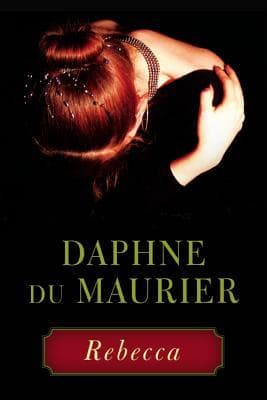
- Rebecca
Daphne du Maurier
4.2 (450k) average on GoodreadsThrillerDeals with themes of jealousy, suspicion, and a woman's struggle within a marriage shrouded in secrets.
- Year of Wonders
Geraldine Brooks
4.0 (138k) average on GoodreadsHistorical FictionBrooks's novel also deals with historical tragedy and isolation but focuses on community resilience and response to a plague, whereas Shreve's work is an intimate, personal account of a specific crime and its psychological aftermath. Shreve's narrative is more concentrated on individual secrets and guilt.
- The Secret Keeper
Kate Morton
4.2 (3k) average on GoodreadsRomanceMorton frequently employs dual timelines and family secrets, similar to Shreve. However, Shreve's The Weight of Water distinguishes itself by grounding its core mystery in a specific, real historical event, providing a starker, more morally ambiguous portrayal of victimhood and complicity compared to Morton's often more romanticized or generational secrets.
- To Kill a Mockingbird
Harper Lee
4.3 (4.5M) average on GoodreadsHistorical FictionIn the 1930s Jim Crow South, Harper Lee writes about racial injustice, moral growth, and the quiet courage of a lawyer father, Atticus Finch, as seen through his young daughter's eyes.





Enjoyed the summary?
A summary gives you the shape of the book. The book itself has the detail, the examples and the voice.
Find The Weight of Water on AmazonAs an Amazon Associate, BookBrief earns from qualifying purchases. How we're funded