
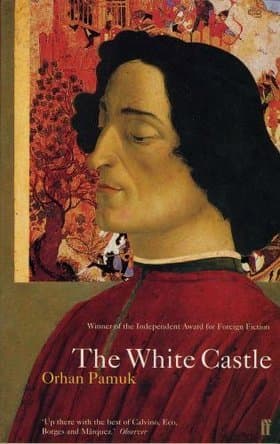
Synopsis
Covers the whole plot, including the ending.
- Difficulty
- Medium
- Pacing
- Slow
- Mood
- Philosophical, Introspective, Mysterious, Historical
- Read it if
- You enjoy philosophical historical fiction that delves into identity, East-West cultural clashes, and psychological doubles, written with a Borges-esque sensibility.
- Skip it if
- You prefer fast-paced plots with clear resolutions, or dislike ambiguous narratives that prioritize ideas over action.
The White Castle Plot Summary
Covers the whole plot, including the ending.
Capture and Enslavement
In the 17th century, Ottoman corsairs capture a young Italian scholar sailing from Venice to Naples. His ship is looted, and he and other passengers are taken prisoner to Constantinople. He is sold into slavery. Despite his education in Western sciences, he is now property in a foreign land. He feels deep despair, losing his freedom, identity, and familiar world. Ottoman customs and language replace everything he knew. He is now a servant, his fate controlled by his new masters.
Encounter with Hoja
The Italian slave is brought before a rich and powerful Turkish scholar called Hoja, who works for the Pasha. To the Italian's surprise, Hoja looks exactly like him. This strange resemblance makes Hoja curious, and he buys the Italian. Hoja, an ambitious but somewhat insecure man, sees a chance to improve his knowledge and status. The Italian, at first confused and scared, realizes this could be a unique, though forced, intellectual exchange. This meeting starts their complex relationship, where the lines between master and slave will blur.
Instruction in Western Sciences
Hoja makes the Italian teach him all he knows about Western science, medicine, and technology. The Italian, at first unwilling, begins to share his knowledge, explaining astronomy, anatomy, physics, and even how to build machines and fireworks. Hoja, wanting to impress the Pasha and the Sultan, learns these lessons with great interest. Their sessions are often tense, with Hoja being demanding and the Italian feeling resentment. Despite the power difference, a strange intellectual connection forms. Hoja's ambition and the Italian's skill create a shared goal, though Hoja controls it.
The Pasha's Request
The Pasha is impressed by Hoja's new Western knowledge. He gives Hoja a big project: to design and build a magnificent, never-before-seen weapon or device to awe the Sultan and show Ottoman strength. This project becomes the main focus for Hoja and the Italian. The Italian, using his European engineering and pyrotechnics knowledge, becomes essential. He is both a prisoner and a vital asset, his skills key to their survival and success. The pressure is huge, as failure would mean severe punishment, possibly death, for both of them.
Building the War Machine
Under Hoja's command and with the Italian's expert help, they begin building the war machine. The Italian draws designs, calculates paths, and guides the Ottoman craftsmen, who are initially confused by his foreign methods. Hoja, while taking credit for the ideas, is truly interested in how Western science applies in practice. Their work involves long hours and close teamwork. They spend much time together, discussing not only technical details but also their cultures, beliefs, and personal histories. This shared work deepens their strange connection, making them face their similarities and differences.
The Sultan's Campaign
The Sultan, wanting to expand his empire, starts a military campaign against a strong 'white castle' in Europe. Hoja and the Italian, with their new war machine — a giant cannon-like device meant to launch fire projectiles — go with the Ottoman army. The journey is hard, with the realities of war and tough military conditions. The Italian sees the brutality and scale of Ottoman warfare, a sharp contrast to his scholarly life. The campaign's success, and their own lives, now depend on their creation working. They hope it will break the castle's strong defenses.
The War Machine's Failure
During the siege of the white castle, the war machine is used with much ceremony. But despite their careful planning and building, it breaks down or does not work against the castle's defenses. The grand show meant to scare the enemy and impress the Sultan instead ends in a shameful failure. Hoja and the Italian face serious consequences for this. The Sultan's anger is terrifying, and their lives are at risk. This failure makes the already tense relationship between Hoja and the Italian worse, as they deal with the results and the chance of both dying.
The Identity Exchange Game
After the military campaign and the machine's failure, Hoja becomes more and more interested in identity. He suggests a chilling game to the Italian: to truly understand each other so well that they can convincingly act out the other's life, thoughts, and even memories. They start exchanging stories, secrets, and personal details of their pasts, carefully writing down each other's lives. This mental exercise goes beyond just role-playing; it becomes a deep and unsettling look at selfhood. The lines between Hoja and the Italian begin to blur, driven by Hoja's constant search for self-knowledge and the Italian's desperate need to survive.
The Blurring of Selves
As the identity game continues, the Italian's and Hoja's personalities and memories become deeply mixed. They practice copying each other's ways, speech, and even handwriting. The Italian finds himself thinking Hoja's thoughts, and Hoja seems to take on the Italian's Western views. The game's first purpose, perhaps from Hoja's curiosity and the Italian's survival instinct, changes into something deeper and more disturbing. Both begin to question their original selves, wondering if they are distinct or just reflections of each other, caught in a mirror image.
The Final Exchange
The novel ends with an unclear and unsettling exchange of identities. After years of living in each other's shadows, sharing every secret, the original Italian scholar seems to vanish, and a new Hoja-like person appears. The narrator, whose true identity has always been unclear, now tells the story from a perspective that suggests he has fully taken on the other's life and persona. The original Hoja is said to have died, while the other, now living as Hoja, continues his life, perhaps even marrying Hoja's wife. The exact moment of the exchange is never clearly stated, leaving the reader to wonder what happened to each man's original self and what their shared life means.
The White Castle Characters
The Italian Slave (Later Hoja)
Protagonist
A captured Italian scholar forced to serve a Turkish master who is his double.
An educated, intellectually curious young man from Venice, skilled in Western sciences, astronomy, medicine, and engineering. He is initially fearful and resentful of his captivity but adapts out of a need for survival. He possesses a keen intellect and a deep understanding of his own culture. His core drive is to survive and, eventually, to understand the enigmatic Hoja and perhaps regain some form of agency. He is observant and reflective, constantly analyzing his new environment and his relationship with his master.
Relationships: Hoja (Master/slave, intellectual collaborator, doppelgänger, eventual identity mirror); The Pasha (Employer of Hoja, indirect master)
Hoja (The Turkish Master)
Antagonist/Co-protagonist
A Turkish scholar and advisor to the Pasha, obsessed with Western knowledge and his Italian doppelgänger.
An ambitious, intelligent, and deeply insecure Ottoman scholar who serves the Pasha. He is fascinated by Western knowledge and technology, not for its inherent truth, but for the power and prestige it can bring him. Hoja is demanding, manipulative, and driven by a profound existential curiosity about identity and selfhood, particularly in relation to his Italian double. He is both a shrewd intellectual and a man deeply rooted in the customs and hierarchies of the Ottoman court. His primary drive is to understand himself and achieve a higher status.
Relationships: The Italian Slave (Master/slave, intellectual collaborator, doppelgänger, eventual identity mirror); The Pasha (Superior, patron); The Sultan (Ultimate ruler, object of ambition)
The Pasha
Supporting
A powerful Ottoman official who employs Hoja and commissions projects.
A high-ranking and influential figure in the Ottoman court, the Pasha is Hoja's patron and superior. He is pragmatic and focused on maintaining his status and impressing the Sultan. He sees the value in Western innovations, primarily for military and political advantage, and tasks Hoja with developing such technologies. The Pasha represents the political power structure and the expectations placed upon Hoja and, by extension, the Italian. He is a man of authority and consequence, whose favor or displeasure can determine their fate.
Relationships: Hoja (Subordinate/patron); The Italian Slave (Indirect master, project commissioner)
The Sultan
Mentioned/Supporting
The ultimate ruler of the Ottoman Empire, whose approval is sought by Hoja and the Pasha.
The enigmatic and powerful sovereign of the Ottoman Empire. Though he rarely appears directly, his presence is constantly felt as the ultimate arbiter of fate and the source of all power. Hoja and the Pasha's ambition and projects are primarily aimed at gaining his favor and impressing him. He represents the pinnacle of Ottoman authority and the cultural and political context in which the story unfolds. His decisions, or perceived desires, drive much of the characters' actions and anxieties.
Relationships: Hoja (Subject/ruler); The Pasha (Subject/ruler)
Hoja's Wife
Mentioned/Supporting
Hoja's wife, whose presence contributes to the domestic setting.
Hoja's wife is a largely silent and background figure, representing the domestic and traditional aspects of Ottoman life that contrast with the intellectual pursuits of Hoja and the Italian. Her presence, though minimal, underscores the societal expectations and roles within Hoja's household. She may or may not be aware of the extent of the identity game, but her existence becomes a part of the life that the Italian potentially inherits. She is a symbol of the life Hoja lives and the life the Italian might come to inhabit.
Relationships: Hoja (Husband/wife); The Italian Slave (Household member (potential future husband))
The White Castle Themes
Identity and Selfhood
The novel looks closely at how identity changes and is built. The physical resemblance between the Italian slave and Hoja starts a philosophical question: what truly makes a person? Is it memories, experiences, culture, or something deeper? Their 'game' of exchanging lives shows how outside factors and inner stories shape who we think we are. The final blurring of their identities, when the narrator says he is 'Hoja' but has the Italian's memories, questions if a fixed, individual self even exists. This is clear in the detailed telling of each other's pasts, leading to a point where both men could live the other's life, as the narrator's final unclear statement shows.
“How can I explain to you that I am Hoja and that Hoja is I, and that it is the same thing, the same man, who has lived both our lives?”
East vs. West
The novel considers the perceived differences and basic similarities between Eastern and Western cultures. The Italian, representing the West with his scientific thought and individual view, is set against Hoja, who stands for the Ottoman East with its focus on tradition, hierarchy, and a more group-oriented self. Their interactions show mutual misunderstandings, biases, and interests. The Italian teaches Western science to Hoja, but Hoja wants a deeper, almost spiritual understanding that goes beyond just technology. The 'white castle' itself represents a physical and idea-based border between these two worlds, which the story suggests are not as separate as they seem.
“We were like two halves of a single being, separated by a sea, and now brought together to complete each other.”
Power and Servitude
The power dynamics between master and slave are key, but they are constantly challenged. At first, Hoja has complete power over the Italian, controlling his life and demanding his knowledge. However, as the Italian becomes necessary for Hoja's goals, and especially as their identities blend, the power balance shifts. The slave gains a kind of intellectual authority, and the master becomes reliant on the slave's knowledge and eventually his very identity. The 'game' of identity exchange becomes a subtle power struggle. Understanding and imitating the other can be seen as both giving in and conquering, leading to a mutual enslavement of self.
“He was my master, but I was his knowledge. What was more powerful?”
The Nature of Knowledge and Progress
The search for knowledge drives both characters, but their reasons differ. The Italian represents Western scientific thought and its use for technological progress (e.g., medicine, fireworks). Hoja, while wanting these practical results for status, is more interested in a complete, almost spiritual understanding that includes the self and the universe. The war machine's failure shows the limits of purely technical knowledge without deeper insight. The novel asks if 'progress' is universal or defined by culture, and if knowledge truly frees us or just changes one kind of servitude into another, as seen in Hoja's constant search for self-knowledge through the Italian.
“True knowledge is not merely to know how to build a cannon, but to know oneself.”
Plot Devices & Literary Techniques
The Doppelgänger
The uncanny physical resemblance between the Italian slave and Hoja.
The central plot device, the doppelgänger, immediately establishes the novel's core theme of identity. The physical identicality of the Italian and Hoja is the catalyst for their entire relationship and the subsequent exploration of selfhood. It allows for the possibility of an identity exchange, making the philosophical questions concrete and unsettling. The doppelgänger isn't just a visual trick; it's a profound symbol of the potential for any individual to be 'another' and forces a re-evaluation of what makes one unique. This device drives Hoja's obsession and the Italian's eventual surrender to the identity game.
The Unreliable Narrator
The ambiguity of the narrator's true identity by the novel's end.
The narrative's reliability is progressively undermined, particularly concerning the narrator's true identity. Initially, the story is told by the Italian slave. However, as the identity exchange deepens, the narrator's voice begins to merge, and by the end, it's unclear whether the 'Hoja' narrating is the original Hoja or the Italian who has assumed his life. This device forces the reader to question every detail and interpretation, mirroring the characters' own confusion about their selves. It reinforces the theme of fluid identity and makes the ending profoundly ambiguous, leaving the reader to conclude who truly 'survived' the exchange.
The White Castle
A symbolic fortress representing the boundary between East and West.
The 'white castle' serves as a significant symbolic plot device. It is a physical fortress, a European stronghold that the Ottoman army, aided by Hoja and the Italian's war machine, attempts to conquer. Symbolically, it represents the rigid boundaries, cultural differences, and military conflicts between the Christian West and the Ottoman East. Its resistance and the failure of the war machine against it underscore the limitations of purely technological superiority and the enduring nature of cultural and ideological divides, even as the characters themselves blur these lines on a personal level.
The War Machine
A technological invention meant to showcase Western knowledge but ultimately fails.
The war machine, a grand cannon-like device designed by the Italian and Hoja, functions as a plot device to drive the narrative forward and explore themes of knowledge and power. Its creation forces the two men into close collaboration, accelerating their intellectual and personal entanglement. Its ultimate failure, despite the Italian's Western scientific expertise, serves as a crucial turning point. It highlights the limitations of applying knowledge without a deeper understanding of context and human nature, and it directly leads to the intensification of Hoja's identity obsession, as practical success eludes him.
The White Castle Quotes
“The East and the West, the past and the future, the Muslim and the Christian, the master and the slave, the learned and the ignorant, the inventor and the imitator—all these were but different masks of the same face, and that face was mine.”
“The greatest pleasure a man can have is to recognize the face of his own soul in the eyes of another.”
“I had always thought that the world was divided into two kinds of people: those who believed in God and those who did not. But now I saw that it was more complicated than that.”
“To be able to invent something, you must first be able to imagine it.”
“We are all prisoners of our own stories, and we can only escape them by telling new ones.”
“The only way to truly understand a culture is to live within it, to breathe its air, to eat its food, to speak its language.”
“Every man has a secret, and that secret is his true self.”
“History is not a simple recounting of facts, but a story we tell ourselves about who we are.”
“The more I tried to escape my past, the more it clung to me.”
“Knowledge without understanding is like a library without a reader.”
“Sometimes, the only way to find yourself is to lose yourself in someone else.”
“The world is full of mirrors, and we are constantly seeing ourselves in them.”
“Fear is the greatest obstacle to knowledge.”
“To truly know someone, you must know their dreams and their nightmares.”
Quiz
10 questions on the plot and the characters. Each answer comes with a short explanation.
Question 1
Where is the Italian scholar initially sailing when he is captured by Turkish ships?
- From Genoa to Alexandria
- From Venice to Naples
- From Rome to Marseille
- From Palermo to Istanbul
Show answer
B. From Venice to Naples The Italian scholar is captured by Turkish ships while sailing from Venice to Naples, as stated in the book's synopsis.
Question 2
What is the name given to the Turkish scholar who becomes the Italian's master?
- Sultan Mehmet
- Pasha Murad
- Hoja
- Dervish Ali
Show answer
C. Hoja The Turkish scholar is known as Hoja, which means 'master', and he takes the Italian scholar into his custody.
Question 3
Which of the following subjects does the Italian slave NOT primarily instruct his master in?
- Western medicine
- Pyrotechnics
- Islamic calligraphy
- Western science and technology
Show answer
C. Islamic calligraphy The Italian slave primarily instructs his master in Western science and technology, including medicine and pyrotechnics, not Islamic calligraphy.
Question 4
What is the most striking physical characteristic shared by the Italian scholar and Hoja?
- They both have a distinctive birthmark on their left cheek.
- They are exact physical doubles of each other.
- They both have exceptionally long, white beards.
- They share the same height and build, but little else.
Show answer
B. They are exact physical doubles of each other. The most significant physical characteristic they share is that Hoja is the Italian scholar's exact double, which is central to the novel's theme of identity.
Question 5
What is Hoja's ultimate ambition regarding his relationship with his captive?
- To convert the Italian to Islam.
- To make the Italian his trusted advisor in political matters.
- To understand if they can exchange identities.
- To use the Italian's knowledge to overthrow the Sultan.
Show answer
C. To understand if they can exchange identities. Hoja's profound curiosity is centered on understanding why he and his captive are the persons they are and whether, with intimate knowledge, they could exchange identities.
Question 6
The novel is set primarily in which major city?
- Venice
- Alexandria
- Constantinople
- Naples
Show answer
C. Constantinople The Italian scholar is delivered to Constantinople, which serves as the primary setting for the events of the novel.
Question 7
What historical century does 'The White Castle' primarily take place in?
- 15th century
- 16th century
- 17th century
- 18th century
Show answer
C. 17th century The novel is explicitly set in the 17th century, as mentioned in the book's description.
Question 8
The relationship between Hoja and the Italian scholar can be seen as an allegory for which broader philosophical or cultural concept?
- The conflict between monarchy and democracy.
- The complex relations and merging of East and West.
- The struggle between science and religion.
- The impact of trade routes on global economies.
Show answer
B. The complex relations and merging of East and West. The novel explores the enigma of identity and the relations between East and West through the intertwined lives of the two characters, who represent these two cultural spheres.
Question 9
What is the primary motivation for Hoja to learn Western knowledge from his captive?
- To impress the Sultan with his intellectual prowess.
- To gain practical knowledge for personal wealth.
- To understand the 'why' behind their identities and the differences between their worlds.
- To use Western technology to build a more powerful navy.
Show answer
C. To understand the 'why' behind their identities and the differences between their worlds. Hoja's deepest desire is to understand the nature of identity and the distinctions between himself and his captive, using Western knowledge as a means to this philosophical end.
Question 10
The 'White Castle' in the title is most likely a metaphor for what?
- A literal fortress built by the Sultan.
- The elusive and shifting nature of individual identity.
- The Ottoman Empire's military dominance.
- A specific scientific invention developed by Hoja.
Show answer
B. The elusive and shifting nature of individual identity. Given the novel's central theme of identity and its enigmatic nature, the 'White Castle' likely symbolizes the elusive and constructed nature of self, which can be 'built' or 'dismantled' through the exchange of experiences and knowledge.
The White Castle FAQ
What is the central premise of 'The White Castle'?
The novel centers on a young Italian scholar, captured by Turks in the 17th century, who becomes the property of a Turkish scholar, Hoja, in Constantinople. The core of the story revolves around their uncanny physical resemblance and Hoja's obsessive desire to understand and potentially exchange identities with his Italian slave. This relationship explores themes of East-West cultural exchange and the nature of self.
Who are the two main characters and what is their initial relationship?
The two main characters are the unnamed Italian scholar and Hoja, the Turkish master. The Italian, initially a prisoner of war, is forced into servitude under Hoja. Their relationship is initially one of master and slave, but it quickly evolves into a complex intellectual and psychological bond due to their identical appearances and Hoja's profound curiosity.
What kind of knowledge does the Italian scholar impart to Hoja?
The Italian scholar teaches Hoja various aspects of Western science and technology, including medicine, astronomy, and pyrotechnics. This knowledge is crucial for Hoja's work for the Sultan, particularly in designing war machines and fireworks, which highlights the practical application of the Italian's expertise in a different cultural context.
What is the significance of the 'White Castle' mentioned in the title?
The 'White Castle' refers to a formidable siege weapon, a giant, mobile fort designed by Hoja and the Italian for the Sultan's campaign against the Polish. It symbolizes the culmination of their collaborative efforts in Western technology applied to warfare, but also represents the destructive potential and the ultimate futility of their grand project.
How does the novel explore the concept of identity through its characters?
The novel explores identity primarily through the physical resemblance and psychological merging of the Italian and Hoja. Hoja's relentless questioning of 'why' they are who they are, and his desire to literally step into the Italian's life, forces both characters to confront the arbitrary and constructed nature of their individual selves, blurring the lines between them. This culminates in a potential, ambiguous exchange of identities.
What role does the Sultan play in the narrative?
The Sultan is a powerful, demanding figure who serves as Hoja's patron and taskmaster. He commissions Hoja and the Italian to create the White Castle and other marvels, providing the external pressure that drives their collaboration. His presence underscores the political and military context in which their intellectual pursuits take place.
Are there any subtle clues about the true identity of the narrator at the beginning of the book?
The initial narration is from the perspective of the Italian, recounting his capture and early life in Constantinople. However, astute readers might notice subtle shifts in perspective or an overly detached, almost scholarly tone when describing the Italian's past, hinting that the narrator might not be the Italian himself, but a later, more integrated Hoja, looking back.
How does Pamuk use the setting of 17th-century Constantinople to enhance the themes?
17th-century Constantinople, a vibrant crossroads of East and West, serves as the perfect backdrop for exploring cultural exchange and conflict. Its blend of Ottoman tradition and burgeoning interest in European science provides a fertile ground for the Italian's skills and Hoja's curiosity, highlighting the clash and convergence of different worldviews.
What is the significance of the 'notebook' shared by the two characters?
The notebook is a crucial symbol of their intellectual and personal merging. It contains their shared observations, inventions, and even their most intimate thoughts and dreams. As they fill it together, it becomes a physical manifestation of their intertwined identities, blurring who authored which entry and signifying their growing unity.
How does the story comment on the nature of genius and invention?
The novel suggests that genius and invention are not solely individual endeavors but often arise from collaboration and the synthesis of diverse knowledge. The White Castle, though ultimately a failure, is a product of both the Italian's Western scientific understanding and Hoja's ambition and drive, demonstrating how disparate minds can combine to create something new, albeit with complex moral implications.
What psychological impact does their physical resemblance have on both the Italian and Hoja?
Their physical resemblance profoundly impacts both, fostering Hoja's obsession and forcing the Italian to confront his own self through the mirror of another. It creates a deep psychological connection, blurring their individual boundaries and leading to a profound identity crisis for both, as they struggle to differentiate themselves from their doppelgänger.
Is there a definitive answer to whether the Italian and Hoja truly swap identities by the end?
No, the novel deliberately leaves the identity swap ambiguous. The narrator, who claims to be the original Italian, describes an elderly man (presumably Hoja) living in Italy. However, the details are sparse and the overall tone suggests that the narrator himself might be Hoja, having assumed the Italian's identity. This ambiguity forces the reader to question the very nature of identity itself.
How does the novel address the themes of East vs. West?
The novel addresses East vs. West not as a simple dichotomy of good and evil, but as a complex interaction of knowledge, culture, and prejudice. The Italian brings Western science, while Hoja embodies Ottoman curiosity and tradition. Their relationship highlights mutual fascination, misunderstanding, and the potential for both conflict and synthesis between these two worlds.
What is the role of memory and storytelling in the novel's structure?
Memory and storytelling are central to the novel's unreliable narration. The entire story is presented as a recollection, possibly by an unreliable narrator whose identity is uncertain. This structure emphasizes how personal history is constructed and reconstructed, blurring the lines between fact and fiction, and reinforcing the novel's themes of fluid identity.
What does the ending suggest about the lasting impact of their relationship?
The ending suggests that their relationship has a permanent and transformative impact, regardless of who ultimately assumed whose identity. The surviving individual, whether Hoja or the Italian, carries the merged experiences and knowledge of both. It implies that identity is not fixed but is profoundly shaped by one's interactions and experiences, especially with a doppelgänger.
How does the 'laughing' incident, where the Italian is forced to laugh by Hoja, contribute to their power dynamic?
The incident where Hoja forces the Italian to laugh is a deeply humiliating and psychologically manipulative act. It demonstrates Hoja's power over the Italian, not just physically but emotionally, stripping him of his autonomy and forcing a performance of emotion. This moment is a crucial step in Hoja's attempt to break down the Italian's individual identity and exert control.
What is the significance of the plague that sweeps through Constantinople?
The plague serves as a stark reminder of the fragile nature of life and the limitations of their scientific pursuits. It underscores the raw savagery and unpredictability of their 17th-century world, contrasting with their intellectual endeavors. It also provides a moment of shared vulnerability between the Italian and Hoja, temporarily shifting their focus from identity games to survival.
Does the novel offer any clear moral judgment on Hoja's obsession or the Italian's compliance?
The novel largely refrains from explicit moral judgment, instead presenting the complex psychological motivations and consequences of both characters' actions. Hoja's obsession can be seen as a quest for self-understanding, while the Italian's compliance is a survival mechanism that gradually morphs into a deeper, perhaps unwilling, engagement. Pamuk allows the reader to interpret the morality.
About the author
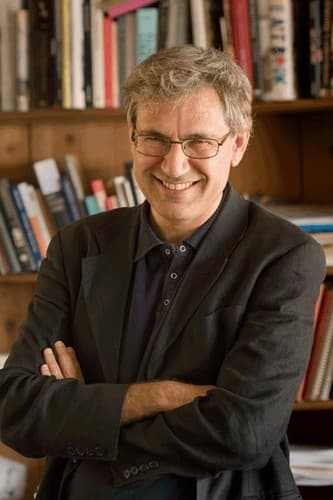
Ferit Orhan Pamuk is a Turkish novelist, screenwriter, academic, and recipient of the 2006 Nobel Prize in Literature. One of Turkey's most prominent novelists, he has sold over 13 million books in 63 languages, making him the country's best-selling writer.
Similar books
- The Name of the Rose
Umberto Eco
4.1 (301k) average on GoodreadsHistorical FictionExplores intellectual puzzles within a historical setting, with deep philosophical undertones.
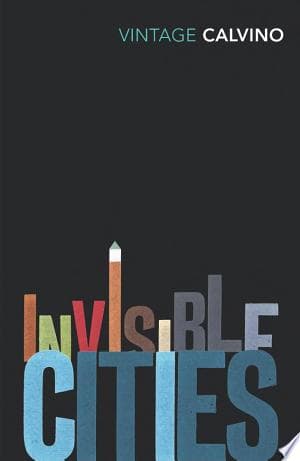
- Invisible Cities
Italo Calvino
4.1 (62k) average on GoodreadsFantasyOffers a meditative, poetic exploration of place, memory, and perception through a historical lens.
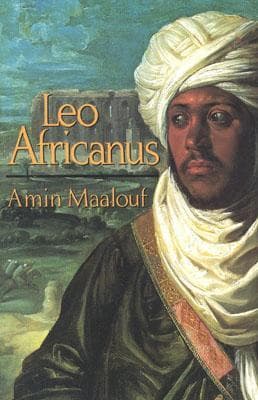
- Leo Africanus
Amin Maalouf
4.2 (11k) average on GoodreadsHistorical FictionWhile both explore East-West encounters and identity, Maalouf's novel focuses on the linear journey and synthesis of a single individual's hybrid identity, whereas Pamuk's delves into the dissolution and recombination of two distinct selves, emphasizing the blurring of boundaries.
- Wolf Hall
Hilary Mantel
3.9 (166k) average on GoodreadsLiterary FictionMantel's work offers a richly detailed, character-driven historical immersion that brings figures to vivid life within their political contexts. Pamuk's "The White Castle," by contrast, is more allegorical and philosophical, using the historical setting as a stage for abstract contemplation of self and other rather than a direct historical biography.
- The Old Man and the Sea
Ernest Hemingway
3.8 (831k) average on GoodreadsLiterary FictionA Cuban fisherman's long struggle with a giant marlin becomes a story of endurance and dignity, now retold for young adults with illustrations, phonetic guides, and writing prompts in Traditional Chinese.
- One Hundred Years of Solitude
Gabriel García Márquez
4.1 (753k) average on GoodreadsLiterary FictionThrough the multi-generational story of the Buendía family, a mythical town deals with the repeating patterns of time, love, and solitude, as the extraordinary mixes with the ordinary.




Enjoyed the summary?
A summary gives you the shape of the book. The book itself has the detail, the examples and the voice.
Find The White Castle on AmazonAs an Amazon Associate, BookBrief earns from qualifying purchases. How we're funded