
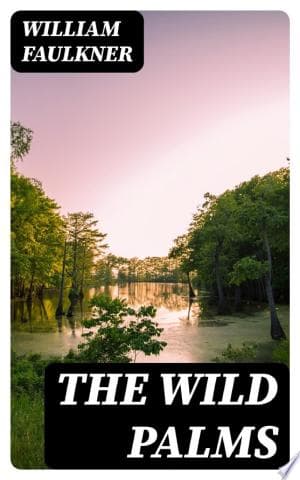
Synopsis
Covers the whole plot, including the ending.
- Difficulty
- Hard
- Pacing
- Variable
- Mood
- Dark, Desperate, Intense, Melancholic, Atmospheric
- Read it if
- You appreciate complex, interweaving narratives that explore themes of love, freedom, and human endurance against a backdrop of intense natural and emotional landscapes. Perfect for readers who enjoy deep psychological dives and rich, challenging prose.
- Skip it if
- You prefer straightforward plots, lighthearted stories, or are sensitive to graphic descriptions of medical procedures and human suffering. The prose can be dense and the themes are often bleak.
The Wild Palms Plot Summary
Covers the whole plot, including the ending.
Harry and Charlotte's Reckless Escape
The novel opens in New Orleans, introducing Harry Wilbourne, a young, inexperienced doctor, and Charlotte Rittenmeyer, a sophisticated married woman with children. They are drawn to each other with an intense passion. Charlotte, feeling suffocated by her conventional life and her husband, Frank Rittenmeyer, plans their escape. They leave their lives, Harry's medical career and Charlotte's family, to start a flight fueled by their illicit love. Their first destination is a small cottage on a lake. This symbolizes their attempt to create a private world free from societal judgment and the results of their actions. This act sets the stage for their struggles with poverty, isolation, and the destructive nature of their all-consuming passion.
The Convict's Flood Rescue
Interspersed with Harry and Charlotte's story is the narrative of a nameless convict from the Mississippi State Penitentiary. He is serving a sentence for attempting to rob a train. During a catastrophic flood of the Mississippi River, the convict is made by authorities to help rescue stranded individuals. Armed with a rifle and navigating a small skiff, he is ordered to rescue a pregnant woman from a collapsing cabin. Despite his desire to escape, the convict, a man of simple principles, feels compelled to fulfill his duty. This sets him on a perilous journey across the turbulent, debris-filled waters. This mission immediately challenges his personal freedom and sense of self-preservation against the force of nature and his moral code.
Poverty and Isolation in Chicago
After their initial escape, Harry and Charlotte move to Chicago, where their financial situation quickly gets worse. Harry, having left his medical career, struggles to find work, taking on low-paying jobs. Charlotte, despite her sophisticated background, also finds herself in bad circumstances. Their love, which at first seemed to overcome all obstacles, begins to break under the pressure of poverty and social ostracism. They cannot establish any stable life, constantly moving and struggling to get by. This period shows their inability to function outside the societal structures they rejected. It reveals the practical limits of their passionate but impractical commitment.
The Convict's Reluctant Midwifery
The convict successfully retrieves the pregnant woman, identified only as the 'tall woman,' from the collapsing cabin. As they try to navigate back through the treacherous floodwaters, the woman goes into labor. Despite his complete lack of medical experience and the dangerous conditions, the convict delivers her baby in the skiff. This harrowing experience complicates his mission, as he now has a newborn and its mother to care for. His simple desire to return to prison and serve out his sentence is constantly stopped by the needs of the rescue. This pushes him into an unexpected role of responsibility and care.
Desperation and the Abortion in Utah
Harry and Charlotte, still struggling financially, move to a mining camp in Utah. Charlotte finds out she is pregnant. Fearing that a child would further involve them in the societal responsibilities they fled, and unable to afford a proper birth, they decide on an abortion. Harry, despite his limited medical knowledge and moral concerns, tries to perform the procedure himself. The abortion is botched, leading to severe complications for Charlotte. This desperate act marks a turning point. It symbolizes the destructive results of their choices and how their love has led them to self-destruction. The procedure leaves Charlotte gravely ill and Harry consumed by guilt.
The Convict's Unwanted Freedom
Having delivered the baby and navigated the floodwaters, the convict tries to return the woman and child to the authorities. However, due to the widespread chaos and his disheveled appearance, he is repeatedly mistaken for an escaped prisoner. Despite his attempts to explain his mission and return to his sentence, he is met with suspicion and hostility. He even meets a group of men who believe he is a looter. This frustrating cycle shows the bureaucratic indifference and injustice of his situation. It forces him to continue his journey against his will, further delaying his return to the structured existence of prison.
Charlotte's Decline and Death in Mississippi
Following the botched abortion, Charlotte's health quickly gets worse. Harry, desperate and guilt-ridden, takes her to a remote cabin in Mississippi, hoping to nurse her back to health. Despite his efforts, Charlotte's condition worsens, and she dies. Her death is the result of their reckless choices and the physical toll their illicit relationship took. Harry is left alone, dealing with grief and the devastating realization of the consequences of their all-consuming passion. Her death forces him to confront the reality of their dream, which led to her demise.
The Convict's Final Arrest
After a long journey through the flood-ravaged landscape, during which he even meets a wealthy family who mistakes him for a rescuer, the convict is finally caught. He is cornered by a group of deputies who assume he is an escapee. Despite his continued attempts to explain his mission, he is taken back into custody. There is a sense of relief for the convict, as he is finally returned to the familiar confines of the prison. He has fulfilled his duty and now simply wishes to serve his time, having been thrust into a world of freedom and responsibility that he never sought.
Harry's Imprisonment and Reflection
After Charlotte's death, Harry is discovered and arrested, charged with murder. He is placed in a jail cell, where he reflects on his relationship with Charlotte, their choices, and the tragic outcome. He is offered a chance to escape, planned by Charlotte's husband, Frank Rittenmeyer, who still feels a strange loyalty to Charlotte and a desire to protect her memory. Harry, however, refuses the escape, choosing instead to face the consequences of his actions. He realizes that even in prison, he has a sense of agency and a connection to Charlotte's memory, a connection that he values more than physical freedom. He chooses the 'wild palms' of his memory over the 'wilderness' of escape.
The Convict's Return to Servitude
The convict is returned to the penitentiary, where he is questioned about his journey. The authorities, still skeptical, eventually accept his story. He is given additional time on his sentence for 'attempting to escape' and 'stealing a skiff,' despite his protests. He returns to his work detail, having experienced a brief, involuntary taste of freedom and responsibility. His ordeal in the flood has changed him; he carries the memory of the woman and child, and the power of nature, back into his monotonous existence. He has faced a far greater challenge than his initial crime, and has emerged with a quiet, if unacknowledged, sense of accomplishment.
Principal Figures
Harry Wilbourne
Protagonist
A young, inexperienced doctor who abandons his life for an illicit love.
Harry Wilbourne is a cautious and somewhat passive young doctor who becomes consumed by an intense, illicit passion for Charlotte Rittenmeyer. He is initially drawn to her strong will and adventurous spirit, which he lacks. Throughout the novel, Harry struggles with his conscience, practical responsibilities, and the destructive nature of their love. He is often a follower in their relationship, letting Charlotte dictate their trajectory. His professional inexperience and moral ambiguity lead him to disastrous decisions, particularly the botched abortion. He grapples with guilt and the weight of his choices, eventually finding a strange form of peace in accepting his fate.
Relationships: Charlotte Rittenmeyer (Illicit lover, all-consuming and destructive passion); Frank Rittenmeyer (Husband of Charlotte, a strange benefactor/foil)
Charlotte Rittenmeyer
Protagonist
A married woman who instigates a reckless affair, seeking freedom and intensity.
Charlotte Rittenmeyer is a vibrant, strong-willed, and unconventional woman who feels suffocated by the constraints of her marriage and societal expectations. She is the driving force behind her and Harry's escape, seeking an intense, authentic experience of life and love, even if it means abandoning her children and husband. She is fiercely independent and believes their love can transcend all practical concerns. Charlotte embodies a yearning for absolute freedom and passion, but her idealism blinds her to the practical consequences, ultimately leading to her tragic demise. She is both a liberator and a destroyer.
Relationships: Harry Wilbourne (Illicit lover, object of her intense passion); Frank Rittenmeyer (Husband, whom she leaves for Harry); Her Children (Abandoned for her love affair)
The Tall Convict
Protagonist
A nameless convict forced into a heroic rescue during a flood.
The Tall Convict is a man of simple principles and desires, serving a sentence for attempted train robbery. He is pragmatic, stoic, and initially desires nothing more than to serve his time and return to the familiar structure of prison life. Thrust into a chaotic and dangerous rescue mission during a flood, he displays an unexpected sense of duty and resilience. He is a reluctant hero, constantly trying to return to his confinement, yet compelled by circumstance and a basic human decency to protect those in his care. His journey is a testament to survival and an ironic exploration of freedom and responsibility.
Relationships: The Tall Woman (Pregnant woman he rescues and delivers her baby); The Baby (Newborn he helps bring into the world during the flood)
Frank Rittenmeyer
Supporting
Charlotte's husband, who maintains a complex relationship with Harry.
Frank Rittenmeyer is Charlotte's husband, a successful and seemingly stable man. Despite being cuckolded and abandoned, he displays a surprisingly complex and almost compassionate attitude towards Harry and Charlotte. He is not a vengeful husband but rather a figure who understands Charlotte's restless nature on some level. He even attempts to help Harry escape prison, suggesting a strange loyalty or perhaps a desire to protect Charlotte's memory from scandal. He represents the societal order that Harry and Charlotte flee, yet he is not entirely unsympathetic, complicating the simple villain-victim dynamic.
Relationships: Charlotte Rittenmeyer (Wife, whom he loves despite her infidelity); Harry Wilbourne (Rival, yet he shows a strange concern for him)
The Tall Woman
Supporting
The pregnant woman rescued by the Convict during the flood.
The Tall Woman is a nameless, stoic, and resilient figure whom the Convict rescues during the Mississippi flood. She is heavily pregnant and, despite the extreme danger and discomfort, remains remarkably composed. Her primary role is to provide the Convict with a tangible mission and a profound responsibility. Her survival and the birth of her child in such dire circumstances highlight themes of life, endurance, and the primal forces of nature. She is a symbol of vulnerable humanity amidst chaos, inspiring the Convict's unexpected heroism.
Relationships: The Tall Convict (Her rescuer and reluctant midwife); The Baby (Her newborn child)
The Baby
Mentioned
The infant born to the Tall Woman during the flood.
The baby, born in the skiff amidst the raging floodwaters, is a symbol of life, innocence, and the unpredictable nature of existence. Its birth underscores the contrast between the destructive forces of the flood and the miraculous act of creation. For the Convict, the baby represents an unexpected burden and responsibility, yet also a profound, if unspoken, connection to humanity. It serves as a counterpoint to Harry and Charlotte's decision to abort their child, highlighting different responses to the consequences of life.
Relationships: The Tall Woman (Mother); The Tall Convict (Reluctant deliverer and temporary guardian)
Mrs. Ratliff
Supporting
A kindly woman who takes in Harry and Charlotte for a time.
Mrs. Ratliff is a minor character who offers Harry and Charlotte a temporary home in a remote cottage. She is a simple, compassionate woman who, despite sensing the unusual nature of their relationship, provides them with shelter and a brief respite from their struggles. Her presence offers a glimpse of conventional kindness and stability, contrasting sharply with the chaotic and desperate lives of the lovers. She represents a brief moment of normalcy and human generosity before they plunge back into their self-imposed wilderness.
Wilbourne's Mother
Mentioned
Harry's deceased mother, whose memory influences him.
Harry's mother is mentioned primarily through his internal thoughts and memories. She represents a conventional, respectable past that Harry has abandoned. Her memory often surfaces when Harry is wrestling with guilt or contemplating the consequences of his actions. She serves as a moral compass, albeit one that Harry has largely ignored in his pursuit of Charlotte. Her presence, though spectral, highlights Harry's internal conflict between societal expectations and his passionate rebellion.
Relationships: Harry Wilbourne (Son, whose choices she would disapprove of)
Mr. and Mrs. Armstid
Supporting
A farming couple who encounter the Convict.
Mr. and Mrs. Armstid are a farming couple the Convict encounters during his flood journey. They are simple, hardworking people who provide a brief, if somewhat bewildered, interaction with the Convict. They represent the ordinary, struggling populace affected by the flood, and their interaction further highlights the Convict's disoriented state and the difficulties of his mission. Their brief appearance serves to ground the fantastical elements of the flood narrative in the reality of rural Mississippi life.
Relationships: The Tall Convict (Brief, bewildered encounter)
Themes & Insights
The Destructive Nature of Passion vs. The Endurance of Duty
This central theme is shown through the two narratives. Harry and Charlotte's 'wild palms' story illustrates how an all-consuming, illicit passion, pursued without regard for societal norms or practical consequences, can lead to ruin, isolation, and death. Their love, at first liberating, becomes a cage and a destructive force. In contrast, the Convict's story shows the endurance of duty, even when imposed against one's will. His reluctant heroism and commitment to his task, despite chances to escape, suggest a different kind of strength and survival. Faulkner questions whether absolute freedom in passion is truly liberating or self-destructive, especially when compared to the quiet dignity found in fulfilling an unwanted responsibility.
“Between grief and nothing I will take grief.”
Freedom, Confinement, and Responsibility
The novel examines the meanings of freedom and confinement. Harry and Charlotte seek freedom from societal constraints, marriage, and financial stability. They find themselves confined by poverty, their own choices, and Harry's imprisonment and Charlotte's death. Their 'freedom' leads to a deeper form of entrapment. Conversely, the Convict, physically confined in prison, is put in a situation that offers him literal freedom from his cell, yet he consistently seeks to return to his confinement. His journey reveals that true freedom might lie not in the absence of walls, but in the acceptance of responsibility and the fulfillment of duty, however burdensome. His prison, in a strange way, offers a structure and purpose that the lovers' 'freedom' lacks.
“He knew that he was not free, that he was merely at liberty, that he was still a Convict.”
The Power and Indifference of Nature
The Mississippi flood in the Convict's narrative is a large, indifferent force of nature that both threatens and compels. It removes human artifice, revealing primal instincts for survival and duty. The flood is a character itself, dictating the Convict's actions and pushing him beyond his limits. It contrasts sharply with the human-made crises of Harry and Charlotte. This shows the difference between a natural disaster that forces external action and internal, self-inflicted 'disasters' born of human passion. The flood shows nature's power to both destroy and, ironically, to facilitate life (through the baby's birth).
“The river, which had been a river, was now a flood, a primal, inchoate force.”
Love as a Paradoxical Force
Faulkner presents love not as a simple romantic ideal, but as a complex, often paradoxical force capable of both immense uplift and destruction. Harry and Charlotte's love is fervent and all-consuming, at first seen as their salvation and their ultimate freedom. However, it quickly becomes a source of suffering, poverty, desperation, and death. It isolates them from the world and from themselves, demanding absolute sacrifice. The novel questions whether such an intense, exclusive love is sustainable or tragic, suggesting that its intensity makes it unsustainable outside societal structure. It shows the fine line between passionate devotion and self-annihilation.
“We're going to be together, always, whether we like it or not.”
Class and Social Dislocation
The novel explores themes of class and social dislocation, particularly through Harry and Charlotte's narrative. Their abandonment of respectable lives puts them into poverty, forcing them into menial jobs and transient existences. They struggle to adapt to a life without the comforts and privileges they once knew. This highlights their inability to function outside their accustomed social strata. Their attempts to live authentically outside conventional society reveal the deep influence of class on identity and survival. The Convict's story, conversely, presents a man already outside 'respectable' society. His struggle for survival is more elemental, less tied to a fall from grace.
“They were outcasts, not because they had sinned, but because they had sinned and failed.”
Plot Devices & Literary Techniques
Dual Narrative Structure
Two seemingly unrelated stories presented in alternating chapters.
Faulkner employs a dual narrative structure, alternating between the story of Harry Wilbourne and Charlotte Rittenmeyer's illicit affair ('The Wild Palms') and the story of the Tall Convict during the Mississippi flood ('Old Man'). These two narratives, initially appearing disparate, are strategically interwoven. They never explicitly intersect in terms of plot, but they serve as thematic counterpoints and ironic parallels, illuminating each other's explorations of freedom, confinement, passion, and duty. The alternating chapters create a rhythmic tension and allow Faulkner to explore similar themes through vastly different human experiences and settings.
Juxtaposition
The side-by-side placement of contrasting elements for thematic emphasis.
Juxtaposition is a key device, most prominently seen in the alternating narratives themselves. The 'wild palms' of destructive human passion are juxtaposed with the 'old man' (the river) of indifferent natural force. The Convict's forced responsibility is juxtaposed with Harry and Charlotte's chosen freedom. This technique highlights the ironic similarities and profound differences between the characters' struggles. For example, Harry's botched abortion stands in stark contrast to the Convict's reluctant midwifery, underscoring different responses to life and death, choice and circumstance.
Symbolism of the River/Flood
The Mississippi River as a symbol of primal force, fate, and cleansing.
The Mississippi River, particularly in its flooded state, functions as a powerful symbol. It represents an overwhelming, indifferent, and primal force of nature that dictates human destiny and strips away societal artifice. It is both destructive and life-giving (the birth of the baby). For the Convict, the river is a physical and metaphorical barrier, a test of endurance, and a force that ironically pushes him towards a form of heroism and self-discovery he never sought. It can also symbolize a kind of cleansing or a return to a more elemental state of being, contrasting with the complex, self-inflicted turmoil of the lovers.
Irony
The use of situations where the outcome is contrary to what is expected.
Irony pervades both narratives. In 'The Wild Palms,' Harry and Charlotte seek freedom and an escape from societal constraints through their passionate love, only to find themselves increasingly confined by poverty, guilt, and eventually, imprisonment and death. Their 'freedom' leads to their ultimate entrapment. In 'Old Man,' the Convict, a prisoner, is given literal freedom from his cell, yet he desperately tries to return to his confinement, finding a strange kind of peace and purpose within the prison walls that he lacks when 'at liberty.' This pervasive irony highlights the complex, often contradictory nature of human desires and outcomes.
Interior Monologue/Stream of Consciousness
Narration reflecting the character's unfiltered thoughts and feelings.
Faulkner frequently employs interior monologue and stream of consciousness, particularly in Harry's narrative, to delve deeply into the characters' psychological states. This device allows the reader to experience Harry's guilt, despair, and obsessive thoughts about Charlotte directly. It blurs the line between narration and thought, creating a sense of immediacy and intimacy with the characters' internal struggles. This technique is less prevalent in the Convict's story, emphasizing his more stoic and action-oriented nature, thus highlighting the contrast between the two protagonists' modes of experiencing the world.
The Wild Palms Quotes
“Between grief and nothing I will take grief.”
“It's not what you are that counts, but what you can be.”
“Man, a two-legged animal without feathers.”
“Love is not a fact. It is a state of mind or perhaps a disease.”
“Living is a process of getting ready for something, and then getting ready for something else.”
“The past is never dead. It's not even past.”
“There are some things that even love cannot change.”
“The human heart is a lonely hunter.”
“We are all born for love. It is the principle of existence, and its only end.”
“Maybe what you don't know won't hurt you, but it sure as hell won't help you either.”
“It takes a man to suffer, and a woman to make him suffer.”
“The trouble with truth is, it's so hard to find out.”
“Drowning is not a bad way to die, if you don't mind the water.”
“We must be free not because we claim freedom, but because we practice it.”
Quiz
10 questions on the plot and the characters. Each answer comes with a short explanation.
Question 1
Which two distinct narratives are interwoven in William Faulkner's 'The Wild Palms'?
- A story of a Southern family's decline and a tale of a Civil War veteran.
- A man and woman's illicit affair in 1937 and a convict's rescue mission in 1927.
- A young boy's coming-of-age in rural Mississippi and a detective's investigation in Memphis.
- A journalist covering a political scandal and a doctor dealing with a pandemic.
Show answer
B. A man and woman's illicit affair in 1937 and a convict's rescue mission in 1927. The novel explicitly interweaves two narratives: one about a couple's illicit passion in 1937 New Orleans and another about a convict rescuing a pregnant woman across a flooded river ten years earlier in Mississippi.
Question 2
What was the original title Faulkner considered for 'The Wild Palms'?
- The Sound and the Fury
- As I Lay Dying
- If I Forget Thee, Jerusalem
- Light in August
Show answer
C. If I Forget Thee, Jerusalem The description states that the novel was originally titled 'If I Forget Thee, Jerusalem', highlighting a thematic connection to the biblical psalm.
Question 3
In the 1937 narrative, what are the man and woman fleeing from?
- Economic hardship and the Great Depression.
- A criminal gang and the police.
- Her husband and the temptations of respectability.
- A natural disaster and a failing farm.
Show answer
C. Her husband and the temptations of respectability. The synopsis clearly states they are 'fleeing her husband and the temptations of respectability' as they embark on their illicit passion.
Question 4
What is the primary motivation for the convict's actions in the 1927 narrative?
- To escape prison and start a new life.
- To rescue a pregnant woman, even at the risk of his own freedom.
- To retrieve hidden treasure from the flooded area.
- To prove his innocence in a crime he didn't commit.
Show answer
B. To rescue a pregnant woman, even at the risk of his own freedom. The text explicitly states the convict is 'risking his own chance at freedom to rescue a pregnant woman,' indicating his primary motivation is self-sacrifice.
Question 5
Which of the following themes is NOT explicitly mentioned as being explored in 'The Wild Palms'?
- Deliverance and damnation.
- Survival and self-sacrifice.
- Racial injustice and social inequality.
- Elemental danger and fatal injuries of the spirit.
Show answer
C. Racial injustice and social inequality. While Faulkner often explores racial injustice, the provided synopsis for 'The Wild Palms' specifically mentions 'deliverance and damnation, survival and self-sacrifice, elemental danger...fatal injuries of the spirit' as its themes, but not racial injustice.
Question 6
In what city and year does the illicit passion narrative begin?
- Memphis, 1927
- New Orleans, 1937
- Jackson, 1937
- Vicksburg, 1927
Show answer
B. New Orleans, 1937 The description clearly places the beginning of this narrative 'In New Orleans in 1937,' setting the scene for the couple's flight.
Question 7
How do the two seemingly disparate narratives in 'The Wild Palms' relate to each other?
- They feature the same characters at different stages of their lives.
- They are wholly unrelated and serve as experimental literary exercises.
- They subtly illuminate each other, forming a symphony of common themes.
- One narrative is a dream sequence within the other.
Show answer
C. They subtly illuminate each other, forming a symphony of common themes. The description states that each narrative is 'subtly illuminating the other,' suggesting a thematic or conceptual connection rather than a direct plot link.
Question 8
What kind of natural event is central to the convict's narrative?
- A severe drought causing widespread famine.
- A devastating hurricane hitting the coast.
- A massive flood across a river, impeding travel.
- A wildfire engulfing a large forest area.
Show answer
C. A massive flood across a river, impeding travel. The convict's story involves him setting forth 'across a flooded river,' indicating a major flood as a significant obstacle and element of danger.
Question 9
The novel's prose is described as 'heart-stopping' and 'feverishly beautiful.' What literary characteristic does this suggest about Faulkner's writing in 'The Wild Palms'?
- It is straightforward and minimalist, focusing on dialogue.
- It is highly emotional, intense, and stylistically rich.
- It primarily relies on dry wit and intellectual discourse.
- It is detached and observational, like a journalistic report.
Show answer
B. It is highly emotional, intense, and stylistically rich. Phrases like 'feverishly beautiful' and 'heart-stopping in its prose' suggest an intensely emotional, vivid, and stylistically complex writing style, characteristic of Faulkner's work.
Question 10
What is the implied consequence for the man and woman in the 1937 narrative due to their 'headlong flight into the wilderness of illicit passion'?
- They find lasting happiness and societal acceptance.
- They achieve great wealth and influence through their adventures.
- They face 'fatal injuries of the spirit' and potential damnation.
- They successfully evade all consequences and return to normalcy.
Show answer
C. They face 'fatal injuries of the spirit' and potential damnation. The themes mentioned include 'deliverance and damnation' and 'fatal injuries of the spirit,' strongly implying that their illicit passion will lead to profound spiritual and emotional suffering rather than a happy ending.
The Wild Palms FAQ
What is 'The Wild Palms' about?
'The Wild Palms' interweaves two distinct novellas: 'Wild Palms' and 'Old Man'. The first follows Harry Wilbourne and Charlotte Rittenmeyer's doomed flight into illicit passion and poverty after abandoning their respectable lives. The second details the harrowing journey of a convict who, during the Great Mississippi Flood of 1927, is forced to rescue a pregnant woman, enduring immense physical hardship while yearning for his simple prison life.
Why should I read 'The Wild Palms'?
You should read 'The Wild Palms' for its masterful juxtaposition of two compelling narratives that explore themes of freedom, captivity, love, sacrifice, and the human condition against the backdrop of elemental forces. Faulkner's distinctive prose, rich character psychology, and the stark contrast between spiritual and physical suffering make it a profoundly moving and intellectually stimulating experience.
What is the background/setting of 'The Wild Palms'?
The novel is set in two distinct periods and locations. The 'Wild Palms' narrative unfolds in 1937, moving from New Orleans across various Southern states and even to Chicago and Utah, depicting the rootless existence of Harry and Charlotte. The 'Old Man' narrative is set ten years earlier, in 1927, primarily along the flooded Mississippi River during one of its most devastating historical floods, showcasing the raw power of nature.
What writing style does the author use?
Faulkner employs a dense, often stream-of-consciousness style characterized by long, complex sentences, rich imagery, and a profound sense of atmosphere. His prose is intensely poetic and demanding, frequently shifting perspectives and using internal monologues to delve deep into the characters' psychological states, particularly evident in the 'Wild Palms' section's exploration of Harry's despair.
What minor details add significant meaning?
In 'Wild Palms,' the recurring motif of money, or the lack thereof, constantly underscores Harry and Charlotte's descent, illustrating how their 'freedom' is inextricably tied to material constraints. In 'Old Man,' the convict's consistent adherence to the letter of his prison orders, even in extreme circumstances, highlights the profound psychological conditioning of institutional life and his fear of true freedom.
What are some subtle foreshadowing moments?
In 'Wild Palms,' early descriptions of Harry's passivity and Charlotte's intense, almost desperate pursuit of experience subtly hint at their tragic end; Harry's inability to truly act or commit beyond Charlotte's will ultimately dooms them. In 'Old Man,' the early, almost casual mention of the convict's past attempt to rob a train with a toy pistol foreshadows his consistent ineptitude and the ironic nature of his forced heroism.
What unexpected character connections exist?
While the two narratives feature entirely separate characters and plots, their connection is thematic rather than direct. They serve as parallel explorations of extreme human conditions: Harry and Charlotte represent a self-imposed prison of passion and spiritual injury, while the convict experiences an enforced, physically grueling 'freedom' that he ultimately rejects for the ordered safety of actual prison.
What are unspoken character motivations?
Harry Wilbourne's unspoken motivation is a deep-seated passivity and an almost masochistic desire to be consumed by Charlotte, perhaps stemming from an inability to forge his own path. Charlotte, on the other hand, is driven by a desperate, almost nihilistic need to experience life intensely, even if it means destruction, perhaps as an escape from the banality of her previous existence.
What psychological complexities do characters exhibit?
Harry Wilbourne exhibits profound psychological inertia and a tendency towards self-abnegation, allowing Charlotte to dictate their lives, even to their detriment. The convict, in 'Old Man,' displays a complex mixture of stoicism, fatalism, and a deep-seated preference for the predictable, if harsh, confines of prison over the terrifying unpredictability of true freedom and responsibility.
What are the major emotional turning points?
For Harry and Charlotte, a major turning point is Charlotte's decision to perform an abortion on herself, which leads to her death and Harry's ultimate despair and arrest. For the convict, the emotional turning point is his successful delivery of the pregnant woman and her baby, which, instead of bringing relief or pride, fills him with a longing for the simple, unburdened existence of prison life.
How do relationship dynamics evolve?
Harry and Charlotte's relationship evolves from an intoxicating, all-consuming illicit affair into a desperate, mutually destructive dependency. Charlotte initially dominates, with Harry passively following, but as their circumstances worsen, Harry's silent resentment and despair grow, culminating in his inability to save her. The convict's relationship with the pregnant woman is one of forced, silent cooperation, evolving from grudging obligation to a strange, almost paternal responsibility, yet without true emotional connection.
Which parts remain ambiguous or open-ended?
The ultimate meaning of Harry's decision to choose 'grief' over 'nothing' at the end of 'Wild Palms' remains open to interpretation – is it a defiant act of retaining his humanity, or simply another form of self-punishment? The convict's future after being returned to prison, beyond his expressed desire to stay, is left unstated, allowing readers to ponder the true nature of his contentment.
What are controversial scenes or decisions?
Charlotte's self-attempted abortion, described in stark, unflinching detail, is a controversial and deeply disturbing scene due to its graphic nature and tragic outcome, highlighting the extreme measures the couple takes. Harry's subsequent decision not to provide Charlotte with the requested cyanide, opting instead for a life of 'grief' in prison, is a highly debated moment regarding its moral and psychological implications.
'The Wild Palms' ending explained: how it ends & what it means
The 'Wild Palms' narrative ends with Charlotte dying from a botched abortion, Harry attempting to commit suicide, and subsequently being arrested and sentenced to prison. Offered a chance at freedom by another inmate, Harry refuses, stating he would rather have 'grief' than 'nothing,' implying that his suffering for Charlotte is preferable to an empty existence. The 'Old Man' narrative ends with the convict returning to prison, glad to be free of the harrowing ordeal and the responsibility of the woman and baby, preferring the simple security of his sentence.
About the author
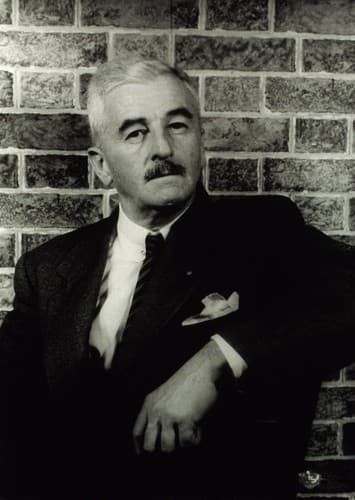
William Cuthbert Faulkner was an American writer known for his novels and short stories set in the fictional Yoknapatawpha County, based on Lafayette County, Mississippi, where Faulkner spent most of his life. A Nobel laureate, Faulkner is one of the most celebrated writers of American literature and often is considered the greatest writer of Southern literature.
Similar books
- As I Lay Dying
William Faulkner
3.7 (137k) average on GoodreadsLiterary FictionShares Faulkner's distinctive stream-of-consciousness style and exploration of Southern poverty and family dynamics.
- A Farewell to Arms
Ernest Hemingway
3.8 (263k) average on GoodreadsHistorical FictionFeatures a doomed love affair against a backdrop of chaos and a similar sense of existential struggle.
- Blood Meridian
Cormac McCarthy
4.2 (227k) average on GoodreadsFictionFor its raw, unflinching portrayal of human depravity and the harshness of the natural world, though set in a different historical context.
- The Grapes of Wrath
John Steinbeck
4.0 (750k) average on GoodreadsHistorical FictionWhile both Faulkner's 'Old Man' narrative and Steinbeck's The Grapes of Wrath (1939) depict human struggle against overwhelming natural and economic forces, their approaches differ. Steinbeck offers a broad, epic social commentary on the plight of migrant workers, with a clear moral and political agenda. Faulkner, in 'Old Man,' focuses on an individual's almost absurd, existential journey through a natural disaster, less concerned with social critique than with the individual's raw confrontation with fate and duty. Steinbeck's narrative is more linear and accessible, aiming for a wide audience's empathy, while Faulkner's is more stylized and focused on the psychological and philosophical dimensions of survival.
- Nineteen Eighty-Four
George Orwell
4.2 (5.5M) average on GoodreadsFictionWinston Smith dreams of truth and rebellion in a world where Big Brother watches all, but he confronts the terrifying power of a regime that controls not just actions, but thoughts.
- The Frozen River
Ariel Lawhon
4.4 (600k) average on GoodreadsFictionIn 1789 Maine, a heroic midwife's diary helps her expose a murder and get justice in a town that wants to silence her.




Enjoyed the summary?
A summary gives you the shape of the book. The book itself has the detail, the examples and the voice.
Find The Wild Palms on AmazonAs an Amazon Associate, BookBrief earns from qualifying purchases. How we're funded