

Synopsis
Covers the whole plot, including the ending.
- Difficulty
- Hard
- Pacing
- Variable
- Mood
- Dark, Desperate, Intense, Melancholy, Psychological
- Read it if
- You enjoy experimental narrative structures, stream-of-consciousness, and deep psychological dives into complex, flawed characters facing extreme circumstances.
- Skip it if
- You prefer linear plots, easy-to-follow prose, or find bleak and often disturbing themes challenging.
As I Lay Dying Plot Summary
Covers the whole plot, including the ending.
Addie's Death and Cash's Work
The novel opens with Addie Bundren on her deathbed, watched by her family. Her eldest son, Cash, a carpenter, is outside her window, building her coffin. His precise work, despite the heat and grief, is a source of both admiration and irritation to his siblings. Darl, the most thoughtful of the children, narrates much of this section, noting Cash's dedication and the coming death. Vardaman, the youngest, struggles to understand his mother's death, connecting her with a fish he has just caught, leading to his declaration, 'My mother is a fish.'
The Coffin and Vardaman's Grief
After Addie's death, Vardaman's distress causes him to drill two holes into the lid of her coffin. He believes this will allow his mother to breathe, a literal interpretation of life and death from his child-like understanding. This act complicates the family's difficult task of preparing for the journey. Darl observes this with a detached understanding of Vardaman's grief. The family then struggles to get Addie's body into the coffin, facing the challenge of her being placed in it upside down due to Cash's earlier measurements, meant to fit her wedding dress.
The Journey Begins: The First River Crossing
The Bundren family, with Addie's coffin loaded onto their wagon, begins the journey to Jefferson, forty miles away, to fulfill Addie's wish to be buried with her own people. Their path is immediately blocked by a flooded river, swollen by recent rains. Jewel, Addie's illegitimate son, struggles with his horse, a symbol of his independence, as they attempt the crossing. The family's determination to honor Addie's wish is tested from the outset, showing their stubborn resolve and the harsh realities of their lives.
Tragedy at the River
During the first attempt to cross the flooded river, tragedy occurs. The wagon overturns, sending the coffin and the family into the current. Vardaman nearly drowns, and several of their mules are lost. Cash breaks his leg, which is then set crudely and painfully by Darl and Jewel. Despite the setbacks — the loss of their animals, Cash's injury, and the near-loss of Addie's coffin — the Bundrens retrieve the coffin and remain determined to continue their journey to Jefferson, showing their commitment to their matriarch's last request.
The Stench and MacGowan's Deception
As the journey continues under the summer sun, Addie's body decays faster, and the stench from the coffin becomes unbearable, attracting buzzards. The family must endure the smell, driving away potential helpers and drawing stares and complaints from townsfolk. Meanwhile, Dewey Dell, pregnant and wanting an abortion, is repeatedly misled and exploited by men. In Mottson, a drug store clerk named MacGowan seduces and deceives her, promising a remedy but using her vulnerability for his own gratification, further showing her isolation and desperation.
Jewel's Sacrifice and Darl's Growing Instability
After the river crossing, the Bundrens face another challenge when their camp catches fire, started by Darl. Jewel, despite his usual distance, rushes into the burning barn to rescue Addie's coffin, proving his deep devotion to his mother. This act solidifies his unique position within the family. Darl's behavior, however, becomes more erratic and philosophical, his narrative sections growing more abstract and unsettling, foreshadowing his mental breakdown. His actions, including the fire, suggest a growing detachment from reality and a desire to end the grotesque journey.
Vardaman's Observation and Darl's Actions
Vardaman, in one of his fragmented narratives, recounts seeing Darl set fire to Gillespie's barn, where Addie's coffin is stored for the night. This confirms Darl's deliberate attempt to cremate his mother's body and end the agonizing journey. Jewel again bravely rescues the coffin from the blaze. Darl's motives are complex: a mix of compassion for his mother's decaying body, a desire to end the family's suffering, and a manifestation of his worsening mental state. The family, though, remains committed to the original plan, despite Darl's drastic intervention.
Arrival in Jefferson and Cash's Operation
After days of travel, enduring the stench and physical hardships, the Bundrens finally arrive in Jefferson. The first order of business is to get proper medical attention for Cash's severely broken leg, which has been crudely splinted and is now infected. He is taken to a doctor, who tells them that the leg must be re-broken and properly set, a painful procedure that Cash endures with his characteristic stoicism. The long-awaited arrival in Jefferson brings some relief, but also new challenges and opportunities for the family members to pursue their individual desires.
Addie's Burial and Dewey Dell's Desperation
Addie Bundren is finally buried in the Jefferson cemetery, fulfilling her dying wish. The burial is a somber affair, concluding the central quest of the novel. Immediately after the burial, Dewey Dell, still pregnant and desperate, tries again to find an abortionist. She meets a man who again exploits her vulnerability, leading to another failed and humiliating attempt to rid herself of the child. Her continued plight highlights the novel's themes of individual struggle and the limited agency of women in their society.
Darl's Committal to Jackson
Following the discovery of his role in setting Gillespie's barn on fire, Darl is declared insane by the family, particularly by Jewel and Vardaman, and is sent to the state mental asylum in Jackson. His articulate, yet increasingly detached, narratives stop, replaced by the stark reality of his confinement. This act, while perhaps necessary for the family, also highlights the harsh treatment of mental illness and the family's desire to maintain a semblance of normalcy and order, even if it means sacrificing one of their own.
Pa's New Teeth and New Wife
After the burial and Darl's departure, Anse, the patriarch, quickly attends to his own desires. He gets a new set of false teeth, a long-held ambition he had postponed due to his perceived bad luck. More strikingly, he returns to the family wagon with a new wife, who has a set of false teeth of her own. This new 'Ms. Bundren' is a jarring and almost comical conclusion to the family's arduous journey, showing Anse's self-serving nature and the quick replacement of Addie, despite the family's recent ordeal.
As I Lay Dying Characters
Addie Bundren
Deceased Matriarch
The deceased mother whose burial wish drives the plot.
Addie is the deceased matriarch whose last wish to be buried in Jefferson with her own people propels the entire narrative. Though dead for most of the story, her presence is deeply felt through the memories and perspectives of her family members, particularly in her own powerful, single monologue. She resents Anse and finds solace only in Cash and Jewel, her illegitimate son. Her life was one of quiet desperation and unfulfilled desires, and her death reveals the complex web of relationships and resentments within the Bundren family.
Relationships: Anse Bundren (Husband; she resents his idleness and self-pity.); Cash Bundren (Eldest son; she sees him as a source of solace and reliability.); Darl Bundren (Son; she feels a strange, unsettling connection to his perceptiveness.); Jewel Bundren (Illegitimate son; her favorite, a fierce and passionate connection.); Dewey Dell Bundren (Daughter; she feels a maternal, yet distant, connection.); Vardaman Bundren (Youngest son; a child she bore out of duty, not love.)
Anse Bundren
Patriarch
The lazy, self-pitying patriarch of the Bundren family.
Anse is the patriarch of the Bundren family, characterized by his extreme idleness, self-pity, and constant complaints about his bad luck. He avoids physical labor, claiming that the upright position will kill him, and consistently prioritizes his own comfort and desires over the well-being of his children. Despite his flaws, he is stubbornly determined to fulfill Addie's dying wish, though his motivations are often self-serving, as evidenced by his quick acquisition of new teeth and a new wife after the burial.
Relationships: Addie Bundren (Wife; he takes her for granted and ultimately replaces her.); All his children (Father; he exploits their labor and emotional support.)
Cash Bundren
Eldest Son
A skilled carpenter, stoic, and pragmatic.
Cash is the eldest Bundren son, a skilled carpenter known for his meticulousness, stoicism, and unwavering sense of duty. He builds Addie's coffin with great care and endures a severely broken leg during the journey without complaint, often expressing himself through his craft rather than words. His narrative sections are often lists of reasons or observations, reflecting his practical and logical mind. He is the most reliable and selfless of the children, consistently putting the family's needs, particularly the completion of the burial, before his own suffering.
Relationships: Addie Bundren (Son; he quietly fulfills her last wish out of love and duty.); Darl Bundren (Brother; he respects Darl's intellect but eventually agrees to his committal.)
Darl Bundren
Second Son
The most articulate and perceptive, yet ultimately unstable, Bundren child.
Darl is the second Bundren son and arguably the most complex character. He possesses a keen intellect, poetic sensibility, and deep perceptiveness, often narrating events from the perspective of others and offering profound insights into human nature. However, his heightened sensitivity and awareness also lead to his mental breakdown. He questions the meaning of existence and the purpose of their journey, eventually attempting to cremate Addie's body to end the suffering, leading to his committal to a mental institution.
Relationships: Addie Bundren (Son; he shares a deep, unsettling understanding with her.); Jewel Bundren (Brother; he often mocks Jewel but also recognizes his fierce loyalty.); Cash Bundren (Brother; he respects Cash's practical nature.)
Jewel Bundren
Illegitimate Son
Addie's illegitimate son, fiercely independent and devoted to his horse.
Jewel is Addie's illegitimate son, a fact known to the family but rarely spoken. He is fiercely independent, taciturn, and often expresses his emotions through intense, sometimes violent, actions rather than words. His most prized possession is his horse, which he works tirelessly to acquire and which symbolizes his wild, untamed spirit. Despite his aloofness and occasional cruelty, he demonstrates a deep, almost primal, devotion to Addie, repeatedly risking his life to protect her coffin during the journey.
Relationships: Addie Bundren (Son; his devotion to her is intense and possessive.); Darl Bundren (Half-brother; he resents Darl's intelligence and mockery.)
Dewey Dell Bundren
Daughter
The only daughter, pregnant and desperate for an abortion.
Dewey Dell is the only daughter of Addie and Anse, and she is secretly pregnant by a farmhand named Lafe. Her primary motivation throughout the journey is to find a doctor or some means to procure an abortion. She is often depicted as naive and vulnerable, easily manipulated by men who promise help but instead exploit her. Her desperation drives her actions, often overshadowing her grief for her mother, and she is largely consumed by her own physical and emotional plight.
Relationships: Addie Bundren (Daughter; she feels a complicated mix of grief and self-preoccupation.); Lafe (Lover; the father of her unborn child.)
Vardaman Bundren
Youngest Son
The youngest child, struggling to comprehend his mother's death.
Vardaman is the youngest Bundren child, struggling to comprehend the abstract concept of death. His grief manifests in literal and sometimes disturbing ways, most famously by equating his mother with a fish he has just caught and dismembered ('My mother is a fish'). He is highly impressionable and often confuses reality with his own child-like logic. His fragmented narratives provide a unique, raw perspective on the events, reflecting his innocence and trauma as he witnesses the family's arduous journey.
Relationships: Addie Bundren (Son; he struggles deeply with her death and its meaning.)
Vernon Tull
Supporting Character
A neighbor and friend to the Bundrens, offering practical assistance and moral commentary.
Vernon Tull is a compassionate and practical neighbor of the Bundrens. He helps them with farm work, offers advice, and provides assistance during Addie's final moments and the initial stages of the funeral journey. His narratives often provide an outsider's perspective on the Bundren family's eccentricities and struggles, grounding the story in the reality of the community. He represents a voice of reason and common decency, often expressing concern for the family's well-being.
Relationships: Bundren family (Neighbor and friend; he often helps them out of kindness.)
Cora Tull
Supporting Character
Vernon Tull's devoutly religious wife and a neighbor.
Cora Tull is Vernon Tull's wife and a neighbor to the Bundrens. She is deeply religious and often expresses her thoughts through a strict, moralistic lens, frequently judging the Bundrens' behavior, particularly Addie's past. Her narratives often focus on her baked goods and her interpretation of divine will, providing a contrast to the Bundrens' more earthly and complicated motivations. She represents a conventional, albeit sometimes judgmental, community perspective.
Relationships: Vernon Tull (Husband.); Addie Bundren (Neighbor; she often judges Addie's character and choices.)
As I Lay Dying Themes
Grief and Loss
The novel explores grief, not as a single emotion but as a personal and often isolating experience. Each Bundren child processes Addie’s death uniquely: Vardaman literally equates her with a fish, Darl intellectualizes and eventually tries to destroy the body to end the suffering, Jewel expresses it through protective actions, and Dewey Dell is largely preoccupied with her own pregnancy. The physical decay of Addie's body throughout the journey is a constant, visceral reminder of loss, forcing the family to confront death in its raw form. The varied responses show how grief can lead to both self-discovery and destruction.
“My mother is a fish.”
Family Duty vs. Individual Desire
A central tension in the novel is the conflict between the family's duty to bury Addie and the individual desires of each Bundren member. While the goal is to fulfill Addie's wish, each character has other motives: Anse wants new teeth and a new wife, Dewey Dell seeks an abortion, and Jewel wants his horse. Even Cash, the most dutiful, has specific reasons for his actions. The difficult journey shows how family bonds, while strong enough to keep them together, are constantly tested by personal aspirations and the often selfish nature of human beings. The resolution of the journey, where Anse immediately fulfills his desires, emphasizes this theme.
“I got them teeth. I got my teeth.”
Communication and Isolation
Faulkner uses the stream-of-consciousness narrative to reveal the isolation within the Bundren family, despite their physical closeness. Each character's internal monologue is distinct, often revealing thoughts and feelings that are never spoken to others. Darl's perceptiveness, for instance, isolates him, as he sees too much. Vardaman's struggle to communicate his grief leads to symbolic actions. The lack of direct, honest communication among the family members worsens their individual struggles and often leads to misunderstandings and resentment. Their journey is a communal act, but experienced by each as a solitary ordeal.
“How often have I lain beneath rain on a strange roof, thinking of home.”
The Nature of Reality and Perception
The novel's multiple perspectives challenge the idea of a single, objective reality. Each character's narrative offers a subjective interpretation of events, colored by their individual biases, understanding, and mental states. What is real for Vardaman (his mother is a fish) is different from Darl's philosophical thoughts or Cash's practical observations. Faulkner forces the reader to piece together the truth from these fragmented and often contradictory accounts. This theme is clear in Darl's deteriorating mental state, where his perception of reality becomes increasingly distorted, and in Addie's own monologue, which redefines her life and relationships.
“I dont know what I am. I dont know if I am or not.”
Poverty and Hardship
The Bundrens' journey is shaped by their extreme poverty and the hardships of rural life in the Deep South. The lack of resources forces them to make difficult choices, such as using a crudely set leg for Cash or enduring the stench of a decomposing body for days. Their dependence on their mules, the loss of which is a major catastrophe, highlights their vulnerability. The family's struggles are not merely emotional but are constantly underscored by the harsh physical realities of their lives, including the flooded river and the need for their meager possessions. This theme grounds the fantastical elements of the journey in a stark, believable reality.
“I reckon I am one of the most unlucky men in the world.”
Plot Devices & Literary Techniques
Multiple First-Person Narrators (Stream of Consciousness)
The story is told through the internal monologues of 15 different characters.
Faulkner employs a revolutionary narrative technique, presenting the story through the stream-of-consciousness monologues of 15 different characters, including the deceased Addie. Each chapter is a distinct voice, offering a subjective and often fragmented perspective on the same events. This device allows for a deep psychological exploration of each character, revealing their individual thoughts, motivations, and perceptions, often in stark contrast to their spoken words or outward actions. It creates a complex, multi-faceted reality where no single truth prevails, compelling the reader to synthesize meaning from disparate viewpoints. This technique is crucial for understanding the themes of communication, perception, and isolation.
Symbolism of the Coffin
The coffin represents duty, suffering, and the physical manifestation of Addie's presence.
Cash's meticulously crafted coffin serves as a powerful symbol throughout the novel. Initially, it represents Cash's dutiful love and skill. However, as the journey progresses, it transforms into a grotesque burden, a source of unbearable stench, and a tangible representation of the family's suffering and stubborn commitment. Its journey through flood and fire, and its repeated retrieval, underscore the family's relentless pursuit of their duty. The coffin also symbolizes Addie's enduring, albeit decaying, presence, which continues to shape and torment her family even after her death. Its placement, and the holes drilled by Vardaman, further emphasize its symbolic weight.
The Journey Itself
The physical journey to Jefferson serves as an extended metaphor for life, grief, and the human condition.
The arduous forty-mile journey from the Bundren farm to Jefferson is more than just a plot device; it functions as an extended metaphor for the human condition, grief, and the family's collective and individual struggles. The physical obstacles—the flooded river, the fire, Cash's broken leg, the stench—mirror the emotional and psychological burdens carried by each character. The journey forces the characters to confront their deepest fears, desires, and relationships, stripping away pretenses. It is a purgatorial passage that tests their resolve, reveals their true natures, and ultimately leads to profound changes (or lack thereof) for each family member.
Animal Symbolism (Fish, Horse, Buzzards)
Animals are used to symbolize primal instincts, individual identity, and the decay of life.
Faulkner employs various animals as powerful symbols. Vardaman's 'My mother is a fish' links Addie's death to the primal act of dismemberment and his inability to comprehend abstract loss, representing his raw, child-like grief. Jewel's horse is a potent symbol of his fierce independence, his untamed nature, and his unique, almost possessive, love for Addie. He works tirelessly to acquire it and fiercely protects it, reflecting his own wild spirit. The ever-present buzzards circling the coffin symbolize the inescapable decay of life, the grotesque reality of death, and the family's increasing isolation due to the putrid smell, serving as a constant, ominous reminder of their burden.
As I Lay Dying Quotes
“I got them for you, Ma. I got them for you.”
“My mother is a fish.”
“I can remember how my father used to say that the reason for living was to get ready to stay dead a long time.”
“How often have I lain beneath rain on a strange roof, thinking of home.”
“It's not your horse. It's not your wagon. And it's not your team.”
“I made it on the bevel. There is more surface for the nails to grip.”
“I would think of the words that my father had put into my mouth, and if I could just stay awake until the day came, I would say them.”
“That's what they mean by the love of a mother. That's what they mean by the love of a mother.”
“And so when the high water came, I said, 'It is God's will.'”
“I could just remember how my mother used to say that the reason for living was to get ready to stay dead a long time.”
“It's not your horse. It's not your wagon. And it's not your team. And it's not your land.”
“How often have I lain beneath rain on a strange roof, thinking of home.”
“I believe in God and the Bible. But it's just like I said: I wouldn't do it for nobody else.”
“I am not crying now. I am not crying now.”
Quiz
10 questions on the plot and the characters. Each answer comes with a short explanation.
Question 1
What is Darl Bundren's primary motivation for burning the barn with Addie's coffin inside?
- To prevent the family from reaching Jefferson, as he believes it's a pointless journey.
- To cleanse Addie's decaying body with fire, believing it's a more fitting end.
- To destroy the evidence of Jewel's illegitimacy.
- To claim the insurance money from the barn for himself.
Show answer
B. To cleanse Addie's decaying body with fire, believing it's a more fitting end. Darl's action is driven by a desire to end the grotesque journey and symbolically purify Addie's decaying body, reflecting his unique and often unsettling perception of reality.
Question 2
Which character famously states, 'My mother is a fish'?
- Cash Bundren
- Vardaman Bundren
- Darl Bundren
- Jewel Bundren
Show answer
B. Vardaman Bundren Vardaman, grappling with his mother's death and having recently caught a fish, equates the two in his young, traumatized mind, symbolizing his inability to process grief directly.
Question 3
What item does Cash Bundren insist on bringing with him on the journey, despite his broken leg?
- His fishing rod
- His carpentry tools
- A photograph of Addie
- A bible
Show answer
B. His carpentry tools Cash's carpentry tools represent his meticulous, practical nature and his dedication to his craft, which he maintains even in extreme physical discomfort.
Question 4
What is the primary reason Anse Bundren is so determined to go to Jefferson?
- To honor Addie's dying wish to be buried with her family.
- To get a new set of teeth and a new wife.
- To collect an inheritance Addie left him there.
- To escape the judgment of his neighbors in Frenchman's Bend.
Show answer
B. To get a new set of teeth and a new wife. Anse's journey is deeply self-serving; he uses Addie's burial as an opportunity to fulfill his own desires, particularly getting new teeth and finding a new wife.
Question 5
What does Jewel's horse symbolize for him?
- His connection to his family and their shared poverty.
- His independence, fierce loyalty, and his mother's secret love.
- His desire to escape the Bundren farm and start a new life.
- His religious devotion and hope for salvation.
Show answer
B. His independence, fierce loyalty, and his mother's secret love. Jewel's horse, bought with money earned through secret labor, represents his fierce individualism, his deep, almost singular attachment to Addie, and his sense of self-worth outside the Bundren family unit.
Question 6
How does Addie Bundren characterize words in her monologue?
- As divine and eternal.
- As empty and meaningless, a 'ludicrous hurdle' between people.
- As essential for human connection and understanding.
- As the foundation of truth and morality.
Show answer
B. As empty and meaningless, a 'ludicrous hurdle' between people. Addie views words as a hollow substitute for true experience and emotion, seeing them as a barrier rather than a bridge between individuals, a central theme in her monologue.
Question 7
What specific event causes Cash to break his leg for the second time during the journey?
- Falling off Jewel's horse.
- Being hit by a runaway wagon.
- The wagon overturning while crossing the flooded river.
- A tree falling on him during a storm.
Show answer
C. The wagon overturning while crossing the flooded river. Cash's leg is re-broken when the wagon overturns during the perilous river crossing, a moment of intense chaos and tragedy for the family.
Question 8
What does Dewey Dell attempt to acquire in Jefferson, besides burying her mother?
- A new dress.
- An abortion.
- Money for her future.
- A husband.
Show answer
B. An abortion. Dewey Dell's desperate attempts to get an abortion highlight her own personal crisis and the limited options available to her as a young, pregnant woman.
Question 9
Why does Darl's narration often stand out from the other characters' monologues?
- He uses the most formal and educated language.
- He provides objective, factual accounts of events.
- He possesses an almost omniscient awareness, describing events he couldn't physically witness.
- He is the only character who speaks in verse.
Show answer
C. He possesses an almost omniscient awareness, describing events he couldn't physically witness. Darl's sections often include details and perspectives he couldn't possibly know firsthand, highlighting his unique, almost psychic, and increasingly unhinged perception of the world and his family.
Question 10
What is the final fate of Darl Bundren?
- He successfully escapes the family and starts a new life.
- He dies in the barn fire he set.
- He is committed to the state insane asylum in Jackson.
- He remains with the family, silently observing.
Show answer
C. He is committed to the state insane asylum in Jackson. Darl is ultimately committed to the insane asylum, a tragic culmination of his perceived madness and the family's desire to rid themselves of his unsettling presence.
As I Lay Dying FAQ
What is the central premise of 'As I Lay Dying'?
The novel recounts the Bundren family's arduous journey to bury their deceased matriarch, Addie Bundren, in her hometown of Jefferson, Mississippi. Narrated through multiple stream-of-consciousness monologues, it details the physical and emotional challenges they face, driven by a mixture of obligation, self-interest, and a promise made to Addie.
Who are the primary members of the Bundren family featured in the narrative?
The family consists of Anse, the patriarch; Addie, the deceased mother; and their five children: Cash, the skilled carpenter; Darl, the introspective and poetic philosopher; Jewel, the illegitimate and fiercely independent son; Dewey Dell, the pregnant daughter; and Vardaman, the youngest, who struggles to comprehend death.
What significant obstacles do the Bundrens encounter during their journey to Jefferson?
Their journey is plagued by numerous misfortunes, including a flooded river that nearly drowns them and sweeps away Addie's coffin, Cash breaking his leg again, the rotting corpse attracting buzzards and emitting a foul odor, and a barn fire started by Darl. These events test the family's resilience and expose their individual motivations.
How does the narrative structure contribute to the reader's understanding of the Bundren family?
The novel is unique for its use of 59 stream-of-consciousness monologues from 15 different characters, offering fragmented and often contradictory perspectives. This multi-vocal approach allows readers to piece together the events and gain deep insight into each character's inner thoughts, motivations, and perceptions of one another, revealing the complex dynamics of the family.
What is the significance of the title 'As I Lay Dying'?
The title is a direct quote from Homer's 'Odyssey,' spoken by Agamemnon's ghost, lamenting his betrayal and murder. In Faulkner's novel, it reflects Addie's own sense of betrayal and her quiet suffering during her life, particularly concerning her marriage to Anse and her feelings about her children, which she reveals in her single, powerful monologue.
What is the true paternity of Jewel, and how does it impact his character?
Jewel is the illegitimate son of Addie and Whitfield, the minister. This secret paternity explains Addie's favoritism towards him and Jewel's intense, almost animalistic devotion to his horse, which he bought by secretly working. His wildness and detachment from the rest of the family stem from his unique position and Addie's unspoken bond with him.
How does Cash's meticulous carpentry on Addie's coffin reveal a hidden detail about his character?
Cash's precise and almost obsessive construction of Addie's coffin, despite his broken leg and the family's impatience, reveals his deep respect for craftsmanship and order, but also a quiet, profound devotion to his mother. His detailed list of reasons for the coffin's flawed angles, even after the journey, underscores his logical and practical nature, contrasting with the family's emotional chaos.
What is the underlying reason for Darl's eventual institutionalization?
Darl's heightened sensitivity, philosophical musings, and ability to perceive others' thoughts and hidden truths lead to his increasing alienation and eventual breakdown. His act of setting fire to Gillespie's barn, an attempt to end the grotesque journey and symbolically purify Addie's decaying body, is perceived as madness by his family, leading to his forced commitment.
How does Dewey Dell's pregnancy influence her actions and psychological state throughout the journey?
Dewey Dell's unwanted pregnancy consumes her thoughts and drives her actions, particularly her desperate attempts to find an abortion. Her internal monologues reveal her fear, shame, and a sense of isolation, making her increasingly self-absorbed and less concerned with Addie's burial than with her own predicament, using the journey as an opportunity to seek a solution.
Analyze Anse's psychological motivations for fulfilling Addie's burial request.
Anse, despite his apparent indolence and self-pity, is primarily motivated by a desire for personal gain and a superficial adherence to social propriety. He leverages the burial as an opportunity to acquire a new set of teeth, a new wife (Mrs. Bundren), and a new family dynamic, revealing a deep-seated selfishness masked by a veneer of duty.
How does Vardaman's famous line, 'My mother is a fish,' reflect his psychological coping mechanism?
Vardaman's association of his mother with a fish stems from his traumatic experience of catching and gutting a fish shortly after Addie's death. This symbolic equivalence is his child-like attempt to process the incomprehensible concept of death, equating the violence of gutting the fish with the loss and emptiness he feels from his mother's absence, making her death tangible.
Is Addie Bundren a sympathetic character, despite her harsh monologue and past actions?
Addie is a complex character whose single monologue provides crucial insight into her life of quiet desperation and her feeling of being misunderstood. While her confession of having Jewel out of wedlock and her resentment towards her other children and Anse might seem unsympathetic, her yearning for genuine connection and her struggle against the perceived emptiness of words evoke a tragic sympathy.
What is the significance of the Bundrens' journey being described as both heroic and absurd?
The journey is heroic in its sheer perseverance against immense natural and emotional obstacles, demonstrating a raw human determination. However, it is also profoundly absurd due to the family's ulterior motives, the decaying corpse, and the ultimate selfish outcomes, creating a dark comedic irony that highlights the human capacity for both endurance and self-delusion.
How does the novel critique traditional notions of family and duty?
Faulkner deconstructs the idealized image of family by revealing the Bundrens as a collection of isolated individuals driven by their own desires, fears, and resentments, rather than a cohesive unit united by love. Their 'duty' to bury Addie is frequently overshadowed by personal gain and a superficial adherence to societal expectations, exposing the fragility and often transactional nature of familial bonds.
To what extent can Darl's 'madness' be seen as a form of heightened perception or truth-telling?
Darl's 'madness' can be interpreted not as a loss of sanity, but as an inability to reconcile his acute perception of reality – including the hidden motives and truths of his family – with their collective denial and self-deception. His poetic insights and ability to narrate events he wasn't present for suggest a profound, almost psychic, understanding that others cannot bear, leading to his isolation and eventual institutionalization as a societal rejection of uncomfortable truths.
What symbolic role does Addie's decaying corpse play throughout the novel?
Addie's decaying corpse is a potent symbol of mortality, the inescapable past, and the family's burden. Its putrefaction mirrors the moral decay and dysfunction within the Bundren family, forcing them to confront the physical reality of death and the unpleasant consequences of their actions. It also serves as a constant, malodorous reminder of the promise they made and the selfish reasons for fulfilling it.
How does Faulkner use the Deep South setting to enhance the novel's themes?
The harsh, rural Deep South setting, with its unforgiving landscapes, poverty, and isolation, intensifies the Bundrens' struggle and underscores their resilience. The vernacular language and specific cultural context root the story in a sense of place, while the challenging environment itself becomes a character, mirroring the internal struggles and the primitive, often brutal, aspects of human nature explored in the narrative.
What is the ultimate fate of the Bundren family at the end of the novel?
By the end, the family is dramatically altered: Addie is buried, Darl is committed to a mental asylum, Cash has a permanently injured leg, Dewey Dell is still pregnant and has been exploited, Vardaman remains traumatized, and Anse has acquired new teeth and a new wife, Mrs. Bundren. The family unit is fractured and irrevocably changed, revealing the selfish motives behind their collective ordeal.
About the author
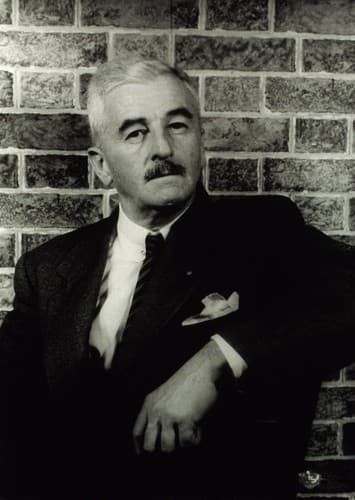
William Cuthbert Faulkner was an American writer known for his novels and short stories set in the fictional Yoknapatawpha County, based on Lafayette County, Mississippi, where Faulkner spent most of his life. A Nobel laureate, Faulkner is one of the most celebrated writers of American literature and often is considered the greatest writer of Southern literature.
Similar books
- The Sound and the Fury
William Faulkner
3.9 (158k) average on GoodreadsLiterary FictionShares Faulkner's experimental narrative style, multiple perspectives, and Southern Gothic themes.
- Mrs Dalloway
Virginia Woolf
3.8 (361k) average on GoodreadsFictionVirginia Woolf's Mrs Dalloway (1925) also utilizes stream-of-consciousness and multiple perspectives to explore a single day in London. Both novels are modernist masterpieces known for their psychological depth and innovative narrative techniques. However, while Mrs Dalloway focuses on the internal lives and social interactions within a relatively confined urban setting, As I Lay Dying depicts a physical journey through a rural landscape, where the external challenges and the raw, often brutal realities of poverty and nature play a more significant role in shaping the characters' experiences and internal monologues. Woolf's prose, while intricate, often feels more lyrical and reflective, whereas Faulkner's in As I Lay Dying can be more visceral, raw, and rooted in the vernacular.
- The Old Man and the Sea
Ernest Hemingway
3.8 (831k) average on GoodreadsLiterary FictionA Cuban fisherman's long struggle with a giant marlin becomes a story of endurance and dignity, now retold for young adults with illustrations, phonetic guides, and writing prompts in Traditional Chinese.
- One Hundred Years of Solitude
Gabriel García Márquez
4.1 (753k) average on GoodreadsLiterary FictionThrough the multi-generational story of the Buendía family, a mythical town deals with the repeating patterns of time, love, and solitude, as the extraordinary mixes with the ordinary.
- The Goldfinch
Donna Tartt
3.9 (720k) average on GoodreadsLiterary FictionHaunted by a tragic explosion and clutching a stolen Dutch masterpiece, a young orphan navigates the opulent drawing rooms of New York and the gritty underbelly of the art world, desperately seeking connection and redemption amidst a life spiraling into crime and obsession.
- Little Fires Everywhere
Celeste Ng
4.1 (713k) average on GoodreadsLiterary FictionIn Shaker Heights, an artist and her daughter move in, and their free-spirited lives clash with a rule-bound matriarch, revealing hidden conflicts beneath a perfect surface.






Enjoyed the summary?
A summary gives you the shape of the book. The book itself has the detail, the examples and the voice.
Find As I Lay Dying on AmazonAs an Amazon Associate, BookBrief earns from qualifying purchases. How we're funded