
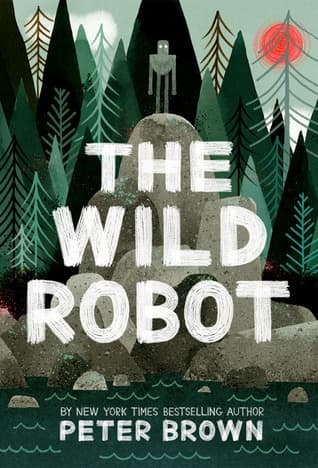
Synopsis
Covers the whole plot, including the ending.
- Difficulty
- Easy
Principal Figures
ROZ (Unit 7134)
Protagonist
A highly advanced robot who washes ashore on a remote island. Initially programmed for survival, she gradually develops sentience, empathy, and a profound connection to the natural world and its inhabitants.
Relationships: Brightbill (Adopted son; their bond is central to Roz's emotional development.); Fuzzy (A close friend and mentor who teaches Roz about the island.); The Island Animals (Her adopted community and family; she becomes their protector.); RECO units (Antagonists; representatives of the human world trying to reclaim her.)
Brightbill
Supporting
An orphaned gosling adopted by Roz. He is curious, adventurous, and serves as Roz's primary connection to the animal world and her catalyst for emotional growth.
Relationships: ROZ (His adoptive mother; their bond is the emotional core of the story.); Other Geese (His biological family and flock, which he eventually joins for migration.)
Fuzzy
Supporting
A wise and elderly goose who initially distrusts Roz but becomes her first friend and mentor, teaching her the ways of the wild.
Relationships: ROZ (Close friend and mentor, providing guidance and wisdom.); Other Geese (A respected elder within his flock.)
Longneck
Supporting
A kind and gentle deer, one of the first animals to approach Roz without fear. She embodies grace and the peaceful aspects of nature.
Relationships: ROZ (A trusted friend and early ally on the island.)
Paddler
Supporting
A beaver known for his industriousness and practical skills. He aids Roz in constructing her nest and other projects.
Relationships: ROZ (A helpful collaborator and friend, assisting with construction.)
Rumpus
Supporting
A grumpy, but ultimately helpful, bear who teaches Roz about foraging and the island's resources.
Relationships: ROZ (An unlikely friend and teacher, sharing knowledge of the wild.)
RECO units (Recalibrators)
Antagonists
Other robots sent by the manufacturer to retrieve and 'recalibrate' Roz. They are purely logical, destructive, and represent the impersonal force of human technology.
Relationships: ROZ (Antagonistic; they are programmed to capture and deactivate her.)
Quiz
10 questions on the plot and the characters. Each answer comes with a short explanation.
Question 1
What is the name of the main character in the book?
- Roz
- Blink
- Crunch
Show answer
A. Roz Roz is the name of the robot who is the main character in the book.
Question 2
Where does Roz find herself at the beginning of the story?
- In a factory
- On an island
- In a city
Show answer
B. On an island Roz finds herself on an island at the beginning of the story after being shipwrecked.
Question 3
What animals does Roz encounter on the island?
- Only birds
- Only monkeys
- Various animals including otters, beavers, and bears
Show answer
C. Various animals including otters, beavers, and bears Roz encounters various animals including otters, beavers, and bears on the island.
Question 4
How does Roz communicate with the animals on the island?
- Through a special language chip
- Using sign language
- By making robot sounds
Show answer
B. Using sign language Roz communicates with the animals on the island using sign language that she learns from a manual.
Question 5
Who is Brightbill?
- A lost sailor
- A young gosling
- A wise owl
Show answer
B. A young gosling Brightbill is a young gosling that Roz adopts and cares for on the island.
Question 6
What happens to Roz's memory module?
- It gets damaged by lightning
- It is stolen by the animals
- It is eventually restored by the end of the story
Show answer
C. It is eventually restored by the end of the story Roz's memory module gets damaged but is eventually restored by the end of the story, allowing her to remember her past.
Question 7
How does Roz help the animals during the harsh winter?
- By building them shelters
- By teaching them to hunt
- By leaving the island to find help
Show answer
A. By building them shelters Roz helps the animals during the harsh winter by building them shelters to keep them warm and safe.
Question 8
Who is Mr. Shareef?
- A robot hunter
- A scientist studying animal behavior
- A lost human survivor
Show answer
B. A scientist studying animal behavior Mr. Shareef is a scientist who studies animal behavior and becomes intrigued by Roz's interactions with the animals.
Question 9
What is the ultimate fate of Roz at the end of the story?
- She is dismantled and recycled
- She leaves the island to find other robots
- She becomes an integral part of the island community
Show answer
C. She becomes an integral part of the island community At the end of the story, Roz becomes an integral part of the island community and continues to live among the animals.
Question 10
How does the book explore themes of nature versus technology?
- By portraying technology as superior to nature
- By showing the harmony between nature and technology through Roz's experiences
- By depicting nature as obsolete in the presence of advanced technology
Show answer
B. By showing the harmony between nature and technology through Roz's experiences The book explores themes of nature versus technology by showing the harmony between nature and technology through Roz's experiences and interactions with the animals.
The Wild Robot FAQ
What is 'The Wild Robot' about?
'The Wild Robot' is a non-fiction book by Peter Brown that follows a robot named Roz who becomes stranded on a remote island. She learns to adapt to the wild environment and forms unexpected bonds with the animals and nature around her.
Is 'The Wild Robot' based on a true story?
No, 'The Wild Robot' is a work of fiction, not non-fiction. It is a story about a robot's journey of adaptation and connection in a natural setting, created by author Peter Brown.
What is the main theme of 'The Wild Robot'?
The main theme of 'The Wild Robot' is adaptation and connection. It explores how Roz, a robot, learns to survive in the wild and builds relationships with animals, highlighting themes of empathy, nature, and technology.
How does Roz adapt to the island in 'The Wild Robot'?
Roz adapts by observing and learning from the animals and environment. She develops skills like camouflage, communication with animals, and problem-solving to survive and thrive in the wild.
Does 'The Wild Robot' work as an educational book for children?
Yes, 'The Wild Robot' works well as an educational book for children. It teaches lessons about nature, empathy, and resilience through an engaging story, making it suitable for young readers.
What age group is 'The Wild Robot' suitable for?
'The Wild Robot' is suitable for children aged 8 to 12, but its themes of adaptation and connection can appeal to readers of all ages, including adults interested in nature and technology stories.
How is 'The Wild Robot' different from other robot-themed books?
'The Wild Robot' differs by focusing on a robot's integration into nature rather than urban or futuristic settings. It emphasizes ecological themes and emotional growth, unlike many robot stories that center on technology or action.
What is the role of animals in 'The Wild Robot'?
Animals play a crucial role as Roz's companions and teachers. They help her learn about the island, form a community, and highlight the book's themes of interdependence and friendship in nature.
Does 'The Wild Robot' have a sequel?
Yes, 'The Wild Robot' has a sequel titled 'The Wild Robot Escapes'. It continues Roz's adventures as she navigates new challenges and further explores themes of home and belonging.
How does 'The Wild Robot' compare to Peter Brown's other books?
'The Wild Robot' is unique in Peter Brown's work for its blend of robotics and nature themes. Unlike his picture books, it is a longer narrative that delves into deeper ecological and emotional concepts.
About the author
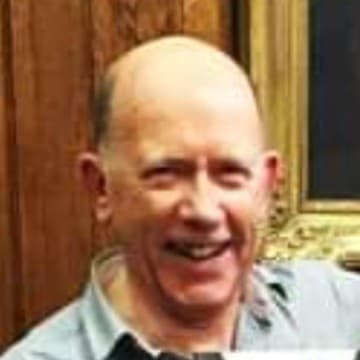
Peter Brown is an author and illustrator known for his children's books. He is the creator of "The Wild Robot" and its sequel, "The Wild Robot Escapes," which explore themes of nature and technology through the adventures of a robot in the wilderness. Brown's work often combines engaging storytelling with vivid illustrations.
Similar books
- Sapiens: A Brief History of Humankind
Yuval Noah Harari
4.4 (502k) average on GoodreadsPsychologyHarari's Sapiens analyzes the cognitive revolution and the power of shared fictions in human history. The Wild Robot, though fictional itself, explores a similar cognitive leap in an artificial being, Roz, who develops complex problem-solving skills and emotional intelligence. While Harari focuses on humanity's past, Brown speculates on a future where non-human intelligence might forge its own 'culture' and community, challenging Harari's human-centric view of intelligence and cooperation.
- Harry Potter and the Sorcerer's Stone
J.K. Rowling
4.5 (7M) average on GoodreadsFantasyRescued from a miserable life under the stairs, an orphaned boy discovers he's a wizard destined for a magical school, where he uncovers a dangerous secret tied to the dark wizard who murdered his parents.
- The Hunger Games
Suzanne Collins
4.3 (6.4M) average on GoodreadsFantasyIn a future where children fight to the death on live television, Katniss Everdeen volunteers for the arena, turning a death sentence into a fight for survival and a spark of rebellion.
- 1984
George Orwell
4.2 (3.1M) average on GoodreadsPoliticsIn a future where surveillance and thought control are absolute, a man's search for truth clashes with the Party, showing that hope can be a form of rebellion.
- Divergent
Veronica Roth
4.2 (2.9M) average on GoodreadsFantasyIn a society divided by virtues, a sixteen-year-old's difference from the norm starts a rebellion that threatens her world.
- The Hobbit, or There and Back Again
J.R.R. Tolkien
4.3 (2.9M) average on GoodreadsFantasyA comfort-loving hobbit named Bilbo Baggins is whisked away by a mischievous wizard and a band of dwarves on an unexpected journey to reclaim stolen treasure from a fearsome dragon, discovering courage and a magical ring along the way.






Enjoyed the summary?
A summary gives you the shape of the book. The book itself has the detail, the examples and the voice.
Find The Wild Robot on AmazonAs an Amazon Associate, BookBrief earns from qualifying purchases. How we're funded