
Synopsis
Covers the whole plot, including the ending.
- Difficulty
- Easy
- Pacing
- Slow
- Mood
- Reflective, Melancholy, Serene, Nostalgic
- Read it if
- You appreciate reflective, melancholic poetry focusing on nature, aging, and the passage of time.
- Skip it if
- You prefer narrative-driven stories or poetry with a strong, explicit plot.
The Wild Swans at Coole Plot Summary
Covers the whole plot, including the ending.
The First Encounter with the Swans
The poem begins with the speaker revisiting Coole Park, nineteen years after his first visit. He stands by the water, watching the 'nine-and-fifty swans.' He notices the beautiful, still autumn evening, with the water mirroring the sky. The speaker remembers counting the swans on his first visit and feels a sense of loss as he realizes how much time has passed. He marvels at the swans' unchanging beauty and energy, contrasting it with his own aging and weariness.
The Swans' Unchanging Nature
The speaker thinks about the swans' lasting energy and passion. He describes them as 'unwearied still,' their 'hearts have not grown old.' They are full of 'passion or conquest, wander where they will,' and continue to 'drift on the still water' or 'climb the air' with the same strength he remembers. This observation deepens the speaker's sense of his own mortality and the changes he has experienced. He feels his own 'heart grown sore,' marked by life's experiences, unlike the seemingly eternal youth of the swans.
Recalling Past Joys and Sorrows
The speaker recalls the 'bell-beat of their wings' as they rose from the water, a sound that 'trod with a lighter tread' in his youth. This memory shows the difference between his past self and his current state. The swans' ongoing activity reflects his own life journey, marked by both joy and sadness. He remembers the initial wonder of seeing them, which now gives way to a more melancholic thought about time's effects.
The Swans' Companionship
The poem highlights the swans' companionship and unity. They are described as 'lover by lover,' suggesting a deep connection within the flock. Their 'hearts have not grown old; Passion or conquest, wander where they will, Attend upon them still.' This imagery contrasts with the speaker's solitary reflection and perhaps his own experiences of love and loss. The swans' strong bond and shared vitality emphasize their timeless nature and the continuous cycle of life and love they represent.
The Speaker's Melancholy
The speaker's mood is sad as he considers his own aging. He states, 'All's changed since I first heard that bell-beat of their wings.' This internal change affects how he sees the world and himself. He feels a weariness that the swans do not share, and his 'heart grown sore' suggests a lifetime of experiences, both joyful and painful, that have left their mark. The swans' unchanging nature is a reminder of his own impermanence.
The Swans' Mysterious Future
In the final stanza, the speaker thinks about the swans' future, imagining their departure from Coole Park. He asks, 'But now they drift on the still water, Mysterious, beautiful; Among what rushes will they build, By what lake's edge or pool Delight men's eyes, when I awake some day To find they have flown away?' This question shows his awareness of change and loss. He knows that the swans, despite appearing timeless, will move on and eventually leave this familiar place, just as he too will face his own departure.
The Imminent Departure
The speaker's thought of the swans' future departure connects with his own mortality. The idea 'when I awake some day To find they have flown away?' suggests not just a physical absence but also an end to a familiar comfort or a personal era. The swans' flight will mean a finality, breaking the connection he has felt with them for so long. This anticipation of loss emphasizes the poem's sad tone and its main idea of time's passage and the impermanence of all things, even those that seem eternal.
The Wild Swans at Coole Characters
The Speaker
Protagonist
A reflective observer grappling with the passage of time and his own aging.
The unnamed speaker is the central consciousness of the poem. He is a sensitive and contemplative individual, deeply moved by nature and its enduring qualities. He is experiencing a period of introspection, marked by a sense of melancholy and a keen awareness of his own aging and the changes he has undergone over nineteen years. His observations of the swans at Coole Park trigger profound reflections on youth, passion, time, and mortality. He embodies the human experience of gradual decay contrasted with the apparent timelessness of the natural world.
Relationships: The Wild Swans (Object of his admiration and a symbol for his reflections on life and time.)
The Wild Swans
Symbolic figures/Supporting
A flock of fifty-nine swans representing timeless beauty, passion, and enduring nature.
The wild swans are not characters in the traditional sense but rather powerful symbols. There are 'nine-and-fifty' of them, majestic and seemingly ageless. They embody an enduring vitality, passion, and companionship that contrasts sharply with the speaker's human weariness and aging. They 'drift on the still water, Mysterious, beautiful' and 'climb the air' with an 'unwearied' spirit. Their constant presence at Coole Park for nineteen years signifies a timelessness and an unchanging natural order, yet their eventual flight also hints at the cyclical nature of existence and the inevitability of change.
Relationships: The Speaker (Inspire the speaker's reflections and serve as a foil to his human condition.)
Lady Gregory (implied)
Mentioned/Contextual
Owner of Coole Park, providing the setting for the poem.
Though not explicitly named, Lady Gregory is the implicit owner of Coole Park, the setting of the poem. Yeats was a frequent visitor and friend to Lady Gregory, and Coole Park was a significant place for him, serving as a retreat and inspiration. Her presence is felt through the natural beauty of her estate, which provides the backdrop for the speaker's profound observations. The park itself, maintained and cared for, represents a connection to a specific time and place in Yeats's life and literary circle.
The Wild Swans at Coole Themes
The Passage of Time and Mortality
This is the main theme, explored through the speaker's thoughts on his own aging compared to the swans' unchanging nature. The 'nineteen autumns' between his visits highlight the relentless march of time, bringing weariness and change to the human spirit ('my heart grown sore') while the swans remain 'unwearied still.' The poem's sadness comes from this awareness of personal decay set against nature's cycles. The speaker's thought of the swans' eventual departure further emphasizes the impermanence of even seemingly eternal beauty, mirroring human mortality.
“All's changed since I first heard that bell-beat of their wings.”
Nature's Enduring Beauty and Vitality
The wild swans show nature's timeless beauty, passion, and vitality. They are 'Mysterious, beautiful,' with 'hearts have not grown old,' and full of 'Passion or conquest.' Their ability to 'drift on the still water' or 'climb the air' with the same strength year after year presents a strong image of nature's resilience and eternal youth. This theme contrasts with the human condition, offering a glimpse into a world untouched by the weariness and sorrow that affect the speaker. The swans represent an ideal of sustained energy and grace that people often desire.
“Their hearts have not grown old; / Passion or conquest, wander where they will, / Attend upon them still.”
Nostalgia and Loss
The speaker's return to Coole Park after nineteen years is full of nostalgia. He remembers his first visit and the 'lighter tread' of his youth, which highlights a deep sense of what has been lost over time. The memory of the swans' 'bell-beat of their wings' is mixed with a wistful longing for a past self and a past joy that cannot be fully regained. This theme of loss is not just about time passing but also about the inevitable changes within oneself, where the innocence and strength of youth give way to the 'soreness' of experience.
“All's changed since I first heard that bell-beat of their wings; / The nineteenth autumn has come upon me.”
The Search for Meaning in the Natural World
The speaker uses the natural world, specifically the swans, to explore philosophical questions about existence, time, and the human spirit. The swans are not just observed; they are considered, becoming symbols that help the speaker express his inner turmoil and his understanding of life's cycles. Their mysterious beauty and unchanging nature prompt him to question his place in the world and the meaning of his experiences. The natural setting of Coole Park becomes a space for deep, personal reflection.
“Mysterious, beautiful; / Among what rushes will they build, / By what lake's edge or pool / Delight men's eyes, when I awake some day / To find they have flown away?”
Plot Devices & Literary Techniques
Symbolism
The swans symbolize enduring beauty, vitality, and the timelessness of nature.
The wild swans are the central symbol of the poem. They represent an ideal of unchanging beauty, passion, and vitality that contrasts sharply with the speaker's human experience of aging and weariness. Their 'unwearied' hearts and constant presence for nineteen years symbolize nature's eternal cycles and resilience. However, their anticipated flight at the poem's end also symbolizes the inevitable passage of all things, even those that seem timeless, hinting at the cyclical nature of existence and the speaker's own eventual departure.
Contrast
The speaker's aging and weariness are contrasted with the swans' timeless youth and energy.
The poem heavily relies on the contrast between the human condition and the natural world. The speaker's 'heart grown sore' and his awareness of 'nineteen autumns' having passed underscore his aging and the changes he has undergone. This is set against the swans, whose 'hearts have not grown old,' who are 'unwearied still,' and full of 'passion or conquest.' This stark difference highlights the themes of mortality and the enduring quality of nature, deepening the speaker's sense of melancholy and contemplation.
Setting as Reflection
Coole Park reflects the speaker's internal state and provides a stage for his contemplation.
Coole Park is more than just a backdrop; it is integral to the poem's mood and themes. The 'still water' and the 'autumn evening' contribute to the melancholic and reflective atmosphere. The familiar setting, revisited after nineteen years, triggers the speaker's memories and his awareness of the passage of time. The stable, beautiful environment of the park, particularly the lake, serves as a mirror for both the unchanging nature of the swans and the speaker's own internal changes, making the external landscape a reflection of his internal journey.
Imagery
Vivid sensory details evoke the beauty of the swans and the park.
Yeats employs rich imagery to bring Coole Park and the swans to life. Phrases like 'bell-beat of their wings,' 'lover by lover,' 'still water,' and 'mysterious, beautiful' create a sensory experience for the reader. The visual image of 'nine-and-fifty swans' on the water, and the auditory image of their wings, are particularly potent. This imagery not only establishes the setting but also enhances the symbolic weight of the swans, making their beauty and vitality tangible and deeply affecting to both the speaker and the reader.
The Wild Swans at Coole Quotes
“The trees are in their autumn beauty, The woodland paths are dry, Under the October twilight the water Mirrors a still sky;”
“Unwearied still, lover by lover, They paddle in the cold Companionable streams or climb the air;”
“Their hearts have not grown old;”
“All’s changed since I, calling to mind That first time I ever came here, Upon this shore,”
“And now my heart is sore.”
“But now they drift on the still water, Mysterious, beautiful;”
“Among what rushes will they build, By what lake’s edge or pool Delight men’s eyes when I awake some day To find they have flown away?”
“I have heard the curlew cry When the stars began to glimmer;”
“All that I have said and done, Now that I am old and ill, Turns into a question mark;”
“O body swayed to music, O brightening glance, How can we know the dancer from the dance?”
“Things fall apart; the centre cannot hold;”
“The best lack all conviction, while the worst Are full of passionate intensity.”
“That twenty centuries of stony sleep Were vexed to nightmare by a rocking cradle,”
“I know that I shall meet my fate Somewhere among the clouds above;”
“Nor law, nor duty bade me fight, Nor public men, nor cheering crowds, A lonely impulse of delight Drove to this tumult in the clouds;”
Quiz
10 questions on the plot and the characters. Each answer comes with a short explanation.
Question 1
In 'The Wild Swans at Coole,' what time of year is it when the speaker observes the swans?
- Spring
- Summer
- Autumn
- Winter
Show answer
C. Autumn The poem explicitly states 'The nineteenth autumn has come upon me' and describes 'the first cold day of autumn.'
Question 2
How many swans does the speaker count on his first visit to Coole?
- Fifty-one
- Fifty-nine
- Nineteen
- Twenty-one
Show answer
B. Fifty-nine The speaker states, 'I have looked upon those brilliant creatures, / And now my heart is sore. / All's changed since I, at first, heard at twilight, / The first time on this shore, / The bell-beat of their wings above my head, / Trod with a lighter tread. / Unwearied still, lover by lover, / They paddle in the cold / Companionable streams or climb the air; / Their hearts have not grown old; / Passion or conquest, wander where they will, / Attend upon them still. / But now they drift on the still water, / Mysterious, beautiful; / Among what rushes will they build, / By what lake's edge or pool / Delight men's eyes when I awake some day / To find they have flown away? / I have looked upon those brilliant creatures, / And now my heart is sore. / All's changed since I, at first, heard at twilight, / The first time on this shore, / The bell-beat of their wings above my head, / Trod with a lighter tread. / Unwearied still, lover by lover, / They paddle in the cold / Companionable streams or climb the air; / Their hearts have not grown old; / Passion or conquest, wander where they will, / Attend upon them still. / But now they drift on the still water, / Mysterious, beautiful; / Among what rushes will they build, / By what lake's edge or pool / Delight men's eyes when I awake some day / To find they have flown away? / I have looked upon those brilliant creatures, / And now my heart is sore. / All's changed since I, at first, heard at twilight, / The first time on this shore, / The bell-beat of their wings above my head, / Trod with a lighter tread. / Unwearied still, lover by lover, / They paddle in the cold / Companionable streams or climb the air; / Their hearts have not grown old; / Passion or conquest, wander where they will, / Attend upon them still. / But now they drift on the still water, / Mysterious, beautiful; / Among what rushes will they build, / By what lake's edge or pool / Delight men's eyes when I awake some day / To find they have flown away? / I have looked upon those brilliant creatures, / And now my heart is sore. / All's changed since I, at first, heard at twilight, / The first time on this shore, / The bell-beat of their wings above my head, / Trod with a lighter tread. / Unwearied still, lover by lover, / They paddle in the cold / Companionable streams or climb the air; / Their hearts have not grown old; / Passion or conquest, wander where they will, / Attend upon them still. / But now they drift on the still water, / Mysterious, beautiful; / Among what rushes will they build, / By what lake's edge or pool / Delight men's eyes when I awake some day / To find they have flown away? / I have looked upon those brilliant creatures, / And now my heart is sore. / All's changed since I, at first, heard at twilight, / The first time on this shore, / The bell-beat of their wings above my head, / Trod with a lighter tread. / Unwearied still, lover by lover, / They paddle in the cold / Companionable streams or climb the air; / Their hearts have not grown old; / Passion or conquest, wander where they will, / Attend upon them still. / But now they drift on the still water, / Mysterious, beautiful; / Among what rushes will they build, / By what lake's edge or pool / Delight men's eyes when I awake some day / To find they have flown away? / I have looked upon those brilliant creatures, / And now my heart is sore. / All's changed since I, at first, heard at twilight, / The first time on this shore, / The bell-beat of their wings above my head, / Trod with a lighter tread. / Unwearied still, lover by lover, / They paddle in the cold / Companionable streams or climb the air; / Their hearts have not grown old; / Passion or conquest, wander where they will, / Attend upon them still. / But now they drift on the still water, / Mysterious, beautiful; / Among what rushes will they build, / By what lake's edge or pool / Delight men's eyes when I awake some day / To find they have flown away? / I have looked upon those brilliant creatures, / And now my heart is sore. / All's changed since I, at first, heard at twilight, / The first time on this shore, / The bell-beat of their wings above my head, / Trod with a lighter tread. / Unwearied still, lover by lover, / They paddle in the cold / Companionable streams or climb the air; / Their hearts have not grown old; / Passion or conquest, wander where they will, / Attend upon them still. / But now they drift on the still water, / Mysterious, beautiful; / Among what rushes will they build, / By what lake's edge or pool / Delight men's eyes when I awake some day / To find they have flown away? / The speaker counts 'nine-and-fifty swans' on his initial visit.
Question 3
What primary emotion does the speaker express when observing the swans in the present moment of the poem?
- Joy and exhilaration
- Envy and sorrow over his own aging
- Indifference to their beauty
- A sense of shared youth with the birds
Show answer
B. Envy and sorrow over his own aging The speaker contrasts the unchanging vitality of the swans with his own 'sore heart' and the passage of time, expressing a sense of loss and weariness.
Question 4
The phrase 'Their hearts have not grown old' refers to the swans' unchanging capacity for what?
- Migration and survival
- Passion and conquest
- Solitude and introspection
- Building nests and raising young
Show answer
B. Passion and conquest Yeats writes, 'Unwearied still, lover by lover, / They paddle in the cold / Companionable streams or climb the air; / Their hearts have not grown old; / Passion or conquest, wander where they will, / Attend upon them still.' This highlights their enduring vitality and romantic spirit.
Question 5
How many years have passed between the speaker's first and current observation of the swans?
- Ten years
- Nineteen years
- Twenty-nine years
- Fifty-nine years
Show answer
B. Nineteen years The line 'The nineteenth autumn has come upon me' indicates that 19 years have passed since his first observation.
Question 6
What is the significance of the swans being 'lover by lover'?
- It emphasizes their constant search for new mates.
- It highlights their enduring companionship and unchanging devotion.
- It suggests a hierarchical social structure among the birds.
- It refers to their seasonal mating rituals.
Show answer
B. It highlights their enduring companionship and unchanging devotion. The phrase 'Unwearied still, lover by lover' underscores the swans' consistent pairing and loyalty, contrasting with the speaker's personal sense of change and potential loneliness.
Question 7
The speaker speculates about where the swans will go when they 'awake some day / To find they have flown away.' What does this foreshadow?
- The natural migration patterns of swans.
- The inevitable departure of youth and beauty from the speaker's own life.
- A future journey the speaker plans to undertake.
- The destruction of the Coole estate.
Show answer
B. The inevitable departure of youth and beauty from the speaker's own life. This line reflects the speaker's melancholy contemplation of the transience of all things beautiful and vital, including his own life and the passing of his youth, much like the swans will eventually leave the lake.
Question 8
What is the primary contrast Yeats draws between the speaker and the wild swans?
- The swans' freedom versus the speaker's confinement.
- The swans' unchanging vitality versus the speaker's aging and weariness.
- The swans' wildness versus the speaker's domesticity.
- The swans' silence versus the speaker's poetic voice.
Show answer
B. The swans' unchanging vitality versus the speaker's aging and weariness. The central theme of the poem is the contrast between the speaker's aging, 'sore heart,' and the 'unwearied still' and 'hearts have not grown old' swans.
Question 9
The phrase 'bell-beat of their wings' is an example of what literary device?
- Metaphor
- Simile
- Onomatopoeia
- Personification
Show answer
C. Onomatopoeia Onomatopoeia is the formation of a word from a sound associated with what is named (e.g., cuckoo, sizzle). 'Bell-beat' evokes the sound of the wings.
Question 10
What does the speaker imply about the swans' understanding of their own 'passion or conquest'?
- They are fully conscious and reflective about their desires.
- Their motivations are driven by instinctual, unconscious forces.
- They are guided by a divine presence.
- Their actions are a deliberate performance for human observers.
Show answer
B. Their motivations are driven by instinctual, unconscious forces. The poem suggests the swans embody an unthinking, natural vitality. Their 'passion or conquest' is an inherent, unwearied force that attends upon them 'still,' implying an instinctual drive rather than conscious reflection, which further highlights the speaker's human burden of self-awareness and aging.
The Wild Swans at Coole FAQ
What is the central theme of 'The Wild Swans at Coole'?
The poem explores themes of aging, the passage of time, the unchanging nature of the natural world versus human mortality, and a sense of loss or melancholic reflection on youth and past passions. Yeats contrasts his own aging self with the timeless vitality and unwavering passion of the swans.
Who is the speaker in the poem, and what is their emotional state?
The speaker is William Butler Yeats himself, reflecting on his visit to Coole Park after nineteen years. He is in a state of wistful melancholy, keenly aware of his own aging and the changes within himself, contrasting this with the vibrant, unchanging energy of the swans.
Where does the poem take place, and why is this setting significant?
The poem is set at Coole Park, the estate of Lady Augusta Gregory, a close friend and patron of Yeats. This setting is significant as it was a place of great personal importance and inspiration for Yeats, representing a period of intense artistic collaboration and personal connection.
What role do the 'wild swans' play in the poem?
The wild swans are the central symbol, representing timeless beauty, unwavering passion, and an enduring, self-possessed vitality. They embody an unchanging spirit that the speaker, now older and perhaps wearier, feels he has lost or can no longer fully access.
How does the speaker's perception of the swans change from his first visit?
The poem implies that while the swans' physical presence and energy remain the same, the speaker's perception has deepened due to his own aging. He now observes them with a more profound sense of their enduring spirit, which highlights his own mortality and the passage of his 'nineteen autumns'.
What is the significance of the 'nineteen autumns' mentioned in the second stanza?
The 'nineteen autumns' explicitly mark the passage of nearly two decades since the speaker's first observation of the swans. This specific time frame emphasizes the duration of his personal journey and the profound changes he has undergone in contrast to the swans' unchanging nature.
Are the swans merely a symbol of nature, or do they represent something more abstract?
While rooted in nature, the swans transcend mere natural symbolism; they embody an ideal of unchanging spirit, passionate vitality, and perhaps even a form of spiritual immortality that the aging human speaker envies. They represent a timeless, unified existence.
What does the line 'Their hearts have not grown old' suggest about the swans compared to the speaker?
This line suggests that unlike humans, whose emotional and spiritual vitality can wane with age, the swans retain their youthful passion and 'unwearied' spirit. It highlights a core difference: human hearts are susceptible to the weariness of time, while the swans' are not.
How does the poem subtly hint at Yeats's own artistic journey and potential disillusionment?
The speaker's melancholic tone and reflection on lost 'passion' and 'delight' can be interpreted as a subtle lament for the fading intensity of his own youthful poetic fervor, or perhaps the changing nature of his inspiration as he ages. The swans represent an enduring creative force he strives to maintain.
How does the speaker grapple with his own mortality in the poem?
The speaker confronts his mortality through direct comparison with the immortal-seeming swans. His awareness of his 'nineteen autumns' and the implied loss of youthful vigor underscore his human limitations and the inevitable physical decline, contrasting with the swans' perpetual motion and life.
What psychological effect do the swans have on the speaker?
The swans evoke a complex mix of admiration, envy, and melancholic reflection in the speaker. They remind him of what he has lost or is losing, yet their enduring beauty also provides a moment of profound, if bittersweet, contemplation and connection to a timeless ideal.
Is there a sense of hope or despair in the poem's conclusion?
The conclusion is ambiguous, leaning towards a reflective melancholy rather than outright despair. While the speaker acknowledges his own aging and the swans' eventual departure to 'another shore,' there's a quiet acceptance and appreciation of their enduring beauty, suggesting a bittersweet peace rather than hopelessness.
How does the poem's structure and rhythm contribute to its emotional impact?
The consistent five stanzas of six lines each, with a regular ABCBDD rhyme scheme, create a sense of measured contemplation and controlled emotion. This formal structure allows the speaker's deep personal reflection to unfold with a quiet dignity, mirroring the tranquil yet profound setting.
Could the swans be interpreted as representing an ideal relationship or love that the speaker never fully attained?
Yes, the swans' 'unwearied' passion and their 'lover by lover' movements could symbolize an ideal of enduring, unified love that the speaker, known for his unrequited love for Maud Gonne, might have yearned for. Their constant companionship contrasts with his solitary reflection.
Is the poem primarily about nature, or is nature merely a vehicle for human introspection?
While nature provides the immediate setting and catalyst, the poem is primarily a vehicle for human introspection. The swans are less important as creatures themselves and more significant as symbols that provoke the speaker's deep reflections on time, mortality, and the human spirit.
How does the poem reflect the broader Modernist concerns of its time (early 20th century)?
The poem reflects Modernist concerns through its personal introspection, its focus on individual consciousness confronting the passage of time and loss, and its use of symbolic imagery to convey complex emotional states. It grapples with the fragmentation of self in a changing world, even as it finds solace in enduring natural forms.
What is the significance of the swans' 'clamorous wings' and 'bell-like' calls?
These auditory details emphasize the swans' vibrant, living presence and their powerful, undeniable energy. The 'clamorous wings' suggest an active, dynamic force, while 'bell-like' calls hint at a clear, resonant purity, further highlighting their contrast with the speaker's quieter, more reflective state.
How does the poem's ending, 'When I awake some day to find they have flown away?', affect its overall message?
This hypothetical ending reinforces the transient nature of even beautiful things and the speaker's awareness of inevitable loss. It adds a layer of poignant anticipation, suggesting that even the enduring beauty of the swans is not eternal in his presence, emphasizing the cyclical nature of life and departure.
About the author
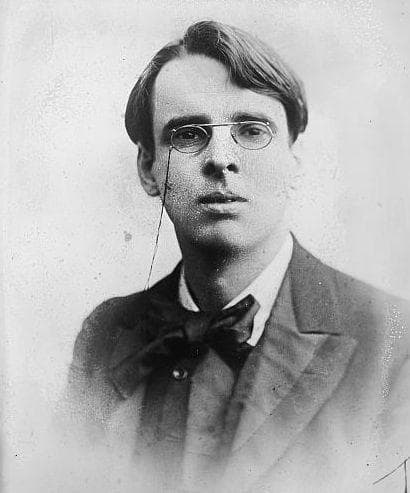
William Butler Yeats was an Irish poet, dramatist, writer and politician. One of the foremost figures of 20th-century literature, he was a driving force behind the Irish Literary Revival and became a pillar of the Irish literary establishment who helped to found the Abbey Theatre. In his later years, he served two terms as a Senator of the Irish Free State.
Similar books
- Harry Potter and the Sorcerer's Stone
J.K. Rowling
4.5 (7M) average on GoodreadsFantasyRescued from a miserable life under the stairs, an orphaned boy discovers he's a wizard destined for a magical school, where he uncovers a dangerous secret tied to the dark wizard who murdered his parents.
- The Hunger Games
Suzanne Collins
4.3 (6.4M) average on GoodreadsFantasyIn a future where children fight to the death on live television, Katniss Everdeen volunteers for the arena, turning a death sentence into a fight for survival and a spark of rebellion.
- Nineteen Eighty-Four
George Orwell
4.2 (5.5M) average on GoodreadsFictionWinston Smith dreams of truth and rebellion in a world where Big Brother watches all, but he confronts the terrifying power of a regime that controls not just actions, but thoughts.
- Pride & Prejudice
Jane Austen
4.3 (4.9M) average on GoodreadsElizabeth Bennet and Mr. Darcy navigate love and misunderstanding, learning that first impressions can be wrong.
- To Kill a Mockingbird
Harper Lee
4.3 (4.5M) average on GoodreadsHistorical FictionIn the 1930s Jim Crow South, Harper Lee writes about racial injustice, moral growth, and the quiet courage of a lawyer father, Atticus Finch, as seen through his young daughter's eyes.
- The Great Gatsby
F. Scott Fitzgerald
3.9 (3.8M) average on GoodreadsHistorical FictionIn the opulent Roaring Twenties, a mysterious millionaire's lavish parties hide his desperate, tragic pursuit of a lost love, exposing the emptiness within the American Dream.





Enjoyed the summary?
A summary gives you the shape of the book. The book itself has the detail, the examples and the voice.
Find The Wild Swans at Coole on AmazonAs an Amazon Associate, BookBrief earns from qualifying purchases. How we're funded