

Synopsis
Covers the whole plot, including the ending.
- Difficulty
- Medium
- Pacing
- Slow
- Mood
- Atmospheric, Melancholy, Reflective, Lyrical
- Read it if
- You appreciate lyrical prose, profound emotional depth, and stories that intertwine personal loss with grand historical events.
- Skip it if
- You prefer fast-paced plots or straightforward narratives without much introspection and historical context.
The Winter Vault Plot Summary
Covers the whole plot, including the ending.
The St. Lawrence Seaway and a Shared Beginning
Avery, a young engineer, and Jean, a botanist, meet in Canada during the St. Lawrence Seaway's construction in the late 1950s. They are both affected by the project's creation and destruction, seeing towns and landscapes submerged for progress. This shared experience of change and loss, along with their developing love, forms their relationship's basis. Avery is drawn to machinery's power, while Jean is captivated by nature's resilience. Their early days are filled with strong intellectual and emotional connection, bonding over their observations of the changing world.
Abu Simbel and the Nile
In 1964, Avery and Jean, now married, move to Egypt. Avery is part of the international team of engineers relocating the Abu Simbel temples, saving them from the Aswan Dam's rising waters. They live on a Nile houseboat, surrounded by the dramatic landscape and the engineering project's scale. Jean, though not directly involved, observes the work as a botanist, noting the displacement of ancient structures and the natural ecosystem. Their life by the Nile is a time of close intimacy and shared purpose, set against another large human intervention in nature.
A Life on the Houseboat
On their Nile houseboat, Avery and Jean create their own sanctuary. They share observations, dreams, and small, intimate moments that strengthen their bond. Avery is absorbed in the temple's relocation details, marveling at the precision needed to save history. Jean explores the local plants, documenting those that will soon be submerged. Their discussions often cover preservation and erasure, the past and the future. This period is marked by a deep connection, a shared understanding of the balance between human effort and nature, and the forging of deep emotional roots.
Tragedy Strikes
Tragedy strikes at Abu Simbel. The exact nature of the accident is clouded by grief and trauma, but it involves a devastating incident during the temple's relocation, causing loss and deep emotional scarring. This event shatters the idyllic world Avery and Jean built. The shared purpose that once bound them becomes a source of unbearable pain and unspoken grief. The trauma is too immense for them to process together, creating an irreparable split in their marriage and forcing them to face their bond's fragility and circumstances' destructive power.
Separation and Return to Toronto
Unable to overcome the trauma and unspoken grief from the Abu Simbel tragedy, Avery and Jean return to Toronto, but their lives diverge. Their shared intimacy is replaced by a chasm of unspoken pain. Avery enrolls in architecture school, seeking new creation and order, perhaps to process the destruction he saw. Jean, adrift and seeking comfort, begins to forge her own path, drawn to art and the stories of other survivors. Their separation is a slow, painful drifting apart, each trying to live with their individual burdens.
Jean and Lucjan
In Toronto, Jean meets Lucjan, a Polish émigré artist. Lucjan is haunted by the past, a survivor of occupied Warsaw during World War II. His art and stories are filled with experiences of loss, resilience, and history's scars. Jean is drawn to his intensity and suffering, finding a strange connection to her own unspoken grief. Lucjan's stories of a destroyed and rebuilt city, of shattered and reassembled lives, offer Jean a new way to see her experiences. Their relationship deepens, offering Jean a different connection, rooted in shared understanding of deep loss.
Avery's Architectural Pursuit
While Jean explores her connection with Lucjan, Avery dedicates himself to architectural studies. He finds comfort and purpose in design's precision and logic, in creating structures that stand against time and chaos. His work reflects his inner struggle, an attempt to build and rebuild, literally and metaphorically. He grapples with creation and destruction's ethical implications, the themes that defined his early experiences. Though physically separated from Jean, memories of their time together, especially the efforts at Abu Simbel, continue to inform his understanding of form, permanence, and human endeavor.
Lucjan's Influence Deepens
Lucjan's influence on Jean grows. His vivid, often difficult, accounts of wartime Warsaw, its Jewish ghetto's destruction, and its people's resilience, deeply connect with Jean's experiences of large-scale destruction and loss. Through Lucjan, Jean begins to understand grief not just as a personal burden but as a collective historical weight. She becomes an empathetic listener, absorbing his stories and finding a new way to process her own pain. Lucjan’s art, often showing fragmented memories and reconstructed narratives, becomes a strong force in Jean’s life, pulling her further from her past with Avery.
The Weight of History and Memory
Jean finds herself more and more immersed in the historical trauma Lucjan carries. The stories of Warsaw's destruction, countless lives lost, and culture's deliberate erasure become intertwined with her memories of the St. Lawrence Seaway and Abu Simbel. She grapples with collective memory's immense weight and the individual burden of witnessing. This period is marked by Jean's deep empathy for Lucjan's past, which helps her articulate and understand her own previously unexamined feelings of loss and displacement. She begins to see parallels between ancient temples' destruction and a city's destruction.
Avery's Lingering Presence
Even as Jean delves deeper into her relationship with Lucjan and his history, Avery's presence remains a subtle but persistent part of her life. Memories of their shared past—the St. Lawrence, Abu Simbel, their intimate conversations—periodically resurface, reminding her of their deep bond. Avery, too, carries their history's weight, though he expresses it through his architectural pursuits rather than direct confrontation. The emotional space between them, though broken, is never entirely severed, suggesting their initial connection's lasting nature and their deep impact on each other's early years.
Forgiveness and Consolation
Lucjan, through his survival journey and ability to express deep suffering, eventually offers Jean a path towards forgiveness and comfort. His stories, though painful, also show resilience and the human spirit's ability to rebuild. By seeing his process of grappling with immense historical trauma, Jean slowly begins to forgive herself and Avery for the unspoken grief that separated them. Lucjan helps her understand that loss is part of life, and that acknowledging pain is the first step towards healing, allowing her to process the Abu Simbel tragedy with a new perspective.
Reconciliation and Rebirth
In time, Jean finds her own essential life. This is not necessarily a physical reunion with Avery, but an internal reconciliation with her past, grief, and identity. Lucjan's stories and steady presence have helped her integrate her experiences of loss and displacement into a richer understanding of herself. She finds a way to carry the memories of the St. Lawrence and Abu Simbel not as burdens, but as integral parts of her being. The novel ends with Jean having achieved a deep sense of self, capable of holding both life's beauty and sorrow, and moving forward with new peace and purpose.
The Winter Vault Characters
Avery
Protagonist
An engineer captivated by creation and destruction, seeking order in the world.
Avery is an engineer by trade, deeply fascinated by the power of machinery and its capacity for both creation and destruction. He is sensitive, thoughtful, and keenly aware of the ethical implications of large-scale human interventions in nature. His early experiences with the St. Lawrence Seaway and later the Abu Simbel project shape his worldview, leading him to grapple with themes of loss, preservation, and the human impulse to build and dismantle. After the tragedy, he seeks solace and meaning in the structured world of architecture, attempting to impose order on a chaotic past.
Relationships: Jean (Wife; initially deeply connected, later estranged by trauma, a lingering influence.); Lucjan (Indirectly connected through Jean; a foil in how they process trauma.)
Jean
Protagonist
A botanist who experiences profound loss and seeks understanding through nature and art.
Jean is a botanist with a deep passion for the natural world and a keen eye for growth and decay. She is empathetic, observant, and profoundly affected by the changes wrought by human hands on the landscape. Her experiences with the St. Lawrence Seaway and the Abu Simbel project, culminating in personal tragedy, leave her with a deep, unspoken grief. She seeks understanding and healing first in her connection with Lucjan and his historical trauma, eventually finding her own path to integrate loss and discover her 'essential life.'
Relationships: Avery (Husband; deeply connected by shared experiences, then separated by tragedy, a lingering influence.); Lucjan (Lover/confidant; a source of understanding and a catalyst for her healing through shared historical trauma.)
Lucjan
Supporting
A Polish émigré artist haunted by the destruction of Warsaw, who helps Jean process her grief.
Lucjan is a Polish émigré artist and a survivor of the destruction of Warsaw during World War II. He carries the immense weight of historical trauma, which he expresses through his art and his poignant stories. He is empathetic, profound, and his experiences offer Jean a new framework for understanding grief, loss, and resilience. Lucjan's ability to articulate the collective suffering of a devastated city helps Jean to process her own personal tragedy and find a path towards forgiveness and consolation.
Relationships: Jean (Lover/confidant; helps her process grief and understand historical trauma.); Avery (Indirectly connected through Jean; represents an alternative way of dealing with loss.)
The St. Lawrence River
Mentioned
A significant landscape representing the initial shared experience of creation and destruction.
The St. Lawrence River, particularly the Seaway project, serves as the backdrop for Avery and Jean's initial meeting and the genesis of their relationship. It embodies the novel's central themes of human intervention in nature, the creation of new worlds at the expense of old ones, and the profound impact of such changes on individual lives and communities. The river's transformation is a powerful metaphor for the changes Avery and Jean will experience in their own lives.
Abu Simbel
Mentioned
An ancient Egyptian temple, the site of Avery's work and their shared tragedy.
Abu Simbel is the majestic ancient Egyptian temple complex that Avery helps to dismantle and relocate to save it from the rising waters of the Aswan Dam. It is a symbol of human ingenuity and reverence for the past, but also the site of the devastating tragedy that shatters Avery and Jean's marriage. The temple's monumental scale and the immense effort to preserve it highlight the novel's tension between enduring history and inevitable change, and between human ambition and vulnerability.
Warsaw
Mentioned
The historical setting of Lucjan's trauma, representing collective human suffering and resilience.
Warsaw, particularly its destruction during World War II and the Holocaust, is the historical landscape that defines Lucjan's past and profoundly influences Jean. It symbolizes the immense scale of human-inflicted suffering, the systematic erasure of culture and lives, and the enduring capacity for resilience and memory. Lucjan's stories of Warsaw offer Jean a powerful parallel to her own experiences of loss and provide a framework for understanding collective historical trauma.
The Winter Vault Themes
Creation and Destruction
This theme is central to the novel, explored through engineering projects like the St. Lawrence Seaway and the Abu Simbel relocation. Avery, an engineer, shows this duality, fascinated by machines that both build and destroy. The narrative consistently contrasts the human desire to create (new waterways, preserved temples, art) with the destruction it brings (submerged towns, displaced ecosystems, personal tragedy). Lucjan's stories of Warsaw's destruction and rebuilding further emphasize this theme, showing how creation often comes from destruction's ashes, literally and metaphorically. The characters grapple with these actions' ethical implications.
“He was a 'machine-worshipper,' yet exquisitely sensitive to the dichotomy of creation and destruction of which machines are capable.”
Memory and History
The novel deeply explores how personal and collective memory shapes identity and understanding. The characters are affected by their pasts – Avery and Jean by the Abu Simbel tragedy, and Lucjan by Warsaw's devastation. History is not just a background but an active force, influencing present relationships and emotional landscapes. Preserving ancient temples or telling stories of a lost city becomes a way to deal with existence's impermanence and the desire to hold onto what is gone. Jean's journey is one of integrating these layers of memory, personal and historical, to find meaning.
“exchanging the 'moments that are the mortar of our days, innocent memories we don’t know we hold until given the gift of the eagerness of another.'”
Grief and Loss
Grief is a strong force in the novel, appearing in many forms: loss of places (submerged towns, destroyed cities), loss of ancient heritage (Abu Simbel), and deep personal loss (the tragedy that separates Avery and Jean). The characters struggle to process and express their grief, often leading to silence and estrangement. Lucjan's ability to voice the immense grief of a historical tragedy helps Jean confront her own unspoken pain, showing that acknowledging loss, rather than suppressing it, is essential for healing and moving forward.
“But that gift will not be enough to bind them when tragedy strikes, and they will go back to separate lives in Toronto.”
The Nature of Love and Connection
The novel looks at love's complexities, from Avery and Jean's initial passionate connection, formed amidst shared experiences of change, to the different comfort Jean finds with Lucjan. It examines how love can be a binding force and a fragile thing, vulnerable to trauma and unspoken grief. The story suggests that while initial romantic love can be shattered, other connections—rooted in empathy, shared understanding of suffering, and willingness to witness—can offer paths to healing and a renewed sense of self, leading to a deeper, more resilient love for life.
“In time, he will also offer her the chance for forgiveness, consolation, and, finally, her own, most essential life.”
Plot Devices & Literary Techniques
Parallel Historical Events
Juxtaposition of the St. Lawrence Seaway, Abu Simbel, and Warsaw's destruction.
The novel uses parallel historical events—the St. Lawrence Seaway project, the Abu Simbel temple relocation, and the destruction of Warsaw during WWII—to amplify its themes. These events, though distinct, all represent massive human interventions that involve both creation and destruction, progress and loss. By weaving these historical narratives together, the author highlights the recurring patterns of human experience, the universal nature of grief, and the enduring impact of collective memory on individual lives. This device deepens the emotional and intellectual resonance of the characters' personal struggles.
Symbolism of Water
Water as a symbol of change, memory, and engulfment.
Water serves as a powerful and recurring symbol throughout the novel. The rising waters of the St. Lawrence and the Aswan Dam represent unstoppable forces of change, engulfing old worlds and creating new ones. Water symbolizes memory, as the past is submerged but never truly erased, much like the 'winter vault' of the title suggests hidden depths. It also signifies the overwhelming nature of grief and trauma, threatening to drown the characters in their unspoken pain. The houseboat on the Nile, floating on this symbolic water, becomes a temporary sanctuary amidst vast, transformative forces.
The Unspoken/Silence
The impact of uncommunicated grief and trauma on relationships.
A significant plot device is the prevalence of the unspoken, particularly the silence surrounding the tragedy at Abu Simbel. The inability of Avery and Jean to articulate their grief and trauma to each other creates an insurmountable chasm between them. This silence acts as a corrosive force, eroding their intimacy and forcing them apart. In contrast, Lucjan's ability to articulate the historical trauma of Warsaw, even in its painful detail, offers Jean a pathway to understanding and eventually, to her own healing. The novel powerfully illustrates how what remains unsaid can be as destructive as any direct conflict.
Art as Testimony and Healing
Art as a means to process trauma and preserve memory.
Art, particularly Lucjan's paintings and storytelling, functions as a crucial device for processing trauma and preserving memory. Lucjan's artistic expression allows him to bear witness to the horrors of his past and communicate the incommunicable. For Jean, engaging with Lucjan's art and his narratives provides a vital outlet and a framework for understanding her own experiences of loss. Art, in this context, is not merely aesthetic but serves as a powerful form of testimony, allowing characters to confront, integrate, and eventually find solace amidst immense personal and historical suffering, providing a bridge between past and present.
The Winter Vault Quotes
“The past is a country we inhabit, not a country we visit.”
“Every object holds the memory of its making, the hands that touched it, the air it breathed.”
“Grief is not a single, monolithic thing, but a vast and intricate landscape.”
“To forget is to betray, not just the dead, but the living.”
“Love is not a fixed point, but a constantly shifting constellation.”
“Architecture, like memory, is built layer upon layer, each telling a part of the story.”
“The silence between words can hold as much meaning as the words themselves.”
“We carry our histories not as burdens, but as the very ground we walk on.”
“Every life is a series of small, unrepeatable moments, each a universe unto itself.”
“Even in ruin, there is a kind of stubborn beauty, a testament to what once was.”
“The earth remembers. It holds the echoes of every step, every sorrow, every joy.”
“To truly see is to witness the invisible threads that connect everything.”
“What we build, and what we preserve, speaks volumes about who we are and what we value.”
“The weight of absence can be heavier than any presence.”
“History is not a straight line, but a labyrinth of echoes and resemblances.”
Quiz
10 questions on the plot and the characters. Each answer comes with a short explanation.
Question 1
In what year do Avery and Jean settle into their Nile River houseboat near Abu Simbel?
- 1958
- 1964
- 1970
- 1952
Show answer
B. 1964 The book explicitly states that Avery and Jean settle into their Nile River houseboat in 1964.
Question 2
What is Avery's profession when he and Jean are in Egypt?
- Architect
- Historian
- Engineer responsible for dismantling and reconstructing the temple
- Botanist
Show answer
C. Engineer responsible for dismantling and reconstructing the temple Avery is described as one of the engineers responsible for the dismantling and reconstruction of the temple at Abu Simbel.
Question 3
What common experience did Avery and Jean share on the St. Lawrence River before moving to Egypt?
- They built a house together.
- They watched the construction of the seaway change the river's course.
- They studied ancient Egyptian history.
- They worked on a botanical survey.
Show answer
B. They watched the construction of the seaway change the river's course. Avery and Jean met on the banks of the St. Lawrence River and watched together as the construction of the seaway changed the course of the river.
Question 4
What event leads to Avery and Jean going back to separate lives in Toronto?
- Avery's engineering project was completed.
- Jean decided to pursue her botanical studies abroad.
- Tragedy strikes their relationship.
- They ran out of money.
Show answer
C. Tragedy strikes their relationship. The synopsis states that 'tragedy strikes' and they will go back to separate lives in Toronto.
Question 5
What subject does Avery return to school to study after separating from Jean?
- Engineering
- Botany
- Architecture
- Archaeology
Show answer
C. Architecture After returning to Toronto, Avery returns to school to study architecture.
Question 6
Who is Lucjan, and what is his origin?
- A Canadian architect who studies with Avery.
- A Polish émigré artist who enters Jean's life.
- An Egyptian engineer who worked with Avery.
- A botanist colleague of Jean's.
Show answer
B. A Polish émigré artist who enters Jean's life. Lucjan is described as a Polish émigré artist who enters Jean's life after her separation from Avery.
Question 7
What specific historical event are Lucjan's haunting stories about?
- The construction of the Aswan Dam.
- The Canadian Seaway project.
- Occupied Warsaw during World War II.
- The fall of ancient Egypt.
Show answer
C. Occupied Warsaw during World War II. Lucjan's haunting stories are specifically of 'occupied Warsaw', referring to the period during World War II.
Question 8
What is Avery's character described as, relating to his view on machines?
- A machine-skeptic, fearing their destructive power.
- A machine-worshipper, sensitive to their dichotomy of creation and destruction.
- Indifferent to machines, focusing only on their practical use.
- A machine-inventor, always seeking new innovations.
Show answer
B. A machine-worshipper, sensitive to their dichotomy of creation and destruction. Avery is described as a 'machine-worshipper,' yet exquisitely sensitive to the dichotomy of creation and destruction of which machines are capable.
Question 9
The novel juxtaposes historical events with intimate moments. Which two major historical engineering projects are specifically mentioned as backdrops to Avery and Jean's relationship?
- The building of the Panama Canal and the Hoover Dam.
- The construction of the Aswan Dam and the St. Lawrence Seaway.
- The creation of the Suez Canal and the Welland Canal.
- The Great Wall of China and the Pyramids of Giza.
Show answer
B. The construction of the Aswan Dam and the St. Lawrence Seaway. The synopsis explicitly mentions Avery's work on the Aswan Dam and their shared experience watching the construction of the St. Lawrence Seaway.
Question 10
What does Lucjan ultimately offer Jean, beyond drawing her away from Avery?
- A new career as an artist.
- A chance for forgiveness, consolation, and her own essential life.
- A return to Egypt to study ancient plants.
- A way to forget her past completely.
Show answer
B. A chance for forgiveness, consolation, and her own essential life. The synopsis states that Lucjan 'will also offer her the chance for forgiveness, consolation, and, finally, her own, most essential life.'
The Winter Vault FAQ
What is the central conflict or premise of 'The Winter Vault'?
'The Winter Vault' centers on the newly married Canadian couple, Avery and Jean, who witness immense historical change and personal tragedy. Their story explores how grand acts of creation and destruction, like the Aswan Dam and St. Lawrence Seaway, parallel the intimate moments and devastations within their own lives, ultimately leading to their separation and individual searches for meaning.
Where do Avery and Jean begin their married life, and what is Avery's profession there?
Avery and Jean begin their married life in 1964 on a Nile River houseboat, moored near Abu Simbel. Avery is an engineer, specifically involved in the monumental task of dismantling and reconstructing the ancient temples to save them from the rising waters of the Aswan Dam, a project that deeply resonates with the novel's themes of preservation and loss.
How does the St. Lawrence Seaway connect to Avery and Jean's past?
Avery and Jean first met on the banks of the St. Lawrence River, where they observed the construction of the seaway. This earlier project, which involved changing the river's course and submerging towns, serves as a significant precursor to their experience at Abu Simbel, establishing a pattern of witnessing monumental, landscape-altering engineering feats that foreshadow their own personal upheavals.
What role does Jean's passion for botany play in the narrative?
Jean's passion for botany, her interest in "everything that grows," serves as a counterpoint to Avery's engineering focus. It highlights themes of organic life, resilience, and natural cycles amidst the human-made destruction and reconstruction. Her connection to the natural world often reflects her inner emotional state and her search for rootedness and renewal after tragedy.
What tragedy causes Avery and Jean to separate and return to Toronto?
The synopsis mentions that a profound tragedy strikes the couple while they are in Egypt, which is the catalyst for their separation and return to Toronto. While the specific nature of this tragedy is not detailed in the provided text, it is significant enough to fracture their marriage and send them on individual paths of grief and rediscovery.
How does the concept of 'machine-worship' apply to Avery?
Avery is described as a "machine-worshipper," which reflects his deep engagement and perhaps reverence for the power of engineering and technology. However, this is tempered by his exquisite sensitivity to the inherent dichotomy of creation and destruction that machines are capable of, making his relationship with technology complex and nuanced.
What is the significance of the 'Winter Vault' in the title?
The 'Winter Vault' likely refers to a metaphorical space of preservation, memory, and dormancy, much like a seed vault or a place where things are kept safe during harsh times. It could symbolize the reservoir of memories and experiences that characters hold onto, or the emotional spaces they retreat into, as they navigate loss and seek renewal.
How do the 'moments that are the mortar of our days' function within Avery and Jean's early relationship?
These 'innocent memories' are described as the 'mortar' binding Avery and Jean early in their marriage, highlighting the foundational role of shared small moments and intimate exchanges in building their connection. The phrase suggests these memories are crucial for their bond, implying that the loss of this 'mortar' contributes to their later separation.
What is the role of Lucjan, the Polish émigré artist, in Jean's life after her separation from Avery?
After separating from Avery, Jean enters the life of Lucjan, a Polish émigré artist in Toronto. Lucjan's haunting stories of occupied Warsaw draw Jean further away from Avery, suggesting he offers a different kind of connection, perhaps one rooted in shared suffering or a profound understanding of loss that resonates with her own experiences.
How do the historical events of the Aswan Dam and the St. Lawrence Seaway mirror the characters' internal struggles?
These massive engineering projects, involving both creation and destruction, serve as powerful external metaphors for Avery and Jean's internal struggles. The displacement of communities and the loss of ancient sites mirror their personal displacement, the loss of their shared life, and the challenge of reconstructing meaning after devastation.
What psychological impact might witnessing the dismantling and reconstruction of Abu Simbel have on Avery?
Witnessing the dismantling and reconstruction of Abu Simbel likely has a profound psychological impact on Avery, a 'machine-worshipper' sensitive to creation and destruction. It could intensify his awareness of impermanence, the human capacity for both preservation and erasure, and the weight of history, potentially shaping his later architectural studies.
How do Lucjan's stories of occupied Warsaw affect Jean's emotional journey?
Lucjan's haunting stories of occupied Warsaw draw Jean "further and further away from Avery," indicating they offer her a new emotional landscape or a different way to process grief and loss. These stories might provide a sense of shared human suffering, offering Jean a path towards understanding and perhaps a different kind of solace than Avery could provide.
In what way does the novel explore the dichotomy of creation and destruction?
The novel explores this dichotomy through multiple lenses: the engineering feats of the Aswan Dam and St. Lawrence Seaway (creating new possibilities while destroying old worlds), Avery's profession, and the personal tragedy that befalls the couple. It suggests that creation often necessitates destruction, and vice-versa, both on a grand scale and within individual lives.
How does the book suggest that forgiveness and consolation are achieved?
The synopsis implies that forgiveness and consolation for Jean come through her relationship with Lucjan, who eventually offers her "the chance for forgiveness, consolation, and, finally, her own, most essential life." This suggests that healing is a complex process, possibly requiring distance from past traumas and new, unexpected connections that foster self-discovery and peace.
What is the significance of Avery returning to study architecture after his separation from Jean?
Avery's return to study architecture after his separation from Jean is significant. Having worked on the destruction and reconstruction of ancient temples, he now seeks to understand the principles of building and form. This shift might represent his attempt to rebuild his own life, find new structures for meaning, or grapple with themes of permanence and design in a more academic, reflective way.
How does the novel utilize its historical settings to deepen the character's experiences?
The novel strategically places its characters within monumental historical events—the Aswan Dam project and the aftermath of WWII in Warsaw. These settings are not mere backdrops but active forces that shape the characters' perceptions of loss, memory, and resilience, making their personal tragedies resonate with larger human histories of displacement and survival.
What does the phrase 'her own, most essential life' imply for Jean's ultimate journey?
The phrase 'her own, most essential life' suggests that Jean's journey, facilitated by Lucjan, ultimately leads to a profound self-discovery beyond her identity as Avery's wife or solely defined by her tragedy. It implies a return to her core being, a life lived authentically and independently, perhaps reconnecting with her initial passions or finding new purpose.
About the author

Anne Michaels is a Canadian poet and novelist whose work has been translated and published in over 45 countries. Her books have garnered dozens of international awards including the Orange Prize, the Guardian Fiction Prize, the Lannan Award for Fiction and the Commonwealth Poetry Prize for the Americas. She is the recipient of honorary degrees, the Guggenheim Fellowship and many other honours. She has been shortlisted for the Governor General's Award, the Griffin Poetry Prize, twice shortlisted for the Giller Prize and twice long-listed for the International Dublin Literary Award. Michaels won a 2019 Vine Award for Infinite Gradation, her first volume of non-fiction. Michaels was the poet laureate of Toronto, Ontario, Canada from 2016 to 2019, and she is perhaps best known for her novel Fugitive Pieces, which was adapted for the screen in 2007.
Similar books
- The English Patient
Michael Ondaatje
3.9 (113k) average on GoodreadsLiterary FictionExplores love, memory, and the impact of war and history on individual lives with a lyrical, evocative style.
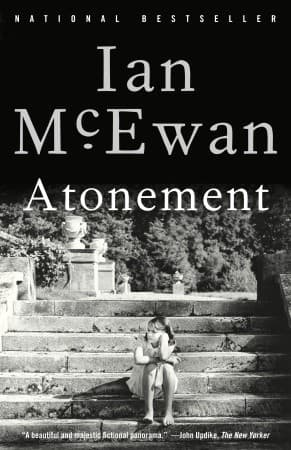
- Atonement
Ian McEwan
4.4 (70) average on GoodreadsFeatures a central tragedy, the weight of memory, and the intertwining of personal and historical narratives.
- The God of Small Things
Arundhati Roy
3.9 (244k) average on GoodreadsLiterary FictionKnown for its beautiful, poetic language, deep emotional resonance, and exploration of complex family dynamics and societal forces.
- No Great Mischief
Alistair MacLeod
4.0 (10k) average on GoodreadsLiterary FictionMacLeod's novel also deals with intergenerational memory, landscape, and the ties that bind families in a specific Canadian context. However, MacLeod's style, while evocative, is generally more grounded and direct in its storytelling compared to Michaels' more abstract and intensely poetic approach in "The Winter Vault".
- The Old Man and the Sea
Ernest Hemingway
3.8 (831k) average on GoodreadsLiterary FictionA Cuban fisherman's long struggle with a giant marlin becomes a story of endurance and dignity, now retold for young adults with illustrations, phonetic guides, and writing prompts in Traditional Chinese.
- One Hundred Years of Solitude
Gabriel García Márquez
4.1 (753k) average on GoodreadsLiterary FictionThrough the multi-generational story of the Buendía family, a mythical town deals with the repeating patterns of time, love, and solitude, as the extraordinary mixes with the ordinary.




Enjoyed the summary?
A summary gives you the shape of the book. The book itself has the detail, the examples and the voice.
Find The Winter Vault on AmazonAs an Amazon Associate, BookBrief earns from qualifying purchases. How we're funded