
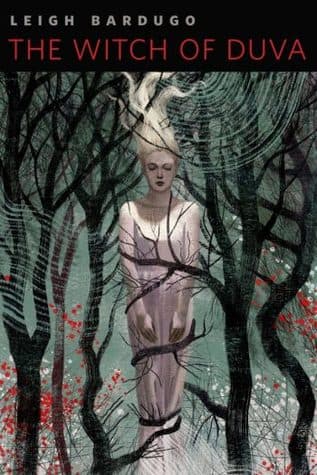
Synopsis
Covers the whole plot, including the ending.
- Difficulty
- Easy
- Pacing
- Fast
- Mood
- Dark, Mysterious, Tragic, Vengeful
- Read it if
- You enjoy dark fairy tales, morally ambiguous characters, and a quick, impactful read with a twist.
- Skip it if
- You prefer lighthearted fantasy or stories with clear-cut heroes and villains.
The Witch of Duva Plot Summary
Covers the whole plot, including the ending.
The Whispers of Duva
Nadya lives in the isolated village of Duva, nestled beside a dark and ancient forest. Her mother, a practical and stern woman, constantly reminds Nadya of the local legends concerning the 'Witch of Duva' who preys on young girls venturing into the woods. These stories are a constant source of fear and caution for the villagers, especially after several girls have gone missing over the years. Nadya, though dutiful, feels a growing unease and curiosity about these disappearances, sensing that the simple folk tales might not fully explain the grim reality of their village's plight. The pervasive fear shapes daily life in Duva, making the woods a forbidden and terrifying place.
Missing Girls and Growing Fear
The tension in Duva escalates when another young girl, Anya, vanishes without a trace. Her disappearance is unsettling as she was known for her cautious nature and rarely strayed from the village path. This event fuels the villagers' terror and reinforces their belief in the malevolent Witch of Duva. Nadya's mother, distraught, reinforces her strict warnings, fearing for Nadya's safety. The men of the village organize futile search parties, but the deep, dark woods yield no clues. The lack of answers breeds a sense of helplessness and dread among the community, leaving them to wonder who will be next to fall victim to the unseen predator.
Nadya's First Encounter with the Stranger
Defying her mother's warnings, Nadya ventures to the edge of the woods to gather berries, a task that becomes increasingly dangerous with each new disappearance. While there, she encounters a strikingly beautiful woman with skin like cream and hair like spun moonlight. The woman is dressed in fine clothes, unlike anyone Nadya has ever seen in Duva, and seems out of place in the wild forest. The stranger offers Nadya a sweet, ripe berry, which Nadya instinctively refuses, remembering her mother's cautionary tales about accepting gifts from strangers. This encounter leaves Nadya deeply unsettled, a mix of fascination and fear stirring within her, as the woman's presence feels both enchanting and ominous.
The Stranger's Visit to Duva
To Nadya's shock, the beautiful stranger from the woods appears in Duva village. She introduces herself as a traveler and quickly captivates the men with her charm and exotic beauty, particularly Nadya's father. She brings with her an air of sophistication and an unsettling aura. While the men are enamored, the women of Duva, including Nadya's mother, regard her with suspicion and unease, sensing a hidden danger beneath her alluring facade. Nadya watches her father's growing fascination with the woman, a subtle shift in his demeanor that makes her increasingly uncomfortable, as the stranger's presence disrupts the quiet monotony of their village life.
A Mother's Jealousy
Nadya observes the growing rift between her parents. Her mother, usually stoic, becomes visibly distressed and consumed by jealousy as her husband's attention fixes on the beautiful stranger. The stranger's presence in their small home creates a tense and suffocating atmosphere, turning their once stable family dynamic upside down. Nadya's mother's once firm warnings about the woods now seem tinged with a different kind of fear, the fear of losing her husband and her family's stability. Nadya feels caught in the middle, witnessing her mother's quiet suffering and her father's oblivious infatuation, and begins to question the nature of the evil in Duva.
The Strange Berries
The stranger brings a basket of vibrant, unusually sweet-smelling berries, unlike any Nadya has ever seen, and offers them to her father. He readily accepts, captivated by her. Nadya watches, a knot of dread tightening in her stomach, as he consumes them with relish. The berries seem to have an intoxicating effect on him, making him even more enchanted with the stranger. Nadya's mother looks on with a mixture of fear and despair. The berries, though seemingly innocuous, carry an underlying sense of menace, hinting at a deeper, more insidious plot unfolding within their home, unnoticed by the men of Duva.
Nadya's Suspicions Deepen
Nadya's mind races, connecting the dots between the stranger, the strange berries, and the disappearances. The berries remind her of the ones she refused in the woods, and a chilling realization begins to dawn on her. She recalls the stories of the Witch of Duva luring girls with treats and realizes that the tales might be a distorted truth. The stranger's sudden appearance, her enchanting demeanor, and the effect of the berries on her father all point to a sinister connection to the missing girls. Nadya feels a growing certainty that the real danger is not a mythical witch in the woods, but something far more human and cunning, now residing within their own village.
The Confrontation
Driven by a desperate need to protect her family and the remaining girls of Duva, Nadya confronts the beautiful stranger. She accuses her of being the true culprit behind the disappearances, not a witch, but a woman who uses her beauty and cunning to lure her victims. As Nadya speaks, a subtle shift occurs in the stranger's demeanor, her alluring facade cracks, revealing a cold, predatory glint in her eyes. The confrontation is tense, charged with unspoken magic and human malice, as Nadya bravely challenges the sinister force that has brought so much fear and sorrow to her village, unmasking the true nature of the 'Witch of Duva'.
The Truth Revealed
Under Nadya's accusations, the stranger sheds her human guise, revealing her true, monstrous form. She confesses to being the one consuming the girls, not a witch, but a creature of the forest that feeds on the life force of young women, using her beauty as a lure. She explains that the berries she offered were a way to weaken and enchant her victims, making them easier prey. The revelation is horrific, confirming Nadya's worst fears and exposing the raw, brutal truth behind the village's legends. The 'Witch of Duva' was not a hag, but a beautiful, deadly predator, far more terrifying in her deceptive allure.
A Mother's Sacrifice
As the creature attacks Nadya, her mother, witnessing the true horror, intervenes. In a desperate act of maternal love and self-sacrifice, she throws herself between Nadya and the creature, allowing Nadya a chance to escape. The creature, temporarily distracted by this unexpected resistance, turns its attention to Nadya's mother. Nadya is forced to watch in terror as her mother makes the ultimate sacrifice, her love for her daughter overriding her own fear. This act of bravery and despair solidifies Nadya's resolve and steels her for the fight that must come, a fight to avenge her mother and protect her village from this ancient evil.
Nadya's Revenge
Empowered by her mother's sacrifice and fueled by grief and rage, Nadya finds unexpected strength. She remembers her mother's advice and uses the creature's own deception against it. The details of the final confrontation are grim, but Nadya, no longer a frightened girl, manages to exploit a weakness in the creature's predatory nature. She uses an object imbued with her mother's love or a piece of wisdom passed down to her, ultimately defeating the creature and breaking its hold over Duva. The forest, once a place of terror, is now cleansed of its immediate threat, though the scars of its reign remain on the village and Nadya's heart.
The Aftermath and the New Legend
In the aftermath, Duva slowly begins to heal from the decades of terror. The villagers are left to grapple with the shocking truth behind the 'Witch of Duva' legend. Nadya, forever changed by her ordeal and her mother's sacrifice, emerges as a quiet hero. The stories of the woods will still be told, but now they will include the tale of the brave girl who faced the true monster and saved her village. Nadya carries the burden of her knowledge and the memory of her mother, understanding that true evil can wear many faces, even beautiful ones. She becomes a silent guardian, ensuring the real lesson of Duva is never forgotten.
Principal Figures
Nadya
Protagonist
A young, observant girl who uncovers the truth behind Duva's disappearances.
Nadya is a thoughtful and cautious girl, living under the shadow of the Duva woods' dark legends. Despite her mother's strict warnings, she possesses a keen sense of observation and an innate curiosity that compels her to look beyond the surface of things. She is initially fearful but develops immense bravery and resolve when her family and village are threatened. Her love for her mother and her desire for truth drive her actions.
Relationships: Nadya's Mother (Loving but strict; Nadya seeks her approval and fears her disappointment.); Nadya's Father (Initially protective but later enchanted by the stranger, causing a rift with Nadya.); The Stranger/Creature (Antagonistic; Nadya is her primary target and eventual vanquisher.)
Nadya's Mother
Supporting
A stern but loving mother who fiercely protects her daughter and makes the ultimate sacrifice.
Nadya's mother is a practical and stern woman, deeply rooted in the traditions and fears of Duva. She is fiercely protective of Nadya, constantly warning her about the dangers of the woods and the Witch. Her initial strictness stems from a place of deep love and concern for her daughter's safety. She becomes increasingly distressed and jealous when her husband falls under the stranger's spell, eventually revealing immense courage in her final, selfless act.
Relationships: Nadya (Overprotective and loving mother-daughter bond.); Nadya's Father (Initially a loving marriage, strained by the stranger's arrival and her husband's enchantment.); The Stranger/Creature (Distrustful and antagonistic, leading to her sacrifice.)
The Stranger / The Creature
Antagonist
A beautiful, deceptive entity that preys on the girls of Duva.
The Stranger appears as a stunningly beautiful woman with an alluring charm that captivates the men of Duva. Beneath this captivating facade lies a predatory, ancient creature, an embodiment of the 'Witch of Duva' legend. She is cunning, manipulative, and ancient, using her beauty and enchanted berries to lure and consume young girls. Her true nature is revealed as a monstrous entity feeding on life force, a stark contrast to her initial enchanting appearance. She represents the insidious nature of evil that hides in plain sight.
Relationships: Nadya (Predator and prey; eventually, Nadya becomes her vanquisher.); Nadya's Father (Manipulated victim; she uses her charm to enchant him.); Nadya's Mother (Antagonistic; she indirectly causes her death.)
Nadya's Father
Supporting
A villager whose enchantment by the stranger highlights the creature's deceptive power.
Nadya's father is a typical Duva villager, initially a loving husband and father. He is, however, susceptible to the stranger's charm and falls under her spell after consuming her enchanted berries. His enchantment causes distress to his wife and daughter, making him oblivious to the true danger lurking in their home. His character serves to illustrate the powerful, deceptive nature of the antagonist and the vulnerability of the villagers to her allure.
Relationships: Nadya (Loving father, but temporarily detached due to enchantment.); Nadya's Mother (Husband, but his attention shifts to the stranger, causing marital strife.); The Stranger/Creature (Enchanted victim, manipulated by her beauty and berries.)
Anya
Mentioned
A young girl who disappears, intensifying the fear in Duva.
Anya is a young girl from Duva whose disappearance serves as a catalyst for increased fear and suspicion in the village. Her vanishing underscores the immediate threat posed by the 'Witch of Duva' and pushes Nadya to question the existing legends. She is a symbol of the innocent victims of the creature.
The Villagers of Duva
Supporting
The fearful inhabitants of Duva, bound by tradition and terror.
The villagers are a collective character, defined by their isolation, their deep-seated fear of the woods, and their adherence to the local legends of the Witch of Duva. They are initially helpless in the face of the disappearances, relying on old stories for explanations. Their fear is palpable and influences their daily lives, making them vulnerable to the creature's deception.
Themes & Insights
The Deceptive Nature of Evil
This theme is central, as the 'Witch of Duva' is not the stereotypical hag of legend, but a beautiful, alluring creature who uses her charm to ensnare victims. The story challenges the traditional portrayal of evil, showing that it can hide behind a captivating facade. The stranger's ability to enchant Nadya's father with her beauty and the sweet berries (Chapter 6) illustrates how easily people can be deceived by what appears pleasant or harmless. This theme emphasizes that true danger often comes in unexpected, attractive forms, making it harder to recognize and resist.
“The woods ate girls. Or so the story went. But sometimes, the danger came knocking at your door.”
Maternal Love and Sacrifice
The unwavering love and protectiveness of Nadya's mother for her daughter is a powerful force in the story. Despite her initial sternness, her actions are driven by a deep desire to keep Nadya safe. This theme culminates in her ultimate sacrifice (Chapter 10), where she bravely puts herself between Nadya and the creature. Her act of selflessness not only saves Nadya but also empowers her to confront and defeat the monster, highlighting the strength and transformative power of a mother's love.
“A mother's love was a fierce, protective thing, stronger than any spell.”
Truth vs. Legend
The story explores the tension between accepted folklore and reality. The villagers of Duva cling to the legend of the 'Witch of Duva' as an explanation for the missing girls, but Nadya ultimately discovers that the truth is more complex. The creature is real, but its methods and appearance defy the traditional tales. Nadya's journey involves peeling back layers of superstition to uncover the actual nature of the threat (Chapter 7, 9), demonstrating that sometimes, the stories we tell ourselves obscure the real dangers right in front of us.
“They had told stories of a witch, an old hag, but the truth was far more beautiful, and far more terrible.”
The Power of Observation and Skepticism
Nadya's ability to observe her surroundings and question accepted narratives is crucial to her success. While others are swayed by the stranger's beauty or blinded by fear, Nadya notices inconsistencies, the unusual berries, the stranger's unsettling presence, and her father's enchantment. Her skepticism of the simple 'witch' legend allows her to connect the seemingly disparate events and ultimately uncover the creature's true identity (Chapter 7). This theme champions critical thinking and trusting one's instincts over blind adherence to old beliefs.
“The stories were old, but the fear was fresh, and Nadya wondered if they had been telling the wrong story all along.”
Plot Devices & Literary Techniques
The Folk Tale Frame
The story is presented as a traditional cautionary folk tale.
The entire narrative is framed as a dark folk tale, beginning with the classic 'there was a time...' structure. This device immediately immerses the reader in a world of ancient legends and superstitions. It also sets up the expectation of a clear-cut good vs. evil narrative, which is then subverted by the deceptive nature of the antagonist. The folk tale frame enhances the sense of timelessness and universal themes, while also allowing the author to play with reader expectations regarding the identity and nature of the 'witch'.
The Enchanted Berries
Magical berries used by the creature to weaken and control its victims.
The enchanted berries serve as a crucial plot device, symbolizing temptation and the insidious nature of the creature's power. By offering these sweet, intoxicating berries, the creature is able to lower the guard of its victims, making them more susceptible to its influence and ultimately easier to consume. Nadya's refusal of the berries (Chapter 3) and her father's acceptance (Chapter 6) highlight the varying levels of awareness and vulnerability among the characters, directly impacting their fates and driving the plot forward.
The Missing Girls
A series of disappearances that create escalating tension and mystery.
The recurring disappearances of young girls, culminating in Anya's vanishing (Chapter 2), serve as the primary source of conflict and suspense. This device establishes the grave danger facing Duva and motivates Nadya to seek the truth. Each disappearance heightens the villagers' fear and reinforces the legend of the Witch, while also providing a tangible measure of the antagonist's threat. It's a classic mystery trope that keeps the reader engaged in uncovering the culprit.
The Beautiful Antagonist
The villain's alluring appearance subverts expectations of evil.
Instead of a hideous witch, the antagonist is depicted as strikingly beautiful and charming. This device is a powerful subversion of the traditional 'hag' archetype, playing on the theme of deceptive evil. Her beauty allows her to move freely within the village and ensnare victims like Nadya's father, making her a more insidious and dangerous threat than a conventionally monstrous villain. It forces Nadya, and the reader, to look beyond superficial appearances to discern true malevolence.
The Witch of Duva Quotes
“The woods are not safe for girls with too much curiosity.”
“There are some things that even love can’t heal.”
“The forest had always been hungry, but lately, it had grown bolder.”
“Sometimes, the only way to save someone is to let them go.”
“Grief was a beast with many teeth.”
“Magic was a tricky thing. It could mend, but it could also break.”
“She had always known the cost of living in a fairy tale.”
“Fear was a constant companion in the village, a shadow that clung to every house.”
“A secret shared was a burden halved, but sometimes, it was a danger doubled.”
“The truth was rarely simple, and never kind.”
“Sometimes the greatest monsters hide in plain sight.”
“Hope was a fragile thing, easily crushed, but stubborn too.”
“The heart remembers what the mind tries to forget.”
“There was a kind of strength in knowing when to give up, and when to fight.”
Quiz
10 questions on the plot and the characters. Each answer comes with a short explanation.
Question 1
What is the name of the protagonist who is searching for her sister?
- Irina
- Nadya
- Hanna
- Kaelen
Show answer
C. Hanna Hanna is the main character who bravely ventures into the woods to find her missing sister, Lena.
Question 2
What is the primary reason the girls of Duva are disappearing?
- They are being taken by a pack of wolves.
- They are being sacrificed to a forest spirit.
- They are being lured away by a magical siren.
- They are being killed by someone close to them and left in the woods.
Show answer
D. They are being killed by someone close to them and left in the woods. The girls are not being taken by a magical entity, but rather murdered by a human in the village, who then leaves them in the woods to make it seem like the 'Witch' is responsible.
Question 3
Which specific item does Hanna's mother give her before she goes into the woods?
- A silver locket
- A knife with a carved handle
- A small pouch of protective herbs
- Her grandmother's shawl
Show answer
B. A knife with a carved handle Hanna's mother gives her a knife with a familiar carved handle, which later becomes a crucial clue.
Question 4
What is the common folk tale or superstition surrounding the disappearances in Duva?
- A river monster drags girls into the water.
- The woods near Duva 'eat' girls.
- A wicked sorcerer curses the village maidens.
- Girls who wander too far are turned into trees.
Show answer
B. The woods near Duva 'eat' girls. The story explicitly states, 'There was a time when the woods near Duva ate girls…or so the story goes,' setting up the initial mystery.
Question 5
Who does Hanna initially suspect of being the 'witch' or the cause of the disappearances?
- The village healer
- An old woman living on the outskirts of the village
- Her own father
- A traveling merchant
Show answer
B. An old woman living on the outskirts of the village Hanna, like many in the village, initially suspects an old woman living alone, fitting the traditional 'witch' archetype.
Question 6
What is the true identity of the 'witch' and killer of the girls?
- Hanna's father
- A vengeful forest spirit
- The village elder
- A rival from a neighboring village
Show answer
A. Hanna's father In a shocking twist, Hanna discovers that her own father is the one who has been killing the girls, including her sister Lena.
Question 7
What specific physical evidence does Hanna find that implicates the true killer?
- A unique piece of jewelry belonging to her father.
- The knife her mother gave her, with its distinctive carved handle, matches the wounds.
- A distinct footprint near one of the bodies matching her father's boots.
- A confession letter hidden in her father's belongings.
Show answer
B. The knife her mother gave her, with its distinctive carved handle, matches the wounds. The knife her mother gave her, which was her father's, becomes the key piece of evidence, as the wounds on Lena's body match its blade.
Question 8
What is the primary theme explored in 'The Witch of Duva' regarding monsters?
- Monsters are always supernatural beings from the forest.
- The greatest monsters are often found within humans, particularly those closest to us.
- Monsters are a necessary evil to maintain balance in nature.
- Only brave heroes can defeat the monsters of the world.
Show answer
B. The greatest monsters are often found within humans, particularly those closest to us. The story subverts the traditional folk tale by revealing that the 'monster' is not a witch or a creature, but a seemingly normal member of the community, highlighting that evil can reside in the familiar.
Question 9
How does Hanna's mother react when Hanna confronts her father about his crimes?
- She immediately defends her husband and dismisses Hanna's claims.
- She has known all along and helps Hanna expose him.
- She is completely shocked and disbelieving, refusing to accept the truth.
- She flees the village in fear.
Show answer
B. She has known all along and helps Hanna expose him. It's revealed that Hanna's mother was aware of her husband's monstrous nature and actively helps Hanna bring him to justice, indicating a deeper, tragic complicity and strength.
Question 10
What is the fate of Hanna's father at the end of the story?
- He escapes into the woods and is never seen again.
- He is banished from the village by the elders.
- He is killed by Hanna and her mother.
- He confesses his crimes and is imprisoned.
Show answer
C. He is killed by Hanna and her mother. Hanna and her mother work together to kill him, putting an end to his reign of terror and avenging Lena.
The Witch of Duva FAQ
What is the central premise of 'The Witch of Duva'?
The story centers on a village, Duva, plagued by the mysterious disappearance of young girls, supposedly taken by the 'witch' in the woods. Nadya, the protagonist, lives with her mother and younger sister, Luda, under the shadow of this fear, hoping to protect Luda while also navigating the oppressive atmosphere of their small community.
Who are the main characters in the story?
The main characters are Nadya, a resourceful and protective older sister; Luda, her younger sister who is sweet but also somewhat naive; and their Mama, a stern and often distant figure. Other significant characters include the village men who hunt for the 'witch' and the memory of Nadya's deceased father.
What is the 'witch' that the villagers fear?
The villagers believe a malevolent witch living in the surrounding woods is responsible for snatching their young girls. They describe her with various menacing attributes, fueling a collective fear that drives them to organize hunts and impose curfews, creating a pervasive sense of dread throughout Duva.
How does Nadya try to protect Luda from the perceived dangers?
Nadya is fiercely protective of Luda, constantly reminding her to stay close, avoid the woods, and be wary of strangers. She tries to keep Luda safe by adhering to village rules and attempting to shield her from the grim realities of their situation, even as she herself harbors deep anxieties.
What is the twist or reveal at the end of the story?
The shocking twist reveals that the 'witch' is not a supernatural entity from the woods, but rather Nadya's own mother, Mama. She has been killing the girls, including Luda, and using their hearts in a dark ritual to preserve her youth and beauty, a horrifying secret Nadya uncovers.
What is the significance of the red ribbons Nadya uses?
Nadya uses red ribbons to mark Luda's belongings and to tie her hair, symbolic of her love and desire to keep Luda safe and visible. Ironically, these very ribbons, particularly the one in Luda's hair, become a tragic marker, confirming her sister's disappearance and later, her mother's culpability.
How does the story connect to the broader Grishaverse mythology, as a companion to 'Shadow and Bone'?
While not directly featuring Grisha or specific characters from 'Shadow and Bone,' 'The Witch of Duva' embodies the dark folklore and moral ambiguity prevalent in the Grishaverse. It explores themes of sacrifice, hidden magic, and the monstrous nature of humans, akin to the darker fairy tales often referenced or adapted within Bardugo's world.
What is the true nature of Mama's 'magic' or ritual?
Mama's 'magic' is a form of dark, life-draining ritual, specifically involving the consumption of young girls' hearts. This gruesome practice allows her to maintain her youthful appearance and vitality, suggesting a form of blood magic or dark sorcery that feeds on innocence and life force.
What clues foreshadow Mama's true identity as the 'witch'?
Subtle clues include Mama's unusual beauty and youth despite her age, her seemingly detached reactions to the disappearances, and her stern warnings to Nadya about the woods, which could be interpreted as a way to keep Nadya away from her own secrets. Her consistent lack of visible grief also hints at her role.
Analyze Nadya's psychological journey throughout the story.
Nadya's journey is one from hopeful protector to traumatized survivor. Initially driven by love for Luda and a desire to believe in simple solutions, she descends into suspicion and horror as she uncovers her mother's monstrous secret. This psychological arc forces her to confront the deepest betrayal imaginable.
How does the community's fear and superstition contribute to the tragedy?
The community's pervasive fear of a mythical 'witch' in the woods blinds them to the true danger within their own homes. Their focus on an external threat prevents them from scrutinizing internal dynamics or suspicious behaviors, allowing Mama to continue her horrific acts undetected for a long time.
Discuss the mother-daughter relationships in the story.
The story presents a complex and ultimately twisted portrayal of mother-daughter bonds. Nadya's love for Luda is pure and protective. However, Mama's relationship with both daughters is predatory and selfish, ultimately culminating in the ultimate betrayal of a mother sacrificing her own children for her vanity.
How does grief manifest in the characters, particularly Nadya?
Nadya experiences a profound and multi-layered grief: first, the generalized fear of losing Luda, then the crushing reality of her sister's death, and finally, the agonizing grief of realizing her mother is a monster. This final revelation compounds her sorrow with a deep sense of betrayal and psychological trauma.
What is the ultimate message or moral of 'The Witch of Duva'?
The story suggests that true monsters often hide in plain sight, sometimes even within the most trusted figures. It warns against superficial fears and encourages deeper scrutiny, highlighting how appearances can be deceiving and the darkest evils can reside within human hearts, not just in mythical creatures.
How does the ending leave Nadya's future ambiguous or open to interpretation?
Nadya's future is left uncertain. While she has survived the immediate threat and exposed her mother, she is now orphaned and deeply traumatized. Her final actions or fate are not explicitly stated, leaving readers to ponder how she will cope with such profound loss and betrayal, and whether she will ever find peace.
Is Mama's motivation purely vanity, or are there deeper psychological reasons for her actions?
While vanity and the desire for eternal youth are explicitly stated motivations for Mama's horrific acts, one could interpret deeper psychological underpinnings. Perhaps a profound fear of aging, loss of power, or a twisted form of self-preservation drives her, suggesting a deep-seated narcissism and lack of empathy.
How does the folk tale structure enhance the story's impact?
The folk tale structure, with its familiar tropes of a village under a curse and a mythical witch, initially lulls the reader into a sense of traditional fantasy. This makes the eventual reveal of the human monster all the more shocking and impactful, subverting expectations and amplifying the horror of the true nature of evil.
What is the significance of the story being set in a remote village like Duva?
The remote setting of Duva emphasizes its isolation and insularity, making the villagers more susceptible to superstition and less likely to question internal threats. This isolation also means there's little external help or scrutiny, allowing Mama's dark practices to continue unchecked for longer periods.
How does the author use sensory details to build atmosphere and suspense?
Bardugo effectively uses sensory details like the chill of the woods, the scent of pine and decay, the sound of the wind, and the visual of the red ribbons to create a palpable atmosphere of dread and mystery. These details immerse the reader, heightening the suspense and making the eventual reveal more visceral and horrifying.
About the author

Leigh Bardugo is an American author known for her contributions to young adult fantasy literature. Her notable works include the "Grishaverse" series, which features "Shadow and Bone," "Siege and Storm," "Ruin and Rising," and the "Six of Crows" duology, as well as "Ninth House." Bardugo's storytelling often explores themes of power, identity, and morality within richly developed worlds.
Similar books
- Uprooted
Naomi Novik
4.1 (167k) average on GoodreadsFantasyIn contrast to Novik's Uprooted, which features intricate magic systems and a longer character arc, 'The Witch of Duva' is a more concise and thematically focused tale. Bardugo delivers a sharp, impactful narrative centered on a singular, internal conflict, rather than Novik's epic scope and detailed magical world.
- The Bloody Chamber and Other Stories
Angela Carter
4.0 (39k) average on GoodreadsFantasyWhile Carter's work, like 'The Bloody Chamber,' targets an adult audience with its explicit gothic and feminist retellings, Bardugo's 'The Witch of Duva' shares a similar commitment to reinterpreting dark fairy tales. Bardugo, however, adapts these themes for a Young Adult audience, maintaining the eerie atmosphere but tempering the more explicit elements, making her horror accessible yet still profound.
- Harry Potter and the Sorcerer's Stone
J.K. Rowling
4.5 (7M) average on GoodreadsFantasyRescued from a miserable life under the stairs, an orphaned boy discovers he's a wizard destined for a magical school, where he uncovers a dangerous secret tied to the dark wizard who murdered his parents.
- The Hunger Games
Suzanne Collins
4.3 (6.4M) average on GoodreadsFantasyIn a future where children fight to the death on live television, Katniss Everdeen volunteers for the arena, turning a death sentence into a fight for survival and a spark of rebellion.
- 1984
George Orwell
4.2 (3.1M) average on GoodreadsPoliticsIn a future where surveillance and thought control are absolute, a man's search for truth clashes with the Party, showing that hope can be a form of rebellion.
- Divergent
Veronica Roth
4.2 (2.9M) average on GoodreadsFantasyIn a society divided by virtues, a sixteen-year-old's difference from the norm starts a rebellion that threatens her world.






Enjoyed the summary?
A summary gives you the shape of the book. The book itself has the detail, the examples and the voice.
Find The Witch of Duva on AmazonAs an Amazon Associate, BookBrief earns from qualifying purchases. How we're funded