
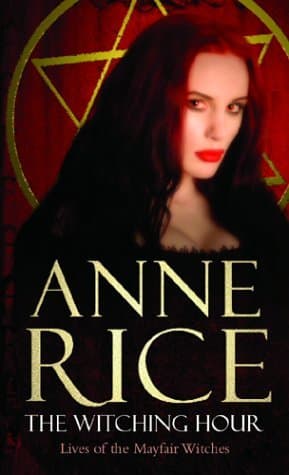
Synopsis
Covers the whole plot, including the ending.
- Difficulty
- Medium
- Pacing
- Variable
- Mood
- Gothic, Atmospheric, Suspenseful, Dark, Romantic
- Read it if
- You love epic, sprawling sagas with rich historical detail, gothic atmosphere, and a deep dive into the supernatural, focusing on a powerful family's dark legacy.
- Skip it if
- You prefer fast-paced thrillers, dislike extensive historical exposition, or are put off by themes of incest and graphic supernatural horror.
The Witching Hour Plot Summary
Covers the whole plot, including the ending.
A Life Saved, A Connection Forged
In San Francisco, Rowan Mayfair, a neurosurgeon with psychic abilities, saves Michael Curry from drowning. Michael, from New Orleans, briefly dies and gains a new psychometric power: he can see an object's or person's history by touching them. Rowan and Michael are drawn to each other and fall in love. Michael is troubled by his new ability and finds comfort in Rowan, while Rowan feels a strong connection to him, sensing he is linked to her past. Their intense bond begins the process of revealing Rowan's lineage and Michael's new gift.
The Mayfair Legacy Revealed
After they meet, Michael's psychometric gift becomes difficult. Touching Rowan's locket, he sees a vision of a grand New Orleans house with many women and a shadowy male figure. This vision, and a feeling that he belongs in New Orleans, makes him return home. Rowan, sensing the importance of Michael's visions, joins him. They are drawn to the old Mayfair house in the Garden District, where they start to learn about Rowan's adoption and her connection to the Mayfair Witches, a dynasty spanning centuries.
The Talamasca and the History of the Witches
In New Orleans, Michael meets Aaron Lightner, a member of the Talamasca, a secret group that studies the supernatural. Aaron has watched the Mayfair family for generations and has many records of their history. He shares the Talamasca's file on the Mayfair Witches with Michael, showing the family's line of powerful female witches, their wealth, incestuous tendencies, and their connection to a supernatural entity named Lasher. This history, from 17th-century Scotland to the present, explains Lasher's origins, his interactions with each generation of Mayfair women, and his destructive influence on their lives, including the death of Rowan's biological mother, Deirdre Mayfair.
Suzanne and the First Summoning
The Talamasca's records start with Suzanne Mayfair, the family's first documented witch, in 17th-century Donnelaith, Scotland. Suzanne, a young woman with magic, is shunned for her powers. Lonely, she performs a ritual to summon a spirit and accidentally calls Lasher. Lasher becomes attached to Suzanne, fulfilling her desires and helping her, but also being possessive. Their relationship starts the Mayfair family's pact with the entity, setting a pattern for generations where Lasher would appear to the current Mayfair witch, influencing their lives and demanding their love.
The European Mayfairs and Lasher's Influence
The story continues with later generations of Mayfair witches in Europe. Deborah Mayfair, Suzanne's daughter, inherits the legacy and Lasher's presence, eventually being burned in France after an affair and the Church learning of her powers. Her daughter, Charlotte, continues the line, gaining wealth with Lasher's help and moving the family to Port-au-Prince. The Talamasca chronicles the Mayfairs' growing power, their incestuous relationships to keep the bloodline pure, and Lasher's influence, which brought both prosperity and personal tragedies, including murders, madness, and unexplained deaths, all influenced by the entity's desire to become flesh.
Julien Mayfair and the American Branch
The Talamasca's files feature Julien Mayfair, a rare male witch born in the 19th century, who became a powerful family member. Julien, charismatic and connected to Lasher, moves the family from Port-au-Prince to New Orleans, building their fortune and social network. He has many incestuous relationships, fathering children to continue the Mayfair line and its powers. Julien's cunning and devotion to Lasher strengthen the entity's presence in America, and he works towards Lasher's desire for a physical form, manipulating family members and events to serve this goal, further entrenching the Mayfairs in their supernatural pact.
Stella, Antha, and Deirdre: The Modern Mayfairs
The Talamasca's records bring the history closer to the present with Stella, Antha, and Deirdre Mayfair. Stella, a Jazz Age witch, openly embraces Lasher, leading to her violent death. Her daughter, Antha, becomes isolated and troubled by Lasher, eventually dying in a fall from the house. Antha's daughter, Deirdre, Rowan's biological mother, is born with a severe mental disability, possibly from Lasher's influence, and spends her life in a catatonic state on the Mayfair house porch. Despite her condition, Lasher stays present, and Deirdre's tragic life shows the entity's hold on the Mayfair women, ending in Rowan's adoption to protect her from the family's curse.
Rowan's Return and the Call of Lasher
With the Talamasca files, Rowan understands her lineage and her power as the Mayfair witch. She also understands Lasher's centuries-long presence, influencing her life before she knew of him. Rowan, intelligent and independent, decides to confront her heritage. She moves into the Mayfair house with Michael, starts renovations, and takes control of the family's affairs. She feels a pull towards Lasher, a mix of fear, fascination, and a desire to understand and perhaps control the entity that has haunted her family.
The Christmas Eve Confrontation
On Christmas Eve, the night Deirdre dies, Rowan plans a confrontation with Lasher. She gathers the Mayfair family and, using her neurosurgical knowledge and psychic powers, performs a ritual in the operating room she built in the Mayfair house. In a horrifying act, she gives Lasher a human body. The newly incarnated Lasher shows immense, uncontrolled power and evil. He immediately kills Aaron Lightner, who warned against this, and then turns to Rowan and the family, revealing his nature and his desire to breed with the Mayfair women to create a new race.
Lasher's Reign of Terror and Rowan's Fate
The physical Lasher, beautiful and monstrous, immediately causes chaos. He assaults and impregnates Rowan, fulfilling his desire to father a child through the Mayfair line. He shows cruelty, manipulating the family and using his supernatural abilities. Michael Curry, devastated and angry by Lasher's actions and Aaron's death, tries to confront him but is overpowered and injured. In the chaos, Rowan, seemingly under Lasher's control or making a desperate choice, disappears with Lasher, leaving Michael and the surviving Mayfairs to deal with the aftermath and the entity's physical presence.
Principal Figures
Rowan Mayfair
Protagonist
Brilliant neurosurgeon and the powerful Thirteenth Witch of the Mayfair dynasty.
Rowan is a fiercely intelligent, independent, and ambitious neurosurgeon with latent psychic abilities. Adopted and raised in California, she is unaware of her true heritage as a Mayfair witch until she meets Michael Curry. She is rational and scientific but possesses an innate magical power that far surpasses her ancestors. Her drive for knowledge and control leads her to embrace her lineage and ultimately to the fateful decision of bringing Lasher into physical form, believing she can control him. She is both a victim and an active participant in her destiny.
Relationships: Michael Curry (Husband, lover, confidant); Lasher (Supernatural entity, tormentor, desired progenitor); Deirdre Mayfair (Biological mother); Aaron Lightner (Talamasca contact, mentor)
Michael Curry
Protagonist/Supporting
A New Orleans native who gains psychometric powers and falls in love with Rowan.
Michael is a kind, grounded, and physically strong contractor from New Orleans, orphaned at a young age. His near-death experience grants him the terrifying gift of psychometry, allowing him to perceive the history of objects and people through touch. This gift leads him to Rowan and the Mayfair family, becoming instrumental in uncovering their secrets. He is deeply in love with Rowan and acts as her anchor to normalcy, though he is increasingly drawn into the supernatural world. He is a protector and often a voice of caution, but ultimately powerless against Lasher's final manifestation.
Relationships: Rowan Mayfair (Wife, lover); Aaron Lightner (Talamasca contact, friend); Lasher (Antagonist, rival)
Lasher
Antagonist
A powerful, seductive, and malevolent supernatural entity bound to the Mayfair witches.
Lasher is the central antagonist and the driving force behind much of the Mayfair family's history. He is a non-corporeal entity, summoned by Suzanne Mayfair in the 17th century, who develops an obsessive desire to become flesh and breed with the Mayfair women. He is incredibly intelligent, manipulative, and seductive, granting power and wealth to the witches while simultaneously tormenting and controlling them. His presence is characterized by a chilling blend of charm and cruelty, always working towards his ultimate goal of corporeal existence and the creation of a new race through the Mayfair bloodline. He is the ultimate expression of the Mayfair curse.
Relationships: Suzanne Mayfair (First summoner, bound spirit); Rowan Mayfair (Desired mate, means of incarnation); All Mayfair Witches (Tormentor, source of power, object of obsession)
Aaron Lightner
Supporting
A Talamasca scholar who has meticulously documented the Mayfair family for decades.
Aaron Lightner is a kind, scholarly, and dedicated member of the Talamasca, an ancient order that observes and records supernatural phenomena. He has spent decades meticulously compiling the extensive history of the Mayfair witches and Lasher. He acts as a guide and informant for Michael and Rowan, providing them with crucial information about their lineage and the dangers of Lasher. Despite his warnings, he maintains a compassionate and objective approach, though he ultimately becomes a tragic victim of Lasher's physical manifestation. He represents the detached observer, yet becomes personally invested.
Relationships: Michael Curry (Confidant, friend); Rowan Mayfair (Informant, advisor); The Talamasca (Member, scholar)
Julien Mayfair
Supporting/Historical
The most powerful male Mayfair witch, who brought the family to New Orleans and solidified their fortune.
Julien Mayfair is a legendary and immensely powerful male witch from the 19th century, known for his charm, intelligence, and ruthless ambition. He is one of the most significant figures in the Mayfair lineage, responsible for moving the family to New Orleans and greatly expanding their wealth and influence. Julien had a particularly close and manipulative relationship with Lasher, actively working towards the entity's desire for physical form. He engaged in numerous incestuous relationships to preserve the Mayfair bloodline and its powers, leaving a lasting legacy of both grandeur and moral ambiguity.
Relationships: Lasher (Close confidant, manipulator); Katherine Mayfair (Mother, incestuous lover); Mary Beth Mayfair (Daughter, incestuous lover)
Deirdre Mayfair
Supporting/Historical
Rowan's biological mother, a tragic figure rendered catatonic by Lasher's influence.
Deirdre Mayfair is Rowan's biological mother, a tragic figure who spent most of her life in a catatonic state, perpetually rocking on the porch of the Mayfair house. Born with a severe mental disability, her condition is heavily implied to be a direct result of Lasher's influence on her mother, Antha. Despite her incapacitation, Lasher maintained a presence around her, waiting for the next witch. Her life is a poignant symbol of the Mayfair curse and the destructive power of Lasher's relentless pursuit of a physical body. Her death on Christmas Eve is a catalyst for Rowan's final confrontation with the entity.
Relationships: Rowan Mayfair (Daughter (adopted away)); Antha Mayfair (Mother); Lasher (Tormentor, constant presence)
Mona Mayfair
Supporting
A precocious and powerful young Mayfair witch, fascinated by the family history.
Mona Mayfair is a young, intelligent, and highly precocious member of the contemporary Mayfair family. She possesses strong inherent psychic abilities, particularly a clear connection to the family's past and an understanding of Lasher. Mona is intensely curious about the family's history and its magical legacy, often seeking out forbidden knowledge. She is drawn to Rowan and quickly recognizes her as the destined Thirteenth Witch. Mona represents the next generation of Mayfair power, eager to embrace her heritage and the mysteries surrounding Lasher, often with a youthful recklessness.
Relationships: Rowan Mayfair (Cousin, admired figure); Michael Curry (Friend); Lasher (Fascination, family entity)
Petyr van Abel
Supporting/Historical
A Talamasca investigator who chronicled the European Mayfairs in the 17th century.
Petyr van Abel was a Talamasca investigator in the 17th century who meticulously documented the lives of Suzanne and Deborah Mayfair in Scotland and France. His detailed accounts form a significant portion of the Talamasca files, providing crucial insights into the origins of Lasher and the early development of the Mayfair family's powers. Petyr was deeply fascinated by the Mayfairs, and his observations are infused with both scholarly detachment and a growing sense of personal dread as he witnesses the entity's malevolent influence. He is the original, dedicated chronicler of the Mayfair curse.
Relationships: Suzanne Mayfair (Subject of study); Deborah Mayfair (Subject of study, object of pity); The Talamasca (Member, archivist)
Suzanne Mayfair
Historical
The first documented Mayfair witch who summoned Lasher in 17th-century Scotland.
Suzanne Mayfair is the progenitor of the Mayfair witch line and the first to summon Lasher. Living in isolation and ostracized in 17th-century Scotland for her innate magical abilities, she yearned for companionship and unwittingly called forth the entity. Her relationship with Lasher was initially one of mutual benefit, with him fulfilling her desires, but it quickly turned possessive and ultimately led to her tragic demise. She laid the foundation for the centuries-long pact between the Mayfair women and the entity, setting in motion the entire saga.
Relationships: Lasher (Summoned spirit, tormentor); Deborah Mayfair (Daughter)
Themes & Insights
Identity and Heritage
The novel explores identity, especially how heritage shapes a person. Rowan Mayfair, initially unaware of her origins, seeks her true self, which is linked to the Mayfair family. Michael Curry also deals with a new identity from his psychometric gift. The Talamasca's records show how each Mayfair witch, despite their individual traits, is tied to the family's legacy and Lasher's influence, making their identities inseparable from their history. The struggle to balance personal desires with inherited destiny is central.
“For the Mayfair Witches, the past was not just prologue; it was a living, breathing entity, always present, always demanding.”
Power and Control
Power, in its various forms—supernatural, financial, and personal—is a main theme. The Mayfair women have immense magical power, often helped by Lasher, which brings wealth but also suffering. Rowan's intelligence and neurosurgical skills represent a different power, which she tries to use to control her supernatural heritage, leading to disaster. Lasher embodies a manipulative power, constantly seeking control over the Mayfairs and their destiny, culminating in his desire for physical form. The novel questions the morality and results of using such power.
“She wanted to know if she could control him, this thing that had haunted her family for centuries, or if she was merely his final, most powerful instrument.”
Love and Obsession
The novel explores the complexities of love, from Rowan and Michael's bond to Lasher's centuries-long obsession with the Mayfair women. Lasher's 'love' is possessive, manipulative, and destructive, driving him to impregnate and control generations of witches in his pursuit of a physical body. Incestuous relationships within the Mayfair family, often to keep power within the bloodline and influenced by Lasher, complicate the theme, blurring love, lust, and obsession. Michael's love for Rowan contrasts with Lasher's predatory affections.
“He wanted to be flesh, to be human, to walk and talk and touch and make love and breed with them, the women of the Mayfair line.”
The Supernatural and the Mundane
Anne Rice mixes the supernatural with the everyday, showing how ancient magic interacts with modern life. Rowan, a neurosurgeon, represents scientific rationality, yet she is linked to a magical lineage and a supernatural entity. Michael, a contractor, gains a psychic ability. The Mayfair family, with their magical powers and connection to Lasher, live in a New Orleans house, manage fortunes, and navigate social norms. This contrast shows how the supernatural can infiltrate and change the mundane world.
“The greatest magic, she realized, was not in the spells or the spirits, but in the way the impossible wove itself into the fabric of the undeniably real.”
Family and Legacy
The Mayfair family itself is a central theme, a sprawling, incestuous, and powerful dynasty linked by blood, magic, and Lasher. The novel details their history, showing how one generation's actions affect the next, creating a legacy of wealth, power, madness, and tragedy. Maintaining the bloodline, often through morally ambiguous means, is important for the family's survival and Lasher's plans. Rowan's journey is about confronting and inheriting this overwhelming family legacy, deciding whether to continue or break the cycle.
“The Mayfair Witches. A family without end, bound by blood, by power, and by the thing that watched them all.”
Plot Devices & Literary Techniques
The Talamasca Files
An extensive, in-universe archive that provides the historical narrative of the Mayfair family.
The Talamasca Files serve as the primary expositional device, providing readers (and Michael and Rowan) with the detailed, centuries-spanning history of the Mayfair Witches and their relationship with Lasher. These meticulously documented records, presented as if actual historical documents, allow the narrative to jump across time periods and perspectives, offering a comprehensive, almost academic, account of the Mayfair saga from the 17th century to the present. This device grounds the fantastical elements in a sense of historical reality and allows for the gradual unveiling of complex lineage and supernatural lore.
Psychometry
Michael Curry's psychic ability to perceive history through touch, acting as a catalyst for discovery.
Michael Curry's psychometric ability is a crucial plot device. It is the initial supernatural event that draws him into the Mayfair mystery and allows him to access information that would otherwise be hidden. By touching objects or even people connected to the Mayfairs, Michael experiences vivid, often overwhelming, visions of their past. This gift directly leads him to the Mayfair house and later helps him understand the tragic history of Deirdre and the presence of Lasher, serving as a direct, visceral link to the family's supernatural heritage and driving much of the early plot's investigative momentum.
The Mayfair House (First Street)
A living, symbolic entity that embodies the family's history and power.
The Mayfair house on First Street in New Orleans is more than just a setting; it acts as a character and a powerful symbol. It is the physical manifestation of the Mayfair legacy, holding the memories, secrets, and presence of generations of witches and Lasher himself. Its architecture, its gardens, and even its decay reflect the family's fortunes and internal struggles. The house is a constant, tangible link to the past, a place where the supernatural is deeply embedded in the mundane, and it becomes the ultimate stage for the novel's climax as Rowan chooses to bring Lasher into the physical world within its walls.
The Thirteenth Witch
A prophecy or designation for the most powerful witch in the Mayfair line, destined to fulfill Lasher's desire.
The concept of the 'Thirteenth Witch' is a significant plot device, acting as a preordained destiny for Rowan. It suggests a witch of unparalleled power, one capable of achieving what no other Mayfair witch could: bringing Lasher into physical form. This designation builds suspense and a sense of inevitability around Rowan's role. It frames her actions not just as personal choices but as the culmination of centuries of supernatural planning and genetic inheritance, adding a layer of tragic destiny to her character arc and ultimately driving the catastrophic climax of the novel.
The Witching Hour Quotes
“The world was a great library without walls.”
“We are all of us caught in a great net of forces and dreams and desires.”
“There are no accidents. There is only destiny.”
“To be a witch is to know the secret language of the world.”
“Love is the only wisdom.”
“Every house has its secrets, and this house had more than its share.”
“The past is never dead. It's not even past.”
“There are things which we can't explain, and those are the things that make life worth living.”
“He was a thing of pure will and pure desire, and he wanted to be flesh.”
“The world was full of wonders, if you knew where to look.”
“Some loves are too strong to be broken by death.”
“The greatest evil is to do nothing.”
“She had come home, to the place where all the threads of her life were woven.”
“There was a hunger in him for knowledge, for understanding, for the secrets of the universe.”
Quiz
10 questions on the plot and the characters. Each answer comes with a short explanation.
Question 1
Which character initiates the primary plot in the present day by rescuing a man at sea?
- Suzanne Mayfair
- Rowan Mayfair
- Deirdre Mayfair
- Mona Mayfair
Show answer
B. Rowan Mayfair The synopsis clearly states that Rowan Mayfair, a neurosurgeon, finds and resuscitates Michael Curry off the coast of California, initiating their connection and the unraveling of her past.
Question 2
What is the name of the powerful, dangerous, and seductive being that haunts the Mayfair family?
- Marius
- Lasher
- Lestat
- Petyr
Show answer
B. Lasher The synopsis explicitly mentions that Suzanne of the Mayfair conjures up the spirit she names Lasher, who then torments her descendants.
Question 3
What specific profession does Rowan Mayfair practice?
- Psychiatrist
- Neurosurgeon
- Forensic Scientist
- Architect
Show answer
B. Neurosurgeon Rowan Mayfair is described as a 'brilliant practitioner of neurosurgery,' highlighting her medical expertise.
Question 4
Which historical figure's era is mentioned as a setting for parts of the Mayfair family history?
- Queen Elizabeth I
- Louis XIV
- Napoleon Bonaparte
- Catherine the Great
Show answer
B. Louis XIV The story moves 'backward and forward in time... to a château in the France of Louis XIV,' indicating this specific historical period.
Question 5
What significant event orphaned Michael Curry in childhood?
- A shipwreck
- A plague
- A fire on Christmas Eve
- A flood
Show answer
C. A fire on Christmas Eve Michael Curry was 'orphaned in childhood by fire on Christmas Eve,' a crucial detail about his past.
Question 6
What new ability does Michael Curry acquire after his brief interval of death?
- Telekinesis
- Invisibility
- A sensory power that mystifies and frightens him
- The ability to speak with animals
Show answer
C. A sensory power that mystifies and frightens him Upon being brought back to life, Michael 'has acquired a sensory power that mystifies and frightens him,' which becomes part of the mystery.
Question 7
Which Mayfair is identified as the only male in the clan to be endowed with occult powers and provide the dynasty its foothold in America?
- Petyr van Abel
- Julien Mayfair
- Cortland Mayfair
- Aaron Lightner
Show answer
B. Julien Mayfair The synopsis states that 'Julien—the clan's only male to be endowed with occult powers—provides for the dynasty its foothold in America' during the Civil War era.
Question 8
Where is the great Mayfair fortune mentioned to have been made?
- The diamond mines of South Africa
- The spice trade of India
- The coffee plantations of Port au Prince
- The silk roads of China
Show answer
C. The coffee plantations of Port au Prince The text specifies 'From the coffee plantations of Port au Prince, where the great Mayfair fortune is made,' indicating the source of their wealth.
Question 9
What overarching thematic conflict is highlighted as 'eternal war' throughout the novel?
- Wealth versus poverty
- Innocence versus the corruption of the spirit
- Science versus magic
- Family loyalty versus individual freedom
Show answer
B. Innocence versus the corruption of the spirit The synopsis explicitly mentions 'the echoes of eternal war: innocence versus the corruption of the spirit, sanity against madness, life against death' as a core theme.
Question 10
In what city and on what specific holiday does the 'strangest of family sagas' reach its startling climax?
- San Francisco, Halloween
- Amsterdam, New Year's Eve
- New Orleans, Christmas Eve
- Port au Prince, Easter
Show answer
C. New Orleans, Christmas Eve The ending is described as: 'And in New Orleans, on Christmas Eve, this strangest of family sagas is brought to its startling climax.'
The Witching Hour FAQ
What is "The Witching Hour" about?
"The Witching Hour" by Anne Rice is a sprawling saga following the Mayfair Witches, a powerful dynasty haunted across four centuries by a seductive, dangerous entity named Lasher. The story centers on Rowan Mayfair, a neurosurgeon with latent powers, who uncovers her magical heritage after encountering Michael Curry, a man who gains a mysterious sensory gift after a near-death experience. Together, they delve into the Mayfair family's dark history, revealing their incestuous relationships, murders, and the devastating influence of Lasher.
Why should I read "The Witching Hour"?
You should read "The Witching Hour" for its intricate storytelling, deep dive into occult history, and richly detailed characters. Anne Rice crafts a hypnotic narrative that blends fantasy, horror, and family drama, offering a unique perspective on witchcraft and power. The novel explores complex themes of good versus evil, sanity versus madness, and the enduring legacy of trauma and desire across generations, all set against the atmospheric backdrop of New Orleans and various historical periods.
What is the background/setting of "The Witching Hour"?
The story spans multiple centuries and locations, primarily centering on the Mayfair family's ancestral home in New Orleans. Flashbacks transport readers to 17th-century Scotland, where the first witch, Suzanne, conjures Lasher, as well as to Amsterdam, 18th-century France, and the coffee plantations of Port au Prince. The contemporary narrative unfolds between New Orleans and San Francisco, grounding the epic historical saga in modern times.
What are the most memorable quotes?
While specific quotes are best experienced in the book, Anne Rice's prose is known for its evocative descriptions of beauty, decay, and the supernatural. Memorable passages often capture the seductive allure of Lasher, the profound connection between Rowan and Michael, or the ancient, almost sentient feel of the Mayfair house on First Street. The novel frequently delves into philosophical musings on life, death, and the nature of power.
What writing style does the author use?
Anne Rice employs a lush, highly descriptive, and often gothic writing style. Her prose is rich with sensory details, creating an immersive and atmospheric experience. The narrative often shifts between present-day events and extensive historical flashbacks, sometimes presented as detailed case files or personal accounts. She masterfully weaves together intricate plotlines and character perspectives, creating a hypnotic, almost dreamlike flow that pulls the reader deep into the Mayfair family's world.
What minor details add significant meaning?
The detailed descriptions of the Mayfair house on First Street, from its decaying grandeur to its hidden passages and the specific items within, serve as a living character, embodying the family's history and secrets. Subtle mentions of recurring symbols, like the emerald pendant, or the specific dates of significant events (especially Christmas Eve), tie together the disparate timelines and hint at Lasher's enduring influence and the cyclical nature of the family's fate.
What are some subtle foreshadowing moments?
Early on, Rowan's unexplained 'special powers' and her intuitive understanding of complex medical procedures foreshadow her true identity as a Mayfair witch. Michael Curry's vivid, almost prophetic visions after his near-death experience, particularly those involving the Mayfair house and a mysterious green-eyed figure, subtly hint at his destined connection to the family and Lasher. The recurring motif of women 'seeing' Lasher before their downfall also foreshadows the danger awaiting Rowan.
What unexpected character connections exist?
Beyond the direct Mayfair lineage, there's the unexpected connection between Michael Curry and the Mayfair family, as he was born in New Orleans and orphaned by a fire on Christmas Eve, a date significant to the Mayfairs. Another surprising link is the Talamasca, a secret society of scholars and paranormal investigators, who have been observing and documenting the Mayfair witches for centuries, providing an external, objective (yet still biased) perspective on their history and Lasher's activities.
What are unspoken character motivations?
Lasher's unspoken motivation, beyond simply existing and gaining physical form, appears to be a deep-seated desire for human experience, love, and perhaps even a twisted form of family, which he seeks to fulfill through his manipulation of the Mayfair women. Rowan's initial drive to understand her powers also masks a deeper, almost primal yearning for belonging and the truth of her identity, which Lasher exploits. Michael's desire to protect Rowan is intertwined with a need to understand and control his own terrifying new gift.
What psychological complexities do characters exhibit?
Rowan Mayfair grapples with her brilliant scientific mind against the overwhelming reality of her magical heritage, leading to an internal conflict between logic and the supernatural. Julien Mayfair, the only male witch, exhibits profound psychological complexity through his incestuous relationships, his calculated manipulation, and his deep affection for his family, all while navigating the constant presence of Lasher. Many Mayfair women experience a form of Stockholm Syndrome with Lasher, becoming psychologically dependent and even enamored with their tormentor.
What are the major emotional turning points?
A major emotional turning point is Rowan's rescue of Michael Curry, which sparks their intense connection and sets her on the path to discovering her heritage. Another is the moment Rowan fully embraces her powers and confronts Lasher, leading to her decision to attempt to give him a body. For many Mayfair women throughout history, the first successful conjuring of Lasher and the subsequent seduction marks a critical, often tragic, emotional turning point.
How do relationship dynamics evolve?
The relationship between Rowan and Michael evolves from an immediate, passionate attraction to a deep, committed partnership as they face increasingly supernatural threats. However, it is tested by Rowan's growing obsession with Lasher and her Mayfair heritage. The Mayfair family's internal dynamics are complex, characterized by both fierce loyalty and destructive incestuous relationships, all constantly warped by Lasher's influence, creating a cycle of love, betrayal, and dependency across generations.
Which parts remain ambiguous or open-ended?
The true nature and ultimate origins of Lasher remain somewhat ambiguous; while he is a spirit, his exact classification and purpose beyond his interaction with the Mayfairs are left open to interpretation. The ultimate fate of some Mayfair descendants, particularly those who tried to escape the family's influence, is not always explicitly detailed. The long-term implications of Lasher's transformation and the future of the Mayfair legacy, even after the climax, leave room for reader speculation.
What are controversial scenes or decisions?
Controversial scenes include the pervasive theme of incest within the Mayfair family, which is depicted as both a source of power and a destructive force. Rowan's decision to attempt to give Lasher a physical body, despite warnings and the known history of his malevolence, is a highly controversial choice within the narrative, leading to dire consequences. Lasher's various seductions and the subsequent 'deaths' of Mayfair women are also points of significant debate regarding consent and manipulation.
"The Witching Hour" ending explained: how it ends & what it means
The novel culminates dramatically on Christmas Eve in New Orleans, where Rowan, after successfully giving Lasher a physical body, is essentially kidnapped by him. Lasher, now in human form, proves to be even more dangerous and manipulative, seeking to propagate his own kind with Rowan. He takes her away, leaving Michael Curry devastated and the Mayfair family in disarray. The ending signifies the ultimate triumph of Lasher's will, the devastating consequences of Rowan's choices, and the perpetuation of the Mayfair curse, suggesting that the cycle of power, desire, and destruction will continue.
About the author
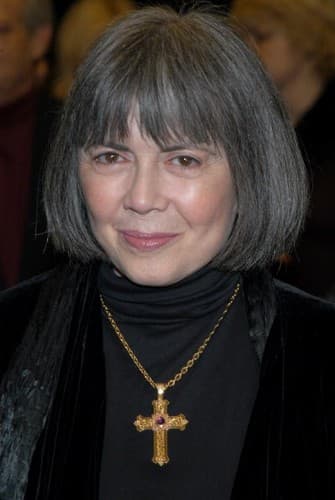
Anne Rice was an American author of gothic fiction, erotic literature, and Christian literature. She was best known for her series of novels The Vampire Chronicles. The first book became the subject of a film adaptation—Interview with the Vampire (1994).
Similar books
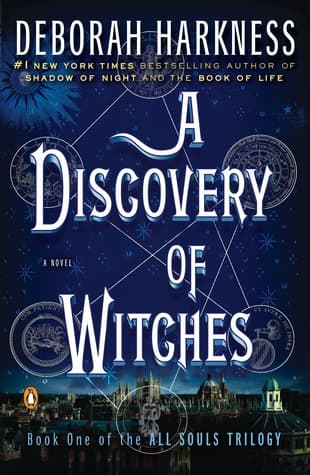
- A Discovery of Witches
Deborah Harkness
4.0 (369k) average on GoodreadsFantasyFeatures a powerful witch protagonist uncovering her family's magical history and a forbidden romance with a supernatural being.
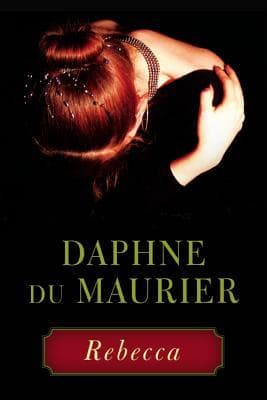
- Rebecca
Daphne du Maurier
4.2 (450k) average on GoodreadsThrillerShares a gothic atmosphere, a strong sense of place (Manderley/Mayfair house), and a pervasive, haunting mystery.
- The House of the Spirits
Isabel Allende
4.2 (190k) average on GoodreadsFantasyA multi-generational saga of a powerful family with magical realism and political undertones, similar to the Mayfair family's epic scope.
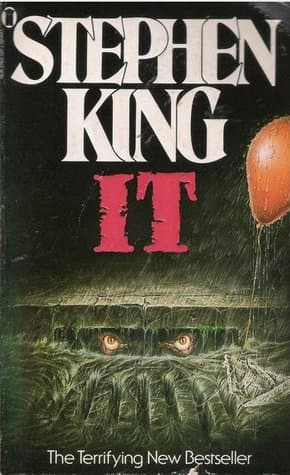
- It
Stephen King
3.5 (237) average on GoodreadsFictionBoth novels feature an ancient, malevolent entity preying on a specific locale and its inhabitants over generations. However, Rice's approach is more focused on psychological and inherited family trauma rather than overt horror, and her entity, Lasher, is more ambiguous and symbiotic than King's Pennywise, which is pure evil.
- The Mists of Avalon
Marion Zimmer Bradley
4.1 (192k) average on GoodreadsFantasyBoth authors excel at detailed character development and world-building within a magical context. However, Bradley reinterprets existing mythology (Arthurian legends), while Rice creates an entirely original, sprawling mythology rooted in American gothicism. Rice also delves deeper into the grotesque and morally ambiguous aspects of her characters and supernatural forces.
- Interview With The Vampire
Anne Rice
4.0 (485k) average on GoodreadsFantasyWhile both are by Anne Rice and share gothic sensibilities, 'The Witching Hour' is far more expansive in its historical scope and family saga, focusing on a lineage of witches rather than a small group of vampires. 'Interview' is more intimate and philosophical about immortality, whereas 'The Witching Hour' explores the broader societal and intergenerational impact of inherited supernatural power.


Enjoyed the summary?
A summary gives you the shape of the book. The book itself has the detail, the examples and the voice.
Find The Witching Hour on AmazonAs an Amazon Associate, BookBrief earns from qualifying purchases. How we're funded