
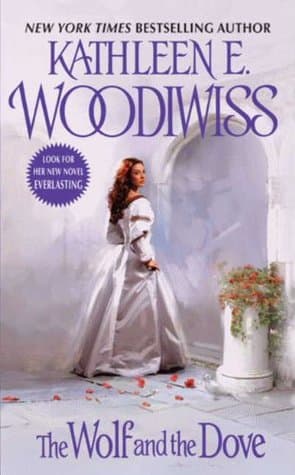
Synopsis
Covers the whole plot, including the ending.
- Difficulty
- Easy
- Pacing
- Moderate
- Mood
- Passionate, Dramatic, Romantic, Intense
- Read it if
- You love epic historical romances with a 'enemies-to-lovers' trope, strong-willed heroines, and powerful, dominant heroes set against a backdrop of medieval conquest and court intrigue.
- Skip it if
- You prefer romances with modern sensibilities, dislike 'alpha male' heroes, or find historical power imbalances and forced marriages to be problematic themes.
The Wolf and the Dove Plot Summary
Covers the whole plot, including the ending.
The Norman Invasion of Darkenwald
In 1072, Lady Aislinn of Darkenwald lives peacefully in her Saxon home until Lord Wulfgar's Norman forces invade. Aislinn's father, Lord Saxon, dies in battle, and her mother soon dies from grief. As the only heir, Aislinn faces Wulfgar. Despite her Saxon pride and hatred for Normans, she is drawn to Wulfgar's presence and unexpected kindness, even as he claims her castle and makes her his ward. She vows revenge for her family and people but feels more and more attracted to her conqueror.
A Forced Betrothal and Growing Tensions
Wulfgar wants to secure Darkenwald and bring Aislinn into Norman society, so he arranges her marriage to Lord Gundry, a loyal but cruel Norman baron. Aislinn is horrified by the idea. As she lives in Wulfgar's castle, their closeness creates a complex dynamic. Aislinn, initially defiant, slowly sees the honorable man beneath Wulfgar's stern outside. Wulfgar is increasingly charmed by Aislinn's spirit, beauty, and intelligence, despite her Saxon background and his duty to his king. Their interactions are full of unspoken desire and conflicting loyalties.
The Escape Attempt and Its Aftermath
Aislinn wants to escape her marriage to Gundry and gain freedom. She plans and carries out an escape from Wulfgar's castle with loyal Saxon helpers. Her attempt fails, and Wulfgar's men recapture her. Furious and worried for her safety, Wulfgar confronts her. The moment's intensity, with their strong emotions, leads to a passionate encounter. Though Wulfgar initially acts to show his dominance and protect her from Gundry, it changes their relationship. Aislinn feels confused by her anger, shame, and unexpected desire for Wulfgar.
A Forced Marriage and a New Life
To stop Aislinn from marrying Gundry and to protect her after her escape, Wulfgar decides to marry her himself. This is an unusual choice with political consequences and disapproval from others. The marriage is initially for convenience and protection, but their attraction is clear. Aislinn struggles to reconcile her hatred for her conqueror with the passion and growing affection she feels for her husband. Their early married life is full of emotional trouble, misunderstandings, and arguments, but also moments of tenderness and growing love that slowly reduce Aislinn's desire for revenge.
Intrigue and Betrayal at Court
Wulfgar takes Aislinn to King William's court in London. Her Saxon heritage makes her an object of suspicion among the Norman nobility. She faces hostility, especially from Lady Yvette, who wants Wulfgar. Aislinn's beauty and spirit also attract other Norman lords, including the manipulative Sir Robert. Wulfgar protects Aislinn fiercely, but their bond is tested by constant intrigue and attempts to separate them. Aislinn begins to learn the complex rules of court and its hidden dangers.
The Threat of Gundry's Revenge
Lord Gundry, angry about Wulfgar's marriage to Aislinn and his own humiliation, becomes a strong enemy. He plots with other unhappy Norman lords and tries to stir up Saxon rebels against Wulfgar. Gundry's pursuit of revenge creates constant danger for Aislinn and Wulfgar, forcing them to rely on each other. Aislinn, at first hesitant to trust Wulfgar, begins to see his commitment to her safety and happiness, even as he handles political challenges and defends his lands against Gundry.
Aislinn's Pregnancy and a New Hope
Amidst the political trouble and personal dangers, Aislinn learns she is pregnant with Wulfgar's child. This news affects both of them deeply. For Aislinn, the pregnancy is a new start, a clear link to Wulfgar that goes beyond their first conflict. For Wulfgar, it is a source of joy and pride, making his protective feelings and love for Aislinn stronger. The idea of a child, part Saxon and part Norman, represents hope for peace and unity, and it strengthens their emotional bond, making their connection clear and permanent.
The Abduction and Rescue
Lord Gundry, becoming more desperate, arranges Aislinn's abduction while she is pregnant. He plans to use her to torment Wulfgar and ruin his reputation. He holds her in a remote fortress, making her live in harsh conditions. Wulfgar, full of fear and anger, starts a search and rescue mission, showing his love and devotion. He tracks Gundry to his fortress and, in a final fight, battles Gundry and his men. Wulfgar defeats Gundry, saving Aislinn and their unborn child, confirming his role as her protector and hero.
Aislinn's Illness and Wulfgar's Devotion
After her abduction and rescue, Aislinn becomes very ill. Her life and the life of their child are at risk. Wulfgar is worried and dedicates himself to her care, calling the best healers and staying by her side. During this time, Aislinn sees the depth of Wulfgar's love and tenderness, realizing his devotion is complete. Her remaining resentment and desire for revenge finally disappear, replaced by a deep and mutual love. She fully accepts him as her husband and the father of her child, embracing their future together.
The Birth of Their Child and Lasting Peace
Aislinn recovers from her illness and gives birth to a healthy son named Gareth, who has both Saxon and Norman heritage. Their child's birth marks a happy end to their journey. Aislinn and Wulfgar have overcome their initial animosity, political problems, and personal dangers to build a strong, loving bond. They find lasting peace and happiness in their marriage, ruling Darkenwald together. This shows the potential for unity between Saxons and Normans. Their love story shows lasting passion and the triumph of affection over conflict.
Principal Figures
Lady Aislinn of Darkenwald
Protagonist
A fiery Saxon noblewoman who marries her Norman conqueror.
Lady Aislinn is a proud, spirited, and beautiful Saxon noblewoman whose world is shattered by the Norman conquest. Initially consumed by hatred and a desire for revenge against Wulfgar for invading her home and killing her father, she is also undeniably drawn to him. She is intelligent, defiant, and fiercely independent, often clashing with Wulfgar. Over the course of the novel, she struggles to reconcile her loyalty to her Saxon heritage with her growing love for her Norman husband, eventually finding peace and happiness in their union. Her journey is one of emotional growth and acceptance.
Relationships: Wulfgar (Husband, conqueror, eventual deep love); Lord Saxon (Father, killed by Normans); Lord Gundry (Unwanted suitor, antagonist)
Lord Wulfgar, the Iron Wolf
Protagonist
A powerful Norman knight who conquers Darkenwald and marries Aislinn.
Lord Wulfgar is a formidable, honorable, and powerful Norman knight, known as the 'Iron Wolf' for his military prowess. Despite his stern and often ruthless exterior as a conqueror, he possesses a deep sense of duty, loyalty to his king, and an unexpected capacity for tenderness and passion. He is immediately captivated by Aislinn's beauty and spirit, and his initial intention to merely control her evolves into a profound and protective love. He is determined to win her heart and protect her, even from his own people, demonstrating unwavering devotion.
Relationships: Aislinn (Wife, conquered, eventual deep love); King William (Liege lord, loyal subject); Lord Gundry (Rival, antagonist)
Lord Gundry
Antagonist
A cruel Norman baron who seeks Aislinn's hand and later revenge.
Lord Gundry is a cruel, ambitious, and vindictive Norman baron to whom Wulfgar initially betroths Aislinn. He is portrayed as physically unappealing and morally reprehensible, making him a stark contrast to Wulfgar. After Wulfgar marries Aislinn, Gundry becomes a relentless antagonist, driven by humiliation and a desire for revenge against both Aislinn and Wulfgar. He orchestrates plots, abducts Aislinn, and attempts to undermine Wulfgar's authority, serving as a constant threat to their happiness and safety.
Relationships: Aislinn (Unwanted suitor, target of his revenge); Wulfgar (Rival, object of his hatred)
Lady Yvette
Supporting
A jealous Norman noblewoman who desires Wulfgar.
Lady Yvette is a beautiful but manipulative Norman noblewoman who has long harbored affections for Wulfgar. She resents Aislinn's marriage to Wulfgar and attempts to sow discord between them, using her influence at court and her feminine wiles. She represents the social and political opposition Aislinn faces as a Saxon wife in a Norman world, and her jealousy serves to highlight the strength of Wulfgar's commitment to Aislinn.
Relationships: Wulfgar (Unrequited love, object of desire); Aislinn (Rival, object of jealousy)
King William (William the Conqueror)
Supporting
The powerful Norman King of England.
King William is the stern and authoritative Norman King of England. He is Wulfgar's liege lord and the ultimate authority figure in the Norman world. He is primarily concerned with securing his reign and maintaining control over the conquered Saxon lands. While he respects Wulfgar's loyalty and military prowess, he is initially wary of Wulfgar's marriage to a Saxon noblewoman, reflecting the political tensions of the era. His presence underscores the historical context and the challenges Wulfgar faces in legitimizing his union with Aislinn.
Relationships: Wulfgar (Loyal subject, trusted knight); Aislinn (Wulfgar's Saxon wife, initially viewed with suspicion)
Lord Saxon
Mentioned
Aislinn's father, the former Lord of Darkenwald.
Lord Saxon is Aislinn's father and the former ruler of Darkenwald. He is a proud and brave Saxon lord who dies defending his lands against Wulfgar's Norman invasion. His death is a foundational event in the novel, fueling Aislinn's initial hatred and desire for revenge against Wulfgar. He represents the lost Saxon way of life and the legacy Aislinn feels compelled to uphold.
Relationships: Aislinn (Daughter, source of her initial grief and vengeance)
Lady Edith
Supporting
Aislinn's loyal nurse and confidante.
Lady Edith is Aislinn's elderly and fiercely loyal nurse. She remains devoted to Aislinn even after the conquest, offering comfort, advice, and practical assistance. She represents the enduring loyalty of the Saxon people and provides a maternal figure for Aislinn in her time of loss. Edith often expresses her distrust of the Normans but eventually comes to accept Wulfgar for Aislinn's sake.
Relationships: Aislinn (Nurse, confidante, surrogate mother)
Sir Robert
Supporting
A Norman knight who attempts to court Aislinn.
Sir Robert is a Norman knight at King William's court who shows an interest in Aislinn. While not as overtly villainous as Gundry, he represents another source of potential conflict and distraction for Aislinn and Wulfgar. His attempts to flirt with Aislinn and undermine Wulfgar's claim on her highlight the societal pressures and temptations present in the Norman court, further solidifying Wulfgar's protective instincts.
Relationships: Aislinn (Flirtatious admirer); Wulfgar (Rival for Aislinn's attention)
Themes & Insights
Love Conquers All (Even Conquest)
This theme explores how deep love can grow during conflict, hatred, and forced situations. Aislinn's initial hatred for Wulfgar, her conqueror, slowly changes into deep, passionate love. Wulfgar, at first seeing Aislinn as a political prize, comes to love her completely. Their story shows that real affection, understanding, and shared experiences can bridge cultural gaps and overcome even traumatic beginnings. It unites two people from opposing sides of a historical conflict.
“He had come as her conqueror, but he would stay as her love.”
Identity and Belonging
Aislinn deals with her Saxon identity in a world increasingly run by Normans. She tries to keep her heritage and loyalties while being forced into a Norman marriage and society. She finds a new sense of self, not just Saxon or Norman, but a mix, especially with the birth of her child. Wulfgar also has to balance his Norman duty with his love for a Saxon woman, challenging his time's strict social rules. The theme looks at how people adapt, integrate, and form new identities during big societal changes.
“She was a Saxon, he a Norman. But in their hearts, they were simply man and woman.”
Revenge vs. Forgiveness
Aislinn starts the story wanting revenge against Wulfgar for her father's death and the conquest of her home. Her internal struggle between this desire and her attraction to Wulfgar is a big part of her character arc. Over time, through Wulfgar's protection, love, and devotion, Aislinn slowly lets go of her need for vengeance. The novel suggests that forgiveness, or moving past hatred through love, is more fulfilling than holding onto past wrongs, especially when a future together is possible.
“The fires of hatred had cooled, replaced by a warmth she had never anticipated.”
The Brutality and Aftermath of Conquest
The novel shows the harsh realities of the Norman Conquest of England, from the violence and loss of life to the displacement of the Saxon people. Aislinn's personal tragedy reflects this larger historical event. The story highlights the power dynamics, cultural clashes, and deep resentments that came from the conquest. While the romance is central, the historical background reminds the reader of the social and political challenges faced by both conquerors and conquered, and the long road to integration and peace.
“Her home, her heritage, all had been swept away by the Norman tide.”
Plot Devices & Literary Techniques
Forced Marriage
Aislinn is compelled to marry Wulfgar, creating initial conflict and later deep affection.
The forced marriage between Aislinn and Wulfgar is a classic romance trope that serves as the central catalyst for their relationship. It immediately places them in a high-stakes, intimate situation despite their initial animosity and cultural divide. This device forces them to confront their prejudices, navigate their conflicting loyalties, and ultimately discover a profound love that transcends the circumstances of their union. Without the forced marriage, their paths might never have intertwined in such a deep and transformative way, highlighting the idea that love can emerge from unexpected and unideal beginnings.
Enemy-to-Lovers Trope
The protagonists, from opposing sides, gradually fall in love.
This narrative device is fundamental to the story. Aislinn views Wulfgar as her enemy, the conqueror of her land and killer of her father, while Wulfgar initially sees Aislinn as a spirited but defiant ward to be controlled. Their journey from hatred and mistrust to passionate love is the core of the novel's appeal. The slow burn of their evolving feelings, the internal conflicts, and the external obstacles they overcome amplify the emotional intensity and make their eventual union feel earned and powerful, demonstrating that even the most profound divides can be bridged by personal connection.
Historical Setting (Norman Conquest)
The 11th-century Norman Conquest of England provides the backdrop and conflict.
The specific historical setting of 1072, during the Norman Conquest, is more than just a backdrop; it is an integral plot device that drives the entire narrative. The conflict between Saxons and Normans creates the initial antagonism between Aislinn and Wulfgar, shapes their identities, dictates their political situations, and provides the constant external threats (like Lord Gundry and court intrigue). The historical context provides high stakes, political tension, and cultural clashes that directly influence character motivations and plot developments, grounding the personal romance within a grander historical drama.
Symbolism of 'The Wolf and The Dove'
The titles represent the contrasting natures of Wulfgar and Aislinn.
The title itself, 'The Wolf and The Dove,' serves as a powerful symbolic device. Wulfgar, the 'Iron Wolf,' embodies the fierce, dominant, and conquering nature of the Norman warrior. Aislinn, the 'Dove,' represents innocence, vulnerability, and the peace of the conquered Saxon land, though she also possesses a hidden strength and fiery spirit. The symbolism highlights their initial contrasting natures and roles, but also foreshadows their eventual union, suggesting that even predator and prey can find harmony. It encapsulates the core theme of love bridging seemingly irreconcilable differences, transforming the wolf's predation into protection for the dove.
The Wolf and the Dove Quotes
“Never had she known such a powerful, demanding force, and her body quaked from the sheer intensity of it.”
“She was his, and he would take her, claim her, and brand her with his name until the very stars fell from the heavens.”
“For the first time in her life, she felt truly alive, truly desired, and truly cherished.”
“He was a wolf, she a dove, and their worlds were never meant to collide, yet fate had woven their destinies together.”
“Her spirit, though bruised, was not broken, and she would fight with every fiber of her being for her freedom and her love.”
“He would conquer her resistance, not with force, but with the sheer power of his passion and the undeniable truth of his love.”
“The world outside might be filled with war and strife, but within the confines of his arms, she found a peace she had never known.”
“His touch was fire, his kiss a flame, and she was consumed by the glorious inferno he ignited within her.”
“She was not a prize to be won, but a woman to be cherished, respected, and loved with all his heart.”
“Though their languages differed and their cultures clashed, the language of their hearts spoke a truth that transcended all barriers.”
“Every beat of her heart was a testament to the love she bore for him, a love that would defy kingdoms and conquer all odds.”
“He had claimed her body, but it was her spirit, her very soul, that he longed to possess completely.”
“Her defiance was a challenge he relished, for it proved her spirit was as untamed and wild as his own.”
“Love, she learned, was not a gentle whisper, but a roaring fire that consumed everything in its path, leaving only ash and an unquenchable yearning.”
Quiz
10 questions on the plot and the characters. Each answer comes with a short explanation.
Question 1
What is the nickname given to the Norman conqueror, Wulfgar, in the book's description?
- The Golden Lion
- The Iron Wolf
- The Saxon Slayer
- The Dark Knight
Show answer
B. The Iron Wolf The description explicitly states, 'Noble Aislinn grieves as the Iron Wolf and his minions storm through her beloved Darkenwald.' This refers to Wulfgar.
Question 2
What is the name of Aislinn's beloved homeland that is being stormed by Wulfgar?
- Silverwood
- Darkenwald
- Greenmeadow
- Stonehaven
Show answer
B. Darkenwald The description mentions Aislinn 'grieves as the Iron Wolf and his minions storm through her beloved Darkenwald,' identifying it as her home.
Question 3
What is Aislinn's initial feeling towards Wulfgar?
- Curiosity and admiration
- Fear and respect
- Malice and hatred
- Indifference and apathy
Show answer
C. Malice and hatred The text states, 'And she burns with malice for the handsome Norman savage who would enslave her,' clearly indicating her initial negative feelings.
Question 4
What is Wulfgar's primary desire regarding Aislinn after she 'vanquishes' him?
- To imprison her as a war trophy
- To form a political alliance with her family
- To possess her and nurture a union with her
- To return her to her people unharmed
Show answer
C. To possess her and nurture a union with her The description states, 'He must have the chaste, sensuous enchantress who is sworn to his destruction. And he will risk life itself to nurture with tender passion a glorious union.' This highlights his strong desire for her.
Question 5
What is Aislinn's background, identifying her as the 'Dove'?
- She is a Norman lady of high standing.
- She is a bold and beautiful princess of Saxon blood.
- She is a commoner who has risen to power.
- She is a mysterious sorceress from a distant land.
Show answer
B. She is a bold and beautiful princess of Saxon blood. The 'Dove' section explicitly states Wulfgar 'has been vanquished — and by a bold and beautiful princess of Saxon blood,' referring to Aislinn.
Question 6
What paradox describes Aislinn's internal conflict regarding Wulfgar?
- She desires peace but is compelled to fight.
- She hates him but also aches for his kiss.
- She wants freedom but yearns for enslavement.
- She seeks revenge but wishes for forgiveness.
Show answer
B. She hates him but also aches for his kiss. The 'Wolf' section details this: 'And she burns with malice for the handsome Norman savage...even as she aches to know the rapture of the conqueror's kiss.' This highlights her conflicting emotions.
Question 7
How is the union between Aislinn and Wulfgar ultimately described in terms of its origin?
- Born from mutual respect and shared goals.
- A strategic alliance to end the war.
- A glorious union born in the blistering heat of hatred and war.
- A fated love revealed through ancient prophecy.
Show answer
C. A glorious union born in the blistering heat of hatred and war. The final sentence of the description explicitly states Wulfgar will 'nurture with tender passion a glorious union born in the blistering heat of hatred and war.'
Question 8
What is the primary historical context hinted at by the conflict between Aislinn and Wulfgar?
- The Hundred Years' War
- The Norman Conquest of England
- The Crusades
- The War of the Roses
Show answer
B. The Norman Conquest of England The terms 'Norman savage,' 'Saxon blood,' and the theme of a conqueror storming a land strongly point to the Norman Conquest of England, where Normans invaded Saxon lands.
Question 9
How does the description characterize Wulfgar's state after encountering Aislinn?
- He is more determined to conquer her land.
- He has been 'vanquished' for the first time by her.
- He feels pity for her plight.
- He sees her as a valuable hostage.
Show answer
B. He has been 'vanquished' for the first time by her. The 'Dove' section states, 'For the first time ever, mighty Wulfgar has been vanquished — and by a bold and beautiful princess of Saxon blood.' This suggests a significant personal defeat or emotional impact caused by Aislinn.
Question 10
What is the central theme that underpins the relationship between Aislinn and Wulfgar as described?
- The triumph of political strategy over personal feelings.
- The slow, gradual development of respect and friendship.
- The transformation of intense hatred and conflict into passionate love.
- The inevitability of conflict between different cultures.
Show answer
C. The transformation of intense hatred and conflict into passionate love. The description clearly sets up a dynamic where Aislinn 'burns with malice' but 'aches to know the rapture of the conqueror's kiss,' and their union is 'born in the blistering heat of hatred and war,' indicating love emerging from intense opposition.
The Wolf and the Dove FAQ
What is 'The Wolf and the Dove' about?
'The Wolf and the Dove' is a historical romance set in 11th-century England after the Norman Conquest. It tells the story of the fierce Norman knight Wulfgar, known as 'The Wolf,' and the proud Saxon lady Aislinn, 'The Dove,' as their lives become entangled through conquest, captivity, and a passionate, tumultuous love story that defies their warring peoples.
Why should I read 'The Wolf and the Dove'?
You should read 'The Wolf and the Dove' for its classic historical romance appeal, featuring a strong-willed heroine, a formidable hero, and intense emotional conflict set against a backdrop of post-Conquest England. It's known for its passionate narrative, detailed historical setting, and the compelling development of love from initial hatred and cultural divides.
What is the background/setting of 'The Wolf and the Dove'?
The book is set in 11th-century England, specifically after the Norman Conquest of 1066. It vividly depicts the cultural clash and political tension between the conquering Normans, led by characters like Wulfgar, and the subjugated Saxons, represented by Aislinn and her people of Darkenwald. The historical context of feudal lords and forced alliances is central to the plot.
What are the most memorable quotes?
While specific quotes are not provided in the summary, memorable lines often revolve around Aislinn's fiery defiance against Wulfgar's dominance, and Wulfgar's internal struggle between his warrior's pride and his growing tenderness for Aislinn, capturing the essence of their 'blistering heat of hatred and war' turning to 'tender passion.'
What writing style does the author use?
Kathleen E. Woodiwiss is known for a lush, descriptive writing style that immerses readers in the historical period and the characters' intense emotions. Her prose often features dramatic internal monologues, vivid descriptions of medieval life, and a focus on the passionate development of the central romance, often with detailed love scenes.
What minor details add significant meaning?
The persistent symbolism of the 'wolf' and 'dove' throughout the narrative, beyond just the characters' nicknames, subtly reinforces their opposing natures and eventual, improbable union. Small details about Saxon customs versus Norman traditions also highlight the cultural chasm they must bridge.
What are some subtle foreshadowing moments?
Early descriptions of Wulfgar's unexpected gentleness in certain actions, despite his 'savage' reputation, subtly foreshadow his capacity for deep love and tenderness towards Aislinn. Similarly, Aislinn's initial captivation by Wulfgar's physical presence, even amidst her hatred, hints at the underlying attraction that will blossom.
What unexpected character connections exist?
Beyond the immediate captor-captive relationship between Wulfgar and Aislinn, the book often reveals unexpected connections through shared experiences of loss or duty, or through the common humanity that transcends their cultural divide, fostering empathy where only animosity was expected.
What are unspoken character motivations?
Wulfgar's unspoken motivation often includes a desire for a love that transcends mere conquest, perhaps seeking genuine connection after a life of battle and dominance. Aislinn, despite her outward defiance, likely harbors an unspoken yearning for security and belonging, even if it comes from her 'enemy,' after her world is shattered.
What psychological complexities do characters exhibit?
Wulfgar exhibits the complexity of a conqueror torn between his duty and his burgeoning affection, grappling with the concept of yielding emotionally to a 'vanquished' woman. Aislinn displays the psychological struggle of a proud noblewoman who must reconcile her hatred for her oppressor with an undeniable, passionate attraction, leading to internal conflict and self-questioning.
What are the major emotional turning points?
A major emotional turning point is when Aislinn, initially sworn to Wulfgar's destruction, experiences a moment of unexpected tenderness or protection from him, challenging her preconceived notions. Another is when Wulfgar recognizes his possessive desire for Aislinn has transformed into genuine love, risking his own life and reputation for her.
How do relationship dynamics evolve?
The relationship dynamics evolve from initial animosity and a captor-captive power imbalance to a complex blend of mutual respect, understanding, and passionate love. Aislinn gradually moves from rebellion to acceptance and then to reciprocating Wulfgar's affection, while Wulfgar transitions from demanding submission to cherishing and protecting Aislinn.
Which parts remain ambiguous or open-ended?
While the core romance reaches a satisfying conclusion, the long-term societal integration of Normans and Saxons, beyond the main characters' union, often remains an open-ended theme, hinting at the continuing challenges faced by their respective peoples even after their personal peace is forged.
What are controversial scenes or decisions?
Controversial scenes often involve the initial power dynamics inherent in the captor-captive romance, particularly Wulfgar's forceful actions and Aislinn's initial lack of agency. Readers may debate the morality of their early encounters and the rapid shift from hatred to passion, which is a hallmark of the 'blistering heat' described.
'The Wolf and the Dove' ending explained: how it ends & what it means
The book typically concludes with Wulfgar and Aislinn overcoming all obstacles—both external threats and their own internal conflicts—to fully embrace their love and commit to a future together. This ending signifies that love, even born from conflict and hatred, can triumph over profound cultural and personal divides, leading to a glorious, tender union.
About the author

Kathleen E. Woodiwiss was an American author known for her contributions to the historical romance genre. Her notable works include "The Wolf and the Dove," "The Flame and the Flower," and "A Rose in Winter," which have garnered a dedicated readership and significantly influenced the genre. Woodiwiss's writing is characterized by richly detailed settings and complex characters.
Similar books
- The Flame and the Flower
Kathleen E. Woodiwiss
4.1 (17k) average on GoodreadsHistorical FictionPioneering historical romance by the same author, featuring a similar blend of strong characters and passionate conflict.
- A Kingdom of Dreams
Judith McNaught
4.2 (45k) average on GoodreadsHistorical FictionFeatures a Scottish warrior and an English lady in a medieval setting with an 'enemies-to-lovers' dynamic.
- The Prize
Julie Garwood
3.9 (1k) average on GoodreadsThrillerMedieval romance with a feisty heroine and a powerful Viking lord, sharing themes of forced marriage and eventual love.
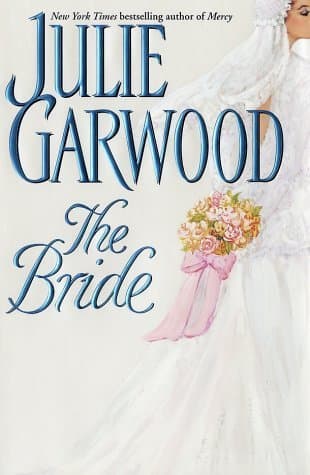
- The Bride
Julie Garwood
4.3 (55k) average on GoodreadsHistorical FictionWhile published later (1990), 'The Bride' also features a forced marriage between a Scottish lord and an English lady. Garwood's approach, however, generally emphasizes more humor and a more balanced power dynamic between protagonists. Her heroines often exhibit more agency, and the path to mutual respect is clearer, representing an evolution in the genre that addresses some of the consent issues and problematic power imbalances found in Woodiwiss's earlier work, making 'The Wolf and the Dove' appear more dated in its treatment of these themes.
- To Kill a Mockingbird
Harper Lee
4.3 (4.5M) average on GoodreadsHistorical FictionIn the 1930s Jim Crow South, Harper Lee writes about racial injustice, moral growth, and the quiet courage of a lawyer father, Atticus Finch, as seen through his young daughter's eyes.
- The Great Gatsby
F. Scott Fitzgerald
3.9 (3.8M) average on GoodreadsHistorical FictionIn the opulent Roaring Twenties, a mysterious millionaire's lavish parties hide his desperate, tragic pursuit of a lost love, exposing the emptiness within the American Dream.


Enjoyed the summary?
A summary gives you the shape of the book. The book itself has the detail, the examples and the voice.
Find The Wolf and the Dove on AmazonAs an Amazon Associate, BookBrief earns from qualifying purchases. How we're funded