
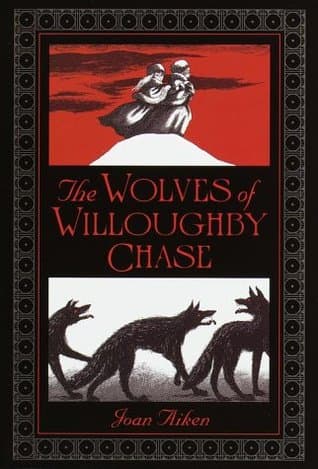
Synopsis
Covers the whole plot, including the ending.
- Difficulty
- Easy
- Pacing
- Moderate
- Mood
- Adventurous, Suspenseful, Classic, Whimsical
- Read it if
- You love classic children's adventures with plucky heroines, dastardly villains, and a touch of gothic charm.
- Skip it if
- You prefer modern, fast-paced narratives or stories without clear-cut good and evil.
The Wolves of Willoughby Chase Plot Summary
Covers the whole plot, including the ending.
A New Governess and Departing Parents
The story begins at Willoughby Chase, a large country estate in fictional 19th-century England, where many wolves are present. Bonnie Green, the young mistress of the house, awaits her orphaned cousin, Sylvia Green, from London. Before Sylvia arrives, a new governess, Miss Slighcarp, is introduced by Bonnie's parents, Sir Willoughby and Lady Green, who are preparing for a long sea voyage to the Mediterranean due to Lady Green's illness. Bonnie immediately dislikes Miss Slighcarp's cold manner. Her fears are confirmed when Miss Slighcarp takes Bonnie's toy wolf and forbids her from playing with the goose-boy, Simon. Sir Willoughby and Lady Green leave, placing the girls in Miss Slighcarp's care.
Slighcarp's Reign of Terror Begins
After Sir Willoughby and Lady Green leave, Miss Slighcarp shows her cruel nature. She dismisses all the loyal household staff, including Mrs. Brisket the cook and Mr. Gripe the butler, replacing them with her own unpleasant associates, like Mrs. Mimm. Willoughby Chase becomes a silent place. Bonnie and Sylvia receive harsh lessons, small meals, and constant watch. Miss Slighcarp begins to sell off furniture and valuable items, claiming it is for the girls' education, but clearly for her own gain. The girls realize they are prisoners in their own home.
The Fraudulent Will and Forced Departure
Miss Slighcarp's control grows when she announces that Sir Willoughby and Lady Green's ship has sunk, and they are presumed dead. She then produces a fake will, supposedly written by Sir Willoughby, which disinherits Bonnie and leaves the estate to Miss Slighcarp. With the estate seemingly hers, Miss Slighcarp moves to secure her control. She arranges for Bonnie and Sylvia to be sent to Mrs. Brisket's Orphan School, a harsh institution for unwanted children, far from Willoughby Chase. The girls are sent away in a carriage, their protests ignored, and find themselves in a bleak place, treated as paupers.
Life at Mrs. Brisket's Orphan School
At Mrs. Brisket's Orphan School, Bonnie and Sylvia endure a brutal daily routine of hard labor, cold rooms, and not enough food. The school is run by Mrs. Brisket, who, despite having the same name as the former cook at Willoughby Chase, is a much crueler woman. The girls are forced to do menial tasks, wear coarse uniforms, and are always threatened with punishment. Sylvia, being more timid, struggles, while Bonnie's spirit is tested but not broken. They find some friendship with other orphans, but their situation seems without hope, with no clear way to escape or expose Miss Slighcarp's deception.
The Escape Plan and Simon's Help
Bonnie, refusing to give up, plans an escape. She sends a message to Simon, the goose-boy from Willoughby Chase, who she knows is loyal and clever. Simon, who had been hiding in the woods after being dismissed by Slighcarp, arrives near the orphan school, bringing his flock of trained geese. He communicates with the girls using a secret code. Their plan involves using the geese to create a diversion and help them travel through the wilderness. The girls prepare for their escape, gathering what little they can and waiting for the right moment.
Flight Through the Snow
Under cover of darkness and a heavy snowfall, Bonnie and Sylvia escape. With Simon's help, they slip away from the orphan school. The journey is dangerous; they must deal with the cold, the deep snow, and the constant threat of wolves. Simon's geese are helpful, not only as a distraction but also for their warmth and guidance. They rely on Simon's knowledge of the land and his courage to navigate the terrain, hoping to reach safety and find someone who can help them reclaim Willoughby Chase.
Seeking Refuge with Dr. Aiken
After their journey, the children reach the home of Dr. Aiken, a kind inventor and friend of Sir Willoughby. Dr. Aiken gives them warmth, food, and comfort. He listens to their story of Miss Slighcarp's deceit and the fake will. Though at first doubtful, he is convinced by the children's honesty and the details of their account. Dr. Aiken, despite being reclusive, agrees to help them. He plans to expose Miss Slighcarp and recover Willoughby Chase, seeing the urgency of the situation.
The Return of Sir Willoughby
As Dr. Aiken prepares to confront Miss Slighcarp, a surprising event happens. It is discovered that Sir Willoughby and Lady Green did not die in the shipwreck. Their ship had sunk, but they were rescued and had been recovering, suffering from amnesia. They are found and brought back to England. The news of their survival completely undoes Miss Slighcarp's fake claims and her forged will, as the true owners of Willoughby Chase are now alive and well, ready to reclaim their home and expose the governess's villainy.
Confrontation and Exposure
With Sir Willoughby and Lady Green returned, Miss Slighcarp's plan quickly fails. She is confronted with the evidence of her treachery, including the forged will and the testimony of Bonnie, Sylvia, and Simon. Her cruel treatment of the girls and her systematic plundering of Willoughby Chase are revealed. Faced with proof, Miss Slighcarp tries to escape, showing her true, desperate nature. Her accomplices, including Mrs. Mimm and the fake Mrs. Brisket, are also exposed for their part in the conspiracy.
Willoughby Chase Restored
Miss Slighcarp and her associates are caught and face justice for their crimes. Willoughby Chase is restored to its rightful owners, Sir Willoughby and Lady Green, who are happy to be reunited with Bonnie and Sylvia. The loyal servants, including Simon, are reinstated, and the estate slowly returns to its former joyful state. The girls, though changed by their experience, become stronger. The family is complete once more, and the threat of the wolves, both real and symbolic, is finally gone, bringing a peaceful end to their adventure.
The Wolves of Willoughby Chase Characters
Bonnie Green
Protagonist
The spirited and courageous young mistress of Willoughby Chase.
Bonnie is a lively, brave, and intelligent girl, the daughter of Sir Willoughby and Lady Green. Despite her young age, she possesses a keen sense of justice and an unyielding spirit. She is quick to distrust Miss Slighcarp and is the driving force behind the girls' escape from Mrs. Brisket's Orphan School. Her resilience and determination are key to their survival and ultimately to the exposure of Miss Slighcarp's plot. She cares deeply for her family and her home, Willoughby Chase, and is fiercely protective of Sylvia.
Relationships: Sylvia Green (cousin and close friend); Sir Willoughby Green (father); Lady Green (mother); Simon (loyal friend and ally); Miss Slighcarp (antagonist, cruel governess)
Sylvia Green
Protagonist
Bonnie's timid and gentle cousin from London.
Sylvia is Bonnie's orphaned cousin, initially portrayed as shy, delicate, and easily frightened. She comes from London to live at Willoughby Chase. Her gentle nature makes her particularly vulnerable to Miss Slighcarp's cruelty and the harsh conditions of the orphan school. While she lacks Bonnie's overt courage, she demonstrates quiet resilience and loyalty, supporting Bonnie through their shared ordeal. Her character highlights the contrast between the innocence of childhood and the harsh realities they face, and her emotional journey is significant.
Relationships: Bonnie Green (cousin and close friend); Simon (friend and ally); Miss Slighcarp (antagonist, cruel governess)
Miss Slighcarp
Antagonist
The cruel and cunning governess who plots to steal Willoughby Chase.
Miss Slighcarp is the primary antagonist, a woman of chilling demeanor and ruthless ambition. She is introduced as a governess but quickly reveals herself to be a master manipulator and a criminal mastermind. Her motives are purely financial, driven by a desire to seize the Green family's fortune and estate. She orchestrates a complex plot involving forged wills, the dismissal of loyal staff, and the imprisonment of the girls. Her cold, calculating nature makes her a formidable foe, embodying pure evil in the children's world.
Relationships: Bonnie Green (victim, target of her cruelty); Sylvia Green (victim, target of her cruelty); Mrs. Mimm (accomplice); Mrs. Brisket (Orphan School) (accomplice)
Simon
Supporting
The loyal and resourceful goose-boy who aids the girls.
Simon is a kind-hearted and brave goose-boy from the Willoughby Chase estate. He is an orphan who lives in a cave nearby and possesses an unusual connection with his flock of geese, which he has trained. He is fiercely loyal to Bonnie and the Green family, and despite being dismissed by Miss Slighcarp, he remains a crucial ally. His knowledge of the local wilderness and his resourcefulness are instrumental in the girls' escape from the orphan school and their journey to Dr. Aiken.
Relationships: Bonnie Green (friend and beneficiary of his help); Sylvia Green (friend and beneficiary of his help)
Sir Willoughby Green
Supporting
Bonnie's father and the rightful owner of Willoughby Chase.
Sir Willoughby is Bonnie's kind and somewhat naive father, the master of Willoughby Chase. He is a loving parent but, due to his wife's illness and his trust in Miss Slighcarp, he unwittingly leaves his daughters vulnerable. He is presumed dead after a shipwreck, which is central to Miss Slighcarp's plot. His eventual return, suffering from temporary amnesia, is the catalyst for the villains' downfall and the restoration of order to the estate. He represents the benevolent authority that is temporarily usurped.
Relationships: Bonnie Green (daughter); Lady Green (wife); Miss Slighcarp (antagonist (initially trusted))
Lady Green
Supporting
Bonnie's mother, whose illness initiates the family's journey.
Lady Green is Bonnie's mother, whose delicate health prompts the sea voyage to the Mediterranean. Her illness and departure create the opening for Miss Slighcarp to enact her wicked plans. Like her husband, she is presumed dead in a shipwreck but is later found alive, suffering from amnesia. Her return, alongside Sir Willoughby, signifies the ultimate defeat of Miss Slighcarp and the restoration of the family unit. She represents the warmth and care that Miss Slighcarp attempts to eradicate from Willoughby Chase.
Relationships: Bonnie Green (daughter); Sir Willoughby Green (husband)
Dr. Aiken
Supporting
An eccentric inventor and friend of the Green family who aids the children.
Dr. Aiken is an old friend of Sir Willoughby and an eccentric inventor who lives in a remote, technologically advanced house (for the era). He provides refuge for Bonnie, Sylvia, and Simon after their escape. Initially skeptical of their wild tale, he quickly becomes convinced of Miss Slighcarp's villainy and uses his intellect and resources to help them. He represents the benevolent adult who, once informed, is capable of outwitting the forces of evil.
Relationships: Bonnie Green (beneficiary of his help); Sylvia Green (beneficiary of his help); Simon (beneficiary of his help); Sir Willoughby Green (old friend)
Mrs. Brisket (Orphan School)
Supporting
The cruel proprietress of the orphan school, an accomplice of Miss Slighcarp.
This Mrs. Brisket is a harsh and unfeeling woman who runs the dreadful orphan school where Bonnie and Sylvia are sent. She is an accomplice of Miss Slighcarp, willingly participating in the scheme to keep the girls imprisoned and miserable. Her cruelty and the grim conditions of her school serve to highlight the dire situation the girls are in and the extent of Miss Slighcarp's wickedness. She represents the institutionalized cruelty and neglect that the children face.
Relationships: Miss Slighcarp (accomplice); Bonnie Green (captor, tormentor); Sylvia Green (captor, tormentor)
Mrs. Mimm
Supporting
One of Miss Slighcarp's unpleasant and loyal henchwomen.
Mrs. Mimm is one of the new, surly servants brought in by Miss Slighcarp to replace the loyal staff at Willoughby Chase. She is Miss Slighcarp's principal accomplice within the house, assisting in the dismissal of servants, the sale of goods, and the surveillance of Bonnie and Sylvia. She is portrayed as equally unpleasant and complicit in the governess's scheme, serving as an extension of Miss Slighcarp's cruelty within the household.
Relationships: Miss Slighcarp (accomplice); Bonnie Green (tormentor); Sylvia Green (tormentor)
The Wolves of Willoughby Chase Themes
Good Versus Evil
The novel presents a clear difference between good and evil. Miss Slighcarp and her accomplices are pure evil, driven by greed and a desire for power, inflicting cruelty without regret. In contrast, Bonnie, Sylvia, Simon, and the loyal former servants are good, kind, and loyal. The story consistently pits these forces against each other, with good winning in the end. The 'wolves' can symbolize the widespread evil threatening the children's innocence and their home.
“'Oh, what a lot of wickedness there is in the world!'”
Resilience and Courage in Childhood
A main theme is the resilience and courage of Bonnie and Sylvia when facing extreme difficulty. Despite being young children, stripped of their home, family, and comfort, they do not give up. Bonnie shows great bravery and resourcefulness, planning escapes and traveling through dangerous places. Sylvia, though more shy, also finds inner strength. Their journey shows children's ability to endure hardship and fight for what is right, even when adults fail them.
“'But we must escape! We must! We cannot stay here always.'”
The Power of Family and Loyalty
The bond between Bonnie and Sylvia, as well as the loyalty of characters like Simon and the original Willoughby Chase staff, is central to the story. Miss Slighcarp's first act is to break up the family and dismiss loyal servants, aiming to isolate the girls. However, the deep family love between the cousins and Simon's strong devotion prove stronger than any outside threat. The reunion of the Green family and the return of the loyal household show how important these relationships are in overcoming difficulty and creating a true home.
“'We are cousins, you and I, and we must stick together.'”
Loss of Innocence and Growing Up
Bonnie and Sylvia experience a harsh and early loss of innocence. They must confront the dark realities of human greed and cruelty, a sharp contrast to their protected lives at Willoughby Chase. Their journey from carefree children to resourceful survivors means they grow up quickly. They learn to trust their instincts, make hard decisions, and endure suffering. While their childhood is changed, they become stronger, understanding the world and their own abilities better, showing a coming-of-age through hardship.
“'It was as if all the joy had been drained out of Willoughby Chase, leaving only a hollow shell.'”
Social Justice and Class Divide
The novel touches on themes of social justice and the class differences in 19th-century England. The ease with which Miss Slighcarp manipulates legal documents and the existence of a harsh 'orphan school' show the vulnerability of children without proper protection and the potential for abuse in institutions. Simon, the goose-boy, from a lower class, helps the aristocratic girls, blurring class lines in their shared fight against injustice. The story supports the idea that character and loyalty are more important than social status.
“'It was a terrible thing to be poor, and friendless, and alone in the world.'”
Plot Devices & Literary Techniques
The Wolves
A literal and symbolic threat to Willoughby Chase and its inhabitants.
The wolves in the story serve as both a literal and symbolic plot device. Literally, they represent a constant, tangible danger in the wilderness surrounding Willoughby Chase, adding a layer of gothic suspense and peril to the children's escape. Symbolically, the wolves represent the wild, untamed forces of evil and chaos, mirroring the 'human wolves' like Miss Slighcarp who prey on the innocent. Their presence heightens the sense of isolation and vulnerability experienced by Bonnie and Sylvia, making their journey even more perilous and their eventual triumph more significant.
The Forged Will
The central MacGuffin driving Miss Slighcarp's plot.
The forged will is the primary plot device that sets Miss Slighcarp's villainy in motion. It serves as the legal justification for her takeover of Willoughby Chase and the disinheritance of Bonnie. This document, falsely claiming Sir Willoughby's death and transferring his estate, is the physical embodiment of Slighcarp's deceit. Its existence creates the central conflict, forcing the girls into their desperate situation. The eventual revelation of its fraudulent nature, coupled with the return of Sir Willoughby, directly leads to the antagonist's downfall, making it a crucial element of the intricate plot.
The Orphan School
A grim setting that emphasizes the girls' desperate plight.
Mrs. Brisket's Orphan School functions as a critical plot device by isolating Bonnie and Sylvia from any remaining support and subjecting them to extreme hardship. It is a classic 'prison-like' setting, designed to break their spirits and prevent them from interfering with Miss Slighcarp's plans. The harsh conditions, meager food, and cruel treatment intensify the girls' suffering and underscore the severity of their predicament. This setting serves as the catalyst for Bonnie's determination to escape, driving the narrative forward towards their eventual defiance and flight.
Simon's Geese
A unique and unexpected aid in the children's escape.
Simon's trained geese are a distinctive and charming plot device. They represent an unexpected source of aid and a connection to the natural world, contrasting with the artificial cruelty of Miss Slighcarp. The geese are not merely pets but actively participate in the escape, creating diversions, providing warmth, and even guiding the children through the snow. This device adds an element of whimsical fantasy to the otherwise grim narrative, showcasing the power of loyalty and the unusual allies that can be found in times of need, reinforcing Simon's unique character and skills.
The Wolves of Willoughby Chase Quotes
“It is a very odd thing - As odd as can be - That whatever Miss T. eats Turns into Miss T.”
“Wolves are like people, only more honest.”
“I am not a child, I am a person.”
“There is no such thing as a little enemy.”
“We must be brave, for there is no one else to be brave for us.”
“A house without books is like a room without windows.”
“It is better to light a candle than curse the darkness.”
“Kindness is a language which the deaf can hear and the blind can see.”
“Adventure is worthwhile in itself.”
“The world is full of obvious things which nobody by any chance ever observes.”
“Home is not where you live but where they understand you.”
“Courage is not the absence of fear, but the triumph over it.”
“A friend is one who knows you and loves you just the same.”
“The only way to have a friend is to be one.”
Quiz
10 questions on the plot and the characters. Each answer comes with a short explanation.
Question 1
What is the primary reason Bonnie's parents leave Willoughby Chase at the beginning of the story?
- They are fleeing from the wolves that threaten the estate
- They are going on a sea voyage for Sir Willoughby's health
- They are traveling to London to handle legal matters
- They are visiting relatives in another country
Show answer
B. They are going on a sea voyage for Sir Willoughby's health Bonnie's parents, Sir Willoughby and Lady Green, depart for a sea voyage because Sir Willoughby's health requires it. This absence creates the opportunity for Miss Slighcarp to take over Willoughby Chase.
Question 2
Who is Sylvia in relation to Bonnie?
- Her sister
- Her cousin
- Her best friend from school
- Her governess
Show answer
B. Her cousin Sylvia is Bonnie's cousin who comes to live at Willoughby Chase. She is more timid and delicate compared to the bold Bonnie, and they form a close bond throughout their ordeal.
Question 3
What is the name of the cruel governess who takes over Willoughby Chase?
- Miss Grimshaw
- Mrs. Brisket
- Miss Slighcarp
- Lady Molesworth
Show answer
C. Miss Slighcarp Miss Slighcarp is the wicked governess who is supposed to care for Bonnie and Sylvia but instead dismisses the servants, sells the furniture, and sends the girls to an orphan school while plotting to claim Willoughby Chase for herself.
Question 4
Where are Bonnie and Sylvia sent after Miss Slighcarp takes control of Willoughby Chase?
- A boarding school in London
- A prison-like orphan school
- To live with distant relatives
- A workhouse in the city
Show answer
B. A prison-like orphan school Miss Slighcarp sends Bonnie and Sylvia to a harsh, prison-like orphan school run by Mrs. Brisket, where they face endless drudgery and poor conditions, highlighting the cruelty of their new guardian.
Question 5
How do Bonnie and Sylvia escape from the orphan school?
- They sneak out during a fire drill
- They are rescued by a kind teacher
- With the help of Simon the gooseboy and his flock
- They disguise themselves as servants and walk out
Show answer
C. With the help of Simon the gooseboy and his flock Simon, the gooseboy who is a friend of Bonnie's, helps the girls escape by using his flock of geese to create a distraction, allowing them to flee the orphan school and begin their journey to reclaim Willoughby Chase.
Question 6
What role does Simon play in the story beyond helping the girls escape?
- He is a secret heir to Willoughby Chase
- He is a spy for Miss Slighcarp
- He is a loyal friend who aids in their quest to reclaim the estate
- He is a runaway from the orphan school
Show answer
C. He is a loyal friend who aids in their quest to reclaim the estate Simon is a steadfast ally who not only helps Bonnie and Sylvia escape but also supports them in their efforts to expose Miss Slighcarp's schemes and restore Willoughby Chase to its rightful owners.
Question 7
What is a key theme explored in 'The Wolves of Willoughby Chase'?
- The importance of technological advancement
- The struggle between good and evil, with resilience and friendship triumphing
- The inevitability of fate and destiny
- The complexities of adult relationships
Show answer
B. The struggle between good and evil, with resilience and friendship triumphing The book centers on themes of good versus evil, as seen in the girls' battle against Miss Slighcarp, and emphasizes resilience, courage, and the power of friendship to overcome adversity.
Question 8
What is the setting of 'The Wolves of Willoughby Chase' that blends historical and fantastical elements?
- An alternate 19th-century England with wolves roaming the countryside
- A medieval kingdom with magical creatures
- A futuristic dystopia with robotic wolves
- A Victorian London with no supernatural elements
Show answer
A. An alternate 19th-century England with wolves roaming the countryside The story is set in an alternate historical England during the early 19th century, where wolves are a real and threatening presence in the countryside, adding a fantastical and menacing layer to the plot.
Question 9
How does Miss Slighcarp attempt to legitimize her takeover of Willoughby Chase?
- By forging documents to claim she is the rightful owner
- By marrying Sir Willoughby while he is away
- By bribing local officials to support her
- By claiming the estate was abandoned
Show answer
A. By forging documents to claim she is the rightful owner Miss Slighcarp forges documents to make it appear that she has legal ownership of Willoughby Chase, allowing her to dismiss servants, sell property, and send the girls away while plotting to secure the estate for herself.
Question 10
What symbolizes hope and resilience for Bonnie and Sylvia during their hardships?
- A locket containing a picture of their parents
- The memory of their happy home and their bond with each other
- A map hidden in Bonnie's dress
- A secret code they develop
Show answer
B. The memory of their happy home and their bond with each other Throughout their ordeal, Bonnie and Sylvia draw strength from their memories of the happy times at Willoughby Chase and their growing friendship, which helps them stay resilient and determined to reclaim their home.
The Wolves of Willoughby Chase FAQ
What is 'The Wolves of Willoughby Chase' about?
The story follows cousins Bonnie and Sylvia as they are left at Willoughby Chase while Bonnie's parents embark on a sea voyage. Their once-happy home falls under the control of the cruel governess Miss Slighcarp, who dismisses servants, sells furniture, and sends the girls to a harsh orphan school. With help from Simon the gooseboy, they escape and must reclaim their home from Miss Slighcarp's clutches.
Why should I read 'The Wolves of Willoughby Chase'?
This book offers a thrilling adventure with strong, resourceful child protagonists facing genuine peril from both human villains and the supernatural threat of wolves. Joan Aiken creates an engaging alternate-history England with Gothic elements, making it a classic of children's literature that balances darkness with hope and resilience.
What is the background/setting of 'The Wolves of Willoughby Chase'?
Set in an alternate 19th-century England during the reign of King James III, the story takes place primarily at Willoughby Chase, a grand estate in the countryside. This world is characterized by harsh winters, packs of wolves that have migrated through the newly built Channel Tunnel from Europe, and a society where children have little protection from adult cruelty.
What are the most memorable quotes?
Key quotes include Bonnie's defiant 'We'll get away, you'll see!' when facing Miss Slighcarp's tyranny, and Sylvia's observation 'It's like a bad dream' as their home is dismantled. Simon's practical wisdom shines in lines like 'Wolves or no wolves, we must get to London,' highlighting the children's determination against overwhelming odds.
What writing style does the author use?
Joan Aiken employs a vivid, descriptive style with Gothic undertones, creating atmospheric tension through details like the howling wolves and decaying orphan school. Her prose balances suspense with moments of warmth, particularly in the children's interactions, making the narrative accessible yet richly textured for young readers.
What minor details add significant meaning?
The dismissal of loyal servants like Pattern and James highlights Miss Slighcarp's systematic destruction of Bonnie's world. Sylvia's initially timid nature, contrasted with her growing bravery, underscores the theme of resilience. Even small elements like Simon's geese become crucial to the escape plan, showing how overlooked resources can save the day.
What are some subtle foreshadowing moments?
Early mentions of the wolves' proximity to Willoughby Chase foreshadow both literal and metaphorical threats. Miss Slighcarp's immediate interest in the estate's valuables hints at her fraudulent intentions. Bonnie's parents' seemingly rushed departure sets up the vulnerability that allows the governess's scheme to unfold.
What unexpected character connections exist?
Simon the gooseboy, initially an outsider, proves to have deep knowledge of the countryside and a network of allies, including the farmer who helps the girls escape. Miss Slighcarp's connection to a criminal ring in London reveals her plot extends beyond Willoughby Chase, tying the estate's fate to broader corruption.
What are unspoken character motivations?
Miss Slighcarp's greed drives her to orchestrate the takeover of Willoughby Chase, but her cruelty suggests a deeper resentment toward the privileged class. Sylvia's desire to prove herself to her more confident cousin Bonnie motivates her gradual transformation from fragility to courage throughout their ordeal.
What psychological complexities do characters exhibit?
Bonnie displays both fierce loyalty and impulsive bravery, sometimes risking their safety for quick action. Sylvia's anxiety masks a strong observational skills that aids their plans. Miss Slighcarp's manipulative nature shows how authority can be abused, while Simon's practicality contrasts with the girls' more emotional responses.
What are the major emotional turning points?
The girls' arrival at the bleak orphan school marks a shift from confusion to despair, galvanizing their resolve to escape. Their reunion with Simon after escaping reignites hope, and the discovery of Miss Slighcarp's plot in London provides a clear goal—restoring justice to Willoughby Chase.
How do relationship dynamics evolve?
Bonnie and Sylvia grow from cousins with contrasting personalities into a united team, with Sylvia gaining confidence and Bonnie learning patience. Their bond with Simon transitions from wary alliance to deep friendship, as his outsider perspective complements their insider knowledge of the estate.
Which parts remain ambiguous or open-ended?
The fate of Bonnie's parents during their sea voyage is left uncertain until near the end, maintaining suspense. The extent of the wolves' supernatural influence versus their natural threat is ambiguous, adding to the Gothic atmosphere. Some secondary characters' motivations, like other villains in London, are not fully explored.
What are controversial scenes or decisions?
Miss Slighcarp's immediate cruelty upon arriving at Willoughby Chase, including selling heirlooms and sending children to an abusive school, may disturb readers with its realism. The girls' decision to trust Simon, a stranger, despite the dangers of wolves and pursuers, highlights themes of risk versus necessity in survival.
'The Wolves of Willoughby Chase' ending explained: how it ends & what it means
The girls, with Simon's help, expose Miss Slighcarp's fraud in London, leading to her arrest and the restoration of Willoughby Chase. Bonnie's parents return safely, and order is reestablished. This ending reinforces themes of justice and resilience, showing that courage and friendship can overcome corruption, with the wolves symbolizing overcome threats.
About the author
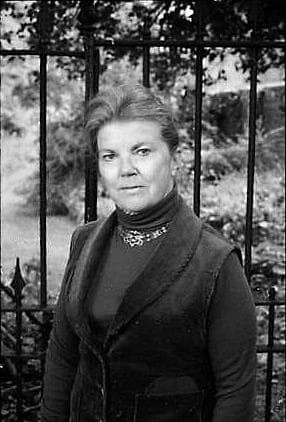
Joan Aiken was a British author known for her works of fiction, particularly in the genre of children's literature. She is best recognized for her novels "The Wolves of Willoughby Chase" and "Midnight Is a Place," both of which showcase her imaginative storytelling and unique settings. Aiken's writing often features elements of fantasy and adventure, appealing to a wide range of readers.
Similar books
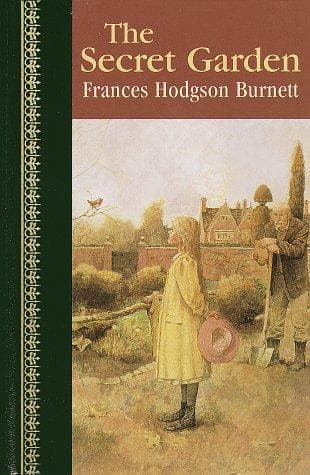
- The Secret Garden
Frances Hodgson Burnett
4.1 (891k) average on GoodreadsFantasyA classic children's story set in a large, mysterious estate with a focus on young protagonists overcoming adversity.
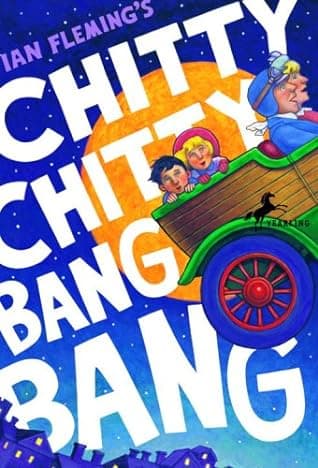
- Chitty Chitty Bang Bang
Ian Fleming
4.0 (13k) average on GoodreadsFantasyAn adventurous children's story with fantastical elements and a clear battle against villains.
- A Little Princess
Frances Hodgson Burnett
4.2 (4k) average on GoodreadsFantasyBoth novels explore the theme of resilient orphans enduring hardship. However, Aiken's work incorporates a much stronger element of overt, fantastical peril (the wolves, the overtly villainous Slighcarp) and a more pronounced sense of adventure, whereas Burnett's focuses more on social cruelty and internal fortitude in a realistic setting.
- Harry Potter and the Sorcerer's Stone
J.K. Rowling
4.5 (7M) average on GoodreadsFantasyRescued from a miserable life under the stairs, an orphaned boy discovers he's a wizard destined for a magical school, where he uncovers a dangerous secret tied to the dark wizard who murdered his parents.
- The Hunger Games
Suzanne Collins
4.3 (6.4M) average on GoodreadsFantasyIn a future where children fight to the death on live television, Katniss Everdeen volunteers for the arena, turning a death sentence into a fight for survival and a spark of rebellion.
- 1984
George Orwell
4.2 (3.1M) average on GoodreadsPoliticsIn a future where surveillance and thought control are absolute, a man's search for truth clashes with the Party, showing that hope can be a form of rebellion.



Enjoyed the summary?
A summary gives you the shape of the book. The book itself has the detail, the examples and the voice.
Find The Wolves of Willoughby Chase on AmazonAs an Amazon Associate, BookBrief earns from qualifying purchases. How we're funded