

Synopsis
Covers the whole plot, including the ending.
- Difficulty
- Easy
- Pacing
- Moderate
- Mood
- Heartwarming, Emotional, Mysterious, Reflective
- Read it if
- You enjoy heartfelt middle-grade mysteries about family secrets, courage, and the complexities of friendship, with a focus on character growth.
- Skip it if
- You prefer fast-paced, action-driven mysteries over character-focused, emotional narratives, or stories without significant emotional depth.
The World from Up Here Plot Summary
Covers the whole plot, including the ending.
Wren's Cautious World
Wren Baker is a sixth-grader who is very timid and afraid of almost everything. She avoids speaking up in class, joining activities, or drawing attention to herself. Her best friend, Maeve, is also quiet, but not as much as Wren. Wren's anxiety often increases because of her overprotective mother, who constantly warns her about dangers and encourages her cautious nature. Wren's father is more relaxed, but his attempts to encourage Wren often fail against her deep fears. This beginning shows Wren's inner conflict and the comfortable, yet limiting, routine of her life.
Silver's Arrival
Wren's quiet life is interrupted by the unexpected arrival of her cousin, Silver. Silver's family has moved to town after her father lost his job, and Silver is joining Wren's sixth-grade class. Silver is everything Wren is not: confident, outgoing, stylish, and seemingly fearless. From the moment she arrives at school, Silver easily gets attention and quickly becomes the most popular girl in the grade, first amazing then making Wren uncomfortable. Silver's presence immediately challenges Wren's carefully built world of anonymity and safety, pushing her out of her comfort zone.
The Dare and the Dilemma
Silver, with her strong personality, starts including Wren in her new social circle, which is exciting but also frightening for Wren. Silver constantly dares Wren to do things she would never normally consider: wearing bolder clothes, speaking up, and even pulling small pranks. Wren feels pulled between her deep fear of failure and her wish to be accepted by Silver and her new friends. She feels a thrill from these small acts of rebellion, but also a growing dread about where Silver's dares might lead, and the possible consequences of getting caught.
The Playground Incident
One of Silver's dares involves climbing onto the roof of the school playground structure, an area clearly off-limits. Wren, despite her strong fear, follows Silver, along with a few other friends. While exciting at first, the experience turns bad when a teacher sees them. Silver, quick-witted, manages to shift most of the blame, but Wren feels a strong sense of guilt and anxiety. This event shows Silver's manipulative side and her ability to charm her way out of trouble, while Wren struggles with her own morals and the pressure to go along with Silver's daring nature.
Growing Rift with Maeve
As Wren spends more time with Silver and her popular group, her friendship with Maeve starts to suffer. Maeve, who is still quiet and prefers their old, calm activities, feels ignored. She expresses concern about Silver's influence on Wren, warning her about Silver's reckless behavior. Wren, caught between her desire to fit in with the popular kids and her loyalty to Maeve, finds herself making excuses and putting Silver first. This growing distance adds another layer of emotional difficulty to Wren's journey, forcing her to confront the changing nature of her friendships.
The Old House and the Mystery
Silver introduces Wren and their friends to an abandoned house on the edge of town, known for its spooky reputation. Silver treats the house as their secret hideout, a place where they can be completely alone. Inside, Silver starts to hint at a deeper, more personal mystery about the house, suggesting it holds secrets related to her own family. Wren is fascinated and scared by the house, and by Silver's increasingly unclear remarks, which make her curious but also increase her unease. The house becomes a symbol of the dangerous appeal of the unknown.
The Missing Items and Suspicions
Small, seemingly unimportant items start to go missing from various places: a key from Wren's house, a photograph from the school bulletin board, and later, a bracelet from a classmate. Wren starts to notice inconsistencies in Silver's stories and a strange interest Silver shows in these missing items. Her first admiration for Silver begins to fade, replaced by a growing suspicion and unease. Wren deals with the uncomfortable thought that Silver might be involved in something more serious than just harmless dares, making her question her cousin's true character.
The Confrontation and the Truth
Driven by her growing suspicions and a need for answers, Wren finally confronts Silver about the missing items and her strange behavior. Silver, cornered and upset, breaks down and reveals the truth: the abandoned house was once her biological mother's home, before she died. Silver's current family are her adoptive parents, and she believes her biological mother was murdered, not that she died in an accident. She has been trying to find clues in the house and collect items related to her mother's past, driven by a deep need for truth and understanding.
Unraveling the Past
With the truth known, Wren decides to help Silver. They revisit the abandoned house, this time with a shared goal. They carefully search for clues, putting together bits of information from old letters, photographs, and hidden journals. Wren's cautious nature, which once held her back, now helps her as she carefully looks at details. They discover that Silver's biological mother was involved in a complicated situation, which led to her apparent accidental death, but the details are still unclear, suggesting a cover-up or misunderstanding.
The Full Revelation
Through their combined efforts, Wren and Silver uncover the full story of Silver's biological mother. They learn that she was a young woman who died in an accident, not a murder, but that the circumstances were kept quiet by her family to protect her reputation and her child's future. The family, including Silver's adoptive parents, believed it was best that Silver never knew the painful details. The missing items were indeed related to Silver's mother, parts of a past intentionally hidden, not stolen for bad reasons.
Facing the Families
Armed with the truth, Wren and Silver decide to confront their families. This leads to emotional and difficult talks. Silver's adoptive parents are heartbroken but relieved that the truth is finally out. Wren's parents, initially angry about her breaking rules, come to understand the seriousness of the situation and praise her bravery in supporting Silver. The families are forced to revisit painful memories and confront the results of their past decisions, leading to a time of healing and reconciliation, though with lasting emotional marks.
Wren's Transformation
Having gone through the complex mystery and stood by Silver, Wren changes deeply. She is no longer the timid girl who avoided everything. She finds her voice, stands up for herself, and makes choices based on her own beliefs rather than fear or peer pressure. While still thoughtful, her courage has grown. Her friendship with Maeve is mended and stronger, and she accepts Silver for who she is, faults and all. Wren realizes that true bravery is not the absence of fear, but acting despite it, and that her unique qualities are her strengths.
The World from Up Here Characters
Wren Baker
Protagonist
A timid sixth-grader who learns to overcome her fears and find her voice.
Wren is initially characterized by her extreme shyness, anxiety, and a deep-seated fear of drawing attention to herself or making mistakes. She prefers to blend into the background, often stifled by her own cautious nature and her mother's overprotectiveness. She is observant, thoughtful, and possesses a strong moral compass, though she struggles to act on it. Her internal world is rich, but her external expression is limited by her fear. She values her quiet routines and her best friend, Maeve.
Relationships: Silver (Cousin and catalyst for change, initially admired then viewed with suspicion, eventually a partner in discovery); Maeve (Best friend, initially strained by Silver's arrival, eventually strengthened through Wren's growth); Wren's Mother (Overprotective, contributing to Wren's anxieties, later understanding and proud); Wren's Father (Supportive but less influential than her mother, encourages her gently)
Silver
Supporting/Catalyst
Wren's confident, popular, and seemingly fearless cousin who harbors a deep secret.
Silver is the polar opposite of Wren: outgoing, charismatic, and effortlessly popular. She is a natural leader, though her leadership often verges on recklessness and manipulation. Beneath her confident exterior, Silver carries the heavy burden of her past, driven by an intense need to uncover the truth about her biological mother. Her daring behavior stems from a place of unresolved grief and a desire for answers, making her actions understandable, if not always excusable. She is intelligent and resourceful, but also impulsive.
Relationships: Wren Baker (Cousin and reluctant accomplice, eventually a trusted confidante and partner in solving a mystery); Silver's Adoptive Parents (Loving but secretive, their relationship is strained by the hidden truth but ultimately strengthens)
Maeve
Supporting
Wren's loyal and quietly observant best friend.
Maeve is Wren's best friend, sharing a similar quiet disposition but possessing more self-assurance. She is perceptive and often sees through Silver's charming facade before Wren does. Maeve is a steadfast and supportive friend, though she struggles when Wren's attention is drawn away by Silver. She represents Wren's comfort zone and the values of loyalty and genuine connection. Her quiet wisdom often provides a grounding influence for Wren, even when Wren isn't ready to hear it.
Relationships: Wren Baker (Best friend, briefly strained but ultimately strengthens their bond)
Wren's Mother
Supporting
Wren's overprotective parent, whose anxieties inadvertently contribute to Wren's fears.
Wren's mother is loving and well-meaning, but her constant warnings about potential dangers and her desire to shield Wren from harm often reinforce Wren's own anxieties. She is cautious and orderly, preferring a predictable and safe environment. Her actions stem from a place of deep maternal love, but she struggles to understand Wren's need for independence and exposure to life's challenges. She initially disapproves of Silver's influence, but eventually comes to understand the positive impact Wren's experience has had.
Relationships: Wren Baker (Mother-daughter, initially strained by overprotection, evolves into greater understanding and respect)
Wren's Father
Supporting
Wren's more laid-back parent, who tries to encourage her gently.
Wren's father is a gentler, more relaxed presence in her life compared to her mother. He attempts to encourage Wren to be more adventurous, often with small, subtle nudges. While he loves Wren deeply, he is less directly involved in her daily anxieties than her mother. He provides a calmer counterbalance to the household, offering a different perspective on risk and growth. He is proud of Wren's eventual bravery and supports her in her journey.
Relationships: Wren Baker (Father-daughter, a supportive and encouraging presence)
Silver's Adoptive Parents
Supporting/Mentioned
Loving parents who kept a painful secret from Silver to protect her.
These characters are loving and devoted to Silver, having raised her as their own. They made the difficult decision to conceal the true circumstances of Silver's biological mother's death, believing it was for Silver's own good to protect her from pain and scandal. Their actions, though well-intentioned, created a void that Silver desperately sought to fill. When the truth comes out, they are heartbroken but ultimately relieved, ready to confront the past and rebuild trust with Silver. They represent the complexities of parental love and difficult choices.
Relationships: Silver (Adoptive parents, their relationship is tested by hidden truths but ultimately strengthens)
The World from Up Here Themes
Overcoming Fear
This is the novel's main theme, shown through Wren's journey. Initially paralyzed by fear, Wren learns to face her anxieties, first through Silver's dares, and then by taking brave action to find the truth. The story emphasizes that bravery is not the absence of fear, but the willingness to act even with fear. Wren's inner struggle and eventual success show how facing fears can lead to deep personal growth, as seen when she actively helps Silver investigate the abandoned house, a place that first scared her.
“Maybe bravery wasn't about not being scared. Maybe it was about being scared and doing it anyway.”
The Nature of Truth and Secrets
The novel explores the complexities of truth, especially how secrets, even well-meant ones, can have deep and sometimes harmful results. Silver's entire search is driven by an unspoken family secret about her biological mother's death. The story looks at why secrets are kept, the burden they place on those who hold them, and their impact on those from whom they are hidden. The eventual revelation of the truth, though painful, ultimately leads to healing and understanding for both Silver and her family, showing that honesty, no matter how hard, is often the best path.
“Some secrets were like heavy stones, weighing everyone down, even the ones who didn't know they were carrying them.”
Friendship and Loyalty
The nature of friendship and loyalty is examined through Wren's relationships with Maeve and Silver. Wren's first interest in Silver's popularity strains her long, comfortable friendship with Maeve, making her consider what real friendship means. The story shows the importance of choosing friends who support one's true self, rather than those who pressure one to conform. Ultimately, Wren's loyalty to Silver, despite her questionable actions, becomes a strong bond formed in the shared search for truth, while her friendship with Maeve is renewed and strengthened by Wren's growth.
“Real friends didn't make you feel like you had to be someone else.”
Identity and Self-Discovery
Wren's journey is one of self-discovery. Her first identity is defined by her fears and her desire to be invisible. Through her interactions with Silver and the unfolding mystery, Wren is forced to confront who she is and who she wants to be. She learns to tell the difference between outside pressures and her inner moral compass, finally forming a stronger, more authentic sense of self. Her change shows how challenging experiences can lead to a deeper understanding of one's own strengths and values, allowing her to 'fly' and embrace her unique place in the world.
“She wasn't just Wren Baker, the scared girl. She was Wren Baker, the girl who found her voice.”
Plot Devices & Literary Techniques
The Abandoned House
A physical setting that serves as both a symbol of danger and a key to the mystery.
The abandoned house functions as a central plot device. Initially introduced by Silver as a thrilling, forbidden hideout, it symbolizes the allure of the unknown and the danger of breaking rules. As the story progresses, it becomes the primary location for uncovering the truth about Silver's biological mother. Its decaying state and hidden compartments directly facilitate the discovery of crucial clues like old letters and photographs. The house transforms from a place of fear and recklessness into a space of poignant revelation and shared purpose for Wren and Silver.
The Dares
A series of challenges posed by Silver that gradually push Wren out of her comfort zone.
Silver's dares are a crucial plot device that drive Wren's initial character development. They range from seemingly harmless acts of rebellion, like wearing certain clothes or speaking up, to more significant rule-breaking, such as climbing on the playground roof. These dares force Wren to confront her fears and test her boundaries, serving as a catalyst for her to begin taking risks. While initially a source of peer pressure, they ultimately prepare Wren to take the much larger, more meaningful risks required to uncover the truth and stand up for herself.
Missing Items
Small, seemingly insignificant objects that build suspicion and lead to the core mystery.
The gradual disappearance of small items—a key, a photograph, a bracelet—is a clever plot device that builds suspense and shifts Wren's perception of Silver. These items initially seem like petty thefts or coincidences, but as they accumulate, they create a pattern that alerts Wren to a deeper, more personal motive behind Silver's actions. Each missing item serves as a breadcrumb, leading Wren to question Silver's honesty and eventually prompting the confrontation that unravels the central mystery about Silver's biological mother.
The World from Up Here Quotes
“The thing about secrets is, they always have a way of coming out. Like a stubborn weed pushing through concrete.”
“Sometimes, the hardest thing to see is what's right in front of you.”
“Grief is a funny thing. It doesn't just sit there. It crawls inside you and changes the furniture around.”
“A photograph isn't just a moment caught in time; it's a whisper from the past, waiting for someone to listen.”
“You can't really know someone until you understand what they're afraid of.”
“The world from up here looks different. Smaller, sure. But also, clearer.”
“Every family has its stories, some told, some hidden away like forgotten treasures.”
“Sometimes, the bravest thing you can do is ask for help.”
“Truth isn't always neat and tidy. Sometimes it's a tangled mess, and you have to pull at each strand to unravel it.”
“Even the smallest kindness can echo through time.”
“It's funny how you can live in a place your whole life and still not really know it.”
“The past isn't just behind us; it's woven into the present, always influencing what's happening now.”
“Sometimes, letting go is the only way to truly hold on to what matters.”
Quiz
10 questions on the plot and the characters. Each answer comes with a short explanation.
Question 1
What is Wren Baker's primary internal struggle at the beginning of the story?
- She struggles with her academic performance in school.
- She is afraid of taking risks and venturing too far from home.
- She has difficulty making friends and feels lonely.
- She is constantly arguing with her parents.
Show answer
B. She is afraid of taking risks and venturing too far from home. The book description states that Wren 'has never felt brave a day in her life' and is afraid of 'raising her voice or leaving her mark or venturing too far from home.'
Question 2
Who is Wren's cousin that enters her life and challenges her to take risks?
- Ruby
- Goldie
- Silver
- Pearl
Show answer
C. Silver The summary clearly states, 'But that all changes when Wren's cousin Silver walks into her life.'
Question 3
What is Silver's defining characteristic that contrasts with Wren's personality?
- She is shy and reserved.
- She is totally fearless.
- She is very studious and academic.
- She is quiet and introspective.
Show answer
B. She is totally fearless. The text describes Silver as 'totally fearless,' which is a direct contrast to Wren's initial fearfulness.
Question 4
What kind of choice is Wren forced to make when Silver decides to 'break all the rules'?
- Whether to tell her parents about Silver's actions.
- Whether to join Silver or distance herself from her.
- Whether to confess her own past mistakes.
- Whether to move to a new school.
Show answer
B. Whether to join Silver or distance herself from her. The summary states, 'So when Silver decides to break all the rules, Wren is forced to make a choice: Is she in or is she out?' This implies a choice to participate or not.
Question 5
What phrase is used to describe the ultimate action Wren must take to 'learn to fly'?
- She must follow all the rules.
- She must stand at the edge of the unknown . . . and jump.
- She must confide in her closest friend.
- She must study harder in school.
Show answer
B. She must stand at the edge of the unknown . . . and jump. The concluding sentence of the description is, 'It's time for her to stand at the edge of the unknown . . . and jump.'
Question 6
What is one of the overarching themes highlighted in the book's description?
- The importance of academic achievement.
- The challenge of adapting to a new city.
- The courage it takes to face your biggest fears.
- The difficulties of sibling rivalry.
Show answer
C. The courage it takes to face your biggest fears. The very first line of the description states, 'From the award-winning author of The Patron Saint of Butterflies comes a story about the courage it takes to face your biggest fears.'
Question 7
How does Silver influence Wren, according to the description?
- Silver encourages Wren to be more cautious.
- Silver dares Wren to take risks and live out loud.
- Silver helps Wren improve her grades.
- Silver teaches Wren new hobbies.
Show answer
B. Silver dares Wren to take risks and live out loud. The description states, 'She dares Wren to take risks, to live out loud, to finally spread her wings.'
Question 8
What specific emotional states are mentioned as being present in 'The World From Up Here'?
- Joy and anger.
- Boredom and excitement.
- Heartache and hope.
- Confusion and clarity.
Show answer
C. Heartache and hope. The final paragraph describes the book as 'Full of heartache and hope,' indicating these emotional states.
Question 9
The book is described as a 'tender, moving story about old secrets, new friendships, and what it means to face the things that scare us most.' What does 'old secrets' suggest about the plot?
- Wren will discover a hidden treasure.
- The story will involve uncovering past events or concealed truths that impact the present.
- Wren will learn ancient historical facts.
- The characters are involved in a secret society.
Show answer
B. The story will involve uncovering past events or concealed truths that impact the present. 'Old secrets' in a mystery/YA context typically refers to undisclosed past events or hidden information that comes to light and affects the characters.
Question 10
Considering Wren's initial personality and Silver's influence, what does the metaphor 'spread her wings' most likely represent for Wren?
- Learning to fly an actual airplane.
- Becoming more independent, confident, and willing to experience new things.
- Developing a talent for birdwatching.
- Traveling to distant places physically.
Show answer
B. Becoming more independent, confident, and willing to experience new things. Given Wren's fear of 'venturing too far from home' and Silver daring her 'to take risks, to live out loud,' 'spread her wings' is a common metaphor for gaining independence and confidence, overcoming limitations.
The World from Up Here FAQ
What is the central conflict Wren Baker faces at the beginning of 'The World from Up Here'?
Wren Baker begins the story as a timid and fearful girl, struggling with an undefined anxiety that prevents her from taking risks or expressing herself. Her central conflict is her inability to step outside her comfort zone and truly live, fearing failure or drawing attention.
How does Silver's arrival impact Wren's life initially?
Silver's arrival dramatically alters Wren's quiet life by introducing a stark contrast in personality. Silver is fearless and popular, pushing Wren to confront her anxieties and encouraging her to take risks she would never consider on her own, thereby initiating Wren's journey of self-discovery.
What kind of 'rules' does Silver often encourage Wren to break, and what is the underlying motivation?
Silver often encourages Wren to break societal norms and school rules, like speaking out, exploring forbidden places, or engaging in mischievous acts. Her underlying motivation is to challenge Wren's timidity and teach her to 'live out loud,' though some of these actions lead to more serious consequences.
What significant choice does Wren have to make when Silver 'decides to break all the rules'?
Wren is forced to make a critical choice: whether to participate in Silver's increasingly reckless rule-breaking or to stand firm against it. This decision is pivotal for Wren, as it tests her newfound courage and defines her individuality apart from Silver's influence.
What does the phrase 'stand at the edge of the unknown...and jump' symbolize for Wren?
This phrase symbolizes Wren's ultimate act of courage and self-liberation. It represents her decision to face her biggest fears, embrace uncertainty, and take a leap of faith to define her own path, rather than being guided by fear or someone else's dares.
Are there any subtle clues early in the book that hint at Silver's more complicated nature or the eventual 'old secrets'?
Yes, early interactions might show Silver's 'fearlessness' bordering on recklessness or a lack of concern for consequences, hinting that her bravado might be a facade. These subtle hints foreshadow the 'old secrets' and the deeper reasons behind her seemingly carefree attitude, suggesting her own hidden struggles.
How does the author use the setting or environment to reflect Wren's internal state or the unfolding mystery?
The author might use descriptions of Wren's home as a safe but confining space, mirroring her initial reluctance to venture out. As the mystery unfolds and Wren gains courage, the setting might expand to include more 'forbidden' or wilder places, reflecting her psychological journey and the exposure of secrets.
What is the significance of the title, 'The World from Up Here,' in relation to Wren's personal growth and the story's resolution?
The title suggests a shift in perspective. Initially, Wren's 'world' is small and fear-bound. 'Up Here' implies a broader, more confident viewpoint, perhaps from a metaphorical 'jump' or a literal elevated position, symbolizing her ability to see situations clearly and overcome her limitations.
Beyond the obvious, what specific 'old secrets' are revealed, and how do they connect to Wren and Silver's families?
The 'old secrets' likely involve a past event or misunderstanding between the families, possibly related to an accident, a betrayal, or a long-held family grievance. These secrets explain the underlying tension and the different dynamics between Wren and Silver's parents, shaping the girls' current lives.
How does Wren's initial 'undefined fear' manifest psychologically, and what might be its underlying cause before Silver's influence?
Wren's 'undefined fear' manifests as a general anxiety, leading to avoidance, social inhibition, and a lack of self-expression. Psychologically, it could stem from an overprotective environment, a past minor trauma, or an innate shy temperament, exacerbated by a lack of opportunities to test her limits.
Analyze Silver's 'fearless' personality. Is it genuine bravery, a coping mechanism, or something else?
Silver's 'fearless' personality often appears to be a coping mechanism rather than genuine bravery. Her recklessness and desire to break rules might stem from unaddressed personal pain or a need for attention, masking her own vulnerabilities or struggles, which are revealed as the story progresses.
How does Wren's relationship with Silver evolve from admiration to a more complex understanding, psychologically speaking?
Wren's relationship with Silver evolves from initial admiration and dependency to a more complex understanding as Wren develops her own identity. Psychologically, she moves from idolizing Silver to recognizing her flaws, eventually forming a relationship based on mutual respect and genuine empathy, rather than just following.
What psychological journey does Wren undergo to 'learn to fly,' and what internal conflicts does she overcome?
Wren undergoes a journey of self-actualization, overcoming internal conflicts like fear of judgment, fear of failure, and the pressure to conform. She learns to trust her own judgment, assert her boundaries, and find her unique voice, ultimately discovering that true bravery comes from within, not from external dares.
Could Wren's initial timidity be interpreted as a form of wisdom or caution rather than just fear?
Yes, Wren's initial timidity could be interpreted as a form of inherent caution or an intuitive wisdom, preventing her from engaging in impulsive or genuinely dangerous situations. While it limits her, it also protects her, setting her apart from Silver's more reckless approach and allowing for a more thoughtful development of courage.
Is Silver a truly positive influence on Wren, or does her role serve more as a catalyst for Wren's independent growth?
Silver's influence is complex; while she initially pushes Wren out of her comfort zone, her role is more of a catalyst. Silver's actions, both positive and negative, force Wren to define her own boundaries and values, ultimately leading Wren to independent growth rather than simply becoming a follower.
The book mentions 'new friendships.' How do these friendships, beyond the one with Silver, contribute to Wren's development?
Other friendships likely offer Wren different perspectives and a sense of belonging outside of Silver's intense orbit. These new connections provide a support system, allow Wren to practice her social skills in a less pressured environment, and help her realize that healthy relationships don't require constant rule-breaking or risk-taking.
What is the ultimate message about 'facing the things that scare us most' that the book conveys through Wren's journey?
The book conveys that facing fears isn't about becoming reckless, but about understanding oneself, setting boundaries, and finding internal strength. It suggests that true courage comes from making difficult choices, standing up for what's right, and embracing one's authentic self, even when it means going against others.
How does the 'mystery' element intertwine with Wren's personal growth, and is it resolved satisfactorily?
The 'mystery' element, likely involving the 'old secrets,' intertwines with Wren's personal growth by forcing her to investigate, question, and confront uncomfortable truths. Its resolution is satisfactory as it not only clarifies past events but also allows Wren to apply her newfound courage and problem-solving skills, bringing closure to both the plot and her character arc.
Similar books
- Bridge to Terabithia
Katherine Paterson
4.0 (445k) average on GoodreadsFantasyExplores intense childhood friendships, the pain of loss, and the power of imagination and courage.
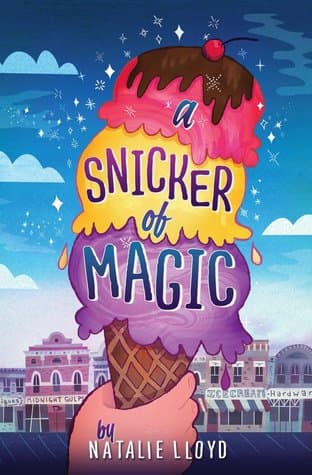
- A Snicker of Magic
Natalie Lloyd
4.1 (12k) average on GoodreadsFantasyInvolves a young girl discovering small-town secrets and family history with a touch of whimsy and heart.
- Harry Potter and the Sorcerer's Stone
J.K. Rowling
4.5 (7M) average on GoodreadsFantasyRescued from a miserable life under the stairs, an orphaned boy discovers he's a wizard destined for a magical school, where he uncovers a dangerous secret tied to the dark wizard who murdered his parents.
- The Hobbit, or There and Back Again
J.R.R. Tolkien
4.3 (2.9M) average on GoodreadsFantasyA comfort-loving hobbit named Bilbo Baggins is whisked away by a mischievous wizard and a band of dwarves on an unexpected journey to reclaim stolen treasure from a fearsome dragon, discovering courage and a magical ring along the way.
- Harry Potter and the Goblet of Fire
J.K. Rowling
4.6 (2.6M) average on GoodreadsFantasyA bewildered Harry Potter, underage and thrust into a deadly Triwizard Tournament, must brave dragons, mermaids, and a resurgent dark magic to survive a year that will forever alter the wizarding world.
- Harry Potter and the Order of the Phoenix
J.K. Rowling
4.5 (2.5M) average on GoodreadsFantasyIn a year of oppressive secrets and the threat of Voldemort, Harry Potter and Dumbledore's Army secretly train for war, shown through Jim Kay and Neil Packer's dark illustrations.





Enjoyed the summary?
A summary gives you the shape of the book. The book itself has the detail, the examples and the voice.
Find The World from Up Here on AmazonAs an Amazon Associate, BookBrief earns from qualifying purchases. How we're funded