

Synopsis
Covers the whole plot, including the ending.
- Difficulty
- Medium
- Pacing
- Moderate
- Mood
- Gritty, Dark, Atmospheric, Suspenseful, Reflective
- Read it if
- You enjoy gritty, character-driven literary fiction set in the American South, exploring themes of poverty, violence, and historical legacy.
- Skip it if
- You prefer light-hearted stories or shy away from dark themes and explicit violence.
The World Made Straight Plot Summary
Covers the whole plot, including the ending.
The Bear Trap and the Discovery
Seventeen-year-old Travis Shelton, restless in rural Madison County, North Carolina, ventures into the woods. He discovers a hidden grove of marijuana plants, a potential source of income. However, his excitement turns to agony when he steps into a bear trap, set by the grove's owner. After hours of pain, Travis is found by Carlton Toomey, the ruthless farmer who owns the land and the illegal crop. Toomey, a man with a dark past, takes Travis into his care, but his intentions are far from good. This marks the beginning of Travis's entanglement with the community's dark side.
A New Mentor and a New Home
Following the bear trap incident and tension with his parents, Travis Shelton moves out of his family home. He finds a mentor in Leonard Shuler, a former schoolteacher who lost his job and custody of his daughter after being framed by a student. Leonard now lives in a dilapidated trailer outside town with his dogs and his on-again, off-again girlfriend, Dena. He deals small amounts of drugs and studies Civil War journals, focusing on a local massacre. Travis, drawn to Leonard's intellect and outsider status, becomes a student, learning about history, survival, and the harsh realities of their community, while also helping with Leonard's drug dealing.
The Massacre's Shadow
Leonard Shuler, engrossed in his research, educates Travis Shelton about the Shelton Laurel Massacre, a brutal Civil War incident where Confederate Home Guard members executed thirteen unarmed Union sympathizers in Madison County. Leonard reveals that Travis's ancestors were involved in the massacre, both as victims and perpetrators. This historical revelation affects Travis, making him realize that the past is a living legacy that still influences present-day feuds and prejudices within their community. The massacre connects Travis's personal struggles to the deeper, unresolved conflicts of his homeland.
Carlton's Grip Tightens
Carlton Toomey, having discovered Travis Shelton on his property, begins to influence the young man. Toomey, a major drug grower and dealer, sees Travis as a pawn in his operation. He initially offers Travis money for his silence and a job working his fields, but his true aim is to control Travis. Toomey's manipulative tactics ensure Travis's compliance, despite Travis's growing unease. This uneasy alliance forces Travis deeper into the criminal side of the community, highlighting the moral compromises he makes in his struggle for independence and survival, and further alienating him from a conventional life.
Dena's Influence and Leonard's Decline
Dena, Leonard Shuler's girlfriend, develops a complex relationship with Travis Shelton. Initially, she offers him comfort and a sense of belonging, acting as a maternal figure but also displaying a subtle romantic tension. As Leonard's health declines due to drug use and obsessive research, Dena becomes more central to Travis's life. She struggles with her own addictions and past traumas, often turning to Travis for support. Their bond grows, creating a fragile sense of family amidst their dysfunctional circumstances, but also adding another layer of complexity to Travis's strained allegiances.
The Theft and the Confrontation
Driven by desperation, defiance, and a desire to strike back at Carlton Toomey's control, Travis Shelton and Leonard Shuler decide to steal a significant amount of marijuana from Toomey's hidden patch. This act is not just about money; it's a direct challenge to Toomey's authority and a desperate attempt by Leonard to regain some agency. The theft does not go unnoticed. Toomey, a man who tolerates no insubordination, quickly discovers the betrayal. This act sets off a dangerous chain of events, drawing the two men into a direct and violent confrontation with Toomey and his enforcers, pushing them closer to a deadly reckoning.
The Reckoning at Toomey's Farm
The stolen marijuana leads to an inevitable and brutal confrontation at Carlton Toomey's farm. Travis Shelton and Leonard Shuler, along with Dena, find themselves in a deadly standoff against Toomey and his associates. The tension explodes into violence. Gunfire erupts, and lives are irrevocably altered. During the chaos, the deep-seated grievances and historical echoes of the Shelton Laurel Massacre resurface, as the present-day conflict mirrors the brutality of the past. Travis is forced to make life-or-death decisions, testing his courage and his loyalty in the crucible of this violent climax.
Aftermath and Escape
In the aftermath of the violent confrontation at Carlton Toomey's farm, Travis Shelton and Dena are left to deal with the devastating consequences. With Leonard Shuler either dead or gravely wounded, and the law closing in, they know they cannot stay. They attempt to flee, seeking to escape the cycle of violence and the long shadow of the past that has defined their lives in Madison County. Their escape is fraught with danger and uncertainty, forcing them to confront the true cost of their actions and the fragile hope for a future free from the community's corruption and historical burdens. Their journey becomes a desperate bid for a new beginning.
The Weight of the Past
Even as Travis Shelton tries to escape the immediate dangers, the historical weight of the Shelton Laurel Massacre continues to haunt him. Leonard Shuler's teachings about the massacre, and the revelation of his own ancestors' involvement, force Travis to confront the deep-seated divisions and cycles of violence that have plagued his community for generations. He realizes that present conflicts are often echoes of past grievances, and that escaping the physical location does not mean escaping the psychological burden of history. This introspection is important for Travis's character development, as he seeks to understand how to break free from these inherited patterns of conflict.
A Glimmer of Hope
Despite the harrowing events and the deep scars left by the violence, Travis Shelton begins to find a glimmer of hope for a different future. He carries the lessons learned from Leonard Shuler, not just about history, but about resilience and the importance of seeking truth. His relationship with Dena, though complicated, offers a potential for genuine connection and a shared future. Travis starts to envision a life where he can escape the cycles of violence and poverty that defined his upbringing. This ending is not a clean resolution but rather a hopeful, uncertain step towards 'making the world straight' – finding a moral compass and a path towards peace and independence.
The World Made Straight Characters
Travis Shelton
Protagonist
A restless teenager seeking escape and identity in a corrupt Appalachian community.
Travis is a seventeen-year-old from rural North Carolina, grappling with boredom, poverty, and a desire for independence. Initially naive, he is drawn into the criminal underworld through his encounter with Carlton Toomey and his mentorship by Leonard Shuler. He possesses an innate resilience and a strong moral compass, though he is often forced to compromise it for survival. His journey is one of self-discovery, as he confronts the harsh realities of his community's past and present, and struggles to forge his own path.
Relationships: Leonard Shuler (mentor and surrogate father); Carlton Toomey (antagonist and exploiter); Dena (lover and fellow survivor); His Parents (strained and distant family bond)
Leonard Shuler
Supporting
A disgraced former teacher obsessed with the Civil War and a mentor to Travis.
Leonard is a brilliant but broken man, a former schoolteacher who lost everything after being framed. He lives in self-imposed exile, dealing small amounts of drugs and obsessively researching the Shelton Laurel Massacre. He serves as Travis's intellectual guide, imparting knowledge about history, literature, and the harsh realities of their region. Despite his flaws and drug use, he possesses a strong sense of justice and a deep understanding of the human condition, making him a complex and tragic figure.
Relationships: Travis Shelton (student and surrogate son); Dena (on-again, off-again girlfriend); Carlton Toomey (adversary and symbol of corrupt power)
Carlton Toomey
Antagonist
A ruthless and manipulative drug grower who controls much of the local illegal trade.
Carlton Toomey is the primary antagonist, a cunning and vicious farmer who runs a large marijuana operation. He is a local power broker, using intimidation and violence to maintain control. Toomey embodies the corrupt and unforgiving aspects of the rural community, representing the legacy of violence and greed that has plagued the region for generations. He is pragmatic and unsentimental, viewing people as tools to be used or obstacles to be removed, and shows little remorse for his actions.
Relationships: Travis Shelton (victim and unwilling accomplice); Leonard Shuler (nemesis); Dena (former lover and victim of his control)
Dena
Supporting
Leonard's troubled girlfriend who forms a complex bond with Travis.
Dena is Leonard Shuler's on-again, off-again girlfriend, a woman scarred by her own past and struggles with addiction. She lives with Leonard in the trailer, often providing a fragile sense of domesticity amidst the chaos. She develops a complicated relationship with Travis, oscillating between maternal care, romantic interest, and a shared vulnerability. Dena represents the women caught in the harsh cycles of poverty and abuse in the community, yet she possesses a resilience and a longing for something better.
Relationships: Leonard Shuler (lover and partner in crime); Travis Shelton (lover and fellow survivor); Carlton Toomey (former lover and abuser)
The Home Guard
Mentioned
Confederate militia responsible for the Shelton Laurel Massacre.
The Home Guard refers to the Confederate militia members who executed thirteen unarmed Union sympathizers during the Shelton Laurel Massacre in 1863. Though historical figures, their actions cast a long shadow over the present-day narrative, symbolizing the deep-seated divisions, brutal violence, and unresolved grievances that continue to affect the community. Their legacy is a constant reminder of the historical roots of the region's conflicts.
Relationships: Shelton Laurel Victims (perpetrators of violence against); Leonard Shuler (subject of his obsession and research)
Travis's Mother
Supporting
A concerned but ultimately ineffectual figure in Travis's life.
Travis's mother is a well-meaning but overwhelmed woman who struggles to understand and control her son's rebellious nature. She represents the conventional, law-abiding element of the community, trying to keep her family together amidst the pervasive poverty and illicit activities. Her concern for Travis is genuine, but she lacks the means or the strength to pull him away from the dangerous path he embarks on, leading to a strained relationship.
Relationships: Travis Shelton (mother-son relationship, strained by Travis's choices)
Travis's Father
Supporting
A stoic and distant figure, struggling with the hardships of rural life.
Travis's father is a quiet and hardworking man, representative of many men in the Appalachian region who toil in difficult conditions. He is often distant and communicates little, struggling with his own burdens. While he cares for Travis, he is unable to connect with him on a deeper level or provide the guidance Travis needs. His inability to intervene effectively in Travis's choices reflects a broader sense of helplessness against the systemic issues of their environment.
Relationships: Travis Shelton (father-son relationship, marked by emotional distance)
The Sheriff
Supporting
A local law enforcement officer, often ineffective or compromised by local power structures.
The Sheriff represents the official law and order in Madison County, but his presence often highlights the limitations and compromises within the justice system in a remote, insular community. He is aware of the illegal activities but often seems powerless or unwilling to fully intervene against figures like Carlton Toomey, suggesting a degree of corruption or simply the overwhelming influence of local power structures. His role underscores the theme of justice being elusive in this world.
Relationships: Carlton Toomey (aware of his activities but seemingly unable to act decisively)
The World Made Straight Themes
The Enduring Legacy of Violence and History
The novel shows how the past, especially the Civil War's Shelton Laurel Massacre, is not just history but a living force that shapes present-day conflicts and character motivations. Leonard Shuler's obsession with the massacre directly informs Travis's understanding of his community's deep divisions and cycles of violence. The feuds, grudges, and even the criminal enterprises in the story can be seen as echoes of historical brutality, showing how unresolved traumas and injustices continue to haunt generations, influencing everything from family loyalties to criminal acts. The past is shown to be an inescapable burden that must be confronted.
“The past ain't dead. It ain't even past.”
The Corrupting Influence of Poverty and Illicit Economies
Poverty and a lack of legitimate opportunities drive many characters into the illicit drug trade, highlighting its corrupting influence on individuals and the community. Travis's initial encounter with the bear trap and the marijuana patch is a direct consequence of this economic reality. Carlton Toomey's power comes from his control over the drug economy, which offers a deceptive path to wealth for those with few other options. The novel portrays how this reliance on illegal activities erodes moral boundaries, fosters violence, and traps people in a cycle of desperation, making it difficult to 'make the world straight' when survival depends on bending the rules.
“There wasn't nothing left around here but dope and history.”
The Search for Identity and Independence
Travis Shelton's journey is a quest for identity and independence in a world that seems determined to define him by his circumstances. He struggles against his parents' expectations, the manipulative control of Carlton Toomey, and even the well-intentioned but confining influence of Leonard Shuler. His desire to escape his rural life and the legacy of his family's past fuels his actions. This theme is explored through his physical movement away from his home, his intellectual engagement with Leonard, and his desperate attempts to forge his own moral code amidst the chaos, ultimately seeking a path where he can be his own person.
“He wanted to be free of it all, the mountains, the past, the way things were.”
The Nature of Justice and Morality
The novel questions the nature of justice and morality in a world where the official legal system is often compromised or ineffective. Characters like Leonard Shuler seek a form of historical justice, while Travis is forced to make difficult moral choices in extreme circumstances. The lines between right and wrong blur as characters resort to violence, theft, and deception, often believing their actions are justified by past wrongs or the need for survival. The story suggests that true justice is complex and often elusive, and that individuals must forge their own moral codes in the absence of clear societal guidelines.
“Some things, you couldn't make them straight again. Some things were just twisted.”
Plot Devices & Literary Techniques
The Bear Trap
A literal and symbolic trap that initiates Travis's entanglement with the criminal underworld.
The bear trap serves as a powerful inciting incident, immediately drawing Travis Shelton into the novel's central conflict. Literally, it's the device that leads to his capture by Carlton Toomey. Symbolically, it represents the traps of poverty, history, and illicit economies that ensnare the characters in Madison County. It signifies the sudden, brutal reality of their world and Travis's inability to escape its grasp easily. The pain and vulnerability Travis experiences in the trap mirror his broader entrapment within the community's cycles of violence and corruption.
The Shelton Laurel Massacre
A historical event that acts as a foundational backstory and a mirror for present-day conflicts.
The Shelton Laurel Massacre of 1863 is a crucial historical backdrop that functions as a plot device to contextualize the novel's present-day conflicts. It provides a historical precedent for the violence, feuds, and deep-seated divisions within Madison County. Leonard Shuler's obsession with it directly informs Travis's understanding of his heritage and the cyclical nature of brutality. The massacre serves as a constant reminder that the past is alive, shaping characters' actions and motivations, and underscoring the theme of the enduring legacy of violence and unresolved historical trauma.
Leonard Shuler's Civil War Journals
A means of conveying historical context and foreshadowing present-day events.
Leonard Shuler's collection of Civil War journals and his meticulous research serve as a primary vehicle for revealing the history of the Shelton Laurel Massacre to Travis and the reader. This plot device allows for exposition of the historical context without resorting to heavy-handed narration. More importantly, the journals highlight the cyclical nature of violence and revenge, often drawing direct parallels between the brutal acts of the past and the conflicts unfolding in the present, subtly foreshadowing the violent reckoning that Travis and Leonard ultimately face.
The Marijuana Grove
The catalyst for conflict and a symbol of the community's illicit economy.
The marijuana grove initially represents a temptation for Travis Shelton—a quick way to make money and gain independence. However, it quickly becomes the primary catalyst for the central conflict, leading him into the bear trap and under the control of Carlton Toomey. Symbolically, the grove represents the pervasive illicit economy in the Appalachian region, driven by poverty and a lack of legitimate opportunities. It is both a source of potential wealth and a dangerous trap, embodying the moral compromises and violence inherent in this underground world.
The World Made Straight Quotes
“There’s a world made straight, boy, but it ain’t this one. This one’s crooked as a dog’s hind leg.”
“Every man carries his own hell, and it’s the one he makes for himself.”
“The past ain’t never past. It just waits.”
“Some things, once broken, can’t be put back together, no matter how hard you try.”
“You can’t outrun what’s inside you.”
“Hatred’s a seed, and it grows in the dark.”
“There ain’t no clean hands in this world, not really.”
“The mountains remember. They hold onto things.”
“Sometimes the only way to find your way out is to go deeper in.”
“Fear can make you do things you never thought you would.”
“A man’s word ain’t worth much if he ain’t got nothing left to lose.”
“Some folks are just born to trouble, like a moth to a flame.”
“The silence in the woods could be a comfort, or it could be a warning.”
“Forgiveness don’t erase what happened. It just lets you live with it.”
Quiz
10 questions on the plot and the characters. Each answer comes with a short explanation.
Question 1
What does Travis Shelton discover in the woods that leads to his initial predicament?
- A hidden Civil War artifact
- A large grove of marijuana plants
- A lost and injured dog
- The remains of an old campsite
Show answer
B. A large grove of marijuana plants Travis steps into a bear trap after discovering a large marijuana grove, which he plans to sell for money.
Question 2
Who sets the bear trap that injures Travis Shelton?
- Leonard Shuler
- Travis's father
- Carlton Toomey
- A local hunter
Show answer
C. Carlton Toomey Carlton Toomey, the farmer who owns the marijuana grove, set the bear trap to protect his plants.
Question 3
What was Leonard Shuler's profession before he lost his job and custody of his daughter?
- Farmer
- Lumberjack
- Schoolteacher
- Drug dealer
Show answer
C. Schoolteacher Leonard Shuler was a schoolteacher before he was framed by a student, leading to him losing his job and custody.
Question 4
What historical event continues to divide the Appalachian community and influence the present-day plot?
- A Revolutionary War battle
- A Civil War massacre
- A Prohibition-era feud
- A devastating natural disaster
Show answer
B. A Civil War massacre The legacy of a Civil War massacre continues to haunt and divide the community, impacting the characters' lives.
Question 5
After leaving his parents' home, where does Travis Shelton go to live?
- With Carlton Toomey
- In a trailer with Leonard Shuler
- In an abandoned cabin in the woods
- He leaves town entirely
Show answer
B. In a trailer with Leonard Shuler Travis moves out of his parents' home to live with Leonard Shuler in his run-down trailer outside town.
Question 6
What does Leonard Shuler study in his free time, connecting to the novel's historical themes?
- Local folklore and legends
- Journals from the Civil War
- Botany, specifically marijuana cultivation
- Modern criminal psychology
Show answer
B. Journals from the Civil War Leonard studies Civil War journals, which directly links to the community's terrible past and its impact on the present.
Question 7
What is the primary theme explored in 'The World Made Straight' regarding the protagonist's journey?
- The pursuit of romantic love against all odds
- The conflict between the bonds of home and the desire for independence
- The struggle for technological advancement in a rural setting
- The impact of industrialization on natural landscapes
Show answer
B. The conflict between the bonds of home and the desire for independence The novel is described as Ron Rash's subtlest exploration of 'the painful conflict between the bonds of home and the desire for independence.'
Question 8
How did Leonard Shuler lose his job and custody of his daughter?
- He was caught dealing drugs at school.
- He voluntarily resigned to pursue other interests.
- He was framed by a vindictive student.
- He suffered a mental breakdown and was institutionalized.
Show answer
C. He was framed by a vindictive student. Leonard lost his job and custody after being framed by a vindictive student, which is a key detail about his past.
Question 9
What specific 'evils' does Travis Shelton confront in his rural world?
- Environmental pollution and corporate greed
- The subtle evils, corrupt present, and terrible past of his community
- His own internal demons and mental health struggles
- The challenges of modern technology and social media
Show answer
B. The subtle evils, corrupt present, and terrible past of his community The synopsis states Travis's confrontation begins with 'the subtle evils within his rural world' and later mentions 'the community's terrible past and corrupt present.'
Question 10
The novel culminates in a violent reckoning. Who is this reckoning primarily with, as mentioned in the synopsis?
- Only with Leonard Shuler
- With Toomey and the legacy of the Civil War massacre
- With Travis's own family members
- With the local law enforcement
Show answer
B. With Toomey and the legacy of the Civil War massacre The synopsis explicitly states the violent reckoning is 'not only with Toomey, but with the legacy of the Civil War massacre.'
The World Made Straight FAQ
What is the central conflict Travis Shelton faces after discovering the marijuana grove?
Travis's central conflict begins when he steps into Carlton Toomey's bear trap, leading to a direct confrontation with Toomey, the ruthless farmer who set it. This incident immediately draws Travis into the hidden, violent undercurrents of his rural community, forcing him to confront the moral ambiguities and dangers lurking beneath the surface of his seemingly quiet hometown.
Who is Leonard Shuler and what is his role in Travis's story?
Leonard Shuler is a disgraced former schoolteacher living a reclusive life, dealing drugs and obsessively studying Civil War journals. He becomes a mentor figure to Travis, offering him refuge and an unconventional education after Travis leaves his parents' home. Leonard's past and present circumstances, including his own brushes with the community's corruption, deeply intertwine with Travis's unfolding journey.
How does the legacy of the Civil War massacre impact the contemporary plot?
The Civil War massacre serves as a historical backdrop that continues to divide the Appalachian community, manifesting in present-day feuds and prejudices. The historical animosities fuel the ongoing tensions between characters like Carlton Toomey and the Shuler family, shaping their actions and ultimately leading to a violent reckoning that connects past grievances with current conflicts.
What motivates Travis to leave his parents' home and live with Leonard?
Travis leaves his parents' home due to the escalating conflict with Carlton Toomey and the subsequent strain on his family. Seeking protection, guidance, and perhaps a sense of belonging outside his conventional home, he finds an unlikely haven with Leonard Shuler, who offers him an alternative path away from his parents' disapproval and the direct threat from Toomey.
What is the significance of the bear trap in the opening of the novel?
The bear trap is a potent symbol that immediately thrusts Travis into the harsh realities of his world, representing the hidden dangers and moral traps that lie in wait. It not only initiates his physical suffering but also metaphorically ensnares him in the complex web of Toomey's illicit activities and the community's deep-seated conflicts.
Are there any subtle indications of Carlton Toomey's past beyond his current drug dealing?
Toomey's deep-rooted connection to the land and his fierce protectiveness suggest a history steeped in the region's traditions and feuds, possibly stemming from generations of family conflict. His knowledge of the local terrain and his ruthlessness hint at a past where such violence and self-preservation were perhaps more common or even necessary for survival.
How does Leonard Shuler's obsession with Civil War journals connect to his personal history of being framed?
Leonard's meticulous study of Civil War journals reflects his own experience of injustice, finding parallels between the historical betrayals and his own framing by a vindictive student. This obsession allows him to seek understanding and perhaps a sense of control over narratives of conflict and retribution, mirroring his desire for justice in his own life.
Is there a specific historical event in the Civil War that directly mirrors the community's present-day divisions?
The novel specifically references a Civil War massacre that directly informs the present-day divisions, implying a historical event where local allegiances led to brutal violence. This massacre serves as the foundational trauma that continues to pit families and factions against each other, influencing the characters' inherent distrust and animosity.
What is the significance of Leonard's dogs in his life and in the narrative?
Leonard's dogs represent loyalty, companionship, and a simple, uncorrupted bond, contrasting sharply with the treacherous human relationships he experiences. They offer him unconditional affection and a sense of purpose, serving as a symbol of the pure connections he lost or struggles to find among people.
How does Travis's initial act of trespassing reflect his psychological state at the beginning of the novel?
Travis's trespassing into the woods, driven by curiosity and the lure of easy money, reflects a youthful impulsiveness and a desire for independence from his parents. It suggests a nascent yearning to break free from the constraints of his familiar world, even if it means venturing into dangerous and forbidden territory.
What psychological impact does the bear trap incident have on Travis's development?
The bear trap incident profoundly traumatizes Travis, forcing him to confront his vulnerability and the harsh realities of violence and betrayal. This experience accelerates his maturation, stripping away his youthful naivete and instilling in him a deeper understanding of the world's dangers and the need for self-preservation.
How does Leonard Shuler's reclusive lifestyle and drug dealing reflect his internal struggle with his past?
Leonard's reclusive lifestyle and drug dealing are coping mechanisms for his past trauma of being framed and losing his daughter and job. His self-imposed isolation and illicit activities reflect a profound disillusionment with society and a retreat into a world where he can exert some control, even if it's outside conventional morality.
In what ways do Travis and Leonard mutually influence each other's psychological journeys?
Travis's youthful resilience and moral compass begin to re-engage Leonard with the present, while Leonard's knowledge of history and the community's hidden truths provides Travis with a crucial education. Leonard offers Travis a father figure, and Travis, in turn, offers Leonard a chance for redemption and a renewed sense of purpose beyond his solitary obsessions.
What does the title 'The World Made Straight' ultimately imply about the novel's resolution or themes?
The title suggests an attempt, perhaps futile or imperfect, to reconcile past injustices and present conflicts, bringing a sense of order or reckoning to a world previously twisted by lies and violence. It implies a struggle towards clarity and truth, even if the 'straightness' achieved is hard-won and still bears the scars of its crooked history.
Is the ending of the novel truly 'hopeful' despite the violence, and if so, how?
While the novel culminates in violence, its hopefulness lies in Travis's survival, his gained wisdom, and his potential to break free from the cycle of vengeance that entraps others. The hope is not in the absence of conflict, but in the possibility of individual growth and the choice to forge a different path forward, informed but not consumed by the past.
How does the novel explore the 'painful conflict between the bonds of home and the desire for independence' through Travis's journey?
Travis's journey vividly illustrates this conflict as he initially seeks independence by leaving his parents' home, only to find new, complex bonds with Leonard and the community's history. He struggles to define himself apart from his family and the entrenched local feuds, ultimately realizing that true independence might involve understanding and selectively engaging with, rather than fully severing, these ties.
To what extent is Carlton Toomey a purely evil character, or are there nuances to his villainy?
While Toomey embodies viciousness and ruthlessness, his character is nuanced by his deep connection to the land and perhaps a sense of ancestral pride or grievance tied to the Civil War massacre. His actions, while reprehensible, can be interpreted as a distorted form of self-preservation and a continuation of long-standing feuds, rather than pure, unmotivated malice.
What is the thematic significance of the Appalachian setting in shaping the characters and their conflicts?
The Appalachian setting is crucial, as its isolation, rugged landscape, and historical legacy of feuds and independence deeply shape the characters' resilience, insularity, and adherence to old ways. The environment fosters both a strong sense of community and a propensity for violence, making the land itself a silent, powerful character influencing every conflict and relationship.
About the author

Ron Rash is an American author known for his fiction that often explores themes of the Appalachian region. His notable works include "Serena," a novel about ambition and destruction in the early 20th century, "One Foot in Eden," which delves into the complexities of rural life, and "The World Made Straight," a story of redemption and the impact of the past.
Similar books
- Winter's Bone
Daniel Woodrell
3.9 (29k) average on GoodreadsLiterary FictionExplores the harsh realities of poverty and crime in rural Appalachia with a strong sense of place and dark atmosphere.
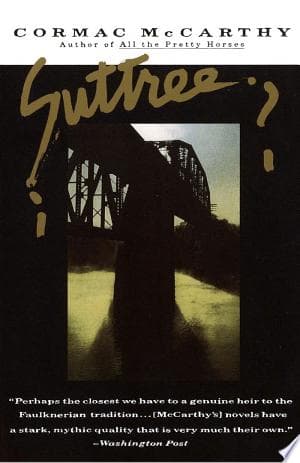
- Suttree
Cormac McCarthy
4.2 (18k) average on GoodreadsLiterary FictionFeatures a protagonist navigating a bleak Southern landscape, encountering a cast of marginalized characters and grappling with existential themes.
- Serena
Ron Rash
3.5 (34k) average on GoodreadsLiterary FictionAnother historical fiction by the same author, set in the Appalachian mountains, dealing with power, ambition, and violence within a natural setting.
- The Old Man and the Sea
Ernest Hemingway
3.8 (831k) average on GoodreadsLiterary FictionA Cuban fisherman's long struggle with a giant marlin becomes a story of endurance and dignity, now retold for young adults with illustrations, phonetic guides, and writing prompts in Traditional Chinese.
- One Hundred Years of Solitude
Gabriel García Márquez
4.1 (753k) average on GoodreadsLiterary FictionThrough the multi-generational story of the Buendía family, a mythical town deals with the repeating patterns of time, love, and solitude, as the extraordinary mixes with the ordinary.
- The Goldfinch
Donna Tartt
3.9 (720k) average on GoodreadsLiterary FictionHaunted by a tragic explosion and clutching a stolen Dutch masterpiece, a young orphan navigates the opulent drawing rooms of New York and the gritty underbelly of the art world, desperately seeking connection and redemption amidst a life spiraling into crime and obsession.





Enjoyed the summary?
A summary gives you the shape of the book. The book itself has the detail, the examples and the voice.
Find The World Made Straight on AmazonAs an Amazon Associate, BookBrief earns from qualifying purchases. How we're funded