
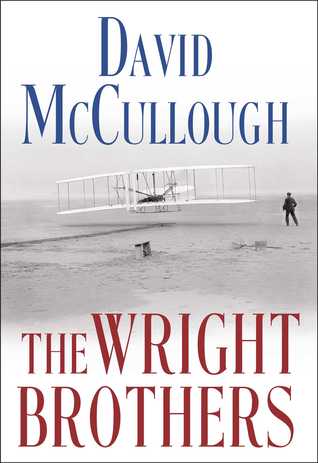
Core Idea
- Difficulty
- Easy
- Read it if
- You are fascinated by the origins of flight, appreciate detailed historical biographies, or want to understand the human elements of invention and perseverance.
- Skip it if
- You prefer theoretical discussions over narrative history, or are looking for a highly technical engineering breakdown of early aviation.
Key Takeaways from The Wright Brothers
The Power of Practical Ingenuity
Theory is good, but hands-on experimentation leads to breakthroughs.
The Wright brothers were not theoretical scientists or wealthy inventors. They were bicycle mechanics with a deep understanding of practical mechanics and a strong commitment to repeated experimentation. Their intelligence came not from new theoretical physics, but from using existing knowledge, carefully watching real-world events, and constantly testing their ideas through many glider flights. This hands-on method, along with their ability to build, change, and fix their own machines, let them learn from every failure and improve their designs in ways that academic or financially driven projects could not. Their success shows how important practical experience is for solving hard engineering problems.
“The way to learn to ride a bicycle is to ride it. The way to learn to fly a machine is to fly it.”
In the book: Their extensive work with gliders at Kill Devil Hills, where they performed hundreds of test flights, meticulously observing the effects of wind, control surfaces, and airfoils. They built their own wind tunnel to test wing shapes, but it was the actual flight data that proved most invaluable.
Try this: Embrace iterative design and rapid prototyping in any innovative endeavor. Don't get bogged down in theoretical perfection; build, test, learn, and refine. Prioritize direct experience and empirical data over abstract models where possible.
Related ideas: iterative-design, empirical-learning, prototype-testing
The Unsung Hero: Relentless Persistence
Failure is not an end, but a stepping stone to success.
The path to powered flight involved many failures, crashes, and moments of great discouragement. Yet, the Wright brothers showed extreme persistence. They faced doubt, jokes, dangerous accidents, and the sheer difficulty of a problem that had puzzled humanity for thousands of years. Their ability to analyze each failure, understand its cause, and return to work with new determination was perhaps their most important trait. This was not just stubbornness; it was intelligent, analytical persistence that saw every crash as data, a chance to learn and improve, not a reason to quit. Their story demonstrates that real innovation rarely comes easily.
“We could not have learned to fly without our numerous failures. Every failure taught us something.”
In the book: The numerous crashes and near-fatal incidents during their glider experiments and early powered flight attempts. For instance, the 1908 Fort Myer crash, which tragically killed their passenger, Lieutenant Thomas Selfridge, and severely injured Orville, but did not deter them from continuing their work.
Try this: Cultivate resilience in the face of obstacles. Develop a mindset that views failures as valuable learning experiences, not definitive defeats. Create systems for analyzing setbacks to extract lessons and inform future attempts.
Related ideas: resilience, grit, failure-analysis
The Synergy of Two Minds
Collaboration and complementary skills amplify individual genius.
Both Wilbur and Orville were smart, but their success came from their teamwork. Wilbur often thought about the bigger problems and solutions, while Orville was the mechanical genius who made ideas into working machines. They understood each other well, finishing each other's thoughts and criticizing ideas without ego. This intellectual and practical teamwork helped them solve problems from many angles, carefully test assumptions, and stay motivated during hard times. Their partnership is an example of good collaboration, where individual strengths are used best through mutual respect and shared goals.
“It was a partnership in the closest sense of the word. They thought as one.”
In the book: McCullough frequently highlights how they worked side-by-side, often finishing each other's sentences, and how their distinct yet complementary skills (Wilbur's theoretical insights, Orville's mechanical dexterity) were essential to their progress. Their shared notebooks and correspondence reflect this constant intellectual exchange.
Try this: Seek out partners whose skills and perspectives complement your own. Foster an environment of open, ego-free collaboration where ideas are freely exchanged and rigorously tested. Recognize that collective intelligence often surpasses individual brilliance, especially in complex problem-solving.
Related ideas: collaboration, teamwork, complementary-skills
The Power of Self-Reliance and Resourcefulness
Constraints can breed ingenuity, not stifle it.
The Wright brothers worked with very little money and no institutional help. This made them very resourceful, building much of their equipment, including their own wind tunnel and engine, from scratch. Their bicycle shop provided income, mechanical skills, and a workshop for their experiments. This self-reliance meant they fully controlled their designs and changes, allowing for quick improvements without bureaucracy. Their story challenges the idea that great achievements need huge money or established institutions; sometimes, the best innovations come from humble beginnings driven by ingenuity and need.
“We were not men of wealth, nor of influence. We had only ourselves and our bicycle shop.”
In the book: They designed and built their own lightweight gasoline engine when commercial options proved too heavy. They also fabricated many of their own tools and testing equipment, including a primitive but effective wind tunnel, from materials readily available in their shop.
Try this: Don't wait for perfect conditions or unlimited resources. Embrace constraints as catalysts for creative problem-solving. Leverage existing skills and available tools to begin, and build capacity incrementally. Foster a 'maker's' mindset.
Related ideas: resourcefulness, self-sufficiency, bootstrapping
The Crucial Role of Family Support
A strong personal foundation enables monumental achievements.
Beyond their direct teamwork, the Wright brothers greatly benefited from their family's support, especially their sister Katharine. She managed their home, handled correspondence, offered emotional encouragement, and later promoted them and served as their confidante in Europe. Their father, Bishop Milton Wright, taught them to love learning and have strong morals. This stable, supportive home allowed Wilbur and Orville to focus on their demanding and often dangerous work, knowing they had a safe place and people cheering them on. The book shows that even seemingly solitary geniuses often depend on a supportive personal network.
“Without Katharine, I doubt we would have had the strength to carry on.”
In the book: McCullough dedicates significant attention to Katharine's role, detailing her extensive correspondence, her trips to Europe to support her brothers, and her crucial role in managing their affairs and public image. Their father's intellectual influence and encouragement are also highlighted.
Try this: Cultivate strong personal relationships and a supportive home environment. Recognize and value the contributions of family and close friends who provide emotional, logistical, or intellectual support. Don't underestimate the power of a stable personal life in fueling professional success.
Related ideas: family-support, emotional-intelligence, personal-network
Mastering Control: The True Breakthrough
Beyond lift and thrust, stability and maneuverability define flight.
While other inventors focused on lift and thrust, the Wright brothers uniquely understood that true flight needed control. They knew that an airplane, like a bicycle, needed constant adjustment to stay balanced in three dimensions. Their new idea was 'wing warping' for roll control, combined with a movable rudder for yaw and an elevator for pitch. This system, inspired by watching birds and their own bicycle experience, let the pilot actively control the aircraft, not just passively ride it. This focus on dynamic control, rather than static stability, was the key conceptual step that set them apart and led to sustained, steerable flight.
“It is not merely enough to fly; one must be able to control the direction and balance of the machine.”
In the book: Their detailed studies of birds in flight, particularly eagles, and their application of bicycle balancing principles to aircraft. The development of their three-axis control system (wing warping, rudder, elevator) was meticulously documented in their notebooks and patents.
Try this: When solving complex problems, look beyond the obvious metrics. Identify the true 'control variable' or the fundamental mechanism that allows for mastery, rather than just basic functionality. Seek inspiration from analogous systems in nature or other fields.
Related ideas: control-systems, aerodynamics, biomechanics-inspiration
The Importance of Intellectual Curiosity
Lifelong learning and broad interests fuel innovation.
Even with only a high school education, the Wright brothers read a lot and kept learning throughout their lives. Their father's large library and encouragement of intellectual inquiry created a deep curiosity that went beyond mechanics to science, history, and philosophy. This broad intellectual background helped them approach the problem of flight with a unique view, using ideas from different fields. Their constant search for knowledge, with their practical skills, let them question common ideas and find new solutions. Their story reminds us that formal education is one way to expertise; a self-driven pursuit of knowledge is just as powerful, or more so.
“From childhood, we were surrounded by books and ideas. It shaped everything we did.”
In the book: McCullough emphasizes their upbringing, surrounded by books and intellectual discussion, and their continuous reading throughout their lives. Their detailed notebooks reveal not just engineering calculations but also reflections on scientific principles and observations.
Try this: Cultivate a habit of lifelong learning and explore diverse subjects. Don't limit your knowledge acquisition to your immediate field; cross-pollination of ideas often leads to breakthroughs. Encourage intellectual curiosity in yourself and others.
Related ideas: lifelong-learning, intellectual-curiosity, interdisciplinary-thinking
The Delay in Recognition: A Cautionary Tale
Revolutionary ideas often face initial skepticism and resistance.
Even after achieving sustained, controlled flight in 1903, the Wright brothers faced years of doubt, indifference, and even jokes from the press, public, and scientific groups in their own country. Their need for secrecy to protect their invention also delayed recognition. It was not until their public demonstrations in Europe in 1908 that the world truly understood their achievement. This period shows how hard it can be to convince people of truly revolutionary ideas, especially those that go against old beliefs. It's a reminder that even clear proof can slowly overcome deep-seated skepticism.
“The world simply refused to believe what we had done. It was the hardest part.”
In the book: The extensive documentation of the Wrights' struggle to gain recognition in America, contrasted with their triumphant public demonstrations in France and their subsequent celebrity there, which finally forced American attention.
Try this: Be prepared for skepticism and resistance when introducing truly novel concepts. Focus on clear demonstration and persistent communication. Understand that societal adoption of radical innovation can be a long and challenging process, even with irrefutable evidence.
Related ideas: innovation-adoption, skepticism-bias, public-perception
The Power of Observation and First Principles
Questioning assumptions and learning from nature leads to deeper understanding.
The Wright brothers did not just tinker; they re-evaluated the problem of flight from the beginning. They questioned existing aerodynamic data, especially Langley's tables, and made their own careful observations of birds and kites. This led them to understand that the main challenge was not just creating lift, but achieving dynamic control in an unstable environment. By breaking down the problem into its simplest parts and building their understanding from scratch, rather than relying only on established (and often flawed) theories, they found the real path to success. This careful, experience-based approach to problem-solving is a mark of true scientific and engineering genius.
“Man will not fly for a thousand years. We believed that was wrong, and we set out to prove it.”
In the book: Their rejection of inaccurate aerodynamic tables published by others, leading them to build their own wind tunnel and conduct extensive, precise measurements. Their detailed observations of buzzards and other birds for wing shape and control mechanisms.
Try this: Always question underlying assumptions, especially in complex problem domains. Go back to first principles to build a solid foundation of understanding. Observe natural phenomena closely for inspiration and solutions. Don't be afraid to challenge established 'truths.'
Related ideas: first-principles, empirical-research, observational-learning
The Wright Brothers Quotes
“The greatest thing in the world is to know how to belong to oneself.”
“It is not a matter of whether a man will fly, but when.”
“No great discovery is ever made without a bold guess.”
“If we worked on the assumption that what is currently true will remain true, we’d never make any progress.”
“The desire to fly is an idea handed down to us by our ancestors who, in their grueling travels across trackless lands in prehistoric times, looked enviously at the birds soaring freely through space, at speeds unknown to man, and wished they, too, had wings.”
“The course of experimentation was by no means a straight one. It was full of turns and twists, and often led to dead ends.”
“We were lucky enough to grow up in a home where there was always much encouragement to intellectual curiosity.”
“Learning the secret of flight from a bird would be a good deal like learning the secret of magic from a magician.”
“Success is not born of a single inspiration but of a continuous effort.”
“When we think of the Wright brothers, we think of Kitty Hawk. But the story really begins in Dayton, Ohio.”
“The greatest invention of them all was the control system.”
“They were not daredevils. They were meticulous, methodical, and above all, patient.”
“The fact that the machine was so light and fragile was actually a blessing in disguise, for it forced them to learn how to control it.”
“The air, indeed, is an untamed ocean, and the airplane is the ship of the future.”
“They had not only invented the airplane but had established a new science, aeronautics.”
Quiz
10 questions on the main ideas. Each answer comes with a short explanation.
Question 1
According to McCullough, what was a significant factor in the Wright brothers' intellectual development, despite their lack of formal higher education?
- Extensive travel abroad and exposure to European scientific thought.
- Their father, a preacher, supplied them with a vast array of books, fostering ceaseless curiosity.
- Mentorship from prominent engineers and scientists of their era.
- Attending night classes at a local university while running their bicycle shop.
Show answer
B. Their father, a preacher, supplied them with a vast array of books, fostering ceaseless curiosity. McCullough emphasizes that despite their lack of higher education, their home was filled with books supplied by their preacher father, which cultivated their intellectual interests and curiosity.
Question 2
What primary source material did David McCullough utilize extensively to tell the 'human side' of the Wright Brothers' story?
- Newspaper articles and public speeches from the time.
- Government archives and patent office records.
- The immense riches of the Wright Papers, including private diaries, notebooks, and family letters.
- Interviews with descendants and eyewitnesses conducted decades later.
Show answer
C. The immense riches of the Wright Papers, including private diaries, notebooks, and family letters. The book description explicitly states that McCullough drew on 'the immense riches of the Wright Papers, including private diaries, notebooks, scrapbooks, and more than a thousand letters from private family correspondence.'
Question 3
Which specific location is noted as the site of the first heavier-than-air, powered flight in December 1903?
- Dayton, Ohio
- Kitty Hawk, North Carolina
- Washington D.C.
- Kill Devil Hills, North Carolina
Show answer
B. Kitty Hawk, North Carolina While Kill Devil Hills is nearby, the book specifically mentions 'the Outer Banks of North Carolina' as the location, and Kitty Hawk is the widely recognized site within the Outer Banks for the first successful flight.
Question 4
What was the initial public reaction to the Wright brothers' successful flight in 1903, as described by McCullough?
- Immediate worldwide celebration and recognition.
- Skepticism and disbelief, with the world taking some time to accept what had happened.
- Accusations of fraud and sensationalism from the press.
- Indifference, as many believed flight was already imminent.
Show answer
B. Skepticism and disbelief, with the world taking some time to accept what had happened. The book states, 'But it would take the world some time to believe what had happened: the age of flight had begun...' highlighting the initial skepticism.
Question 5
Beyond their mechanical skills, what personal qualities does McCullough emphasize as crucial to the Wright brothers' success?
- Their shrewd business acumen and aggressive marketing strategies.
- Exceptional courage, determination, far-ranging intellectual interests, and ceaseless curiosity.
- Their extensive network of influential political and scientific contacts.
- A natural talent for mathematics and theoretical physics.
Show answer
B. Exceptional courage, determination, far-ranging intellectual interests, and ceaseless curiosity. McCullough describes them as 'men of exceptional courage and determination, and of far-ranging intellectual interests and ceaseless curiosity,' attributing much of this to their upbringing.
Question 6
What was the primary business of the Wright brothers before they dedicated themselves fully to aviation?
- Printing and publishing.
- Automobile manufacturing.
- Bicycle mechanics and manufacturing.
- Textile production.
Show answer
C. Bicycle mechanics and manufacturing. The book refers to them as 'a couple of unschooled Dayton bicycle mechanics who happened to hit on success,' indicating their prior profession.
Question 7
How does McCullough characterize the individual strengths of Wilbur and Orville Wright when they worked together?
- Wilbur was the primary financier, and Orville was the lead engineer.
- Wilbur was unquestionably a genius, and Orville possessed mechanical ingenuity rarely seen.
- Wilbur handled public relations, while Orville focused on design.
- Wilbur was the daring test pilot, and Orville was the meticulous record-keeper.
Show answer
B. Wilbur was unquestionably a genius, and Orville possessed mechanical ingenuity rarely seen. The text states, 'Wilbur was unquestionably a genius. Orville had such mechanical ingenuity as few had ever seen,' highlighting their complementary talents.
Question 8
What significant 'little-known contribution' does McCullough highlight regarding the Wright brothers' sister, Katharine?
- She designed the initial wing structure for the Flyer.
- She provided critical financial backing for their experiments.
- Her support and influence were so great that 'things might well have gone differently for them' without her.
- She was the first woman to fly in one of their experimental aircraft.
Show answer
C. Her support and influence were so great that 'things might well have gone differently for them' without her. McCullough specifically notes 'the little-known contributions of their sister, Katharine, without whom things might well have gone differently for them,' emphasizing her crucial, though often overlooked, role.
Question 9
How does McCullough portray the Wright brothers' approach to risk during their experiments?
- They were overly cautious, delaying flight until absolute safety could be guaranteed.
- They were reckless daredevils who ignored safety protocols.
- They understood and accepted the self-evident reality that every flight risked their lives.
- They relied on advanced safety equipment that minimized personal danger.
Show answer
C. They understood and accepted the self-evident reality that every flight risked their lives. The text states, 'Nothing did, not even the self-evident reality that every time they took off in one of their contrivances, they risked being killed,' indicating their awareness and acceptance of the inherent danger.
Question 10
What societal or economic advantages did the Wright brothers NOT possess, according to McCullough, that makes their achievement more remarkable?
- A strong family unit and supportive upbringing.
- More than a public high school education, significant money, or contacts in high places.
- Access to a well-stocked library and intellectual resources.
- Mechanical aptitude and problem-solving skills.
Show answer
B. More than a public high school education, significant money, or contacts in high places. The book explicitly states, 'That they had no more than a public high school education, little money and no contacts in high places, never stopped them in their mission to take to the air,' highlighting these as disadvantages they overcame.
The Wright Brothers FAQ
Who were the Wright Brothers and what is their significance?
Wilbur and Orville Wright were two unknown brothers from Ohio who, on a winter day in 1903, achieved the first successful flight of a heavier-than-air, powered machine carrying a pilot. Their pioneering work marked the beginning of the age of flight and revolutionized transportation and human capability.
What kind of education did the Wright Brothers have?
Despite their monumental achievement, the Wright Brothers had no more than a public high school education. They were largely self-taught, driven by insatiable curiosity and a love for reading, which their preacher father encouraged by providing many books.
Does 'The Wright Brothers' book cover their personal lives?
Yes, David McCullough's book delves deeply into the human side of the Wright Brothers' story, utilizing their private diaries, letters, and family correspondence. It highlights their upbringing, intellectual interests, and the significant contributions of their sister, Katharine.
What challenges did the Wright Brothers face in achieving flight?
The Wright Brothers faced numerous challenges, including limited finances, lack of high-placed contacts, and the constant risk of death every time they tested their contrivances. Their success was a testament to their exceptional courage, determination, and mechanical ingenuity.
How did the Wright Brothers fund their experiments?
The book details that the Wright Brothers were bicycle mechanics in Dayton, Ohio. They used the income from their bicycle shop to fund their extensive research, design, and experimental flights, demonstrating their resourcefulness and dedication.
What role did Katharine Wright play in her brothers' success?
Katharine Wright, the brothers' sister, played a significant but often little-known role in their journey. The book suggests that her contributions were crucial and that events might have unfolded differently without her support and involvement.
How does David McCullough's approach differ from other biographies of the Wright Brothers?
McCullough, a master historian, draws extensively on the 'Wright Papers,' including private diaries, notebooks, and over a thousand family letters, to provide an intimate and detailed human story. This rich primary source material allows for a nuanced portrayal beyond just their technical achievements, focusing on their character and family dynamics.
What were Wilbur and Orville's individual strengths?
Wilbur was recognized as a genius, while Orville possessed mechanical ingenuity rarely seen. Their combined intellectual and practical skills, coupled with their ability to work together seamlessly, made them an unstoppable team in their pursuit of flight.
Where did the Wright Brothers conduct their first successful flight?
The Wright Brothers made their historic first successful flight on a winter day in 1903 in the Outer Banks of North Carolina, specifically Kill Devil Hills near Kitty Hawk. This remote location offered the consistent winds and soft landing conditions they sought for their experiments.
About the author

David McCullough was a two-time Pulitzer Prize winner and a recipient of the Presidential Medal of Freedom, celebrated for his vivid historical narratives. His notable works, including "1776," "John Adams," and "Truman," brought American history to life for millions of readers. McCullough's masterful storytelling and meticulous research made him one of the nation's most beloved and respected historians.
Similar books
- Steve Jobs
Walter Isaacson
4.1 (957k) average on GoodreadsBusinessA comprehensive biography of an inventor, detailing their life, struggles, and impact on technology.
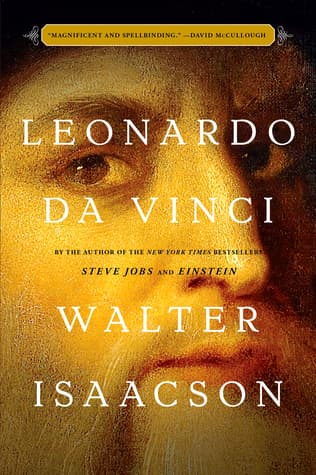
- Leonardo da Vinci
Walter Isaacson
4.1 (62k) average on GoodreadsBiographyExplores the life of a multifaceted genius driven by curiosity, observation, and practical application, much like the Wrights.
- The Diary of a Young Girl
Anne Frank
4.2 (2.7M) average on GoodreadsBiographyDuring the Nazi occupation, a teenage girl's diary, written from a secret annex, shares observations on humanity, hope, and the wait for freedom.
- Eat, Pray, Love
Elizabeth Gilbert
3.6 (1.5M) average on GoodreadsLifestyleA heartbroken writer leaves her conventional life for a year-long global search for pleasure in Italy, spiritual devotion in India, and unexpected love and balance in Bali.
- Night
Elie Wiesel
4.3 (970k) average on GoodreadsBiographyIn the darkness of Auschwitz and Buchenwald, a teenage Elie Wiesel faces the extermination of his family, the loss of his faith, and the lasting scars of humanity's deepest cruelty.
- The Glass Castle
Jeannette Walls
4.3 (903k) average on GoodreadsBiographyJeannette Walls's memoir describes her unusual childhood with brilliant, free-spirited parents whose poverty-stricken life shaped her independence and love despite family problems.





Enjoyed the summary?
A summary gives you the shape of the book. The book itself has the detail, the examples and the voice.
Find The Wright Brothers on AmazonAs an Amazon Associate, BookBrief earns from qualifying purchases. How we're funded