

Synopsis
Covers the whole plot, including the ending.
- Difficulty
- Medium
- Pacing
- Variable
- Mood
- Dystopian, Melancholy, Suspenseful, Reflective, Darkly Humorous
- Read it if
- You enjoy dystopian science fiction with strong ecological and social commentary, character-driven narratives, and a blend of dark humor and suspense.
- Skip it if
- You prefer fast-paced action over introspective world-building, or are sensitive to themes of pandemics, environmental collapse, and societal breakdown.
The Year of the Flood Plot Summary
Covers the whole plot, including the ending.
The Flood and its Aftermath
The novel begins after the 'Waterless Flood' – a global pandemic designed to kill most people. Toby, a former God's Gardener, hides in the AnooYoo Spa, where she worked as a chef. She rations supplies, practices survival skills, and remembers her past with the God's Gardeners, a nature-loving, religious group. Meanwhile, Ren, a trapeze artist, is trapped in Scales and Tails, a high-end club where she worked. She is locked in the 'Cocoon' with another dancer, Amanda, a bioartist, who soon dies from the plague. Ren endures days of isolation, fear, and hunger, unaware of the outside world's destruction, relying on her aerial skills to survive and stay sane.
Toby's Past with the God's Gardeners
Through Toby's memories, the story shows her life before the Flood. She was a dedicated member of the God's Gardeners, a community led by Adam One, who preached environmentalism, veganism, and a simpler life, predicting an apocalypse. Toby joined after escaping a traumatic past with the 'Painballers' and found comfort and purpose with the Gardeners. She learned survival skills, herbal medicine, and the history of corporate greed and environmental destruction that the Gardeners opposed. These flashbacks set up the conflict between the Gardeners' ideals and the consumerist, genetically modified world they lived in.
Ren's Life at Scales and Tails
Ren's flashbacks describe her life as a 'Pleasure Pal' at Scales and Tails, an exclusive club for the rich. She talks about the strict hierarchy, the different 'animals' (dancers), and the club managers' oppressive control. Her friend, Amanda, a bioartist, often shared cynical observations about their world. Ren also thinks about her complex relationship with Jimmy (Snowman-the-Crake from 'Oryx and Crake'), a fellow artist and musician who often visited the club. These memories show a society where luxury and entertainment hid deep corruption and exploitation, a sharp contrast to the God's Gardeners' beliefs.
Adam One's Sermons and Prophecies
Throughout the story are excerpts from Adam One's weekly sermons to the God's Gardeners. These sermons mix ecological warnings with religious prophecy, condemning the 'CorpOrators' (corporations) and their destructive practices, like genetic engineering and environmental damage. Adam One consistently preaches about the coming 'Waterless Flood' as divine punishment for humanity's sins against nature. His words provide a moral and philosophical framework for the God's Gardeners' beliefs and actions, contrasting sharply with the amoral, technologically advanced world outside their compound.
Toby's First Foray Outside
After weeks alone, Toby decides she must leave the AnooYoo Spa to search for other survivors and supplies. She carefully plans her route, navigating the deserted, decaying city. She finds signs of the disaster: abandoned vehicles, skeletal remains, and the eerie silence of a world without human activity. She also sees many genetically modified creatures, like 'pigoons' (pigs with human brain tissue) and 'lion/lambs,' now roaming freely. This first trip confirms her worst fears about the Flood's impact and civilization's complete collapse, strengthening her survival instincts.
Ren's Escape and Search for Jimmy
After Amanda's death and a period of near-starvation, Ren manages to pick the lock of the Cocoon and escape Scales and Tails. She emerges into a desolate city, like Toby's observations of widespread death and decay. Her immediate goal is to find Jimmy, her on-again, off-again lover. She navigates the dangerous streets, encountering grotesque, gene-spliced animals and chilling silence. Her journey is driven by a desperate hope that Jimmy has survived, a fragile anchor in the terrifying new world she now inhabits. She avoids any potential human encounters, fearing the unknown.
Toby Encounters the Painballers
During one of her scavenging trips, Toby meets a group of 'Painballers,' brutal former prisoners from a sadistic reality game show. These men, known for their violence and lack of empathy, are a significant threat in the post-Flood world. Toby's past trauma with the Painballers resurfaces, and she uses her combat and survival skills, learned with the God's Gardeners, to evade them. This encounter shows the extreme dangers of the new world and the regression of human society to a more primal, violent state, emphasizing the need for caution and self-reliance.
Ren and Toby's Paths Converge
Ren, weak and desperate, eventually reaches the AnooYoo Spa, drawn by the possibility of shelter and supplies. Toby, initially wary of human contact, discovers Ren. After a tense standoff, they slowly begin to trust each other, sharing their experiences and limited resources. Toby, with her practical skills and knowledge, becomes a mentor to Ren, who is more fragile and less prepared for survival. Their alliance marks a turning point, as their individual struggles merge into a shared quest for survival and meaning in the desolate landscape.
The Search for Zeb and Other Gardeners
As Ren and Toby bond, they discuss the possibility of other survivors. Ren mentions her stepfather, Zeb, a prominent God's Gardener and known eco-activist. Toby, having known Zeb from her time with the Gardeners, agrees he would likely have survived and be a valuable ally. They decide to embark on a perilous journey to search for Zeb and any other God's Gardeners, hoping to find a community and a path forward. This decision shifts their focus from just survival to actively seeking connection and rebuilding.
Encounters with New Life Forms and Dangers
During their travels, Ren and Toby encounter more of the gene-spliced creatures that now fill the landscape. They see the intelligence and evolving behavior of the 'pigoons,' the predatory instincts of the 'lion/lambs,' and other engineered life forms. They also face environmental hazards and the constant threat of the Painballers, who still roam the ruins. These encounters highlight the irreversible changes caused by human scientific arrogance and the precariousness of their existence in a world where the natural order is disrupted.
The Arrival of Zeb and a New Hope
Just as Ren and Toby are close to despair, Zeb and a small group of other God's Gardeners, including Adam One and Swift, arrive at a pre-arranged meeting point. Zeb, a strong and resourceful character, brings vital knowledge and a survival plan. His arrival, along with the other Gardeners, provides a much-needed sense of community and purpose. They share stories of their own survival and the devastation they've witnessed, confirming that they are among the very few left. This reunion offers fragile hope for rebuilding and a future, however uncertain.
The Future of the Survivors
With Zeb and the other God's Gardeners, Ren and Toby now form a small, diverse group of survivors. They begin to plan for long-term survival, resource management, and the possibility of a new society. The novel ends with the survivors gathered, facing the immense challenge of rebuilding in a world changed by the Waterless Flood. The ending is open, suggesting that while the immediate threat of isolation is over, the work of creating a new existence in a broken world has only just begun. Hope, resilience, and the lasting power of human connection are central themes.
Principal Figures
Toby
Protagonist
A pragmatic and resilient former God's Gardener.
Toby is a survivor, resourceful and fiercely independent. Before the Flood, she found refuge and purpose with the God's Gardeners after a traumatic past involving the criminal Painballers. She is highly skilled in herbal medicine, survival techniques, and practical matters, often acting as a grounded counterpoint to Ren's more artistic nature. Her experiences have made her wary but also deeply compassionate, especially towards those she comes to trust. She carries a burden of past trauma but uses it to fuel her determination to survive and protect others.
Relationships: Ren (mentor/mentee, unlikely friendship); Adam One (spiritual leader, respected figure); Zeb (fellow Gardener, trusted ally); Painballers (past tormentors, source of trauma)
Ren
Protagonist
A young trapeze artist and 'Pleasure Pal' from Scales and Tails.
Ren is a delicate yet surprisingly resilient young woman. Before the Flood, she worked as a 'Pleasure Pal' at a high-end sex club, using her aerial skills. She is artistic, somewhat naive, and deeply affected by the loss of her friends and the world she knew. Initially fragile and dependent, her journey through the post-Flood landscape forces her to confront harsh realities and develop inner strength. She yearns for connection and struggles with the trauma of her past and the desolate present, often finding solace in memories of Jimmy.
Relationships: Toby (mentee, close friendship); Jimmy (Snowman-the-Crake) (lover, significant past relationship); Amanda (friend, fellow dancer); Zeb (stepfather, important family connection)
Adam One
Supporting
The spiritual leader of the God's Gardeners.
Adam One is the charismatic and prophetic leader of the God's Gardeners. He preaches a blend of environmentalism, veganism, and a quasi-religious philosophy, predicting the 'Waterless Flood' as a cleansing event. He is a figure of calm wisdom and unwavering conviction, providing moral guidance and a sense of purpose to his followers. His sermons, interspersed throughout the novel, serve as a narrative device to explain the Gardeners' ideology and foreshadow the apocalypse. He embodies hope and resilience, even in the face of utter devastation.
Relationships: Toby (spiritual leader/follower); Zeb (fellow Gardener, respected colleague)
Zeb
Supporting
Ren's stepfather, a formidable and mysterious eco-activist and God's Gardener.
Zeb is a powerful and enigmatic figure, Ren's stepfather and a key member of the God's Gardeners. He is a former eco-terrorist or 'eco-fighter,' highly intelligent, resourceful, and capable of both fierce protection and ruthless action. He possesses deep knowledge of the corporate world, genetic engineering, and survival tactics, making him an invaluable asset in the post-Flood world. His past is shrouded in mystery, hinting at a life of intense activism and danger. He represents a more pragmatic and sometimes darker side of the environmental movement.
Relationships: Ren (stepfather/stepdaughter, protective bond); Toby (fellow Gardener, trusted ally); Adam One (fellow Gardener, respected colleague)
Jimmy (Snowman-the-Crake)
Mentioned
Ren's former lover, a cynical artist and musician.
Jimmy is Ren's on-again, off-again lover from before the Flood. He is a cynical, intelligent, and artistic individual, often critical of the corporate-controlled world. He is a prominent character in 'Oryx and Crake' under the name Snowman-the-Crake. His presence in Ren's memories provides a strong emotional anchor for her in the desolate post-Flood world, as she desperately searches for him. He represents lost love and the pre-Flood world's intellectual and artistic life, now seemingly extinct.
Relationships: Ren (lover, deep emotional connection); Crake (best friend, fellow scientist (from 'Oryx and Crake'))
Amanda
Supporting
Ren's friend and fellow 'Pleasure Pal' at Scales and Tails.
Amanda is Ren's friend and confidante at Scales and Tails. She is a bioartist, intelligent and observant, often sharing cynical and insightful commentary on their society. She is trapped with Ren in the 'Cocoon' when the Flood hits but quickly succumbs to the plague. Her death is a significant loss for Ren, highlighting the sudden and brutal impact of the pandemic and leaving Ren truly alone in the immediate aftermath. Amanda represents the lost potential and the immediate human cost of the catastrophe.
Relationships: Ren (close friend, fellow dancer)
Painballers
Antagonists
Brutal, sadistic former prisoners from a reality game show.
The Painballers are a group of violent, dehumanized individuals who were once contestants in a brutal reality game show. They represent the extreme degradation of human morality and the lawlessness that emerges in the post-Flood world. They are a constant threat to survivors, embodying the worst aspects of human nature when societal constraints are removed. Their presence re-traumatizes Toby and underscores the dangers of encountering other humans in this new, unforgiving landscape.
Relationships: Toby (tormentors, source of past trauma); Ren (threat, source of fear)
Pigoons
Mentioned
Genetically modified pigs with human brain tissue.
Pigoons are one of Crake's most famous genetic creations, pigs engineered with human brain tissue to grow organs for human transplant. In the post-Flood world, they have escaped their enclosures and roam freely, exhibiting surprising intelligence and complex social behaviors. They are both a source of food and a potential threat to survivors. The Pigoons symbolize the ethical dilemmas and unintended consequences of unchecked genetic engineering, a central theme of the novel and the 'MaddAddam' trilogy.
Themes & Insights
Environmentalism and Ecological Collapse
The novel warns about environmental damage and humanity's destructive relationship with nature. The 'Waterless Flood' is a direct result of unchecked corporate greed, genetic engineering, and the exploitation of natural resources. The God's Gardeners are the moral guides, advocating for sustainable living and respect for the natural world. Scenes of desolate, polluted cities and many gene-spliced animals clearly show the catastrophic impact of human arrogance, emphasizing fragile ecosystems and the dire consequences of ignoring scientific warnings.
“What is the Lord God's plan? To let the human race, which has made such a mess of the planet, be swept away by the Waterless Flood, and then to let the plants and animals, and a few of us, start over.”
Survival and Resilience
At its heart, the novel explores the human will to survive in extreme catastrophe. Both Toby and Ren show great resilience, adapting to extreme isolation, hunger, and danger. Toby's careful planning and practical skills, and Ren's ability to find inner strength despite her fragility, show different aspects of survival. Their journey from solitary struggle to forming an alliance, and eventually finding a community, highlights the importance of both individual strength and collective effort. The story constantly tests their physical and psychological limits, revealing the lasting power of hope and the instinct to live.
“This is what you're up against, Toby thought. Don't be a victim. Don't be a victim. Don't be a victim.”
Critique of Corporate Power and Genetic Engineering
The novel sharply criticizes the unchecked power of corporations ('CorpOrators') and the ethical problems of advanced genetic engineering. The world before the Flood is a dystopia where corporations control everything, from food to entertainment and even human biology. The 'Waterless Flood' itself is a genetically engineered plague, a product of scientific hubris. The creation of 'pigoons,' 'lion/lambs,' and other 'genetically modified organisms' (GMOs) shows the dangerous blurring of ethical lines and the potential for science to be weaponized or create unforeseen ecological imbalances. The God's Gardeners' opposition to these practices forms a central ideological conflict.
“The CorpOrations had taken over, they had the money, they had the power, they had the say. They had the scientists, they had the media, they had the armies.”
Memory and the Past
Memories of the world before the Flood are important in shaping the characters' current experiences and motivations. Both Toby and Ren often remember their past lives, relationships, and the societal structures that existed before the catastrophe. These flashbacks provide essential context for understanding their characters and the world that was lost. For Ren, memories of Jimmy are a driving force; for Toby, her past traumas with the Painballers and her time with the God's Gardeners inform her survival strategies. Remembering helps them process loss, maintain their identity, and understand how their current problems started.
“The past was a different country, they did things differently there. No, the past was this country, but it was buried under a landslide.”
Religion and Spirituality
Religion and spirituality are explored through the God's Gardeners. Their faith mixes environmental activism, respect for nature, and a belief in a divine plan that includes a cleansing apocalypse. Adam One's sermons provide a spiritual framework for understanding the Flood and the Gardeners' purpose. While their beliefs might seem extreme, they offer community, hope, and moral guidance in a world without traditional institutions. The novel examines how faith can provide comfort, structure, and motivation, even when faced with overwhelming despair, and how it can adapt to new, catastrophic realities.
“We are the gardeners of God, and we must tend His garden, even if it is full of weeds and thorns and poison ivy.”
Plot Devices & Literary Techniques
Flashbacks
Interspersed memories providing context and character depth.
Flashbacks are extensively used to reveal the pre-Flood world, the characters' backstories, and the societal conditions that led to the apocalypse. They alternate between Ren's life at Scales and Tails and Toby's experiences with the God's Gardeners. This device allows Atwood to slowly build a comprehensive picture of the dystopian society, explain the motivations of the characters, and provide crucial exposition about the 'Waterless Flood' and its origins. The fragmented nature of the flashbacks also mimics the characters' own struggle to piece together their past and understand their present.
Adam One's Sermons
Weekly sermons from the God's Gardeners' leader, serving as exposition and prophecy.
Adam One's sermons function as a unique narrative device, interspersed throughout the chapters. They serve multiple purposes: providing the ideological framework of the God's Gardeners, foreshadowing the 'Waterless Flood,' offering social commentary on the pre-Flood world (particularly corporate greed and genetic engineering), and giving a sense of the Gardeners' history and beliefs. These sermons act as a moral and philosophical anchor, contrasting the Gardeners' worldview with the destructive path taken by mainstream society, and serving as a Greek chorus of impending doom.
Genetically Modified Organisms (GMOs)
Engineered creatures that populate the post-Flood world, symbolizing scientific hubris.
The various genetically modified organisms, such as 'pigoons' (pigs with human brain tissue), 'lion/lambs' (genetically engineered predators), and 'Mo'hair' sheep, are not just background elements but active plot devices. They represent the ultimate consequences of unchecked scientific ambition and corporate control over life itself. These creatures serve as both resources and threats to the survivors, highlighting the altered ecosystem and the new dangers of the post-Flood world. Their presence constantly reminds the characters and the reader of humanity's past mistakes and the profound, irreversible changes to the planet.
The 'Cocoon' and the 'AnooYoo Spa'
Symbolic locations of isolation and temporary refuge for the protagonists.
The 'Cocoon' in Scales and Tails, where Ren is trapped, and the 'AnooYoo Spa,' where Toby finds refuge, function as significant plot devices. They are initial spaces of isolation and containment, forcing the protagonists to confront their immediate survival alone. Symbolically, the Cocoon represents Ren's former sheltered (and exploited) existence, while the Spa, ironically, becomes a place of gritty survival rather than luxury. These locations serve as starting points for their individual journeys, providing the initial setting for their post-Flood experiences and highlighting their resourcefulness in confined spaces before venturing into the wider, devastated world.
The Year of the Flood Quotes
“Water, water, everywhere, Nor any drop to drink.”
“The past is a phantom that can reach out and grab you.”
“Only when we are no longer afraid do we begin to live.”
“Humans are such a hopeful species, even when all hope is gone.”
“The world had ended, but life, stubbornly, continued.”
“Every paradise is a prison, if you're not allowed to leave.”
“Ignorance is not bliss. Ignorance is a choice, and it's a dangerous one.”
“We were made for love, but we were also made for war.”
“The world was full of wonders, even after it broke.”
“Sometimes, the only way to go forward is to go back.”
“The truth was a slippery thing, hard to hold on to.”
“Survival is not a game. It's a constant, brutal negotiation.”
“We are all connected, whether we like it or not.”
“What is a human being, if not a story?”
Quiz
10 questions on the plot and the characters. Each answer comes with a short explanation.
Question 1
Which group of people is Ren, the trapeze dancer, locked inside a high-end sex club with at the time of the flood?
- The God's Gardeners
- The Painballers
- The patrons and staff of Scales and Tails
- The members of the policing force
Show answer
C. The patrons and staff of Scales and Tails Ren is a trapeze dancer at the high-end sex club Scales and Tails, and she is locked inside with others from the club during the flood.
Question 2
What is the primary goal of the God's Gardeners, led by Adam One?
- To develop advanced genetic engineering
- To establish a new global government
- To meld science and religion and preserve plant and animal life
- To train eco-fighters for environmental protection
Show answer
C. To meld science and religion and preserve plant and animal life The God's Gardeners are described as a religion devoted to the melding of science and religion, as well as the preservation of all plant and animal life.
Question 3
Which of the following gene-spliced life forms is explicitly mentioned in the book's description?
- Spider/human hybrids
- Mo'hair sheep with human hair
- Dolphin/fish blends
- Cows with extra limbs
Show answer
B. Mo'hair sheep with human hair The description specifically mentions 'the Mo'hair sheep with human hair' as one of the proliferating gene-spliced life forms.
Question 4
Where is Toby, the other female survivor, barricaded during the flood?
- Inside a secure government bunker
- Within the walls of the God's Gardener compound
- Inside a luxurious spa where many treatments are edible
- A deserted research facility
Show answer
C. Inside a luxurious spa where many treatments are edible Toby, a God's Gardener, is barricaded inside a luxurious spa where many of the treatments are edible.
Question 5
What is the relationship between Zeb and Ren?
- Zeb is Ren's bioartist friend
- Zeb is Ren's eco-fighter stepfather
- Zeb is Ren's onetime lover
- Zeb is the leader of the Painballers
Show answer
B. Zeb is Ren's eco-fighter stepfather The description mentions Zeb as Ren's 'eco-fighter stepfather'.
Question 6
What specific characteristic is given for the 'pigs' among the gene-spliced life forms?
- They have wings
- They are unusually large
- They have human brain tissue
- They glow in the dark
Show answer
C. They have human brain tissue The text states that among the gene-spliced life forms are 'the pigs with human brain tissue'.
Question 7
What type of garment is characteristic of Adam One and his God's Gardeners?
- Silk robes
- Leather armor
- Hemp-clad attire
- Reflective suits
Show answer
C. Hemp-clad attire Adam One and his group are described as 'his intrepid hemp-clad band'.
Question 8
What is the nature of the 'Painballers' mentioned in the summary?
- They are a benevolent group assisting survivors
- They are survivors of a mutual-elimination Painball prison
- They are a new species of gene-spliced humans
- They are a shadowy policing force
Show answer
B. They are survivors of a mutual-elimination Painball prison The Painballers are described as 'murderous Painballers, survivors of the mutual-elimination Painball prison'.
Question 9
What is the overarching theme predicted by Adam One that has now occurred?
- A technological singularity
- A global economic collapse
- A natural disaster that will alter Earth as we know it
- An alien invasion
Show answer
C. A natural disaster that will alter Earth as we know it Adam One has long predicted 'a natural disaster that will alter Earth as we know it', which has now occurred.
Question 10
Besides Ren and Toby, which other character's survival is specifically questioned in the summary, implying their potential importance?
- Adam One
- Jimmy, Ren's onetime lover
- A member of the shadowy policing force
- An unnamed scientist
Show answer
B. Jimmy, Ren's onetime lover The summary explicitly asks if 'Her onetime lover, Jimmy?' has survived, alongside Amanda and Zeb.
The Year of the Flood FAQ
What is the central catastrophic event that reshapes the world in 'The Year of the Flood'?
The central event is the Waterless Flood, a meticulously engineered pandemic unleashed by Crake, which rapidly eradicates most of humanity. This biological catastrophe spares only a select few, fundamentally altering the global ecosystem and societal structure.
Who are Ren and Toby, and what are their initial circumstances after the Flood?
Ren is a young trapeze dancer trapped inside the Scales and Tails sex club, where she was performing when the Flood hit. Toby, a former God's Gardener, is barricaded inside a high-end spa, having sought refuge there just before the pandemic struck.
What is the role of the God's Gardeners in the narrative, and who is Adam One?
The God's Gardeners are a nature-worshipping, eco-conscious religious group who predicted the 'Flood' and advocate for sustainable living. Adam One is their charismatic and insightful leader, guiding his followers through the post-apocalyptic world with spiritual teachings and practical survival skills.
How do the 'Painballers' fit into the post-Flood landscape, and what threat do they pose?
The Painballers are violent survivors of a brutal prison system where inmates engaged in deadly 'Painball' games for entertainment. Post-Flood, they roam as a dangerous, predatory gang, posing a significant threat to any other survivors they encounter, including Ren and Toby.
What are some examples of the gene-spliced life forms mentioned in the book, and what do they signify?
The book features 'Mo'hair' sheep with human hair, 'pigoons' (pigs with human brain tissue), and 'lion/lamb' blends. These creatures signify humanity's unchecked genetic engineering and disregard for natural order, contributing to the world's ecological instability before the Flood.
How does Ren's past relationship with Jimmy connect to the events of 'Oryx and Crake'?
Ren's onetime lover, Jimmy, is the same character as Snowman from 'Oryx and Crake,' making 'The Year of the Flood' a parallel narrative providing deeper insight into their shared history before the Flood. Their relationship, though brief, deeply impacted both characters.
What is the significance of Zeb, Ren's eco-fighter stepfather, and his connection to the God's Gardeners?
Zeb is Adam One's brother and a co-founder of the God's Gardeners, though he takes a more radical, direct-action approach to environmental activism. His past activities and knowledge of corporate corruption are crucial to understanding the pre-Flood world and the Gardeners' origins.
How do the 'Crakers' from 'Oryx and Crake' appear or are referenced in 'The Year of the Flood'?
The Crakers, Crake's genetically engineered humanoid species, are observed by Toby and other Gardeners post-Flood. Their innocent, nature-attuned existence offers a stark contrast to the destructive human past and represents a potential 'new beginning' for the planet.
What is the implied connection between the 'shadowy, corrupt policing force' and the larger corporations of the pre-Flood world?
The 'shadowy, corrupt policing force' is an enforcement arm for the powerful, amoral corporations that control the pre-Flood world. They maintain order and suppress dissent, acting as a tool to protect corporate interests and facilitate their unchecked scientific and economic expansion.
Discuss Ren's psychological journey from a performer in a sex club to a survivor in a ruined world.
Ren's journey involves a profound shift from a life of superficiality and objectification at Scales and Tails to one of raw survival and self-reliance. Her initial isolation and fear give way to resilience as she navigates the dangers, forcing her to confront her past and re-evaluate her values.
How does Toby's pragmatic and resilient nature, honed by the God's Gardeners, aid her psychological survival?
Toby's upbringing with the God's Gardeners instilled in her practical skills, a deep respect for nature, and a stoic resilience. This foundation allows her to maintain composure, make rational decisions, and effectively navigate the post-Flood landscape, emotionally and physically, far better than many others.
What psychological impact does the constant threat of the Painballers have on the survivors?
The Painballers represent a constant, brutal threat that instills deep fear and paranoia among survivors, forcing them to live in perpetual vigilance. This threat strips away any semblance of civility, pushing individuals to their psychological limits and often leading to desperate, violent actions.
How does the book explore the psychological toll of isolation and the yearning for connection in a post-apocalyptic world?
The narrative vividly portrays the profound loneliness and psychological strain experienced by Ren and Toby during their isolation. Their yearning for human connection drives much of their actions, highlighting the fundamental human need for community and belonging even amidst devastation.
Is Adam One a genuine prophet or a manipulative leader, and how does the book invite this interpretation?
Adam One's portrayal invites debate: he genuinely predicts the Flood and advocates for a virtuous path, but his pronouncements can also be seen as a form of manipulation, albeit for what he believes is the greater good. The ambiguity lies in whether his 'prophecies' are divinely inspired or shrewd observations of impending collapse.
To what extent is the 'Waterless Flood' a natural disaster versus a man-made catastrophe, and what is the book's commentary on this?
The 'Waterless Flood' is explicitly a man-made catastrophe, a bioweapon engineered by Crake, disguised as a natural pandemic. The book's commentary is a stark warning about humanity's hubris, unchecked scientific ambition, and the devastating consequences of playing God with nature and human life.
How does 'The Year of the Flood' critique consumerism and corporate power in the pre-Flood world?
The novel sharply critiques a world dominated by mega-corporations that prioritize profit over ethics, leading to environmental degradation, social stratification, and the commodification of everything, including human bodies and genetic material. The 'pleasure domes' like Scales and Tails exemplify this critique.
What is the significance of the God's Gardeners' blend of science and religion?
The God's Gardeners' philosophy represents an attempt to reconcile scientific understanding with spiritual reverence for nature. It suggests a path where knowledge serves life and sustainability, offering a counterpoint to the destructive, amoral science practiced by corporations that led to the Flood.
Does the ending offer a message of hope or despair for humanity's future?
The ending offers a cautiously ambiguous hope. While humanity has been decimated, the survival of Ren, Toby, and the Gardeners, along with the innocent Crakers, suggests a potential for a new, more harmonious beginning. However, the lingering threats and the memory of past mistakes temper this hope with a sense of fragility.
About the author
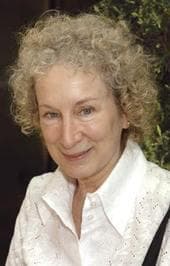
Margaret Eleanor Atwood is a Canadian poet, novelist, literary critic, essayist, teacher, environmental activist, and inventor. Since 1961, she has published eighteen books of poetry, eighteen novels, eleven books of non-fiction, nine collections of short fiction, eight children's books, two graphic novels, and a number of small press editions of both poetry and fiction. Atwood has won numerous awards and honors for her writing, including two Booker Prizes, the Arthur C. Clarke Award, the Governor General's Award, the Franz Kafka Prize, Princess of Asturias Awards, and the National Book Critics and PEN Center USA Lifetime Achievement Awards. A number of her works have been adapted for film and television.
Similar books
- Oryx And Crake
Margaret Atwood
4.0 (221k) average on GoodreadsFantasyIt's the companion novel, set in the same world and timeline, offering a complementary perspective.
- The Road
Cormac McCarthy
4.0 (716k) average on GoodreadsScience FictionFeatures a bleak, post-apocalyptic landscape with a focus on survival and human resilience.
- Station Eleven
Emily St. John Mandel
4.0 (322k) average on GoodreadsLiterary FictionExplores the aftermath of a devastating pandemic and the struggle to rebuild society and culture.
- Harry Potter and the Sorcerer's Stone
J.K. Rowling
4.5 (7M) average on GoodreadsFantasyRescued from a miserable life under the stairs, an orphaned boy discovers he's a wizard destined for a magical school, where he uncovers a dangerous secret tied to the dark wizard who murdered his parents.
- The Hunger Games
Suzanne Collins
4.3 (6.4M) average on GoodreadsFantasyIn a future where children fight to the death on live television, Katniss Everdeen volunteers for the arena, turning a death sentence into a fight for survival and a spark of rebellion.
- 1984
George Orwell
4.2 (3.1M) average on GoodreadsPoliticsIn a future where surveillance and thought control are absolute, a man's search for truth clashes with the Party, showing that hope can be a form of rebellion.






Enjoyed the summary?
A summary gives you the shape of the book. The book itself has the detail, the examples and the voice.
Find The Year of the Flood on AmazonAs an Amazon Associate, BookBrief earns from qualifying purchases. How we're funded