
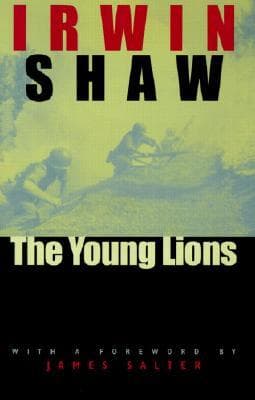
Synopsis
Covers the whole plot, including the ending.
- Difficulty
- Medium
- Pacing
- Moderate
- Mood
- Gritty, Reflective, Somber, Epic
- Read it if
- You want a sprawling, character-driven epic exploring the human experience of WWII from multiple, contrasting perspectives.
- Skip it if
- You prefer fast-paced action over deep character development and philosophical musings on war.
The Young Lions Plot Summary
Covers the whole plot, including the ending.
New Year's Eve in the Alps
The novel opens on New Year's Eve, 1938, in an Austrian ski resort. Christian Diestl, a handsome ski instructor, watches the crowd, including American tourists Michael Whitacre and Noah Ackerman. Christian is an idealistic young man, already a Nazi Party member, who believes in a revitalized Germany. He is initially portrayed as naive, drawn to the party's talk of national pride. He briefly flirts with an American woman, Margaret Freemantle, showing his initial innocence before the war's horrors consume him. This scene sets up Christian's character and the pre-war atmosphere.
Michael Whitacre's Hollywood Discontent
In 1940, in Hollywood, Michael Whitacre, a successful but cynical film producer, lives in a superficial world. He has privilege and intellectual leanings, but feels disillusioned. He is having an affair, and his life feels empty despite its glamour. News of the war in Europe is a distant hum, but it begins to bother him. He struggles with the moral implications of American neutrality and his own comfortable life while the world burns. His initial reluctance to get involved reflects a common feeling among some Americans before Pearl Harbor, setting up his eventual change.
Noah Ackerman's Love and Early Struggles
Noah Ackerman, a shy, intelligent Jewish man, is in love with Hope Plowman. They marry just as the United States enters the war after Pearl Harbor. Noah, driven by duty, enlists in the army. He immediately faces brutal antisemitism from fellow recruits during basic training. He is harassed, especially by Private Rickett, who shows the prejudice of the era. Despite his gentle nature, Noah refuses to back down, showing an inner strength that will define his wartime experience. Hope's support helps him.
Christian's Early War Experiences
Christian Diestl's initial enthusiasm for the war quickly fades as he experiences combat. He participates in the invasion of France, seeing atrocities and the dehumanizing effects of war. Later, he transfers to the Eastern Front, where fighting is even more savage. The vastness of the Russian landscape and the cold take a toll. He begins to question his ideals, seeing cruelty and futility firsthand. His moral compass shifts, and his initial idealism erodes from the horrors he endures and commits.
Michael's Enlistment and Training
Motivated by a growing sense of responsibility, Michael Whitacre enlists in the army, surprising his friends and colleagues. As an older, educated man, he finds the rigid discipline and camaraderie of basic training difficult. He struggles to adapt to the loss of his former status and the mundane routines of army life. He forms a friendship with Private Boyle, a rough but loyal soldier. Michael sheds his civilian cynicism and finds new purpose, though it is uncomfortable and filled with self-doubt.
Noah's Endurance and Leadership
Despite the antisemitism he faces, Noah Ackerman stands out for his courage and intelligence. During training and later in combat, he performs his duties with bravery. He earns the respect of some fellow soldiers, even those who were prejudiced, like Private Rickett, who grudgingly acknowledges Noah's strength. Noah's letters to Hope comfort and motivate him, reminding him what he fights for. He shows that quiet resilience can be a powerful resistance against hatred.
Christian's Descent into Brutality
As the war progresses and the Nazi regime becomes desperate, Christian Diestl changes. He is assigned to an SS unit and participates in brutal acts, including executions of civilians and mistreatment of prisoners. His initial idealism vanishes, replaced by cold pragmatism and indifference to human suffering. He becomes a willing participant in atrocities, showing how war can corrupt even well-intentioned individuals. His journey is one of moral decay.
The European Front: Michael and Noah
Michael Whitacre and Noah Ackerman, in different units, fight across Europe, experiencing the Western Front. Michael, now an officer, uses his intelligence and leadership skills, often questioning strategic decisions. Noah, still a private, shows quiet bravery, his inner strength a constant against the chaos of battle. They are part of the Allied advance, seeing war's devastation and the liberation of towns, moving closer to Germany and their eventual meeting with Christian.
The Concentration Camp
Towards the end of the war, Christian Diestl is present when retreating German forces discover a concentration camp. He does not directly participate in the camp's operations, but the horror of what he sees — emaciated bodies, evidence of extermination — shakes him. For a moment, the enormity of the Nazi regime's evil and his own complicity registers. This scene marks a fleeting flicker of conscience in Christian, a momentary break in his hardened exterior, though it does not change his path.
The Final Confrontation
In the chaotic final days of the war, as Allied forces push into Germany, Michael Whitacre and Noah Ackerman are in a small German town. Christian Diestl, now a desperate soldier, is also there, trying to escape capture. The three men, whose lives the war has intertwined, finally cross paths. In a tense and tragic confrontation, Christian Diestl kills Noah Ackerman. Michael Whitacre then avenges Noah's death, shooting Christian. This climax brings the three stories to a violent and poignant end, showing the arbitrary cruelty of war.
Aftermath and Reflection
After the war, Michael Whitacre returns home, forever changed. He carries the weight of Noah's death and other lost lives. His former cynicism is replaced by a somber understanding of humanity's capacity for good and evil. He reflects on the senselessness of war and its impact on him and the world. The ending is not triumphant, but one of weary survival and deep loss, emphasizing the novel's anti-war message and the lasting scars of conflict. He thinks of Hope and her future without Noah.
The Young Lions Characters
Christian Diestl
Antagonist/Protagonist
An idealistic young German who descends into brutality.
Christian is initially presented as a handsome, athletic, and somewhat naive Austrian ski instructor. He is drawn to the Nazi Party out of a genuine belief in its promise for a stronger Germany, not out of inherent malice. As the war progresses, he is exposed to its horrors on the Eastern Front and in France, which gradually erodes his idealism. He becomes increasingly hardened, pragmatic, and eventually, a willing participant in atrocities, losing his moral compass entirely. His journey exemplifies the corrupting influence of war and totalitarian ideology.
Relationships: Margaret Freemantle (Brief, flirtatious encounter); Various German soldiers (Comrades in arms, some of whom he outlives or betrays)
Michael Whitacre
Protagonist
A jaded American film producer who finds purpose in war.
Michael is a successful, intelligent, and cynical Hollywood film producer at the war's outset. He lives a life of privilege and intellectual detachment, but feels a growing emptiness and unease about the world. He initially resists the idea of joining the war effort but eventually enlists out of a sense of moral obligation. In the army, he struggles with the loss of his former status and the indignities of military life, but ultimately finds a new sense of purpose and leadership. He represents the intellectual and moral awakening forced upon many Americans by the war.
Relationships: Noah Ackerman (Comrade and friend); Boyle (Comrade and friend); Various lovers (Superficial romantic entanglements before the war)
Noah Ackerman
Protagonist
A shy, intelligent Jewish American soldier who faces antisemitism and displays quiet courage.
Noah is a gentle, introverted, and deeply principled young Jewish man. Newly married to the love of his life, Hope, he enlists out of patriotism but immediately faces brutal antisemitism from his fellow soldiers. Despite his quiet nature, Noah possesses immense inner strength and resilience, refusing to be broken by prejudice or the horrors of combat. He represents the marginalized soldier fighting for a country that doesn't always accept him, and his unwavering moral compass and love for Hope sustain him through the war. His death is one of the novel's central tragedies.
Relationships: Hope Plowman Ackerman (Wife and unwavering emotional anchor); Michael Whitacre (Comrade and friend); Rickett (Antagonistic at first, later grudging respect)
Hope Plowman Ackerman
Supporting
Noah's devoted wife, a symbol of the home front and what the soldiers are fighting for.
Hope is Noah Ackerman's loving wife, whom he marries just before enlisting. She is portrayed as kind, supportive, and deeply devoted to Noah. Her letters to him are a constant source of strength and comfort, representing the enduring ties of love and the life waiting for him back home. She embodies the hope and innocence that the war threatens to destroy, and her steadfastness highlights the personal sacrifices made by those on the home front. Her existence gives Noah a reason to persevere through unimaginable hardship.
Relationships: Noah Ackerman (Husband, deep and abiding love)
Rickett
Supporting
A prejudiced soldier who initially torments Noah but eventually shows grudging respect.
Rickett is a rough, uneducated soldier who embodies the virulent antisemitism prevalent in some parts of American society during the war. He is initially one of Noah Ackerman's primary tormentors during basic training, subjecting him to physical and verbal abuse. However, as the war progresses and Noah consistently demonstrates courage and resilience in combat, Rickett's prejudice begins to erode, replaced by a grudging respect for Noah's character. He represents the possibility of overcoming prejudice through shared experience and mutual respect, even if imperfectly.
Relationships: Noah Ackerman (Initially antagonistic, later develops grudging respect)
Lieutenant Boyle
Supporting
A pragmatic and loyal officer who befriends Michael Whitacre.
Boyle is a fellow soldier and later officer who becomes a close friend and confidant to Michael Whitacre. He is a more grounded, working-class character, offering a contrasting perspective to Michael's intellectualism. Boyle is loyal, pragmatic, and possesses a strong sense of duty, navigating the war with a more direct and less introspective approach than Michael. Their friendship highlights the bonds formed between men from different backgrounds under the extreme pressures of combat, providing Michael with crucial support and camaraderie.
Relationships: Michael Whitacre (Close friend and comrade)
Margaret Freemantle
Mentioned
An American tourist who has a brief encounter with Christian Diestl.
Margaret is a young American woman Christian Diestl meets during his time as a ski instructor. Their brief, flirtatious encounter in the pre-war Alps serves as a poignant reminder of the innocence and normalcy that existed before the conflict engulfed Europe. She represents the outside world, oblivious to the coming storm, and her interaction with Christian highlights his initial, less corrupted state before his descent into wartime brutality. She is a fleeting symbol of what might have been.
Relationships: Christian Diestl (Brief, flirtatious encounter)
The Young Lions Themes
The Corrupting Nature of War
The novel shows how war dehumanizes and corrupts individuals, regardless of their initial ideals. Christian Diestl's change from a naive ski instructor to a brutal killer is the most striking example. His participation in atrocities and his cold pragmatism show how constant exposure to violence and totalitarian demands can strip away one's humanity. Even Allied soldiers, like Michael Whitacre, are deeply scarred and changed, losing their innocence and making moral compromises, highlighting the universal damage of conflict.
“War makes you a stranger to yourself.”
Prejudice and Antisemitism
Prejudice, especially antisemitism, is central to Noah Ackerman's story. From the moment he enlists, Noah faces verbal and physical abuse from fellow American soldiers, particularly Rickett, simply for being Jewish. This shows the insidious nature of hatred even among those fighting fascism. Noah's quiet resilience in the face of this prejudice highlights the strength needed to maintain dignity in a hostile environment. The novel contrasts this internal prejudice with the external enemy, making readers confront the complexities of societal hatred.
“He knew that he was fighting two wars: one against the Germans, and one against the men in his own company.”
Loss of Innocence and Disillusionment
All three protagonists lose their innocence and become disillusioned. Christian loses his youthful idealism about Germany. Michael sheds his cynical detachment, only to gain a deeper, more painful understanding of the world's brutality. Noah, while keeping his moral core, confronts the darkest aspects of human nature, from both enemies and allies. The novel suggests that war changes those who experience it, leaving them with scars that cannot heal, and a deep sense of the world's brokenness. The pre-war scenes contrast sharply with the post-war reality.
“The war had taken his youth, his peace, and now his friend.”
The Search for Meaning and Identity
Each character seeks meaning and identity amidst the chaos of war. Christian initially finds identity in Nazi ideology, only to lose himself in its brutality. Michael, a privileged man, seeks purpose beyond his superficial civilian life, finding it in the shared struggle of the army. Noah, fighting for acceptance and respect, affirms his identity through his courage and moral compass. The war removes pre-existing ideas of self, forcing them to redefine who they are in combat and suffering.
“He had gone into the army a producer, a lover, a man of wit. He was coming out... something else.”
Plot Devices & Literary Techniques
Alternating Perspectives
The narrative shifts between the viewpoints of a German, a Jewish American, and a non-Jewish American.
Shaw employs an alternating third-person perspective, rotating between Christian Diestl (German), Noah Ackerman (Jewish American), and Michael Whitacre (non-Jewish American). This allows for a comprehensive and multifaceted exploration of the war, showing its impact from diverse ideological and personal standpoints. It highlights both the universal experiences of soldiers and the unique challenges faced by each character, fostering empathy and demonstrating the complex human cost of conflict across different sides.
Irony of Names
Character names often subtly contradict or foreshadow their fates or roles.
The names of characters sometimes carry ironic weight. Noah Ackerman, a gentle and peace-loving man, bears a name associated with the biblical figure who survived a flood, yet he drowns in the deluge of war. Hope Plowman Ackerman, his wife, embodies hope, but ultimately faces profound loss. This subtle use of irony deepens the tragic elements of the narrative and emphasizes the unforeseen cruelties of fate and conflict, often highlighting the contrast between expectation and reality.
Symbolism of Landscapes
Different geographical settings symbolize character states and the changing nature of the war.
The novel uses landscapes symbolically. The pristine, idyllic Austrian Alps at the beginning represent Christian's initial innocence and the pre-war calm. The vast, brutal, and frozen Eastern Front symbolizes the dehumanizing grind of Christian's war experience. The chaotic, bombed-out towns of Western Europe reflect the destruction and moral ambiguity faced by Michael and Noah. These settings are more than mere backdrops; they are active elements that mirror the internal and external transformations of the characters and the escalating devastation of the war.
Foreshadowing
Early scenes and character interactions hint at future events and character developments.
Foreshadowing is used throughout the novel to build tension and dramatic irony. Christian's early, seemingly innocuous flirtation with Nazi ideology subtly hints at his later descent into brutality. The initial antisemitism Noah faces during training foreshadows the constant struggle he will endure. Michael's growing unease with his civilian life suggests his eventual enlistment. These narrative clues create a sense of inevitability and underscore the tragic trajectories of the characters, connecting their early choices and environments to their ultimate fates.
The Young Lions Quotes
“There are no good wars, with the possible exception of the War of 1812, which was a good war because it was fought with a minimum of casualties, and it was fought for no particular reason, and it ended in a draw, and it was forgotten almost immediately.”
“The only thing a man can do is to be brave, and to be decent, and to be kind.”
“Fear is a great teacher. It teaches you to be careful, and it teaches you to be quick, and it teaches you to be alone.”
“Nobody owns the world. Everybody just borrows it for a little while.”
“You can't hate all the people you're fighting. You have to hate something else. You have to hate the idea.”
“There was no such thing as a good time to die, but there were certainly bad times, and this was one of them.”
“The greatest tragedy of war is not that men die, but that they become like the enemy.”
“He had learned that courage was not the absence of fear, but the triumph over it.”
“It was impossible to hate a country entirely when you had seen its beauty.”
“War makes you old quickly, no matter how young you are.”
“He felt that he had to do something, anything, to prove to himself that he was still alive.”
“The past was a foreign country; they did things differently there.”
“There was a time when he had believed in justice, but that time was long gone.”
“The only thing you could count on was that nothing would stay the same.”
Quiz
10 questions on the plot and the characters. Each answer comes with a short explanation.
Question 1
Which character is initially a perceptive young Nazi, full of idealism for the cause?
- Noah Ackerman
- Michael Whitacre
- Christian Diestl
- Rick Settlow
Show answer
C. Christian Diestl Christian Diestl is introduced as the young, idealistic German soldier whose perspective forms one of the three main narratives.
Question 2
What profession did Michael Whitacre hold before joining the American military?
- Journalist
- Film Producer
- Musician
- Lawyer
Show answer
B. Film Producer Michael Whitacre is described as a jaded American film producer before the war, bringing a cynical worldview to his military experience.
Question 3
What significant personal event occurs for Noah Ackerman just before he goes to war?
- He graduates from college.
- He gets married.
- He starts a new business.
- He moves to a new city.
Show answer
B. He gets married. Noah Ackerman is portrayed as a shy Jewish boy who has just married the love of his life, Hope, before being drawn into the conflict.
Question 4
Which of the following best describes Christian Diestl's initial motivation for fighting for Germany?
- A desire for personal glory and wealth.
- A deep-seated hatred for all non-Germans.
- An idealistic belief in the Nazi cause and the future of Germany.
- He was forced into service against his will.
Show answer
C. An idealistic belief in the Nazi cause and the future of Germany. Christian Diestl begins as an idealistic young Nazi, believing in the righteousness and future of his country's cause, although his views become increasingly disillusioned.
Question 5
What kind of prejudice does Noah Ackerman frequently face within the American military?
- Racial discrimination
- Class discrimination
- Anti-Semitism
- Discrimination based on his height
Show answer
C. Anti-Semitism As a Jewish character, Noah Ackerman endures significant anti-Semitism from fellow soldiers and superiors, highlighting the pervasive prejudice even within Allied forces.
Question 6
Michael Whitacre's character arc primarily explores the theme of:
- The triumph of idealism over cynicism.
- The loss of innocence and the brutalization of war.
- The search for love and companionship amidst conflict.
- The pursuit of power and ambition.
Show answer
B. The loss of innocence and the brutalization of war. Michael Whitacre, starting as jaded, experiences the brutal realities of war, leading to a profound loss of his remaining innocence and a deep understanding of war's dehumanizing effects.
Question 7
Which major historical event serves as the backdrop for the entire novel?
- World War I
- The Korean War
- World War II
- The Vietnam War
Show answer
C. World War II The novel explicitly portrays the experiences of ordinary soldiers fighting World War II, making it the central historical context.
Question 8
How do Christian Diestl's views and actions evolve throughout the war, particularly regarding the Nazi ideology?
- He becomes more fanatical and committed to the Nazi cause.
- He maintains his initial idealism despite the atrocities he witnesses.
- He becomes increasingly disillusioned and morally compromised, eventually rejecting his initial idealism.
- He deserts the German army and joins the Resistance.
Show answer
C. He becomes increasingly disillusioned and morally compromised, eventually rejecting his initial idealism. Christian's journey is one of profound disillusionment. He starts idealistic but becomes increasingly brutalized and cynical by the war's realities and the Nazi regime's actions, losing his moral compass.
Question 9
What is the ultimate fate of the three main characters (Christian Diestl, Michael Whitacre, and Noah Ackerman) by the end of the novel?
- All three survive and return home to their pre-war lives.
- Christian Diestl and Noah Ackerman are killed, while Michael Whitacre survives.
- All three are killed in the final battles.
- Michael Whitacre and Noah Ackerman are killed, while Christian Diestl survives.
Show answer
B. Christian Diestl and Noah Ackerman are killed, while Michael Whitacre survives. In a climactic and tragic convergence, Diestl kills Ackerman, and then Whitacre kills Diestl. Only Whitacre survives the war among the three protagonists.
Question 10
The novel's title, 'The Young Lions,' primarily refers to:
- The Allied leaders who guided the war effort.
- The young, often inexperienced soldiers from all sides who are thrown into the brutality of war.
- The powerful new weapons developed during WWII.
- The specific elite fighting units known for their bravery.
Show answer
B. The young, often inexperienced soldiers from all sides who are thrown into the brutality of war. The title metaphorically represents the young men, full of vitality and potential, from various nations, who are consumed and often destroyed by the 'lion' of war, regardless of their initial allegiances.
The Young Lions FAQ
What is the overarching narrative structure of 'The Young Lions'?
'The Young Lions' employs a tripartite narrative structure, following the distinct journeys of three main characters: Christian Diestl, a German ski instructor turned Wehrmacht officer; Noah Ackerman, a shy American Jewish soldier; and Michael Whitacre, a cynical American film producer. Their paths, initially separate, gradually converge and intertwine as the war progresses, offering diverse perspectives on the conflict.
Who is Christian Diestl and what is his initial motivation for joining the German army?
Christian Diestl is a young, initially idealistic German ski instructor who believes in a sense of duty and national pride, though not necessarily in the extreme Nazi ideology. He joins the Wehrmacht with a romanticized view of soldiering and a desire for adventure, hoping to be part of something significant, rather than out of deep-seated hatred or political conviction.
Describe Noah Ackerman's background and his primary struggle in the early stages of his military service.
Noah Ackerman is a sensitive, newly married Jewish man from Brooklyn who enlists in the U.S. Army. His primary struggle during basic training and early deployment is enduring relentless antisemitic bullying and physical harassment from his fellow soldiers, particularly Rickett. Despite his gentle nature, he eventually learns to fight back, earning a grudging respect.
What kind of character is Michael Whitacre and how does the war affect his worldview?
Michael Whitacre is a jaded, intelligent American film producer who initially joins the army to escape a failing marriage and a sense of ennui. He approaches the war with a cynical detachment, but as he witnesses the brutality and futility firsthand, his worldview is profoundly shaken, forcing him to confront his own moral compass and find a new purpose.
How do the experiences of Christian Diestl in North Africa differ from his experiences on the Eastern Front?
Christian Diestl's experiences in North Africa are marked by a sense of adventure and a less brutal, more conventional form of warfare, initially preserving some of his youthful idealism. However, his transfer to the Eastern Front exposes him to the horrific savagery, extreme cold, and moral degradation of fighting against the Soviets, fundamentally hardening and dehumanizing him.
Is there a specific moment where Christian Diestl's initial idealism completely shatters?
Christian Diestl's idealism doesn't shatter in a single moment but erodes progressively, particularly during his time on the Eastern Front. The extreme brutality, senseless killings, and the constant struggle for survival against the Soviets gradually strip away his humanity and any remaining romantic notions about warfare, leaving him disillusioned and cynical.
How does Shaw use the character of Rickett to highlight the internal conflicts within the Allied forces?
Shaw uses Rickett, the antisemitic bully, to expose the deep-seated prejudices and internal conflicts present even within the Allied ranks. Rickett's harassment of Noah Ackerman demonstrates that not all battles were fought against the external enemy, but also against bigotry and intolerance among supposed allies, highlighting the complexity of human nature in wartime.
What is the significance of the brief encounter between Michael Whitacre and Christian Diestl towards the end of the novel?
The brief, fatal encounter between Michael Whitacre and Christian Diestl is the ultimate convergence of the three narratives, symbolizing the arbitrary and tragic nature of war. It highlights how individual lives, despite vastly different backgrounds, can be brought together in a sudden, violent climax, underscoring the universal cost of conflict.
How does the relationship between Noah Ackerman and his wife, Hope, function as a thematic anchor?
The relationship between Noah Ackerman and Hope serves as a crucial thematic anchor, representing the personal stakes and the civilian world that soldiers fought for and longed to return to. Their love provides Noah with resilience and a reason to survive, contrasting sharply with the brutality of war and highlighting the enduring power of human connection.
Analyze the psychological impact of war on Christian Diestl, particularly his descent into brutality.
Christian Diestl's psychological descent is a gradual process, fueled by exposure to extreme violence, the loss of comrades, and the constant pressure to survive. He initially struggles with moral dilemmas but eventually succumbs to the dehumanizing aspects of war, becoming increasingly ruthless and indifferent to suffering, a stark reflection of the brutalizing environment he inhabits.
How does Noah Ackerman's initial shyness and pacifistic tendencies evolve under the pressures of combat?
Noah Ackerman's initial shyness and pacifistic tendencies are severely tested by the relentless antisemitism he faces and the horrors of combat. He is forced to confront his inner strength, learning to fight physically and assert himself, not out of aggression but out of a need for self-preservation and dignity. This transformation showcases his growth from vulnerability to resilience.
Discuss Michael Whitacre's journey from cynicism to a form of reluctant engagement with his role.
Michael Whitacre begins his military service with a deep-seated cynicism and detachment, viewing the war as an absurd spectacle. However, as he witnesses the suffering and heroism of others, particularly the common soldiers, his cynicism erodes. He develops a reluctant sense of responsibility and purpose, finding meaning not in glory, but in bearing witness and striving for integrity.
What role does guilt play in the psychological makeup of the main characters?
Guilt manifests differently in each character: Christian Diestl experiences a suppressed, perhaps unacknowledged, guilt over his actions and the atrocities he witnesses. Noah Ackerman carries the guilt of survival and the trauma of combat. Michael Whitacre grapples with guilt over his past detachment and privilege, motivating his eventual search for meaning.
Does 'The Young Lions' offer a definitive moral judgment on its characters, especially Christian Diestl?
'The Young Lions' largely refrains from offering definitive moral judgments, instead presenting a nuanced portrayal of its characters. While Christian Diestl commits heinous acts, Shaw explores the circumstances and psychological pressures that lead to his moral degradation, allowing readers to interpret the complexities of his character rather than simply condemning him.
How does the novel challenge or reinforce traditional notions of heroism?
The novel challenges traditional notions of heroism by focusing on the ordinary, often unglamorous, experiences of soldiers. It portrays heroism not as grand, individual acts of valor, but as the quiet courage of endurance, the struggle for humanity amidst brutality, and the simple act of survival. Noah's resilience against prejudice is as heroic as any battlefield exploit.
What is the significance of the ending of 'The Young Lions' and the fate of its protagonists?
The ending of 'The Young Lions' is stark and tragic, with Christian Diestl being killed by Michael Whitacre, and Noah Ackerman also perishing in the final days of the war. This bleak conclusion underscores the immense and indiscriminate cost of war, suggesting that even as the conflict ends, its individual human toll remains profound and often senseless.
Could Christian Diestl have chosen a different path, or was his fate inevitable given his circumstances?
This is a point of debate. While Christian Diestl is undeniably shaped by his environment and the propaganda he's exposed to, the novel subtly suggests moments where he makes conscious choices that lead him further down a path of brutality. His initial idealism, however naive, implies a capacity for a different trajectory, making his eventual fate a complex interplay of circumstance and choice.
How does Shaw use the disparate experiences of the three protagonists to convey the 'scope, confusion, and complexity of war'?
Shaw meticulously interweaves the vastly different experiences of a German, an American Jew, and an American gentile to illustrate the war's immense scope, from the deserts of North Africa to the Eastern Front and Western Europe. The confusion arises from their limited individual perspectives within a global conflict, while the complexity is revealed through their varied motivations, moral compromises, and the universal impact of violence on the human psyche.
About the author
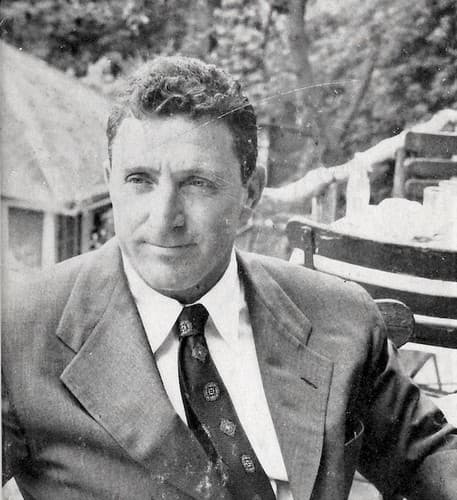
Irwin Shaw was an American author and playwright known for his contributions to 20th-century literature. His notable work, "The Young Lions," explores themes of war and human experience. Shaw's fiction often reflects his insights into society and relationships.
Similar books
- From Here to Eternity
James Jones
4.1 (16k) average on GoodreadsHistorical FictionExplores the lives of American soldiers before and during WWII with deep character studies.
- The Naked and the Dead
Norman Mailer
3.9 (23k) average on GoodreadsHistorical FictionA panoramic view of soldiers' experiences in WWII, focusing on psychological depth and moral ambiguity.
- Catch-22
Joseph Heller
4.0 (723k) average on GoodreadsHistorical FictionOffers a satirical yet profound look at the absurdity and horrors of war, though 'The Young Lions' is more dramatic.
- To Kill a Mockingbird
Harper Lee
4.3 (4.5M) average on GoodreadsHistorical FictionIn the 1930s Jim Crow South, Harper Lee writes about racial injustice, moral growth, and the quiet courage of a lawyer father, Atticus Finch, as seen through his young daughter's eyes.
- The Great Gatsby
F. Scott Fitzgerald
3.9 (3.8M) average on GoodreadsHistorical FictionIn the opulent Roaring Twenties, a mysterious millionaire's lavish parties hide his desperate, tragic pursuit of a lost love, exposing the emptiness within the American Dream.
- Pride and Prejudice
Jane Austen
4.3 (3M) average on GoodreadsHistorical FictionIn a society focused on status and money, Elizabeth Bennet navigates love and pride, challenging Mr. Darcy and social expectations to find true affection.






Enjoyed the summary?
A summary gives you the shape of the book. The book itself has the detail, the examples and the voice.
Find The Young Lions on AmazonAs an Amazon Associate, BookBrief earns from qualifying purchases. How we're funded