
Synopsis
Covers the whole plot, including the ending.
- Difficulty
- Easy
- Pacing
- Slow
- Mood
- Thought-provoking, Whimsical, Educational, Gentle
- Read it if
- You want a charming and thought-provoking children's book that introduces the concept of perspective and empathy.
- Skip it if
- You are looking for a complex narrative or a book with a traditional plot arc.
They All Saw A Cat Plot Summary
Covers the whole plot, including the ending.
The Cat's Appearance
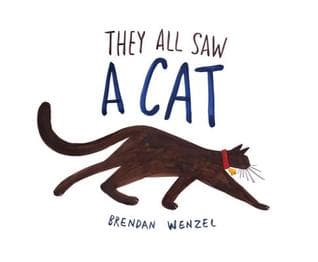
The story starts with a cat, simply described with whiskers, ears, and paws, walking. The story immediately shows the main idea: how different beings see the same cat. The cat is first shown from a child's view, appearing as a typical housecat. This first picture sets a base, showing the cat in a way most readers would know, before moving to the more varied interpretations that follow. This highlights how observation is subjective from the start.
The Child's Perspective
A young child, the first person introduced, sees the cat as a fluffy, four-legged creature with a tail, whiskers, and a curious look. This view uses warm, soft colors and rounded shapes, showing an innocent and loving perception. The child's view is likely the most common and relatable, grounding the reader before the story moves into more unusual views of the same animal. It makes the cat a real thing in a shared world, though one that will soon be seen differently.
The Dog's Perspective
From a dog's view, the cat has sharp angles and a more aggressive stance, appearing as a blur of energy, perhaps a rival or a playmate to chase. The colors are bolder, and the lines are more active, showing the dog's strong senses and natural reaction. The cat's tail is bristling, suggesting it is ready for interaction, whether playful or confrontational. This contrast quickly shows how emotional state and species instincts change perception, turning a simple animal into a complex stimulus.
The Fox's Perspective
A fox's view changes the cat into a small, delicate, and possibly edible creature. The cat is a shadowy outline, blending into its surroundings, showing its weakness in the wild. The colors become more muted and earthy, reflecting the fox's predatory gaze and its focus on survival. This view introduces the food chain and how an animal's role in the ecosystem changes how it is seen, reducing the cat from a pet to just a resource.
The Fish's Perspective
Underwater, a fish sees the cat as a large, distorted, and somewhat threatening shape above the surface. The image is wavy and bent, showing the fish's limited vision and environmental filters. The cat's shape is less clear, appearing as a large shadow. This view shows how physical surroundings and sensory differences greatly alter visual information, turning the familiar cat into an alien and perhaps scary entity from another world.
The Mouse's Perspective
For a mouse, the cat is an enormous, terrifying monster, all sharp teeth and claws, filling its entire vision. The picture is stark and scary, with exaggerated features that show the mouse's deep fear. The cat's eyes appear huge and piercing, and its body looms. This view clearly shows how fear and a big power difference can distort perception, making a common housecat into a symbol of danger and death.
The Bee's Perspective
A bee's compound eyes show the cat as many fragmented images, a series of geometric patterns and colors rather than one form. The cat's fur might look like a textured landscape of hairs. This unique view highlights biological differences in vision and how sensory organs shape perceived reality. It is a very abstract interpretation, showing that even basic visual input can be processed in very different ways.
The Bird's Perspective
From high above, a bird sees the cat as a small, unimportant dot on the ground, a possible threat, but one easily avoided by flying. The view is wide, with the cat appearing as just one part of a large landscape. The colors are muted, and details are minimal, reflecting the bird's distant position. This view shows how spatial relationship and scale influence perception, making the cat a mere speck in a larger world.
The Worm's Perspective
A worm, from deep in the earth, experiences the cat not visually, but through vibrations and perhaps as a blurry, earthy mass if it surfaces briefly. The cat's paw might appear as a huge, textured object. This view shifts from visual to touch and sound, showing that perception is not only about sight. It shows how profoundly different sensory tools lead to entirely different understandings of the same physical thing.
The Cat's Reflection
The cat eventually sees its own reflection in a puddle or window, recognizing itself. This moment shows a clear, realistic image of the cat, like the initial human view. It is a moment of self-awareness for the cat and a return to a common image after seeing many different views. This reflection reminds the reader that despite all the varied interpretations, the cat stays a single, consistent thing.
The Cat's Own View
Finally, the cat sees itself and the world with its own eyes, shown as a curious and watchful creature. The picture shows the cat looking out with interest, embodying its own unique view of its surroundings. This ending view reinforces the idea that every creature, including the cat, has a distinct way of experiencing reality, and that the cat's internal experience is as valid and unique as any external observation.
The Universal Cat
The book ends by repeating that no matter how differently the cat is seen—whether as a cuddly pet, a strong foe, a blurry shape, or many small pieces—it is still the same cat. The final pages show the cat walking away, its form consistent, but leaving the reader to think about the many ways it was just seen. This emphasizes the main message: objective reality exists, but our experience of it is deeply subjective and shaped by who and what we are.
They All Saw A Cat Characters
The Cat
Protagonist
The central figure whose varied perceptions drive the narrative.
The Cat is the singular, consistent entity at the heart of the story. It is a seemingly ordinary feline, with whiskers, ears, and paws, but its significance lies in how it is observed rather than its inherent personality. The Cat walks through the world with an air of simple existence, unaware of the profound differences in how it is seen by other beings. It serves as a blank canvas upon which the themes of perspective and observation are painted, embodying the objective reality that is subjectively interpreted.
Relationships: The Child (Familiar pet); The Dog (Playful rival/threat); The Fox (Potential prey); The Fish (Looming shadow); The Mouse (Terrifying predator); The Bee (Fragmented patterns); The Bird (Distant threat); The Worm (Vibrating mass)
The Child
Observer
The first human observer, seeing a familiar and beloved pet.
The Child represents a common, affectionate human perspective of a cat. Their view is one of warmth, familiarity, and perhaps ownership, seeing the cat as a soft, furry companion. This perspective is a baseline for the reader, grounding the fantastical journey into varied perceptions in a recognizable reality. The Child's perception is innocent and uncomplicated, often reflecting how many young readers might initially see a cat.
Relationships: The Cat (Pet owner/companion)
The Dog
Observer
An animal observer, perceiving the cat as a rival or object of chase.
The Dog's perception is instinctual and driven by typical canine behavior towards felines. It sees the cat as something to be chased, barked at, or perhaps playfully engaged with, but always with an undercurrent of territoriality or rivalry. This perspective introduces the idea that inter-species relationships and inherent instincts heavily influence how one creature perceives another, often transforming a neutral entity into a 'good' or 'bad' one based on its own needs and drives.
Relationships: The Cat (Rival/object of chase)
The Fox
Observer
A wild predator, seeing the cat as potential prey.
The Fox's view introduces the harsh reality of the food chain. For the fox, the cat is not a pet or a playmate, but a small, vulnerable creature that could be a meal. This perspective is stark and primal, stripping away any anthropomorphic qualities and reducing the cat to its biological role as a potential source of sustenance. It highlights how survival instincts dictate perception, turning a familiar image into a purely functional one.
Relationships: The Cat (Potential prey)
The Fish
Observer
An aquatic observer, seeing the cat as a distorted, looming presence.
The Fish's perspective demonstrates how physical environment and sensory limitations profoundly alter visual reality. From underwater, the cat is a blurry, refracted shape, a large and possibly threatening presence from an alien world above. This view emphasizes that our physical location and the medium through which we observe fundamentally shape what we 'see,' even when looking at the same object. It's a highly sensory-driven perception, focusing on the visual distortion.
Relationships: The Cat (Looming, distorted presence)
The Mouse
Observer
A small prey animal, seeing the cat as an enormous, terrifying predator.
The Mouse's perception is one of pure terror. To a mouse, the cat is an overwhelming, giant predator, all sharp edges and menacing features. This viewpoint powerfully illustrates how fear and a significant power imbalance can warp reality, exaggerating threats and making a common creature seem monstrous. It's a highly emotional and instinctual perception, driven by the fight-or-flight response, showcasing the cat at its most intimidating.
Relationships: The Cat (Terrifying predator)
The Bee
Observer
An insect observer, seeing the cat as fragmented patterns and colors.
The Bee's perspective, with its compound eyes, offers a highly abstract and scientific view of the cat. It sees the cat not as a unified form, but as a mosaic of individual pixels, patterns, and colors. This view highlights the biological diversity of vision across species and how different optical structures lead to fundamentally different interpretations of light and form. It's a reminder that 'seeing' is a complex process, not a simple reflection of reality.
Relationships: The Cat (Collection of fragmented visual data)
The Bird
Observer
An aerial observer, seeing the cat as a small, distant ground-level threat.
From its vantage point high in the sky, the Bird sees the cat as a tiny, almost insignificant speck on the ground. While still a potential threat, its small size from a distance renders it less immediately menacing. This perspective emphasizes how scale and spatial relationship influence perception, making a significant creature appear minor when viewed from afar. It illustrates that context is crucial in how we interpret what we see.
Relationships: The Cat (Small, distant ground threat)
The Worm
Observer
A subterranean observer, experiencing the cat primarily through vibrations.
The Worm's perspective is unique because it shifts almost entirely away from visual perception. From underground, the worm experiences the cat through vibrations in the earth, and perhaps as a blurry, immense, earthy mass if it briefly surfaces. This view broadens the definition of 'seeing' to include other sensory inputs, underscoring that our understanding of the world is not solely reliant on sight and that creatures with different senses will construct vastly different realities.
Relationships: The Cat (Source of ground vibrations/blurry mass)
They All Saw A Cat Themes
Perspective and Subjectivity
The main theme is how individual viewpoint shapes what we see. The book shows that the 'same' cat looks very different to various observers (child, dog, mouse, fish, bee, etc.). Each creature's unique biology, environment, and connection to the cat determine how it sees and feels about the cat. For example, the mouse sees a scary monster, while the child sees a cuddly pet. This highlights that there is no single 'objective' way to see the cat, but many subjective realities, all true from their own views.
“The cat walked through the world, with its whiskers, ears, and paws . . . and everyone saw a cat.”
Empathy and Understanding
By showing such different views, the book subtly promotes empathy and a wider understanding of other viewpoints. It asks readers to think about how others might experience the world differently, even when looking at the exact same thing. Seeing the cat through the eyes of a mouse (fear), a dog (playfulness), or a fish (distortion) implicitly asks the reader to step outside their own limited view and imagine another being's sensory and emotional reality. This encourages a sense of wonder about the many ways life is experienced.
“And the cat saw a cat.”
Observation and Curiosity
The book itself is an act of observation, carefully detailing how different beings see. It celebrates curiosity by prompting readers to look closer and consider the 'how' and 'why' behind these varied views. Each picture is a visual experiment in perception, encouraging both children and adults to observe their surroundings with more attention and to question their first ideas. The simple act of the cat walking becomes a deep study in how we interact with and interpret the world around us.
“What do you see?”
The Nature of Reality
While stressing subjectivity, the book also touches on the existence of an underlying objective reality. Despite all the different views, it is always 'the cat.' This dual idea—that something can exist objectively but be experienced subjectively—is a deep concept for a children's book. It suggests that while our individual experiences are unique and valid, they are all interpretations of a shared, real world. The cat's final self-reflection supports this: it is one entity, no matter how others see it.
“And they all saw a cat.”
Plot Devices & Literary Techniques
Shifting Visual Styles
Each observer's perception is depicted with a unique artistic style.
This is the primary device. For each observer (child, dog, mouse, fish, etc.), the illustration of the cat changes dramatically in color palette, line quality, texture, and overall artistic rendering. For instance, the mouse's cat is sharp and monstrous, while the fish's cat is blurry and distorted. This visual metamorphosis is crucial for conveying the theme of subjective perception without explicit verbal explanation, allowing the reader to 'see' the world through different eyes.
Repetitive Phrase
The phrase 'And [observer] saw a cat' anchors each new perspective.
The consistent use of the phrase 'And the [observer] saw a cat' (or similar variations) acts as a structural anchor, clearly delineating each shift in perspective. This repetition creates a rhythmic, almost meditative quality to the narrative, while also emphasizing the central point: despite wildly different visual interpretations, the underlying object (the cat) remains constant. It reinforces the idea that all these varied views are still of 'a cat,' linking the subjective back to the objective.
Limited Text
Minimal narration allows the illustrations to convey the story.
The book employs very sparse text, relying heavily on its powerful illustrations to tell the story. The limited words guide the reader, but the visual changes are what communicate the profound differences in perception. This minimalist approach encourages visual literacy and active engagement from the reader, who must interpret the meaning conveyed through color, shape, and form. It makes the book accessible across ages and languages, prioritizing universal visual storytelling.
Circular Narrative
The story begins and ends with a relatively objective view of the cat.
The narrative structure is somewhat circular, starting with a conventional depiction of the cat (from a child's perspective) and ending with the cat seeing itself, and then simply walking on. This framing device suggests that while there are countless ways to perceive something, there is also a consistent, underlying reality. It provides a sense of completeness and reinforces the idea that the cat exists independently of its observers, even as its perceived form constantly shifts.
They All Saw A Cat Quotes
“The cat walked through the world, with its whiskers, ears, and paws.”
“And the child saw a cat, and the child thought, 'A cat!'”
“The dog saw a cat, and the dog thought, 'A chew toy! A chase! A friend!'”
“The fox saw a cat, and the fox thought, 'A tasty treat!'”
“The fish saw a cat, and the fish thought, 'A big, scary monster!'”
“The mouse saw a cat, and the mouse thought, 'A giant, terrifying beast!'”
“The bee saw a cat, and the bee thought, 'A blurry flower!'”
“The bird saw a cat, and the bird thought, 'A perfect perch!'”
“The worm saw a cat, and the worm thought, 'A rumbling mountain!'”
“The bat saw a cat, and the bat thought, 'A squeaky sound!'”
“The world was full of cats, and they all saw a different one.”
“Even the cat saw itself, and the cat thought, 'A cat!'”
“Each creature, with its own eyes and its own mind, saw a different cat.”
“And though they all saw a different cat, they all saw a cat.”
Quiz
10 questions on the plot and the characters. Each answer comes with a short explanation.
Question 1
How does the child initially perceive the cat?
- As a furry friend with a soft purr.
- As a tiny, skittish creature.
- As a mysterious hunter with sharp eyes.
- As a blurred shape moving quickly.
Show answer
A. As a furry friend with a soft purr. The book opens with the child seeing the cat as a 'furry friend, soft and warm,' emphasizing a typical, affectionate view.
Question 2
Which animal sees the cat as 'a wobbly, furry clump'?
- The fox
- The fish
- The bee
- The bird
Show answer
C. The bee The bee, due to its compound eyes and close proximity, perceives the cat as a 'wobbly, furry clump' of colors and shapes.
Question 3
What is the primary theme explored through the various perspectives of the cat?
- The importance of owning pets.
- The diversity of animal species.
- How perspective shapes what we see and understand.
- The life cycle of a house cat.
Show answer
C. How perspective shapes what we see and understand. The book explicitly states and demonstrates that 'perspective shapes what we see,' which is the central theme.
Question 4
How does the cat appear to the worm?
- As a giant, vibrating shadow.
- As a warm, soft mound.
- As a colorful blur passing by.
- As a distant, unthreatening shape.
Show answer
A. As a giant, vibrating shadow. From the worm's underground perspective, the cat is seen as a 'giant, vibrating shadow' above.
Question 5
What common characteristic is emphasized in the cat's initial description, regardless of who sees it?
- Its hunting prowess.
- Its whiskers, ears, and paws.
- Its meow.
- Its tail.
Show answer
B. Its whiskers, ears, and paws. The repetitive phrase 'The cat walked through the world, with its whiskers, ears, and paws...' highlights these consistent physical features.
Question 6
The book suggests that seeing the cat in many ways helps the reader to:
- Understand feline biology better.
- Develop empathy and a broader understanding of the world.
- Learn about different types of animals.
- Improve their drawing skills.
Show answer
B. Develop empathy and a broader understanding of the world. By showing diverse perspectives, the book encourages empathy and a broader understanding that different beings experience the same reality in unique ways.
Question 7
Which of the following creatures sees the cat primarily through sound, as 'a jingle of bells'?
- The bat
- The mouse
- The dog
- The owl
Show answer
C. The dog The dog sees the cat as 'a jingle of bells,' focusing on the sound of a collar rather than visual appearance, implying a different sensory interaction.
Question 8
How does the cat's appearance change when viewed by the fish, illustrating a specific environmental distortion?
- It becomes a shadowy outline on the bank.
- It appears distorted and wavy through the water's surface.
- It is seen as a large, dark predator from below.
- It is merely a reflection on the water.
Show answer
B. It appears distorted and wavy through the water's surface. The fish's view through the water's surface shows the cat 'wobbly and blurred,' demonstrating how the medium (water) distorts perception.
Question 9
The book concludes by asking the reader, 'When you see a cat, what do you see?' This question primarily serves to:
- Encourage observation and personal reflection on perspective.
- Test the reader's memory of the different views presented.
- Suggest that the reader should get a cat.
- Prompt a discussion about cat breeds.
Show answer
A. Encourage observation and personal reflection on perspective. The concluding question directly invites the reader to apply the book's central theme of perspective to their own experience, fostering curiosity and imagination.
Question 10
Which character's perspective of the cat is depicted as a series of abstract, colorful dots and lines, suggesting a very different visual spectrum?
- The bird
- The bee
- The flea
- The snake
Show answer
B. The bee The bee's compound eyes are illustrated with a fragmented, abstract view of the cat, depicted as many small, colorful, wobbly shapes, reflecting its unique vision.
They All Saw A Cat FAQ
What is the central premise of 'They All Saw A Cat'?
The book explores how different living creatures perceive the same cat based on their unique perspectives, senses, and experiences. It illustrates that what one 'sees' is heavily influenced by who is doing the seeing, using the cat as a constant subject viewed through varied lenses.
Which creatures are shown observing the cat in the book?
The cat is observed by a child, a dog, a fox, a fish, a mouse, a bee, a bird, a flea, a worm, a bat, a skunk, and an owl. Each creature's depiction of the cat reflects its own sensory world, from the dog's blurry vision to the bee's compound eyes.
How does the author visually represent the different perspectives?
Brendan Wenzel uses distinct artistic styles and media for each creature's view. For instance, the child's cat is colorful and familiar, the dog's is blurry and energetic, the fish's is distorted through water, and the bat's is an echolocation-based outline.
What is the ultimate message conveyed by the book's ending?
The ending emphasizes that despite individual differences in perception, the cat remains a singular, unified entity, walking through the world. It suggests a harmony in diversity, where many unique views contribute to a more complete, shared understanding of reality.
How does the cat's physical appearance change throughout the book, and what does this signify?
The cat's physical appearance changes dramatically with each observer, from a fluffy pet to a collection of lines or even a thermal image. This signifies that 'truth' or 'reality' is not always objective but is filtered through the subjective lens of the observer, highlighting the power of individual perspective.
Are there any subtle visual cues about the creatures' own environments or senses in their depiction of the cat?
Yes, for example, the fish's view of the cat is rippled and watery, reflecting its aquatic environment. The mouse's view emphasizes the cat's large, predatory eyes and paws, highlighting the mouse's vulnerability and heightened sense of danger.
What is the significance of the cat's consistent 'walk' described throughout the book?
The cat's continuous walk, 'with its whiskers, ears, and paws,' serves as a narrative anchor, a constant action around which all the varied perceptions revolve. It grounds the abstract concept of perspective in a concrete, relatable movement, emphasizing the cat's independent existence.
How does the book subtly introduce scientific concepts like echolocation or compound eyes?
Without explicitly naming them, the book visually represents these concepts. The bat's view shows the cat as sound waves, illustrating echolocation, while the bee's perspective depicts the cat in a fractured, kaleidoscopic manner, reflecting its compound eyes.
How does the book encourage empathy in young readers?
By showing how different creatures perceive the same object, the book implicitly teaches children that others may see the world differently from them. This fosters empathy by encouraging them to consider other viewpoints and understand that their own perspective is not the only one.
What psychological effect does the repeated phrase 'They All Saw A Cat' have on the reader?
The repetition reinforces the central theme while simultaneously creating a sense of shared experience, despite the visual differences. It subtly emphasizes that even with diverse perceptions, there is a common object and a shared reality, creating a unifying psychological anchor.
How does the book tap into the psychological concept of 'selective attention'?
Each creature's depiction of the cat highlights aspects most relevant to its survival or experience, demonstrating selective attention. For instance, the mouse focuses on the cat's predatory features, while the child sees a playful pet, illustrating how attention filters reality.
Does the book suggest that any one perception is more 'correct' than another?
No, the book deliberately avoids validating one perception over another. By presenting each view with equal artistic conviction, it champions the idea that all perspectives are valid and contribute to a richer, more complete understanding, rather than identifying a single 'correct' way of seeing.
Could the book be interpreted as a metaphor for human communication and understanding?
Absolutely. The varying perceptions of the cat can be seen as a metaphor for how humans interpret situations, ideas, or even other people differently based on their backgrounds, biases, and experiences. It highlights the challenges and richness of diverse human perspectives.
What is the significance of the 'cat' itself being a common, relatable animal?
Using a cat, an animal familiar to most children, makes the abstract concept of perspective more accessible and concrete. Its ubiquity allows readers to easily project their own understanding and experiences onto the subject, making the lesson more personal and impactful.
How does the book challenge traditional notions of 'reality' for young readers?
It introduces the idea that reality is not fixed or singular but can be fluid and multifaceted depending on the observer. This challenges the simplistic notion that there's only one way to see things, encouraging critical thinking about perception from an early age.
What role does imagination play in the book's message?
Imagination is central, both in how the creatures 'imagine' or perceive the cat through their unique senses, and in how the reader is encouraged to imagine what it might be like to see through those different eyes. It celebrates the creative act of interpreting the world.
Why does the book end with the cat walking towards the horizon, seemingly alone?
The ending reinforces the cat's independent existence and its journey through the world, transcending individual perceptions. It suggests that while the cat is seen in many ways, it continues to be its singular self, moving forward regardless of how it is viewed by others.
Similar books
- The Dot
Peter Reynolds
4.3 (35k) average on GoodreadsEncourages imagination and the idea that art can be anything.
- I Want My Hat Back
Jon Klassen
4.4 (26k) average on GoodreadsFantasyKlassen's book subtly explores differing accounts and unreliable narration through dialogue and implicit understanding. Wenzel's book, in contrast, offers a much more explicit and visually diverse demonstration of how the same thing is seen differently by various observers, making its lesson on perspective more direct and less inferential for young children.
- Harry Potter and the Sorcerer's Stone
J.K. Rowling
4.5 (7M) average on GoodreadsFantasyRescued from a miserable life under the stairs, an orphaned boy discovers he's a wizard destined for a magical school, where he uncovers a dangerous secret tied to the dark wizard who murdered his parents.
- The Hobbit, or There and Back Again
J.R.R. Tolkien
4.3 (2.9M) average on GoodreadsFantasyA comfort-loving hobbit named Bilbo Baggins is whisked away by a mischievous wizard and a band of dwarves on an unexpected journey to reclaim stolen treasure from a fearsome dragon, discovering courage and a magical ring along the way.
- Harry Potter and the Goblet of Fire
J.K. Rowling
4.6 (2.6M) average on GoodreadsFantasyA bewildered Harry Potter, underage and thrust into a deadly Triwizard Tournament, must brave dragons, mermaids, and a resurgent dark magic to survive a year that will forever alter the wizarding world.
- Harry Potter and the Order of the Phoenix
J.K. Rowling
4.5 (2.5M) average on GoodreadsFantasyIn a year of oppressive secrets and the threat of Voldemort, Harry Potter and Dumbledore's Army secretly train for war, shown through Jim Kay and Neil Packer's dark illustrations.




Enjoyed the summary?
A summary gives you the shape of the book. The book itself has the detail, the examples and the voice.
Find They All Saw A Cat on AmazonAs an Amazon Associate, BookBrief earns from qualifying purchases. How we're funded