

Synopsis
Covers the whole plot, including the ending.
- Difficulty
- Easy
- Pacing
- Moderate
- Mood
- Heartwarming, Humorous, Romantic, Suspenseful
- Read it if
- You love small-town romance with a grumpy hero, a plucky heroine, an adorable child, and a touch of suspense.
- Skip it if
- You dislike explicit romance, significant plot drama, or stories with a large cast of quirky secondary characters.
Things We Never Got Over Plot Summary
Covers the whole plot, including the ending.
The Runaway Bride Arrives
Naomi Witt, a runaway bride, arrives in the small town of Knockemout, Virginia, after a call from her estranged identical twin sister, Tina. Naomi expects to help Tina, but Tina instead steals Naomi's car and money, leaving her stranded. Tina also abandons her 11-year-old daughter, Waylay, with Naomi, a child Naomi never knew existed. Penniless, Naomi is in a difficult situation, with no car, no job, and no place to stay, now responsible for her smart niece. She soon realizes Tina's call was a trick, leaving her in a bind in an unfamiliar town.
Knox's Unwilling Intervention
Knox Morgan, a gruff, solitary barber who dislikes drama and commitment, is immediately drawn into Naomi's chaos. He first sees her trying to understand the town's social rules, which she struggles with due to her sheltered life. Despite his initial reluctance and desire for peace, Knox repeatedly helps Naomi out of various problems, from finding her a temporary place to stay in his guesthouse to offering her a job at his barber shop. He is annoyed by her constant need for help but feels compelled to protect her and Waylay.
Building a New Life
With Knox's reluctant help, Naomi begins to build a new life in Knockemout. She starts working at Knox's barbershop, learning the trade, and slowly earning the respect of the townspeople, who initially distrusted her because of Tina. Waylay, a child wise beyond her years, quickly fits into the community, forming bonds with other children and adults, including Knox. Naomi shows her resourcefulness and determination, facing challenges directly and showing a strength she didn't know she had. Her presence starts to break down Knox's carefully built walls of solitude.
Tina's Shadow and Waylay's Past
Even as Naomi settles in, Tina's past causes problems. Tina's past debts and dangerous friends begin to affect Naomi and Waylay. The mystery of Waylay's father also comes to light, revealing a complex and potentially dangerous history. Waylay, though resilient, carries the emotional scars of Tina's neglect. Naomi becomes fiercely protective of Waylay, determined to give her the stable home she deserves. This commitment deepens Naomi's resolve to stay in Knockemout and fight for their future, even as dangers grow.
Developing Feelings
Despite Knox's initial resistance to romance, his interactions with Naomi and Waylay begin to break down his defenses. He sees Naomi's kindness, resilience, and love for Waylay, and feels increasingly attracted to her. Naomi, in turn, sees past Knox's gruff exterior to the caring, protective man underneath. Their shared experiences and strong chemistry lead to a slow-burn romance. Knox, who swore off relationships after past heartbreak, finds himself falling for Naomi, a woman who brings all the 'complications' he claims to avoid.
The Threat Intensifies
Tina's past catches up with her, and by extension, with Naomi and Waylay. Dangerous individuals, to whom Tina owes money, begin to harass and threaten Naomi, demanding to know Tina's whereabouts. The threats grow from warnings to physical intimidation, putting Waylay in direct danger. Knox, fiercely protective of Naomi and Waylay, steps up to shield them. He uses his influence and connections in town, including his brother Nash, the police chief, to investigate and stop the threats. This period strengthens his commitment to their safety, further blurring the lines of their professional relationship.
Confronting the Past
Naomi finally confronts Tina, who reappears briefly, only to prove herself as unreliable and manipulative as ever. This encounter forces Naomi to accept that Tina will not change and that she cannot rely on her sister. It also reveals the extent of Tina's involvement with dangerous people, making it clear that Naomi and Waylay are truly on their own. This realization, while painful, strengthens Naomi's resolve to create a stable life for Waylay, separate from Tina's chaos. It also strengthens her bond with Knox, who remains a steady support.
The Climax and Resolution
The threats against Naomi and Waylay climax in a dangerous confrontation when Tina's creditors directly target them. Naomi, with Knox's unwavering support, bravely faces these criminals. The town of Knockemout, especially Knox, Nash, and other friends, rallies around them, showing strong community bonds. The situation is resolved through a mix of wit, bravery, and the help of the town's protective figures. Tina's dangerous past is finally dealt with, ensuring she cannot further endanger Naomi and Waylay. This event solidifies Naomi's place in Knockemout and her relationship with Knox.
A Family Formed
With Tina's threats gone, Naomi and Waylay can finally settle into their new lives in Knockemout without fear. Naomi fully accepts her role as Waylay's guardian and begins to build a life around her. Knox, having overcome his fear of commitment and loneliness, fully commits to Naomi and Waylay, becoming a loving partner and a father figure. Their unconventional family thrives, finding happiness and stability in the quirky town. Naomi has found a home, a purpose, and a love she never expected, while Knox has found the family he secretly wanted.
Embracing the Future
Life in Knockemout settles into a comfortable rhythm for Naomi, Knox, and Waylay. Naomi continues to build her business and her reputation in town, becoming a beloved member of the community. Knox, while still gruff, openly embraces his role as part of their family, finding joy and contentment in their shared life. Their love story, formed amidst chaos and danger, is resilient and lasting. The novel ends with them looking forward to their future together, having found love, family, and a true home in Knockemout, proving that sometimes the best things are found when you least expect them.
Things We Never Got Over Characters
Naomi Witt
Protagonist
A runaway bride who finds herself responsible for her niece in a strange town.
Naomi is initially portrayed as a somewhat naive, people-pleasing individual, accustomed to being overshadowed by her twin sister, Tina. She is kind, empathetic, and possesses a hidden strength and resilience that emerges when she is forced to care for Waylay. Despite her initial helplessness, she is resourceful, determined, and fiercely protective of her niece. Her journey transforms her from a woman running from her past into one who actively builds her future and finds her voice.
Relationships: Knox Morgan (Love interest, protector, eventual partner); Waylay (Niece, adopted daughter, primary responsibility); Tina Witt (Estranged identical twin sister, source of initial conflict); Nash Morgan (Friend, brother of Knox, police chief)
Knox Morgan
Protagonist
A gruff, solitary barber who reluctantly becomes involved in Naomi's life.
Knox is a quintessential 'bad boy' with a heart of gold, hidden beneath layers of cynicism and a carefully cultivated loner persona. He's fiercely loyal to his family and community, despite his claims of wanting to be left alone. A past heartbreak has made him wary of relationships and drama, leading him to prefer a solitary life with his basset hound, Waylon. He is protective, intelligent, and surprisingly tender when his walls come down, especially with Naomi and Waylay.
Relationships: Naomi Witt (Love interest, eventual partner); Waylay (Niece of Naomi, becomes a surrogate daughter figure); Nash Morgan (Brother, police chief, close confidant); Waylon (Beloved basset hound)
Waylay
Supporting
Naomi's precocious and resilient 11-year-old niece.
Waylay is an incredibly intelligent, observant, and wise-beyond-her-years child who has been forced to mature quickly due to her mother Tina's neglect. She has a sharp wit and a deep understanding of adult behavior, often acting as a grounding force for Naomi. Despite her tough exterior, she craves stability and love. She quickly forms a strong bond with Naomi and Knox, seeing them as the stable family she has always longed for. Her resilience and adaptability are key to her survival.
Relationships: Naomi Witt (Aunt, primary caregiver, surrogate mother); Knox Morgan (Surrogate father figure); Tina Witt (Biological mother, neglectful)
Tina Witt
Antagonist
Naomi's manipulative and irresponsible identical twin sister.
Tina is the catalyst for much of the novel's conflict, a character defined by her selfishness, impulsivity, and chronic irresponsibility. She manipulates those around her, especially Naomi, to serve her own needs, often leaving a trail of chaos and debt. She is neglectful of Waylay and shows little remorse for her actions. Her dangerous associations and inability to change make her a constant threat, driving much of the plot's tension. She represents the difficult past Naomi must overcome.
Relationships: Naomi Witt (Identical twin sister, victim of Tina's manipulation); Waylay (Biological daughter, neglected); Knox Morgan (Antagonistic relationship due to her harm to Naomi and Waylay)
Nash Morgan
Supporting
Knox's older brother and the police chief of Knockemout.
Nash is the steady, responsible foil to Knox's gruffness. As the police chief, he is dedicated to his community and fiercely protective of his family. He is a moral compass and a voice of reason, often mediating between Knox and others. He is kind, supportive, and immediately takes a liking to Naomi and Waylay, offering them help and friendship. His position as chief is crucial in navigating the escalating threats from Tina's past.
Relationships: Knox Morgan (Brother, close confidant); Naomi Witt (Friend, ally); Lina (Love interest)
Lina
Supporting
Naomi's first friend in Knockemout and a local business owner.
Lina is a vibrant, no-nonsense woman who owns the local coffee shop. She is one of the first people in Knockemout to genuinely befriend Naomi, offering her support, advice, and a sense of belonging. She is fiercely loyal, perceptive, and has a great sense of humor. Lina acts as a confidante for Naomi and helps her navigate the social dynamics of the small town, becoming an important part of her new support system.
Relationships: Naomi Witt (Close friend); Nash Morgan (Love interest); Waylay (Friendly with)
Waylon
Supporting
Knox's beloved basset hound.
Waylon is Knox's loyal and constant companion, often serving as a comedic relief and a physical representation of Knox's softer side. He's a big, lazy basset hound who adores Knox and quickly takes to Naomi and Waylay. His presence highlights Knox's capacity for love and care, even before he fully opens up to human relationships. Waylon is a silent observer but a significant emotional anchor for Knox, symbolizing the comfort and routine Knox initially prefers.
Relationships: Knox Morgan (Owner, best friend); Naomi Witt (Affectionate towards); Waylay (Affectionate towards)
Duke
Supporting
A respected elder in Knockemout and a friend to Knox.
Duke is a wise and respected older member of the Knockemout community. He often provides sage advice and a calm presence amidst the town's occasional chaos. He has a long-standing friendship with Knox and his family, serving as a mentor figure to Knox. Duke's presence emphasizes the strong community ties in Knockemout and offers Naomi another source of support and acceptance as she integrates into the town.
Relationships: Knox Morgan (Friend, mentor); Naomi Witt (Supportive towards); Nash Morgan (Friend)
Things We Never Got Over Themes
Found Family and Community
The novel focuses on the idea that family goes beyond blood, showing the power of chosen relationships and a supportive community. Naomi, initially alone, finds a true home and family in Knockemout with Knox and Waylay, and with townspeople like Lina, Nash, and Duke. The community supports Naomi and Waylay in crises, showing loyalty and protection. This theme is clear when the townspeople unite to shield Naomi from Tina's dangerous past, proving that strong bonds can form through shared experiences and care, not just blood. It shows that love and belonging can be found in unexpected places.
“Family isn’t just blood. It’s the people who show up for you, over and over again, even when you make it hard.”
Overcoming Past Trauma and Fear of Vulnerability
Both Naomi and Knox carry significant past traumas that have shaped their lives. Naomi's trauma comes from a lifetime of being manipulated by her twin, leading to a lack of self-worth and a tendency to please others. Knox's past heartbreak has made him fiercely protective of his solitude and resistant to commitment or emotional vulnerability. The story explores their individual journeys in facing these fears. Naomi learns to assert herself and prioritize Waylay's well-being over her sister's demands, while Knox slowly allows himself to open up to love and the possibility of a family, showing that healing and growth are possible with vulnerability.
“Sometimes the things we think we can’t get over are exactly what we need to find our way home.”
The Power of Self-Discovery and Resilience
Naomi's journey is one of self-discovery. Arriving in Knockemout as a seemingly helpless 'runaway bride,' she must confront her deepest fears. Her responsibility for Waylay sparks a fierce resilience and determination she didn't know she had. She learns new skills, stands up for herself, and builds a life from scratch, proving her abilities and strength. This theme highlights her change from a passive person in her own life to an active, empowered woman who shapes her destiny, showing that adversity can reveal hidden strengths and lead to personal growth.
“She was a runaway bride, but she was also a warrior in training. She just didn’t know it yet.”
Judging a Book by Its Cover (and Small Town Life)
The novel explores initial judgments people make and how perceptions can change. Naomi first sees Knockemout as a rough, unwelcoming place, and many townspeople are wary of her because of Tina. Similarly, Knox's gruff exterior and 'bad boy' reputation hide a deeply caring and protective man. The story gradually peels back these layers, revealing the warmth, loyalty, and connection beneath the surface of both the characters and the town. It challenges assumptions about small-town life, showing that while it can be quirky and gossipy, it also offers strong support and community spirit, proving that true character lies beneath initial appearances.
“Knockemout might be rough around the edges, but its heart was pure gold.”
Plot Devices & Literary Techniques
The 'Runaway Bride' Trope
A classic romance trope used to introduce the protagonist to a new setting and life.
This device immediately establishes Naomi's desperate situation and her desire to escape her previous life. It serves as a stark contrast to the stability she eventually finds. By having her literally run away from a wedding, the story sets her up as someone seeking a different path, even if she doesn't know what that is yet. It also creates immediate intrigue and explains why she's a stranger in Knockemout, forcing her into an entirely new environment where she must forge a new identity and support system.
The 'Grumpy/Sunshine' Dynamic
The contrast between a gruff, solitary hero and an optimistic, initially naive heroine.
This classic romance dynamic is central to Knox and Naomi's relationship. Knox embodies the 'grumpy' archetype, preferring solitude and avoiding emotional entanglement, while Naomi is the 'sunshine,' initially more open and optimistic despite her circumstances. Their contrasting personalities create natural tension, humorous banter, and a compelling slow-burn romance. Naomi's warmth and resilience slowly chip away at Knox's cynicism, while his protective nature provides the stability she desperately needs, leading to mutual growth and a balanced partnership.
The Abandoned Child
A plot device used to immediately establish the protagonist's responsibility and foster a found family.
Tina abandoning Waylay with Naomi is the primary catalyst for Naomi's rapid transformation and her deep connection to Knockemout. It instantly gives Naomi a profound sense of purpose and responsibility, forcing her to shed her people-pleasing tendencies and become a fierce protector. This device quickly forms the core 'found family' unit of Naomi, Waylay, and eventually Knox, driving the emotional heart of the story and providing a strong motivation for Naomi to fight for a stable life in the town.
Small Town Setting
A close-knit community that provides both challenges and unwavering support.
The fictional town of Knockemout, Virginia, functions as more than just a backdrop; it's a character itself. Its small size means everyone knows everyone else's business, which initially creates challenges for Naomi, especially with Tina's reputation. However, the close-knit nature also fosters a strong sense of community and loyalty. When Naomi and Waylay are in danger, the townspeople, led by figures like Nash and Lina, rally around them, providing protection, friendship, and a sense of belonging. The setting emphasizes the theme of found family and the strength of community bonds.
Things We Never Got Over Quotes
“Every time I think I have things figured out, life throws another curveball. And it’s usually a big, hairy, smelly one.”
“Sometimes the people we’re meant to be with are the ones who come into our lives and turn everything upside down.”
“Being a hero isn't about being fearless. It's about being scared to death and doing what needs to be done anyway.”
“You can’t outrun your past, no matter how fast you go or how far you travel. Eventually, it catches up.”
“Love isn't always pretty. Sometimes it's messy and complicated and makes you want to pull your hair out. But it's still love.”
“Some secrets are better left buried. Others need to be dug up, no matter how much they stink.”
“Family isn't just about blood. It's about who shows up when you need them most.”
“You don't have to be perfect to be loved. You just have to be real.”
“Sometimes the most beautiful things grow out of the messiest situations.”
“It’s hard to save someone who doesn’t want to be saved, but it’s even harder to watch them drown.”
“Being strong doesn't mean you don't cry. It means you cry, and then you get back up and keep fighting.”
“There’s a difference between being alone and being lonely. Sometimes being alone is exactly what you need.”
“The greatest adventures often begin with a terrible decision.”
“You can't fix everything, but you can try to make things a little less broken.”
Quiz
10 questions on the plot and the characters. Each answer comes with a short explanation.
Question 1
Why does Naomi initially come to Knockemout, Virginia?
- To start a new life after leaving her fiancé at the altar.
- To rescue her estranged twin sister, Tina.
- To accept a new job opportunity in a small town.
- To escape a dangerous situation in her previous city.
Show answer
B. To rescue her estranged twin sister, Tina. Naomi was riding to the rescue of her estranged twin, Tina, who was in Knockemout.
Question 2
What unexpected responsibility does Tina leave Naomi with?
- A large sum of money and a new car.
- Her pet dog, which Naomi must now care for.
- An 11-year-old niece Naomi didn't know she had.
- The deed to a dilapidated house in Knockemout.
Show answer
C. An 11-year-old niece Naomi didn't know she had. After taking Naomi's car and cash, Tina leaves her with 'The niece Naomi didn't know she had.'
Question 3
What is the name of Knox's basset hound?
- Winston
- Waylon
- Walter
- Wallace
Show answer
B. Waylon The description states that Knox lives alone 'Unless you count his basset hound, Waylon.'
Question 4
What is Knox's general attitude towards 'drama' and 'complications' before Naomi arrives?
- He actively seeks them out to break the monotony of his life.
- He tolerates them if they involve his friends or family.
- He prefers to avoid them and live a peaceful, solitary life.
- He enjoys solving other people's problems as a hobby.
Show answer
C. He prefers to avoid them and live a peaceful, solitary life. Knox 'doesn't tolerate drama' and 'doesn't do complications or high-maintenance women,' preferring his peaceful, solitary life.
Question 5
How does the synopsis describe the way disputes are typically settled in Knockemout, Virginia?
- Through town hall meetings and democratic votes.
- With legal action and court proceedings.
- With fists and beer, usually in that order.
- Through quiet discussions and mutual understanding.
Show answer
C. With fists and beer, usually in that order. Knockemout is described as 'a rough-around-the-edges town where disputes are settled the old-fashioned way...with fists and beer. Usually in that order.'
Question 6
What is the primary reason Knox initially decides to help Naomi, despite his preference for solitude?
- He is secretly attracted to her from the moment they meet.
- He feels a sense of duty because her life imploded right in front of him.
- He is pressured by his friends in town to offer assistance.
- He wants to prove to himself that he can handle complications.
Show answer
B. He feels a sense of duty because her life imploded right in front of him. The text states, 'But since Naomi's life imploded right in front of him, the least he can do is help her out of her jam.'
Question 7
What does Naomi find herself stuck with after Tina's departure, besides her niece?
- A new job, a new car, and a new home.
- No car, no job, no plan, and no home.
- A significant debt and a legal summons.
- A temporary apartment and a loan from Knox.
Show answer
B. No car, no job, no plan, and no home. The synopsis states she's stuck in town 'with no car, no job, no plan, and no home with an 11-year-old going on thirty to take care of.'
Question 8
What is the ultimate turning point that makes Knox's plan to leave Naomi alone difficult?
- He realizes he has fallen deeply in love with her.
- Naomi gets a high-paying job and no longer needs his help.
- The 'trouble' Naomi experiences escalates into 'real danger'.
- His basset hound, Waylon, becomes unusually attached to Naomi.
Show answer
C. The 'trouble' Naomi experiences escalates into 'real danger'. Knox's plan is to help her and then leave her alone, but 'At least, that's the plan until the trouble turns to real danger.'
Question 9
How does Knox take his coffee, and what does this detail reveal about his character?
- With cream and sugar, indicating a hidden softness.
- Black and strong, reflecting his preference for solitude and simplicity.
- As a fancy latte, suggesting a sophisticated side.
- Decaffeinated, showing his desire to avoid any excitement.
Show answer
B. Black and strong, reflecting his preference for solitude and simplicity. The text states, 'Knox prefers to live his life the way he takes his coffee: Alone.' This implies black coffee, mirroring his solitary nature.
Question 10
What specific characteristic is used to describe Knox's appearance in the initial description?
- Clean-shaven and well-dressed.
- Bearded and a bad-boy barber.
- Muscular and tattooed.
- Glasses and a stern expression.
Show answer
B. Bearded and a bad-boy barber. The description immediately introduces him as 'Bearded, bad-boy barber Knox'.
Things We Never Got Over FAQ
What brings Naomi to Knockemout, Virginia, and what immediate challenge does she face upon arrival?
Naomi arrives in Knockemout to rescue her estranged twin sister, Tina, from a bad situation. However, Tina quickly betrays Naomi, stealing her car and cash, and abandoning her with an 11-year-old niece, Waylay, whom Naomi didn't know existed, leaving her stranded and penniless.
Who is Knox Morgan and how does he initially react to Naomi's presence in Knockemout?
Knox Morgan is a solitary, gruff barber in Knockemout who prefers his life uncomplicated, with only his basset hound, Waylon, for company. He initially views Naomi as a 'runaway bride' and a source of unnecessary drama, determined to keep his distance and avoid getting entangled in her problems.
What is the central conflict or 'trouble' that escalates beyond Naomi's initial financial woes?
The central conflict escalates when Tina's past actions and current entanglements with dangerous individuals, specifically the criminal activities of her boyfriend, eventually put Naomi and Waylay in real physical danger. This forces Knox to step in more actively to protect them, moving beyond simple assistance.
How does Waylay, Naomi's niece, impact the lives of both Naomi and Knox?
Waylay, despite her young age, is exceptionally mature and perceptive, acting as a catalyst for growth in both Naomi and Knox. For Naomi, Waylay provides a purpose and forces her to take responsibility, while for Knox, Waylay's vulnerability and innocence chip away at his hardened exterior, making him rethink his solitary existence.
What significant role does the town of Knockemout itself play in the story?
Knockemout, with its 'rough-around-the-edges' charm and tight-knit community, acts as more than just a setting; it becomes a character in itself. Its residents, including Nash and Lucian, offer both challenges and unexpected support, ultimately providing Naomi and Waylay with a sense of belonging and a safe haven they lacked.
What is the significance of Waylon, Knox's basset hound, beyond being a pet?
Waylon serves as a symbol of Knox's carefully constructed solitary life and his hidden softer side. He's Knox's only trusted companion before Naomi and Waylay arrive, and his acceptance of Naomi and Waylay subtly indicates Knox's own growing affection and willingness to let them into his world.
Are there any subtle hints about Knox's past that explain his aversion to 'complications' before they are explicitly revealed?
Early in the story, Knox's extreme reluctance to engage with Naomi's problems and his insistence on boundaries hint at a past trauma or betrayal that made him wary of emotional attachments. His cynicism about relationships and preference for solitude are strong indicators of deeper unresolved issues.
How does the 'old-fashioned' way disputes are settled in Knockemout foreshadow later events?
The description of Knockemout's 'old-fashioned' dispute resolution, often involving 'fists and beer,' foreshadows the physical confrontations and dangerous situations that arise due to Tina's criminal connections. It establishes a setting where violence is a real and present threat, preparing the reader for the escalating danger Naomi faces.
What is the underlying psychological reason for Knox's initial resistance to helping Naomi, despite his obvious attraction?
Knox's resistance stems from a deep-seated fear of vulnerability and a past heartbreak that made him believe emotional involvement only leads to pain and complications. He's built a protective wall around himself, equating 'drama' with the potential for personal devastation, making him hesitant to open up to Naomi.
How does Naomi's experience with Tina reflect a deeper psychological pattern in her life?
Naomi's repeated attempts to 'rescue' Tina, even after severe betrayals, suggests a pattern of codependency or a desperate need to fix her sister, perhaps stemming from childhood dynamics. This reflects a psychological need for validation or a misplaced sense of responsibility for Tina's actions, which she must overcome.
What psychological journey does Knox undergo regarding his perception of 'complications' and 'high-maintenance women'?
Knox initially labels Naomi as a 'high-maintenance woman' because of the chaos surrounding her, fitting into his avoidance patterns. However, as he witnesses her resilience and genuine character, he gradually realizes that not all 'complications' are negative, and that true connection, though messy, can bring profound fulfillment and happiness.
How does the trauma of Tina's actions affect Waylay's development and her interactions with adults?
Waylay's exposure to Tina's instability and criminal activities has forced her into premature maturity and a guarded demeanor. She exhibits a sharp perceptiveness and a need for stability, which makes her initially wary of adults but also incredibly appreciative of the genuine care and safety offered by Naomi and Knox.
Is Tina purely an antagonist, or is there a more nuanced interpretation of her character and motivations?
While Tina primarily acts as an antagonist, a nuanced interpretation suggests she might be a victim of her own circumstances, poor choices, or perhaps a personality disorder that prevents her from forming healthy attachments. Her actions, though destructive, could be seen as desperate attempts to survive or cope, rather than pure malice.
How does the book challenge or reinforce traditional romance tropes, particularly the 'bad boy' archetype?
The book both reinforces and challenges the 'bad boy' trope. Knox embodies the gruff, solitary 'bad boy' exterior, but his underlying kindness, protective instincts, and eventual vulnerability challenge the notion that such characters are purely rebellious or emotionally unavailable. He evolves beyond the stereotype.
What is the significance of the title, 'Things We Never Got Over,' in relation to the characters' journeys?
The title refers to the unresolved traumas, past heartbreaks, and deeply ingrained fears that both Knox and Naomi carry. For Knox, it's his past relationship and his resulting cynicism; for Naomi, it's her lifelong struggle with Tina and her own self-worth. The story is about them finally confronting and moving past these 'things.'
Could Naomi have made different choices regarding Tina, and would it have altered the narrative significantly?
While Naomi's initial instinct to 'rescue' Tina is a driving force, if she had made different choices, such as immediately cutting ties or seeking legal intervention earlier, the narrative would have drastically changed. It would have prevented her entanglement with Knockemout and Knox, thus altering the core of the story.
How does the author use humor to balance the darker, more dangerous elements of the plot?
The author effectively uses witty banter, Waylay's precocious observations, and Knox's dry sarcasm to inject humor into situations that could otherwise be overwhelmingly dark. This comedic relief provides a necessary balance, making the characters more endearing and the tense moments more bearable.
What message does the book convey about the nature of family, both biological and chosen?
The book strongly conveys that family is not solely defined by blood; it's about loyalty, love, and unwavering support. While Naomi's biological family (Tina) is destructive, she finds a true, loving family unit with Waylay and Knox, highlighting the profound importance of chosen connections and community.
About the author

Lucy Score is a contemporary author known for her fiction, particularly in the romance genre. Her notable works include "Things We Never Got Over," "By a Thread," and "The Worst Best Man," which explore themes of love and personal growth. Score's writing often features relatable characters and engaging storylines that resonate with readers.
Similar books
- Beach Read
Emily Henry
4.1 (86k) average on GoodreadsRomanceOffers witty banter, emotional depth, and a romance that develops over time in a small-town setting.
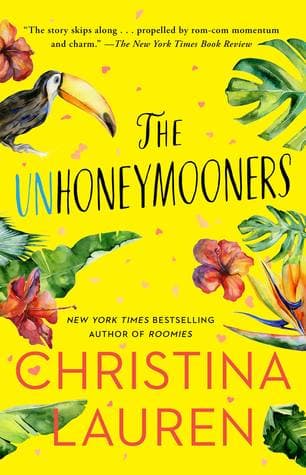
- The Unhoneymooners
Christina Lauren
4.0 (115k) average on GoodreadsRomanceWhile both feature enemies-to-lovers and a 'destination' setting, The Unhoneymooners is lighter, faster-paced, and relies more on comedic misunderstandings and internal character friction for conflict. Things We Never Got Over has a deeper emotional core, more extensive external threats, and a stronger focus on found family.
- The Hunger Games
Suzanne Collins
4.3 (6.4M) average on GoodreadsFantasyIn a future where children fight to the death on live television, Katniss Everdeen volunteers for the arena, turning a death sentence into a fight for survival and a spark of rebellion.
- The Great Gatsby
F. Scott Fitzgerald
3.9 (3.8M) average on GoodreadsHistorical FictionIn the opulent Roaring Twenties, a mysterious millionaire's lavish parties hide his desperate, tragic pursuit of a lost love, exposing the emptiness within the American Dream.
- The Fault in Our Stars
John Green
4.2 (3.6M) average on GoodreadsYoung AdultA girl with a terminal illness finds her story rewritten when a charming boy with a similar past enters her life at a cancer support group, leading to a star-crossed romance.
- Pride and Prejudice
Jane Austen
4.3 (3M) average on GoodreadsHistorical FictionIn a society focused on status and money, Elizabeth Bennet navigates love and pride, challenging Mr. Darcy and social expectations to find true affection.





Enjoyed the summary?
A summary gives you the shape of the book. The book itself has the detail, the examples and the voice.
Find Things We Never Got Over on AmazonAs an Amazon Associate, BookBrief earns from qualifying purchases. How we're funded