

Core Idea
- Difficulty
- Medium
- Read it if
- You are interested in a detailed, on-the-ground account of a pivotal moment in the American Civil Rights Movement, the methods of investigative journalism, or the mechanics of a racially motivated conspiracy.
- Skip it if
- You prefer a broad overview of the Civil Rights Movement rather than a deep dive into a single, complex event, or if you are sensitive to graphic details of racial violence and systemic injustice.
Key Takeaways from Three Lives for Mississippi
The Price of Inaction
How systemic complacency enabled a horrific crime.
Huie details how the murder of Chaney, Goodman, and Schwerner was not a spontaneous act, but the result of deeply ingrained racism and a culture of impunity in Mississippi. Local law enforcement, the judiciary, and many white community members were either involved or chose to ignore what was happening. This created an environment where such violence was possible and, for many, desired. This systemic failure meant that 'good people' who might have intervened were either too afraid or too comfortable to challenge the status quo, effectively allowing the terror. The book argues that the tragedy was less about a few 'bad apples' and more about the rotten system itself, highlighting the moral failings that can take root when a society refuses to confront its own prejudices.
“The conspiracy to murder the three civil rights workers was not an isolated act of extremism, but a predictable outcome of a society that had long tolerated and even encouraged racial violence.”
In the book: Huie's interviews with locals, including those peripherally involved or aware of the Klan's activities, reveal a widespread understanding of the racial climate and the lack of consequences for violence against Black individuals and civil rights activists. The slow, unenthusiastic initial response from local authorities to the disappearances, and the subsequent cover-up attempts, underscore this complicity.
Try this: Reflect on current social issues where systemic biases and normalized injustices exist. Identify areas in your community or profession where inaction or silence might contribute to harm, and actively seek ways to challenge and dismantle those structures. Support organizations working to expose and reform systemic failures.
Related ideas: systemic-racism, judicial-failure, law-enforcement-complicity
The Power of Investigative Journalism
Huie's relentless pursuit of truth exposed a hidden conspiracy.
William Bradford Huie's role in breaking this story open and helping to ensure justice, even if belated, was significant. Faced with silence, intimidation, and official obstruction, Huie used a controversial but effective strategy: paying informants for information. This approach, while ethically debated, helped to expose the tightly-knit conspiracy of the Ku Klux Klan and identify the perpetrators. His work didn't just report on the crime; it actively helped the investigation when official channels were failing or unwilling. Huie's investigative persistence shows the important role independent journalism can play in holding power accountable and exposing uncomfortable truths that society prefers to keep hidden, even at great personal risk.
“The truth often lies buried beneath layers of fear and denial, and it takes a persistent, often unpopular, effort to unearth it.”
In the book: Huie paid $30,000 (a significant sum at the time) to an informant, ultimately leading to the identification of the burial site and key conspirators. His detailed accounts of these payments and the information gleaned from them form the backbone of the book's revelations.
Try this: Support and advocate for independent, investigative journalism. Be critical of information sources and seek out reporting that challenges official narratives. If you are a journalist, understand the ethical complexities but also the profound impact of persistent, truth-seeking reporting, even when it requires unconventional methods.
Related ideas: investigative-journalism, informant-payments, truth-seeking
The Anatomy of a Conspiracy
Unpacking the chilling details of a planned murder.
Huie reconstructs the events leading up to and following the murders, showing the organized and deeply rooted nature of the conspiracy. He details how local law enforcement, including Sheriff Lawrence Rainey and Deputy Cecil Price, were not just negligent but actively involved in orchestrating the ambush and cover-up. The book outlines the Klan's chain of command, the pre-arranged plan to intercept the civil rights workers, their detention, and the brutal execution. This examination reveals the chilling coordination and casual depravity of those involved, highlighting how ordinary individuals, fueled by ideology and groupthink, can commit horrific acts with calculated efficiency. It serves as a warning about the dangers of unchecked extremism and the corruption of authority.
“This was not a spontaneous act of rage, but a meticulously planned ambush, executed with cold precision by men who believed they were defending their way of life.”
In the book: The book details the specific roles of Deputy Cecil Price in stopping the workers, their release from jail into the Klan's hands, and the subsequent discovery of their bodies in an earthen dam, all consistent with a pre-planned operation involving local officials and Klan members.
Try this: Study historical and contemporary examples of organized crime and political extremism to understand their operational tactics. Recognize the warning signs of groupthink and radicalization in any community. Advocate for strong oversight of law enforcement and governmental bodies to prevent their co-option by extremist ideologies.
Related ideas: klan-conspiracy, law-enforcement-corruption, extremist-violence
The Moral Cost of Segregation
How the 'Southern Way of Life' justified unspeakable acts.
Huie powerfully shows how the idea of racial segregation, deeply ingrained in Mississippi's culture and laws, provided the moral and social justification for the murders. The perpetrators, and many who supported them, truly believed they were defending their way of life, their 'heritage,' and white supremacy against what they saw as an outside invasion. This belief system allowed them to dehumanize Chaney, Goodman, and Schwerner, reducing them from individuals to symbols of a hated movement, making their murder seem justifiable, even heroic, in their twisted worldview. The book is a chilling reminder of how deeply held prejudice, when institutionalized and violently defended, can corrupt an entire society's moral compass and lead to atrocities.
“The 'Southern way of life' was a euphemism for a brutal system of racial hierarchy, and its defense often meant the dehumanization and murder of anyone who dared challenge it.”
In the book: Huie's interviews with locals reveal a pervasive sentiment that the civil rights workers were 'agitators' from outside, disrupting a peaceful (albeit segregated) society, thus deserving their fate. This narrative was used to rationalize the violence.
Try this: Critically examine current narratives that justify discrimination or violence against any group based on 'tradition,' 'heritage,' or perceived threats. Challenge language that dehumanizes others. Understand that systemic injustice is often built on widely accepted, yet morally corrupt, ideologies.
Related ideas: segregation-ideology, white-supremacy, dehumanization
The Unsung Heroes of Justice
The quiet courage of those who dared to speak out.
While the book focuses on the perpetrators and the victims, Huie also shows the immense courage of the few individuals who, despite living in a climate of fear and intimidation, chose to cooperate with federal investigators or Huie himself. These were often ordinary people, sometimes even loosely connected to the Klan, who for various reasons—conscience, financial incentive, or fear of greater consequences—provided important information. Their actions were not publicly celebrated at the time, and often carried severe risks to their safety and livelihoods. The book shows that even in the darkest times, moral courage can persist, and that the path to justice often relies on the quiet bravery of individuals willing to break ranks with a corrupt system.
“Amidst the overwhelming silence and complicity, there were always a few who, at great personal risk, chose to whisper the truth, and those whispers eventually became a roar.”
In the book: The unnamed informants who provided Huie with details about the murders and the location of the bodies, despite the pervasive threat of Klan retaliation, are central to the book's narrative and the eventual arrests.
Try this: Recognize and support individuals who speak out against injustice, especially when they are vulnerable. Cultivate an environment where it is safe for people to report wrongdoing. Understand that collective change is often catalyzed by individual acts of courage, however small.
Related ideas: moral-courage, whistleblowers, social-change
The Slow Grind of Justice
Justice delayed, but not entirely denied, for a horrific crime.
The legal aftermath of the murders was a long and frustrating process. While federal authorities eventually brought charges, the initial trials were difficult, with all-white juries and a biased local judiciary. The first convictions for the murders themselves did not come until decades later, in 2005, showing the deep-seated resistance to racial justice in Mississippi. Huie's book, written much earlier, foreshadows this long struggle, showing how deeply embedded systemic racism can hinder the legal process. It highlights the persistence needed to achieve even partial justice in the face of such strong opposition and shows the importance of sustained pressure from outside forces, like the federal government and investigative journalists, to move the wheels of justice.
“Justice, in Mississippi, moved at the pace of a glacier, and often required external pressure to even begin to thaw.”
In the book: The book details the initial federal indictments for civil rights violations (not murder), and the subsequent acquittals or light sentences for many perpetrators, contrasting with the much later state murder conviction of Edgar Ray Killen in 2005.
Try this: Advocate for judicial reform and accountability, particularly in areas with a history of systemic bias. Support legal aid organizations working on civil rights cases. Understand that achieving justice for historical wrongs can be a multi-generational effort requiring sustained advocacy.
Related ideas: judicial-reform, civil-rights-law, historical-justice
The Federal Government's Imperfect Role
External pressure was necessary, but often hesitant.
Huie's narrative subtly critiques the federal government's initial hesitation and the political calculations that often came before decisive action in the Civil Rights era. While the FBI eventually launched a massive investigation, dubbed 'MISSBURN,' it was largely due to intense national pressure and the high-profile nature of the victims (two of whom were white). The book suggests that without such external scrutiny, the case might have languished, much like countless other unsolved murders of Black civil rights activists. This reveals a tension between the federal government's constitutional duty to protect civil rights and its political reluctance to directly confront powerful, segregationist state governments. It shows the ongoing need for public vigilance and advocacy to ensure that justice is pursued universally, not just when politically convenient.
“The federal government, while ultimately intervening, often acted with a reluctance born of political calculation, rather than immediate moral imperative.”
In the book: The initial FBI response was slow, and it was only after President Johnson's direct intervention and national outrage that the investigation gained full momentum. The fact that the first federal charges were for civil rights violations, not murder, also highlights this political maneuvering.
Try this: Hold governmental bodies accountable for their response to civil rights violations, demanding swift and equitable action. Understand the interplay between political will and moral imperative in policy-making. Support organizations that monitor government actions related to human rights.
Related ideas: federal-intervention, political-will, civil-rights-movement
The Enduring Legacy of Terror
How violence shaped and scarred a generation.
The murders had a lasting impact, not only on the families of the victims but on the broader Civil Rights Movement and American society. Huie's work, by detailing the brutality and the systemic involvement, helped to unite national opinion and expose the true face of segregationist violence. It contributed to the political momentum that led to the passage of landmark civil rights legislation. However, the book also implicitly shows the lasting trauma and fear inflicted upon the Black community in Mississippi, a legacy that persisted for decades. The memory of such terror shaped generations, illustrating how acts of violence, even if intended to suppress, can ultimately ignite a greater will for change, while also leaving indelible scars.
“The murders of Chaney, Goodman, and Schwerner cast a long, dark shadow, not just over Mississippi, but over the entire nation, revealing the brutal cost of racial hatred.”
In the book: The national outrage following the discovery of the bodies and the subsequent federal investigation were crucial factors in shifting public opinion and pressuring Congress to pass the Civil Rights Act of 1964 and the Voting Rights Act of 1965.
Try this: Engage with historical narratives of racial violence to understand their ongoing impact on contemporary society. Support efforts for historical truth and reconciliation. Recognize how collective trauma can shape communities and advocate for policies that address these deep-seated legacies.
Related ideas: civil-rights-impact, racial-trauma, historical-memory
The Banality of Evil
Ordinary men committing extraordinary atrocities.
Huie's deep dive into the lives and motivations of the perpetrators reveals a disturbing truth: the men involved were not fringe lunatics but often 'respectable' members of their community—shopkeepers, preachers, law enforcement officers. This aspect of the story is particularly chilling as it highlights Hannah Arendt's concept of the 'banality of evil.' These individuals, driven by fear, prejudice, and a desire to maintain a perceived social order, were capable of unspeakable cruelty. The book shows how easily ordinary people can be drawn into horrific acts when fueled by groupthink, ideological extremism, and the absence of moral checks within their community. It serves as a potent reminder that evil often wears a mundane face, making it all the more insidious and dangerous.
“The men who committed these murders were not monsters from another world; they were ordinary citizens, neighbors, and law enforcement, corrupted by a pervasive ideology of hate.”
In the book: Huie's profiles of the various Klansmen involved, such as Edgar Ray Killen (a Baptist minister) and Deputy Cecil Price, show them as integrated members of their community, not isolated deviants.
Try this: Be vigilant against the normalization of hate speech and prejudice in your own community. Challenge discriminatory remarks and actions, even seemingly minor ones. Understand that the erosion of moral boundaries often begins with small compromises and unquestioned assumptions.
Related ideas: banality-of-evil, groupthink, extremist-ideology
Three Lives for Mississippi Quotes
“There are some things worth dying for, and the right to vote is one of them.”
“The law, in Mississippi, was often what the local sheriff said it was.”
“They had come to Mississippi to change the world, and Mississippi had changed them.”
“Fear was a constant companion in the Mississippi Delta for anyone who challenged the status quo.”
“The silence of good men is often more terrifying than the shouts of evil men.”
“Mississippi was a state of mind as much as it was a place on the map.”
“The murders were not an aberration; they were the logical conclusion of a system designed to maintain white supremacy.”
“To be truly free, one must first be free from fear.”
“The truth, like a river, will eventually wear down the stones of denial.”
“Sometimes, the greatest courage is simply to show up.”
“The past is never truly past; it lives in the present, shaping our future.”
“Hope, even a flicker, can ignite a revolution.”
“The struggle for human dignity is a universal one, transcending borders and generations.”
“What happened in Mississippi was a test of America's soul.”
Quiz
10 questions on the main ideas. Each answer comes with a short explanation.
Question 1
Which of the following civil rights workers was NOT abducted and murdered in Neshoba County, Mississippi, in June 1964?
- James Chaney
- Michael Schwerner
- Andrew Goodman
- Martin Luther King Jr.
Show answer
D. Martin Luther King Jr. The book details the murders of James Chaney, Michael Schwerner, and Andrew Goodman. Martin Luther King Jr. was not involved in this specific incident.
Question 2
What organization were the three civil rights workers associated with when they traveled to Mississippi?
- Southern Christian Leadership Conference (SCLC)
- Student Nonviolent Coordinating Committee (SNCC)
- Congress of Racial Equality (CORE)
- National Association for the Advancement of Colored People (NAACP)
Show answer
C. Congress of Racial Equality (CORE) Chaney, Schwerner, and Goodman were working for the Congress of Racial Equality (CORE) as part of the Freedom Summer project.
Question 3
What was the primary purpose of the civil rights workers' trip to Neshoba County on June 21, 1964, before their disappearance?
- To register African American voters in Philadelphia, MS
- To investigate the burning of Mount Zion Methodist Church
- To organize a protest march against segregation
- To meet with local FBI agents
Show answer
B. To investigate the burning of Mount Zion Methodist Church They went to Neshoba County to investigate the arson of Mount Zion Methodist Church, which had been a meeting place for civil rights activists.
Question 4
William Bradford Huie's approach in 'Three Lives for Mississippi' is characterized by his use of what to uncover the truth about the murders?
- Direct participation in civil rights demonstrations
- Paying informants for information and access to interviews
- Extensive analysis of FBI wiretaps and surveillance reports
- Focusing solely on official court transcripts and testimonies
Show answer
B. Paying informants for information and access to interviews Huie controversially paid informants, including a key witness, to gain access to information and interviews that helped him piece together the events of the murders.
Question 5
Who was the Neshoba County Sheriff's Deputy implicated in the murders and later convicted of federal charges related to the case?
- Sheriff Lawrence Rainey
- Cecil Price
- Edgar Ray Killen
- Samuel Bowers
Show answer
B. Cecil Price Cecil Price was the deputy who arrested the three men and later released them into the hands of the waiting Klansmen. He was among those convicted in the federal conspiracy trial.
Question 6
What was the significance of the 'federal conspiracy charges' in the initial legal proceedings against those involved in the murders?
- Mississippi state courts were willing to prosecute murder charges effectively.
- It allowed the federal government to bypass state inaction on murder charges.
- It focused on voter fraud rather than the actual killings.
- It was a lesser charge that carried no significant penalties.
Show answer
B. It allowed the federal government to bypass state inaction on murder charges. Due to the lack of willingness by Mississippi state authorities to prosecute the murder charges, the federal government pursued charges of conspiring to violate the civil rights of the victims, which was a federal offense.
Question 7
The book highlights the deep-seated resistance to integration and civil rights in Mississippi, often linking it to what organization?
- The White Citizens' Council
- The Ku Klux Klan
- The John Birch Society
- The American Nazi Party
Show answer
B. The Ku Klux Klan The Ku Klux Klan, particularly the White Knights of the Ku Klux Klan, played a central role in organizing and carrying out the murders and maintaining racial terror in Mississippi.
Question 8
How did the national attention generated by the disappearance and subsequent discovery of the bodies impact the broader Civil Rights Movement?
- It significantly reduced federal involvement in civil rights issues.
- It highlighted the extreme violence faced by activists and garnered national outrage, pushing for federal legislation.
- It shifted the movement's focus away from voting rights.
- It led to an immediate end to all racial segregation in Mississippi.
Show answer
B. It highlighted the extreme violence faced by activists and garnered national outrage, pushing for federal legislation. The murders brought national and international attention to the dangers faced by civil rights workers, contributing to public pressure that helped pass the Civil Rights Act of 1964 and the Voting Rights Act of 1965.
Question 9
William Bradford Huie's decision to pay for information was controversial. What was a primary ethical concern raised by this practice?
- It made the book less profitable for the author.
- It risked incentivizing false testimony or fabrication of facts.
- It was illegal under Mississippi state law.
- It prevented other journalists from accessing the same sources.
Show answer
B. It risked incentivizing false testimony or fabrication of facts. A significant ethical concern with paying sources is the potential for informants to embellish or fabricate information to receive payment, thus compromising the truthfulness of the reporting.
Question 10
What was the ultimate fate of Edgar Ray Killen, a key orchestrator of the murders, decades after the initial federal convictions?
- He was granted immunity for his testimony.
- He was acquitted in a retrial of the federal charges.
- He was convicted of manslaughter in a state trial in 2005.
- He died before any charges could be brought against him.
Show answer
C. He was convicted of manslaughter in a state trial in 2005. Edgar Ray Killen, a former Ku Klux Klan organizer, was finally convicted of three counts of manslaughter in a Mississippi state court in 2005, more than 40 years after the murders.
Three Lives for Mississippi FAQ
What is 'Three Lives for Mississippi' about?
'Three Lives for Mississippi' by William Bradford Huie is a non-fiction account of the 1964 murders of civil rights workers James Chaney, Andrew Goodman, and Michael Schwerner in Neshoba County, Mississippi. The book delves into the investigation, the political climate, and the societal forces that enabled such violence during the Civil Rights Movement.
Who were James Chaney, Andrew Goodman, and Michael Schwerner?
James Chaney, Andrew Goodman, and Michael Schwerner were three young civil rights workers who went missing and were later found murdered in Mississippi in June 1964. Chaney was a Black Mississippian and a CORE (Congress of Racial Equality) organizer, while Goodman and Schwerner were white New Yorkers who had volunteered for Freedom Summer.
Does the book provide new insights into the Mississippi murders?
Yes, William Bradford Huie's book was groundbreaking for its time, providing early and detailed insights into the murders. Huie conducted extensive interviews and uncovered information about the local perpetrators and the systemic cover-up that was not widely known or officially acknowledged at the time of its initial publication.
How does 'Three Lives for Mississippi' differ from other books about the Freedom Summer murders?
Compared to later works, 'Three Lives for Mississippi' offers a more immediate, contemporaneous perspective, published relatively soon after the events. While subsequent books may benefit from declassified documents and further historical distance, Huie's work provides a raw, investigative account from a journalist deeply embedded in the story as it unfolded.
What role did the Ku Klux Klan play in the events described in the book?
The Ku Klux Klan played a central and violent role in the murders described in 'Three Lives for Mississippi.' The book details how local Klan members, some of whom were also law enforcement officials, orchestrated and carried out the abduction and killing of Chaney, Goodman, and Schwerner.
Is 'Three Lives for Mississippi' considered an accurate historical account?
Yes, 'Three Lives for Mississippi' is widely regarded as an accurate and important historical account of the 1964 murders. Huie's meticulous reporting and the information he exposed were instrumental in shaping public understanding and even influencing subsequent investigations into the crime.
What is the significance of the title 'Three Lives for Mississippi'?
The title 'Three Lives for Mississippi' directly refers to the three young men—James Chaney, Andrew Goodman, and Michael Schwerner—who lost their lives while working to register Black voters and challenge segregation in Mississippi. It highlights the ultimate sacrifice made in the struggle for civil rights in the state.
Does the book cover the legal aftermath and trials related to the murders?
The book primarily focuses on the events leading up to and immediately following the murders, including the initial investigation and the challenges of bringing perpetrators to justice in a hostile environment. While it touches on early legal efforts, it predates the later, more extensive state trials that occurred decades after its publication.
About the author
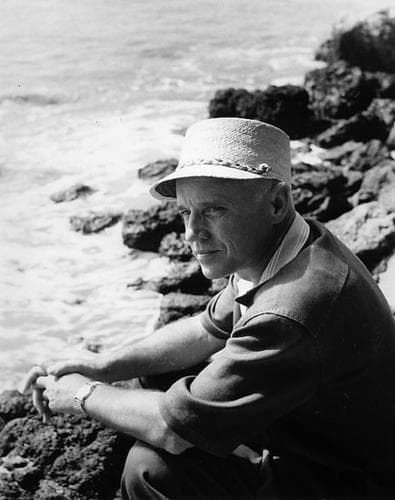
William Bradford Huie was an American writer, investigative reporter, editor, national lecturer, and television host. His credits include 21 books that sold over 30 million copies worldwide. In addition to writing 14 bestsellers, he wrote hundreds of articles that appeared in all of the major magazines and newspapers of the day.
Similar books
- Killers of the Flower Moon: The Osage Murders and the Birth of the FBI
David Grann
4.1 (127k) average on GoodreadsHistoryInvestigative true crime revealing systemic conspiracies against a marginalized group.
- The Diary of a Young Girl
Anne Frank
4.2 (2.7M) average on GoodreadsBiographyDuring the Nazi occupation, a teenage girl's diary, written from a secret annex, shares observations on humanity, hope, and the wait for freedom.
- Night
Elie Wiesel
4.3 (970k) average on GoodreadsBiographyIn the darkness of Auschwitz and Buchenwald, a teenage Elie Wiesel faces the extermination of his family, the loss of his faith, and the lasting scars of humanity's deepest cruelty.
- Steve Jobs
Walter Isaacson
4.1 (957k) average on GoodreadsBusinessSteve Jobs was a visionary who fused creativity and technology to revolutionize six industries and shape our digital world.
- Unbroken: A World War II Story of Survival, Resilience and Redemption
Laura Hillenbrand
4.4 (767k) average on GoodreadsBiographyLouis Zamperini's incredible World War II odyssey transforms him from a rebellious youth and Olympic runner into a survivor of a plane crash, shark-infested waters, and brutal Japanese POW camps, only to find redemption through forgiveness.
- The Immortal Life of Henrietta Lacks
Rebecca Skloot
4.1 (587k) average on GoodreadsBiographyA poor Southern tobacco farmer's unwitting contribution of 'immortal' cells starts a journey through scientific breakthroughs, medical ethics, and her family's decades-long fight for recognition and understanding.






Enjoyed the summary?
A summary gives you the shape of the book. The book itself has the detail, the examples and the voice.
Find Three Lives for Mississippi on AmazonAs an Amazon Associate, BookBrief earns from qualifying purchases. How we're funded