

Synopsis
Covers the whole plot, including the ending.
- Difficulty
- Medium
- Pacing
- Slow
- Mood
- Contemplative, Melancholy, Lyrical, Evocative, Poignant
- Read it if
- You appreciate lyrical prose, deep character introspection, and a non-linear narrative exploring themes of memory, time, and family legacy. Ideal for those who enjoy a contemplative and emotionally resonant reading experience.
- Skip it if
- You prefer fast-paced plots, strong dialogue, or a clear, linear storyline. The book's stream-of-consciousness style and focus on internal monologue might feel slow or abstract if you're looking for external action.
Tinkers Plot Summary
Covers the whole plot, including the ending.
George's Final Hours and the Clock
George Washington Crosby, an elderly clock repairer, is dying in his Maine home, propped up in his living room. His children and grandchildren are with him, watching his slow decline. As George fades, he sees the world around him with sharp senses, noticing dust in the air and the quiet sounds of the house. His mind begins to drift, first to the complex parts of the clocks he fixed his whole life, and then further back, into his many memories. His dying present is broken by flashes of his past, especially his poor childhood and the strong influence of his father and grandfather.
Recollections of Howard: The Itinerant Peddler
George often thinks of his father, Howard Crosby, a traveling peddler who sold housewares and tin goods from a horse-drawn wagon across rural Maine. Howard had severe epilepsy, and George clearly remembers the fear and helplessness he felt watching his father's seizures. These attacks often left Howard confused and weak, deeply affecting young George. Despite the struggles, George also remembers kind moments and their time together on the road, where Howard taught him about nature and hard work. Their life was marked by poverty and constant movement, shaping George's understanding of strength and loss.
The Burden of Epilepsy and Howard's Secret
Howard's epilepsy caused constant worry and hardship for the Crosby family. His unpredictable seizures made it hard to keep a steady job and often left him unable to work, putting a heavy load on his wife and children. As George remembers, the family feared these attacks, especially that they might happen while Howard was driving his wagon. The seriousness of his condition led to a sad choice: Howard, afraid he would hurt his family or himself during a seizure, decided to leave them. He meant to seek treatment or a new life, but he effectively left them to spare them more pain and the shame linked to his illness.
George's Childhood and the Aftermath of Abandonment
After Howard left, young George and his siblings faced extreme poverty. His mother, left to raise the children alone, struggled to make ends meet. George's memories from this time are full of images of not having enough, hard work, and a deep feeling of being left alone. He remembers the harshness of country life, the need to help the family survive, and the lasting emotional pain from his father's absence. Despite the hardship, these experiences gave George a strong sense of independence and resourcefulness, traits that would define his later life as a careful clock repairer.
The Grandfather: A Preacher's Madness
George's memories go back even further to his paternal grandfather, a passionate Methodist preacher named Howard Sr. The grandfather was a powerful man, dedicated to his faith, but he eventually suffered from a severe mental illness, described as a form of madness or dementia. George remembers his grandfather's unsettling change, as his once clear sermons and religious manner gave way to strange behavior and a loss of touch with reality. This decline into madness deeply affected the family, especially Howard, who inherited a tendency for his own health problems, creating a family pattern of illness and suffering that George now thinks about.
Clocks and the Nature of Time
Throughout his dying process, George's thoughts connect with his life's work: fixing clocks. He remembers the complex parts, the delicate balance of gears and springs, and the precision needed to make a stopped clock work again. For George, clocks are more than just tools for telling time; they are symbols for life itself, representing the way life, death, and memory repeat. He thinks about how time, though seemingly straight, can bend and loop in the mind, letting him revisit past moments clearly. His skill with clocks gave him a unique view on time's steady passage and the wish to fix what is broken.
The Present Moment: Family and Sounds
Despite his deep dives into memory, George often returns to the present, keenly aware of his family around his deathbed. He hears their quiet talks, the rustle of their movements, and the general mood of quiet watching. He notices the small details of his living room, how light falls, the familiar objects. These brief returns to the present act as anchors, keeping him in the reality of his dying, even as his mind continues its journey through the past. The sounds of the house, like a grandfather clock ticking, mix with the echoes of his own life, creating a rich sensory experience.
Nature and Solitude
George's memories often include the natural world of Maine, from the thick forests to the rough coast. He remembers moments of deep solitude spent outside, watching animals, the changing seasons, and the quiet beauty around him. These experiences gave him a sense of peace and connection, especially during his tough childhood. He remembers his father, Howard, teaching him about trees and animals, giving him a love for nature's careful balance. This deep connection to the land offered George a refuge and a source of wonder, a sharp contrast to his family's hardships and the inner struggles of his father and grandfather.
The Cycle of Life and Death
As his life ends, George thinks about the cycle of life and death. He watches his children and grandchildren, seeing parts of himself and his ancestors in their faces and actions. He understands that while his own life is ending, his legacy, both genetic and from his experiences, will continue through them. His memories, especially of his father and grandfather, show the family patterns of struggle, strength, and love. George finds a quiet acceptance in this continuation, seeing his own life as part of a larger, ongoing story, much like the constant ticking of a clock that, even when broken, still has the chance to be fixed.
Final Moments and Legacy
In his final moments, George's mind becomes more and more fragmented, blending past and present into a single whole. The specific details of his memories mix with the sensory input of his dying room. He feels a sense of peace, a quiet fading into the vastness of time and memory. His life, with all its joys and sorrows, its complex parts and broken pieces, finds its end. The novel finishes with George's peaceful death, leaving his family to deal with his absence but also to carry on the rich fabric of his memories and the deep lessons learned from his unique view on time, family, and being human.
Principal Figures
George Washington Crosby
Protagonist
An elderly, dying clock repairer who reflects on his life and family history.
George is a meticulous and introspective man, defined by his life's work repairing clocks and his deep connection to his family's past. He possesses a keen observational eye, a legacy of his father's appreciation for nature and his own trade's demand for precision. Despite a challenging childhood marked by poverty and his father's abandonment, George developed a strong sense of self-reliance and an enduring fascination with the mechanisms of time. His dying moments are a journey through memory, revealing his profound understanding of human suffering, love, and the cyclical nature of existence.
Relationships: Howard Crosby (Son of Howard, deeply affected by his father's epilepsy and abandonment.); Howard Sr. (Grandson of Howard Sr., fascinated by his grandfather's religious fervor and tragic madness.); His children and grandchildren (Father and grandfather, observing his dying moments and serving as a link to his future legacy.)
Howard Crosby
Supporting
George's father, an itinerant peddler afflicted with severe epilepsy.
Howard is a complex and tragic figure, whose life is dominated by the unpredictable and debilitating seizures of his epilepsy. Despite his illness, he is a kind and resourceful man, deeply connected to nature and devoted to his family. He earns a living as a peddler, traversing rural Maine in a horse-drawn wagon. His love for his family is ultimately overshadowed by his fear of harming them during a seizure, leading to his difficult decision to abandon them. His absence profoundly shapes George's childhood and worldview, making him a central figure in George's memories.
Relationships: George Washington Crosby (Father of George, whose illness and abandonment deeply impacted George's life.); Howard Sr. (Son of Howard Sr., inheriting a legacy of illness and struggle.)
Howard Sr.
Supporting
George's paternal grandfather, a Methodist preacher who succumbed to madness.
Howard Sr. is a powerful and charismatic Methodist preacher, a man of fervent faith and eloquent sermons. He represents a strong moral and spiritual foundation for the family, but his life takes a tragic turn as he succumbs to a debilitating mental illness, described as madness or dementia. His descent into irrationality and loss of self deeply affects his son, Howard, and leaves a lasting impression on George through his father's stories. He is a symbol of the fragility of the human mind and the generational patterns of suffering within the Crosby family.
Relationships: Howard Crosby (Father of Howard, whose madness influenced his son's fears about his own health.); George Washington Crosby (Grandfather of George, whose story is a foundational part of George's family history.)
George's Mother
Supporting
George's resilient mother, left to raise her children after Howard's departure.
George's mother is a figure of quiet strength and resilience. After Howard's abandonment, she is left to raise her children in extreme poverty, facing immense hardship with determination. While not as fully fleshed out as the male characters, her presence is felt through George's memories of her struggles and her unwavering efforts to provide for her family. She embodies the quiet courage of women facing adversity in rural Maine, and her sacrifices are a testament to her enduring love and commitment.
Relationships: Howard Crosby (Wife of Howard, left to cope with his illness and subsequent abandonment.); George Washington Crosby (Mother of George, whose struggles shaped his early life.)
George's Children and Grandchildren
Supporting
The family gathered at George's deathbed, representing the continuation of his lineage.
While not individually named or deeply characterized, George's children and grandchildren represent the present and future of the Crosby family. They are present as silent witnesses to George's dying, their hushed conversations and movements forming part of the backdrop to his internal journey. Their presence symbolizes the cyclical nature of life and death, and the continuation of the family's story beyond George's own existence. They are the inheritors of George's memories and experiences, carrying forward the legacy of their ancestors.
Relationships: George Washington Crosby (Children and grandchildren of George, observing his final moments and carrying his legacy.)
Themes & Insights
Time and Memory
The novel deeply considers the nature of time, not as a straight line, but as something flowing and repeating. George's dying allows his mind to move freely between past and present, mixing clear memories of his childhood and ancestors with his current physical feelings. His job as a clock repairer highlights this theme, as he understands the complex parts that control time and the wish to fix what is broken. The story's structure itself reflects this flow, moving smoothly between different times, suggesting that the past is never truly gone but always changed by the present.
“The past, he thought, was not a line, but a series of concentric circles, expanding and contracting, always returning to the same central point.”
Generational Legacy and Suffering
The book explores how the lives and struggles of earlier generations strongly affect later ones. The Crosby family has a history of illness and hardship: George's grandfather, Howard Sr., goes mad; his father, Howard, suffers from severe epilepsy and leaves his family; and George himself carries the emotional scars of this past. This theme shows how physical and mental weaknesses, as well as choices made by earlier generations, echo through time, shaping the identities and experiences of those who follow. Yet, it also suggests a legacy of strength and love that lasts despite the pain.
“He saw that the past was not just his own, but a tapestry woven from the lives of those who came before him, their joys and sorrows, their madness and their love, all bound together.”
The Beauty and Harshness of Nature
The natural world of rural Maine is both beautifully grand and harshly unforgiving. George's memories are full of descriptions of the landscape, from the tiny details of a forest to the changing seasons, showing a deep connection to nature. Nature offers comfort and wonder, especially for young George and his father, Howard. However, it also brings challenges, such as the poverty caused by tough farm life and the isolation of living in the country. The repeating nature of the seasons and the raw power of the wilderness mirror the cycles of life and death within human experience.
“The beauty of the world, he thought, was a terrible and fleeting thing, always on the verge of disappearing, always returning in a new form.”
Love, Loss, and Abandonment
At its heart, 'Tinkers' is a story about the strong power of love and the lasting pain of loss and being left. Howard's love for his family is clear, yet his fear of his epilepsy leads him to a heartbreaking act of leaving, deeply scarring George. George's memories are filled with both the tenderness he felt for his father and the lingering ache of his absence. The novel explores the complex feelings involved, showing how love can appear in difficult choices and how loss shapes a person's entire life. Ultimately, it suggests that even when someone is gone, family bonds and memories of love remain.
“He realized that love was not a thing that could be broken or mended, but a force that simply was, sometimes painful, sometimes joyful, always present.”
Plot Devices & Literary Techniques
Stream of Consciousness
The narrative flows freely through George's thoughts and memories without strict chronological order.
The novel primarily uses a stream of consciousness technique, mirroring George Washington Crosby's dying mind. The narrative shifts seamlessly between present observations from his deathbed and vivid recollections of his past, particularly his father Howard and grandfather Howard Sr. This device allows for a non-linear exploration of time and memory, reflecting the subjective and often fragmented nature of human thought. It creates an intimate and immersive experience, drawing the reader directly into George's internal world and allowing for complex thematic connections across different time periods.
Flashback and Memory
Extensive use of flashbacks to reveal the intricate histories of George's ancestors.
Flashbacks are central to the novel's structure, serving as the primary means of revealing the backstories of George's father, Howard, and grandfather, Howard Sr. These detailed and often lengthy excursions into the past are triggered by George's present thoughts or sensory experiences. They are not merely chronological insertions but deeply intertwined with George's current reflections on life, death, and family legacy. This device allows the author to build a rich historical context for George's present state, illustrating the generational patterns of illness, resilience, and love that define the Crosby family.
Symbolism of Clocks and Tinkering
Clocks symbolize time, its fragility, and the human desire to mend what is broken.
George's profession as a clock repairer is deeply symbolic. Clocks represent the relentless, yet intricate, passage of time. His ability to mend broken mechanisms mirrors his internal process of piecing together his own fragmented memories and understanding his family's 'broken' history. The act of tinkering suggests meticulous care, patience, and a deep understanding of how small parts contribute to a larger whole. It also symbolizes the human desire to impose order on chaos, to fix what is damaged, and to find meaning in the complex machinery of life and death. The ticking of a clock serves as a constant reminder of George's dwindling time.
Sensory Imagery
Rich, detailed descriptions of sensory experiences to immerse the reader.
The novel employs extensive sensory imagery, particularly focusing on sight, sound, and touch, to create a vivid and immersive reading experience. George's heightened senses on his deathbed allow for incredibly detailed descriptions of dust motes in the air, the sounds of his family, the intricate workings of a clock, and the natural world of Maine. This device brings the past and present to life, making George's memories palpable and immediate. It also underscores his unique way of perceiving the world, a legacy perhaps from his observant father, and emphasizes the preciousness of sensory experience at the end of life.
Tinkers Quotes
“He had been so certain, up there on the roof, that he was the only one in the world who could hear the clocks.”
“He had spent his whole life waiting for something to happen, and now that something was happening, he wished it would stop.”
“The world was a machine, he thought, and he was a tinker, mending it one broken clock at a time.”
“Time was not a river, but a vast and intricate clockwork, and he was one of its cogs, turning slowly, inevitably.”
“Every object had a story, a memory, a ghost of its former self.”
“The past was not dead, it was not even past. It was a present, always present, always pressing in.”
“He knew that the world was full of wonders, and that most of them went unnoticed.”
“The silence was not empty, but full of the sound of clocks ticking, a symphony of time.”
“He tried to remember the last time he had felt truly alive, and realized it had been a long time ago, too long.”
“The air itself seemed to hum with the accumulated weight of all the hours that had passed.”
“To mend a clock was to mend a piece of the world, to bring order to chaos, however small.”
“Death was not an end, but a rearrangement, a scattering of parts that would find new forms.”
“He thought of his father, a man who had seen the world in fragments, and tried to put them back together with words.”
“The world was a book, and he was trying to read it, but the pages kept turning too fast.”
Quiz
10 questions on the plot and the characters. Each answer comes with a short explanation.
Question 1
What is George Washington Crosby's primary occupation throughout much of his adult life?
- Itinerant peddler
- Clock repairer
- Methodist preacher
- Farmer
Show answer
B. Clock repairer George Washington Crosby is known as a clock repairer, a skill that provides a central metaphor in the book for time, memory, and breakdown.
Question 2
What medical condition did George Washington Crosby's father, Howard, suffer from?
- Tuberculosis
- Epilepsy
- Blindness
- Heart disease
Show answer
B. Epilepsy Howard, George's father, was an epileptic, which greatly impacted his life and his family's experiences as he was often forced to leave home.
Question 3
What specific item does George frequently fix and reflect upon, often linking it to his own life and memories?
- Old radios
- Broken spectacles
- Clocks and watches
- Farm machinery
Show answer
C. Clocks and watches As a clock repairer, George spends much of his time working on and contemplating clocks and watches, which serve as a powerful symbol of time's passage and the intricate mechanisms of life.
Question 4
Why did George's father, Howard, often leave his family for extended periods?
- He was a traveling salesman by choice.
- He was an itinerant peddler, often forced to leave due to his epilepsy and the societal stigma surrounding it.
- He was searching for a cure for his illness.
- He had another family he visited.
Show answer
B. He was an itinerant peddler, often forced to leave due to his epilepsy and the societal stigma surrounding it. Howard's epilepsy made it difficult for him to hold down a steady job or remain in one place without prejudice, leading him to become an itinerant peddler and frequently leave his family.
Question 5
What is the primary setting for George Washington Crosby's dying moments?
- A hospital room
- His childhood home in Maine
- His living room, surrounded by family
- A nursing home
Show answer
C. His living room, surrounded by family The book opens and largely takes place with George propped up in his living room, surrounded by his children and grandchildren as he drifts in and out of consciousness.
Question 6
How does George's grandfather, the Methodist preacher, primarily cope with his 'madness' or mental struggles?
- Through extensive travel and new experiences.
- By meticulously cataloging and organizing nature, especially rocks and plants.
- By withdrawing from society entirely.
- Through intense prayer and fasting.
Show answer
B. By meticulously cataloging and organizing nature, especially rocks and plants. George's grandfather found solace and a way to structure his thoughts by collecting and cataloging natural objects, particularly rocks and plants, as a means of imposing order on his inner turmoil.
Question 7
A recurring theme in 'Tinkers' is the intricate connection between humanity and nature. Which specific natural element is often used to symbolize the passage of time and the cyclical nature of life and death?
- The changing seasons
- The flow of rivers
- The growth of trees
- The vastness of the ocean
Show answer
A. The changing seasons The novel frequently references the cyclical nature of the seasons, using them to mark the passage of time, the changes in life, and the inevitability of death and renewal.
Question 8
The narrative structure of 'Tinkers' is characterized by its non-linear approach. How does Paul Harding primarily achieve this fragmented, associative storytelling?
- By presenting events in reverse chronological order.
- Through the use of multiple, distinct narrators for each chapter.
- By intertwining George's present consciousness with vivid, often unprompted, memories of his past and his ancestors.
- Using a dream journal format.
Show answer
C. By intertwining George's present consciousness with vivid, often unprompted, memories of his past and his ancestors. The novel jumps between George's dying moments and his memories, as well as the memories of his father and grandfather, creating a rich, non-linear tapestry of consciousness and family history.
Question 9
What is the significance of the title 'Tinkers' in relation to the novel's overarching themes and characters?
- It refers exclusively to George's profession as a clock repairer, a 'tinker' of mechanisms.
- It symbolizes the various characters' attempts to mend, understand, and make sense of their broken lives, memories, and the world around them.
- It is a direct reference to a specific ancestral trade in the Crosby family.
- It highlights the transient, 'tinkering' nature of their family's historical movements across Maine.
Show answer
B. It symbolizes the various characters' attempts to mend, understand, and make sense of their broken lives, memories, and the world around them. The title 'Tinkers' goes beyond George's literal repair work; it metaphorically applies to all the characters' efforts to 'tinker' with their lives, memories, and understanding of existence, trying to fix or make sense of what is broken.
Question 10
The narrative often delves into detailed descriptions of the internal mechanisms of clocks. What literary purpose do these intricate descriptions serve within the broader context of the novel?
- They provide practical instructions for clock repair, appealing to hobbyists.
- They act as a metaphor for the complex, interconnected workings of memory, consciousness, and the human body, especially as George's own 'mechanism' is failing.
- They establish George's expertise and credibility as a master craftsman.
- They are purely stylistic flourishes to demonstrate the author's descriptive ability.
Show answer
B. They act as a metaphor for the complex, interconnected workings of memory, consciousness, and the human body, especially as George's own 'mechanism' is failing. The detailed descriptions of clock mechanisms serve as a powerful metaphor for the intricate, delicate, and often failing systems of the human mind, memory, and body, mirroring George's own decline.
Tinkers FAQ
What is the central premise of 'Tinkers'?
The novel primarily follows George Washington Crosby, an elderly clock repairman, as he lies on his deathbed, experiencing vivid memories and hallucinations. These recollections span his own life, focusing on his impoverished childhood in rural Maine and his complex relationship with his epileptic father, Howard.
Who are the main characters in the book?
The core characters are George Washington Crosby, the dying protagonist and narrator; his father, Howard Crosby, an itinerant peddler with epilepsy; and George's grandfather, a Methodist preacher who struggled with mental illness. George's wife, children, and grandchildren also appear, largely as silent witnesses to his final moments.
What role do clocks and tinkering play in George's life and the narrative?
Clocks are central to George's identity and profession, symbolizing the relentless march of time and his attempts to mend broken mechanisms, much like he tries to make sense of his own fractured memories. His tinkering reflects a desire for order and understanding in a life often characterized by chaos and loss.
How does the book explore the theme of nature?
Nature is depicted as both beautiful and brutally indifferent, a powerful force that shaped the lives of the Crosby men, particularly Howard's experiences as a peddler in rural Maine. It represents a source of wonder, hardship, and a primal connection that contrasts with George's more domesticated, urban existence.
What specific incident from Howard's childhood deeply affected him?
Howard was profoundly affected by the death of his younger brother, Robert, who drowned in a well. This traumatic event, witnessed by Howard, contributed to his recurring seizures and a deep-seated sense of guilt and loss that haunted him throughout his life.
How does George's perception of time change as he approaches death?
As George nears death, his perception of time becomes fluid and non-linear. Past, present, and imagined futures meld together, allowing him to revisit pivotal moments, experience hallucinations, and engage in philosophical reflections that transcend conventional chronological order.
Are there any recurring symbols besides clocks in the novel?
Yes, other recurring symbols include the 'great green ash' tree, which represents enduring life and nature's cycles, and the various tools of a tinkerer, which symbolize the human desire to fix, understand, and bring order to a disordered world. Howard's peddler's cart is also a potent symbol of transient existence.
How does Howard's epilepsy influence his character and interactions?
Howard's epilepsy profoundly shapes his life, leading to his itinerant peddling career due to the stigma and unpredictable nature of his seizures. It isolates him, makes him vulnerable, but also provides him with unique, often spiritual, experiences during his altered states of consciousness, affecting his family's perception of him.
What is the psychological impact of Howard's abandonment on young George?
Howard's eventual abandonment of his family, driven by his desire to spare them the burden of his illness, leaves a deep, unresolved wound in George. This trauma contributes to George's lifelong pursuit of order and understanding through his clock repair work, as he tries to 'fix' the broken pieces of his past.
How does George's dying experience reflect the human mind's coping mechanisms?
George's dying experience illustrates the mind's attempt to reconcile a lifetime of memories, regrets, and loves. His hallucinations and vivid recollections serve as a psychological mechanism to process his existence, seek meaning, and find a form of peace or understanding in his final moments.
How does the novel portray the relationship between madness and creativity/faith?
The novel suggests a complex link, particularly through George's grandfather, the preacher, whose intense faith and powerful sermons border on madness. His visions and struggles with mental illness are intertwined with his profound spiritual experiences, implying that extreme states of mind can be conduits for both suffering and unique insight.
Is Howard's decision to leave his family an act of love or abandonment?
This is a central point of debate. While it appears as abandonment to young George, the narrative suggests Howard's intention was a profound act of love, believing his illness was a burden and that his family would be better off without him. He sought to spare them further hardship, making it a tragic, self-sacrificing choice.
What is the significance of the title 'Tinkers'?
The title 'Tinkers' refers not only to George's profession as a clock repairman but also more broadly to the human attempt to mend, understand, and make sense of the broken pieces of life, memory, and relationships. It suggests a constant, imperfect effort to bring order to chaos and find meaning in existence.
Does the book offer a definitive answer on the meaning of life or death?
Rather than offering definitive answers, 'Tinkers' presents a profound meditation on the cyclical nature of life, death, memory, and inheritance. It suggests that meaning is found in the intricate tapestry of individual experiences, the enduring power of nature, and the continuous echo of past lives within the present, even in death.
How does the author use language to create the novel's unique atmosphere?
Paul Harding employs a highly lyrical, poetic, and often visceral prose style, rich in sensory detail and extended metaphors, particularly those related to nature and mechanical objects. This elevated language creates an elegiac, reflective, and immersive atmosphere that blurs the lines between reality, memory, and hallucination.
What is the role of George's children and grandchildren in the story?
George's children and grandchildren primarily serve as silent, watchful figures around his deathbed, representing the present moment and the continuity of his lineage. They are observers of his final journey, symbolizing the legacy he leaves behind and the quiet passage of life from one generation to the next.
How does the book explore the concept of inheritance, beyond material possessions?
The novel delves into the inheritance of traits, memories, and struggles across generations. George inherits not only his father's mechanical aptitude but also the emotional weight of his experiences, including the trauma of abandonment and the profound connection to nature, shaping his own life and perspective.
What is the significance of the detailed descriptions of clock mechanisms?
The intricate descriptions of clock mechanisms serve as a metaphor for the complexity of human life, memory, and the universe itself. George's understanding of how gears and springs work reflects his attempt to find underlying order and interconnectedness in the seemingly random events of existence, even as his own 'mechanism' winds down.
About the author

Paul Harding is an American author known for his work in fiction. His notable novel, "Tinkers," won the Pulitzer Prize for Fiction in 2010, exploring themes of memory and the passage of time. Harding's writing often delves into the complexities of human experience and the intricacies of family relationships.
Similar books
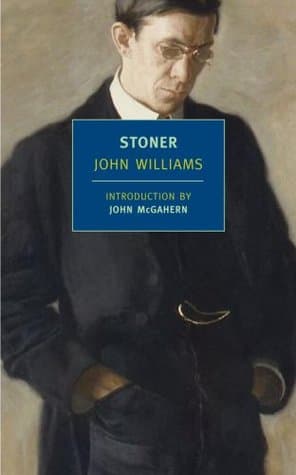
- Stoner
John Williams
4.3 (103k) average on GoodreadsLiterary FictionBoth are character-driven literary fiction with a focus on a single life, exploring internal struggles and the passage of time with elegant, understated prose.
- Gilead (Oprah's Book Club)
Marilynne Robinson
3.9 (126k) average on GoodreadsFictionBoth feature an elderly man on his deathbed reflecting on his life, faith, and family history through a deeply introspective and beautifully written narrative.
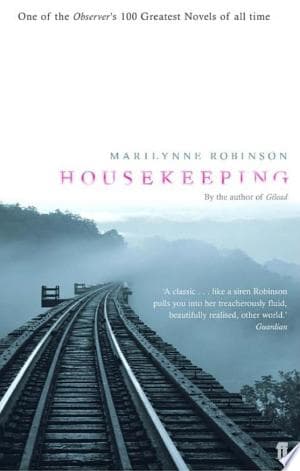
- Housekeeping
Marilynne Robinson
3.8 (44k) average on GoodreadsLiterary FictionShares a similar atmospheric quality, focus on memory, and a lyrical exploration of family, loss, and the nature of home in a rural setting.
- As I Lay Dying
William Faulkner
3.7 (137k) average on GoodreadsLiterary FictionWhile both novels employ non-linear narratives and delve into the complexities of rural family life and the impact of death, Tinkers differs significantly in its narrative voice and focus. Faulkner's As I Lay Dying uses multiple, distinct first-person perspectives to construct a more externalized, albeit fragmented, account of a journey. Harding, in contrast, primarily delves into the internal consciousness of George and Howard, using a more unified, lyrical voice to explore the subjective experience of memory and time, rather than a polyphonic external event.
- The Old Man and the Sea
Ernest Hemingway
3.8 (831k) average on GoodreadsLiterary FictionA Cuban fisherman's long struggle with a giant marlin becomes a story of endurance and dignity, now retold for young adults with illustrations, phonetic guides, and writing prompts in Traditional Chinese.
- One Hundred Years of Solitude
Gabriel García Márquez
4.1 (753k) average on GoodreadsLiterary FictionThrough the multi-generational story of the Buendía family, a mythical town deals with the repeating patterns of time, love, and solitude, as the extraordinary mixes with the ordinary.




Enjoyed the summary?
A summary gives you the shape of the book. The book itself has the detail, the examples and the voice.
Find Tinkers on AmazonAs an Amazon Associate, BookBrief earns from qualifying purchases. How we're funded