
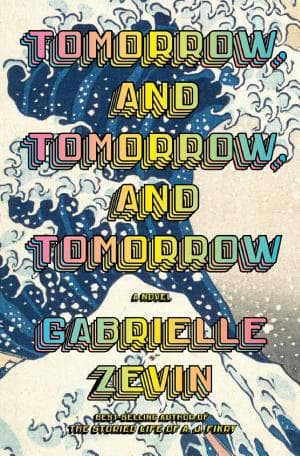
Synopsis
Covers the whole plot, including the ending.
- Difficulty
- Medium
- Pacing
- Moderate
- Mood
- Nostalgic, Reflective, Bittersweet, Inspiring
- Read it if
- You enjoy character-driven stories about unconventional relationships, the creative process, and the intersection of art and commerce, with a strong focus on the video game industry.
- Skip it if
- You're looking for a traditional romance novel or are uninterested in the world of video game development.
Tomorrow, and Tomorrow, and Tomorrow Plot Summary
Covers the whole plot, including the ending.
A Chance Reunion and a Game-Changing Idea
In December of his junior year at Harvard, Sam Masur, recovering from a serious car accident that left him with a permanently damaged foot, sees Sadie Green on a subway platform. They had been childhood friends, bonding over video games during Sam's hospital stays after his mother's death, but had grown apart. Sadie, now an MIT student, tries to avoid him, but Sam's persistence leads to a renewed connection. During a conversation, Sadie shows Sam a game she's been working on for a class. Sam, recognizing her talent and his own passion for game design, proposes they collaborate. He convinces her to drop out of her summer internship to work with him, starting their creative partnership.
The Birth of 'Ichigo'
Sam and Sadie begin working intensely on their first game, 'Ichigo,' named after the Japanese word for strawberry, symbolizing the game's theme of a solitary, strong female character. They get funding and space from Sam's wealthy roommate, Marx Watanabe, who becomes their producer and a mediator in their often-difficult creative process. 'Ichigo' is a new game, featuring a young girl who must rebuild a shattered world. Its blend of melancholic beauty and challenging gameplay quickly receives critical acclaim and commercial success, making Sam, Sadie, and Marx overnight sensations in the growing video game industry. Their company, Unfair Games, begins with this triumph.
The Pressures of Success and 'Pioneers'
After 'Ichigo's' success, the pressure to create a worthy follow-up grows. Sam and Sadie begin developing 'Pioneers,' a game about settling a new world. However, their creative collaboration becomes strained by unspoken resentments, artistic disagreements, and personal insecurities. Sadie feels her contributions are often overshadowed by Sam's public persona, and she deals with sexism in the gaming industry. Sam, meanwhile, struggles with his physical pain and the weight of expectation. Marx often mediates their conflicts, trying to keep their partnership intact. 'Pioneers' development is tense, showing the growing cracks in their friendship and professional relationship.
Sadie's Disillusionment and Departure
Sadie's relationship with her professor, Dov Mizrahi, a manipulative figure, complicates her life. Dov takes credit for some of her early work and undermines her confidence. This, combined with the stress of 'Pioneers' and feeling undervalued by Sam, pushes Sadie to a breaking point. A hurtful argument with Sam, where he dismisses her feelings and belittles her contributions, makes her leave Unfair Games. She moves away to pursue her own path, feeling betrayed and exhausted by their partnership. This marks a split in their creative and personal lives, leaving Sam and Marx to navigate Unfair Games without her.
Life Apart and Marx's Tragedy
Years pass, and Sam and Sadie live separate lives, occasionally communicating but never fully reconciling. Sadie continues to make games, though none achieve the same level of success as 'Ichigo.' Sam, with Marx's support, keeps Unfair Games going, developing new projects. Marx, the steady and compassionate anchor of their trio, pursues a relationship with a woman named Ant. However, tragedy strikes when Marx is shot and killed during a random act of violence. His death affects both Sam and Sadie, forcing them to confront their shared history and the void he leaves behind. This event is a catalyst for their eventual reconciliation.
A Shared Grief and a New Beginning
Marx's funeral brings Sam and Sadie back into sustained contact. Their shared grief for their friend begins to heal some old wounds. They reminisce about their early days, their triumphs, and their mistakes. In the aftermath, they find solace in each other's presence and a new understanding of their unique bond. This period of shared mourning rekindles their creative spark. Inspired by Marx's memory and their own experiences, they decide to collaborate on a new game, 'Our Infinite Days,' a poignant and ambitious project intended as a tribute to Marx and a reflection on life, loss, and connection. This new game means a fresh start for their partnership.
'Our Infinite Days' and Reconciliation
Working on 'Our Infinite Days' becomes a therapeutic process for Sam and Sadie. The game, a complex and emotionally resonant narrative about a character navigating a world shaped by memory and choice, allows them to explore grief, forgiveness, and the enduring nature of relationships. Through their collaborative efforts, they slowly dismantle the walls they had built. They learn to communicate more openly, acknowledge past hurts, and appreciate each other's strengths. The creation of 'Our Infinite Days' is not just a professional endeavor but a personal journey of reconciliation, bringing them closer than they have been in years, creatively and emotionally.
Personal Lives and Lingering Questions
While their professional partnership flourishes once more, their personal lives remain intertwined but not romantically resolved. Sadie enters a relationship with another man and eventually has a child, while Sam continues to deal with his chronic pain and search for connection. They share deep affection and an undeniable bond, but their relationship remains platonic, characterized by an intense, almost familial love that goes beyond conventional romance. They are 'never lovers' in the traditional sense, yet their connection is arguably deeper and more enduring than many romantic pairings, exploring the boundaries of friendship, creative partnership, and deep intimacy without physical consummation.
The Legacy of Unfair Games
Unfair Games, under Sam and Sadie's renewed leadership, continues to produce innovative and successful titles. Their games, particularly 'Ichigo' and 'Our Infinite Days,' become iconic, influencing a generation of game designers and players. They are celebrated in the industry, their work recognized for its artistic merit, emotional depth, and technical innovation. Their enduring partnership, despite its turbulent past, shows their individual brilliance and undeniable synergy. Their games provide a sense of immortality, allowing players to experience worlds and stories that reflect the complex human experience, mirroring their own lives.
An Enduring Partnership and the Meaning of Play
The novel concludes with Sam and Sadie, older and wiser, continuing their creative partnership. Their relationship shows the power of shared purpose, enduring friendship, and the redemptive nature of play. They have navigated fame, tragedy, betrayal, and personal growth, always finding their way back to each other through games. Their story shows that love takes many forms, and that the deepest connections can be built on mutual respect, shared passion, and creating something meaningful together. Their legacy is not just the games they made, but the enduring bond they forged through them.
Tomorrow, and Tomorrow, and Tomorrow Characters
Sam Masur
Protagonist
A brilliant but physically vulnerable game designer driven by a need for connection and creative expression.
Sam is a gifted game designer, characterized by his sharp intellect, creative vision, and a deep-seated vulnerability stemming from a childhood car accident that left him with chronic pain and a limp. He is passionate and often intense, sometimes to the point of being abrasive, particularly with Sadie. He struggles with feelings of inadequacy and a fear of being overlooked, often compensating with ambition. His love for games is profound, seeing them as a means of escape and connection. His arc involves learning to be more open, forgiving, and appreciative of others, particularly Sadie and Marx, and accepting the limitations of his body while embracing the power of his mind.
Relationships: Sadie Green (Intense, complex creative partnership and deep, platonic love); Marx Watanabe (Best friend, business partner, and emotional anchor); Dov Mizrahi (Competitor, rival, and source of resentment for Sadie's treatment)
Sadie Green
Protagonist
A fiercely intelligent and innovative game designer seeking recognition and creative autonomy.
Sadie is an exceptionally talented and ambitious game designer, often feeling the need to prove herself in a male-dominated industry. She is sensitive, prone to self-doubt despite her brilliance, and deeply affected by perceived slights or lack of recognition. She values authenticity and artistic integrity above commercial success. Her relationship with Sam is the central axis of her professional and personal life, marked by both profound connection and intense frustration. Sadie's arc involves finding her voice, asserting her worth, and ultimately understanding that her contributions are invaluable, independent of external validation or romantic entanglement.
Relationships: Sam Masur (Intense, complex creative partnership and deep, platonic love); Marx Watanabe (Close friend and supportive confidant); Dov Mizrahi (Manipulative mentor and ex-lover, source of professional and personal pain)
Marx Watanabe
Supporting
The kind, pragmatic producer and emotional glue of Unfair Games, mediating Sam and Sadie's partnership.
Marx is Sam's wealthy, charming, and deeply empathetic college roommate and later the producer for Unfair Games. He possesses a rare emotional intelligence, acting as the steady, grounding force between the volatile creative energies of Sam and Sadie. He is not a game designer himself, but his business acumen, unwavering support, and ability to mediate conflicts are indispensable to their success. Marx is the heart of their trio, often sacrificing his own desires for the sake of his friends. His tragic death is a pivotal moment, forcing Sam and Sadie to confront their shared history and the depth of their bond.
Relationships: Sam Masur (Best friend and business partner); Sadie Green (Close friend and business partner); Ant (Romantic partner)
Dov Mizrahi
Antagonist/Supporting
Sadie's manipulative former professor and lover, who takes credit for her work.
Dov Mizrahi is Sadie's former professor at MIT and later her lover. He is a charismatic but deeply insecure and manipulative figure who exploits Sadie's talent and vulnerability. He takes credit for some of her early game design concepts and undermines her confidence, contributing significantly to her decision to leave Unfair Games. Dov represents the toxic, exploitative side of the creative world and the challenges Sadie faces as a woman in tech. His actions are a major source of conflict and pain for Sadie, highlighting themes of intellectual property and professional ethics.
Relationships: Sadie Green (Former professor, mentor, and manipulative lover); Sam Masur (Professional rival)
Ant
Supporting
Marx's girlfriend, who brings him happiness before his untimely death.
Ant is Marx Watanabe's girlfriend. She is portrayed as a kind and loving partner who brings joy and stability into Marx's life. Though her role in the narrative is brief, her presence highlights Marx's personal happiness outside of his role as Sam and Sadie's producer. Her grief after Marx's death underscores the profound loss felt by those close to him and provides a glimpse into the life Marx had built for himself beyond Unfair Games.
Relationships: Marx Watanabe (Romantic partner)
Anna
Mentioned
Sam's younger sister, who later becomes a mother.
Anna is Sam's younger sister. She appears briefly in the narrative, primarily in Sam's thoughts or during family interactions. She represents a more traditional life path compared to Sam's intense creative endeavors. Her eventual motherhood highlights the passage of time and the different ways people find meaning and connection outside of professional pursuits. While not a major character, her presence grounds Sam in his familial relationships.
Relationships: Sam Masur (Sibling)
Naomi
Supporting
Sadie's younger sister, who plays games and offers a generational perspective.
Naomi is Sadie's younger sister. She is portrayed as a bright and observant young woman who plays the games Sadie designs. Her perspective often offers a glimpse into the impact of Sam and Sadie's work on the gaming community and the younger generation. She represents a connection to Sadie's family and provides a contrast to Sadie's more intense and driven personality.
Relationships: Sadie Green (Sibling)
Tomorrow, and Tomorrow, and Tomorrow Themes
Identity and Self-Discovery
The novel explores how characters form their identities through creative work and relationships. Sam deals with physical limitations and finds purpose in game design, while Sadie struggles to define herself independently of Sam and industry expectations, eventually asserting her artistic voice. Their games, such as 'Ichigo' and 'Our Infinite Days,' extend their evolving selves, reflecting their inner worlds and growth. This theme is clear in Sadie's journey to reclaim her contributions after Dov's manipulation and Sam's acceptance of his physical reality.
“To be a game designer is to be a god, and to be a god is to know oneself.”
The Nature of Love and Connection
Zevin redefines love beyond conventional romance, focusing on the deep, enduring bond between Sam and Sadie. Their relationship has intense creative synergy, deep friendship, and unwavering loyalty, yet remains largely platonic. Marx's role as the emotional anchor highlights different forms of love – friendship, familial, and romantic – and their significance. The novel argues that connection can be found in shared passion, mutual respect, and co-creation, proving that love doesn't always fit into traditional boxes. Marx's death makes Sam and Sadie realize the depth of their non-romantic love for him and each other.
“What is a game? It’s a series of interesting choices. What is love? It’s a series of interesting choices.”
Creativity and Collaboration
At its heart, the book is about the creative process, especially in collaborative efforts. Sam and Sadie's partnership is a dynamic force, fueled by their individual brilliance, clashes, compromises, and shared vision. The development of 'Ichigo,' 'Pioneers,' and 'Our Infinite Days' illustrates the highs and lows of bringing artistic ideas to life. The novel emphasizes that true innovation often comes from the friction and synergy between different perspectives, showing how collaboration can make individual talent into something greater than its parts.
“To make a game is to build a world, and to build a world is to make a promise.”
Mortality, Loss, and Legacy
The book frequently deals with themes of death and its aftermath. Sam's childhood trauma and chronic pain are constant reminders of mortality, while Marx's sudden death is a central turning point, forcing Sam and Sadie to deal with profound grief. Creating games, especially 'Our Infinite Days,' becomes a way to process loss, honor memory, and achieve a form of immortality through art. The characters' desire to leave a lasting impact through their creations speaks to a human need to transcend their finite existence and leave a meaningful legacy.
“We are all just walking each other home.”
The Redemptive Power of Play
Play, specifically video games, is presented not just as entertainment but as a means of healing, connection, and self-expression. For Sam, games offer an escape from physical pain and a way to connect with others. For Sadie, they are a medium for artistic vision and storytelling. Creating and playing games allows the characters to confront difficult emotions, explore alternative realities, and find solace. The novel argues that games, in their capacity to create worlds and foster interaction, offer a unique way to understand ourselves and others, providing a form of therapy and meaning.
“In games, you can always try again. In life, you often don't get a second chance.”
Plot Devices & Literary Techniques
The Game as Metaphor
Video games serve as a central metaphor for life, relationships, and the creative process.
The video games Sam and Sadie create, such as 'Ichigo' and 'Our Infinite Days,' are not just plot points but also profound metaphors. Their mechanics, narratives, and development challenges mirror the characters' personal struggles, relationships, and philosophical questions about life, death, and connection. The concept of 'respawning' in games, for instance, reflects the characters' resilience and ability to restart or reinvent themselves after setbacks. The games allow the characters, and the reader, to explore complex themes within a structured, interactive framework, blurring the lines between art and life.
Non-Linear Narrative Elements
The story occasionally shifts in time and perspective to reveal character depth and past events.
While largely chronological, the novel employs subtle non-linear elements, occasionally flashing back to key moments in Sam and Sadie's shared past, particularly their childhood hospital visits, or jumping forward to provide context or foreshadowing. There are also chapters that shift perspective, such as the one told from the perspective of a character within 'Pioneers,' which offers a unique meta-narrative layer. This technique enriches the narrative by revealing the long-term impact of past events and providing deeper insight into the characters' motivations and the evolution of their complex relationship.
Chronic Pain as a Character Motivator
Sam's physical disability and chronic pain are a constant, driving force in his life and creativity.
Sam's chronic pain from his childhood accident is more than just a physical ailment; it's a significant character motivator and a pervasive plot device. It shapes his personality, his ambition, and his need for escape and control, which he finds in game design. His physical limitations often make him feel vulnerable and isolated, fueling his desire for connection and recognition. The pain is a constant backdrop to his creative genius, illustrating how adversity can both hinder and inspire, making his triumphs all the more poignant and his struggles deeply relatable.
The 'Never Lovers' Trope Subversion
The novel intentionally subverts the expectation of a romantic resolution between its protagonists.
The book's subtitle, 'A love story, but not one you have read before,' directly addresses and subverts the traditional romance trope of two protagonists destined to be together romantically. Despite the intense intimacy, shared passion, and profound connection between Sam and Sadie, their relationship remains platonic. This device challenges conventional definitions of 'love story,' emphasizing that deep, enduring love can exist without sexual or romantic entanglement. It forces the reader to consider the multifaceted nature of human connection and the validity of non-romantic bonds as equally significant and powerful.
Tomorrow, and Tomorrow, and Tomorrow Quotes
“What is a game? It's tomorrow, and tomorrow, and tomorrow. It's the possibility of infinite rebirth, infinite redemption.”
“We are all just living in the aftermath of someone else's love story.”
“The only way to win is to not play.”
“You don't have to be a genius to make a great game. You just have to care.”
“Love is not a game, but it is the only game worth playing.”
“The best friendships are the ones that survive the things you can't forgive.”
“In games, you can always start over. In life, you just have to keep going.”
“We built worlds to escape the one we were given.”
“Sometimes the person you need most is the one you're trying to forget.”
“A game is a conversation between the player and the designer.”
“The heart is the hardest level to beat.”
“We are all just characters in someone else's story, trying to write our own.”
“The only thing worse than losing is not playing at all.”
“Love is the ultimate cheat code, but it doesn't always work.”
Quiz
10 questions on the plot and the characters. Each answer comes with a short explanation.
Question 1
Where does Sam first encounter Sadie after years apart, reigniting their friendship?
- At a video game convention in Los Angeles
- On a subway platform in Cambridge, Massachusetts
- In a Harvard library during finals week
- At a mutual friend's wedding in New York
Show answer
B. On a subway platform in Cambridge, Massachusetts The book opens with Sam spotting Sadie on a subway platform in Cambridge during his junior year at Harvard, which marks the beginning of their legendary collaboration.
Question 2
What is the name of Sam and Sadie's first major video game that brings them overnight success?
- Eternal Return
- Ichigo
- Pioneers
- Mapleworld
Show answer
B. Ichigo Ichigo is their breakthrough game created while they were still in college, launching them to fame and financial success.
Question 3
Which character serves as a producer and business partner for Sam and Sadie's game company?
- Marx Watanabe
- Dov Mizrah
- Simon Masur
- Anna Green
Show answer
A. Marx Watanabe Marx Watanabe is Sam's college roommate who becomes the producer and business manager for their game development, playing a crucial role in their success.
Question 4
What significant physical challenge does Sam face throughout the novel?
- He is blind from birth
- He has a chronic illness that limits his mobility
- He lost his foot in a childhood accident and uses a prosthetic
- He suffers from severe arthritis in his hands
Show answer
C. He lost his foot in a childhood accident and uses a prosthetic Sam's disability from a childhood car accident that resulted in the loss of his foot is a key aspect of his identity and influences his experiences in the story.
Question 5
Why does Sadie initially hesitate when Sam calls out to her on the subway platform?
- She is angry with him over a past argument about game design
- She pretends not to hear him because she feels guilty about their estrangement
- She is distracted by an important phone call about her studies
- She doesn't recognize him after so many years apart
Show answer
B. She pretends not to hear him because she feels guilty about their estrangement Sadie's initial pretense of not hearing Sam reflects the complex emotions and guilt surrounding their past friendship and the reasons for their separation.
Question 6
Which theme is most directly explored through Sam and Sadie's creative partnership and personal conflicts?
- The corrupting influence of wealth and fame
- The tension between artistic collaboration and romantic love
- The superiority of digital relationships over real-life connections
- The inevitability of betrayal in competitive industries
Show answer
B. The tension between artistic collaboration and romantic love The novel centers on how Sam and Sadie navigate being 'often in love, but never lovers,' using game design as a medium to express and complicate their deep connection.
Question 7
How does the novel use video game development as a metaphor for larger human experiences?
- It portrays games as mere entertainment with no deeper meaning
- It suggests that life, like a game, has clear winners and losers
- It explores identity, connection, and redemption through the lens of play and creation
- It argues that technology isolates people from genuine relationships
Show answer
C. It explores identity, connection, and redemption through the lens of play and creation The book examines themes like identity, disability, failure, and the need for connection by framing them within the collaborative and imaginative process of game design.
Question 8
What tragic event creates a major rift between Sam and Sadie in their professional and personal lives?
- The commercial failure of their second game
- Sadie's decision to leave the company and work for a competitor
- The death of Marx Watanabe
- A lawsuit over intellectual property rights
Show answer
C. The death of Marx Watanabe Marx's death is a pivotal moment that exacerbates existing tensions between Sam and Sadie, leading to a prolonged estrangement and emotional fallout.
Question 9
In what way does the novel's title, 'Tomorrow, and Tomorrow, and Tomorrow,' reflect its core narrative?
- It refers to the repetitive nature of daily life in the tech industry
- It alludes to a famous line from Shakespeare's Macbeth about the futility of life
- It symbolizes the endless possibilities and iterations in both game design and human relationships
- It highlights the characters' obsession with planning for the future
Show answer
C. It symbolizes the endless possibilities and iterations in both game design and human relationships The title captures the theme of perpetual renewal and the cyclical nature of creation and connection, as Sam and Sadie's partnership evolves through successes, failures, and reconciliations over decades.
Question 10
How does the setting shift throughout the novel to mirror the characters' journeys?
- It moves from rural areas to big cities to show their rising fame
- It spans multiple locations like Cambridge, Venice Beach, and beyond over thirty years, reflecting their personal and professional growth
- It remains primarily in Boston to emphasize their roots
- It focuses on virtual worlds within their games rather than real places
Show answer
B. It spans multiple locations like Cambridge, Venice Beach, and beyond over thirty years, reflecting their personal and professional growth The geographical progression from college in Cambridge to the gaming industry in Venice Beach and other locations across decades underscores the expansive timeline and evolving dynamics of Sam and Sadie's lives.
Tomorrow, and Tomorrow, and Tomorrow FAQ
What is 'Tomorrow, and Tomorrow, and Tomorrow' about?
The novel follows Sam Masur and Sadie Green, two childhood friends who reconnect in college and become legendary video game designers. Spanning thirty years, it chronicles their creative partnership through blockbuster games like 'Ichigo,' exploring their complex relationship that is 'often in love, but never lovers,' alongside themes of success, betrayal, disability, and the search for connection.
Why should I read 'Tomorrow, and Tomorrow, and Tomorrow'?
It offers a unique, emotionally resonant story that blends the worlds of art, technology, and human relationships. Beyond being a love story about creative partnership, it delves deeply into themes like identity, disability (Sam's chronic pain from a childhood accident), failure, and redemption through play, all while providing an immersive look into video game design.
What is the background/setting of 'Tomorrow, and Tomorrow, and Tomorrow'?
The story spans from the 1990s to the 2020s, moving between locations like Cambridge, Massachusetts (where Sam and Sadie attend Harvard), Venice Beach, California (where they launch their game studio), and other settings that reflect their journey in the video game industry. The backdrop captures the evolution of gaming culture over decades.
What are the most memorable quotes?
Key quotes include: 'Often in love, but never lovers' describing Sam and Sadie's relationship; 'What is a game? It's tomorrow, and tomorrow, and tomorrow' reflecting the endless possibilities in creation; and 'In the end, only the games mattered' highlighting their artistic legacy amidst personal turmoil.
What writing style does the author use?
Gabrielle Zevin employs a lyrical, introspective prose that blends narrative storytelling with deep character analysis. The style often mirrors video game structures, with chapters that feel like levels or missions, and it incorporates technical details about game design without losing emotional depth.
What minor details add significant meaning?
Small details like Sam's chronic pain from his childhood accident, which influences his character and their games; the recurring motif of the subway platform where they reunite; and the naming of their company 'Unfair Games,' which hints at the personal and professional inequities they face.
What are some subtle foreshadowing moments?
Early scenes of Sam and Sadie's childhood gaming hint at their future partnership; discussions about 'immortality' through art foreshadow the game 'Pioneers' and its themes; and minor conflicts in college subtly predict later betrayals, such as Sadie's collaboration with Marx.
What unexpected character connections exist?
Marx, Sam's college roommate, becomes a crucial third partner in their game studio and later marries Sadie, creating a love triangle that strains Sam and Sadie's relationship. Additionally, minor characters like Dov, Sadie's mentor, have hidden ties to the gaming industry that impact the plot.
What are unspoken character motivations?
Sam is driven by a need for artistic validation and escape from his physical pain, while Sadie seeks independence and recognition in a male-dominated field. Both hide deep-seated fears of abandonment, which fuel their creative partnership but also lead to misunderstandings and emotional distance.
What psychological complexities do characters exhibit?
Sam grapples with trauma from his accident and survivor's guilt, affecting his relationships and work. Sadie struggles with impostor syndrome and the pressure of being a woman in gaming, leading to decisions that alienate Sam. Their dynamic mixes admiration, jealousy, and unrequited love.
What are the major emotional turning points?
Key moments include: the success of 'Ichigo' bringing fame and strain; Marx's death in a tragic accident, which fractures Sam and Sadie's partnership; their reconciliation while creating the game 'Pioneers'; and the final scene where they find peace in their enduring creative bond.
How do relationship dynamics evolve?
Sam and Sadie's relationship shifts from childhood friendship to creative collaboration, strained by romantic tensions, professional rivalries, and external relationships like Sadie's marriage to Marx. Over decades, they cycle through periods of closeness, betrayal, and eventual acceptance as platonic soulmates.
Which parts remain ambiguous or open-ended?
The nature of Sam and Sadie's love is left ambiguous—whether it's romantic, platonic, or something beyond labels. The ending also leaves open how their legacy in gaming will be remembered, and whether their final game, 'Pioneers,' fully resolves their personal conflicts.
What are controversial scenes or decisions?
Sadie's decision to collaborate with Marx on a game without Sam leads to a major betrayal. Sam's handling of his disability and how it affects his work sparks debate. The love triangle involving Sam, Sadie, and Marx is contentious, with readers divided on who is at fault for the relationship breakdowns.
'Tomorrow, and Tomorrow, and Tomorrow' ending explained: how it ends & what it means
The novel ends with Sam and Sadie, older and somewhat reconciled, reflecting on their lives and the game 'Pioneers,' which explores themes of immortality. It suggests that their creative partnership has granted them a form of eternal connection, emphasizing that love and art can transcend personal failures and time.
What role does video game design play in the story?
Game design serves as both a plot device and a metaphor for the characters' lives. Games like 'Ichigo' and 'Pioneers' mirror Sam and Sadie's emotional journeys, with mechanics reflecting themes of pain, connection, and redemption. It also drives their professional success and conflicts.
How does the book handle themes of disability?
Sam's chronic pain from a childhood accident is central, affecting his identity, relationships, and creative process. The novel portrays disability not as a limitation but as integral to his character, influencing game designs that explore physical and emotional suffering, and challenging stereotypes in the gaming world.
What is the significance of the title?
The title, from Shakespeare's 'Macbeth,' reflects the endless cycle of creation and the passage of time in Sam and Sadie's lives. It ties to their pursuit of 'tomorrows' through games, symbolizing hope, repetition, and the quest for immortality in art, despite personal tragedies.
About the author

Gabrielle Zevin is an American author known for her fiction, including notable works such as "Tomorrow, and Tomorrow, and Tomorrow," "The Storied Life of A.J. Fikry," and "Memoirs of a Teenage Amnesiac." Her writing often explores themes of identity, relationships, and the impact of storytelling. Zevin's books have garnered a wide readership and critical attention.
Similar books
- The Storied Life of A.J. Fikry
Gabrielle Zevin
4.0 (202k) average on GoodreadsLiterary FictionExplores unique relationships and the power of shared passions (books instead of games).
- Ready Player One
Ernest Cline
4.3 (861k) average on GoodreadsFantasyFeatures a deep dive into video game culture and creation, though with a different tone.
- Eleanor Oliphant Is Completely Fine
Gail Honeyman
4.3 (708k) average on GoodreadsLiterary FictionFocuses on complex characters navigating life's challenges and forming unexpected bonds.
- A Little Life
Hanya Yanagihara
4.3 (212k) average on GoodreadsLiterary FictionThough vastly different in tone and subject matter, both novels explore deep, enduring friendships over many years, marked by immense personal struggles and complex emotional bonds. Yanagihara's 'A Little Life' delves into trauma and its lasting impact with an almost unbearable intensity, while Zevin's novel, though also dealing with hardship and loss, maintains a more hopeful, albeit bittersweet, perspective on human connection and the power of creation. Both are long, character-focused sagas that explore the limits and depths of platonic love.
- The Hunger Games
Suzanne Collins
4.3 (6.4M) average on GoodreadsFantasyIn a future where children fight to the death on live television, Katniss Everdeen volunteers for the arena, turning a death sentence into a fight for survival and a spark of rebellion.
- The Great Gatsby
F. Scott Fitzgerald
3.9 (3.8M) average on GoodreadsHistorical FictionIn the opulent Roaring Twenties, a mysterious millionaire's lavish parties hide his desperate, tragic pursuit of a lost love, exposing the emptiness within the American Dream.




Enjoyed the summary?
A summary gives you the shape of the book. The book itself has the detail, the examples and the voice.
Find Tomorrow, and Tomorrow, and Tomorrow on AmazonAs an Amazon Associate, BookBrief earns from qualifying purchases. How we're funded