
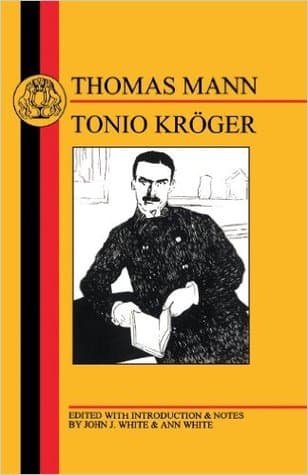
Synopsis
Covers the whole plot, including the ending.
- Difficulty
- Medium
- Pacing
- Slow
- Mood
- Melancholy, Introspective, Philosophical, Reflective
- Read it if
- You are interested in the struggles of an artist, the themes of alienation and belonging, or a classic German novella exploring dual identities.
- Skip it if
- You prefer fast-paced plots with clear external conflicts or dislike introspective, character-driven narratives.
Tonio Kröger Plot Summary
Covers the whole plot, including the ending.
Childhood Longings and Artistic Inclinations
The novella begins with Tonio Kröger at fourteen. He is a sensitive, thoughtful boy with a dark, southern look, who feels different from his more conventional friends. He is fascinated by Hans Hansen, a blond, blue-eyed, athletic boy who represents the 'normal' and 'healthy' life Tonio admires but feels excluded from. Tonio tries to befriend Hans, offering him poetry, but Hans, though polite, shows little interest in Tonio's artistic interests, preferring to talk about horses. This early interaction establishes Tonio's basic desire for connection with the ordinary world, along with his growing artistic sensibility, which already sets him apart.
Unrequited Love and Social Exclusion
Years later, at sixteen, Tonio feels a similar unrequited longing for Ingeborg Holm, a beautiful, lively girl who, like Hans, represents the carefree, 'normal' world. Tonio watches her at a dancing lesson, feeling the same painful admiration and exclusion. He is awkward and self-conscious, observing her joyful interactions from a distance. His artistic nature makes him feel clumsy and out of place in social settings. This episode reinforces Tonio's pattern of being drawn to those who live a simple, healthy life, while also being separated by his own artistic nature, which he increasingly sees as a source of both joy and suffering.
The Artist's Path and Bohemian Life
Tonio leaves his northern German hometown and travels south, becoming an artist. He lives a bohemian life, moving between cities like Munich and Rome, dedicating himself entirely to his craft. He spends time with other artists, writers, and intellectuals, engaging in deep discussions about art and life. This period marks his full commitment to his artistic calling, which requires isolation and a certain distance from conventional society. Despite his success and recognition as a writer, a basic sadness stays with him, a feeling of being an outsider, even among fellow artists. He becomes a master of observation, his art growing from this detachment.
Encounter with Lisaveta Ivanovna
While in Munich, Tonio has an important conversation with Lisaveta Ivanovna, a Russian painter and artist. He explains his developing ideas on the artist's condition, describing it as a difficult existence, a state of constant observation and analysis that prevents genuine, natural living. He admits his love for the 'blond and blue-eyed,' the ordinary, happy people, and his dislike for the 'literary' life, which he sees as a kind of illness. Lisaveta understands his struggle, acknowledging the artist's unique burden and the necessary suffering that fuels their creativity. This dialogue is key to understanding Tonio's inner conflict and his identity as an artist.
Return to the North and the Homeland
Driven by a deep desire and a need for new ideas, Tonio decides to return to his childhood home in the north. He feels pulled back to the simple, bourgeois world he left behind, a world that continues to fascinate and trouble him. His journey north is not just physical but a psychological return to his origins and artistic impulses. He hopes to find a renewed sense of connection or understanding, or perhaps to simply face the sources of his dual nature. This return is a key moment in his inner search for self-acceptance and reconciliation between his artistic and human desires.
The Homeland's Unchanged Face
Upon arriving in his old hometown, Tonio finds that little has changed. The familiar streets, houses, and even the atmosphere bring back strong memories. He visits his former home, now a public library, and walks through familiar places. While these sights stir deep memories, he also feels a deep sense of separation. He is a stranger in his own land, no longer belonging to the simple, conventional world he once inhabited. This experience highlights the irreversible nature of his artistic path and the gap that now exists between his past and present self, between his desire for belonging and the reality of his isolation.
Mistaken Identity and Humiliation
While staying at an inn in his hometown, Tonio has a humiliating experience. Because of his foreign appearance and lack of a passport, he is mistaken for a wanted criminal and questioned by the local police. This event deeply affects Tonio, showing his complete detachment from the conventional society he once belonged to. It is a sharp reminder of how his artistic life, which has led him to travel and live unconventionally, makes him suspicious to ordinary, law-abiding citizens. The incident is a painful example of his 'otherness' and the societal suspicion directed at those who do not conform.
The Ball at the Inn
One evening, Tonio watches a ball taking place in the inn's hall. To his surprise and deep emotion, he sees people who look much like Hans Hansen and Ingeborg Holm. He observes a young man and woman, blond and blue-eyed, dancing and interacting with the same carefree joy that had captivated him in his youth. The scene is a clear echo of his past, a re-enactment of the very beauty and normalcy he has always admired and felt excluded from. This encounter deeply moves Tonio, bringing to the surface his lifelong desire for a simple, unburdened existence, even as he knows it is forever out of his reach.
Reconciliation with his Dual Nature
Watching the ball, Tonio realizes that his love for the 'blond and blue-eyed' is not a weakness but a part of his artistic identity. He understands that his art comes from this very longing, from the tension between his intellectual, analytical mind and his emotional, human heart. He recognizes that he is an artist not despite his bourgeois leanings, but because of them. This realization brings him peace and acceptance. He accepts his dual nature: an artist who observes and analyzes life, yet who fundamentally loves and longs for the simple, natural beauty of ordinary human existence.
Letter to Lisaveta Ivanovna
Tonio ends the novella by writing a letter to Lisaveta Ivanovna, reflecting on his journey and his discoveries. He explains that he has come to terms with his identity, accepting that an artist can have a 'bourgeois heart.' He states that his love for the ordinary, the healthy, and the simple is not a flaw, but the very source of his art and his humanity. He declares that he stands 'between two worlds,' at home in neither, yet belonging to both. This letter is a final statement of his self-acceptance, showing his unique position as an artist who loves life even as he analyzes it, finding beauty in both the ordinary and the profound.
Tonio Kröger Characters
Tonio Kröger
Protagonist
A sensitive, introspective artist torn between his artistic vocation and a longing for ordinary life.
Tonio Kröger is a complex character, dark-haired and southern-looking, who feels an early sense of alienation from his 'normal' peers. He is drawn to art and intellectual pursuits but simultaneously longs for the simple, carefree existence embodied by the 'blond and blue-eyed' people. He is an acute observer, analytical and self-aware, and his artistic gift stems from his ability to detach and dissect. Despite his success as a writer, he carries a deep melancholia and a sense of being an outsider, forever caught between the world of art and the world of ordinary life.
Relationships: Hans Hansen (Childhood crush and ideal of 'normal' life); Ingeborg Holm (Teenage crush and ideal of 'normal' life); Lisaveta Ivanovna (Fellow artist and confidante, to whom he articulates his artistic philosophy)
Hans Hansen
Supporting
Tonio's childhood ideal of the 'blond and blue-eyed' ordinary boy.
Hans Hansen is Tonio's childhood friend and the embodiment of everything Tonio feels he is not: blond, blue-eyed, athletic, popular, and uncomplicated. Hans represents the healthy, normal, and unselfconscious life that Tonio both admires and feels excluded from. He is polite but largely uninterested in Tonio's artistic leanings, preferring discussions about horses. Hans serves as a recurring symbol throughout Tonio's life, representing the simple joy and belonging that Tonio, as an artist, feels forever separated from, yet deeply attracted to.
Relationships: Tonio Kröger (Object of Tonio's childhood admiration and longing)
Ingeborg Holm
Supporting
Tonio's teenage ideal of the 'blond and blue-eyed' ordinary girl.
Ingeborg Holm is the beautiful, vivacious girl Tonio is infatuated with in his adolescence. Like Hans, she embodies the carefree, 'normal' world Tonio yearns for. She is graceful, popular, and seemingly untroubled by the complexities that plague Tonio. Tonio observes her at a dancing lesson, feeling the same painful admiration and exclusion he felt for Hans. Ingeborg represents a further crystallization of Tonio's ideal of simple, unselfconscious beauty and happiness, reinforcing his sense of being an outsider due to his artistic temperament.
Relationships: Tonio Kröger (Object of Tonio's teenage admiration and longing)
Lisaveta Ivanovna
Supporting
A Russian painter and Tonio's confidante, who understands the artist's burden.
Lisaveta Ivanovna is a Russian painter Tonio meets in Munich. She is an intelligent, empathetic, and perceptive woman who shares Tonio's artistic sensibility and understands the inherent suffering and isolation of the artist's life. Tonio confides in her, articulating his complex theories about the artist's paradoxical nature and his enduring love for the 'blond and blue-eyed.' Lisaveta acts as a sounding board and a mirror for Tonio's internal struggles, offering validation and understanding. Her presence allows Tonio to fully express and refine his artistic philosophy.
Relationships: Tonio Kröger (Fellow artist and intellectual confidante)
Consul Kröger
Mentioned
Tonio's father, representing the respectable bourgeois world.
Consul Kröger is Tonio's father, a respectable and successful businessman who embodies the stable, conventional bourgeois life of northern Germany. He is practical, responsible, and represents the world of order and duty. His influence on Tonio is indirect, as Tonio rebels against the expectations of this world. His presence in the story, though largely through Tonio's memories, highlights the societal expectations and the 'normal' life that Tonio ultimately chooses to depart from, yet never fully ceases to admire.
Relationships: Tonio Kröger (Father; represents the bourgeois world Tonio rebels against but also longs for)
Conchita (Tonio's Mother)
Mentioned
Tonio's mother, representing the artistic, southern temperament.
Conchita is Tonio's mother, a woman with a more artistic, southern temperament. Her influence on Tonio is profound, as she represents the passionate, unconventional, and artistic side of his heritage. She is the source of his dark looks and his innate artistic leanings, contrasting sharply with his father's northern practicality. Her character, though largely in Tonio's memories, helps explain his dual nature and the internal conflict between his artistic calling and his longing for a 'normal' life. She is a symbol of the 'other' that sets Tonio apart.
Relationships: Tonio Kröger (Mother; source of his artistic and southern temperament)
Tonio Kröger Themes
The Artist's Duality and Alienation
The main theme explores the conflict within the artist, who is often torn between their creative work and a desire for a 'normal,' natural life. Tonio Kröger shows this duality, feeling both blessed and burdened by his artistic sensibility. He is an outsider, unable to fully belong to either the bourgeois world he admires (represented by Hans and Ingeborg) or the bohemian artistic circles he inhabits. His art grows from this very separation, from his ability to observe and analyze life from a distance, yet this detachment also causes him deep loneliness and a feeling of 'sickness.'
“For the artist, it is enough to love the human being; he must not wish to be one of them.”
The Burden of Consciousness and Intellect
The novella examines how heightened awareness and intellectual analysis, while vital for art, can be a burden. Tonio feels that his ability to see through things, to analyze and understand, prevents him from experiencing life simply and joyfully. He envies the 'blond and blue-eyed' for their natural happiness and grace. His intellect separates him from the 'normal' world, leading him to believe that artistic talent is a form of 'sickness' or a 'curse' that prevents true, uncomplicated living. This theme highlights the melancholic side of the artist's existence.
“I stand between two worlds, am at home in neither, and suffer in consequence.”
Longing for the Bourgeois and the Ordinary
Despite his artistic calling and bohemian life, Tonio Kröger has a deep and lasting desire for the simple, wholesome, ordinary life of the bourgeoisie. His childhood admiration for Hans Hansen and his teenage crush on Ingeborg Holm show this longing. He idealizes their uncomplicated happiness, their naturalness, and their sense of belonging. This desire is not a rejection of his art, but a basic human need that shapes and enriches his artistic view, leading him to believe that an artist can have a 'bourgeois heart.'
“My love for the 'blond and blue-eyed' is not a sickness, but my very humanity.”
North vs. South
This theme explores the geographical and emotional duality within Tonio, representing the conflict between his northern, bourgeois heritage (his father's practical, orderly world) and his southern, artistic temperament (his mother's passionate, unconventional nature). The 'north' symbolizes duty, order, and conventional life, while the 'south' represents passion, art, and freedom. Tonio's physical journey south to pursue art and his later return north to face his past reflect this inner struggle, ultimately leading to a blend of these two opposing forces within his identity.
“I am a bourgeois who has gone astray, an artist with a bad conscience.”
Plot Devices & Literary Techniques
Symbolism of 'Blond and Blue-Eyed'
Represents the ideal of ordinary, healthy, unselfconscious life.
Throughout the novella, the 'blond and blue-eyed' motif symbolizes the simple, healthy, and uncomplicated existence that Tonio Kröger admires and longs for, yet feels eternally alienated from. Characters like Hans Hansen and Ingeborg Holm embody this ideal. It represents natural grace, unthinking happiness, and a sense of belonging that Tonio, as a complex, introspective artist, can never fully achieve. This recurring symbol underscores Tonio's central conflict and his enduring love for the ordinary, which ultimately becomes a source of his artistic inspiration.
Foil Characters (Hans and Ingeborg)
Characters who highlight Tonio's artistic and alienated nature by contrast.
Hans Hansen and Ingeborg Holm serve as foil characters to Tonio Kröger. By embodying the carefree, popular, and 'normal' aspects of life, they highlight Tonio's introspection, his artistic sensitivity, and his sense of being an outsider. Their uncomplicated existence provides a stark contrast to Tonio's burdened consciousness, making his internal struggles and his unique artistic perspective more pronounced. They represent the unattainable ideal that fuels Tonio's longing and, paradoxically, enriches his art, as he observes and immortalizes their beauty.
Epistolary Form (Final Letter)
A letter that functions as a summation of the protagonist's journey and self-realization.
The novella concludes with Tonio Kröger's long letter to Lisaveta Ivanovna. This epistolary device serves as a powerful means for Tonio to articulate his self-discovery and the resolution of his internal conflicts. It allows him to directly address his philosophical insights about the artist's nature, his reconciliation with his 'bourgeois heart,' and his newfound acceptance of his dual identity. The letter provides a direct, intimate window into his matured understanding, offering a definitive statement of the novella's central themes and Tonio's personal growth, rather than simply showing the events.
Recurrence of Childhood Memories
Past events and figures resurface to inform and resolve present conflicts.
Tonio's childhood memories, particularly his interactions with Hans Hansen and Ingeborg Holm, are not merely nostalgic but actively shape his present understanding. His return to his hometown and the sight of people resembling his childhood ideals at the ball are powerful recurrences. These memories and their re-enactments allow Tonio to revisit the origins of his artistic alienation and his longing for normalcy. By confronting these past experiences, he is able to synthesize his artistic identity with his human desires, leading to a profound sense of self-acceptance in the present.
Tonio Kröger Quotes
“I stand between two worlds, at home in neither, and I suffer in consequence.”
“For the artist, feeling is an aesthetic rather than a moral phenomenon.”
“He who loves the most is the one who is the most alone.”
“Literature is not a profession, but a doom.”
“To be able to love, one must be free.”
“A man must be a man and not an artist.”
“The artist is a man who is always about to die.”
“Happiness is not a moral category.”
“I admire those who can live without ever looking into the abyss.”
“One must die in order to live.”
“The true artist is a stranger everywhere.”
“Perhaps what I call love is not really love, but only a kind of curiosity.”
“Mediocrity is a comfortable bed.”
“For there is no art without suffering, and no suffering without art.”
Quiz
10 questions on the plot and the characters. Each answer comes with a short explanation.
Question 1
What is Tonio Kröger's primary internal conflict throughout the story?
- His struggle to choose between a career in business or in the arts.
- His desire for normal, bourgeois happiness versus his artistic calling.
- His inability to decide between living in the North or the South.
- His conflict between loyalty to his family and his friends.
Show answer
B. His desire for normal, bourgeois happiness versus his artistic calling. Tonio Kröger constantly grapples with the tension between his artistic sensibility, which separates him from 'normal' people, and his yearning for their simple, unburdened happiness and connection.
Question 2
Which two individuals from Tonio's youth represent the 'blond and blue-eyed' ideal that he admires but feels alienated from?
- Lisaveta Ivanovna and Herr Knaak.
- Magdalena Vermehren and August von Platen.
- Hans Hansen and Ingeborg Holm.
- Fräulein Knaak and Professor Wöhler.
Show answer
C. Hans Hansen and Ingeborg Holm. Hans Hansen and Ingeborg Holm are recurring figures from Tonio's past who embody the healthy, ordinary, and beautiful life that Tonio, as an artist, feels excluded from.
Question 3
What is the primary reason Tonio Kröger feels like an outsider among his peers in his hometown?
- His family is significantly wealthier than others.
- He is more interested in books and poetry than in typical childhood games and social activities.
- He has a physical disability that prevents him from participating in sports.
- His parents forbid him from socializing with most children.
Show answer
B. He is more interested in books and poetry than in typical childhood games and social activities. From a young age, Tonio's passion for literature and his introspective nature set him apart from the more conventional, active children of his town.
Question 4
Where does Tonio Kröger travel to after leaving his northern hometown, seeking a different kind of life?
- Paris
- Munich
- Rome
- Berlin
Show answer
B. Munich After leaving his hometown, Tonio Kröger moves to Munich, a city known for its artistic and intellectual life, which becomes his primary residence as an artist.
Question 5
What does Lisaveta Ivanovna, Tonio's artist friend, advise him about his internal struggles?
- That he should abandon art to pursue a more conventional life.
- That his longing for the 'bourgeois' is a sign of his humanity and love, making him a richer artist.
- That he needs to travel more to find inspiration.
- That he should seek professional help for his melancholic tendencies.
Show answer
B. That his longing for the 'bourgeois' is a sign of his humanity and love, making him a richer artist. Lisaveta Ivanovna provides a crucial perspective, suggesting that Tonio's 'bourgeois love' is not a weakness but a source of depth and warmth that enriches his art, making him an 'erring bourgeois' rather than a pure artist.
Question 6
Which philosophical concept, associated with Schopenhauer, influences Tonio's early artistic development and his view of the world?
- Utilitarianism
- The Will as the driving force behind existence.
- Categorical Imperative
- Empiricism
Show answer
B. The Will as the driving force behind existence. The introduction explicitly mentions the influence of Schopenhauer on Mann's early phase of writing. Schopenhauer's philosophy, particularly his concept of the Will, often contributed to a sense of tragic awareness and the artist's detachment.
Question 7
During his stay in Kopenhagen, what mistaken identity incident occurs at the hotel where Tonio is staying?
- He is mistaken for a famous opera singer.
- He is mistaken for a horse thief by the local police.
- He is mistaken for a swindler or con artist due to his unusual appearance and lack of a clear profession.
- He is mistaken for a long-lost relative by an elderly woman.
Show answer
C. He is mistaken for a swindler or con artist due to his unusual appearance and lack of a clear profession. While in Kopenhagen (or a similar northern resort town), Tonio is interrogated by the police because his appearance and solitary nature lead them to suspect him of being a swindler, an incident that highlights his alienation.
Question 8
What is the significance of the 'South' in Tonio Kröger's artistic and personal journey?
- It represents the disciplined, structured life he ultimately seeks.
- It symbolizes a place of pure, unburdened artistic inspiration, detached from emotional ties.
- It initially offers a sense of freedom and passion, but ultimately fails to provide the simple human connection he truly yearns for.
- It is where he finds his greatest commercial success as a writer.
Show answer
C. It initially offers a sense of freedom and passion, but ultimately fails to provide the simple human connection he truly yearns for. The South, particularly Italy, represents a world of passion, beauty, and artistic freedom for Tonio. However, he eventually realizes that this detachment from the 'bourgeois' world of the North leaves him feeling cold and isolated, leading him to yearn for a different kind of warmth.
Question 9
How does Tonio Kröger ultimately reconcile his artistic identity with his 'bourgeois' longings?
- He completely abandons his artistic career to live a conventional life.
- He decides to only write about 'bourgeois' characters and themes.
- He accepts that his love for the 'blond and blue-eyed' is the source of his art, allowing him to create while still holding onto his human affection.
- He retreats into isolation, believing true art requires complete detachment.
Show answer
C. He accepts that his love for the 'blond and blue-eyed' is the source of his art, allowing him to create while still holding onto his human affection. In his letter to Lisaveta, Tonio concludes that his love for the ordinary, the 'blond and blue-eyed,' is not a weakness but the 'love out of which all creation springs.' He embraces his dual nature, seeing his longing for the normal as the very wellspring of his art.
Question 10
What specific detail about Tonio's parentage, mentioned in the introduction, contributes to his feeling of duality?
- One parent was extremely wealthy, and the other was poor.
- One parent was German, and the other was from a Southern, more passionate culture.
- One parent was an artist, and the other was a scientist.
- Both parents were artists but had vastly different styles.
Show answer
B. One parent was German, and the other was from a Southern, more passionate culture. The introduction states that the story draws together 'the duality of his parentage.' Tonio's father is a respected Northern businessman, while his mother is from a more artistic and passionate Southern background, directly contributing to his internal conflict between the bourgeois and the artistic.
Tonio Kröger FAQ
What is the central conflict Tonio Kröger experiences regarding his identity?
Tonio Kröger grapples with the inherent conflict between his artistic, intellectual nature and his longing for the simple, conventional life of the 'blond and blue-eyed' bourgeoisie he admires. He feels an inescapable alienation from the normal world while simultaneously yearning for belonging and love within it, creating a perpetual state of internal exile.
Who are Hans Hansen and Ingeborg Holm, and what do they represent to Tonio?
Hans Hansen and Ingeborg Holm are childhood acquaintances who embody the attractive, uncomplicated, and conventional 'bourgeois' ideal that Tonio simultaneously admires and feels excluded from. Hans represents robust masculinity and straightforwardness, while Ingeborg embodies grace, beauty, and social charm, both serving as idealized figures of normality Tonio yearns to connect with.
How does Tonio Kröger's artistic journey evolve throughout the story?
Tonio begins as a sensitive, introspective youth drawn to literature, feeling an early sense of being different. He then dedicates himself to art, experiencing a period of intense artistic production accompanied by loneliness and a sense of being an outsider. Ultimately, he comes to terms with his dual nature, recognizing that his love for humanity is essential to his art, even if it brings suffering.
What is the significance of Lübeck in Tonio Kröger's personal history and artistic memory?
Lübeck, Tonio's hometown, represents his bourgeois origins and the world he both belongs to by birth and is alienated from by temperament. It is the setting for his formative experiences with Hans and Ingeborg, and it remains a touchstone in his memory, symbolizing the 'normal' life he observes from afar and eventually returns to, albeit briefly and with a sense of detachment.
What role does Lisaweta Ivanovna play in Tonio's self-understanding?
Lisaweta Ivanovna is a Russian painter and Tonio's confidante in Munich. She serves as a sympathetic listener and intellectual peer, to whom Tonio articulates his theories about art and life. Her validation and understanding help him crystallize his complex feelings about the artist's position between the two worlds, allowing him to verbalize his 'bourgeois' heart beneath his 'artist's' intellect.
How does the 'duality of his parentage' manifest in Tonio's character?
Tonio's mother, Consuelo, a beautiful Southerner, represents the artistic, passionate, and somewhat exotic side, while his father, a sensible North German merchant, embodies order, discipline, and bourgeois respectability. Tonio inherits this duality, possessing both the artistic sensibility and melancholy from his mother's lineage and a deep, often unacknowledged, yearning for the simple, ordered life of his father's world.
What is the implied connection between Tonio's 'abhorrence of discipline' and his artistic temperament?
Tonio's natural inclination towards introspection, sensitivity, and artistic expression inherently clashes with the rigid discipline and practical expectations of his bourgeois environment, particularly during his schooling. This abhorrence is not mere rebelliousness but a fundamental rejection of systems that suppress his individual, creative spirit, pushing him further into the realm of art as an escape and a vocation.
How do the influences of Schopenhauer and Wagner subtly shape Tonio's worldview?
Schopenhauer's philosophy, with its emphasis on suffering, will, and the tragic nature of existence, underpins Tonio's melancholy and his understanding of the artist's necessary detachment and pain. Wagner's music, particularly its exploration of longing, passion, and the aesthetic sublime, resonates with Tonio's emotional depth and his belief in art's profound, almost spiritual, power, yet also contributes to his sense of isolation.
What is the significance of Tonio's 'return' to Denmark and his encounter with Hans and Ingeborg (or their likenesses)?
Tonio's journey to Denmark, specifically a seaside resort, brings him geographically closer to his northern German roots and ironically to people who uncannily resemble Hans Hansen and Ingeborg Holm. This encounter forces him to confront his past idealizations and the enduring power these figures hold over his imagination, solidifying his realization that his 'love' for the bourgeois world is a fundamental, albeit painful, part of his artistic identity.
How does Tonio Kröger's experience reflect the psychological concept of alienation?
Tonio experiences profound alienation from both the bourgeois world he yearns for and, at times, from the very artistic world that defines him. He feels like an outsider observing life, unable to fully participate in either realm without sacrificing a part of himself, leading to a persistent sense of loneliness and a struggle to reconcile his inner and outer realities.
Discuss the 'suffering' Tonio associates with being an artist.
Tonio believes that artistic creation necessitates a degree of detachment and observation, often at the cost of genuine human connection and simple happiness. This detachment brings suffering because it separates him from the 'normal' life he secretly desires, forcing him into a solitary existence where his keen insight into human nature also makes him painfully aware of his own isolation and the impossibility of true belonging.
What is the psychological impact of Tonio's unrequited longing for 'the blond and blue-eyed'?
Tonio's persistent, unrequited longing for the 'blond and blue-eyed' bourgeoisie creates a deep psychological wound, fostering a sense of inferiority and perpetual yearning. This ideal represents an unattainable state of simple happiness and belonging, which he can only observe and immortalize in his art, intensifying his melancholic introspection and sense of being an eternal outsider.
How does Tonio's internal monologue reveal his struggle with self-acceptance?
Tonio's extensive internal monologues, particularly his conversations with Lisaweta, are filled with self-doubt, self-analysis, and a constant attempt to define his place in the world. He grapples with the 'curse' of his artistic nature, the perceived abnormality of his intellect, and his inability to fully embrace either his artistic identity or his bourgeois longing, indicating a deep struggle for self-acceptance.
Is Tonio Kröger ultimately a tragic or a triumphant figure?
Tonio Kröger is arguably a tragicomic figure, ultimately finding a form of melancholic triumph. While he endures profound loneliness and alienation, he achieves a unique synthesis: accepting that his 'bourgeois heart' is the very source of his art. His triumph lies in embracing his dual nature and finding purpose in his suffering, rather than overcoming it completely, which is a form of reconciliation.
What is the significance of Tonio's final realization: 'I stand between two worlds, at home in neither, and I suffer in consequence'?
This realization encapsulates Tonio's fundamental dilemma, acknowledging his inescapable position as an outsider to both the conventional bourgeois world and the purely aesthetic artistic one. It signifies his acceptance of his dual nature and the perpetual suffering it entails, yet also implies a kind of peace, as he understands this suffering is the wellspring of his artistic creation and unique perspective.
Can Tonio Kröger be seen as a critique of the bourgeois lifestyle, or an homage to it?
Tonio Kröger is more of a complex exploration than a straightforward critique or homage. While it highlights the limitations and superficiality Tonio perceives in bourgeois life, it also deeply romanticizes its simplicity, warmth, and capacity for happiness. Tonio's longing is genuine, suggesting an homage to its perceived virtues, even as his artistic nature prevents him from fully participating, thus offering a nuanced, rather than condemnatory, perspective.
How does the concept of 'love' function in Tonio Kröger's artistic philosophy?
For Tonio, 'love' is not merely romantic affection but a deep, empathetic connection to humanity, particularly to the 'normal' and 'simple' people he observes. He comes to understand that this love, born of suffering and longing for what he cannot fully possess, is the essential prerequisite for genuine art. It is the 'bourgeois' heart, his capacity for human feeling, that fuels his artistic expression.
To what extent is Tonio Kröger an autobiographical reflection of Thomas Mann?
Tonio Kröger is highly autobiographical, reflecting Mann's own struggles with his dual heritage (Lübeck merchant father, Brazilian-Portuguese mother), his early artistic alienation, his conflicted feelings towards the bourgeois world he came from, and the influence of Schopenhauer and Wagner on his developing worldview. The novella serves as a profound artistic exploration of Mann's own identity as an artist.
About the author
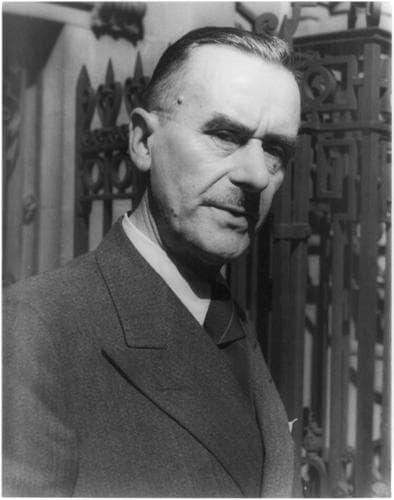
Paul Thomas Mann was a German novelist, short story writer, social critic, philanthropist, essayist, and the 1929 Nobel Prize in Literature laureate. His highly symbolic and ironic epic novels and novellas are noted for their insight into the psychology of the artist and the intellectual. His analysis and critique of the European and German soul used modernized versions of German and Biblical stories, as well as the ideas of Johann Wolfgang von Goethe, Friedrich Nietzsche, and Arthur Schopenhauer.
Similar books
- A Portrait of the Artist as a Young Man
James Joyce
3.6 (128k) average on GoodreadsLiterary FictionFocuses on the intellectual and artistic development of a young man and his alienation from society.
- Steppenwolf
Hermann Hesse
4.1 (136k) average on GoodreadsLiterary FictionDeals with the dual nature of an intellectual protagonist and his struggle with belonging.
- Nineteen Eighty-Four
George Orwell
4.2 (5.5M) average on GoodreadsFictionWinston Smith dreams of truth and rebellion in a world where Big Brother watches all, but he confronts the terrifying power of a regime that controls not just actions, but thoughts.
- The Frozen River
Ariel Lawhon
4.4 (600k) average on GoodreadsFictionIn 1789 Maine, a heroic midwife's diary helps her expose a murder and get justice in a town that wants to silence her.
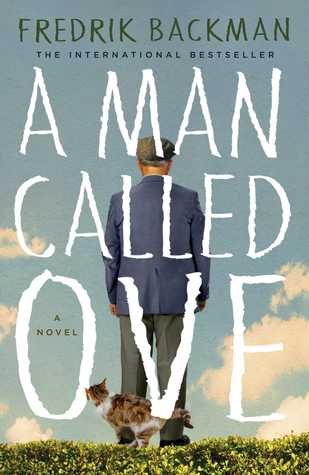
- A Man Called Ove
Fredrik Backman
4.4 (569k) average on GoodreadsFictionA stubborn widower, who lives by strict rules, finds his quiet world changed by a lively new family next door, making him face his past and find happiness in human connection.
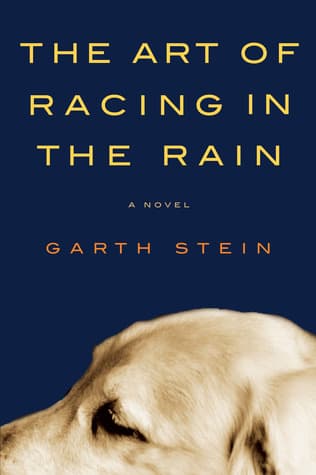
- The Art of Racing in the Rain
Garth Stein
4.2 (452k) average on GoodreadsFictionThrough the eyes of Enzo, a wise and observant dog, a race car driver's family navigates a journey of love, loss, and resilience, learning that life's most important lessons often come in the curves, not just on the straightaways.


Enjoyed the summary?
A summary gives you the shape of the book. The book itself has the detail, the examples and the voice.
Find Tonio Kröger on AmazonAs an Amazon Associate, BookBrief earns from qualifying purchases. How we're funded