

Synopsis
Covers the whole plot, including the ending.
- Difficulty
- Medium
- Pacing
- Moderate
- Mood
- Thought-provoking, Melancholy, Poignant, Reflective
- Read it if
- You are interested in the impact of colonialism on language and culture, historical fiction set in Ireland, or plays with deep philosophical undertones.
- Skip it if
- You prefer fast-paced plots with clear-cut resolutions or dislike stories heavily focused on linguistic and cultural identity.
Translations Plot Summary
Covers the whole plot, including the ending.
The Hedge-School in Baile Beag
The play starts in a hedge-school in Baile Beag, County Donegal, run by Hugh O'Donnell, a classical scholar, and his son, Manus. The students, including the elderly Jimmy Jack, young Sarah, and Maire, are in lessons. Manus often helps explain his father's teaching to the students. Owen, Hugh's other son, returns after six years in Dublin. He is with two English Royal Engineers: Captain Lancey and Lieutenant Yolland. Owen, who now prefers 'Roland' to the English, interprets for them. Their goal is to survey the area for the Ordnance Survey, which means standardizing and translating Irish place names into English. This immediately causes confusion and discomfort among the Irish speakers.
The Ordnance Survey Begins
Captain Lancey, with Owen interpreting, explains the Ordnance Survey's goal: to create a complete map of Ireland, which requires Anglicizing all local place names. Lancey is purely administrative and detached. Lieutenant Yolland, however, is interested in the Irish language and culture, though he cannot speak it. He likes Baile Beag and its people and feels uneasy about renaming places. Owen, at first eager and good at translating, works closely with Yolland, translating names like 'Poll na gCaorach' (Hole of the Sheep) into English. This process shows the cultural gap and the inherent loss in translation.
Maire's Aspirations and Yolland's Affection
Maire, a young woman tired of Baile Beag's poverty, wants to emigrate to America and learn English to help her escape. She asks Yolland to teach her English. Despite the language barrier, they connect deeply. Yolland, increasingly charmed by Maire and Irish life, tries to express his feelings. They share a tender, wordless moment, trying to communicate through touch and a few shared words. They eventually say they love each other, mostly by repeating place names like 'Druim Dubh' and 'Bun na hAbhann,' which gain new, personal meaning for them. This growing romance contrasts with the formal, destructive renaming process.
Manus's Disillusionment and Departure
Manus, Hugh's loyal son, feels increasingly left out. His father often overlooks him, favoring Owen, and Maire does not return his romantic interest, especially after she spends time with Yolland. Manus's role as a hedge-school assistant is weakened by Owen's return and the English presence. He sees his community's language and traditions fading. After a misunderstanding where he thinks Owen stole his wages, and further saddened by Maire's clear affection for Yolland, Manus decides to leave Baile Beag. His departure symbolizes an early loss for the community, a direct result of the changing social landscape.
The Ball and Yolland's Disappearance
A celebratory dance is held in the hedge-school, where Irish and English characters awkwardly mix. Yolland, drunk and immersed in Irish culture, says he loves the place and its people, though few understand his English. He dances with Maire, strengthening their bond. Later that night, Yolland goes missing. Captain Lancey, angry, announces that if Yolland is not found, drastic actions will be taken, including evicting villagers and destroying livestock. The disappearance creates fear and hostility in the community, breaking the fragile peace that had begun to grow.
Owen's Moral Conflict
After Yolland's disappearance, Owen must interpret Captain Lancey's harsher threats. He sees his community's fear and anger and starts to question his role in the Ordnance Survey. His initial enthusiasm for the project, seeing it as progress, turns into a moral conflict. He realizes the destructive effects of the renaming on his people and their identity. Owen tries to mediate, but Lancey is firm. This internal struggle marks a turning point for Owen; he begins to drop his 'Roland' persona and reconnect with his Irish roots, recognizing the cultural harm he has unknowingly helped.
The Search and Retribution
The English soldiers begin a brutal search for Yolland, destroying property and threatening villagers. Captain Lancey's demands become more extreme, including the threat to shoot all livestock and evict people if Yolland is not found. Hugh, the hedge-school master, gives a moving speech, reflecting on the cyclical nature of conquest and the resilience of language and culture. He accepts that change is coming but also speaks of his people's enduring spirit. Despite the rising tensions, Yolland's disappearance remains unsolved, leaving the community in terror and uncertainty.
Hugh's Farewell and the Future
As the play ends, Hugh, with Owen, prepares for the hedge-school's inevitable closure and the arrival of new National Schools, which will teach in English. He recites a passage from Virgil, reflecting on history's cycles and the past's loss. He acknowledges the pain of cultural erosion but also expresses a nuanced understanding of adaptation and survival. Yolland's fate is unknown, and Manus's return is uncertain. The play closes with a sense of significant change, loss, and an unclear future for the Irish language and its people, leaving the audience to consider the lasting impact of the Ordnance Survey.
Translations Characters
Hugh O'Donnell
Supporting
The erudite, often inebriated, master of the hedge-school.
Hugh is the aging, classical scholar who runs the hedge-school in Baile Beag. He is deeply learned, quoting Latin and Greek with ease, but also prone to drink and sometimes neglects his duties. He represents the old world of Irish scholarship and the traditional intellectual elite, clinging to classical learning even as his own language is threatened. He possesses a philosophical understanding of history and language, seeing the inevitability of change but also the enduring power of culture. His wisdom is often obscured by his eccentricities and his preference for the classics over practical matters.
Relationships: Manus O'Donnell (Son, often overlooked and undervalued); Owen O'Donnell (Son, favored and seen as more 'successful'); Jimmy Jack (Student and intellectual companion)
Manus O'Donnell
Supporting
Hugh's loyal, lame son and assistant, deeply rooted in the community.
Manus is Hugh's lame son, who diligently assists in the hedge-school, often acting as a bridge between his father's abstract teaching and the students' needs. He is quiet, responsible, and deeply attached to Baile Beag and its traditions. He is in love with Maire but feels overshadowed by his brother Owen and later by Yolland. Manus represents the vulnerable, traditional heart of the community, whose loyalty and quiet efforts are often unrewarded. His physical lameness can be seen as a metaphor for the hampered state of his culture.
Relationships: Hugh O'Donnell (Father, from whom he seeks approval but often feels ignored); Owen O'Donnell (Brother, whose return displaces him); Maire (Unrequited love interest)
Owen O'Donnell (Roland)
Protagonist
Hugh's son, returned from Dublin, acting as interpreter for the English.
Owen is Hugh's other son, who returns from Dublin having adopted the English name 'Roland' and become an interpreter for the Royal Engineers. Initially, he is enthusiastic about the Ordnance Survey, believing it to be a force for progress and modernization. He is charismatic, intelligent, and skilled in navigating both English and Irish cultures. However, as he witnesses the destructive impact of the renaming on his community and the growing hostility, he experiences a profound moral crisis, torn between his newfound loyalty to the English and his deep-seated connection to his Irish heritage.
Relationships: Hugh O'Donnell (Father, whose intellectual legacy he initially seems to reject); Manus O'Donnell (Brother, whom he inadvertently displaces); Lieutenant Yolland (Colleague and friend, whose disappearance deeply affects him)
Lieutenant George Yolland
Supporting
An English Royal Engineer, enchanted by Irish culture and language.
Lieutenant Yolland is a young, idealistic English soldier from the Royal Engineers, assigned to the Ordnance Survey. Unlike Captain Lancey, he is not driven by military or administrative ambition but by a genuine fascination and affection for Irish culture, language, and the people of Baile Beag. He struggles with the task of renaming places, feeling a sense of loss and discomfort. He falls in love with Maire and attempts to bridge the language barrier through personal connection. Yolland represents a potential for cross-cultural understanding, but his naive goodwill ultimately becomes a catalyst for tragedy.
Relationships: Owen O'Donnell (Colleague and friend, his primary interpreter and guide); Maire (Love interest, with whom he shares a profound, non-verbal connection); Captain Lancey (Superior, with whom he has differing views on the survey)
Maire Chatach
Supporting
A young woman eager to learn English and escape Baile Beag.
Maire is a spirited young woman in Baile Beag, frustrated by the limitations of her rural life and the lack of opportunity. She dreams of emigrating to America and believes that learning English is her ticket to a better future. She is practical, ambitious, and less sentimental about traditional Irish ways than some others. Her desire for English leads her to Yolland, with whom she develops a deep, romantic connection despite the language barrier. Maire represents the younger generation's yearning for progress and escape, even if it means abandoning parts of their heritage.
Relationships: Manus O'Donnell (Childhood friend and unrequited admirer); Lieutenant Yolland (Love interest, with whom she shares a profound bond); Owen O'Donnell (Acquaintance, through whom she learns about the English world)
Captain Lancey
Antagonist
The pragmatic and detached English Royal Engineer leading the survey.
Captain Lancey is the commanding officer of the Royal Engineers' detachment. He is a pragmatic, efficient, and somewhat humorless military man, solely focused on the administrative task of the Ordnance Survey. He views the renaming of Irish places as a purely logistical exercise, devoid of cultural or emotional significance. He embodies the colonial mindset, seeing the Irish language and customs as obstacles to progress and order. His inability to understand or sympathize with the local population makes him a rigid, unyielding figure, especially after Yolland's disappearance, when he resorts to threats and intimidation.
Relationships: Owen O'Donnell (Interpreter, whose skills he relies on but whose cultural ties he ignores); Lieutenant Yolland (Subordinate, whose idealism he likely tolerates but doesn't understand)
Jimmy Jack Cassie
Supporting
An elderly, eccentric scholar who lives in a world of classical mythology.
Jimmy Jack is an elderly 'scholar' at the hedge-school, an autodidact who lives in a world of classical Greek and Roman mythology. He reads Homer in the original Greek and often confuses reality with the ancient myths, believing he is engaged to the goddess Pallas Athene. He represents a form of escapism and the enduring, if somewhat detached, intellectual tradition of the Irish. His character adds a touch of tragicomic relief, but also underscores the isolation of an older generation whose cultural touchstones are becoming increasingly irrelevant in the face of imposed modernity.
Relationships: Hugh O'Donnell (Fellow scholar and drinking companion); Sarah (Student, whom he gently encourages)
Sarah Timoney
Supporting
A shy, non-verbal student who finds her voice, however briefly.
Sarah is one of the students at the hedge-school. She is extremely shy and has difficulty speaking, often relying on gestures. Manus takes a special interest in her, helping her to articulate her name. Her brief ability to speak her name, 'Sarah,' symbolizes the fragile emergence of identity and voice within a community on the cusp of losing its linguistic heritage. Her eventual retreat back into silence after Manus's departure is a poignant reflection of the vulnerability of individual expression when its cultural support system is eroded.
Relationships: Manus O'Donnell (Her primary helper and encourager); Hugh O'Donnell (Teacher)
Translations Themes
Language and Identity
The play shows how language connects to individual and cultural identity. The forced Anglicization of place names directly attacks the Irish people's sense of self and history. Characters like Owen, who first uses 'Roland' and English, struggle with a split identity. Others like Hugh and Manus hold onto Gaelic as a key part of who they are. The untranslatable nuances and historical layers in Irish place names, like 'Druim Dubh' or 'Tobair Vree,' are removed, leading to a loss of shared memory and a redefinition of the landscape that distances its inhabitants. This theme is central to the play's conflict, showing how language conquest is also an identity conquest.
“It is not the King's English the King speaks. This is a bastard language.”
Colonialism and Resistance
Friel explores the subtle and obvious ways colonialism works through the seemingly harmless act of mapping. The Ordnance Survey, presented as an administrative task, is a powerful tool for British control and for dismantling Irish culture. Captain Lancey represents the detached, bureaucratic side of colonialism, while Yolland, despite his good intentions, is still part of this process. The play shows that resistance is not always violent; it can be found in preserving language, storytelling, and community bonds, even as these are undermined. The eventual military response to Yolland's disappearance highlights the underlying power imbalance and the threat of force that supports colonial rule.
“We are being wiped out, Manus, and nobody is doing anything.”
The Nature of Translation and Miscommunication
Translation is a central metaphor, not just for language but for cultural understanding. Owen's role as interpreter shows the difficulties and losses in translating between two very different ways of seeing the world. Literal translations often fail to capture the poetic, historical, or emotional meaning of Irish names, simplifying their meaning. The play also explores miscommunication beyond language, such as the love between Maire and Yolland, which grows despite a language barrier but eventually fails due to the larger cultural gap. This theme suggests that true understanding requires more than just word-for-word conversion; it needs empathy and recognizing different realities.
“We name a thing and, in a sense, we create it.”
Loss and Memory
The play has a strong sense of coming loss—the loss of the Irish language, traditional education (the hedge-school), and a way of life. Renaming places directly attacks shared memory, as the stories and histories in the original names are erased. Characters like Hugh mourn the passing of old ways, while Maire wants to escape a dying culture. Yolland's disappearance and Manus's departure represent personal losses that mirror the larger cultural erosion. Friel suggests that while change is unavoidable, how it happens can be deeply traumatic, separating a people from their past and their identity.
“It is not the King's English the King speaks. This is a bastard language.”
The Power of Education and Oral Tradition
The hedge-school itself symbolizes traditional Irish education, where classical learning exists with local knowledge and oral tradition. Hugh and Manus represent different aspects of this system: Hugh's classical knowledge and Manus's practical teaching. The imminent closing of the hedge-school and its replacement by English-speaking National Schools signifies the systematic dismantling of native educational structures. The play emphasizes the importance of oral tradition, storytelling, and shared community memory in preserving culture, contrasting it with the written, standardized, and imposed knowledge of the English survey. The students' struggles with literacy also show the limits and potential for empowerment through education.
“A civilization can be imprisoned in a linguistic contour which no longer matches the landscape of fact.”
Plot Devices & Literary Techniques
The Language Barrier
A literal and metaphorical divide between characters and cultures.
The inability of most Irish characters to speak English, and the English characters to speak Irish, is a central device. It creates both comedic and tragic moments, driving much of the miscommunication and highlighting the cultural chasm. Owen acts as the crucial, yet flawed, bridge. This barrier is not just about words; it symbolizes the deeper divide in understanding, values, and power between the colonizer and the colonized. It forces characters like Maire and Yolland to seek non-verbal ways to connect, emphasizing the limits of language while also demonstrating its profound importance.
Place Names and Cartography
The act of renaming as a tool of cultural and political conquest.
The Ordnance Survey and the systematic Anglicization of Irish place names are the primary plot drivers. This seemingly benign administrative task becomes a powerful metaphor for colonialism, demonstrating how controlling the map means controlling the narrative and identity of a place. Each name holds historical, mythological, and personal significance for the Irish, which is erased when translated into a standardized English equivalent. The process is a symbolic 'erasure' of Irish history and culture, replacing it with a new, imposed reality that serves the colonial power. It makes concrete the abstract concept of cultural imperialism.
The Hedge-School
A setting that symbolizes traditional Irish culture and education on the brink of extinction.
The hedge-school serves as the central setting and a powerful symbol. It represents the informal, traditional Irish education system, where classical learning and local knowledge are passed down. Its ramshackle nature, Hugh's eccentric teaching, and Manus's diligent support embody a dying way of life. The arrival of the English soldiers and the impending establishment of National Schools directly threaten its existence. The hedge-school is a microcosm of Baile Beag, showcasing its intellectual traditions, community bonds, and vulnerability to external forces, making its inevitable closure a poignant symbol of cultural loss.
Yolland's Disappearance
A catalyst that escalates conflict and reveals the underlying tensions.
Lieutenant Yolland's sudden disappearance is a pivotal plot device. It transforms the initially uneasy coexistence between the English and Irish into open hostility and fear. It serves as a dramatic turning point, forcing characters like Owen to confront their loyalties and revealing the brutal underbelly of colonial power through Captain Lancey's retaliatory threats. The ambiguity of his fate leaves the audience to ponder whether it was an accident, an act of resistance, or a tragic misunderstanding, underscoring the volatile nature of the cultural clash and the individual casualties of imperial projects.
Translations Quotes
“To remember everything is a form of madness.”
“We are being wiped out, Tom, my father said. No, I said, we're being translated.”
“Words are not things.”
“It is not the King's English, it is the King's Gaelic.”
“Sure, when I open my mouth, I'm a walking anthology of the Irish language.”
“We name a thing and, in a sense, at that moment, it exists.”
“To hell with all your genealogies! I want to live now—now—now!”
“My mind is a tabula rasa, a blank sheet. I can learn anything.”
“It's an eviction of sorts. From ourselves.”
“Indeed, it is. A civilization can be imprisoned in a linguistic contour.”
“We must learn where we are in this new world.”
“The only thing I know about Latin is that it's a dead language.”
“Consensus is what is important. Not accuracy.”
“I will provide a lexicon of the new names.”
Quiz
10 questions on the plot and the characters. Each answer comes with a short explanation.
Question 1
What is the primary activity the Royal Engineers are engaged in when they arrive in Baile Beag?
- Building a new military barracks.
- Conducting an Ordnance Survey to map the area.
- Teaching English to the local Irish-speaking community.
- Searching for ancient Irish artifacts.
Show answer
B. Conducting an Ordnance Survey to map the area. The Royal Engineers are in Baile Beag to conduct the first Ordnance Survey, which involves mapping the land and standardizing place names.
Question 2
What is the name of the townland where the hedge-school is located?
- Ballybeg
- Baile Beag
- Donegal Town
- An Grianán
Show answer
B. Baile Beag The play explicitly states the action takes place at a hedge-school in the townland of Baile Beag.
Question 3
What is the main cultural impact of the Ordnance Survey on the Irish community in Baile Beag?
- It leads to a revival of traditional Irish music.
- It results in the replacement of Gaelic place names with English ones.
- It encourages the locals to learn Latin and Greek.
- It causes a mass emigration of the younger generation.
Show answer
B. It results in the replacement of Gaelic place names with English ones. A central theme of the play is the cultural erosion caused by the translation and Anglicization of Irish place names by the Ordnance Survey.
Question 4
Who is Manus's brother, who returns from Dublin and acts as an interpreter for the British soldiers?
- Hugh
- Owen (Roland)
- Jimmy Jack
- Yolland
Show answer
B. Owen (Roland) Owen, who later renames himself Roland for the British, is Manus's brother and plays a crucial role as an interpreter.
Question 5
What is the significance of the character Jimmy Jack Friel?
- He represents the future generation embracing English culture.
- He is the oldest scholar, a polyglot autodidact who quotes Homer in the original.
- He is the local blacksmith, resistant to the British presence.
- He is the leader of the local resistance movement.
Show answer
B. He is the oldest scholar, a polyglot autodidact who quotes Homer in the original. Jimmy Jack is described as an 'elderly polyglot autodidact who reads and quotes Homer in the original,' representing a deep connection to classical learning and Irish oral tradition.
Question 6
What is the primary language spoken by the community in Baile Beag at the beginning of the play?
- English
- Latin
- Irish (Gaelic)
- Scots Gaelic
Show answer
C. Irish (Gaelic) The play explicitly states Baile Beag is an 'Irish speaking community,' highlighting the linguistic barrier and the impact of English imposition.
Question 7
How does the character of Lieutenant Yolland view his role in the Ordnance Survey and the Irish language?
- He is enthusiastic about replacing all Irish names with English equivalents.
- He feels a growing affection for Irish culture and struggles with his duty to Anglicize names.
- He is completely indifferent to the cultural implications of his work.
- He believes the Irish language should be preserved at all costs, even if it delays the survey.
Show answer
B. He feels a growing affection for Irish culture and struggles with his duty to Anglicize names. Yolland develops a romanticized view of Irish culture and struggles with the destructive nature of his work, particularly in his interactions with Maire and his attempts to learn Irish.
Question 8
The play uses the concept of 'translation' in multiple ways. Which of these is NOT a primary form of 'translation' explored in the play?
- Linguistic translation between Irish and English.
- The literal translation of place names from Gaelic to English.
- The translation of ancient scrolls into modern scientific texts.
- The cultural translation or shift from an Irish identity to a more anglicized one.
Show answer
C. The translation of ancient scrolls into modern scientific texts. While the play deals with language and history, it does not focus on the translation of ancient scrolls into scientific texts. Its 'translations' are primarily linguistic, cartographic, and cultural.
Question 9
What is the ultimate fate of Manus, Hugh's son and the hedge-school master's assistant?
- He marries Maire and stays in Baile Beag.
- He leaves Baile Beag, presumably to escape the changes and his personal disappointments.
- He joins the Royal Engineers as an interpreter.
- He becomes a prominent figure in the local English administration.
Show answer
B. He leaves Baile Beag, presumably to escape the changes and his personal disappointments. Manus, feeling increasingly marginalized and heartbroken, particularly after Maire's interest in Yolland, leaves Baile Beag, symbolizing a personal loss amidst the larger cultural upheaval.
Question 10
How does the play 'Translations' make a 'richly suggestive statement about Irish - and English - history'?
- By depicting a decisive battle between Irish rebels and the British army.
- By focusing on the seemingly innocuous administrative act of naming, revealing its profound and lasting cultural and political consequences.
- By celebrating the complete and peaceful integration of both cultures.
- By portraying the economic benefits that the Ordnance Survey brought to rural Ireland.
Show answer
B. By focusing on the seemingly innocuous administrative act of naming, revealing its profound and lasting cultural and political consequences. The play uses the specific historical event of the Ordnance Survey and the renaming of places to illustrate how administrative acts can have deep and far-reaching impacts on national identity, language, and culture, thus commenting on Anglo-Irish relations.
Translations FAQ
What is the central conflict in 'Translations' and where is it set?
The central conflict in 'Translations' revolves around the cultural clash between the Irish-speaking community of Baile Beag and the British Royal Engineers tasked with Anglicizing Irish place names. It is set in a hedge-school in rural County Donegal, Ireland, in August 1833, as the Ordnance Survey begins its work.
Who are the key Irish characters introduced at the hedge-school?
The key Irish characters include Hugh, the master of the hedge-school, and his two sons, Manus and Owen. Other notable scholars are Jimmy Jack, an elderly man obsessed with Greek and Latin classics, and Maire, a young woman eager to learn English and emigrate to America.
What is Owen's role in the Ordnance Survey and how does it affect his community?
Owen acts as the translator and intermediary between the British soldiers, particularly Lieutenant Yolland, and his Irish community. His involvement in translating and often altering the Gaelic place names directly contributes to the erosion of Irish identity and language, despite his initial belief that he is merely assisting a harmless administrative task.
Describe the relationship that develops between Yolland and Maire.
Lieutenant Yolland, an idealistic British soldier, becomes infatuated with Maire. Despite their significant language barrier, they share moments of profound connection and understanding, particularly during the scene where they exchange place names, symbolizing a fleeting, almost utopian cross-cultural bond.
What ultimately happens to Yolland and what are the immediate consequences?
Yolland mysteriously disappears, presumed murdered, which triggers a severe reaction from the British military. Captain Lancey threatens to evict the local population and destroy their livestock if Yolland is not found, plunging Baile Beag into fear and uncertainty.
What is the significance of the two different names Owen uses for himself: Roland and Owen?
Owen initially introduces himself as 'Roland' to the British soldiers, a more Anglicized version of his name, symbolizing his eagerness to assimilate and facilitate the survey. This subtle act foreshadows his deeper role in the Anglicization of place names and the subsequent loss of Irish identity.
How does Jimmy Jack's obsession with Greek and Latin classics serve as a commentary on Irish culture?
Jimmy Jack's deep immersion in classical languages, to the point of neglecting his immediate reality, mirrors the Irish community's own reliance on an ancient, rich linguistic heritage that is now under threat. His inability to engage with the present highlights the vulnerability of a culture deeply rooted in its past.
What does Manus's injury (the lame leg) symbolize within the play's broader themes?
Manus's lame leg can symbolize the wounded or hobbled state of Irish culture and language, struggling to keep pace with the encroaching English influence. It also contributes to his feelings of inadequacy and his eventual departure, mirroring the displacement felt by many Irish people.
Explain the psychological impact of the name changes on the Irish characters, particularly Hugh and Manus.
The name changes inflict a profound psychological blow, as they strip the Irish characters of their connection to their land and history, leading to a sense of dispossession. Hugh laments the loss of their 'identity', while Manus, already feeling marginalized, becomes even more alienated and ultimately leaves, unable to cope with the cultural erasure.
How does Maire's desire to learn English reflect a psychological coping mechanism or aspiration?
Maire's fervent desire to learn English and emigrate represents a psychological aspiration for a better future and an escape from the perceived limitations of her Irish-speaking world. It's a coping mechanism to adapt and survive, even if it means abandoning her cultural roots, driven by a pragmatic need for opportunity.
Analyze Owen's internal conflict and his eventual disillusionment with the Ordnance Survey.
Owen initially believes he is bridging a gap and facilitating progress, but his internal conflict grows as he witnesses the destructive impact of the name changes. His eventual disillusionment stems from realizing that the 'translations' are not benign but an act of cultural subjugation, leading him to question his own complicity and identity.
What psychological effect does Yolland's idealism have on the audience's perception of the British presence?
Yolland's naive idealism and genuine affection for Ireland complicate the audience's perception of the British, moving beyond simple villainy. His character highlights the unintended consequences of imperial actions, suggesting that even well-meaning individuals can be agents of cultural destruction, fostering a more nuanced psychological understanding of colonialism.
Is the play ultimately pessimistic or does it offer any glimmer of hope for Irish culture?
While the play ends on a somber note with the threat of violence and the imminent loss of language, it offers a glimmer of hope through Hugh's final monologue, emphasizing the enduring power of memory and the resilience of the human spirit. The act of telling this story itself is a form of cultural preservation.
How does the play challenge the notion of 'translation' as a neutral act?
The play profoundly challenges the neutrality of 'translation' by demonstrating it as an act of power and cultural imposition, rather than simple equivalence. The Anglicization of place names is shown to erase history, alter identity, and sever the community's connection to its land, revealing translation as a political act.
To what extent is the language barrier between the Irish and English characters a metaphor for deeper cultural misunderstandings?
The literal language barrier serves as a powerful metaphor for the profound cultural misunderstandings and irreconcilable worldviews between the Irish and English. Even when words are translated, the underlying values, histories, and ways of life remain divergent, leading to tragic outcomes and a lack of true communion.
What is the significance of the play's title, 'Translations', beyond the literal act of converting names?
The title 'Translations' extends beyond the literal renaming of places to encompass broader themes of cultural translation, the translation of power dynamics, and the psychological 'translation' of identity under colonial pressure. It speaks to how one culture is reinterpreted and redefined by another, often with devastating consequences for the original.
Could Yolland's disappearance be interpreted symbolically, rather than just literally?
Yolland's disappearance can be interpreted symbolically as the vanishing of a benevolent, albeit naive, form of cross-cultural engagement and understanding. His loss signifies the collapse of the fragile bridge between the two cultures and the descent into conflict, leaving behind only the stark reality of imposition.
How does the play use the hedge-school setting to highlight the fragility of Irish cultural institutions?
The hedge-school, a traditional, informal institution for learning, highlights the fragility of Irish cultural preservation in the face of formal British education and administration. It represents a vulnerable bastion of Irish language and heritage, easily threatened and ultimately overshadowed by the more powerful, organized forces of the British Empire.
About the author

Brian Friel was an acclaimed Irish playwright and short story writer. His most famous work, 'Translations,' is a seminal piece of postcolonial literature, exploring themes of language, identity, and cultural change. Friel's plays often delve into the complexities of Irish life and history, earning him widespread critical recognition and numerous awards.
Similar books
- To Kill a Mockingbird
Harper Lee
4.3 (4.5M) average on GoodreadsHistorical FictionIn the 1930s Jim Crow South, Harper Lee writes about racial injustice, moral growth, and the quiet courage of a lawyer father, Atticus Finch, as seen through his young daughter's eyes.
- The Great Gatsby
F. Scott Fitzgerald
3.9 (3.8M) average on GoodreadsHistorical FictionIn the opulent Roaring Twenties, a mysterious millionaire's lavish parties hide his desperate, tragic pursuit of a lost love, exposing the emptiness within the American Dream.
- Pride and Prejudice
Jane Austen
4.3 (3M) average on GoodreadsHistorical FictionIn a society focused on status and money, Elizabeth Bennet navigates love and pride, challenging Mr. Darcy and social expectations to find true affection.
- Angels & Demons
Dan Brown
3.9 (2.7M) average on GoodreadsThrillerA Harvard symbologist races through Rome's ancient sites, deciphering cryptic clues to unmask the Illuminati and stop a vengeful plot to destroy the Vatican with a stolen antimatter weapon.
- The Kite Runner
Khaled Hosseini
4.3 (2.4M) average on GoodreadsHistorical FictionIn pre-Taliban Afghanistan, a wealthy boy's betrayal of his servant's son during a kite-running tournament starts a lifelong journey for amends as his country collapses.
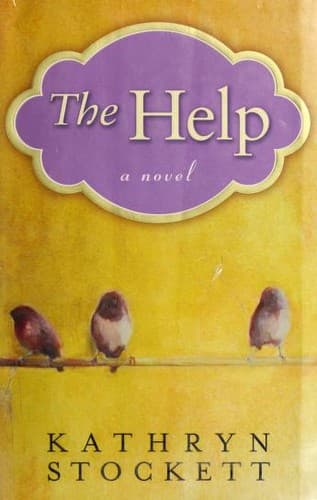
- The Help
Kathryn Stockett
4.5 (2.2M) average on GoodreadsHistorical FictionIn 1960s Mississippi, an aspiring writer and two Black maids risk everything to expose the harsh realities of their lives, defying societal norms with stories that start a quiet revolution.





Enjoyed the summary?
A summary gives you the shape of the book. The book itself has the detail, the examples and the voice.
Find Translations on AmazonAs an Amazon Associate, BookBrief earns from qualifying purchases. How we're funded