

Synopsis
Covers the whole plot, including the ending.
- Difficulty
- Medium
- Pacing
- Variable
- Mood
- Emotional, Dramatic, Romantic, Heartbreaking, Resilient
- Read it if
- You enjoy epic, emotionally intense sagas spanning decades, focusing on enduring friendships, first loves, and the profound impact of tragedy and sacrifice.
- Skip it if
- You prefer light-hearted reads, are sensitive to heavy emotional themes and tragedy, or dislike morally complex characters.
Tully Plot Summary
Covers the whole plot, including the ending.
Childhood Beginnings in Rome, Georgia
Tully Makker, a spirited and defiant girl from a poor, abusive family, moves to Rome, Georgia. She quickly forms a close bond with Jennifer and Julie, two girls from more stable, affluent backgrounds, despite their socioeconomic differences. Their friendship is forged in childhood adventures, shared secrets, and the protective loyalty Tully offers. Tully's home life is difficult with her mother's alcoholism and her father's absence, leaving her to largely raise herself and her younger brother, Billy. This early hardship hardens Tully but also gives her a deep need for connection and loyalty, which she finds in her two best friends. They navigate early school years, supporting each other through childhood trials and solidifying their unbreakable bond.
Teenage Years and First Loves
As the girls enter high school, their lives become more complicated with the introduction of boys and burgeoning romantic relationships. Tully falls deeply in love with Robin, a kind and artistic boy who sees beyond her rough exterior. Jennifer dates Jack, a charismatic but troubled young man, while Julie also experiences her own first romance. Their friendships are tested by the jealousies and insecurities that come with teenage love, but they remain fiercely loyal to one another. Tully's relationship with Robin is particularly intense, offering her a glimpse of a stable, loving future she desperately craves, contrasting sharply with her chaotic home life. The group spends their days navigating school, parties, and the emotional rollercoaster of first loves and heartbreaks.
The Tragic Accident
A tragic event occurs when Tully, Robin, Jennifer, and Jack are involved in a horrific car accident. Robin, who was driving, is killed instantly. Tully, critically injured, survives but is left with immense physical and emotional scars. Jennifer and Jack also suffer injuries, but the emotional trauma of losing Robin impacts all of them deeply. This tragedy shatters their innocent teenage world, forcing them to confront grief, guilt, and the fragility of life. Tully struggles immensely with Robin's death, blaming herself and withdrawing into a deep depression. The accident marks a clear turning point, casting a long shadow over their lives and fundamentally changing the dynamics of their friendships and individual paths forward.
Tully's Recovery and Recklessness
After Robin's death, Tully struggles to cope. Her grief leads to self-destructive behavior, including reckless driving and emotional withdrawal. She pushes away Jennifer and Julie, finding it difficult to connect with anyone who reminds her of the past. Her home life continues to deteriorate, making her feel more isolated and despairing. Jack, also deeply affected by the accident, tries to support Tully, but their shared trauma creates a complex and sometimes volatile connection. Tully's path during this period is marked by a raw, untamed grief that she doesn't know how to process, leading her down a dangerous road of emotional pain and physical risk-taking as she tries to outrun her memories and the overwhelming sense of loss.
Reconciliation and New Beginnings
Through the unwavering support of Jennifer and Julie, and her own resilience, Tully slowly begins to pull herself out of the darkness. She eventually finds purpose and a path forward. Her relationship with Jack deepens, as they share a unique understanding of their mutual loss and trauma. Despite the complicated emotions surrounding their connection, born from tragedy and the ghost of Robin, they find solace and love in each other. Tully and Jack eventually marry, attempting to build a stable life together. This period signifies Tully's gradual return to a semblance of normalcy, embracing the possibility of happiness and a future, even one forever marked by the past.
Motherhood and Career
Tully and Jack start a family, and Tully finds joy and purpose in motherhood. She becomes a devoted and loving mother, determined to provide her children with the stable and nurturing environment she never had. Alongside her family life, Tully also pursues a career, demonstrating her strength and ambition. She works hard to create a secure and comfortable life for her family, finally achieving a sense of control and contentment that had eluded her for so long. Her relationships with Jennifer and Julie evolve but remain central to her life, as they continue to share milestones and support each other through the challenges of adulthood. Tully believes she has finally found her footing and built the life she always dreamed of.
The Return of the Past
Just when Tully believes she has everything under control, her past resurfaces in an unexpected and devastating way. Secrets and unresolved issues from her youth, particularly those surrounding Robin's death and the car accident, begin to unravel. These revelations challenge her understanding of key events and the people she loves, shaking the foundations of her seemingly stable life. The emotional impact is immense, forcing Tully to re-examine her memories, confront long-buried truths, and question the narratives she has held onto for years. This period marks a dramatic shift, as Tully is once again plunged into uncertainty and emotional turmoil, facing the possibility that her future might be irrevocably altered by the weight of her history.
Confrontation and Betrayal
As the past unravels, Tully is forced to confront Jack, Jennifer, and Julie, demanding answers about the events surrounding Robin's death. The truth, when it finally emerges, is far more complex and painful than she could have imagined. She discovers elements of betrayal and complicity, particularly regarding Jack's role and the full circumstances of the accident. This confrontation is emotionally charged, leading to heartbreaking revelations that test the limits of her trust and loyalty. Tully struggles to reconcile the people she loves with the difficult truths they reveal, feeling a profound sense of betrayal. Her perception of her relationships and her own past is irrevocably altered by these painful disclosures.
The Ultimate Sacrifice
Facing the devastating consequences of the newly revealed truths, Tully is presented with an impossible choice. To protect her children and secure their future, she must make an ultimate sacrifice. This decision involves profound personal loss and a redefinition of her own happiness. The novel explores the depths of a mother's love and the lengths to which Tully is willing to go to shield her family from the repercussions of the past. This act is both heartbreaking and empowering, demonstrating Tully's immense strength and her unwavering commitment to those she loves, even at great personal cost. It's a moment of profound selflessness that reshapes her destiny.
Life Beyond the Sacrifice
After her sacrifice, Tully embarks on a new chapter of her life. She must rebuild, not just her circumstances, but her sense of self and purpose. The novel follows her journey as she grapples with the aftermath of her choices, the lingering pain of the past, and the challenges of forging a new identity. Despite the heartache, Tully demonstrates remarkable resilience and inner strength. She finds new ways to connect with her children, maintain her enduring friendships, and discover unexpected sources of joy and fulfillment. Her story becomes a testament to the enduring power of the human spirit to heal, adapt, and find meaning even after profound loss and difficult decisions.
Principal Figures
Tully Makker
Protagonist
A fiercely loyal and resilient woman from a difficult background.
Tully is the central figure of the novel, defined by her tough exterior, unwavering loyalty, and deep capacity for love. Growing up in poverty with an alcoholic mother, she develops a street-smart pragmatism and a fierce protectiveness towards those she cares about. Despite her rough edges and occasional recklessness, she possesses a vulnerable core and a yearning for stability and unconditional love. Her life is a series of trials, from childhood trauma to devastating loss, yet she consistently demonstrates an incredible resilience and determination to survive and protect her loved ones.
Relationships: Jennifer (Best friend, sisterly bond); Julie (Best friend, sisterly bond); Robin (First love, profound connection); Jack (Husband, shared trauma, complicated love); Billy (Younger brother, whom she largely raised); Her Children (Deeply loving and protective mother)
Jennifer
Supporting
Tully's steadfast and supportive best friend.
Jennifer is one of Tully's two best friends, coming from a more stable and affluent background. She is often depicted as the more grounded and emotionally mature of the trio, offering a steady presence and unconditional support to Tully through all her trials. Jennifer's friendship with Tully is deep and enduring, weathering romantic entanglements, tragedy, and the passage of time. She is fiercely loyal, often acting as a conscience or a source of comfort for Tully, and represents the enduring power of female friendship.
Relationships: Tully (Best friend, unwavering support); Julie (Close friend); Jack (Former boyfriend, complicated history)
Julie
Supporting
Tully's other best friend, initially more naive and gentle.
Julie is the third member of the inseparable trio of friends. She is often portrayed as more gentle and perhaps a bit more naive in their younger years, contrasting with Tully's toughness and Jennifer's pragmatism. Despite their differing personalities, Julie's bond with Tully is unbreakable. She provides emotional warmth and a different perspective, rounding out the dynamic of their friendship. Like Jennifer, Julie's loyalty to Tully is profound, and she stands by her through thick and thin, though she also experiences her own challenges and growth throughout the narrative.
Relationships: Tully (Best friend, deep sisterly bond); Jennifer (Close friend)
Robin
Supporting
Tully's first love, a kind and artistic young man.
Robin is Tully's first great love, a gentle and artistic soul who sees and cherishes the real Tully beneath her tough exterior. His love offers Tully a glimpse of a different future, one filled with stability, affection, and understanding, which she desperately craves. His tragic death in a car accident is the pivotal event that shapes much of Tully's subsequent life, leaving a profound and lasting impact on her and all her friends. Robin represents lost innocence and the 'what if' of a life that could have been, becoming a ghost that haunts Tully's journey.
Relationships: Tully (First love, profound romantic connection); Jack (Friend, fellow passenger in the accident)
Jack
Supporting
Tully's husband, linked by shared tragedy and complicated love.
Jack is a complex character, initially Jennifer's boyfriend, who becomes intricately linked with Tully through the tragic car accident that kills Robin. He is charismatic but also harbors his own demons and secrets. His relationship with Tully is born from shared trauma and evolves into a deep, complicated love and marriage. While he offers Tully stability and a family, his past actions and complicity in certain events create ongoing tension and ultimately lead to painful revelations. Jack represents the messy reality of love and the lasting impact of choices made in the shadow of tragedy.
Relationships: Tully (Husband, complicated love, shared trauma); Jennifer (Former boyfriend); Robin (Friend, passenger in the accident)
Billy Makker
Supporting
Tully's younger brother, often cared for by her.
Billy is Tully's younger brother, for whom Tully often takes on a maternal role due to their mother's neglect. He represents Tully's early responsibilities and her innate protective instincts. His presence underscores the harsh realities of Tully's childhood and her resilience in stepping up to care for her family. Though not as prominent in the later parts of the novel, Billy's well-being is a constant concern for Tully and highlights her deep-seated desire to create a better life for those she loves.
Relationships: Tully (Sister, caregiver); Mrs. Makker (Mother, neglectful)
Mrs. Makker
Mentioned
Tully's alcoholic and often neglectful mother.
Tully's mother is largely an absent or negative force in her childhood, struggling with alcoholism and often failing to provide a stable home for Tully and Billy. Her neglect and emotional unavailability are major contributing factors to Tully's independent nature and her deep-seated yearning for love and stability. While not a central character, her influence profoundly shapes Tully's early life and her determination to be a different kind of mother.
Relationships: Tully (Daughter, strained and neglectful relationship); Billy (Son, neglectful relationship)
Themes & Insights
The Enduring Power of Female Friendship
The bond between Tully, Jennifer, and Julie is the bedrock of the novel, providing solace, strength, and unwavering support through childhood, teenage heartbreak, and adult tragedy. Despite differing backgrounds and the complexities introduced by romantic relationships and secrets, their loyalty to each other remains a constant. For Tully, especially, this friendship offers a sense of family and belonging that her own home life lacks, as seen in their shared childhood adventures and Jennifer and Julie's steadfast presence after Robin's death. This theme highlights how these relationships can be as profound and transformative as romantic love.
“We were like three sides of a triangle, strong and unbreakable.”
The Weight of the Past and Unresolved Trauma
The novel explores how past events, particularly the tragic car accident and its hidden truths, continue to shape and haunt the characters years later. Tully's journey is defined by her struggle to come to terms with Robin's death and the subsequent revelations about what truly happened. This theme shows how secrets, guilt, and unresolved grief can fester, eventually resurfacing to demand a reckoning, even in a seemingly stable adult life. The characters are forced to confront how their past choices and omissions continue to influence their present and future, demonstrating the long-lasting impact of trauma.
“The past wasn’t a place you left behind; it was a shadow that followed you.”
Sacrifice and Motherhood
A central theme, especially in the latter half of the book, is the sacrifices a mother is willing to make for her children. Tully, having experienced a difficult and unstable childhood, is fiercely protective of her own children. When faced with devastating truths that threaten their future, she makes an ultimate, heartbreaking sacrifice to ensure their safety and well-being. This theme explores the selfless nature of maternal love, the difficult choices parents face, and the redefinition of happiness and fulfillment when prioritizing one's children above all else. It underscores Tully's growth into a truly selfless and powerful figure.
“A mother’s love was a force of nature, capable of moving mountains and breaking hearts.”
Resilience and Survival
Tully's life is a testament to the human capacity for resilience in the face of immense hardship. From her challenging childhood marked by poverty and neglect, through the grief of losing Robin and the subsequent self-destructive period, to the ultimate sacrifice she makes, Tully consistently demonstrates an extraordinary will to survive and thrive. This theme shows her ability to endure trauma, adapt to changing circumstances, and ultimately find strength within herself to rebuild her life, even when it seems completely shattered. Her journey is one of continuous struggle and unwavering determination.
“I learned early that if you wanted to survive, you had to fight for it, every single day.”
Plot Devices & Literary Techniques
Flashback/Non-linear Narrative
The story often shifts between Tully's present and her past.
While not strictly non-linear throughout, the narrative frequently employs extended flashbacks or shifts in focus to recall specific events from Tully's childhood and teenage years. This device is crucial for revealing the foundational moments of her friendships, her first love with Robin, and the tragic accident. By gradually unveiling the past, the author builds suspense and allows the reader to understand the deep-seated emotional baggage and unresolved issues that continue to impact Tully's adult life. It effectively highlights the theme of the past's enduring weight.
The Tragic Accident
A pivotal car crash that claims a life and forever alters the characters' paths.
The car accident that results in Robin's death is the central inciting incident and a major turning point in the novel. It serves as a catalyst for Tully's subsequent struggles, her relationship with Jack, and the deep-seated secrets that later unravel. This device creates immense emotional stakes and provides the central trauma from which much of the character development and plot complications stem. It's not just an event, but a wound that never fully heals, continuously influencing the characters' decisions and relationships, driving the narrative forward for decades.
First-Person Narration (Tully's Voice)
The entire story is told through Tully's subjective perspective.
The novel is narrated entirely from Tully's point of view, allowing readers deep access to her thoughts, emotions, and internal struggles. This subjective perspective is vital for understanding her complex character, her resilience, and her often-conflicting feelings about her past and her loved ones. It builds strong empathy for Tully, even when she makes questionable choices, and makes the eventual revelations and sacrifices all the more impactful because they are experienced directly through her eyes. The intimate narration enhances the emotional intensity of her journey.
Symbolism of the 'Triangle'
The three friends, Tully, Jennifer, and Julie, form an unbreakable bond.
The recurring image or concept of the 'triangle' is used to symbolize the unbreakable and foundational bond between Tully, Jennifer, and Julie. This geometric shape represents strength, stability, and the idea that even if one side is pressured, the others hold it firm. It underscores the theme of enduring female friendship as a core support system for Tully, especially given her tumultuous family life. The symbolism emphasizes that despite life's changes and challenges, their connection remains a constant, essential force in their lives.
Tully Quotes
“I didn't want to just exist; I wanted to live. I wanted to feel everything, the good and the bad, the joy and the pain, the love and the heartbreak. I wanted to be alive.”
“Love was not a feeling; it was a choice. A deliberate, conscious decision to stand by someone no matter what.”
“Sometimes you have to let go of the life you planned to have the life that is waiting for you.”
“Grief was a thief. It stole your breath, your joy, your future. But it also left behind a residue of love, a memory that would forever be etched in your heart.”
“He was her anchor, her safe harbor, the one constant in a world of ever-shifting tides.”
“The past was a ghost that haunted her, but she refused to let it define her future.”
“Family wasn't just blood; it was the people who stood by you, who loved you unconditionally, who would fight for you.”
“There was a strength in vulnerability, a quiet courage in admitting your fears and letting someone else see them.”
“Every scar told a story, a testament to what she had endured and survived.”
“Hope was a fragile thing, easily shattered, but essential for survival.”
“She learned that forgiveness wasn't for the other person; it was for herself, to free her from the chains of bitterness.”
“The greatest battles were often fought not on battlefields, but within the confines of one's own heart.”
“Life had a funny way of throwing curveballs, but it was how you caught them that defined you.”
“Sometimes the most profound love was found in the quiet moments, the unspoken understanding, the simple presence.”
Quiz
10 questions on the plot and the characters. Each answer comes with a short explanation.
Question 1
What is Tully Makker's social background at the beginning of the novel?
- She comes from a wealthy, established family.
- She is from a middle-class, suburban home.
- She is from the wrong side of the tracks, a tough background.
- She is an orphan raised in a convent.
Show answer
C. She is from the wrong side of the tracks, a tough background. The book description explicitly states Tully Makker is 'a tough young woman from the wrong side of the tracks,' indicating her challenging social background.
Question 2
Who are Tully's two closest school friends mentioned in the synopsis?
- Sarah and Emily
- Jennifer and Julie
- Maria and Elena
- Karen and Lisa
Show answer
B. Jennifer and Julie The synopsis states that Tully 'forms an enduring bond with Jennifer and Julie, school friends from very different backgrounds.'
Question 3
What era do the lives of the three best friends largely unfold in as they grow up?
- The fifties and sixties
- The sixties and seventies
- The seventies and eighties
- The eighties and nineties
Show answer
C. The seventies and eighties The synopsis mentions, 'As they grow into the world of the seventies and eighties, the lives of the three best friends are changed forever.'
Question 4
What significant event is mentioned as changing the lives of the three friends forever?
- A major move to a different country.
- A lottery win that makes them rich.
- A tragedy which engulfs them all.
- A joyous reunion with long-lost family.
Show answer
C. A tragedy which engulfs them all. The synopsis states, 'the lives of the three best friends are changed forever by two young men, Robin and Jack, and a tragedy which engulfs them all.'
Question 5
Who are the two young men whose lives intersect with Tully and her friends?
- Peter and John
- Mark and David
- Robin and Jack
- Chris and Michael
Show answer
C. Robin and Jack The synopsis explicitly names 'Robin and Jack' as the two young men who influence the friends' lives.
Question 6
What characteristic is highlighted about Tully's approach to friendship and loyalty?
- She is fickle and changes friends often.
- She is hesitant to form deep bonds.
- If she gives friendship and loyalty, she gives them for good.
- She only offers friendship to those of similar background.
Show answer
C. If she gives friendship and loyalty, she gives them for good. The description notes, 'But if Tully gives friendship and loyalty, she gives them for good,' emphasizing her steadfast nature in relationships.
Question 7
What does Tully achieve against the odds after the tragedy?
- She travels the world as a famous musician.
- She becomes a reclusive artist.
- She emerges into young womanhood, marriage and a career.
- She dedicates her life to charity work.
Show answer
C. She emerges into young womanhood, marriage and a career. The synopsis states, 'Against the odds, Tully emerges into young womanhood, marriage and a career,' indicating her personal and professional growth.
Question 8
What is the central irony or twist hinted at the end of the synopsis regarding Tully's life?
- After gaining control, she deliberately gives it all up.
- Just when she has life under control, it strikes back in an unexpected way.
- Her friends abandon her when she finally finds success.
- She discovers her entire life has been a lie.
Show answer
B. Just when she has life under control, it strikes back in an unexpected way. The final lines of the synopsis read, 'At last Tully Makker has life under control. And then life strikes back in the most unexpected way of all,' setting up a crucial plot twist.
Question 9
What does the phrase 'not always easy to like' suggest about Tully's character?
- She is inherently evil and malicious.
- She has a complex personality with flaws that might make her unapproachable at times.
- She is overly shy and withdrawn.
- She is a snob who looks down on others.
Show answer
B. She has a complex personality with flaws that might make her unapproachable at times. The phrase 'not always easy to like' implies that despite her loyalty, Tully possesses character traits or a demeanor that can make her difficult or challenging, suggesting complexity rather than outright villainy or shyness.
Question 10
The description highlights that Tully's friends, Jennifer and Julie, come from 'very different backgrounds.' What theme does this detail most likely introduce?
- The inevitability of social class segregation.
- The challenges and strengths of friendships that bridge social divides.
- The importance of shared hobbies for lasting friendships.
- The idea that people only truly connect with those exactly like them.
Show answer
B. The challenges and strengths of friendships that bridge social divides. The mention of friends from 'very different backgrounds' forming an 'enduring bond' directly points to the theme of relationships overcoming social or economic differences, highlighting the strength of such connections.
Tully FAQ
What is the central premise of 'Tully'?
The novel 'Tully' follows the tumultuous life of Tully Makker, a resilient but troubled young woman from a disadvantaged background, as she navigates friendships, love, and immense tragedy from the 1970s into the 1990s. It explores her enduring bonds with best friends Jennifer and Julie, and the profound impact two men, Robin and Jack, have on their lives.
Who are Tully's two best friends and how do they differ from her?
Tully's two best friends are Jennifer and Julie. Jennifer comes from a more stable, affluent background, often serving as the responsible one. Julie is also from a different, perhaps slightly more conventional, upbringing than Tully, who is portrayed as tough and often abrasive due to her difficult home life.
What significant tragedy impacts Tully and her friends in their youth?
A devastating car accident profoundly affects Tully, Jennifer, Julie, Robin, and Jack, leading to the death of Robin. This event serves as a pivotal moment, shaping their relationships and individual paths for years to come, particularly impacting Tully's emotional development.
How does Tully's relationship with Jack evolve throughout the book?
Tully's relationship with Jack is complex and central to the story. Initially, he is Robin's best friend and a source of comfort after Robin's death, but their connection deepens into a passionate, often volatile, love affair that endures through significant challenges, including separation and other relationships.
What unexpected turn does Tully's life take after achieving stability?
After achieving a semblance of control over her life through marriage and a career, Tully's world is once again upended by the unexpected return of Jack into her life. This re-entry forces her to confront unresolved feelings and make difficult choices, challenging the stability she painstakingly built.
Are there any subtle foreshadowing clues about Robin's fate early in the novel?
While not explicitly stated, the intense, almost idyllic portrayal of Robin's character and his burgeoning relationship with Tully creates a sense of fragility. His seemingly perfect nature, combined with the general tumultuous atmosphere surrounding the characters, subtly hints that such happiness might be tragically fleeting.
What is the significance of the recurring motif of the 'wrong side of the tracks' for Tully?
The phrase 'wrong side of the tracks' isn't just a descriptor of Tully's socioeconomic status; it represents her constant struggle with societal judgment and her internal battle with feelings of unworthiness. It informs her defensive nature and her fierce loyalty to those who accept her despite her background.
How does the author use the historical setting of the 70s and 80s to enhance the story?
The 70s and 80s setting provides a backdrop of cultural shifts and a sense of coming-of-age in a specific era, influencing the characters' fashion, music, and social norms. It also contextualizes the opportunities and limitations faced by young women like Tully, Jennifer, and Julie as they navigate their futures.
What role does Tully's difficult family background play in her adult relationships?
Tully's challenging family background, marked by poverty and instability, deeply impacts her adult relationships. It makes her fiercely independent but also prone to pushing people away, fearing abandonment, and struggling with trust, particularly in her tumultuous connection with Jack.
How does grief manifest differently in Tully compared to Jennifer or Julie after Robin's death?
Tully's grief after Robin's death is raw and destructive, leading her to self-sabotage and seek solace in Jack in a complex way. Jennifer and Julie, while deeply affected, process their grief perhaps more internally or conventionally, highlighting Tully's unique coping mechanisms rooted in her past traumas.
Is Tully's 'tough' exterior a genuine personality trait or a defense mechanism?
Tully's 'tough' exterior is primarily a deeply ingrained defense mechanism developed to survive her difficult upbringing and protect her vulnerable inner self. While she possesses genuine resilience, her abrasiveness often masks profound insecurity and a fear of being hurt or rejected.
What psychological impact does Jack's intermittent presence have on Tully?
Jack's intermittent presence creates a cycle of hope and despair for Tully, feeding into an attachment style marked by anxiety and longing. His departures and returns reinforce her deepest fears of abandonment while also offering brief periods of intense connection, making it difficult for her to move on fully.
Is Tully's choice to marry someone else, despite her feelings for Jack, a sign of maturity or resignation?
This choice can be interpreted as both maturity and resignation. It shows maturity in her attempt to build a stable life and move past the tumultuous past with Jack, but it also contains an element of resignation, settling for a safer, albeit less passionate, existence when her true love seems unattainable.
How does the novel challenge traditional notions of love and loyalty through Tully's relationships?
'Tully' challenges traditional notions by portraying love as often messy, imperfect, and enduring despite separation and personal flaws. It suggests that loyalty can extend beyond conventional boundaries, encompassing deep, unbreakable bonds that defy easy categorization or societal expectations.
Can Jack be seen as a destructive force in Tully's life, or is he her ultimate salvation?
Jack is a complex figure who can be seen as both destructive and salvific. His presence often leads to turmoil and heartbreak, but he also represents an undeniable, deep love that challenges Tully to grow and ultimately find a profound connection that no one else can replicate, making him essential to her journey.
What is the overarching message about resilience in 'Tully'?
The overarching message about resilience in 'Tully' is that it's not about avoiding pain, but about enduring it and finding strength amidst adversity. Tully's journey demonstrates that despite numerous setbacks, tragedies, and personal flaws, the human spirit can adapt, learn, and ultimately strive for happiness and connection.
How does the novel explore the concept of destiny versus free will?
The novel subtly explores destiny versus free will through the recurring nature of Tully and Jack's connection, suggesting a fated bond they cannot escape. However, it also shows characters making choices that significantly alter their paths, implying that while some connections might be destined, individuals still exercise agency in how they navigate them.
Is the ending of 'Tully' ultimately hopeful or tragic?
The ending of 'Tully' can be viewed as both hopeful and tinged with tragedy. While Tully finds a form of resolution and enduring love, the path to get there is fraught with immense loss and pain, leaving the reader with a sense of hard-won peace rather than unblemished happiness. It's a testament to enduring love despite life's harsh realities.
Similar books
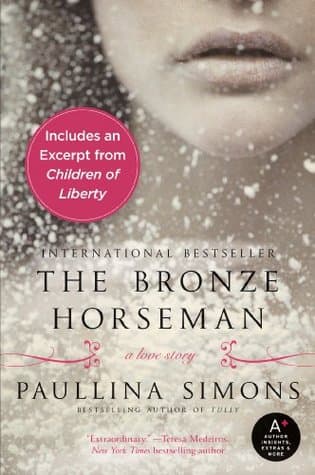
- The Bronze Horseman
Paullina Simons
4.3 (66k) average on GoodreadsHistorical FictionShares author's signature epic romance, historical setting, and emotional depth with significant tragedy.
- A Little Life
Hanya Yanagihara
4.3 (212k) average on GoodreadsLiterary FictionExplores profound friendships and immense suffering over a lifetime, though 'Tully' has more romance.
- Where the Crawdads Sing
Delia Owens
4.5 (975k) average on GoodreadsHistorical FictionFeatures a strong, resilient female protagonist from a difficult background navigating love and hardship.
- Outlander
Diana Gabaldon
4.2 (824k) average on GoodreadsFantasy'Outlander' is a much more robust example of historical fiction intertwined with romance, with extensive research and integration of 18th-century Scottish history directly influencing the plot and character decisions. 'Tully', while spanning decades, uses its historical periods more as markers for personal development rather than as active forces shaping the narrative in the same way. 'Outlander' also features a more complex world-building and a broader cast of supporting characters who are deeply enmeshed in the historical events, whereas 'Tully' remains more tightly focused on Tully's immediate relationships and internal struggles.
- To Kill a Mockingbird
Harper Lee
4.3 (4.5M) average on GoodreadsHistorical FictionIn the 1930s Jim Crow South, Harper Lee writes about racial injustice, moral growth, and the quiet courage of a lawyer father, Atticus Finch, as seen through his young daughter's eyes.
- The Great Gatsby
F. Scott Fitzgerald
3.9 (3.8M) average on GoodreadsHistorical FictionIn the opulent Roaring Twenties, a mysterious millionaire's lavish parties hide his desperate, tragic pursuit of a lost love, exposing the emptiness within the American Dream.





Enjoyed the summary?
A summary gives you the shape of the book. The book itself has the detail, the examples and the voice.
Find Tully on AmazonAs an Amazon Associate, BookBrief earns from qualifying purchases. How we're funded