

Synopsis
Covers the whole plot, including the ending.
- Difficulty
- Medium
- Pacing
- Variable
- Mood
- Atmospheric, Poignant, Suspenseful, Evocative, Melancholy
- Read it if
- You enjoy a blend of coming-of-age, mystery, and nature writing, with a strong, resilient female protagonist.
- Skip it if
- You prefer fast-paced thrillers or dislike emotional narratives with elements of loneliness and betrayal.
Where the Crawdads Sing Plot Summary
Covers the whole plot, including the ending.
The Discovery and the Suspect
In October 1969, two boys find Chase Andrews' body under a fire tower in Barkley Cove, North Carolina. Sheriff Ed Jackson and Deputy Joe Purdue investigate, quickly ruling out an accidental fall because there are no footprints or signs of a struggle. Chase, a popular local quarterback, was known to be involved with Kya Clark, the isolated 'Marsh Girl.' The town's long-standing prejudice against Kya, fueled by rumors and her reclusive life, makes her the immediate suspect. The story then moves back to Kya's childhood, starting in 1952, to explain her background and why she lived alone.
Kya's Abandonment and Early Survival
Kya Clark's childhood is marked by deep abandonment. Her mother, tired of her abusive, alcoholic husband, Pa, leaves the family when Kya is six years old. She promises to return but never does. One by one, her older siblings—Jodie, Murph, Mandy, and Missy—also flee Pa's violence, until only Kya and Pa remain in their isolated shack. Pa, though scary at first, eventually becomes somewhat protective, teaching Kya basic fishing and survival skills. However, he also disappears, leaving Kya completely alone at age ten. She is forced to survive on her own in the vast marsh, which becomes her only world and protector.
Learning from the Land
Left entirely to herself, Kya learns to live off the land, fishing, clamming, and foraging for food. She navigates the marsh's waterways in her skiff, becoming an expert on its plants and animals. Her only regular human contact is Jumpin', a kind African-American general store owner, and his wife Mabel. They offer her food, clothing, and some compassion, despite the racial segregation of the time. Kya's deep connection to nature becomes her education; she carefully collects feathers, shells, and other specimens, drawing and cataloging them. She develops extensive knowledge of her environment and finds peace in its beauty.
Tate Walker's Friendship and Betrayal
As a teenager, Kya meets Tate Walker, a kind and smart boy who often visits the marsh with his father. Tate, who was friends with Kya's brother Jodie as a child, is fascinated by her wildness and her deep knowledge of the marsh. He teaches her to read and write, opening up a new world of science and poetry. Their friendship grows into a deep, passionate love. Tate encourages Kya's artistic talents, seeing her potential as a naturalist. However, when Tate leaves for college, he promises to return for her. But fear of being tied down and the social stigma of 'the Marsh Girl' lead him to break his promise. This leaves Kya heartbroken and feeling deeply betrayed, strengthening her belief that all men eventually leave her.
Chase Andrews' Pursuit
After Tate leaves, a lonely Kya is drawn to Chase Andrews, the charming and popular quarterback from Barkley Cove. Despite her initial hesitations about townspeople and her past heartbreak, Chase's persistence and seemingly genuine affection begin to break down her defenses. He takes her to secluded spots, promises her a future, and makes her feel desired and loved. Kya, longing for connection, allows herself to fall for him, hoping he will be different from Tate. This relationship is her first real step into the complex social world outside her isolated marsh home, and it ultimately leads to her deeper involvement with the town that shuns her.
Chase's True Nature Revealed
Kya's fragile trust in Chase shatters when she discovers he is engaged to a town girl named Pearl. Feeling completely humiliated and betrayed, Kya confronts him. Chase shows his true possessive and violent nature, attacking her, brutally beating her, and threatening her life. This traumatic experience solidifies Kya's deep-seated fear of abandonment and her mistrust of human relationships. It drives her back into the complete isolation of the marsh. The incident leaves her physically and emotionally scarred, reinforcing her belief that the natural world, though sometimes harsh, is ultimately more reliable and honest than people.
The Murder Investigation Intensifies
After Chase Andrews' death, Sheriff Jackson and Deputy Purdue continue their investigation. They find a red wool cap, identical to one Chase wore, near the crime scene. It is later identified as belonging to Kya. A footprint found near the tower also matches Kya's shoe size. This circumstantial evidence, combined with the town's existing prejudice and Chase's known relationship with Kya, leads authorities to issue an arrest warrant for her. Kya, who has been living her life unaware of the growing investigation, is eventually caught by the police, forcibly removed from her beloved marsh, and imprisoned in the Barkley Cove jail, awaiting trial.
The Trial of the Marsh Girl
Kya's trial for Chase Andrews' murder becomes a public spectacle, attracting national attention. The prosecution, led by District Attorney Eric Chastain, portrays Kya as a wild, uneducated, and vengeful 'Marsh Girl' capable of cold-blooded murder. They highlight her motive—Chase's betrayal and abuse—and present the circumstantial evidence, including the red cap and footprints. Kya is represented by Tom Milton, a compassionate and elderly lawyer, who faces a difficult battle against the deep prejudices of the jury and the entire town. The trial is a harrowing experience for Kya, exposing her vulnerability and the harsh judgment of a society she never truly belonged to.
Tate's Return and Support
During the trial, Tate Walker, now a successful biologist, returns to Barkley Cove. Despite his past abandonment, he still cares deeply for Kya and believes she is innocent. He visits her in jail, offering emotional support and trying to help Tom Milton with scientific insights into the marsh. Tate's return is a complex moment for Kya, bringing back memories of both love and pain. His presence provides her with a much-needed connection and a feeling of not being entirely alone, though she struggles to fully trust him again after his earlier betrayal. Tate's unwavering belief in her becomes a crucial source of strength during her ordeal.
The Verdict and Life After
After a tense trial, Tom Milton delivers a powerful closing argument, dismantling the prosecution's circumstantial case and emphasizing the lack of direct evidence. The jury, unable to definitively prove Kya's guilt beyond a reasonable doubt, delivers a 'not guilty' verdict. Kya is released from jail and immediately returns to her beloved marsh, where she is finally reunited with Tate. They rebuild their relationship, and Kya dedicates her life to her scientific pursuits, publishing several acclaimed books on the marsh's ecosystem under the pseudonym 'Amanda Hamilton.' She lives a long, fulfilling life, surrounded by the nature she loves and the quiet companionship of Tate.
The Final Revelation
Many years later, Kya dies peacefully in her sleep at age 70, surrounded by the marsh she cherished. After her passing, Tate, while going through her belongings, finds a hidden compartment in one of her old books. Inside, he finds a collection of her poems. Beneath them, there is a small, hand-knitted red wool cap—the same type of cap found near Chase Andrews' body. This discovery, along with a poem describing a killer who 'hid in the tall grass,' confirms what Tate had always suspected: Kya, the quiet, nature-loving Marsh Girl, had indeed murdered Chase Andrews, ensuring her own safety and justice for his betrayal, and had gotten away with it.
Where the Crawdads Sing Characters
Kya Clark
Protagonist
The 'Marsh Girl' who survives alone and is accused of murder.
Kya, known to the town as 'the Marsh Girl,' is an intelligent, sensitive, and deeply resilient woman. Abandoned by her family at a young age, she grows up entirely alone in the North Carolina marsh, developing an profound connection to nature. She is an astute observer, an artist, and later, a respected naturalist. Despite her isolation, she yearns for human connection and love, making her vulnerable to heartbreak and betrayal. Her fierce independence and survival instincts are balanced by a deep well of empathy for the natural world and a hidden capacity for extreme action when pushed to the brink.
Relationships: Pa (Abusive, then neglectful father); Ma (Mother who abandons her); Jodie (Older brother who leaves but later reconnects); Jumpin' (Kind, paternal figure and provider); Mabel (Jumpin's wife, a maternal figure); Tate Walker (First love, teacher, later partner and confidant); Chase Andrews (Second love interest, abuser, victim)
Tate Walker
Supporting
Kya's first love, a kind and intelligent biologist.
Tate is a thoughtful and compassionate young man who becomes Kya's first true friend and love. He shares her passion for nature, teaching her to read and write, and encouraging her scientific talents. Although he initially abandons her for college, driven by youthful ambition and fear, he deeply regrets his decision. Tate returns to support Kya during her trial and dedicates his life to her, becoming her steadfast partner and confidant. He represents the possibility of genuine, unconditional love and acceptance, offering Kya a connection she desperately craves and deserves.
Relationships: Kya Clark (First love, partner, intellectual companion); Jodie Clark (Childhood friend)
Chase Andrews
Antagonist
Popular town boy who betrays and abuses Kya, leading to his murder.
Chase Andrews is the popular, handsome, and charismatic quarterback from Barkley Cove. He initially appears charming and genuinely interested in Kya, but his true nature is revealed to be selfish, manipulative, and ultimately violent. He toys with Kya's affections, promising her a future while secretly engaged to another woman, and physically assaults her when confronted. Chase embodies the destructive influence of the 'town' on Kya's isolated world, representing the superficiality and cruelty that she often encounters from human society. His death is the central mystery driving the plot.
Relationships: Kya Clark (Love interest, abuser, victim); Pearl (Fiancée)
Jumpin'
Supporting
The kind general store owner who helps Kya survive.
Jumpin' is a wise, compassionate, and dignified African-American man who owns the only general store accessible to Kya by boat. Despite the racial prejudices and segregation of the era, he and his wife Mabel provide Kya with essential supplies, food, and a much-needed sense of human kindness. He acts as a surrogate father figure, offering her quiet support and practical advice throughout her life. Jumpin' represents the rare pockets of empathy and decency that Kya encounters in the human world, offering her a lifeline when she has no one else.
Relationships: Kya Clark (Protector, provider, paternal figure); Mabel (Wife)
Mabel
Supporting
Jumpin's wife, a maternal figure to Kya.
Mabel is Jumpin's wife and a warm, maternal figure to Kya. She is deeply empathetic, understanding Kya's loneliness and vulnerability. Mabel takes on a role similar to a mother, providing Kya with clothing, food, and emotional comfort during her visits to Jumpin's store. She worries for Kya's well-being and is a quiet source of support and love, demonstrating that not all townspeople are judgmental or cruel. She embodies the nurturing aspect of human connection that Kya so desperately needs.
Relationships: Kya Clark (Maternal figure); Jumpin' (Husband)
Sheriff Ed Jackson
Supporting
The lead investigator in Chase Andrews' murder.
Sheriff Ed Jackson is the primary law enforcement officer investigating Chase Andrews' murder. He is diligent in his duties, though initially influenced by the town's prejudices against Kya. As the investigation progresses, he becomes increasingly convinced of Kya's guilt based on circumstantial evidence. While not overtly malicious, he represents the rigid, often biased, structure of societal judgment that Kya faces. He is focused on solving the crime and bringing the perceived culprit to justice.
Relationships: Kya Clark (Accused/Investigator); Deputy Joe Purdue (Subordinate)
Tom Milton
Supporting
Kya's compassionate defense attorney.
Tom Milton is an elderly, experienced, and deeply compassionate attorney who takes on Kya's murder defense. He sees beyond the 'Marsh Girl' persona and recognizes Kya's intelligence and inherent goodness. Milton works tirelessly to present a fair case, meticulously dissecting the prosecution's flimsy evidence and challenging the town's pervasive prejudice. He serves as Kya's advocate, not only in the courtroom but also as a symbol of justice and human decency in a world often quick to condemn. His unwavering belief in her innocence is a source of strength for Kya.
Relationships: Kya Clark (Defense attorney); Tate Walker (Informal collaborator)
Pa (Kya's Father)
Supporting
Kya's abusive and neglectful father.
Pa is Kya's alcoholic and abusive father. His violence drives away his wife and all his children, leaving Kya alone with him. For a time, he becomes somewhat less abusive and teaches Kya basic survival skills, but he eventually abandons her completely. Pa represents the initial trauma and abandonment that shapes Kya's early life, forcing her into extreme self-reliance and fostering her deep mistrust of human relationships. His departure marks Kya's complete isolation.
Relationships: Kya Clark (Abusive/Neglectful father); Ma (Wife); Jodie (Son)
Jodie Clark
Supporting
Kya's older brother who reconnects with her later in life.
Jodie is Kya's older brother, the last of her siblings to leave the shack, promising to return for her but never does until much later. He feels deep guilt for abandoning Kya and eventually seeks her out after her trial, offering her the only family connection she has left. Jodie represents the lingering ties of family and the possibility of reconciliation, even after years of separation and trauma. His return provides Kya with a sense of closure and a renewed, albeit small, human connection.
Relationships: Kya Clark (Brother); Tate Walker (Childhood friend)
Where the Crawdads Sing Themes
Isolation and Belonging
Kya's life is shaped by extreme isolation, both physically in the marsh and socially due to the town's prejudice. She longs for belonging but is repeatedly abandoned or betrayed, leading her to find comfort and identity in the natural world. The marsh becomes her family, her teacher, and her protector. This theme explores the conflict between self-reliance and the human need for connection, showing how deep isolation can influence one's view of the world and one's capacity for both love and violence. Her eventual acceptance by Tate and the publishing world offers a limited sense of belonging, but her true home remains the marsh.
“Marsh is not swamp. Marsh is a space of light, where grass grows in water, and water flows into the sky. Slow-moving water, where sparrows nest in tall reeds, and dragonflies dance. It is not a stagnant backwater but a place of life, constantly changing; a place where one can get lost in the beauty, or lost forever.”
Nature as Teacher and Refuge
The marsh is Kya's ultimate teacher, mother, and refuge. It gives her survival skills, scientific knowledge, and emotional peace. She learns about life, death, love, and betrayal by observing the cycles and behaviors of its creatures. The marsh's beauty and harshness reflect Kya's own experiences, and its secrets become tied to her own. This theme highlights the deep connection between humans and the natural world, suggesting that nature can offer a more reliable and honest existence than human society, while also instilling a primal understanding of justice and survival.
“She knew the ways of the marsh, knew the truth of nature's laws: that every creature must find its place, and sometimes, that place is found by force.”
Prejudice and Justice
The town of Barkley Cove's deep-seated prejudice against Kya, the 'Marsh Girl,' is a central force in the story. She is judged, feared, and shunned simply for being different and living outside social norms. This prejudice directly leads to her being the main suspect in Chase Andrews' murder, showing how easily suspicion falls on those already marginalized. The trial becomes less about finding truth and more about societal judgment. The novel questions the nature of justice, both legal and natural, and whether true justice can be found for those failed by society.
“They called her 'Marsh Girl.' A name whispered in disdain, a name that tasted like swamp water on their tongues.”
The Cycle of Abandonment and Betrayal
Kya's life is a repeated pattern of abandonment and betrayal, starting with her mother and siblings, then her father, and later Tate and Chase. Each abandonment deepens her wounds and strengthens her belief that she cannot rely on others. This pattern forces her into extreme self-reliance but also fuels her fear of intimacy and her capacity for protective, even violent, actions. The novel explores how these early traumas shape an individual's adult relationships and their perception of love and trust, showing the lasting impact of childhood experiences.
“How much does it take to get a man to stay? How many promises, how many tears?”
Survival and Resilience
Kya's entire life shows human survival and resilience. From being abandoned as a child to fending for herself in the wilderness, she displays an extraordinary ability to adapt and thrive against huge odds. She not only survives physically but also intellectually and emotionally, developing a rich inner life and a deep connection to her environment. This theme celebrates the strength of the human spirit when faced with adversity, showing Kya's strong determination to live on her own terms, even when society tries to break her.
“The marsh did not just teach her to live; it taught her to endure.”
Plot Devices & Literary Techniques
Dual Timelines
Alternating narratives between Kya's childhood and the murder investigation.
The novel employs a dual timeline structure, alternating between Kya's coming-of-age story in the marsh, beginning in 1952, and the present-day (1969) murder investigation of Chase Andrews. This allows the reader to understand Kya's background, her unique connection to the marsh, and the reasons for the town's prejudice against her, while simultaneously building suspense around the murder mystery. The past narrative provides context and empathy for Kya, making the reader question her guilt and understand her motivations, while the present timeline drives the plot towards the trial and its resolution.
Nature as Foreshadowing and Symbolism
The marsh's ecosystem mirrors human behavior and foreshadows events.
The natural world of the marsh is not merely a setting but a dynamic character and a crucial plot device. Owens uses the behaviors of animals – such as the predatory nature of certain species, the protective instincts of mothers, and the cycles of life and death – to subtly foreshadow events in Kya's life and to symbolize human relationships and motivations. For example, observations about fireflies, territorial birds, and the violence inherent in nature often parallel Kya's own experiences with love, abandonment, and self-preservation, providing a deeper layer of meaning to her actions and choices.
The Hidden Poem/Evidence
A hidden poem and the red cap reveal the truth after Kya's death.
The discovery of a hidden poem and the red wool cap in Kya's belongings after her death serves as the ultimate plot twist and resolution to the murder mystery. This device provides a shocking posthumous confession, revealing Kya's guilt and her meticulous planning. It subverts the reader's expectations, as Kya had been acquitted, and shifts the narrative from a question of innocence to a revelation of carefully concealed justice. It reinforces the idea that Kya truly learned from the marsh's harsh laws and that the truth, like nature's secrets, can remain hidden for a lifetime.
The 'Marsh Girl' Moniker
A derogatory nickname that shapes Kya's identity and public perception.
The repeated use of the term 'Marsh Girl' is a powerful plot device that highlights the town's prejudice and ostracization of Kya. It functions as a label that strips her of her individuality and humanity, reducing her to an exotic, wild other. This moniker shapes how the townspeople, the police, and even the jury perceive her, making her an easy target for suspicion. Conversely, Kya eventually reclaims the term, finding pride in her unique connection to the marsh, but it remains a constant reminder of the societal judgment she faces and her profound isolation.
Where the Crawdads Sing Quotes
“I wasn’t aware that words could hold so much. I didn’t know a paragraph could be a window to a countless, intricate world.”
“Being alone in the wild, you learn to be a part of it, not just an observer.”
“The marsh did not just give up her secrets. She guarded them, kept them for herself, and only revealed them to those who truly belonged.”
“Some things stay with you forever, no matter what.”
“There are some who can live without wild things, and some who cannot.”
“She knew what it was like to be an outsider, and she knew what it was like to be judged.”
“Please don't talk to me about loneliness. I've been living with it my whole life.”
“The heart's a lonely hunter, but the eyes can see more than you think.”
“You can’t just walk away from nature. It’s in your blood.”
“Each of us is born with a box of matches inside us; but we can't strike them all at once.”
“Marsh is not swamp. Marsh is a space of light, where grass grows in water, and water flows into the sky.”
“Sometimes, the only way to catch a firefly is to become one.”
“How many times can you say goodbye?”
“She knew through her studies that female fireflies would mimic the flash patterns of other species to lure males in, then eat them alive.”
Quiz
10 questions on the plot and the characters. Each answer comes with a short explanation.
Question 1
What is the primary nickname given to Kya Clark by the residents of Barkley Cove?
- The Swamp Witch
- The Marsh Girl
- The River Rat
- The Hermit of the Lagoon
Show answer
B. The Marsh Girl Kya Clark is widely known and referred to by the townspeople as 'The Marsh Girl' due to her isolated upbringing in the marsh.
Question 2
In what year is Chase Andrews found dead, leading to the murder investigation?
- 1959
- 1965
- 1969
- 1972
Show answer
C. 1969 Chase Andrews is found dead in late 1969, which is when the murder investigation begins and Kya becomes the prime suspect.
Question 3
Which character teaches Kya to read and write?
- Jumpin'
- Mabel
- Tate Walker
- Chase Andrews
Show answer
C. Tate Walker Tate Walker, a friend from Kya's childhood and later her love interest, is the one who patiently teaches Kya to read and write, opening up the world of books to her.
Question 4
What is Kya's primary source of income and means of survival for much of her adult life?
- Fishing and selling her catch at the market
- Selling her scientific illustrations and collections of marsh specimens to publishers
- Working odd jobs for Jumpin' at the gas station
- Inheriting money from her estranged family members
Show answer
B. Selling her scientific illustrations and collections of marsh specimens to publishers Kya develops a talent for observing and illustrating the natural world of the marsh. She eventually publishes several successful books of her scientific illustrations and observations, which becomes her main income.
Question 5
What specific item is found near Chase Andrews' body that becomes a crucial piece of evidence in the trial?
- A distinctive seashell
- A red wool cap
- A broken fishing lure
- A handwritten note
Show answer
B. A red wool cap A red wool cap, identical to one Kya's mother wore, is found near Chase's body, and its fibers are later used as evidence against Kya during the trial.
Question 6
What is the ultimate fate of Kya's mother, as revealed through Kya's memories?
- She returns to the shack years later to reconcile with Kya.
- She dies shortly after leaving, a fact Kya learns from her brother Jodie.
- She moves to a nearby city and starts a new family.
- She is never heard from again, her fate remaining a mystery.
Show answer
B. She dies shortly after leaving, a fact Kya learns from her brother Jodie. Kya's brother, Jodie, eventually returns and tells Kya that their mother died from cancer not long after leaving the family.
Question 7
Which of the following themes is most central to Kya's survival and understanding of the world?
- The destructive nature of human greed
- The solace and harsh realities of the natural world
- The pursuit of traditional societal acceptance
- The importance of formal education over experiential learning
Show answer
B. The solace and harsh realities of the natural world Kya's entire existence is shaped by her intimate connection with the marsh. Nature provides her with food, shelter, education, and companionship, while also revealing its brutal laws of survival.
Question 8
What is the crucial piece of evidence that the prosecution presents to suggest Kya was present at the scene of Chase Andrews' death?
- Footprints matching Kya's unique shoes near the fire tower.
- A shell necklace given to Chase by Kya, found clutched in his hand.
- Red fibers from Kya's distinctive wool cap found on Chase's jacket.
- A witness who saw Kya arguing with Chase near the tower the day he died.
Show answer
C. Red fibers from Kya's distinctive wool cap found on Chase's jacket. The prosecution's strongest evidence is the discovery of red fibers, consistent with the unique red wool cap Kya's mother wore (and Kya later wore), found on Chase Andrews' denim jacket.
Question 9
How does Kya manage to evade capture by the authorities for an extended period after Chase's death?
- She sails away on her boat to a remote island.
- She hides in elaborate underground bunkers she built in the marsh.
- She uses her intimate knowledge of the marsh's hidden waterways and terrain.
- She disguises herself and lives among the townspeople unnoticed.
Show answer
C. She uses her intimate knowledge of the marsh's hidden waterways and terrain. Kya's deep understanding of the marsh, its hidden channels, and the tides allows her to expertly navigate and disappear into its vastness, making it incredibly difficult for the police to track her.
Question 10
What is discovered in Kya's belongings after her death that strongly implies her involvement in Chase Andrews' murder?
- A detailed confession letter hidden in her diary.
- A rare, valuable pearl necklace belonging to Chase's family.
- A collection of poetry containing a poem titled 'The Firefly' with a hidden compartment holding Chase's seashell necklace.
- A map with markings indicating the exact location of Chase's fall.
Show answer
C. A collection of poetry containing a poem titled 'The Firefly' with a hidden compartment holding Chase's seashell necklace. After Kya's death, Tate finds a hidden compartment in one of her poetry books, specifically under the poem 'The Firefly,' which contains Chase Andrews' distinctive shell necklace, strongly suggesting she was indeed his killer.
Where the Crawdads Sing FAQ
What is the central mystery driving the plot of 'Where the Crawdads Sing'?
The central mystery revolves around the death of Chase Andrews in late 1969. He is found dead at the base of the fire tower, and the local authorities in Barkley Cove immediately suspect Kya Clark, the reclusive 'Marsh Girl,' due to her past relationship with Chase and her isolated lifestyle.
Who is Kya Clark and why is she known as the 'Marsh Girl'?
Kya Clark is the protagonist of the story, a young woman who has lived in complete isolation in the North Carolina marsh since childhood. She earned the moniker 'Marsh Girl' from the townspeople of Barkley Cove because of her wild appearance, lack of formal education, and her deep connection to the untamed marshland.
How does Kya survive alone in the marsh after her family leaves?
After her family abandons her, Kya learns to survive by fishing, clamming, and foraging for food in the marsh. She sells her catches to Jumpin' and Mabel, a kind African American couple who run a general store, who in turn provide her with gas, supplies, and a sense of community.
Describe Kya's relationship with Tate Walker.
Tate Walker is Kya's first love and a crucial figure in her intellectual development. He teaches her to read and write, shares his love for biology, and encourages her to document the marsh's flora and fauna. Their relationship is tender and deeply connected to their shared appreciation for nature, though he eventually leaves for college.
What role does Chase Andrews play in Kya's life and the overall narrative?
Chase Andrews is a popular, wealthy young man from Barkley Cove who pursues Kya after Tate leaves. He represents Kya's yearning for acceptance and a normal life, but his true nature is revealed as manipulative and abusive, leading to their volatile breakup and ultimately his mysterious death, which implicates Kya.
What is the significance of the poem found after Kya's death, and who wrote it?
After Kya's death, Tate discovers a collection of poems by 'Amanda Hamilton' hidden in her belongings. One poem, 'The Firefly,' subtly reveals that Kya herself was 'Amanda Hamilton' and that she murdered Chase Andrews, having lured him to the fire tower before his fatal fall.
How do the 'firefly' and 'praying mantis' metaphors subtly foreshadow Kya's actions?
The firefly metaphor, particularly in the poem, alludes to the female firefly's predatory nature, luring the male to its death. The praying mantis, which Kya observes meticulously, also represents a female insect that consumes its mate, subtly foreshadowing Kya's calculated decision to eliminate Chase Andrews.
What is the true nature of the 'shell necklace' and its connection to the murder?
The shell necklace that Chase Andrews wore, given to him by Kya, is found missing from his body at the crime scene. This detail is crucial because Kya, after killing him, retrieved the necklace, proving she was present at the murder site and meticulously covered her tracks.
How does Kya's deep connection to nature inform her understanding of morality and justice?
Kya's morality is shaped by the harsh, survivalist laws of the marsh, where predation and self-preservation are natural. She views justice through the lens of nature's balance, believing that Chase's betrayal and violence against her warranted his removal, much like an animal eliminating a threat or a weak link.
Discuss the psychological impact of abandonment on Kya's development and relationships.
The repeated abandonment by her family leaves Kya with profound trust issues and a deep fear of intimacy. This trauma makes her wary of forming attachments, leading to her intense isolation and her eventual inability to fully trust even Tate, and certainly contributing to her extreme reaction to Chase's betrayal.
How does Kya's reclusive lifestyle affect her perception of human society and vice versa?
Kya's isolation leads her to perceive human society as judgmental, cruel, and untrustworthy, based on the town's ostracization. Conversely, the townspeople view her as wild, uneducated, and potentially dangerous, reinforcing her reclusive tendencies and creating a cycle of misunderstanding and fear.
Explore the theme of 'survival of the fittest' as it applies to Kya's journey.
The theme 'survival of the fittest' is central to Kya's story, as she literally survives alone in the harsh marsh environment, adapting and learning its ways. Psychologically, it applies to her resilience against societal prejudice and, ultimately, her decision to eliminate Chase, viewing it as a necessary act of self-preservation.
Was Kya's murder of Chase Andrews justifiable, given his actions?
This is highly debatable. While Chase's actions were reprehensible – he sexually assaulted Kya and violently attacked her – premeditated murder is a serious crime. Some argue it was a desperate act of self-preservation born from a lifetime of trauma and a 'nature's law' perspective, while others maintain that it was an unforgivable crime, regardless of his behavior.
To what extent is society responsible for Kya's isolation and ultimate fate?
Society bears significant responsibility for Kya's isolation, as the townspeople of Barkley Cove actively ostracized and neglected her, failing to provide education or support. This systemic abandonment and prejudice directly contributed to her unique moral code and her extreme reactions, arguably shaping her tragic fate.
Does the ending, revealing Kya as the murderer, undermine the romantic or nature-centric aspects of the novel?
For some readers, the revelation of Kya's guilt introduces a darker, more ambiguous layer that complicates the romantic and nature-centric elements, shifting her from a purely innocent victim to a complex figure capable of violence. Others argue it grounds the story in a more realistic, 'nature red in tooth and claw' perspective, where even beauty can harbor harsh realities.
How does the author use the marsh environment as both a sanctuary and a symbol of danger for Kya?
The marsh is Kya's sanctuary, providing her with sustenance, education, and a sense of belonging that humans denied her. However, it also symbolizes danger with its harsh elements, predatory creatures, and the constant struggle for survival, mirroring the threats she faces from the outside world and her own internal battles.
What is the significance of the recurring motif of birds throughout the novel?
Birds are a constant motif, representing freedom, beauty, and Kya's deep connection to the natural world. They are her only companions for years, and her meticulous study of them leads to her acclaimed books. They symbolize her wild spirit and her ability to find solace and purpose in the natural world.
How does the legal trial of Kya Clark reflect societal prejudices and justice?
The trial vividly exposes the deep-seated prejudices of Barkley Cove against Kya, the 'Marsh Girl.' Despite the lack of concrete evidence, the townspeople and prosecution are quick to condemn her based on her outsider status and reputation. The trial becomes a battle between ingrained bias and the pursuit of true justice.
Discuss the role of Jumpin' and Mabel in Kya's life.
Jumpin' and Mabel are the only consistent source of human kindness and support for Kya throughout her life. They provide her with essential supplies, a fair price for her mussels, and genuine care and affection, acting as surrogate parents and her only link to a compassionate human connection.
About the author
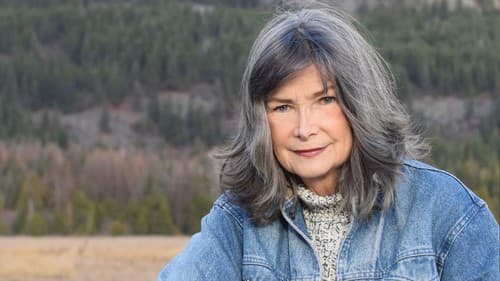
Delia Owens is an American author known for her fiction, particularly her debut novel, Where the Crawdads Sing. The book has received significant attention and has been a bestseller, exploring themes of isolation and nature in the American South. Owens has a background in wildlife biology, which informs her writing style and settings.
Similar books
- The Great Alone
Kristin Hannah
4.3 (377k) average on GoodreadsHistorical FictionFeatures a strong female protagonist surviving in a harsh natural environment.
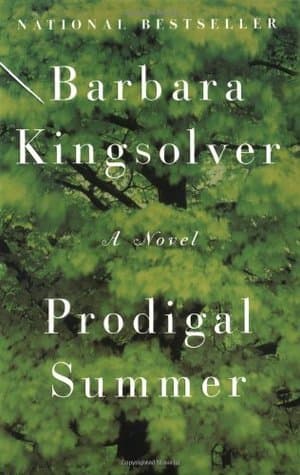
- Prodigal Summer
Barbara Kingsolver
4.0 (98k) average on GoodreadsLiterary FictionExplores themes of nature, isolation, and intricate character relationships.
- Educated
Tara Westover
4.5 (796k) average on GoodreadsBiographyA coming-of-age story about self-education and overcoming an isolated upbringing.
- The Secret Life of Bees
Sue Monk Kidd
4.1 (1.1M) average on GoodreadsHistorical FictionWhile both feature young female protagonists finding solace and community, "Crawdads" emphasizes solitary, nature-based self-sufficiency and radical independence, whereas Kidd's novel focuses on communal healing and shared female experience within a human community.
- To Kill a Mockingbird
Harper Lee
4.3 (4.5M) average on GoodreadsHistorical FictionIn the 1930s Jim Crow South, Harper Lee writes about racial injustice, moral growth, and the quiet courage of a lawyer father, Atticus Finch, as seen through his young daughter's eyes.
- The Great Gatsby
F. Scott Fitzgerald
3.9 (3.8M) average on GoodreadsHistorical FictionIn the opulent Roaring Twenties, a mysterious millionaire's lavish parties hide his desperate, tragic pursuit of a lost love, exposing the emptiness within the American Dream.





Enjoyed the summary?
A summary gives you the shape of the book. The book itself has the detail, the examples and the voice.
Find Where the Crawdads Sing on AmazonAs an Amazon Associate, BookBrief earns from qualifying purchases. How we're funded