
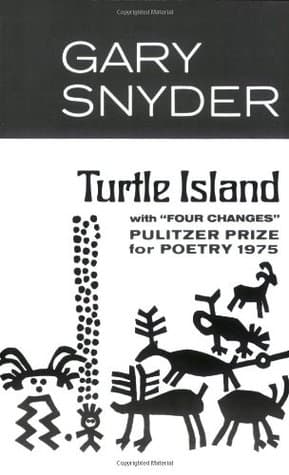
Core Idea
- Difficulty
- Medium
- Read it if
- You are interested in deep ecology, bioregionalism, indigenous philosophy, environmental poetry, or a counter-cultural perspective on humanity's place in nature.
- Skip it if
- You prefer traditional academic prose, are looking for a light read, or are not open to poetic and philosophical explorations of environmentalism.
Key Takeaways from Turtle Island
Becoming Native to Place
Embracing the deep history and ecological identity of the land.
Snyder argues that for humans to truly thrive on the North American continent (Turtle Island), we must drop the colonial idea of being 'newcomers and invaders' and instead develop a deep sense of 'nativeness.' This is not about family history but about an ecological and spiritual belonging. It means understanding the land's past, its ecosystems, its non-human inhabitants, and our place within its complex system. It asks for a shift from using to caring, from temporary living to a deep, historical connection. This change requires listening to the land, learning its rhythms, and adopting practices that support long-term balance instead of short-term gain. It is an invitation to become part of the ecological system, recognizing our dependence on all life.
“The poem is a voice, a speech, a language that comes from the land itself, from the non-human world, and from the deep past.”
In the book: Snyder's introductory note explicitly states the book's purpose: 'a rediscovery of this land, and the ways by which we might become natives of the place, ceasing to think and act (after all these centuries) as newcomers and invaders.' Many poems throughout the collection echo this sentiment, often drawing on Indigenous mythologies and ecological observations.
Try this: Spend time observing a specific local ecosystem—a park, a forest, a riverbank. Learn the names of local plants and animals. Research the Indigenous history of your region. Consider how your daily actions impact your local environment and strive for more sustainable practices.
Related ideas: bioregionalism, ecological-identity, land-stewardship
The Sacredness of the Wild
Recognizing inherent value and spiritual significance in untouched nature.
Snyder sees the 'wild' not just as a resource or a place to conquer, but as a sacred area, valuable on its own, beyond human use. He views wilderness as a source of spiritual renewal, wisdom, and a direct link to the basic forces of existence. This idea challenges the human-centered view common in Western thought, suggesting that humanity is part of nature, not separate or above it. The wild teaches humility, interdependence, and the cycles of life and death. It is a place where the self fades, and a deeper, older self can appear, aligning with the planet's rhythms. Protecting wilderness is not just an environmental act, but a spiritual necessity.
“Nature is not a commodity, but a temple, a source of spiritual sustenance, and a teacher of profound truths.”
In the book: Poems like 'Front Lines' and 'The Call of the Wild' directly address the intrinsic value and spiritual power of untamed landscapes, often contrasting them with the destructive tendencies of industrial society. Snyder frequently references mountains, forests, and animals as sources of ancient wisdom.
Try this: Seek out opportunities to spend time in genuinely wild places, even if small. Practice 'forest bathing' or mindful walking without a specific goal. Cultivate a sense of reverence for natural processes and living beings, even in your urban environment.
Related ideas: deep-ecology, eco-spirituality, wilderness-preservation
Language as a Bridge to the Non-Human
Using poetry to articulate and honor the voices of the natural world.
Snyder's poetry is not just descriptive; it tries to convey and interpret the 'speech' of the non-human world. He believes language, especially poetic language, is a key tool for reconnecting humans with nature. By carefully watching and then putting natural events—a bird's flight, a tree's growth, a river's sound—into vivid verse, he aims to break down the perceived barrier between human thought and the rest of creation. This is not treating animals as humans, but an effort to expand human empathy and understanding to include other life forms and natural processes, recognizing their stories and wisdom. It is about listening closely and giving voice to what is often unheard in our modern, human-focused world.
“The poem is a voice, a speech, a language that comes from the land itself, from the non-human world, and from the deep past.”
In the book: Many of Snyder's poems feature animals, plants, and geological formations as central figures, often imbuing them with agency or presenting their perspectives. For example, 'Axe Handles' subtly explores the transmission of knowledge through craft and nature, while others directly mimic natural sounds or rhythms.
Try this: Engage in nature journaling, attempting to describe natural phenomena without imposing human judgments or interpretations. Write a short poem or prose piece from the perspective of an animal or plant in your local ecosystem. Pay attention to the sounds and textures of your natural surroundings.
Related ideas: eco-poetics, biolinguistics, nature-writing
The Interconnectedness of All Life
Understanding the intricate web of relationships that sustain existence.
A central idea in 'Turtle Island' is how all living things and their environment connect. Snyder stresses that humans are not alone but are threads in a large, complex ecological system. Every action, every choice, affects this system, touching not just nearby areas but distant ecosystems and future generations. This view draws from Indigenous worldviews and ecological science, highlighting the delicate balance needed for life to continue. Disturbing one part—like cutting down a forest or polluting a river—has effects on countless other species and, in the end, on human well-being. Recognizing this connection creates a sense of responsibility and humility.
“All things are interconnected, and what affects one part of the web affects all other parts.”
In the book: Snyder frequently employs metaphors of webs, cycles, and networks in his poems. His prose, particularly in 'Four Changes,' directly addresses the ecological consequences of human actions, linking resource depletion to social decay.
Try this: Before making a purchase or decision, consider its full lifecycle and impact on the environment and other living beings. Support local food systems and businesses that prioritize ecological sustainability. Educate yourself about the food chain and nutrient cycles in your local environment.
Related ideas: systems-thinking, ecological-web, interdependence
Four Changes: A Manifesto for Ecological Action
A pragmatic blueprint for transforming society towards sustainability.
Snyder's 'Four Changes' is a vital work within 'Turtle Island,' offering a clear, practical plan for environmental and social change. It outlines four key shifts: Population, Pollution, Consumption, and Transformation. He argues for major changes in human behavior and societal structures to deal with ecological problems. This is not abstract philosophy but a call for real action—reducing birth rates, cutting waste, limiting excessive consumption, and making a fundamental change in awareness. It is a practical yet visionary declaration that links spiritual understanding with political involvement, stating that true ecological balance requires systemic change at all levels of society, starting with individual responsibility.
“The most effective way to change the world is to change ourselves, and then to live in a way that inspires others to change.”
In the book: The full text of 'Four Changes' is included in the book, detailing specific recommendations under each of the four categories, such as 'stabilize human population' and 'recycle everything.'
Try this: Actively reduce your personal consumption and waste. Advocate for policies that promote renewable energy and sustainable resource management. Engage in discussions about population ethics. Support organizations working on environmental protection and social justice.
Related ideas: environmental-activism, sustainability-manifesto, degrowth
The Importance of Indigenous Knowledge
Drawing wisdom from millennia of living in harmony with the land.
Snyder often refers to and respects the knowledge systems of Indigenous peoples of North America. He recognizes that these cultures, having lived on 'Turtle Island' for thousands of years, have valuable wisdom about sustainable living, ecological balance, and a deep, respectful relationship with the land. Their myths, practices, and worldviews offer a strong alternative to the destructive ways of industrial society. Snyder suggests that by learning from these traditions—not by taking them over, but through real respect and understanding—modern society can begin to mend its broken relationship with nature. It is an acknowledgment that true 'nativeness' involves learning from those who have been native for generations, integrating their insights into a modern ecological awareness.
“The people who have been here for millennia... have much to teach us about how to live on this continent.”
In the book: Snyder explicitly states in his introduction that 'Turtle Island' is 'based on many creation myths of the people who have been here for millennia.' Many poems draw on specific Indigenous narratives, place names, or ecological practices, such as the reverence for animals and specific landscapes.
Try this: Support Indigenous land rights and cultural preservation efforts. Read works by Indigenous authors and scholars. Learn about the specific Indigenous tribes and their history in your local area. Advocate for the inclusion of Indigenous perspectives in environmental policy and education.
Related ideas: indigenous-wisdom, ethnobotany, traditional-ecological-knowledge
Reimagining Human Identity
Moving beyond anthropocentrism to embrace our place within the biosphere.
Snyder challenges the common Western idea of human uniqueness, arguing for a new definition of human identity. Instead of seeing ourselves as nature's masters, separate and superior, he urges us to see ourselves as essential, connected parts of the biosphere. This shift involves moving away from a self-focused view and embracing a 'species consciousness' or 'earth consciousness.' Our identity, in this view, is deeply tied to the health and life of the ecosystems we live in. Real fulfillment and meaning come not from controlling nature, but from harmoniously taking part in its processes, understanding that our own well-being is linked to the planet's well-being. It is a call for humility and ecological citizenship.
“We are not above nature, but of nature. Our true self is connected to the mountains, rivers, and all living beings.”
In the book: Snyder's consistent use of 'Turtle Island' as the continent's name reflects this re-centered identity, moving away from colonial geographic labels. His poems often depict humans as just one species among many, sharing commonalities with animals and plants.
Try this: Practice mindfulness and meditation to cultivate a sense of interconnectedness. Reflect on moments when you feel deeply connected to nature and what that reveals about your identity. Challenge anthropocentric language and assumptions in your daily conversations.
Related ideas: post-humanism, eco-psychology, biocentric-ethics
The Power of Place and Bioregionalism
Cultivating a deep, intimate understanding and loyalty to one's local region.
Snyder supports 'bioregionalism,' the idea that human communities should organize themselves according to the natural borders and ecological features of their specific region, rather than political lines. This means developing a deep, personal knowledge of one's local watershed, climate, plants, animals, and geological history. It is about 'settling in' and building a strong loyalty and responsibility to that particular place. This local focus encourages sustainable practices suited to the specific environment, promotes self-sufficiency, and creates stronger, more connected communities. It rejects a uniform, globalized culture in favor of diverse, place-specific ways of living that honor each landscape's unique spirit.
“Find your place on the planet. Dig in, and take responsibility from there.”
In the book: Snyder's own life in the Sierra Nevada foothills is a testament to bioregional living. Many of his poems are deeply rooted in specific landscapes and their unique characteristics, demonstrating an intimate knowledge of local ecology and history.
Try this: Research the natural history and geology of your immediate bioregion. Join local environmental groups or watershed councils. Support local farmers and artisans. Learn about the traditional land uses and food systems of your area.
Related ideas: localism, sense-of-place, ecological-governance
Poetry as a Tool for Cultural Change
Using artistic expression to shift consciousness and inspire action.
Beyond its artistic merit, Snyder sees poetry as a powerful force for cultural and political change. His work is not just art for art's sake; it is a clear attempt to change human awareness, challenge harmful ideas, and inspire ecological action. By creating vivid, evocative language that reconnects readers with nature and ancient wisdom, he aims to reawaken a sleeping ecological sensibility. Poetry, in this context, becomes a way to share deep truths about our relationship with the planet, encourage empathy, and provide a framework for imagining and building a more sustainable future. It is a necessary tool for cultural re-education and spiritual awakening.
“Poetry is not a luxury. It is a vital necessity of our existence. It forms the quality of the light within which we predicate our hopes and dreams toward survival and change.”
In the book: The very inclusion of 'Four Changes' within a collection of poetry demonstrates Snyder's belief in the power of literary forms to effect real-world change. His use of myth and direct political statements within his verse also underscores this intention.
Try this: Engage with poetry and other art forms that explore ecological themes. Create your own art to express your connection to nature and advocate for environmental causes. Support artists and writers who are working to inspire cultural change towards sustainability.
Related ideas: art-activism, cultural-ecology, visionary-art
Turtle Island Quotes
“The wild is not a place, but a process.”
“We are all an intelligent part of the earth.”
“The most important thing is to be in touch with the sources of life.”
“To live lightly on the earth.”
“Walk out on the tongue of the land and feel the great earth breathing.”
“The house is the human body, the yard is the universe.”
“Find your place on the planet. Dig in, and take responsibility from there.”
“Culture is the way you work with the land.”
“We are creatures of the earth, and to deny that is to deny our own nature.”
“The work of the poet is to bring the world alive.”
“Turtle Island, the old name for the continent, is a name for where we live.”
“The earth is not a platform for human life. It is a living being of which we are a part.”
“To be truly alive, one must be in touch with the flow of the seasons, the cycles of life and death.”
“The liberation of the wild is the liberation of ourselves.”
Quiz
10 questions on the main ideas. Each answer comes with a short explanation.
Question 1
According to Gary Snyder's introductory note in "Turtle Island," what is the primary origin of the name 'Turtle Island' for the North American continent?
- A personal spiritual vision Snyder experienced while meditating.
- An ancient Greek myth about the world resting on a turtle's back.
- Creation myths of the people who have inhabited the continent for millennia.
- A modern environmentalist movement's attempt to rename the continent.
Show answer
C. Creation myths of the people who have inhabited the continent for millennia. Snyder explicitly states that 'Turtle Island' is an 'old/new name for the continent, based on many creation myths of the people who have been here for millennia.'
Question 2
What is the overarching common vision shared by all the diverse poems and prose pieces in "Turtle Island"?
- A call for global unification under a single ecological government.
- A rediscovery of the land and becoming 'natives of the place,' rather than newcomers.
- A celebration of modern technological advancements in environmental conservation.
- An exploration of purely personal, introspective spiritual journeys unrelated to geography.
Show answer
B. A rediscovery of the land and becoming 'natives of the place,' rather than newcomers. The description highlights that all pieces 'share a common vision: a rediscovery of this land, and the ways by which we might become natives of the place, ceasing to think and act (after all these centuries) as newcomers and invaders.'
Question 3
Which specific prose piece within "Turtle Island" is described as Snyder's 'seminal manifesto for environmental awareness'?
- "The Real Work"
- "Axe Handles"
- "Four Changes"
- "Smokey the Bear Sutra"
Show answer
C. "Four Changes" The text explicitly mentions 'the full text of the ever more relevant "Four Changes," Snyder's seminal manifesto for environmental awareness.'
Question 4
The description states that some poems in "Turtle Island" are 'frankly political.' How do these political poems align with the book's overall vision?
- They advocate for specific political parties to implement environmental policies.
- They directly criticize indigenous governance structures for past environmental failures.
- They likely challenge existing societal structures and mindsets that prevent becoming 'natives of the place.'
- They are purely satirical and do not offer any serious proposals.
Show answer
C. They likely challenge existing societal structures and mindsets that prevent becoming 'natives of the place.' While some poems are political, they still 'share a common vision' of becoming 'natives of the place.' Political poems would likely address the societal and systemic barriers (e.g., 'newcomers and invaders' mentality) that prevent this shift.
Question 5
What does the phrase 'mytho-biotic' likely suggest about some of the poems in "Turtle Island"?
- They are strictly scientific treatises on biological processes.
- They combine elements of myth, storytelling, and the natural world or life.
- They focus exclusively on ancient Greek and Roman mythology.
- They are autobiographical accounts of Snyder's personal health struggles.
Show answer
B. They combine elements of myth, storytelling, and the natural world or life. The term 'mytho-biotic' combines 'myth' (traditional stories, often sacred) and 'biotic' (relating to life or living organisms). This suggests poems that interweave mythological narratives or perspectives with biological and ecological themes.
Question 6
The introduction states that the poems range from 'lucid, lyrical, almost mystical to the mytho-biotic.' What does this variety imply about Snyder's approach to communicating his vision?
- He is inconsistent and lacks a clear message.
- He uses diverse poetic styles and modes to appeal to different aspects of human experience and understanding.
- He struggles to find a single effective voice for his environmental message.
- He is primarily interested in showcasing his poetic versatility rather than conveying a specific philosophy.
Show answer
B. He uses diverse poetic styles and modes to appeal to different aspects of human experience and understanding. The variety in style, from 'lucid, lyrical' to 'mytho-biotic,' suggests Snyder employs multiple artistic and philosophical approaches to explore and convey his central vision of becoming 'natives of the place,' engaging readers on emotional, intellectual, and spiritual levels.
Question 7
How does Snyder's concept of 'ceasing to think and act (after all these centuries) as newcomers and invaders' relate to the practical application of his philosophy?
- It advocates for completely abandoning all modern technology and returning to a hunter-gatherer lifestyle.
- It implies a shift in mindset towards stewardship, deep ecological understanding, and respectful coexistence with the land.
- It suggests a literal expulsion of all non-indigenous populations from the continent.
- It means adopting the exact historical practices of specific indigenous tribes without adaptation.
Show answer
B. It implies a shift in mindset towards stewardship, deep ecological understanding, and respectful coexistence with the land. Ceasing to act as 'newcomers and invaders' implies a fundamental shift in our relationship with the land, moving from exploitation and conquest to one of belonging, respect, and sustainable interaction—a core tenet of deep ecology.
Question 8
Given the description of "Turtle Island," what kind of ethical framework does Snyder most strongly advocate for?
- Anthropocentric ethics, where human interests are paramount.
- Utilitarian ethics, focusing on the greatest good for the greatest number of humans.
- Biocentric or ecocentric ethics, recognizing the inherent value of all life and ecosystems.
- Technocentric ethics, believing technology can solve all environmental problems.
Show answer
C. Biocentric or ecocentric ethics, recognizing the inherent value of all life and ecosystems. The emphasis on becoming 'natives of the place,' rediscovering the land, and drawing from millennia-old creation myths points towards an ethical framework that extends moral consideration beyond humans to the entire living system (biocentric) and the ecosystem as a whole (ecocentric).
Question 9
The phrase 'ever more relevant' applied to "Four Changes" suggests what about its content and impact?
- Its ideas are outdated and require constant revision to stay current.
- Its environmental warnings and proposals have become increasingly pertinent over time.
- It was initially ignored but has recently gained a small cult following.
- It is a historical document whose relevance is primarily academic.
Show answer
B. Its environmental warnings and proposals have become increasingly pertinent over time. If something is 'ever more relevant,' it means its importance, applicability, and pertinence have grown or continued to be significant over time, especially in the face of ongoing environmental challenges.
Question 10
Considering Snyder's call to 'become natives of the place,' what is the fundamental shift in identity he advocates for compared to the 'newcomers and invaders' mentality?
- From a purely economic exploiter to a passive observer of nature.
- From an external agent imposing will upon the land to an integral part of the ecosystem.
- From a global citizen to a strictly local, isolationist individual.
- From a scientific analyst to a purely spiritual mystic.
Show answer
B. From an external agent imposing will upon the land to an integral part of the ecosystem. The 'newcomers and invaders' mentality implies an external, often dominating relationship with the land. Becoming 'natives of the place' signifies an internal, integrated identity, where one is part of the ecological system, rather than separate from or superior to it.
Turtle Island FAQ
What is the meaning behind the title 'Turtle Island'?
The title 'Turtle Island' is an old/new name for the North American continent, derived from various creation myths of indigenous peoples who have inhabited the land for millennia. Gary Snyder uses it to evoke a deeper, ancestral connection to the land.
What is the main vision or philosophy presented in 'Turtle Island'?
The core vision of 'Turtle Island' is a call for rediscovery of the North American land and an embrace of indigeneity. It urges readers to shed the mindset of newcomers and invaders, instead learning to live as true natives of the place, deeply connected to its ecology and history.
Does 'Turtle Island' offer practical guidance for environmental awareness?
Yes, 'Turtle Island' includes the full text of 'Four Changes,' Gary Snyder's influential manifesto for environmental awareness. This section provides concrete suggestions and a framework for understanding and acting upon ecological principles.
What kind of poetry can I expect to find in 'Turtle Island'?
The poetry in 'Turtle Island' is diverse, ranging from lucid, lyrical, and mystical pieces to mytho-biotic explorations and frankly political verses. Despite their varied styles, all poems share a common underlying vision of ecological and cultural reconnection.
How does 'Turtle Island' differ from other environmental literature?
'Turtle Island' distinguishes itself by integrating deep ecological awareness with a profound respect for indigenous perspectives and mythology. Rather than just advocating for conservation, it promotes a fundamental shift in identity and relationship to the land, urging readers to become 'natives of the place' through cultural and spiritual transformation.
What is the significance of the 'Four Changes' manifesto within the book?
'Four Changes' is a seminal work within 'Turtle Island,' serving as a direct and impactful manifesto for environmental action and awareness. It outlines a path towards ecological responsibility, making the philosophical themes of the book actionable and relevant.
Is 'Turtle Island' considered a political work?
While primarily philosophical and poetic, 'Turtle Island' does contain frankly political pieces that address issues of land use, environmental policy, and cultural identity. These political elements are interwoven with its broader vision of ecological and social transformation.
Does 'Turtle Island' encourage a return to ancient ways of living?
'Turtle Island' encourages learning from the wisdom and practices of indigenous peoples and ancient traditions, particularly regarding their deep connection to the land. It advocates for adopting a mindset of stewardship and belonging, rather than a literal return to all ancient ways, to foster a sustainable future.
About the author

Gary Snyder is an American poet and essayist known for his connection to nature and Eastern philosophy. His notable work, "Turtle Island," explores themes of environmentalism and indigenous culture. Snyder's writing often reflects his experiences in the natural world and his advocacy for ecological awareness.
Similar books
- Brave New World
Aldous Huxley
4.0 (1.4M) average on GoodreadsFantasyIn a future where happiness comes from chemicals and individuality is gone, one man's desire for real experience threatens the calm, controlled society.
- Life of Pi
Yann Martel
3.9 (1.3M) average on GoodreadsFantasyStranded in the vast Pacific, a young Indian boy forms an unlikely bond with a Bengal tiger, questioning belief and survival.
- The Picture of Dorian Gray
Oscar Wilde
4.1 (966k) average on GoodreadsFantasyA beautiful young man's soul decays within a cursed portrait, mirroring the grotesque cost of his hedonistic pursuit of eternal youth and illicit pleasure.
- Tuesdays with Morrie
Mitch Albom
4.1 (782k) average on GoodreadsBiographyA dying professor's weekly lessons from his bedside change a former student, giving him ideas on life, love, and letting go.
- The Tipping Point: How Little Things Can Make a Big Difference
Malcolm Gladwell
4.0 (690k) average on GoodreadsBusinessMalcolm Gladwell explains how small, targeted actions can start widespread changes in trends, behaviors, and ideas.
- The Metamorphosis
Franz Kafka
3.8 (643k) average on GoodreadsFantasyAwakening as a monstrous insect, Gregor Samsa struggles with family disappointment and his own growing isolation, not with the horror of his new form.





Enjoyed the summary?
A summary gives you the shape of the book. The book itself has the detail, the examples and the voice.
Find Turtle Island on AmazonAs an Amazon Associate, BookBrief earns from qualifying purchases. How we're funded