

Synopsis
Covers the whole plot, including the ending.
- Difficulty
- Medium
- Pacing
- Moderate
- Mood
- Introspective, Empathetic, Melancholy, Hopeful
- Read it if
- You want a raw, honest portrayal of living with mental illness, specifically OCD, woven into a coming-of-age story with elements of mystery and romance. You appreciate character-driven narratives and introspective prose.
- Skip it if
- You are looking for a light, feel-good read or a fast-paced mystery where the plot takes precedence over character internal struggles. The detailed descriptions of intrusive thoughts might be distressing for some.
Turtles All the Way Down Plot Summary
Covers the whole plot, including the ending.
The Disappearance of Russell Pickett
Sixteen-year-old Aza Holmes lives with her mom and deals with severe anxiety and obsessive-compulsive disorder (OCD). Her best friend, Daisy Ramirez, an outgoing girl who writes Star Wars fan fiction, tells Aza about the disappearance of local billionaire Russell Pickett, a man wanted for fraud and bribery. A reward of $100,000 is offered for information leading to his arrest. Daisy, always looking for adventure and money, suggests they investigate, reminding Aza that Pickett's son, Davis, used to attend their summer camp years ago. This news immediately triggers Aza's anxieties, especially her fear of infection and the intrusive thought that she is not real, but merely a construct of her own mind.
Reconnecting with Davis Pickett
Daisy convinces Aza to sneak onto the Pickett estate. They are caught by Davis Pickett, who recognizes Aza from their childhood summer camp. The reunion is awkward but has a spark of connection. Davis, clearly struggling with his father's disappearance and public scrutiny, confides in Aza. They start spending time together, often at Davis's large, empty house, where Aza sees the contrast between his material wealth and emotional isolation. Their conversations cover their past, present struggles, and family complexities. Aza feels drawn to Davis, but her internal battles make intimacy difficult. She constantly questions her own reality and the motives of others.
The Search for Russell Pickett
As Aza and Davis grow closer, the mystery of Russell Pickett's disappearance remains. Davis tells Aza that his father left behind a lot of money, hidden in a secret account, as well as a pet tuatara named Tawny. He confides that he believes his father intentionally vanished to avoid legal repercussions, leaving him and his younger brother, Noah, to deal with the aftermath. Davis wants to find his father, not just for the reward money, but for closure and to understand why he abandoned them. Aza, despite her anxieties, becomes more involved in Davis's search, driven by her growing feelings for him and a desire to help.
The Sewer System Investigation
Daisy, still focused on the reward, suggests they investigate the local sewer system. She believes Russell Pickett might be hiding there, having heard rumors he was interested in infrastructure. Aza's germophobia and fear of contamination peak as they navigate the dark, damp tunnels. The experience is terrifying for her, triggering intense spirals of anxiety where she feels her body is a vessel for bacteria and that she is losing control of her own thoughts and physical being. Despite her distress, Daisy pushes them forward, showing the growing strain on their friendship as Daisy prioritizes the mystery and potential reward over Aza's mental well-being.
Aza's Escalating Health Anxiety
Aza's anxiety spirals further, fixating on the possibility of getting C. diff, a severe intestinal infection. She researches it obsessively, convinced she is experiencing symptoms. This leads to a panic attack where she drinks hand sanitizer, believing it will kill the bacteria in her gut. She is rushed to the emergency room, where her mother and Daisy are deeply concerned. This incident highlights the severity of Aza's condition and the constant battle she fights within her own mind. It also forces Aza to confront the impact her mental illness has on those around her, particularly her mother, who constantly worries about her.
The Picnic and the Kiss
Davis takes Aza on a picnic, a seemingly normal date that becomes a significant moment in their developing relationship. They share a tender kiss, which Aza describes as both exciting and terrifying. Her internal monologue immediately begins, dissecting the physical contact, the exchange of germs, and her own feelings of unreality. She struggles to fully experience the moment, her mind constantly pulling her back into the spiral of her thoughts, questioning the authenticity of her emotions and physical sensations. This scene shows the difficulty Aza faces in forming intimate connections due to her anxiety and OCD.
The Breakdown of Friendship
The tension between Aza and Daisy increases. Daisy expresses her frustration with Aza's constant need for reassurance and her inability to fully participate in their plans due to her anxiety. She accuses Aza of being self-absorbed and dismissive of her own struggles, particularly her financial difficulties. Aza, feeling attacked and misunderstood, retaliates by accusing Daisy of only caring about the reward money and using her for access to Davis. Their argument is bitter and hurtful, exposing the raw nerves of their long-standing friendship and the ways in which Aza's illness has created an imbalance in their dynamic. The fight leaves both girls reeling and their friendship in jeopardy.
Davis's Inheritance and Noah's Struggle
Davis tells Aza that his father left him a lot of money in a trust, which he is now trying to manage. He feels burdened by the wealth and the moral implications of his father's actions. His younger brother, Noah, is also deeply affected by their father's disappearance, drinking too much alcohol to cope. Davis is torn between using the money to help his family and feeling guilt and responsibility. He struggles with inheriting wealth likely obtained through illicit means, and the pressure to find his father and bring closure to their family's ordeal.
Finding Tawny and the Final Clue
Aza, Daisy, and Davis continue their search for Russell Pickett. They eventually find his pet tuatara, Tawny, in a hidden enclosure on the Pickett property. Tawny's presence leads them to a hidden camera and a memory card containing a video message from Russell Pickett. In the video, he explains his decision to disappear and outlines his plans for his assets, including the trust for his sons. He does not apologize for his actions, instead presenting his disappearance as a final act of control. This discovery gives some closure for Davis and Noah, but also leaves them with the complex emotional and financial legacy of their father.
Reconciliation and Moving Forward
After finding Russell Pickett's video, Aza and Daisy reconcile. Daisy apologizes for her insensitivity, and Aza acknowledges her own struggles. Their friendship, though changed, is strengthened by their honesty. Aza and Davis decide to break up, recognizing that Aza's mental health journey needs her full attention and that their relationship, while meaningful, was also intertwined with the mystery of his father. Aza begins to accept that her mental illness is a part of her, but not all of her. She finds comfort in writing, using it as an outlet to explore her thoughts and experiences, and continues therapy, embracing the ongoing process of managing her condition.
Turtles All the Way Down Characters
Aza Holmes
Protagonist
A sixteen-year-old girl battling severe anxiety and OCD.
Aza is a kind, intelligent, and introspective teenager whose life is dominated by her obsessive-compulsive disorder and generalized anxiety. Her internal monologue is a constant struggle against intrusive thoughts, particularly her fear of infection and the existential dread that she is not real. She yearns for connection and normalcy but is frequently pulled into spirals of self-doubt and physical discomfort. Despite her immense internal battles, she possesses a deep capacity for empathy and a desire to understand the world around her.
Relationships: Daisy Ramirez (Lifelong best friend, sometimes strained by Aza's illness); Davis Pickett (Developing romantic interest, complicated by Aza's anxiety); Aza's Mom (Loving and supportive mother, constantly worried about Aza's well-being); Dr. Singh (Aza's therapist, a source of guidance and support)
Daisy Ramirez
Supporting
Aza's adventurous and outspoken best friend.
Daisy is Aza's vibrant and outgoing best friend, a talented writer of Star Wars fan fiction. She is pragmatic, ambitious, and often the driving force behind their adventures. Daisy cares deeply for Aza but sometimes struggles to understand the depths of her mental illness, leading to moments of frustration and insensitivity. She is keenly aware of her family's financial struggles and is motivated by a desire to improve their circumstances, which sometimes puts a strain on her friendship with Aza.
Relationships: Aza Holmes (Lifelong best friend, sometimes strained by Aza's illness)
Davis Pickett
Supporting
The son of a fugitive billionaire, dealing with abandonment and wealth.
Davis is the thoughtful and sensitive son of the missing billionaire, Russell Pickett. He is intelligent, artistic (he writes poetry), and deeply affected by his father's disappearance and the subsequent public scrutiny. Despite his immense wealth, he feels isolated and burdened by his family's legacy. He genuinely cares for Aza and tries to understand her struggles, but also carries his own profound emotional weight, particularly concerning his younger brother Noah and the moral implications of his father's actions.
Relationships: Aza Holmes (Developing romantic interest, complicated by Aza's anxiety); Noah Pickett (Younger brother, whom Davis feels responsible for); Russell Pickett (Absent father, source of both wealth and emotional pain)
Russell Pickett
Antagonist/Mentioned
A fugitive billionaire whose disappearance drives the plot.
Russell Pickett is the central mystery of the novel, a billionaire who vanishes amidst allegations of fraud and bribery. Though never physically present, his actions and legacy profoundly impact his sons, Davis and Noah, and indirectly, Aza and Daisy. He is portrayed as a man of immense power and wealth, but also as someone who prioritizes self-preservation over his family, leaving behind a complex and morally ambiguous inheritance. His disappearance sets the entire plot in motion and forces the characters to grapple with questions of morality, responsibility, and the nature of wealth.
Relationships: Davis Pickett (Son, whom he abandons); Noah Pickett (Son, whom he abandons)
Noah Pickett
Supporting
Davis's younger brother, struggling with his father's absence.
Noah is Davis's younger brother, who is deeply affected by their father's disappearance. He copes with his emotional pain by drinking alcohol and retreating into himself. He is a quieter character, but his struggles highlight the broader impact of Russell Pickett's actions on his family. His vulnerability makes Davis feel a strong sense of responsibility to protect and care for him.
Relationships: Davis Pickett (Older brother, his primary caretaker and protector); Russell Pickett (Absent father, source of his emotional distress)
Gina Holmes (Aza's Mom)
Supporting
Aza's loving and supportive mother.
Aza's mother is a constant source of love and support for her daughter. She is deeply concerned about Aza's mental health and tries her best to help her navigate her anxiety and OCD. She is patient and understanding, but also experiences immense worry and helplessness when Aza's condition flares up. She represents the unconditional love and burden carried by family members of those with severe mental illness.
Relationships: Aza Holmes (Daughter, whom she loves and supports unconditionally)
Dr. Singh
Supporting
Aza's therapist.
Dr. Singh is Aza's psychiatrist, providing professional guidance and support in her ongoing battle with anxiety and OCD. She encourages Aza to articulate her thoughts and feelings, helping her develop coping mechanisms and a deeper understanding of her condition. She represents the crucial role of professional help in managing mental illness and provides a safe space for Aza to explore her inner world.
Relationships: Aza Holmes (Patient, providing therapy and guidance)
Turtles All the Way Down Themes
The Nature of Self and Consciousness
Aza's main struggle is an existential one: the constant, intrusive thought that she is not a real, autonomous self but rather a collection of thoughts, a 'spiral' within her own mind. This theme is explored through her internal monologues, where she questions the authenticity of her feelings and experiences, asking 'Who is the I?' She feels trapped within her own consciousness, unable to fully connect with the external world or even her own body. This shows up in her difficulty with physical intimacy and her constant self-analysis. The 'turtles all the way down' metaphor directly speaks to this infinite regression of self.
“I was thinking about how you can't tell where you end and the world begins. I mean, you can try, but it's a lie. Most of the time. But maybe it's always a lie.”
Living with Mental Illness
The novel offers a personal portrayal of living with severe anxiety and OCD. Aza's daily life is a battle of intrusive thoughts, germophobia, and the constant need for reassurance or mental rituals. The story shows how isolating mental illness can be, how it affects relationships, and the effort needed to simply exist. Scenes like Aza drinking hand sanitizer or her panicked internal debates about kissing Davis highlight the physical and emotional toll of her condition. It also shows the effect on loved ones, particularly her mother and Daisy, who struggle to understand and support her.
“My whole life was a series of tunnels, one after the other, and at the end of each tunnel was another tunnel. And at the end of that tunnel was another tunnel. And so on, forever.”
Friendship and Its Challenges
The friendship between Aza and Daisy is a core element of the story, showing both the strength and the strains that mental illness can place on even the closest bonds. Daisy's loyalty and adventurous spirit are important for Aza, but her occasional insensitivity and frustration show the difficulty of being a friend to someone with severe mental health issues. Their argument, where Daisy expresses feeling unseen and Aza feels attacked, is a raw portrayal of these challenges. Ultimately, their reconciliation emphasizes the importance of honest communication and empathy in maintaining a deep friendship during adversity.
“You're always just, like, trapped inside your head, and you don't care about anything else.”
The Burden of Wealth and Legacy
The mystery of Russell Pickett's disappearance and his vast, ill-gotten wealth forms the external plot, but it also explores themes of wealth, privilege, and legacy. Davis and Noah are burdened by their father's actions and the immense fortune he leaves behind. Davis grapples with the moral implications of inheriting money obtained through fraud, and the pressure to manage it responsibly while also caring for his younger brother. This theme highlights how wealth, while providing material comfort, can also bring emotional and ethical challenges, and that true value is beyond money.
“You don't get to choose what you inherit. But you do get to choose what you do with it.”
Plot Devices & Literary Techniques
The Spiral Metaphor
A central metaphor representing Aza's uncontrollable thoughts.
The 'spiral' is a recurring metaphor used to describe Aza's internal experience of her OCD and anxiety. Her thoughts are depicted as an ever-tightening, inescapable spiral, pulling her deeper into obsessive rumination and existential dread. This device vividly communicates the claustrophobia and lack of control Aza feels over her own mind. It's not just a description of her thoughts, but a representation of her entire internal world, constantly drawing her away from external reality and connection.
The Missing Billionaire (Russell Pickett)
The inciting incident and driving force of the external plot.
Russell Pickett's disappearance is the catalyst for the entire narrative. It provides the external mystery that propels Aza and Daisy into their adventure and brings Aza back into contact with Davis. While the central conflict of the book is Aza's internal struggle, the search for Pickett provides a tangible goal and a framework for the characters' interactions. His absence allows the novel to explore themes of abandonment, wealth, and legacy without his direct presence dominating the narrative.
Aza's Internal Monologue
The primary narrative mode, immersing the reader in Aza's mind.
The novel is largely told through Aza's first-person perspective, dominated by her detailed and often overwhelming internal monologue. This device directly immerses the reader in the experience of living with severe anxiety and OCD. We witness her intrusive thoughts, her self-doubt, her constant questioning of reality, and her struggles to connect with the world outside her head. It's an unfiltered look into her mind, making her struggles visceral and deeply empathetic, allowing readers to understand the profound impact of her condition.
Star Wars Fan Fiction
Daisy's creative outlet, providing contrast and insights into friendship.
Daisy's passion for writing Star Wars fan fiction serves multiple functions. It highlights her creativity and vibrant personality, contrasting with Aza's more introspective nature. It also becomes a point of contention and eventually reconciliation in their friendship, as Daisy uses her writing to process her feelings about Aza and their dynamic. The fan fiction offers a lighter, more fantastical element to the story, while also subtly reflecting the characters' own struggles with identity and their place in the universe.
Turtles All the Way Down Quotes
“The thing about a spiral is, if you follow it inward, it just keeps coiling in on itself.”
“I am a story, and I am telling it to you.”
“Your now is not your forever.”
“We are all dying, and that's the tragedy. But we are also all living, and that's the miracle.”
“I was thinking about how you never really know a person, even if you know them forever.”
“Maybe the point of a person isn't to be a point at all but a spiral.”
“You remember your first love because they're the one who makes you realize that you can love someone else.”
“I felt myself becoming a thing, and I didn't want to be a thing.”
“It's a strange thing, to be a person. To exist.”
“The infinite is not a number, but a concept. It's not something you can reach, but something you can always approach.”
“I was trapped in the spiral of my thoughts, and I couldn't get out.”
“We are all just trying to figure out what it means to be alive.”
“You can't really control what thoughts you have, but you can control whether you dwell on them.”
“I was me, and I was also not me. I was a collection of cells, and I was also a consciousness.”
Quiz
10 questions on the plot and the characters. Each answer comes with a short explanation.
Question 1
What is the name of Aza Holmes's best friend, who is obsessed with Star Wars fan fiction?
- Daisy Ramirez
- Myra Fisher
- Holly Davis
- Maya Evans
Show answer
A. Daisy Ramirez Daisy Ramirez is Aza's best friend and the one who writes Star Wars fan fiction, which she later sells.
Question 2
What is the name of the fugitive billionaire that Aza and Daisy investigate to claim the reward?
- Russell Pickett
- Timothy Peterson
- Arthur Jenkins
- Robert Miller
Show answer
A. Russell Pickett The missing billionaire is Russell Pickett, father of Davis and Noah, who disappears after being investigated for fraud.
Question 3
What specific type of reptile does Russell Pickett keep as a pet, which becomes a key detail in the mystery?
- Iguana
- Gecko
- Tuatara
- Chameleon
Show answer
C. Tuatara Russell Pickett owns a tuatara named Tawny, which is an ancient reptile native to New Zealand. This detail is mentioned multiple times.
Question 4
What is Aza's primary struggle throughout the book, often described as an 'ever-tightening spiral'?
- Social anxiety disorder
- Obsessive-compulsive disorder
- Generalized anxiety disorder
- Depression
Show answer
B. Obsessive-compulsive disorder Aza's internal struggles with intrusive thoughts, fear of infection, and compulsive behaviors are characteristic of Obsessive-Compulsive Disorder (OCD).
Question 5
Where does Aza first meet Davis Pickett again after many years?
- At a local coffee shop
- At the Pickett mansion during their investigation
- At school
- At a Star Wars convention
Show answer
B. At the Pickett mansion during their investigation Aza and Daisy trespass onto the Pickett estate to investigate, and Aza encounters Davis there for the first time in years.
Question 6
What does Aza frequently do to cope with her fear of infection, specifically related to bacteria and her own body?
- Excessively washes her hands
- Drinks hand sanitizer
- Avoids touching anything outside her home
- Wears gloves constantly
Show answer
B. Drinks hand sanitizer Aza has a recurring compulsion to drink hand sanitizer, believing it will kill the bacteria inside her, a dangerous manifestation of her OCD.
Question 7
What is the primary reason for the falling out between Aza and Daisy?
- Daisy's jealousy of Aza's relationship with Davis
- Aza's self-centeredness and inability to focus on Daisy's problems
- A disagreement over how to split the reward money
- Daisy stealing Aza's Star Wars fan fiction ideas
Show answer
B. Aza's self-centeredness and inability to focus on Daisy's problems Daisy confronts Aza about her constant self-absorption and how Aza's mental health issues often overshadow Daisy's own experiences and needs.
Question 8
What metaphorical concept, referenced in the book's title, does Aza often ponder regarding the nature of existence and the self?
- The Butterfly Effect
- The Ship of Theseus
- Turtles All the Way Down
- The Allegory of the Cave
Show answer
C. Turtles All the Way Down The phrase 'Turtles All the Way Down' refers to the philosophical problem of infinite regress, which Aza relates to her unending spiral of thoughts and the question of where her 'self' truly begins and ends.
Question 9
How is Russell Pickett's body ultimately discovered?
- He is found in a hidden room within his mansion.
- His body is retrieved from the river on his property.
- He is found in a secluded cabin in the woods.
- He is never found, remaining a missing person.
Show answer
B. His body is retrieved from the river on his property. Russell Pickett's body is eventually discovered in the White River, having drowned after likely falling in or committing suicide.
Question 10
What is the primary theme explored through Aza's internal monologue and her struggles with her mental health?
- The importance of financial stability and wealth.
- The nature of self, consciousness, and the struggle for agency within one's own mind.
- The challenges of long-distance relationships.
- The pursuit of justice and solving mysteries.
Show answer
B. The nature of self, consciousness, and the struggle for agency within one's own mind. The core of the novel is Aza's internal battle with her thoughts, exploring the philosophical and psychological aspects of selfhood, identity, and the feeling of being trapped within one's own mind.
Turtles All the Way Down FAQ
What is the central conflict Aza Holmes faces throughout the novel?
Aza primarily struggles with severe Obsessive-Compulsive Disorder (OCD), specifically a fear of C. diff infection and a constant preoccupation with her own internal microbial ecosystem. This manifests as intrusive thoughts, compulsive sanitizing, and a deep sense of detachment from her own body and reality.
How does the search for Russell Pickett influence Aza's life?
The search for Russell Pickett, a billionaire who has disappeared, serves as a catalyst for Aza to reconnect with Davis Pickett, his son, and provides a distraction from her internal struggles. While the mystery drives some external plot, its main role is to bring Aza into situations that challenge and exacerbate her OCD.
Who are Aza's closest friends and what roles do they play?
Daisy Ramirez is Aza's best friend, a vibrant and imaginative Star Wars fan fiction writer who often pushes Aza out of her comfort zone. Mychal Turner is a supportive friend and artist who provides a safe space for Aza and Daisy, often offering a calm, observant perspective.
What is the nature of Aza's relationship with Davis Pickett?
Aza and Davis share a complicated romantic connection, rooted in their childhood friendship and mutual understanding of loneliness. Davis is empathetic towards Aza's struggles, but her OCD ultimately creates an insurmountable barrier to true intimacy, leading to their eventual separation.
How does the novel explore the concept of the 'self'?
The novel deeply explores the 'self' through Aza's perspective, where her identity is constantly threatened by her intrusive thoughts and the feeling of being a 'fictional construct' within her own mind. She grapples with the idea that her thoughts are not her own and that her body is a vessel for other organisms, blurring the lines of individual existence.
What is the significance of the tuatara in the story?
The tuatara, a lizard species, appears in Davis's backyard and is a symbol of ancient, unchanging life. Its presence offers a stark contrast to Aza's internal turmoil and the fleeting nature of human existence, representing a silent, enduring witness to their struggles.
How does the 'turtles all the way down' metaphor relate to Aza's experience?
The 'turtles all the way down' metaphor perfectly encapsulates Aza's spiraling thoughts, where every attempt to find a foundational 'self' leads to another layer of questioning and anxiety. She feels there's no solid ground, only an infinite regression of internal processes and microbes, preventing her from ever reaching a stable identity.
What role does Star Wars fan fiction play in Daisy's character and her friendship with Aza?
Star Wars fan fiction is Daisy's creative outlet and a way for her to process her observations about Aza and their lives. Her character, Chewbacca, in the fan fiction, often voices frustrations and insights about Aza's struggles that Daisy cannot directly express, leading to a significant conflict between them.
How does Aza's fear of C. diff manifest in her daily life?
Aza's fear of C. diff leads to compulsive hand-sanitizing until her skin is raw, frequent internal monologues about her gut microbiome, and a pervasive anxiety about contamination. She constantly monitors her bodily sensations, interpreting any minor discomfort as a sign of impending infection.
What is the significance of the poem 'The Great Perhaps' that Aza often references?
The poem 'The Great Perhaps' reflects Aza's longing for a future beyond her current suffering, a hope for possibility and freedom from her mental prison. It represents her internal struggle between despair and the slim chance of breaking free from the spiral of her thoughts.
How does the novel portray the challenges of supporting someone with severe mental illness?
The novel unflinchingly shows the emotional toll on Aza's loved ones, particularly Daisy and her mother, who struggle to understand and cope with Aza's OCD. Daisy's frustration and the eventual argument highlight the difficulty of maintaining a close relationship when one person's illness creates constant barriers and emotional distance.
What is the ultimate fate of Russell Pickett and how does it impact the characters?
Russell Pickett is eventually found to have died alone in the underground drainage system on his property, having orchestrated his disappearance to protect his assets for his sons. His death leaves Davis and Noah with a significant inheritance but also a profound sense of abandonment and a complicated legacy.
How does the setting of Indianapolis contribute to the story's atmosphere?
The suburban Indianapolis setting, with its familiar landscapes of strip malls, fast-food restaurants, and local parks, grounds the story in a relatable reality. This ordinariness contrasts sharply with the extraordinary internal turmoil Aza experiences, emphasizing that mental illness can exist anywhere.
What is the nature of the 'spiral' that Aza frequently describes?
The 'spiral' is Aza's metaphor for her escalating intrusive thoughts and obsessive loops. It represents the feeling of being trapped in an endless descent into her own mind, where every thought leads to another, deeper, and more terrifying realization about her lack of control and the illusory nature of her self.
Does the novel offer a definitive 'cure' or resolution for Aza's OCD?
No, the novel does not offer a definitive 'cure' for Aza's OCD. Instead, it concludes with Aza continuing to live with her condition, learning to navigate it day by day. The ending emphasizes ongoing struggle and the possibility of finding moments of connection and peace amidst the internal chaos, rather than a complete remission.
How does Aza's mother cope with her daughter's illness?
Aza's mother is a constant source of quiet support and love, despite her own struggles with Aza's condition. She tries to find help for Aza, manages her medication, and provides a stable home environment, often sacrificing her own emotional well-being to care for her daughter.
What is the significance of the 'first kiss' sequence in the novel?
The 'first kiss' between Aza and Davis is a pivotal moment that highlights Aza's internal struggles with physical intimacy. Despite her desire for connection, her OCD makes the kiss feel alien and terrifying, emphasizing her detachment from her own body and the difficulty of truly merging with another.
How does the narrative structure, specifically Aza's first-person perspective, impact the reader's understanding of OCD?
Aza's first-person narrative immerses the reader directly into her experience of OCD, allowing them to witness the constant barrage of intrusive thoughts, the compulsive rituals, and the profound sense of alienation. This unfiltered access fosters empathy and provides a raw, authentic portrayal of living with the disorder.
About the author

John Michael Green is an American author, YouTuber, podcaster, and philanthropist. His books have more than 50 million copies in print worldwide, including The Fault in Our Stars (2012), which is one of the best-selling books of all time. Green's rapid rise to fame and idiosyncratic voice are credited with creating a major shift in the young adult fiction market. Green is also well known for his work in online video, most notably his YouTube ventures with his brother Hank Green.
Similar books
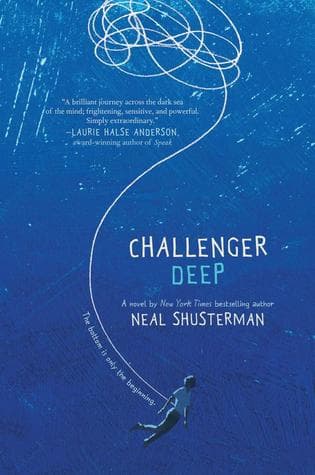
- Challenger Deep
Neal Shusterman
4.1 (20k) average on GoodreadsPsychologyExplores mental illness (schizophrenia) through a young protagonist's internal and external journeys.
- The Perks of Being a Wallflower
Stephen Chbosky
4.2 (1.3M) average on GoodreadsPsychologyA coming-of-age story with a deeply introspective narrator dealing with past trauma and mental health challenges.
- It's Kind of a Funny Story
Ned Vizzini
4.1 (211k) average on GoodreadsPsychologyVizzini's novel focuses on clinical depression and suicidal ideation, offering a broader look at inpatient mental health care. While both books are lauded for authenticity in depicting mental illness, Green's Turtles All the Way Down provides a more specific and in-depth exploration of OCD, whereas Vizzini's covers a wider spectrum of mental health challenges within a psychiatric ward setting.
- The Sun Is Also a Star
Nicola Yoon
4.1 (184k) average on GoodreadsYoung AdultYoon's novel primarily focuses on romance and destiny, with mental health issues appearing as secondary character traits or plot points. In contrast, Green's book centers mental illness (OCD) as the core theme and driving force of the narrative, using romance and mystery as supporting elements to explore Aza's internal world. Green prioritizes the internal struggle over external romantic entanglement.
- Eleanor Oliphant Is Completely Fine
Gail Honeyman
4.3 (708k) average on GoodreadsLiterary FictionA lonely woman's structured life changes when an IT guy and an elderly man help her learn to open her heart.
- One Flew Over the Cuckoo's Nest
Ken Kesey
4.2 (631k) average on GoodreadsPsychologyIn a mind-bending asylum, the boisterous Randle McMurphy wages a defiant war against the tyrannical Nurse Ratched, inspiring his fellow inmates, including the seemingly catatonic Chief Bromden, to reclaim their lost humanity.





Enjoyed the summary?
A summary gives you the shape of the book. The book itself has the detail, the examples and the voice.
Find Turtles All the Way Down on AmazonAs an Amazon Associate, BookBrief earns from qualifying purchases. How we're funded