
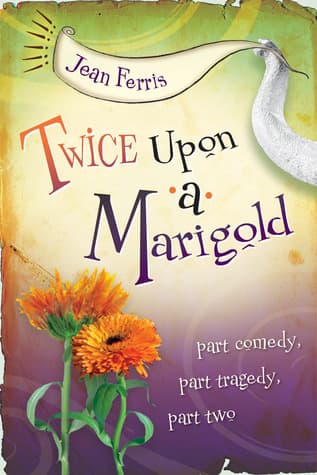
Synopsis
Covers the whole plot, including the ending.
- Difficulty
- Easy
- Pacing
- Moderate
- Mood
- Humorous, Whimsical, Adventurous, Lighthearted
- Read it if
- You enjoy humorous, lighthearted fantasy with familiar fairy tale elements and a clever, adventurous plot.
- Skip it if
- You prefer serious, high-stakes fantasy or want a completely original world without fairy tale allusions.
Twice Upon a Marigold Plot Summary
Covers the whole plot, including the ending.
A Royal Honeymoon Interrupted
King Christian and Queen Marigold are enjoying their peaceful reign in the kingdom of Marigold, living in newlywed harmony. Christian is a just and beloved ruler, while Marigold's common sense and kind heart make her a popular queen. Their happiness, however, is shattered when news reaches them from a distant village. A woman matching Queen Olympia's description, who was presumed dead after falling into the river, has been found alive. This revelation sends a ripple of fear through the kingdom, as Olympia's tyrannical rule and cruel nature are well-remembered. Christian and Marigold must now confront the possibility of her return and the threat it poses to their peace.
Olympia's Amnesia and New Life
After her fall into the river, the former Queen Olympia was swept far downstream and washed ashore, suffering from complete amnesia. She was found by a kind-hearted farmer, Stan Lucasa, and his family, who took her in. Under the new name 'Ollie,' she lived a simple, unassuming life in their village, doing chores and completely unaware of her royal past or her former cruel nature. She even developed a gentle demeanor, a stark contrast to the tyrant she once was. This period of amnesia allows her to experience a life free from the pressures and corruptions of power, temporarily changing her character.
The Return of Memory and Ambition
One day, while working in the fields, 'Ollie' suffers a minor accident, bumping her head. This seemingly innocuous event triggers a sudden and complete restoration of her memories. The kind 'Ollie' vanishes, replaced by the ruthless and ambitious Queen Olympia. She instantly recalls her former glory, her hatred for Marigold, and her desire to reclaim her throne from Christian. Her time as 'Ollie' is quickly dismissed as a temporary aberration, and she begins plotting her return to Marigold, determined to usurp Christian and Marigold and restore her 'rightful' place as queen.
A Royal Alliance of Convenience
With her memory restored, Queen Olympia wastes no time. She manipulates Stan Lucasa, who still believes her to be 'Ollie' and feels a sense of loyalty and affection for her, into accompanying her on a journey back to her 'home.' Along the way, they encounter Lazy Susan, Sleeping Beauty's perpetually sleepy and somewhat lackadaisical sister, who is seeking adventure and a place where she can nap undisturbed. Olympia, recognizing Susan's royal connections and potential usefulness, convinces her to join their party, promising her a life of ease and endless sleep if she helps Olympia reclaim her kingdom. This unlikely trio sets off towards Marigold.
The Road to Marigold
As Olympia, Stan, and Susan travel towards Marigold, their journey has humorous mishaps and encounters with various quirky characters. Olympia's true, demanding, and self-centered nature slowly begins to resurface, despite her attempts to maintain a pleasant facade. Stan, still naive and loyal, struggles to reconcile the 'Ollie' he knew with the increasingly imperious woman she is becoming. Lazy Susan, meanwhile, is mostly concerned with finding comfortable places to nap, but even her sleepy mind occasionally registers Olympia's less-than-noble intentions. Their progress is slow but steady, bringing them closer to the kingdom and a confrontation.
Arrival and Incognito Entry
Queen Olympia, Stan, and Lazy Susan finally reach the outskirts of Marigold. Knowing that a direct assault would be futile and that she is likely presumed dead or exiled, Olympia devises a plan to enter the kingdom discreetly. They attempt to pass themselves off as ordinary travelers or distant relatives seeking refuge. Their arrival causes a stir among some of the older villagers who recognize Olympia, but her changed appearance and the presence of Stan and Susan allow them to initially avoid immediate detection by the royal guards. They seek shelter and begin to gather intelligence, preparing for Olympia's grand reveal and bid for power.
Christian and Marigold Prepare
News of a woman resembling Queen Olympia making her way to the kingdom reaches Christian and Marigold. Though initially disbelieving, the reports become too frequent and detailed to ignore. Christian, ever the strategist, begins to fortify the castle and alert his most loyal knights and advisors. Marigold, while concerned, relies on her wit and the loyalty of the common people. They also seek counsel from their trusted friends, including the wizard Fenwick, whose magical knowledge might prove invaluable against Olympia's cunning. The kingdom braces itself for the inevitable confrontation, uniting under their beloved king and queen.
The Royal Challenge
With her plans solidified, Queen Olympia makes her dramatic public appearance, disrupting a royal ceremony or public gathering. She boldly declares herself the true Queen of Marigold, denouncing Christian's reign as a usurpation. She presents her 'proof' of identity and claims her right to the throne by lineage. This creates a tense atmosphere, as some of the older, more traditional nobles are swayed by her claims, while the majority of the common folk and Christian's loyal supporters remain steadfast. Christian and Marigold must now formally respond to this direct challenge, defending their legitimacy and the peace they have brought to the kingdom.
A Battle of Wits and Loyalty
The conflict between Olympia and Christian is not one of brute force, but of wits, diplomacy, and public opinion. Christian, with Marigold's clever input, uses his knowledge of law and tradition to counter Olympia's claims. Marigold's genuine connection with the people, contrasting sharply with Olympia's remembered tyranny, sways public sentiment. Fenwick's magical insights and inventions also play a role, often subtly undermining Olympia's attempts to gain an advantage. Stan Lucasa, witnessing Olympia's true colors, begins to question his loyalty, while Lazy Susan, surprisingly, offers her own brand of sleepy wisdom that sometimes proves inadvertently helpful.
The Resolution and a New Destiny
Through clever maneuvering, the unwavering loyalty of the people, and a dash of unexpected magical intervention, Queen Olympia's bid for the throne is ultimately thwarted. She is unable to overcome the love and respect Christian and Marigold have earned. Olympia is either exiled or convinced to live a more simple, less destructive life. Stan Lucasa, having seen the true nature of power and the importance of kindness, discovers a surprising royal lineage of his own, leading him to a different, more peaceful destiny as a king in a neighboring, less demanding kingdom, possibly with Lazy Susan by his side. Christian and Marigold's reign continues, stronger and more beloved than ever.
Twice Upon a Marigold Characters
Marigold
Protagonist
The clever and compassionate Queen of Marigold.
Marigold, formerly a simple orphan, is now the beloved Queen of Marigold, married to King Christian. She is known for her sharp wit, common sense, and unwavering kindness. Despite her royal status, she remains grounded and values practicality over pomp. Her ability to connect with ordinary people and her genuine empathy make her a popular ruler, contrasting sharply with the tyrannical Olympia. She is fiercely loyal to Christian and dedicated to the well-being of her kingdom.
Relationships: Christian (Husband, loving and supportive partner); Queen Olympia (Rival, object of Olympia's hatred)
King Christian
Protagonist
The just and strategic King of Marigold.
King Christian is the intelligent and honorable ruler of Marigold, deeply in love with his wife, Marigold. He is known for his strategic mind, fairness, and commitment to his people. Having previously overthrown Olympia, he is acutely aware of the threat she poses and dedicates himself to protecting his kingdom and his queen. He often relies on Marigold's practical insights and the advice of his trusted advisors, showing a willingness to listen and adapt, making him an effective and respected leader.
Relationships: Marigold (Wife, loving and supportive partner); Queen Olympia (Antagonist, former tyrannical ruler he deposed)
Queen Olympia (Ollie)
Antagonist
The former tyrannical queen, returned with her memory and ambition restored.
Queen Olympia is the primary antagonist, a cruel, vain, and power-hungry woman who was believed to be dead. After her fall into the river, she suffered amnesia and lived as 'Ollie,' a simple, kind farmer's helper. However, a bump on the head restores her memories and her ruthless ambition, reigniting her desire to reclaim her throne. She is manipulative and self-serving, believing herself entitled to rule and viewing Christian and Marigold as usurpers. Her character highlights the corrupting influence of power.
Relationships: Christian (Enemy, former stepson and current usurper in her eyes); Marigold (Enemy, object of her hatred and rival for the throne); Stan Lucasa (Unwitting pawn, initially kind rescuer); Lazy Susan (Pawn, ally of convenience)
Stan Lucasa
Supporting
The kind farmer who rescues Olympia, later discovering his own royal destiny.
Stan Lucasa is a kind, honest, and somewhat naive farmer who discovers the amnesiac Olympia (as 'Ollie') and takes her into his home. He develops a genuine affection for 'Ollie' and remains loyal to her even after her memory returns and her true, cruel nature begins to resurface. Stan is characterized by his strong moral compass and his simple, good-hearted nature. He serves as a foil to Olympia's ambition and represents the innocence of a life untouched by power. He later discovers a surprising royal lineage.
Relationships: Queen Olympia (Rescuer, initially caring towards 'Ollie', later disillusioned by her true nature); Lazy Susan (Companion, potential future queen)
Lazy Susan
Supporting
Sleeping Beauty's perpetually sleepy sister, who joins Olympia's quest.
Lazy Susan is Sleeping Beauty's younger sister, known for her constant desire to sleep and her generally languid demeanor. She is not particularly ambitious or malicious, but rather seeks comfort and ease. She joins Olympia's party more out of a desire for adventure and the promise of a life of leisure than any true loyalty to Olympia's cause. Despite her sleepiness, she occasionally offers surprising insights or performs actions that inadvertently aid the protagonists, making her a humorous and unpredictable element of the story.
Relationships: Queen Olympia (Companion, ally of convenience); Stan Lucasa (Companion, potential future king)
Fenwick
Supporting
The eccentric but wise royal wizard.
Fenwick is King Christian's trusted royal wizard, known for his absent-mindedness and his powerful, if sometimes unpredictable, magic. He is loyal to Christian and Marigold and provides magical assistance and counsel when needed. His spells and inventions often have unexpected side effects, leading to humorous situations, but ultimately prove crucial in countering Olympia's schemes. He represents the intellectual and magical support system for the protagonists.
Relationships: Christian (Advisor, loyal subject); Marigold (Advisor, loyal subject)
Pippin
Supporting
Marigold's loyal and intelligent dog.
Pippin is Marigold's beloved and intelligent dog, who often accompanies her and Christian. More than just a pet, Pippin has a keen sense of observation and an uncanny ability to understand human emotions and intentions. He provides comfort and often acts as a silent, furry guardian for Marigold, sometimes even alerting her to danger or sensing the true nature of characters like Olympia before others do. His presence adds a touch of warmth and innocence to the royal court.
Relationships: Marigold (Beloved owner, loyal companion); Christian (Friend, master)
Twice Upon a Marigold Themes
The Nature of Power and Leadership
This theme explores the contrast between tyrannical and benevolent leadership. Queen Olympia embodies the corrupting influence of unchecked power, driven by vanity and entitlement, as seen in her immediate return to cruelty upon regaining her memories. In contrast, Christian and Marigold represent compassionate and just rule, earning the loyalty of their subjects through kindness, fairness, and common sense. The kingdom's preference for Christian and Marigold over Olympia's oppressive return highlights that true leadership comes from service and respect, not just birthright or force.
“A true ruler serves their people, not themselves.”
Identity and Memory
The theme of identity is central to Olympia's character. Her period of amnesia, where she lives as 'Ollie,' shows a drastically different, kinder personality, suggesting that her cruelty was tied to her memories and the pressures of her royal identity. When her memory returns, so does her former self, raising questions about whether identity is inherent or shaped by experience and social roles. Stan's eventual discovery of his own royal lineage also plays into this, showing how one's true identity can be hidden or misunderstood.
“Sometimes, forgetting who you are allows you to become someone better.”
Love and Loyalty
The enduring love between Christian and Marigold forms the emotional core of the story, providing a stark contrast to Olympia's self-serving ambition. Their mutual respect and support are key to their success in defending the kingdom. Beyond romantic love, the loyalty of the kingdom's citizens to Christian and Marigold, earned through their benevolent rule, proves to be a powerful force against Olympia's claims. Even Stan Lucasa's initial loyalty to 'Ollie' and his eventual disillusionment illustrate the complexities of this theme.
“Love is a stronger bond than any crown.”
Humor and Satire
The book uses humor and satire to lighten the serious themes of power and conflict. Characters like Lazy Susan, with her constant napping, and Fenwick, with his eccentric magic, provide comic relief. The absurd situations Olympia finds herself in, or her overly dramatic pronouncements, are often played for laughs. This comedic tone allows the narrative to playfully critique traditional fairy tale tropes and the pretensions of royalty, making the story engaging and accessible for a younger audience while still exploring deeper ideas.
“A good nap can solve many problems, or at least make them seem less urgent.”
Plot Devices & Literary Techniques
Amnesia
Queen Olympia's loss and recovery of memory.
Amnesia serves as a pivotal plot device for Queen Olympia. Her memory loss allows her to experience a period of humility and kindness as 'Ollie,' creating a stark contrast to her true tyrannical nature. This temporary transformation complicates the narrative, as characters like Stan become attached to 'Ollie.' The device also sets up the central conflict, as the recovery of her memory directly triggers her return to Marigold and her attempt to reclaim the throne, making her a direct threat to Christian and Marigold's reign.
The Hidden Royal Lineage
Stan Lucasa's unexpected discovery of noble birth.
This device is used to provide a satisfying resolution for Stan Lucasa and to subtly comment on the nature of leadership. Stan, a simple farmer, discovers he has a claim to a throne, but one that is less grand and demanding than Marigold's. This allows him to find his own 'happily ever after' in a way that aligns with his gentle character, providing a counterpoint to Olympia's aggressive pursuit of power. It also expands the world-building, hinting at other kingdoms and royal families beyond Marigold, and reinforces the idea that true royalty isn't always obvious.
The Quirky Sidekicks
Lazy Susan and Fenwick's eccentric contributions.
Lazy Susan and Fenwick function as quirky sidekicks who, despite their eccentricities, play crucial roles in the plot. Lazy Susan's constant desire to sleep and Fenwick's absent-minded magic often lead to humorous situations, but their actions (or inactions) frequently have unexpected, plot-advancing consequences. They provide comic relief and illustrate that even seemingly insignificant characters can influence major events. Their unique personalities also allow for creative solutions to problems that traditional heroes might not consider.
Twice Upon a Marigold Quotes
“It's a lot of work to be prince, and I've been doing it for a long time. I'm ready to have someone else take over.”
“A good laugh is sunshine in the house.”
“Sometimes you have to do things you don't want to do because they are the right things to do.”
“Love isn't always fireworks and grand gestures. Sometimes it's quiet understanding and a shared smile.”
“Courage isn't the absence of fear, but rather the judgment that something else is more important than fear.”
“A true friend is someone who knows all about you and still loves you.”
“The hardest part of growing up is realizing that not everything is as simple as it seems.”
“”
“”
“”
“”
“The world is full of magic, if only you know where to look.”
“”
“True strength isn't about how much you can lift, but how much you can endure.”
Quiz
10 questions on the plot and the characters. Each answer comes with a short explanation.
Question 1
What is the primary reason Queen Olympia is able to return to the kingdom?
- She was rescued by a passing merchant ship.
- She lost her memory after falling into the river and was found by villagers.
- She faked her death to escape the kingdom unnoticed.
- She was transformed into a mermaid and later regained human form.
Show answer
B. She lost her memory after falling into the river and was found by villagers. Queen Olympia's return is possible because she lost her memory after her fall into the river and was living in a faraway village until her memory returned.
Question 2
Who are the newlyweds enjoying their 'happily ever after' at the beginning of the story?
- King Swithbert and Queen Olympia
- Christian and Marigold
- Stan Lucasa and Lazy Susan
- Prince George and Princess Petunia
Show answer
B. Christian and Marigold The story explicitly states that 'newlyweds Christian and Marigold have been living happily ever after.'
Question 3
Which of these characters accompanies Queen Olympia on her return journey to reclaim the kingdom?
- King Swithbert
- Marigold
- Lazy Susan and Stan Lucasa
- Christian and his royal guard
Show answer
C. Lazy Susan and Stan Lucasa The summary states that Olympia is 'Accompanied by Lazy Susan (Sleeping Beauty's slacker sister) and Stan Lucasa (a gentleman with a surprising destiny)' on her return.
Question 4
What is Lazy Susan's relationship to a well-known fairy tale character?
- She is Cinderella's stepsister.
- She is Sleeping Beauty's slacker sister.
- She is Snow White's half-sister.
- She is the Little Mermaid's aunt.
Show answer
B. She is Sleeping Beauty's slacker sister. The description explicitly identifies Lazy Susan as 'Sleeping Beauty's slacker sister'.
Question 5
What is the primary goal of Queen Olympia upon her return to the kingdom?
- To apologize for her past mistakes.
- To find a new husband.
- To take back the kingdom and the throne.
- To visit her old friends and family.
Show answer
C. To take back the kingdom and the throne. The summary clearly states that Olympia 'returns, determined to take back the kingdom.'
Question 6
How did Queen Olympia initially lose her memory?
- She was hit on the head during a jousting tournament.
- She suffered a magical curse.
- She fell into the river, causing her to lose her memory.
- She consumed a potion that erased her past.
Show answer
C. She fell into the river, causing her to lose her memory. The text states Olympia 'lost her memory after her ill-timed tumble' into the river.
Question 7
What genre is 'Twice Upon a Marigold' primarily identified as, according to the description?
- Mystery/Thriller
- Science Fiction/Dystopian
- Fantasy, Children's, Young Adult, Romance
- Historical Fiction/Biography
Show answer
C. Fantasy, Children's, Young Adult, Romance The provided genre tags for the book are 'Fantasy, Children's, Young Adult, Romance'.
Question 8
What makes Olympia's attempt to reclaim the throne potentially difficult, despite her determination?
- She has forgotten how to rule a kingdom.
- Christian and Marigold have fortified the castle with new defenses.
- A cast of familiar characters will make grabbing the throne not as easy as she thinks.
- Her companions, Lazy Susan and Stan Lucasa, are secretly working against her.
Show answer
C. A cast of familiar characters will make grabbing the throne not as easy as she thinks. The description states, 'Yet, thanks to a cast of familiar characters, grabbing the throne may not be as easy as Olympia thinks!'
Question 9
What is the implied fate of Queen Olympia before her return, according to the kingdom's initial belief?
- She was imprisoned in a distant land.
- She was believed to be dead after her fall into the river.
- She had eloped with a commoner.
- She had retired to a monastery.
Show answer
B. She was believed to be dead after her fall into the river. The text states, 'Olympia may not be as gone as they thought,' implying she was presumed dead after her 'fateful fall into the river.'
Question 10
What type of humor is highlighted in the description as a characteristic of the book?
- Dry, sarcastic wit
- Dark, satirical humor
- Subtle, observational humor
- Zany humor
Show answer
D. Zany humor The description explicitly mentions, 'Full of zany humor, this highly anticipated sequel...'.
Twice Upon a Marigold FAQ
What is the central conflict that disrupts Christian and Marigold's 'happily ever after' in 'Twice Upon a Marigold'?
The central conflict arises when Christian and Marigold discover that Queen Olympia, whom they believed had perished in the river, is actually alive and well. Her return, initially without memory but later with a renewed determination to reclaim her throne, directly threatens their reign and the peace of their kingdom.
Where was Queen Olympia found after her supposed demise, and what was her initial state?
Queen Olympia was found alive in a faraway village. Initially, she had lost all memory of her past as queen and was living a different, unassuming life. Her amnesia protected Christian and Marigold's reign for a time, but it was not a permanent condition.
Who are the key new characters introduced in 'Twice Upon a Marigold' who accompany Olympia on her return journey?
Olympia is accompanied by two significant new characters: Lazy Susan, who is Sleeping Beauty's slacker sister, and Stan Lucasa, a gentleman with a mysterious and surprising destiny. These two characters play crucial roles in Olympia's plot to reclaim the throne and add to the book's zany humor.
What is Olympia's primary goal upon regaining her memory and returning to the kingdom?
Upon regaining her memory, Olympia's primary goal is to return to her former glory and take back the kingdom from Christian and Marigold. She is determined to reassert her power and remove the current rulers, believing the throne is rightfully hers.
How do Christian and Marigold react to the news of Olympia's survival and her intent to reclaim the throne?
Christian and Marigold are initially shocked by Olympia's survival, as they had believed her gone. Their reaction quickly turns to concern and determination to protect their kingdom and their 'happily ever after' from her renewed tyranny. They must rally their allies and wits to counter her schemes.
What is the significance of Lazy Susan being Sleeping Beauty's sister, and how does this connection manifest in her character?
Lazy Susan's familial connection to Sleeping Beauty highlights a contrast, as she is portrayed as a 'slacker.' This implies a subversion of typical fairy tale royalty, suggesting she might be less conventionally heroic or ambitious. Her relaxed demeanor likely provides comedic relief or unexpected insights during Olympia's quest.
What 'surprising destiny' does Stan Lucasa possess, and how does it impact Olympia's plans?
Stan Lucasa's 'surprising destiny' is revealed to be that he is the true heir to the throne, as he is the long-lost Prince of the kingdom. This revelation completely upends Olympia's plans, as it means even if she overthrows Christian and Marigold, the throne rightfully belongs to Stan, not her.
How do 'familiar characters' from 'Once Upon a Marigold' contribute to the resistance against Olympia's return?
Familiar characters, such as the loyal Sir Gus and the eccentric Witch, use their unique skills and knowledge to aid Christian and Marigold. Sir Gus provides strategic support and loyalty, while the Witch's magical abilities and unpredictable nature create obstacles for Olympia, making her path to the throne difficult.
Is there any subtle foreshadowing of Olympia's survival or the circumstances of her fall in the first book that is paid off in the sequel?
While the first book implies Olympia's demise, there might be subtle hints, such as the ambiguity of a body never being recovered, or her sheer resilience, that could be interpreted as foreshadowing. The narrative leaves just enough room for her return, making her 'fateful fall' less final than initially perceived.
How does Olympia's period of amnesia and living a 'normal' life affect her personality or worldview upon regaining her memories?
Olympia's period of amnesia, though temporary, likely provided her with a glimpse into a life without the pressures and obsessions of royalty. While she ultimately returns to her old ways, this experience might subtly influence her ruthlessness, perhaps giving her a moment of doubt or a slightly altered perspective before fully embracing her tyrannical ambition again.
Analyze Christian's psychological journey as he transitions from a commoner to a king, and now faces a challenge from the former queen.
Christian's journey involves adapting to leadership and responsibility, a stark contrast to his earlier life. Facing Olympia's return tests his newfound confidence and commitment to Marigold and the kingdom. He must overcome past insecurities and assert his authority against a figure who once held immense power over him.
How does Marigold's practical and clever nature serve as a psychological counterpoint to Olympia's ambition and vanity?
Marigold's practical and empathetic nature offers a strong psychological contrast to Olympia's self-centered ambition and vanity. Marigold focuses on the well-being of her people and uses her intelligence for constructive solutions, whereas Olympia's actions are driven by a desire for power and personal glory, highlighting the difference between benevolent and tyrannical leadership.
What psychological impact does the revelation of Stan Lucasa's true identity have on Olympia's sense of entitlement?
The revelation of Stan Lucasa's true identity as the rightful prince delivers a significant psychological blow to Olympia. It shatters her absolute sense of entitlement to the throne, as it proves there is a legitimate heir with a stronger claim. This forces her to confront the fact that her ambition is not supported by lineage, potentially fueling her desperation or forcing a re-evaluation of her methods.
Is 'Twice Upon a Marigold' primarily a romance, a fantasy adventure, or a satire of fairy tales?
'Twice Upon a Marigold' skillfully blends elements of all three genres. While the romance between Christian and Marigold is a foundational element, the core plot is a fantasy adventure driven by Olympia's return. The 'zany humor' and 'familiar characters' also strongly suggest a satirical take on traditional fairy tale tropes, subverting expectations for comedic effect.
How does the book's humor contribute to its overall message or theme?
The book's zany humor serves to lighten the potentially serious conflict of a power struggle, making it accessible and enjoyable for its target audience. It also allows for a satirical critique of traditional fairy tale conventions and the absurdities of unchecked ambition, reinforcing themes about true leadership versus tyrannical rule without being overly didactic.
What deeper meaning can be drawn from Olympia's amnesia and subsequent memory return?
Olympia's amnesia can be interpreted as a symbolic 'reset' or a chance for redemption, highlighting the idea that identity and character can be shaped by experience. Her eventual return to her former self, despite this interlude, suggests the enduring power of ingrained personality traits and the difficulty of truly changing one's core nature, especially when power is involved.
Does the ending provide a definitive 'happily ever after' or leave room for future challenges for Christian and Marigold?
While the immediate conflict with Olympia and the resolution involving Stan Lucasa brings a sense of closure and secures Christian and Marigold's reign, the nature of 'happily ever after' in this series often implies ongoing, albeit less dramatic, challenges. The zany world suggests that while major threats are resolved, new, humorous predicaments could always arise, hinting at a nuanced, rather than absolute, 'ever after.'
How does the book utilize the concept of 'destiny' with Stan Lucasa, and what does it say about fate versus free will?
The book uses Stan Lucasa's 'surprising destiny' to explore the concept of predetermined fate, where royal lineage ultimately dictates who should rule. However, it also subtly contrasts this with the free will and actions of Christian and Marigold, who earned their position through merit and love, suggesting that while destiny may set a path, character and choice are equally important in leadership.
Similar books
- Ella Enchanted
Gail Carson Levine
4.0 (387k) average on GoodreadsFantasyFeatures a clever princess in a fairy tale setting with humor and romance.
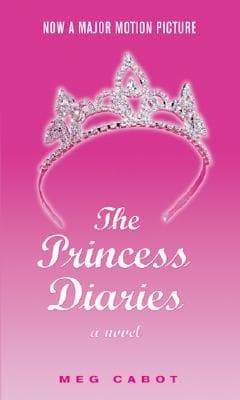
- The Princess Diaries
Meg Cabot
4.0 (624) average on GoodreadsYoung AdultFocuses on royal antics, self-discovery, and lighthearted humor.
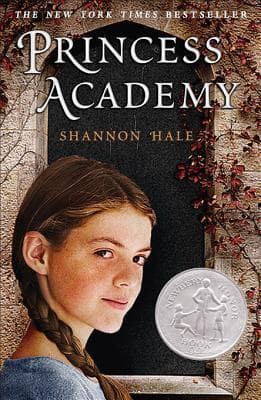
- Princess Academy
Shannon Hale
4.0 (105k) average on GoodreadsFantasyBoth books feature young women in royal or aspiring royal roles, but Princess Academy provides a richer exploration of female empowerment, education, and social class within a more intricately developed fantasy world, presenting characters with more profound internal and external struggles than seen in Ferris's work.
- Harry Potter and the Sorcerer's Stone
J.K. Rowling
4.5 (7M) average on GoodreadsFantasyRescued from a miserable life under the stairs, an orphaned boy discovers he's a wizard destined for a magical school, where he uncovers a dangerous secret tied to the dark wizard who murdered his parents.
- The Hunger Games
Suzanne Collins
4.3 (6.4M) average on GoodreadsFantasyIn a future where children fight to the death on live television, Katniss Everdeen volunteers for the arena, turning a death sentence into a fight for survival and a spark of rebellion.
- 1984
George Orwell
4.2 (3.1M) average on GoodreadsPoliticsIn a future where surveillance and thought control are absolute, a man's search for truth clashes with the Party, showing that hope can be a form of rebellion.




Enjoyed the summary?
A summary gives you the shape of the book. The book itself has the detail, the examples and the voice.
Find Twice Upon a Marigold on AmazonAs an Amazon Associate, BookBrief earns from qualifying purchases. How we're funded