
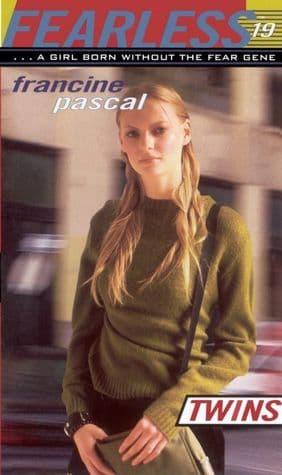
Synopsis
Covers the whole plot, including the ending.
- Difficulty
- Easy
- Pacing
- Moderate
- Mood
- Mysterious, Suspenseful, Intriguing, Empowering
- Read it if
- You enjoy classic YA fantasy with a focus on hidden powers, family secrets, and a young protagonist discovering their true heritage.
- Skip it if
- You prefer complex world-building over character-driven mystery or are looking for a more modern, fast-paced fantasy style.
Twins Plot Summary
Covers the whole plot, including the ending.
A Life of Secrecy and Neglect
Molly Maxwell lives a secluded life with her father, Professor Henry Maxwell, in a large, isolated house. Her father, a brilliant but emotionally distant scientist, works in a hidden laboratory. Molly's only companion is their housekeeper, Mrs. Peterson, who offers some warmth but knows little about the family's true circumstances. Molly's mother, Dr. Eleanor Maxwell, is a constant, painful absence, having disappeared years ago under mysterious circumstances. Molly often feels neglected and longs for a normal life, a desire intensified by her father's erratic behavior and the unsettling atmosphere of their home. She frequently overhears hushed conversations and glimpses strange equipment, hinting at a secret her father tries to keep from her.
The Arrival of Uncle Edward
A new tension enters Molly's life with the unexpected arrival of her Uncle Edward. To Molly's shock, Edward is the spitting image of her father, Henry, a fact that both fascinates and disturbs her. Edward is charming and attentive, a stark contrast to Henry's often cold demeanor, and Molly quickly feels drawn to him. However, his presence also brings unease. Her father reacts with extreme hostility and suspicion towards Edward, intensifying the already strong tension in the house. Molly tries to understand the animosity between the identical brothers, but neither man offers a clear explanation, only veiled warnings and cryptic remarks that deepen her confusion.
Whispers of the Past
Driven by growing suspicion and curiosity, Molly investigates her family's past. She uncovers a hidden compartment containing old journals, research notes, and photographs belonging to her mother, Eleanor. These documents reveal that both her parents were brilliant geneticists involved in groundbreaking, ethically questionable research. The journals hint at a project focused on human cloning and a 'twin' experiment, causing Molly to question the true nature of her father and uncle's relationship. She learns of a catastrophic accident during their research, which led to her mother's disappearance and a deep rift between the brothers. The more she reads, the more she realizes the danger her mother was in, and potentially, the danger she herself now faces.
A Confession and a Revelation
Overwhelmed by her discoveries, Molly confronts Mrs. Peterson, who, seeing Molly's distress, finally breaks her silence. Mrs. Peterson, who has been with the family for years, shares fragmented but crucial details about the 'twin' experiment. She confirms that Henry and Edward are not just brothers, but products of an advanced cloning project, with one being the original and the other a clone. She hints at the profound psychological and ethical dilemmas that arose from their creation and the devastating impact it had on Eleanor. Mrs. Peterson’s confession, though incomplete, solidifies Molly’s growing dread and confirms that her family's secrets are far more sinister than she ever imagined, directly linking to her own existence.
The Trap Unveiled
Molly's investigation ends with a shocking discovery in her father's hidden laboratory. She finds detailed genetic blueprints and a hidden chamber containing equipment identical to what her mother described in her journals. Here, the full, horrifying truth is revealed: Molly is not the biological daughter of Henry and Eleanor, but a clone of Eleanor, meticulously created by her father, Henry. His intention was to recreate his lost love, believing he could bring Eleanor back through Molly. This revelation shatters Molly's identity and understanding of her entire life, exposing her father's twisted obsession and the profound ethical violation at the core of her existence. She realizes she is a replacement, not a child.
The Brothers' Conflicting Motives
The truth about Molly's origins forces both Henry and Edward to reveal their full motivations. Henry, driven by desperate grief and a desire to correct his past mistakes, admits to cloning Eleanor, using Molly as his 'second chance.' He sees Molly not as an individual, but as a vessel to perfect his work and bring back his beloved. Edward, however, explains that he has returned to protect Molly and prevent Henry from repeating his egregious errors. He believes Henry's experiments are dangerous and unethical, and he wants to save Molly from becoming another victim of his brother's scientific hubris. The brothers are locked in a battle of wills, each claiming to act in Molly's best interest, but with very different methods and goals.
Eleanor's Legacy
In a hidden compartment of her mother's old desk, Molly finds a final, desperate message from Eleanor. The message, recorded before her disappearance, reveals that Eleanor had discovered Henry's cloning project and his intention to clone her. She was horrified by the ethical implications and tried to stop him. The 'accident' was not an accident, but Henry's attempt to silence her and continue his work. Eleanor warns Molly about the dangers of unchecked scientific ambition and urges her to never let anyone control her identity or destiny. This message gives Molly a deep connection to her true mother and strengthens her resolve to fight for her own autonomy against her father's manipulative intentions.
The Confrontation and the Choice
Armed with all the truths she has uncovered, Molly confronts both her father and uncle in the laboratory. She exposes their secrets, her mother's fate, and her own identity as Eleanor's clone. She refuses to be a pawn in their scientific rivalry or her father's grief-stricken obsession. Molly passionately asserts her right to exist as an independent person, demanding that they see her as Molly, not as a replacement for Eleanor or an experimental subject. Her powerful declaration forces both men to momentarily step back from their own agendas and confront the profound ethical implications of their actions and the emotional toll they have taken on her.
The Unraveling of Control
In a decisive act of defiance and self-preservation, Molly takes matters into her own hands. She systematically destroys the cloning equipment, the research data, and all remnants of her father's project, ensuring that no one else can be subjected to such a fate and that her own existence cannot be replicated or controlled. This act is not just about destroying the physical tools of her father's obsession, but about symbolically breaking free from his manipulative grasp and reclaiming her own identity. Her actions shock both Henry and Edward, showing her strength and resolve to forge her own future, independent of their scientific ambitions and past grievances.
A New Beginning, A Lingering Shadow
Molly ultimately chooses to leave her father and the house that has been a prison of secrets and scientific obsession. She decides to go with Edward, who, despite his own complicity, offers her a chance at a different life and some protection. While she finds a degree of freedom and the possibility of a normal existence, the revelations about her origins leave a lasting mark. She carries the weight of being a clone, the legacy of her mother's tragic fate, and the trauma of her father's actions. Molly's journey is one of survival and self-discovery, but the shadows of her past will always linger, shaping her understanding of identity, family, and the ethical boundaries of science.
Principal Figures
Molly Maxwell
Protagonist
A young girl discovering her true, cloned identity and fighting for autonomy.
Molly is initially a naive and lonely girl, yearning for a normal life and her absent mother. She is observant and intelligent, constantly questioning the strange atmosphere in her isolated home. As she uncovers the truth about her origins as a clone of her mother, Eleanor, she transforms into a determined and resilient young woman. Her primary drive is to understand who she is and to assert her right to an individual identity, separate from her father's scientific ambitions and his grief-driven obsession. She possesses an innate strength and a strong moral compass that guides her through the shocking revelations.
Relationships: Professor Henry Maxwell (Daughter (cloned) to father, later adversary and victim of his obsession); Dr. Eleanor Maxwell (Cloned daughter to biological mother, a source of guidance and inspiration); Uncle Edward (Niece to uncle, later protector and ally); Mrs. Peterson (Confidante and surrogate maternal figure)
Professor Henry Maxwell
Antagonist
Molly's father, a brilliant but morally compromised geneticist obsessed with recreating his lost wife.
Henry is a renowned scientist, brilliant yet deeply flawed. Consumed by grief over the loss of his wife, Eleanor, he embarks on a morally reprehensible journey to clone her, creating Molly. He is emotionally distant and manipulative, viewing Molly more as a scientific project and a replacement for Eleanor than as his daughter. His actions are driven by a twisted form of love and a refusal to accept loss, leading him to cross ethical boundaries without remorse. He is fiercely protective of his secrets and his work, clashing violently with his brother, Edward, over their past and future.
Relationships: Molly Maxwell (Creator/father to clone/daughter, obsessed and controlling); Dr. Eleanor Maxwell (Husband, obsessed with her return, her creator); Uncle Edward (Twin brother, rival, and adversary); Mrs. Peterson (Employer, oblivious to his true nature)
Dr. Eleanor Maxwell
Supporting/Mentioned
Molly's biological mother, a brilliant geneticist whose warnings about unchecked science guide Molly.
Eleanor is Molly's biological mother and the original from whom Molly was cloned. Though physically absent for most of the story, her presence is deeply felt through her journals and a final message. She was a brilliant and ethical geneticist who became horrified by her husband Henry's descent into cloning. She represents the moral conscience of scientific inquiry, warning against the dangers of playing God. Her struggle against Henry's ambitions and her ultimate fate serve as a powerful catalyst for Molly's own journey of self-discovery and resistance.
Relationships: Molly Maxwell (Biological mother to clone, a posthumous guide); Professor Henry Maxwell (Wife, later victim of his obsession and scientific hubris); Uncle Edward (Sister-in-law, potentially an ally against Henry)
Uncle Edward
Supporting
Professor Henry Maxwell's identical brother, who returns to protect Molly from his sibling's dangerous experiments.
Edward is Henry's identical twin brother, initially appearing as a charming and more approachable figure than Henry. He is also a scientist, but he possesses a stronger moral compass than his brother, having recognized the ethical perils of their past cloning experiments. He returns to the Maxwell household with the intention of stopping Henry and protecting Molly, whom he sees as another victim of his brother's ambition. While he has his own secrets and a complicated past, he ultimately acts as an ally and protector for Molly, offering her a path to freedom.
Relationships: Molly Maxwell (Uncle and protector); Professor Henry Maxwell (Twin brother, rival, and adversary); Dr. Eleanor Maxwell (Sister-in-law, possibly a former ally)
Mrs. Peterson
Supporting
The long-serving housekeeper who holds fragmented knowledge of the Maxwell family's secrets.
Mrs. Peterson is the Maxwell family's housekeeper, a kindly but initially reticent woman. She has been with the family for many years and possesses fragmented knowledge of the strange events surrounding Molly's birth and Eleanor's disappearance. She cares deeply for Molly and, though initially fearful of Henry's wrath, eventually provides crucial clues and confirmations to Molly about her family's dark past. She represents a connection to a semblance of normalcy and offers Molly some much-needed emotional support and warmth amidst the scientific and familial chaos.
Relationships: Molly Maxwell (Surrogate maternal figure and confidante); Professor Henry Maxwell (Employer, fearful of his secrets)
Themes & Insights
Identity and Self-Discovery
The central theme is Molly's journey to understand who she is after discovering she is a clone. She grapples with the question of whether she is a unique individual or simply a copy of her mother. This theme is explored through her internal struggles, her rejection of being a 'replacement,' and her fight to define her own destiny. This is seen when she confronts her father and destroys the cloning equipment, asserting her individuality. Her journey is about forming an identity separate from her origins.
“I am Molly. Not Eleanor. Not a replacement. I am me.”
The Ethics of Scientific Advancement
The novel examines the moral limits of science, especially human cloning. Professor Henry Maxwell's ambition to recreate his deceased wife leads him to ignore ethical considerations, showing the dangers of unchecked scientific pride. Dr. Eleanor Maxwell's journals and warnings offer a counterpoint, emphasizing the profound and potentially devastating consequences of 'playing God.' The story questions whether scientific progress should always be pursued, regardless of the human cost, and illustrates the ethical dilemmas in manipulating life itself.
“There are some doors science should never open, Henry. Some lines that must never be crossed.”
Grief, Obsession, and Control
Henry Maxwell's actions are driven by overwhelming grief for his lost wife, Eleanor. This grief turns into a dangerous obsession, leading him to clone her and try to control Molly's life to recreate his past. His inability to let go shows as a desire for absolute control over Molly's identity and future. This theme is clear in his manipulative behavior, his isolation of Molly, and his scientific project, all stemming from his refusal to accept loss and his desperate attempt to regain what he's lost, ultimately at the expense of his daughter's autonomy.
“You were meant to be her. To bring her back to me.”
Family Secrets and Betrayal
The Maxwell household is built on deep, unsettling secrets. Molly's entire life is a carefully constructed lie, orchestrated by her father. The animosity between Henry and Edward, Eleanor's disappearance, and Molly's own origins are all hidden truths that slowly unravel. This theme explores the destructive power of secrets within a family, leading to mistrust, emotional distance, and profound betrayal. Molly's discovery of these secrets, particularly her father's betrayal in cloning her, shatters her understanding of family and forces her to question the loyalty and intentions of those closest to her.
“Every day was a lie. Every memory, a carefully crafted deception.”
Plot Devices & Literary Techniques
The Hidden Laboratory
A secret scientific workspace symbolizing forbidden knowledge and control.
The hidden laboratory is Professor Henry Maxwell's sanctum, a place where he conducts his unethical cloning experiments. It represents the secretive, dangerous aspect of his scientific ambition and his desire to control life. For Molly, it is initially a place of mystery and forbidden curiosity, but ultimately becomes the site of her most horrifying discovery – her own origin. The lab acts as a physical manifestation of the family's dark secrets, housing the tools and data that reveal Henry's obsession and Eleanor's fate. Its destruction by Molly symbolizes her breaking free from her father's control and the legacy of his scientific hubris.
Dr. Eleanor Maxwell's Journals
Posthumous writings providing crucial exposition and ethical warnings.
Eleanor's journals serve as a critical plot device, providing Molly with the necessary exposition to understand her family's past and her own origins. They function as a posthumous voice for Eleanor, revealing the details of the cloning project, Henry's descent into obsession, and Eleanor's own ethical struggles and warnings. The journals are not just a source of information; they establish a profound connection between Molly and her biological mother, guiding Molly's actions and strengthening her resolve against her father. They represent truth emerging from the past, empowering Molly to confront her present.
The Identical Twins (Henry and Edward)
Mirror images that complicate identity and create moral ambiguity.
The physical identicality of Henry and Edward is a central plot device that initially confuses Molly and highlights the theme of identity. Their shared appearance makes it difficult for Molly to distinguish between them, symbolically reflecting her own struggle with being a clone. More importantly, their identical faces but vastly different moral stances create a powerful dynamic, showcasing how even genetically identical individuals can diverge completely in character and ethics. This duality forces Molly, and the reader, to look beyond surface appearances and discern true intentions, emphasizing that identity is more than just genetics.
The 'Accident' Lie
A deceptive narrative used to conceal a darker truth about Eleanor's disappearance.
The 'accident' that supposedly led to Eleanor's disappearance is a recurring lie perpetuated by Henry to conceal the true, sinister events. This lie creates a veil of mystery and grief that initially prevents Molly from understanding her mother's fate. As Molly investigates, the unraveling of this lie exposes Henry's manipulative nature and his willingness to commit grave acts to protect his secrets and continue his experiments. The eventual revelation that Eleanor's 'accident' was a deliberate act of silencing by Henry underscores the depth of his obsession and the betrayal at the heart of the family.
Twins Quotes
“Jessica and Elizabeth Wakefield were identical twins. They had the same long, blonde hair, the same sparkling blue-green eyes, and the same dimple in their left cheek. But that's where the similarity ended.”
“Elizabeth was always thinking, always planning, always looking for a new adventure. Jessica was always acting, always doing, always looking for a new way to have fun.”
“It was hard to be the 'good' twin when the 'bad' twin was having all the fun.”
“Sometimes it felt like being a twin meant being half of a whole, instead of two whole people.”
“Jessica always knew how to make an entrance. Elizabeth always knew how to make a friend.”
“Even though they were identical, they could always tell each other apart. It was a twin thing.”
“The greatest adventure was often just around the corner, especially when you had a twin to share it with.”
“Being twins didn't mean you always agreed, but it did mean you always had someone on your side, even when you were wrong.”
“Jessica's motto: 'Why walk when you can run, and why be boring when you can be fabulous?'”
“Elizabeth's motto: 'A good book and a quiet place are all you need for a perfect afternoon.'”
“Sometimes, the biggest secrets were the ones they kept from each other, even when they shared everything else.”
“They might have looked the same, but their hearts beat to completely different rhythms.”
“No matter what crazy scheme Jessica cooked up, Elizabeth was usually there to help, or at least to bail her out.”
“Sweet Valley was more than just a town; it was their playground, their school, and the backdrop to all their adventures.”
“They were two halves of a perfect whole, each making the other shine brighter.”
Quiz
10 questions on the plot and the characters. Each answer comes with a short explanation.
Question 1
What is the primary reason the protagonist, Jessica, begins to struggle with distinguishing her uncle and father?
- They both shave their heads and grow beards.
- They both start wearing identical clothing.
- Their personalities and actions become indistinguishable and hostile towards her.
- They undergo a magical transformation that makes their physical appearance identical.
Show answer
C. Their personalities and actions become indistinguishable and hostile towards her. The core of Jessica's struggle is not about physical appearance, but about their increasingly similar and malevolent behavior towards her, making them functionally 'the same' in her perception.
Question 2
What is the overarching goal that both Jessica's father and uncle seem to share regarding her?
- To protect her from an external threat.
- To prepare her for a special destiny.
- To destroy her.
- To force her to choose between them.
Show answer
C. To destroy her. The book's premise explicitly states, 'They both want to destroy me,' indicating their shared malevolent intent towards Jessica.
Question 3
Which genre elements are most prominent in 'Twins' by Francine Pascal, based on the provided description?
- Historical Fiction and Romance
- Fantasy and Young Adult
- Mystery and Thriller
- Biography and Self-Help
Show answer
B. Fantasy and Young Adult The description lists 'Fantasy, Children's, Science Fiction, Young Adult,' making Fantasy and Young Adult the most fitting prominent elements.
Question 4
What kind of internal conflict is Jessica likely experiencing due to her father and uncle's behavior?
- Confusion about her own identity and purpose.
- A struggle to reconcile her past loving memories with their current hostility.
- Guilt over something she has done to provoke them.
- A desire to join them in their destructive goals.
Show answer
B. A struggle to reconcile her past loving memories with their current hostility. The line 'I used to be able to tell them apart. Not anymore.' implies a significant shift from a previous state, suggesting a conflict between her past perception of them and their current alarming behavior.
Question 5
The phrase 'Because they’re both the same' implies a thematic exploration of what concept?
- The power of genetic inheritance.
- The loss of individuality and the merging of malevolent forces.
- The beauty of unity and family bonds.
- The challenges of identical twin relationships.
Show answer
B. The loss of individuality and the merging of malevolent forces. Given their shared goal to 'destroy me,' their sameness points to a chilling unity in their negative intent, signifying a loss of their former individual identities and a merging into a singular threatening entity.
Question 6
How does the narrative perspective (first-person 'I') contribute to the reader's understanding of Jessica's predicament?
- It provides an objective, detached view of the events.
- It allows the reader to experience her confusion and fear directly through her subjective lens.
- It limits the reader to only what other characters tell Jessica.
- It primarily focuses on the internal thoughts of the father and uncle.
Show answer
B. It allows the reader to experience her confusion and fear directly through her subjective lens. First-person narration places the reader directly into Jessica's mind, making her confusion ('I used to be able to tell them apart. Not anymore.') and fear ('They both want to destroy me.') highly personal and immediate.
Question 7
What is a potential symbolic meaning behind the 'twins' concept, even if the father and uncle are not literally identical twins?
- It highlights the unbreakable bond of family love.
- It represents the dual nature of good and evil within a single person.
- It suggests the uncanny and terrifying convergence of two distinct threats into one indistinguishable, overwhelming force.
- It symbolizes the protagonist's desire for a sibling.
Show answer
C. It suggests the uncanny and terrifying convergence of two distinct threats into one indistinguishable, overwhelming force. If they are not literal twins, their 'sameness' and shared destructive intent transform them into a metaphorical 'twin' threat, emphasizing the terrifying convergence of two formerly distinct figures into one unified, malevolent entity.
Question 8
Considering the 'Science Fiction' genre tag, what kind of explanation might be offered for the father and uncle's transformation and shared malevolence?
- A magical curse or ancient prophecy.
- A psychological breakdown or shared delusion.
- An alien influence, technological alteration, or a scientific experiment gone wrong.
- A simple misunderstanding that can be resolved through communication.
Show answer
C. An alien influence, technological alteration, or a scientific experiment gone wrong. The 'Science Fiction' genre suggests that the explanation for their transformation and shared hostile intent could stem from scientific or technological origins, rather than purely magical or psychological ones.
Question 9
The phrase 'I used to be able to tell them apart. Not anymore.' creates a sense of dread rooted in the loss of what specific aspect of reality for Jessica?
- Her ability to recognize faces.
- Her understanding of her family's inherent goodness and stability.
- Her personal memories of childhood.
- Her physical safety within her home.
Show answer
B. Her understanding of her family's inherent goodness and stability. This line implies a fundamental shift not just in appearance, but in their character and behavior. The loss of distinction signifies a loss of the familiar, trustworthy roles they once held, replaced by a unified, threatening entity, shattering her sense of family stability.
Question 10
Given the 'Young Adult' categorization, what is a likely central challenge Jessica will face beyond merely surviving her father and uncle?
- Finding a new romantic interest.
- Learning to cook and clean for herself.
- Navigating betrayal, questioning authority, and understanding her own agency in a terrifying situation.
- Achieving academic excellence despite her family issues.
Show answer
C. Navigating betrayal, questioning authority, and understanding her own agency in a terrifying situation. Young Adult literature often explores themes of self-discovery, challenging adult figures, and developing personal agency in the face of adversity. Betrayal from trusted family members would force Jessica to question everything and find her own strength.
Twins FAQ
What is the core premise of 'Twins' and who are the central characters?
'Twins' centers on a young protagonist who discovers that their seemingly identical uncle and father are, in fact, the same malevolent entity, both intent on destroying them. The story explores the chilling realization that familiar figures have been replaced or merged into a singular threat, creating a profound sense of betrayal and danger for the unnamed narrator.
How does the narrator initially perceive the 'twins' and when do they realize something is wrong?
Initially, the narrator perceived their uncle and father as distinct individuals, able to easily tell them apart. The realization that 'they’re both the same' marks the turning point, suggesting a gradual erosion of their unique identities or a sudden, horrifying revelation that shatters the narrator's understanding of their family structure and safety.
What kind of 'destruction' do the uncle/father figures seek to inflict upon the protagonist?
The nature of the 'destruction' is left ambiguous but implies more than just physical harm. It could signify a desire to erase the narrator's identity, sanity, or very existence, perhaps as part of a larger, sinister plan related to the 'twins' mysterious origins. The threat is existential, aiming to utterly nullify the protagonist.
What genre elements are most prominent in 'Twins' given the description?
The book strongly leans into psychological horror and science fiction, with elements of fantasy. The 'they’re both the same' concept suggests a sci-fi premise like cloning or shapeshifting, while the existential threat and the narrator's internal struggle align with psychological thrillers. The 'Young Adult' categorization implies a coming-of-age narrative twisted by this terrifying discovery.
Is there any indication of how the 'twins' became 'the same' or when this transformation occurred?
The synopsis doesn't explicitly state how or when the transformation occurred, only that the narrator 'used to be able to tell them apart. Not anymore.' This implies a recent or ongoing process, or a sudden awakening to a long-standing deception. It leaves open whether they merged, one replaced the other, or if they were always one entity masquerading as two.
What could be the significance of the narrator's inability to distinguish between their uncle and father?
This inability is crucial, symbolizing a complete breakdown of trust and reality for the narrator. It suggests that the 'twins' have perfected their mimicry or that the narrator's perception has been warped, making them indistinguishable not just physically, but perhaps in their malevolent intent, erasing any last vestige of their former, individual selves.
Are there any clues about the 'twins'' ultimate goal beyond simply destroying the narrator?
While 'destroy me' is the stated goal, the depth of their malice suggests a larger purpose. It could be part of a ritual, a means to gain power, or to eliminate a perceived threat the narrator represents. The 'twins' might be agents of a greater force, or their destructive impulse could be inherently tied to their fused identity and origins.
What might be the symbolic meaning behind the 'uncle' and 'father' merging into one entity?
The merging could symbolize the loss of paternal protection and familial safety, or the collapse of the narrator's foundational understanding of their world. It represents a betrayal from the two most significant male figures in their life, turning sources of security into a singular, overwhelming threat, thus amplifying the psychological horror.
How does the narrator's perspective change from initial confusion to clear understanding of the threat?
The phrase 'I used to be able to tell them apart. Not anymore. Because they’re both the same' marks the shift from confusion to a chilling clarity. The narrator moves from a state of unease or subtle doubt to a definitive, terrifying realization of the 'twins'' true nature and their shared, destructive intent. This transition is a key psychological turning point.
What psychological impact does this familial betrayal have on the protagonist?
The betrayal by both father and uncle would be profoundly traumatizing, eroding the narrator's sense of safety, reality, and trust in others. It could lead to paranoia, isolation, and a struggle to discern truth from deception, forcing them to question everything they once believed about their family and themselves.
How might the narrator cope with the psychological burden of facing two familiar figures who are now one malevolent being?
Coping would be incredibly difficult, likely involving a desperate search for allies, an attempt to understand the 'twins'' nature, or a struggle to maintain their own sanity. The narrator might develop extreme vigilance, a desperate need for escape, or a resolve to fight back against this insidious, familial threat.
Is the 'they’re both the same' a literal physical merging, or a metaphorical representation of shared intent?
This is open to interpretation. It could be a literal physical transformation, like shapeshifting or merging into a single entity. Alternatively, it could be metaphorical, indicating that their minds, wills, and malevolent intentions have become perfectly aligned and indistinguishable, making them functionally 'the same' in their pursuit of the narrator's destruction.
Could the 'twins' be a manifestation of the narrator's own internal struggles or fears?
Given the psychological depth, it's plausible. The 'twins' could represent the narrator's anxieties about unreliable parental figures, the loss of childhood innocence, or the fear of being consumed by overwhelming external pressures. This interpretation would ground the fantastical elements in a deeper, personal struggle.
What kind of 'fantasy' elements might be present in the story, beyond the core premise?
Beyond the core premise of identical, malevolent figures, fantasy elements could include mystical origins for the 'twins,' hidden magical abilities they possess, or a fantastical realm they originate from. The story might involve ancient curses, parallel dimensions, or supernatural beings taking on human forms, adding to the mystery and dread.
How does the 'Young Adult' categorization influence the likely themes and resolution of the story?
As a YA novel, 'Twins' would likely focus on themes of identity, betrayal, finding inner strength, and the struggle for autonomy against oppressive forces. The resolution, while potentially dark, would likely involve the protagonist either escaping, understanding, or confronting the 'twins,' often with a focus on their personal growth and resilience.
What might be the 'Science Fiction' explanation for the uncle and father being the same?
A science fiction explanation could involve advanced cloning technology, a mind-melding experiment gone awry, or extraterrestrial beings impersonating human family members. They might be synthetic constructs, or victims of a transformation virus that makes them physically identical and mentally unified in their destructive goal.
Is there a possibility that the narrator is unreliable, and their perception of the 'twins' is distorted?
This is a strong possibility in psychological thrillers. The narrator's increasing inability to distinguish between the two figures could be a sign of their own deteriorating mental state or a deliberate manipulation by the 'twins' to make the narrator doubt their own sanity, adding another layer of horror to the narrative.
How does the title 'Twins' play into the story's central mystery?
The title 'Twins' is ironic and central to the mystery. Initially, it might imply the uncle and father are literal twins, or perhaps the protagonist has a twin. However, the revelation that 'they’re both the same' redefines 'twins' to mean a singular entity presenting as two, or two individuals who have become terrifyingly identical in form and purpose.
About the author
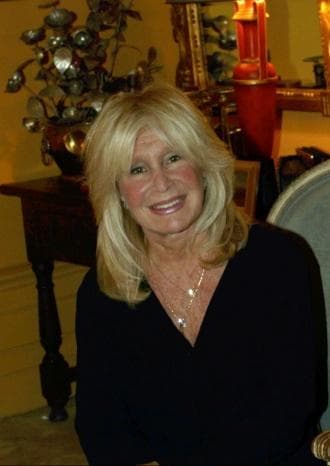
Francine Pascal is an author known for her work in fiction, particularly for creating engaging stories for young readers. Among her notable works are "Twins," which explores the lives of twin sisters, and "The Big Race," a tale of competition and friendship. Pascal's writing often focuses on themes relevant to adolescence and personal growth.
Similar books
- A Wrinkle in Time
Madeleine L'Engle
4.0 (1.1M) average on GoodreadsFantasyFeatures a young protagonist discovering extraordinary powers and facing cosmic family conflicts.
- The Secret Garden
Frances Hodgson Burnett
4.1 (891k) average on GoodreadsFantasyA young, neglected protagonist uncovers family secrets and finds inner strength in a mysterious setting.
- Harry Potter and the Sorcerer's Stone
J.K. Rowling
4.5 (7M) average on GoodreadsFantasyRescued from a miserable life under the stairs, an orphaned boy discovers he's a wizard destined for a magical school, where he uncovers a dangerous secret tied to the dark wizard who murdered his parents.
- The Hunger Games
Suzanne Collins
4.3 (6.4M) average on GoodreadsFantasyIn a future where children fight to the death on live television, Katniss Everdeen volunteers for the arena, turning a death sentence into a fight for survival and a spark of rebellion.
- 1984
George Orwell
4.2 (3.1M) average on GoodreadsPoliticsIn a future where surveillance and thought control are absolute, a man's search for truth clashes with the Party, showing that hope can be a form of rebellion.
- Divergent
Veronica Roth
4.2 (2.9M) average on GoodreadsFantasyIn a society divided by virtues, a sixteen-year-old's difference from the norm starts a rebellion that threatens her world.





Enjoyed the summary?
A summary gives you the shape of the book. The book itself has the detail, the examples and the voice.
Find Twins on AmazonAs an Amazon Associate, BookBrief earns from qualifying purchases. How we're funded