
Core Idea
- Difficulty
- Medium
- Read it if
- You are interested in powerful true stories of overcoming severe childhood abuse and neglect, exploring themes of resilience, trauma, and the pursuit of justice and self-worth against overwhelming odds.
- Skip it if
- You are sensitive to graphic descriptions of child abuse, domestic violence, and emotional cruelty, or prefer books with a less intense and more uplifting tone throughout.
Key Takeaways from Ugly
The Insidious Nature of Familial Abuse
Abuse within the family unit is often hidden, normalized, and incredibly difficult to escape.
Briscoe's memoir clearly shows how those meant to protect can become the source of terror. The truth is not just about physical scars, but the psychological trap of being abused by a parent. This type of abuse is especially damaging because it destroys a child's basic sense of safety and self-worth, making it hard for them to know what is normal or to get help. The constant manipulation and the social expectation of family loyalty create a stronger prison than any physical one. Briscoe's story highlights the painful conflict of depending on your abuser for survival, which only deepens the trauma.
“My mother's love was a weapon, not a shield. Each blow, each cruel word, etched itself deeper than any external wound.”
In the book: Constance's consistent beatings, starvation, and the emotional manipulation where her mother would oscillate between violence and fleeting moments of 'kindness' to maintain control. Her attempts to get taken into care, which were consistently thwarted due to the hidden nature of the abuse and her mother's ability to present a 'normal' facade to outsiders.
Try this: Recognize that 'family secrets' can hide grave injustices. Support initiatives that empower children to report abuse anonymously and provide resources for those trapped in abusive households, understanding that their situation is uniquely complex due to the familial bond.
Related ideas: child-abuse-dynamics, familial-trauma, intergenerational-violence
The Failed Safety Nets
Societal and institutional failures often leave abused children without adequate protection or intervention.
Briscoe's difficult experiences show a major flaw in systems meant to protect children. Despite her desperate attempts to get help—drinking bleach, running away, trying to go into care—the authorities and institutions around her consistently failed. This is not just a personal tragedy; it points to systemic issues where signs of abuse are missed, misunderstood, or ignored. The lack of proper investigation, the failure to see past a parent's outward appearance, and bureaucratic obstacles often leave children like Constance stuck. This failure shows the urgent need for stronger, child-focused safeguarding policies and better training for professionals to identify and respond to complex cases of hidden abuse.
“I tried to tell them, to show them, but no one truly saw. My cries for help echoed in empty rooms.”
In the book: Constance's repeated attempts to report her mother to social services and teachers, only for her claims to be disbelieved or inadequately investigated. Her drinking bleach was a desperate cry for help that, tragically, did not lead to her removal from the abusive home.
Try this: Advocate for improved mandatory reporting laws, better training for educators and social workers to recognize subtle signs of abuse, and more resources for child protective services to conduct thorough, child-focused investigations.
Related ideas: child-protection-failures, systemic-neglect, institutional-blindness
Resilience Forged in Adversity
The human spirit's capacity to endure and find strength even in the most brutal circumstances.
Constance Briscoe's story shows the remarkable strength of the human spirit. Despite enduring severe physical and psychological torture from her mother, she found an inner strength to not only survive but to eventually succeed. This strength was not passive; it was an active, determined will to live and to escape her situation. It appeared in her resourcefulness, her drive to do well in school, and her courage to break free. Her story challenges the idea that victims are always broken, showing instead that trauma, while damaging, can also build incredible inner strength and a powerful desire for self-preservation and improvement.
“They tried to break me, but every blow, every deprivation, only hardened my resolve to survive and prove them wrong.”
In the book: Her survival after being abandoned at 13, her dedication to her studies despite her home life, and her eventual success in pursuing a legal career, directly defying the expectations and limitations imposed by her abusive upbringing.
Try this: Foster resilience in vulnerable populations by providing access to education, mentorship, and therapeutic support that emphasizes agency and self-efficacy. Recognize that survival itself is a profound act of strength.
Related ideas: post-traumatic-growth, grit-and-perseverance, inner-strength
The Weight of Appearance
How societal perceptions of 'ugliness' and beauty can intersect with self-worth and abuse.
Briscoe's title, 'Ugly,' reflects how her mother's verbal abuse targeted her appearance, instilling deep feelings of worthlessness. This goes beyond just physical looks; it speaks to the psychological effect of being constantly told you are unlovable and undesirable. Her mother used 'ugliness' as a way to control, linking it directly to her daughter's perceived value. This story shows how outside approval, or the lack of it, can deeply shape a child's self-perception, especially when it comes from a primary caregiver. It highlights the widespread social pressure around beauty and how easily it can be used in abusive situations, leaving lasting scars on one's self-esteem and identity.
“My mother told me I was ugly, worthless. And for a long time, I believed her, seeing her words reflected in every mirror.”
In the book: Her mother's constant derogatory comments about Constance's appearance, calling her 'ugly' and 'dark', linking her physical traits to her perceived lack of worth. This psychological torment was as damaging as the physical abuse.
Try this: Challenge superficial beauty standards and promote self-acceptance. Educate on the profound psychological damage of verbal abuse, particularly when it targets a child's identity and appearance. Encourage positive self-talk and affirmation.
Related ideas: body-image-issues, psychological-abuse, self-esteem-development
Breaking the Cycle
Escaping an abusive past requires immense courage and a conscious effort to forge a new future.
Constance Briscoe's journey illustrates the difficult process of breaking free from an abusive past, both physically and psychologically. It is not enough to simply leave the abusive environment; the internalized trauma, learned behaviors, and shattered self-worth often remain. Her success as a judge is not just a career achievement, but a deep act of self-reclamation. It shows her refusal to let her past define her future and her deliberate choice to build a life based on justice and self-respect, rather than continuing the cycle of violence. This requires great self-reflection, courage, and often, re-parenting oneself.
“The hardest prison to escape is the one built in your mind, but I was determined to tear down its walls, brick by painful brick.”
In the book: Her pursuit of education and law, culminating in her becoming a judge, stands as direct evidence of her breaking the cycle of poverty and abuse she was born into. This career path is a stark contrast to the life her mother attempted to impose on her.
Try this: Support survivors of abuse through therapy, education, and mentorship programs that focus on healing, self-empowerment, and building healthy relationships. Emphasize that breaking the cycle is a lifelong journey, not a single event.
Related ideas: trauma-recovery, self-liberation, intergenerational-trauma
The Power of Education
Education can be a crucial escape route and a source of empowerment for those in dire circumstances.
For Constance, education was a lifeline, a safe place, and a tool against her oppressive home life. Despite the chaos and hardship at home, her dedication to her studies gave her purpose and a path to a different future. School offered moments of normalcy and validation, a stark contrast to the abuse she faced. This highlights how access to good education, even in the hardest situations, can give children the tools, confidence, and hopes needed to rise above their current reality and imagine a life beyond their limitations. It becomes a key tool for social mobility and personal freedom.
“My books were my friends, my teachers, my escape. They showed me a world beyond the walls of my mother's cruelty.”
In the book: Her dedication to her studies, achieving good grades despite her home life, and ultimately pursuing higher education to become a lawyer and then a judge. Education was her primary means of escaping her impoverished and abusive beginnings.
Try this: Champion equitable access to education for all children, particularly those from disadvantaged backgrounds. Implement programs that support students experiencing trauma, recognizing that school can be a critical safe space and a catalyst for change.
Related ideas: educational-empowerment, social-mobility, safe-spaces-in-education
The Long Shadow of Trauma
Childhood abuse leaves deep psychological scars that require continuous healing and self-awareness.
Constance Briscoe's story, while a triumph, shows that the scars of childhood abuse are not easily removed. The psychological impact—including trust issues, difficulty forming healthy relationships, and struggles with self-worth—can affect a person's life long after they have escaped the abusive situation. Her journey suggests that healing is an ongoing process, requiring constant awareness, self-reflection, and often professional help to process past experiences without letting them define one's present or future. It shows the lasting nature of trauma and the continuous effort needed for true psychological freedom.
“Even when the physical bruises faded, the invisible ones remained, shaping my fears, my choices, my very self.”
In the book: While the book focuses on her survival and success, the very act of writing such a raw memoir suggests a deep, ongoing process of grappling with her past. Her descriptions of internal struggles and the difficulty of trusting others hint at the lasting psychological impact.
Try this: Promote mental health awareness and access to trauma-informed therapy for survivors of abuse. Encourage empathy and understanding that healing is non-linear and takes time, often manifesting in complex ways.
Related ideas: complex-trauma, intergenerational-trauma, healing-journey
The Isolation of Abuse
Abuse thrives in secrecy, often isolating victims from external support and understanding.
One of the most damaging parts of Constance's abuse was the deep isolation it caused. Her mother intentionally created an environment of secrecy, making it nearly impossible for Constance to get help or for outsiders to step in. This isolation is a common tactic in abusive homes, where the abuser controls the story and limits the victim's access to outside support. It strengthens the victim's feeling of helplessness and shame, making them believe their suffering is unique and that no one would understand or believe them. Briscoe's story emphasizes how important it is to create ways for victims to safely break this isolation and connect with trusted people or support systems.
“My mother built walls around our suffering, making sure no one outside could hear my screams, or see my tears.”
In the book: Her mother's careful presentation of a 'normal' family life to neighbors and authorities, the punishment Constance received for trying to disclose the abuse, and her feeling of being utterly alone in her suffering.
Try this: Develop community-based programs that foster open communication about abuse. Train individuals in various community roles (e.g., librarians, hairdressers, religious leaders) to recognize signs of abuse and offer discreet, safe avenues for disclosure and support.
Related ideas: social-isolation, abuse-tactics, secrecy-in-abuse
The Power of Self-Belief
Despite overwhelming odds, cultivating inner belief is crucial for overcoming adversity.
Constance Briscoe's journey shows the strong impact of self-belief, even when it is fragile. Constantly put down and told she was 'ugly' and worthless, her ability to hold onto even a small amount of hope and belief in her own potential was huge. This inner strength allowed her to resist her mother's destructive words and follow a path of self-improvement and achievement. It highlights that while outside support is important, the inner belief in one's own worth and abilities, no matter how small, can be the most powerful force for change and resilience when facing deep hardship. It is the quiet rebellion that ultimately leads to freedom.
“They told me I was nothing, but deep inside, a tiny spark of defiance whispered that I could be something more.”
In the book: Her determination to excel in school, her decision to pursue law despite her background, and her eventual rise to a respected position as a judge, all driven by an internal conviction that she deserved better and was capable of more.
Try this: Encourage and nurture self-belief in children and young adults, especially those facing difficult circumstances. Provide mentorship and positive role models who can affirm their potential and help them envision a brighter future.
Related ideas: self-efficacy, inner-strength, positive-psychology
Ugly Quotes
“I was born into a world where I was not wanted, where my very existence was a burden.”
“My mother's words were like stones, thrown at me daily, each one chipping away at my self-worth.”
“The mirror was my enemy, reflecting back the 'ugly' that my mother insisted I was.”
“Books became my refuge, a portal to a world where I wasn't ugly, where I could be someone else.”
“Every achievement was a small act of defiance, a quiet rebellion against the low expectations placed upon me.”
“I learned to hide my pain, to put on a brave face, because showing weakness only invited more cruelty.”
“The dream of becoming a lawyer wasn't just a career choice; it was a desperate bid for a different life.”
“Even when I felt like giving up, a tiny spark of hope flickered within me, refusing to be extinguished.”
“Forgiveness felt like a betrayal of the child I once was, the child who suffered so much.”
“My success was not just my own; it was a testament to every child who was told they would never amount to anything.”
“The scars were not just on my body, but etched deep into my soul, a constant reminder of where I came from.”
“Love, when it finally found me, was a revelation, a warmth I had never known existed.”
“I may have been 'ugly' in my mother's eyes, but I was beautiful in my own resilience.”
“Telling my story wasn't easy, but it was necessary, a way to finally break free from the chains of the past.”
Quiz
10 questions on the main ideas. Each answer comes with a short explanation.
Question 1
What was one of the primary methods of abuse Constance endured from her mother, as described in 'Ugly'?
- Constant emotional manipulation and gaslighting.
- Regular physical beatings and food deprivation.
- Forced labor in dangerous conditions.
- Isolation from all external social contact.
Show answer
B. Regular physical beatings and food deprivation. The book details Constance's childhood where she was regularly beaten and starved by her mother, making these the primary methods of abuse.
Question 2
At what age did Constance's mother primarily leave her to fend for herself?
- Around 8 years old.
- When she was 10 years old.
- When she was 13 years old.
- Just before her 16th birthday.
Show answer
C. When she was 13 years old. The synopsis explicitly states that Constance's mother left her to fend for herself when she was 13 years old.
Question 3
What extreme measure did Constance take in an attempt to get herself taken into care?
- She ran away from home multiple times.
- She ingested bleach.
- She reported her mother to the police.
- She deliberately injured herself to require hospitalisation.
Show answer
B. She ingested bleach. The summary highlights that Constance 'even drank bleach' in her desperate attempts to be taken into care.
Question 4
Despite the severe abuse, what overarching quality did Constance demonstrate that allowed her to survive?
- Exceptional academic intelligence.
- A strong support network of friends.
- Remarkable courage and resilience.
- A wealthy estranged relative who intervened.
Show answer
C. Remarkable courage and resilience. The description states that Constance 'found the courage to survive,' emphasizing her resilience in overcoming her circumstances.
Question 5
What was the primary obstacle Constance faced when trying to get herself taken into care?
- Lack of evidence to support her claims.
- Her mother's manipulation of social services.
- The failure of the system to recognize or respond adequately to her pleas.
- Her own fear of leaving her family.
Show answer
C. The failure of the system to recognize or respond adequately to her pleas. The text states she 'tried to get herself taken into care without success,' implying systemic failure rather than specific manipulation or lack of evidence, given her extreme actions.
Question 6
How does 'Ugly' primarily function as a memoir, beyond simply recounting events?
- It serves as a detailed historical account of the social services system in the UK.
- It offers psychological insights into the mind of an abuser.
- It provides a personal narrative of survival and triumph over severe childhood trauma.
- It acts as a legal case study for child abuse prosecutions.
Show answer
C. It provides a personal narrative of survival and triumph over severe childhood trauma. As a memoir, 'Ugly' tells Constance's personal story of her experiences and how she survived, focusing on her journey through trauma.
Question 7
The title 'Ugly' likely refers to which aspect of Constance's experience?
- Her physical appearance, which was a source of her mother's criticism.
- The 'ugly' truth of her abusive childhood and the emotional scars it left.
- The 'ugly' environment of the foster care system she hoped to enter.
- The 'ugly' social conditions prevalent in her community.
Show answer
B. The 'ugly' truth of her abusive childhood and the emotional scars it left. Given the themes of abuse and trauma, 'Ugly' most likely refers to the unpleasant, harsh reality of her childhood experiences and the emotional impact.
Question 8
How does the book challenge or reinforce societal perceptions of child abuse survivors?
- It reinforces the idea that survivors are often helpless victims who cannot escape their past.
- It challenges the notion that children cannot effectively seek help or survive extreme abuse independently.
- It suggests that only external intervention can lead to a survivor's recovery.
- It downplays the long-term psychological effects of childhood trauma.
Show answer
B. It challenges the notion that children cannot effectively seek help or survive extreme abuse independently. Constance's story of trying to get into care and then fending for herself highlights a child's agency and resilience in the face of systemic failures and severe abuse.
Question 9
The fact that 'Ugly' is a biography/memoir implies what about its primary purpose?
- To provide a fictionalized account inspired by real events.
- To serve as a strictly academic study of child development.
- To share a true, personal story and its emotional impact on the author and reader.
- To offer legal advice to victims of abuse.
Show answer
C. To share a true, personal story and its emotional impact on the author and reader. Memoirs are personal accounts of true events, aiming to convey the author's lived experience and its emotional truth to the reader.
Question 10
Considering the severity of the abuse and the author's eventual survival, what practical lesson might readers infer about resilience?
- Resilience is an innate trait that cannot be developed.
- Survival often requires extreme measures and an internal drive even when external help is lacking.
- Only those with significant external support can overcome severe trauma.
- Trauma inevitably leads to a complete breakdown of an individual's will to live.
Show answer
B. Survival often requires extreme measures and an internal drive even when external help is lacking. Constance's story emphasizes her individual courage and will to survive despite lacking external support and enduring extreme conditions, highlighting resilience as an internal force.
Ugly FAQ
What is 'Ugly' by Constance Briscoe about?
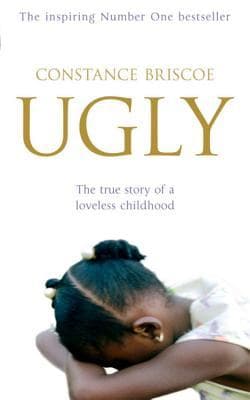
'Ugly' is a powerful memoir by Constance Briscoe detailing her horrific childhood experiences of systematic abuse at the hands of her own mother. It chronicles her struggle for survival against regular beatings, starvation, and her desperate attempts to escape her home.
Does Constance Briscoe find a way out of her abusive home?
Yes, after years of severe abuse and failed attempts to be taken into care, Constance's mother eventually abandons her when she is 13. This pivotal moment, though terrifying, marks the beginning of Constance's journey to self-reliance and survival.
What kind of abuse did Constance suffer as a child?
Constance endured severe physical abuse, including regular beatings, and neglect, such as being starved. Her mother's cruelty was systematic, leading to a childhood filled with fear and desperation.
What is the significance of the title 'Ugly'?
The title 'Ugly' likely reflects the emotional and physical scars Constance carried, as well as the way she may have been made to feel about herself by her abuser. It encapsulates the deep pain and trauma she experienced throughout her early life.
How does 'Ugly' differ from other childhood abuse memoirs?
'Ugly' stands out for its raw honesty and the sheer brutality of the abuse inflicted by a mother, combined with Constance's remarkable resilience and eventual triumph. It highlights her desperate attempts to seek help and her ultimate survival against overwhelming odds.
Is 'Ugly' a true story?
Yes, 'Ugly' is a non-fiction memoir, meaning it is Constance Briscoe's true and personal account of her childhood experiences. It is her autobiographical story of survival against severe abuse.
Does 'Ugly' offer hope despite its dark themes?
Despite the harrowing details of abuse, 'Ugly' ultimately conveys a message of hope and resilience. It showcases Constance's incredible strength, her will to survive, and her ability to build a life for herself after such a traumatic start.
What impact did drinking bleach have on Constance?
In a desperate attempt to escape her unbearable situation, Constance drank bleach, hoping to be taken into care. This act underscores the extreme measures she considered and the profound desperation she felt during her childhood.
Similar books
- Educated
Tara Westover
4.5 (796k) average on GoodreadsBiographyFocuses on overcoming a traumatic, isolated upbringing through education and self-determination.
- The Glass Castle
Jeannette Walls
4.3 (903k) average on GoodreadsBiographyExplores a childhood of poverty, neglect, and unconventional parenting, and the resilience to escape it.
- The Diary of a Young Girl
Anne Frank
4.2 (2.7M) average on GoodreadsBiographyDuring the Nazi occupation, a teenage girl's diary, written from a secret annex, shares observations on humanity, hope, and the wait for freedom.
- Eat, Pray, Love
Elizabeth Gilbert
3.6 (1.5M) average on GoodreadsLifestyleA heartbroken writer leaves her conventional life for a year-long global search for pleasure in Italy, spiritual devotion in India, and unexpected love and balance in Bali.
- Night
Elie Wiesel
4.3 (970k) average on GoodreadsBiographyIn the darkness of Auschwitz and Buchenwald, a teenage Elie Wiesel faces the extermination of his family, the loss of his faith, and the lasting scars of humanity's deepest cruelty.
- Steve Jobs
Walter Isaacson
4.1 (957k) average on GoodreadsBusinessSteve Jobs was a visionary who fused creativity and technology to revolutionize six industries and shape our digital world.






Enjoyed the summary?
A summary gives you the shape of the book. The book itself has the detail, the examples and the voice.
Find Ugly on AmazonAs an Amazon Associate, BookBrief earns from qualifying purchases. How we're funded