

Synopsis
Covers the whole plot, including the ending.
- Difficulty
- Easy
- Pacing
- Fast
- Mood
- Romantic, Sweet, Hopeful
- Read it if
- You enjoy short, sweet, and low-angst forced-marriage romance novellas with a touch of mystery.
- Skip it if
- You prefer longer, more complex plots, high-stakes drama, or detailed world-building.
Ultimatum Plot Summary
Covers the whole plot, including the ending.
The Unexpected Inheritance
Amelia, a struggling artist, receives a letter from a law firm about the death of her Aunt Margaret. Margaret was Amelia's mother's sister, and they had been estranged for many years. The letter states that Amelia is the sole beneficiary of Margaret's estate, which includes a lot of money and a large, old house. Intrigued and a little confused, Amelia decides to investigate, hoping the inheritance might offer a needed fresh start away from her financial struggles and artistic frustrations.
Arrival at Blackwood Manor
Amelia travels to the countryside and arrives at Blackwood Manor, her aunt's imposing estate. The house is old, grand, and secluded, surrounded by dense woods, making Amelia feel both awe and unease. Waiting for her is Mr. Silas Blackwood, the lawyer handling the estate. He is a tall, dark-haired man with an intense gaze, whose demeanor is professional and subtly intimidating. Silas tells Amelia there are conditions attached to the inheritance, which he will explain once she has settled in and reviewed the will. Amelia feels an immediate attraction to Silas, despite his reserved and mysterious nature.
The Will's Conditions
Silas presents Amelia with her Aunt Margaret's will. As he reads, Amelia learns that the inheritance is not simple. The most shocking condition is that Amelia must marry within six months to claim the full estate. The will explicitly states that she must marry a man chosen by Aunt Margaret – and that man is Silas Blackwood himself. Amelia is stunned and outraged, finding the condition old-fashioned and manipulative. Silas appears equally conflicted, explaining that he is also bound by the will as a condition of his own family's legacy and Margaret's trust. He assures her he understands her shock but says the will is legally binding.
A Forced Proposal
Despite her initial anger, Amelia is trapped. The inheritance is her only chance to escape poverty and pursue her artistic dreams without constant financial worry. Silas, maintaining a professional yet strained composure, explains the will's details and the severe penalties for non-compliance for both of them. He formally proposes a marriage of convenience, emphasizing it would be a business arrangement to fulfill the will's terms, nothing more. He promises to provide for her and ensure her comfort, but the emotional cost of such a union weighs heavily on Amelia, who struggles with marrying a stranger, even one she finds attractive.
Reluctant Acceptance
After several days of agonizing over her decision, Amelia realizes she has no other choice. Her current life is a dead end, and the prospect of the manor and financial security is too tempting to ignore, even if it costs her freedom and romantic ideals. She confronts Silas, expressing her deep reservations and her fear of being controlled. Silas listens patiently, restating his commitment to a respectful, if unconventional, partnership. He assures her that he will never force her into anything against her will beyond the terms of the marriage itself. With a heavy heart, but a glimmer of hope for a different future, Amelia reluctantly agrees to marry Silas, setting a date within the six-month window.
Life at Blackwood Manor
Amelia moves into Blackwood Manor, which quickly becomes her new home. She finds herself surrounded by luxury but also by her aunt's past. Silas, while still reserved, is polite and attentive to her needs, making sure she has everything required for her art. Their interactions are formal but charged with unspoken tension. Amelia observes Silas closely, noticing his quiet strength, his dedication to his work, and hints of a lonely past. She starts to see beyond his lawyerly facade, recognizing a man who is also a prisoner of circumstance, like her. A fragile understanding forms between them, built on mutual respect and a shared understanding of their unusual situation.
Unraveling Aunt Margaret's Motives
As Amelia explores Blackwood Manor and sifts through her aunt's belongings, she uncovers fragments of Aunt Margaret's life. She finds old letters, diaries, and photographs that show a woman who was independent but also lonely, perhaps having suffered a broken heart. Amelia suspects that Margaret's unusual will was not merely a cruel joke but a desperate attempt to ensure Amelia's financial security and, perhaps, to orchestrate a love story Margaret herself never had. The conditions, though extreme, seem to come from misguided care rather than malice, making Amelia reconsider her initial judgment of her aunt.
Growing Affection
Living together, Amelia and Silas gradually lower their defenses. They share meals, discuss art and law, and find common ground in their shared love for the manor's quiet solitude. Amelia finds herself drawn to Silas's quiet strength, his intelligence, and the unexpected flashes of humor she occasionally sees. Silas, in turn, is captivated by Amelia's artistic passion, her resilience, and her warmth. The initial awkwardness gives way to comfortable silences and meaningful glances. The line between their 'business arrangement' and genuine affection begins to blur, much to their surprise and growing apprehension.
A Moment of Vulnerability
One evening, after a discussion about the will's implications and their uncertain future, Silas opens up to Amelia about his past. He reveals that his family has a long, complicated history with the Blackwood estate and Aunt Margaret's family. His role as executor and potential husband was not entirely by chance but part of a deeper, long-held family obligation. He confesses his own feelings of being trapped by duty and tradition, mirroring Amelia's struggles. This moment of openness shatters Silas's professional facade, letting Amelia see the man beneath. Their shared burden creates a powerful, emotional bond between them, far beyond what either expected.
The Wedding Day
The wedding day arrives. It is a small, intimate ceremony held in the manor's grand hall, attended only by a few close associates of Silas and the legal team. What began as a forced arrangement now feels different. As Amelia walks towards Silas, she realizes that her feelings for him have grown from reluctant acceptance to a tender, growing love. Silas, too, looks at her with an intensity that speaks volumes, his earlier reserve replaced by clear adoration. They exchange vows, not just as a legal formality, but as an unspoken promise to explore the genuine affection that has blossomed between them, a true partnership forged from an unlikely beginning.
A New Beginning
Following the wedding, Amelia and Silas fully embrace their new life together. The 'marriage of convenience' quickly becomes a passionate and loving relationship. They discover a deep compatibility, both intellectually and emotionally. Amelia finds inspiration for her art in the manor's beauty and Silas's unwavering support, finally able to pursue her dreams without constraint. Silas, in turn, finds solace and joy in Amelia's presence, shedding the burdens of his past and finding genuine happiness. They realize that Aunt Margaret, in her own eccentric way, had orchestrated a perfect match, leading them to a love they never knew they needed, fulfilling her ultimate desire for them both.
Principal Figures
Amelia
Protagonist
A struggling artist who inherits a fortune with unusual conditions.
Amelia is an independent and resilient young woman, passionate about her art but burdened by financial struggles. She initially resents the terms of her aunt's will, feeling manipulated and controlled. Despite her initial reluctance, she possesses a pragmatic streak that allows her to accept her circumstances, and a warm, open heart that eventually leads her to fall in love. She is observant and introspective, slowly uncovering the layers of both Blackwood Manor and Silas's character.
Relationships: Silas Blackwood (Initially a reluctant, forced marriage partner; later, her loving husband.); Aunt Margaret (Estranged aunt whose will orchestrates her future.)
Silas Blackwood
Protagonist/Love Interest
The enigmatic lawyer and chosen husband, bound by the will.
Silas is a distinguished, reserved, and intensely private lawyer, burdened by family obligations and the weight of the Blackwood legacy. He is initially professional and distant, upholding the strictures of Aunt Margaret's will with unwavering resolve. Beneath his controlled exterior lies a man of integrity, loyalty, and a deep capacity for love. He is intelligent and protective, slowly revealing his vulnerabilities to Amelia as their forced proximity turns into genuine affection.
Relationships: Amelia (Initially a professional arrangement; later, his beloved wife.); Aunt Margaret (Client and orchestrator of his future, with whom his family has a long history.)
Aunt Margaret
Mentioned/Catalyst
Amelia's eccentric, deceased aunt whose will drives the plot.
Aunt Margaret is not present in the story physically, but her presence is strongly felt through her will and the legacy she leaves behind. She is portrayed as a wealthy, independent, and somewhat manipulative woman, whose motivations are initially unclear. As the story progresses, Amelia discovers that Margaret's seemingly bizarre conditions stemmed from a place of misguided affection and a desire to ensure Amelia's future happiness and security, perhaps even to live vicariously through her niece's love story. She is the ultimate puppet master of the plot.
Relationships: Amelia (Estranged niece and sole beneficiary.); Silas Blackwood (Her lawyer and the chosen groom for Amelia.)
Themes & Insights
Love Born from Coercion
This theme explores how genuine love can grow even under unusual and forced circumstances. Amelia and Silas are forced into a marriage by a will, initially driven by necessity and duty. However, their shared situation allows them to see past the legal arrangement and discover true affection. The theme questions the idea that love must always begin organically, showing that external pressures can, unexpectedly, create a setting for deep emotional connection, as seen in their gradual understanding and acceptance of each other at Blackwood Manor.
“Sometimes, the most unexpected paths lead to the truest destinations.”
Freedom vs. Security
Amelia's main conflict is choosing between her personal freedom and the financial security her aunt's inheritance offers. At first, the idea of a forced marriage feels like a cage, threatening her independence as an artist and a woman. However, her desperate financial situation pushes her to accept the 'golden handcuffs.' The story suggests that true freedom might not always be found in complete independence, but sometimes in embracing an unexpected path that provides both stability and love, allowing Amelia to pursue her art without the constant burden of poverty.
“Was a gilded cage still a cage if it held the promise of a future she could only dream of?”
The Weight of Legacy and Duty
Both Amelia and Silas are deeply affected by the legacies and duties placed upon them. Amelia inherits not just wealth, but the complex conditions of her aunt's will, forcing her into a life she didn't choose. Silas is bound by his family's long-standing connection to the Blackwood estate and his professional ethics, which guide his actions regarding the will. This theme shows how past generations' decisions can influence the present, and how individuals navigate the tension between personal desires and inherited obligations, ultimately finding a way to fulfill duty while also creating their own happiness.
“Some legacies are chains, others are keys. It's up to us to decide which to carry.”
Plot Devices & Literary Techniques
The Conditional Will
A legal document with bizarre stipulations that drives the entire plot.
Aunt Margaret's will is the primary plot device, serving as the inciting incident and the constant force compelling Amelia and Silas together. Its unusual conditions – particularly the requirement for Amelia to marry Silas within six months – create the central conflict and the framework for their relationship. The will acts as a 'ticking clock' and a 'forced proximity' mechanism, removing their agency initially but ultimately leading them to a genuine connection. It's a classic romance trope that sets up the 'marriage of convenience' scenario.
Forced Proximity
The requirement for characters to live together, fostering intimacy.
Once Amelia agrees to the marriage, she moves into Blackwood Manor with Silas. This forced proximity is crucial for the development of their relationship. Living under the same roof, sharing meals, and navigating the complexities of their arrangement allows them to observe each other, break down barriers, and develop genuine affection and understanding. Without this constant interaction, their connection would likely not have progressed beyond a purely transactional one, highlighting the power of shared space in building intimacy.
The Mysterious Benefactor
A deceased character whose hidden motivations are gradually revealed.
Aunt Margaret serves as the mysterious benefactor. Her character is revealed posthumously through her will and the clues Amelia uncovers at Blackwood Manor. Her motivations for creating such an unusual will are initially seen as manipulative, but as Amelia discovers more about her aunt's past, Margaret's actions are reinterpreted as a misguided but ultimately caring attempt to secure Amelia's future and perhaps even orchestrate a love story. This device adds depth to the plot and provides a sense of discovery for the protagonist.
Ultimatum Quotes
“I’d give her the world if she asked for it. I’d give her the sun, moon, and stars.”
“She was my addiction, my obsession, my everything. And I was never letting her go.”
“Sometimes the greatest risks lead to the greatest rewards.”
“My past was a shadow, but her love was the light that chased it away.”
“He didn't just steal my heart; he claimed my soul.”
“Love isn't always easy, but it's always worth fighting for.”
“Every touch, every kiss, every glance was a promise.”
“We were two broken pieces, perfectly fitting together to make a whole.”
“I never knew I could feel this much, for anyone, for anything.”
“She was the calm to my storm, the peace to my chaos.”
“Some ultimatums aren't about control; they're about clarity.”
“My world began and ended with her.”
“He saw past my walls, past my fears, and loved the woman beneath.”
Quiz
10 questions on the plot and the characters. Each answer comes with a short explanation.
Question 1
What is the initial reason for Holly's encounter with Julian Blackwood?
- She is his new executive assistant.
- She works as a waitress at a restaurant he frequents.
- She is interviewing for a position at his company.
- She is delivering a custom suit to his office.
Show answer
D. She is delivering a custom suit to his office. Holly's initial interaction with Julian occurs when she delivers a custom suit from her family's tailoring business to his office, leading to their unexpected first meeting.
Question 2
What is the 'ultimatum' Julian Blackwood presents to Holly?
- She must sign an NDA and never speak of their encounters.
- She must agree to a year-long fake engagement to secure a business deal for him.
- She must marry him and bear his child, or he will ruin her family's business.
- She must become his personal assistant and work exclusively for him.
Show answer
C. She must marry him and bear his child, or he will ruin her family's business. Julian's 'ultimatum' is a shocking demand: Holly must marry him and conceive his child, or he will use his power to destroy her family's struggling tailoring business.
Question 3
What is the primary motivation behind Julian's ruthless ultimatum?
- He wants to take over her family's tailoring business.
- He is seeking revenge against Holly's family for a past wrong.
- He needs a suitable heir to inherit his vast empire and believes Holly is the perfect, uncorrupted choice.
- He is trying to force her to admit her feelings for him.
Show answer
C. He needs a suitable heir to inherit his vast empire and believes Holly is the perfect, uncorrupted choice. Julian's cold and calculated ultimatum stems from his desire for an heir. He sees Holly as a pure, untainted woman who would provide a suitable successor to his empire, free from the influence of his own family's past.
Question 4
What is the name of Holly's family tailoring business?
- Stitch & Style
- Thread & Needle
- Sewn by Hand
- Needle & Thread
Show answer
D. Needle & Thread Holly's family runs a tailoring business called 'Needle & Thread,' which is on the verge of financial collapse, making Julian's threat particularly potent.
Question 5
How does Holly initially react to Julian's ultimatum?
- She immediately agrees, seeing it as an opportunity.
- She tries to negotiate a different arrangement with him.
- She is horrified and vehemently refuses, despite the consequences.
- She seeks legal counsel to fight his demands.
Show answer
C. She is horrified and vehemently refuses, despite the consequences. Holly is utterly shocked and disgusted by Julian's cold proposition, initially refusing him outright due to the immoral nature of his demands.
Question 6
What is one of the significant internal conflicts Holly faces throughout the story?
- Her desire to leave the tailoring business versus her family's expectations.
- Her struggle between her hatred for Julian and the undeniable attraction she feels towards him.
- Her guilt over a past mistake that she keeps hidden from Julian.
- Her ambition to start her own rival business against Julian's empire.
Show answer
B. Her struggle between her hatred for Julian and the undeniable attraction she feels towards him. A central conflict for Holly is the intense emotional tug-of-war between her moral outrage and resentment towards Julian for his manipulative actions, and the powerful, unexpected physical and emotional attraction she begins to feel for him.
Question 7
What is Julian Blackwood's public reputation?
- A philanthropic and charitable businessman.
- A reclusive and eccentric billionaire.
- A ruthless, cold, and powerful business magnate.
- A charming and charismatic socialite.
Show answer
C. A ruthless, cold, and powerful business magnate. Julian Blackwood is widely known as a formidable and unyielding figure in the business world, often described as cold and ruthless, which aligns with his actions in the story.
Question 8
What theme is most prominent in 'Ultimatum' regarding power dynamics?
- The corrupting influence of absolute power on individuals.
- The struggle of an individual against an overwhelmingly powerful antagonist.
- The idea that love can only flourish between equals.
- The way power shifts hands within a corporate empire.
Show answer
B. The struggle of an individual against an overwhelmingly powerful antagonist. A core theme is the immense power imbalance between Julian, a billionaire who controls Holly's fate, and Holly, a woman forced to make an impossible choice to protect her family, highlighting her struggle against his overwhelming influence.
Question 9
What is a key element that eventually starts to soften Julian's demeanor towards Holly?
- Her unwavering defiance and refusal to be intimidated.
- Her genuine kindness and compassion, which he rarely encounters.
- Her exceptional skills in business, which impress him.
- Her ability to connect with his estranged family members.
Show answer
B. Her genuine kindness and compassion, which he rarely encounters. Despite his initial coldness, Julian is gradually affected by Holly's innate kindness, warmth, and genuine nature, traits that are starkly absent from his own privileged and often ruthless world.
Question 10
What significant personal sacrifice does Holly ultimately make, beyond simply agreeing to the marriage?
- She gives up her dream of becoming a fashion designer.
- She severs ties with her entire family to appease Julian.
- She agrees to bear a child with a man she initially despises, sacrificing her bodily autonomy and emotional well-being.
- She renounces all claims to her family's business in exchange for their safety.
Show answer
C. She agrees to bear a child with a man she initially despises, sacrificing her bodily autonomy and emotional well-being. Beyond just marrying Julian, Holly's ultimate sacrifice is agreeing to conceive and bear his child, forcing her to confront immense emotional and physical challenges with a man she initially resents, all to protect her family.
Ultimatum FAQ
What is the central premise of 'Ultimatum' by Gemma James?
Ultimatum centers on Clara, a struggling art student, who makes a desperate deal with the enigmatic and powerful billionaire, Julian Thorne. He offers to pay off her family's crushing debt, but in return, she must agree to live with him for six months and adhere to a strict set of rules, leading to a complex relationship built on obligation and unexpected attraction.
Who are the main characters in 'Ultimatum' and what are their initial motivations?
The main characters are Clara Maxwell and Julian Thorne. Clara is motivated by a desperate need to protect her family from financial ruin, willing to sacrifice her own freedom for their well-being. Julian's motivations are initially shrouded in mystery, appearing to seek control and companionship, though deeper reasons are hinted at.
What kind of 'ultimatum' does Julian give Clara, and what are the immediate consequences?
Julian's ultimatum requires Clara to move into his lavish penthouse, sever contact with her previous life (including friends and family, with exceptions made for brief supervised visits), and submit to his every demand for six months. The immediate consequences are Clara's isolation and profound culture shock as she adapts to Julian's opulent yet restrictive world.
How does the relationship between Clara and Julian evolve over the course of the six months?
Initially, their relationship is purely transactional and power-imbalanced, filled with tension and mistrust. As they spend more time together, Clara begins to see glimpses of vulnerability beneath Julian's austere exterior, and a powerful, undeniable attraction develops, complicating their original agreement and their emotional boundaries.
What external conflicts or characters threaten Clara and Julian's fragile arrangement?
Clara's past, particularly her lingering connection to her family's financial woes, occasionally resurfaces. Julian's business rivals or former associates are also hinted at as potential threats, adding an element of danger to their secluded life, though the primary conflict remains internal and relational.
What is the significance of the specific art piece Clara is working on throughout the book?
Clara's art piece, often described as a self-portrait or a reflection of her inner turmoil, serves as a metaphor for her emotional state and developing identity. It represents her struggle for freedom and expression within Julian's confines, slowly transforming as her perspective and feelings shift.
Are there any subtle clues about Julian's past trauma or motivations that are revealed early on?
Early clues about Julian's past include his intense need for control, his aversion to being touched unexpectedly, and his occasional moments of melancholy or guardedness when discussing family. These hints suggest a history of betrayal or loss that shaped his reclusive and demanding personality.
What is the true nature of the 'debt' Clara's family owes, and how does Julian know about it?
The specific nature of the debt is a significant sum tied to a failed business venture or a medical emergency, placing Clara's family in dire straits. Julian, with his vast resources and influence, likely had his background team investigate Clara thoroughly once he became interested in her, discovering her family's predicament.
Is there a specific moment where Julian's emotional facade truly begins to crack?
Julian's facade significantly cracks during a scene where Clara falls ill or is in distress, prompting an uncharacteristic display of concern and tenderness from him. This moment reveals the depth of his burgeoning feelings for her, despite his attempts to remain aloof and in control.
How does Clara's initial sense of helplessness evolve into agency?
Clara initially feels trapped and powerless, but through small acts of defiance, asserting her opinions, and refusing to completely surrender her spirit, she gradually reclaims agency. Her artistic pursuits also become a vital outlet for self-expression, strengthening her resolve and sense of self.
What psychological impact does Julian's controlling nature have on Clara?
Julian's controlling nature initially causes Clara significant anxiety, fear, and a loss of personal identity. However, as she navigates his demands, it also forces her to confront her own boundaries and strengths, ultimately leading to a deeper understanding of herself and her desires.
How does Julian's past, hinted at throughout the novel, influence his need for control and isolation?
Julian's past, likely involving betrayal, loss, or a profound lack of control in his formative years, manifests as a deep-seated need for order and predictability. His isolation is a defense mechanism, preventing further emotional vulnerability and potential hurt, which he attempts to mitigate by controlling his immediate environment and relationships.
What role does the lavish setting of Julian's home play in the psychological dynamic between the characters?
The lavish setting acts as both a gilded cage and a symbol of Julian's power and Clara's entrapment. It emphasizes the vast social and economic divide between them, initially overwhelming Clara and reinforcing her dependence, but also offering a backdrop for their evolving intimacy.
Is 'Ultimatum' ultimately a story of captivity and Stockholm Syndrome, or genuine love and redemption?
This is a key debate. While elements of captivity and an initial power imbalance are present, the narrative strives to portray a journey towards genuine love and redemption. Clara's growing agency and Julian's softening heart suggest a transformation beyond mere Stockholm Syndrome, leaning towards a consensual, albeit complicated, emotional connection.
How does the ending of 'Ultimatum' resolve the central conflict, and is it truly a 'happily ever after'?
The ending typically resolves the contractual obligation, with Clara choosing to stay with Julian out of love rather than necessity, implying a commitment to their future. While it aims for a happily ever after, the complexities of their past dynamics suggest their relationship will always require careful navigation and understanding to thrive.
What is the author's message about power dynamics in relationships as depicted in the book?
The author seems to explore the intoxicating and dangerous nature of extreme power imbalances, but ultimately suggests that true love and connection require a more equitable foundation. The narrative implies that while attraction can exist within such dynamics, lasting happiness necessitates mutual respect and a degree of shared control.
Could Clara have chosen a different path at the beginning, and what might that have entailed?
Clara's options were severely limited by her family's dire financial situation, making Julian's offer seem like the only viable solution. A different path might have involved seeking out less drastic forms of employment, appealing to other family members, or even declaring bankruptcy, but these options likely carried their own severe consequences, making Julian's 'ultimatum' appear less terrible by comparison.
Similar books
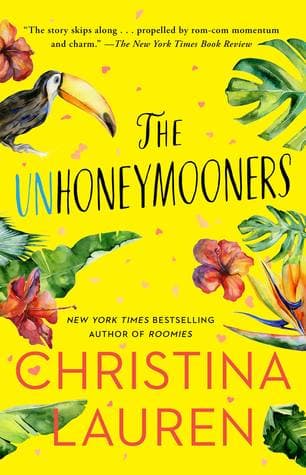
- The Unhoneymooners
Christina Lauren
4.0 (115k) average on GoodreadsRomanceBoth "Ultimatum" and "The Unhoneymooners" feature protagonists forced into close proximity under unusual circumstances. However, "The Unhoneymooners" uses a 'free vacation' premise to spark its romance, which is inherently lighter and more comedic. "Ultimatum," with its 'will's conditions' and 'forced proposal,' carries a heavier, more dramatic weight, exploring themes of duty, manipulation, and the slow burn of affection under pressure, rather than the initial, more playful animosity seen in Lauren's work. James's narrative delves deeper into the internal conflict and emotional stakes.
- The Hunger Games
Suzanne Collins
4.3 (6.4M) average on GoodreadsFantasyIn a future where children fight to the death on live television, Katniss Everdeen volunteers for the arena, turning a death sentence into a fight for survival and a spark of rebellion.
- The Great Gatsby
F. Scott Fitzgerald
3.9 (3.8M) average on GoodreadsHistorical FictionIn the opulent Roaring Twenties, a mysterious millionaire's lavish parties hide his desperate, tragic pursuit of a lost love, exposing the emptiness within the American Dream.
- The Fault in Our Stars
John Green
4.2 (3.6M) average on GoodreadsYoung AdultA girl with a terminal illness finds her story rewritten when a charming boy with a similar past enters her life at a cancer support group, leading to a star-crossed romance.
- Pride and Prejudice
Jane Austen
4.3 (3M) average on GoodreadsHistorical FictionIn a society focused on status and money, Elizabeth Bennet navigates love and pride, challenging Mr. Darcy and social expectations to find true affection.
- Divergent
Veronica Roth
4.2 (2.9M) average on GoodreadsFantasyIn a society divided by virtues, a sixteen-year-old's difference from the norm starts a rebellion that threatens her world.





Enjoyed the summary?
A summary gives you the shape of the book. The book itself has the detail, the examples and the voice.
Find Ultimatum on AmazonAs an Amazon Associate, BookBrief earns from qualifying purchases. How we're funded