
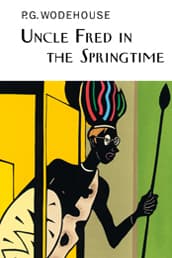
Synopsis
Covers the whole plot, including the ending.
- Difficulty
- Easy
- Pacing
- Fast
- Mood
- Humorous, Lighthearted, Witty, Amusing, Chaotic
- Read it if
- You enjoy lighthearted, farcical comedies with witty dialogue, mistaken identities, and a touch of romance, set in an idyllic English country estate.
- Skip it if
- You prefer serious plots, deep character introspection, or stories without extensive use of coincidence and slapstick humor.
Uncle Fred in the Springtime Plot Summary
Covers the whole plot, including the ending.
A Pecuniary Predicament and a Call to Blandings
Frederick Altamont Cornwallis Twistleton, 5th Earl of Ickenham, known as Uncle Fred, hears from his nephew, Pongo Twistleton, who is again in serious financial trouble. Pongo owes a lot of money, mainly to Mrs. Brenda Banks, and sees no way out. At the same time, Lord Emsworth of Blandings Castle asks Uncle Fred for help. Lord Emsworth suspects his sister, Lady Constance Keeble (Connie), and a pig expert, Sir Roderick Glossop, are planning to steal his prize sow, the Empress of Blandings. Uncle Fred, always looking for adventure and a chance to 'do good' (which usually means causing chaos), sees a way to solve Pongo's problems and go to Blandings. He decides to pretend to be Sir Roderick Glossop.
The Arrival of the Impostors
Uncle Fred, Pongo, and Polly Pott, a young woman Pongo loves, travel to Blandings. Polly is the daughter of 'Old Mustard' Pott, an old schoolmate of Uncle Fred's. She also has financial problems because her late father left her with debt. Uncle Fred's plan has several parts: he will pretend to be Sir Roderick Glossop; Pongo will claim to be 'Mr. Twistleton' from a good firm; and Polly will pose as his secretary. Their stated goal is to help Lord Emsworth with the Empress, but Uncle Fred also plans to secure Pongo's financial future and help his romance with Polly. Their arrival at Blandings immediately causes misunderstandings and mistaken identities, much to Lady Constance's annoyance.
The Real Sir Roderick and His Predicament
The real Sir Roderick Glossop, a respected nerve specialist with a serious manner, arrives at Blandings Castle. He does not know his identity has been taken. He is confused to find 'Sir Roderick Glossop' (Uncle Fred) already there. Lady Constance believes the real Sir Roderick is a fake or has gone mad and dismisses his claims. Lord Emsworth, in his usual confusion, does not recognize Glossop and mistakes him for someone else. So, the real Sir Roderick is locked in a room, believed to be having a breakdown. Uncle Fred finds this very funny and helpful for his plans. This incident makes the deceptions at Blandings even more complicated.
Pongo's Romantic Endeavors and Monetary Woes
Pongo Twistleton, while helping Uncle Fred with his plans, mainly wants to win Polly Pott's affection. He also worries about his debts, especially to Mrs. Brenda Banks, who is determined to collect. Uncle Fred promised to solve Pongo's money issues, but Pongo is doubtful, having been let down by his uncle's 'good intentions' before. His attempts to court Polly are often interrupted by the chaos at Blandings and Uncle Fred's demands. Pongo must balance keeping his cover, helping Uncle Fred, and pursuing his romance, all while fearing a confrontation with his creditors.
The Case of the Missing Empress
Lord Emsworth's biggest fear comes true: the Empress of Blandings, his beloved sow, disappears from her sty. This disappearance is not, as Lord Emsworth first thought, a plot by Lady Constance and Sir Roderick. Instead, a character named Ronnie Fish 'borrowed' the Empress to impress a young woman named Myra Schoonmaker. Ronnie believes giving Myra a pig like the Empress will win her over. The Empress's disappearance sends Lord Emsworth into despair and further complicates Uncle Fred's mission, as he now must genuinely find the pig, even under his false identity. The search for the Empress becomes a main part of the chaos.
The Arrival of Mrs. Brenda Banks
Mrs. Brenda Banks, Pongo Twistleton's most persistent creditor, arrives at Blandings Castle, determined to get the money Pongo owes her. Her unexpected arrival adds more tension and risk to Uncle Fred's already shaky plans. Pongo is terrified of her, knowing her firm reputation. Uncle Fred, however, sees her arrival as another chance to use his unique problem-solving skills. He tries to distract and outsmart Mrs. Banks, often using misdirection and elaborate lies, further entangling Blandings' residents and visitors in his web of deceit. Her presence raises the stakes for Pongo, who fears financial ruin and social embarrassment from being pursued by a creditor in such a grand place.
The Romance of Ronnie Fish and Myra Schoonmaker
Ronnie Fish, a young man in love with Myra Schoonmaker, believes the only way to win her heart and her uncle's approval (Myra's uncle is Sir Roderick Glossop) is to give her an excellent pig. This mistaken belief leads him to 'borrow' the Empress of Blandings. Myra, however, cares little for pigs and more about Ronnie's lack of direction and money problems. Their romantic story connects with the main plot as Ronnie's actions cause the central problem of the missing Empress. Uncle Fred, pretending to be Sir Roderick, finds himself helping with their relationship, adding to the comedic confusion.
The Impersonation of Reverend Twistleton
To further complicate things and solve Pongo's money problems, Uncle Fred decides to pretend to be a Reverend Twistleton, a respected clergyman. He hopes to use this new identity to get funds or influence Mrs. Banks. This new disguise adds more absurdity to the situation. He tries to act proper while manipulating events. His 'reverend' persona lets him interact with various characters under a new identity, often using his perceived moral authority to push his agenda. This deception is especially hard as it requires him to act completely differently, often with funny results when his mischievous nature breaks through.
The Grand Unmasking and Revelations
As the various plots reach a peak, Uncle Fred's deceptions start to unravel. The real Sir Roderick Glossop is eventually released, leading to a confrontation with Uncle Fred. Mrs. Brenda Banks learns the truth about Pongo's finances and Uncle Fred's schemes. The Empress is eventually found, but not before causing Lord Emsworth much distress. The reveal of Uncle Fred's impersonations leads to a series of funny confrontations and explanations, as each character learns how much he meddled. Lady Constance is especially angry, while Lord Emsworth remains mostly unaware of everything that happened.
Resolution and Romantic Entanglements
Despite the chaos he caused, Uncle Fred, with his cleverness, brings things to a good end for most people. He finds a solution for Pongo's financial problems, making sure Mrs. Banks is paid and Pongo is solvent. He also helps Pongo Twistleton and Polly Pott get together, overcoming their initial difficulties. The Empress is returned to Lord Emsworth, who is very happy. While Lady Constance remains annoyed by Uncle Fred, the various romantic and financial problems are solved, mostly because of Uncle Fred's bold meddling. He leaves behind happy couples and frustrated elders. The castle returns to a kind of peace, a Wodehousian one.
Uncle Fred in the Springtime Characters
Frederick Altamont Cornwallis Twistleton, 5th Earl of Ickenham (Uncle Fred)
Protagonist/Instigator
A mischievous and benevolent aristocrat who delights in stirring up chaos for a good cause.
Uncle Fred is a charming, elderly English aristocrat with an insatiable appetite for adventure and 'doing a bit of good,' which invariably involves elaborate hoaxes, impersonations, and general mayhem. He is deeply fond of his nephew, Pongo, and often meddles in his affairs with the best intentions, though the results are usually chaotic. He possesses an infectious enthusiasm and an ability to charm or bamboozle almost anyone. Despite his age, he is remarkably agile both physically and mentally, always several steps ahead of those around him.
Relationships: Pongo Twistleton (Nephew, frequently a co-conspirator and beneficiary of Uncle Fred's schemes.); Polly Pott (Acquaintance, whose romance with Pongo he actively encourages and facilitates.); Lord Emsworth (Friend, whom he assists (and occasionally exasperates) in protecting the Empress.); Lady Constance Keeble (Antagonist, who is constantly exasperated by his antics.)
Pongo Twistleton
Supporting/Love Interest
Uncle Fred's long-suffering nephew, perpetually in financial difficulty and romantically entangled.
Pongo is a young man of good breeding but limited means, prone to getting into financial scrapes. He is deeply in love with Polly Pott but lacks the financial stability to propose. He is often an unwilling participant in Uncle Fred's elaborate schemes, usually finding himself in embarrassing or compromising situations. Pongo is generally well-meaning but easily flustered and lacks his uncle's cunning and nerve. His primary motivations are to escape his debts and win Polly's hand.
Relationships: Uncle Fred (Nephew, frequently manipulated into schemes but ultimately benefits from his uncle's interventions.); Polly Pott (Romantic interest, eventually fiancée.); Mrs. Brenda Banks (Creditor, a source of great anxiety for Pongo.)
Polly Pott
Supporting/Love Interest
A spirited young woman, also in financial difficulty, and the object of Pongo's affection.
Polly is the daughter of 'Old Mustard' Pott, a former schoolmate of Uncle Fred's. She is a practical and resourceful young woman who finds herself in debt after her father's passing. She is secretly in love with Pongo but is hesitant to pursue the relationship due to their respective financial predicaments. Polly is intelligent and capable, often serving as the voice of reason amidst the chaos, though she is not above participating in Uncle Fred's schemes when necessary. She is determined to make her own way in the world.
Relationships: Pongo Twistleton (Romantic interest, eventually fiancée.); Uncle Fred (Acquaintance, who helps her and Pongo.)
Lord Emsworth (Clarence)
Supporting
The absent-minded master of Blandings Castle, obsessed with his prize pig.
Lord Emsworth is the 9th Earl of Emsworth, a gentle, absent-minded aristocrat whose primary passion in life is his prize Berkshire sow, the Empress of Blandings. He is easily flustered and often oblivious to the machinations of those around him, particularly his formidable sister, Lady Constance. His greatest fear is the theft or mistreatment of the Empress. He is generally harmless and kind, preferring the quiet life of the countryside to social engagements or family drama.
Relationships: Empress of Blandings (His beloved prize sow, the object of his obsession.); Lady Constance Keeble (His formidable sister, who constantly tries to manage his affairs.); Uncle Fred (A friend he trusts to help him, despite the chaos that ensues.)
Lady Constance Keeble (Connie)
Antagonist/Supporting
Lord Emsworth's formidable sister, who attempts to maintain order at Blandings.
Lady Constance, or Connie, is Lord Emsworth's highly efficient and rather domineering sister. She sees it as her duty to manage her brother's life and the affairs of Blandings Castle, often to his annoyance. She is a woman of strong will and sharp intellect, though she is easily duped by Uncle Fred's elaborate schemes. She disapproves of many of Lord Emsworth's eccentricities, particularly his obsession with the Empress, and frequently tries to exert her authority over him and the household. She is a constant source of exasperation and a foil for Uncle Fred.
Relationships: Lord Emsworth (Brother, whom she attempts to control and manage.); Uncle Fred (Antagonist, whose antics constantly vex and outmaneuver her.); Sir Roderick Glossop (An acquaintance and potential ally, whom she initially trusts.)
Sir Roderick Glossop
Supporting
A distinguished nerve specialist who becomes an unwitting victim of mistaken identity.
Sir Roderick Glossop is a highly respected nerve specialist, known for his stern demeanor and professional reputation. He is initially invited to Blandings to assess Lord Emsworth, but his arrival coincides with Uncle Fred's impersonation of him, leading to his unfortunate incarceration. He is a man of logic and order, utterly bewildered and outraged by the chaotic events at Blandings and the accusations leveled against him. He serves as a humorous contrast to Uncle Fred's free-spirited mischief.
Relationships: Uncle Fred (His imposter, who causes him considerable distress.); Myra Schoonmaker (His niece, whose romantic life he tries to guide.); Lady Constance Keeble (An acquaintance who initially trusts him but is then deceived.)
Mrs. Brenda Banks
Supporting
Pongo's formidable and persistent creditor.
Mrs. Brenda Banks is a determined and unyielding woman who is Pongo Twistleton's primary creditor. She is known for her tenacity in collecting debts and strikes fear into Pongo's heart. Her arrival at Blandings adds significant pressure to Pongo and Uncle Fred's schemes, as she threatens to expose their deceptions. Despite her intimidating presence, she is ultimately a figure of comedic relief, representing the external pressures that Uncle Fred must overcome.
Relationships: Pongo Twistleton (Creditor, whom she relentlessly pursues.); Uncle Fred (Opponent, who tries to outmaneuver her to protect Pongo.)
Ronnie Fish
Supporting
A young man in love, whose misguided romantic gesture leads to the Empress's disappearance.
Ronnie Fish is a well-meaning but somewhat naive young man, deeply in love with Myra Schoonmaker. He believes that by presenting her with a valuable pig, he can win her affection and approval. This leads him to 'borrow' the Empress of Blandings, inadvertently setting off a major plot point. He is easily influenced and often finds himself in awkward situations due to his romantic endeavors. He represents the youthful impulsiveness that contrasts with the more calculated deceptions of Uncle Fred.
Relationships: Myra Schoonmaker (Romantic interest.); Sir Roderick Glossop (Myra's uncle, whose approval he seeks.)
Myra Schoonmaker
Supporting
Sir Roderick Glossop's niece, the object of Ronnie Fish's affections.
Myra Schoonmaker is Sir Roderick Glossop's niece and the object of Ronnie Fish's romantic pursuits. She is a sensible young woman who is more concerned with Ronnie's lack of ambition than with any grand romantic gestures involving pigs. She is intelligent and independent, not easily swayed by superficial displays. Her presence provides a more grounded perspective on the romantic entanglements and serves as a catalyst for Ronnie's actions.
Relationships: Ronnie Fish (Romantic interest.); Sir Roderick Glossop (Uncle, whose reputation she values.)
Empress of Blandings
Mentioned
Lord Emsworth's prize-winning Berkshire sow.
The Empress of Blandings is Lord Emsworth's beloved, prize-winning Berkshire sow. She is not a character in the traditional sense, but rather a central plot device and the object of Lord Emsworth's profound affection and obsession. Her well-being and presence at Blandings are paramount to Lord Emsworth, making her temporary disappearance the catalyst for much of the novel's action and comedic tension. She represents the pure, uncomplicated joy in Lord Emsworth's life.
Relationships: Lord Emsworth (Her devoted owner and admirer.)
Uncle Fred in the Springtime Themes
The Absurdity of Aristocratic Life
Wodehouse pokes fun at the flaws and quirks of the English upper class. Lord Emsworth's pig obsession, Lady Constance's strict adherence to rules, and Uncle Fred's elaborate, often pointless, plans show how detached and silly aristocratic concerns can be. The idea of a lord dedicating his life to a pig, and another lord staging complex impersonations to solve small money problems, emphasizes this theme. For example, Lord Emsworth's sadness over the Empress's disappearance is treated as seriously as a national crisis, showing the skewed priorities in this social group.
“A man's pig is his castle.”
Benevolent Deception and Chaos
Uncle Fred's character shows that chaos and deception, when used by someone with good intentions, can lead to good results. His elaborate impersonations and manipulations, while confusing and annoying others, ultimately solve Pongo's and Polly's money and romantic problems. The story suggests that sometimes, traditional methods are not enough, and 'doing good' requires some unconventional mischief. Locking up the real Sir Roderick Glossop, though seemingly harsh, is presented as a necessary step in Uncle Fred's plan to help his nephew.
“There are times when a man must break a few eggs to make an omelette, and Uncle Fred was a past master at omelette-making.”
Love and Financial Predicament
The romance between Pongo Twistleton and Polly Pott is tied to their financial problems. Their inability to marry comes directly from their lack of money, a common Wodehouse theme. This theme explores how social expectations and practical issues like money can hinder true affection. Uncle Fred's main reason for meddling is to clear the way for their marriage by solving their financial issues. Mrs. Banks' pressure on Pongo further highlights how financial insecurity can dominate personal lives, making love a luxury.
“Love, like a good cigar, needs to be enjoyed without the constant fear of a bill arriving.”
Mistaken Identity and Impersonation
This theme is central to the plot, as Uncle Fred's whole plan depends on his successful impersonation of Sir Roderick Glossop, and later, a clergyman. The funny situations come directly from the characters' inability to tell who is who, leading to hilarious misunderstandings and absurd accusations. The story uses mistaken identity to move the plot forward, create suspense, and show how gullible some characters are, especially Lady Constance and Lord Emsworth. The initial confusion between the real and fake Sir Roderick is a clear example of this theme.
“In a world where everyone is someone else, the man who is himself is truly lost.”
Plot Devices & Literary Techniques
Mistaken Identity
Characters are frequently confused for others, driving the comedic plot.
This is the primary engine of the plot. Uncle Fred's impersonation of Sir Roderick Glossop, and later a clergyman, creates a cascade of misunderstandings. The confusion surrounding the real Sir Roderick's arrival, leading to his incarceration, is a direct result of this device. It allows Wodehouse to create absurd situations where characters react to false premises, generating humor and advancing the narrative through a series of escalating errors and revelations. It also serves to highlight the gullibility of certain characters, like Lady Constance.
The MacGuffin (The Empress of Blandings)
A coveted object that drives character actions and plot progression.
The Empress of Blandings, Lord Emsworth's prize-winning sow, serves as a classic MacGuffin. While important to Lord Emsworth, her intrinsic value to the overall plot is secondary to the actions she inspires in the characters. Her perceived threat of theft, and later her actual disappearance due to Ronnie Fish's romantic endeavors, motivates Uncle Fred's involvement and much of the castle's chaos. She is the object around which many of the characters' desires and fears revolve, providing a central point of conflict without necessarily being a 'character' herself.
Deus ex Machina (Uncle Fred's Solutions)
An unexpected, often improbable, solution to seemingly insurmountable problems.
Uncle Fred frequently acts as a benevolent *deus ex machina*. Just when situations seem utterly hopeless for Pongo or Polly, or when the various deceptions are on the verge of complete collapse, Uncle Fred invariably conjures an ingenious, if improbable, solution. His ability to pull solutions out of thin air, often through further elaborate lies or manipulations, ensures that the plot's many tangled threads are ultimately resolved to everyone's (or at least most people's) satisfaction. This device reinforces his role as the ultimate orchestrator of chaos and resolution.
Running Gags
Recurring comedic elements that add to the novel's humor.
Wodehouse employs several running gags, such as Pongo's perpetual financial embarrassment, Lord Emsworth's absent-mindedness and obsession with the Empress, and Lady Constance's constant exasperation. These recurring jokes provide consistent humor and allow the reader to anticipate certain character reactions, reinforcing established personalities. The repeated mention of Pongo's debts to Mrs. Banks, and Uncle Fred's 'doing a bit of good' are prime examples, creating a familiar and comforting comedic rhythm throughout the narrative.
Uncle Fred in the Springtime Quotes
“The voice of Love, for instance, is a beautiful thing when it speaks in the bosom of a loved one, but when it starts coming out of the mouth of a parrot, it can be a little disconcerting.”
“There are moments in life, when one is torn between the desire to do the right thing and the desire to do something entirely different.”
“It is a curious thing how a perfectly simple plan can become so complicated that the original goal is lost in a maze of side issues.”
“The world, as a rule, is not disposed to take very kindly to gentlemen who wander about in the middle of the night in fancy dress.”
“To be able to carry a tune is one thing, but to be able to carry it without dropping it all over the floor is quite another.”
“One of the most difficult things to explain to a man is that he is not nearly as clever as he thinks he is.”
“There are few things more shattering to the nervous system than to be compelled to listen to a long and detailed explanation of something one already understands perfectly well.”
“The true test of a gentleman is not how he behaves when he's sober, but how he behaves when he's had a few.”
“It is a curious fact that the most respectable people are often those who are capable of the most extraordinary antics when they are under the influence of strong emotion.”
“The great thing about life is that one is constantly being surprised by the unexpected, usually in a way that makes one wish one hadn't been.”
“A man who is capable of assuming the identity of a complete stranger for the purpose of furthering his own ends is a man to be watched.”
“There is a subtle but distinct difference between a genuine apology and an apology that is merely designed to get you out of trouble.”
“The path of true love, as is well known, is seldom smooth, and often involves a great deal of running about in the dark.”
“A good stout alibi is often worth more than a clear conscience.”
Quiz
10 questions on the plot and the characters. Each answer comes with a short explanation.
Question 1
What is the primary reason Pongo Twistleton is in a state of financial embarrassment at the beginning of the novel?
- He lost all his money gambling on the stock market.
- He has been spending lavishly and needs to pay off his debts.
- His allowance from his uncle has been cut off.
- He invested in a failing business venture.
Show answer
B. He has been spending lavishly and needs to pay off his debts. Pongo is perpetually in financial straits due to his inability to manage his money and his penchant for living beyond his means, leading to the need for Uncle Fred's intervention.
Question 2
Who asks Uncle Fred to go to Blandings Castle to foil a plot to steal the Empress of Blandings?
- Lady Constance Keeble
- Lord Emsworth
- Sir Gregory Parsloe-Parsloe
- Pongo Twistleton
Show answer
B. Lord Emsworth Lord Emsworth, ever anxious about his prize pig, entrusts Uncle Fred with the task of protecting the Empress.
Question 3
Who is Polly Pott's father, as mentioned in the book's setup?
- Lord Emsworth
- Pongo Twistleton
- Old Mustard
- Uncle Fred
Show answer
C. Old Mustard The introductory information explicitly states that Polly Pott is the daughter of 'old Mustard'.
Question 4
What is the specific 'bit of good' that Uncle Fred, Pongo, and Polly Pott are ostensibly bent on doing at Blandings Castle?
- To retrieve a stolen necklace for Lord Emsworth.
- To foil the plot to steal the Empress of Blandings.
- To arrange a suitable marriage for Pongo.
- To expose a fraudulent will.
Show answer
B. To foil the plot to steal the Empress of Blandings. Their primary mission, as set out by Lord Emsworth, is to prevent the theft of his beloved pig, the Empress.
Question 5
What is Uncle Fred's full name, as established in Wodehouse's 'Uncle Fred' series?
- Frederick Twistleton
- Frederick Altamont Cornwalis Twistleton
- Frederick Fotheringay Twistleton
- Frederick Marmaduke Twistleton
Show answer
B. Frederick Altamont Cornwalis Twistleton Uncle Fred's full, gloriously elaborate name is Frederick Altamont Cornwalis Twistleton.
Question 6
What is the relationship between Pongo Twistleton and Uncle Fred?
- Pongo is Uncle Fred's nephew.
- Pongo is Uncle Fred's son.
- Pongo is Uncle Fred's cousin.
- Pongo is Uncle Fred's brother-in-law.
Show answer
A. Pongo is Uncle Fred's nephew. Pongo Twistleton is Uncle Fred's long-suffering nephew, frequently dragged into his uncle's schemes.
Question 7
What is the name of Lord Emsworth's prize pig, central to the plot of 'Uncle Fred in the Springtime'?
- Empress of Blandings
- Queen of Shropshire
- Princess of Pigs
- Dutchess of Dorset
Show answer
A. Empress of Blandings The Empress of Blandings is Lord Emsworth's cherished Berkshire sow, the subject of numerous plots and counter-plots.
Question 8
Which of the following best describes Uncle Fred's typical approach to solving problems or achieving his goals?
- Careful planning and meticulous execution.
- Direct confrontation and logical persuasion.
- Elaborate deceptions, assumed identities, and general mischief.
- Delegating tasks to others and remaining in the background.
Show answer
C. Elaborate deceptions, assumed identities, and general mischief. Uncle Fred is renowned for his love of 'doing a bit of good' through convoluted schemes, impersonations, and creating delightful chaos.
Question 9
What is Blandings Castle primarily known for within the context of Wodehouse's fictional universe?
- As a hub for high society gambling.
- As the ancestral home of the Emsworth family and their prize-winning pig.
- As a school for young gentlemen.
- As a notorious asylum for eccentric relatives.
Show answer
B. As the ancestral home of the Emsworth family and their prize-winning pig. Blandings Castle is the iconic setting for the Blandings series, famous for Lord Emsworth's pig and the various comedic entanglements of its inhabitants.
Question 10
What overarching theme is often explored through the financial predicaments of characters like Pongo Twistleton in Wodehouse's novels?
- The harsh realities of poverty in early 20th-century Britain.
- The comedic struggles of the idle rich and the challenges of maintaining social status.
- The importance of fiscal responsibility and saving for the future.
- The impact of industrialization on agricultural wealth.
Show answer
B. The comedic struggles of the idle rich and the challenges of maintaining social status. Wodehouse often uses the financial woes of his aristocratic characters, like Pongo, to satirize the foibles of the upper class and create humorous situations, rather than to make serious social commentary on poverty.
Uncle Fred in the Springtime FAQ
What is the central conflict that kicks off the main plot at Blandings Castle?
The central conflict revolves around the nefarious plot by Duke of Dunstable and Sir Gregory Parsloe-Parsloe to steal Lord Emsworth's prize pig, the Empress of Blandings. Lord Emsworth, in a rare moment of proactive thought, enlists his nephew, the irrepressible Uncle Fred, to come to Blandings and prevent the theft.
What is Pongo Twistleton's primary predicament at the beginning of the story?
Pongo Twistleton finds himself in a familiar state of financial embarrassment, having overspent and needing to appease his formidable Aunt Jane. His current predicament is a direct result of his inability to manage his allowance, leading him to seek assistance from Uncle Fred, who often devises elaborate schemes to solve such issues.
Who is Polly Pott and what is her initial role in Uncle Fred's scheme?
Polly Pott is the daughter of Old Mustard, a former butler of Lord Ickenham. She is initially brought into Uncle Fred's convoluted plan as a potential love interest for Lord Emsworth's secretary, Rupert Baxter, and to help infiltrate Blandings Castle, posing as a niece of Sir Gregory Parsloe-Parsloe to gain access and gather information.
How does Uncle Fred typically operate when he decides to 'do a bit of good'?
Uncle Fred, or Lord Ickenham, typically operates by assuming false identities and orchestrating elaborate deceptions, often involving multiple innocent parties and a great deal of chaos. His methods, while unconventional and frequently causing widespread confusion, usually achieve his desired outcome, often to the consternation of those around him.
What is the significance of the Empress of Blandings to Lord Emsworth?
The Empress of Blandings is Lord Emsworth's prize-winning Berkshire sow and the absolute apple of his eye. She represents his greatest passion and source of pride, and any threat to her well-being or presence at Blandings throws him into a state of profound distress and anxiety, driving much of the plot's urgency.
What is the hidden connection between Sir Gregory Parsloe-Parsloe and the Empress of Blandings?
Sir Gregory Parsloe-Parsloe is Lord Emsworth's long-standing rival in the pig-breeding world, and his desire to steal the Empress is driven by professional jealousy and a wish to secure her genetics for his own herd. Their rivalry is a recurring motif in the Blandings stories, often culminating in schemes involving the Empress.
How does the character of Rupert Baxter, Lord Emsworth's secretary, contribute to the 'hidden details' of the castle's operation?
Rupert Baxter, often referred to as 'the efficient Baxter,' represents the forces of order and rationality at Blandings, constantly trying to impose structure on Lord Emsworth's chaotic life. His meticulous nature and constant vigilance inadvertently create obstacles and opportunities for Uncle Fred's schemes, making him a formidable, if often duped, adversary.
What subtle recurring joke or motif is present regarding Pongo Twistleton's relationship with Aunt Jane?
A subtle recurring joke is Pongo's perpetual fear of his Aunt Jane, whose disapproval and potential disinheritance loom large over his financial decisions and general well-being. This fear is a constant undercurrent, driving his willingness to participate in Uncle Fred's schemes, however outlandish, in hopes of financial reprieve.
What is the psychological impact of Lord Emsworth's obsession with the Empress on his daily life?
Lord Emsworth's obsession with the Empress of Blandings consumes his thoughts and dictates his priorities, often at the expense of his family and estate responsibilities. This monomania makes him susceptible to manipulation and prone to panic when his pig is threatened, highlighting a childlike focus on his singular passion.
How does Uncle Fred's 'doing good' philosophy reflect a specific psychological coping mechanism for himself?
Uncle Fred's 'doing good' philosophy can be seen as a form of escapism and a way to inject excitement into his own life, masking a potential boredom with conventional aristocratic existence. By orchestrating elaborate deceptions, he fulfills a need for adventure and control, often at the expense of others' peace of mind.
Analyze the psychological dynamic between Pongo Twistleton and Uncle Fred.
The dynamic between Pongo and Uncle Fred is one of reluctant dependency and manipulation. Pongo, financially vulnerable and easily led, is a frequent pawn in Uncle Fred's schemes, often suffering the immediate consequences. Uncle Fred, in turn, views Pongo as a useful, if somewhat dim-witted, accomplice, exploiting his nephew's predicaments for his own amusement and ends.
How does Polly Pott's character exhibit resilience in the face of Uncle Fred's chaotic plans?
Polly Pott exhibits remarkable resilience and adaptability, quickly grasping the intricacies of Uncle Fred's plans and playing her part with enthusiasm and resourcefulness. Despite the potential for embarrassment or exposure, she embraces the adventure, showcasing a practical and unflappable nature that allows her to thrive amidst the chaos.
Is Uncle Fred truly a benevolent figure, or is his 'doing good' merely a self-serving amusement?
This is open to interpretation. While Uncle Fred's actions often lead to positive outcomes for his intended beneficiaries, his methods are highly disruptive and often cause significant distress to others, particularly those who are easily flustered. His motivation appears to be primarily driven by a desire for excitement and a love of intricate mischief, with benevolence often a secondary, if happy, consequence.
To what extent is the plot's resolution a genuine triumph of good over evil, or simply a restoration of the status quo through comedic means?
The resolution is more a comedic restoration of the status quo than a true triumph of good over evil. While the pig-napping plot is foiled, the underlying rivalries and character flaws remain. The 'good' achieved is primarily the return to a stable, if perpetually chaotic, state at Blandings, with the main characters returning to their accustomed roles, often none the wiser about the true orchestrator of events.
Could the Duke of Dunstable and Sir Gregory Parsloe-Parsloe be considered tragic figures, despite their villainy?
It's difficult to see them as truly tragic figures. While their schemes are consistently thwarted and they endure humiliation, their motivations are petty jealousy and greed, devoid of deeper emotional complexity. Their suffering is primarily comedic, serving to highlight the absurdity of their ambition rather than eliciting genuine pity.
How does the novel satirize the English aristocracy through its portrayal of characters like Lord Emsworth and the Duke of Dunstable?
The novel satirizes the English aristocracy by portraying its members as largely idle, eccentric, and often detached from practical realities. Lord Emsworth's obsession with a pig and the Duke's petty schemes highlight a class with too much time and money, prone to absurd pursuits and easily manipulated, underscoring a gentle critique of their social utility.
What is the overarching theme regarding chaos versus order in the world of Blandings Castle?
The overarching theme is the triumph of amiable chaos over rigid order. Blandings Castle, despite attempts by figures like Baxter to impose structure, consistently reverts to a state of delightful disarray, largely due to Lord Emsworth's personality and Uncle Fred's interventions. This suggests a celebration of spontaneity and the unpredictable nature of life, especially among the upper classes.
How does the setting of Blandings Castle itself contribute to the novel's themes?
Blandings Castle, with its sprawling grounds and slightly decaying grandeur, acts as a self-contained, almost mythical world where the rules of conventional society are frequently suspended. It provides the perfect backdrop for Wodehouse's brand of farcical comedy, symbolizing a timeless escape from reality where eccentricities are not just tolerated but celebrated, enabling the outlandish plots to unfold without question.
About the author

Sir Pelham Grenville Wodehouse, was an English writer and one of the most widely read humorists of the 20th century. His creations include the feather-brained Bertie Wooster and his sagacious valet, Jeeves; the immaculate and loquacious Psmith; Lord Emsworth and the Blandings Castle set; the Oldest Member, with stories about golf; and Mr Mulliner, with tall tales on subjects ranging from bibulous bishops to megalomaniac movie moguls.
Similar books
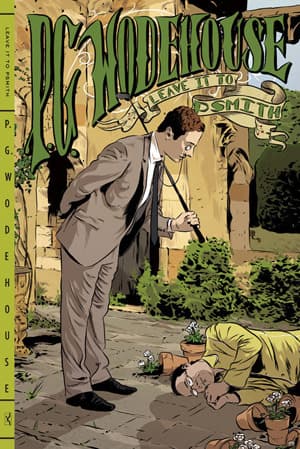
- Leave It to Psmith
P.G. Wodehouse
4.3 (8k) average on GoodreadsRomanceShares the Blandings Castle setting and a similar tone of gentle satire and comedic capers.
- To Kill a Mockingbird
Harper Lee
4.3 (4.5M) average on GoodreadsHistorical FictionIn the 1930s Jim Crow South, Harper Lee writes about racial injustice, moral growth, and the quiet courage of a lawyer father, Atticus Finch, as seen through his young daughter's eyes.
- The Great Gatsby
F. Scott Fitzgerald
3.9 (3.8M) average on GoodreadsHistorical FictionIn the opulent Roaring Twenties, a mysterious millionaire's lavish parties hide his desperate, tragic pursuit of a lost love, exposing the emptiness within the American Dream.
- Pride and Prejudice
Jane Austen
4.3 (3M) average on GoodreadsHistorical FictionIn a society focused on status and money, Elizabeth Bennet navigates love and pride, challenging Mr. Darcy and social expectations to find true affection.
- Angels & Demons
Dan Brown
3.9 (2.7M) average on GoodreadsThrillerA Harvard symbologist races through Rome's ancient sites, deciphering cryptic clues to unmask the Illuminati and stop a vengeful plot to destroy the Vatican with a stolen antimatter weapon.
- The Kite Runner
Khaled Hosseini
4.3 (2.4M) average on GoodreadsHistorical FictionIn pre-Taliban Afghanistan, a wealthy boy's betrayal of his servant's son during a kite-running tournament starts a lifelong journey for amends as his country collapses.





Enjoyed the summary?
A summary gives you the shape of the book. The book itself has the detail, the examples and the voice.
Find Uncle Fred in the Springtime on AmazonAs an Amazon Associate, BookBrief earns from qualifying purchases. How we're funded