
Synopsis
Covers the whole plot, including the ending.
- Difficulty
- Easy
- Pacing
- Moderate
- Mood
- Suspenseful, Eerie, Atmospheric, Melancholy
- Read it if
- You enjoy classic, spooky children's ghost stories with a focus on family dynamics and suspense.
- Skip it if
- You prefer horror with gore or adult themes, or find child characters in peril too distressing.
Wait Till Helen Comes Plot Summary
Covers the whole plot, including the ending.
A New Beginning, A New Family
Molly and her younger brother, Michael, move from Baltimore to a secluded, old converted church in rural Maryland with their mother, Jean, and new stepfather, Dave. Dave's daughter, Heather, who is the same age as Michael, is also part of this new blended family. Heather is a difficult and often manipulative child, still deeply affected by the death of her birth mother in a house fire seven years prior. Molly resents Heather's constant need for attention and how she seems to always get Michael into trouble, creating immediate tension as they try to adapt to their isolated surroundings and each other.
The Old Graveyard
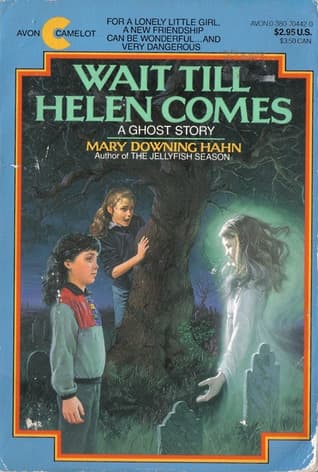
Soon after moving in, Heather discovers a neglected, overgrown graveyard behind the church. Despite warnings from Molly and the general creepiness of the place, Heather is interested in it and spends more and more time exploring the old gravestones. Molly and Michael often follow her, concerned by her solitary trips. In this graveyard, Heather begins to act strangely, seemingly talking to someone unseen among the decaying monuments, hinting at a new, invisible friend that only she can see, deepening Molly's unease about their new home.
Helen's First Appearance
One afternoon, Molly follows Heather into the graveyard and sees her speaking to an empty space next to a weathered angel statue. Heather describes her new friend, Helen, as a beautiful girl with long blonde hair, dressed in white, who died a long time ago. Molly, despite her skepticism, feels an undeniable chill and a sense of dread. Heather recounts that Helen died in a fire, just like her own mother, and quickly forms an intense, possessive bond with this spectral playmate, further isolating herself from Molly and Michael, who are increasingly bothered by her focus on the unseen Helen.
A Growing Influence
As days turn into weeks, Helen's hold over Heather grows stronger. Heather becomes more secretive, withdrawn, and prone to eerie statements. She insists that Helen is lonely and wants a friend to play with, often trying to lure Michael into the graveyard with her. Molly notices that Heather is becoming paler and thinner, almost as if her energy is being drained. Helen, through Heather, begins to play increasingly dangerous games, such as encouraging Heather to walk on the ledge of the church roof, causing Molly great fear for her stepsister's safety and the well-being of the entire family.
The Pond and the Warning
Helen's games get worse, and she starts luring Heather towards a dangerous, deep pond at the edge of the property, despite Molly's desperate attempts to stop her. Molly begins to research the local history and discovers the tragic story of Helen Harper, a girl who died in a house fire with her family over a century ago. Her spirit is said to haunt the area, seeking to drown children in the very pond that now attracts Heather. This discovery confirms Molly's worst fears and solidifies her belief in the malevolent ghost, understanding the true danger Helen poses.
Michael's Near Drowning
The situation reaches a terrifying point when Helen, through Heather, successfully lures Michael to the pond. Heather, under Helen's complete control, tries to push Michael into the water. Molly intervenes just in time, pulling Michael to safety, but not before he gets a glimpse of Helen's spectral form. This near-tragedy makes Molly realize she can no longer just watch. She must take direct action to protect her family, especially Michael and the increasingly frail Heather, from Helen's deadly intentions, even if it means confronting the ghost herself.
The Confrontation in the Graveyard
Determined to save Heather, Molly returns to the graveyard alone. She directly confronts Helen's ghost, demanding she leave Heather alone. Helen, initially defiant, reveals her tragic story: she was trapped in a burning house by her abusive father, who then killed the rest of the family before taking his own life. Helen has been looking for a friend, someone to share her eternal loneliness, and sees Heather as a suitable companion due to their shared experience of losing a mother to fire. Molly, despite her terror, feels a flicker of pity for Helen's eternal suffering.
The Final Battle
Helen, enraged by Molly's interference, tries to drag Heather into the pond, trying to fulfill her desire for a permanent playmate. Molly bravely fights against Helen's invisible force, struggling to pull Heather away from the water's edge. It is a desperate tug-of-war between the living and the dead. Molly appeals to Helen's lingering humanity and her desire for peace, but also to Heather's own will to live, reminding her of Michael and their family. The struggle is intense, with Molly risking her own life to save her stepsister from the ghost's icy grip.
Helen's Release
In a moment of desperation, Molly finds an old locket buried near Helen's grave, containing a miniature portrait of Helen and her mother. She realizes this is a way to help Helen find peace. By showing Helen the locket, Molly reminds the ghost of her mother's love and her own lost innocence, breaking the cycle of anger and loneliness. Helen's spectral form shimmers and then fades, finally finding release from her tormented existence. Heather, weak but alive, collapses, freed from the ghost's control, and the immediate danger passes, leaving a deep impact on Molly.
A Changed Family
After Helen's departure, Heather slowly recovers, though she has no memory of the events while under the ghost's influence. The experience changes Molly deeply, who now feels a protective bond with Heather. The family, though shaken, begins to heal. Molly and Heather's relationship, once strained by resentment, transforms into one of understanding and even affection. The ordeal forces them to confront their fears and rely on each other, solidifying their new family unit, with the lingering memory of the supernatural events that brought them closer.
Principal Figures
Molly
Protagonist
The responsible and protective older stepsister.
Molly is a sensible and compassionate twelve-year-old girl who initially struggles to accept her new stepsister, Heather. She is observant and intelligent, often feeling burdened by the responsibility of her younger brother, Michael. Despite her initial resentment towards Heather, Molly possesses a strong sense of justice and an innate protectiveness, which drives her to confront the malevolent ghost, Helen. She is a skeptic who is forced to confront the supernatural, growing in courage and empathy throughout the ordeal.
Relationships: Heather (stepsister, initially antagonistic but grows into a protective bond); Michael (younger brother, protective and caring); Jean (mother, loving but sometimes oblivious); Dave (stepfather, kind but often preoccupied)
Heather
Supporting/Victim
The traumatized stepsister, targeted by a malevolent ghost.
Heather is a seven-year-old girl, deeply traumatized by the death of her birth mother in a house fire years ago. She is often manipulative, attention-seeking, and prone to dramatic outbursts, which stems from her unresolved grief and insecurity. This vulnerability makes her an easy target for Helen's ghost, who preys on her loneliness and shared experience of fire. Under Helen's influence, Heather becomes withdrawn, sickly, and dangerous, acting as a puppet for the ghost's sinister intentions.
Relationships: Molly (stepsister, initially resentful, later protected and bonded); Michael (stepbrother, often plays together, target of Helen's influence through Heather); Helen (spectral 'friend', manipulative and malevolent entity)
Michael
Supporting
Molly's younger brother, often caught in Heather's antics and Helen's schemes.
Michael is Molly's younger brother, a sweet and somewhat naive boy of six. He often gets drawn into Heather's games and is less discerning than Molly about Heather's strange behavior. He is a target for Helen's ghost, who attempts to lure him into the pond. Michael represents the innocence and vulnerability that Molly is desperate to protect, serving as a catalyst for Molly's courageous actions against Helen.
Relationships: Molly (older sister, protected and cared for); Heather (stepsister, playmate, and unwitting accomplice in Helen's plans)
Helen
Antagonist
The lonely and vengeful ghost of a girl who died in a fire.
Helen is the malevolent spirit of a young girl who died in a house fire over a century ago, a victim of her abusive father. She is trapped in a cycle of loneliness and anger, seeking a permanent playmate to share her eternal torment by luring children to their deaths in the nearby pond. She preys on Heather's vulnerability and shared trauma, manipulating her to achieve her sinister goals. Helen is a tragic figure, driven by her past suffering, but her actions are undeniably evil.
Relationships: Heather (victim/puppet, chosen as a 'friend'); Molly (adversary, ultimately her liberator)
Jean
Supporting
Molly and Michael's mother, trying to make her new blended family work.
Jean is Molly and Michael's mother and Dave's new wife. She is loving and tries her best to foster a harmonious family environment, but she is often preoccupied with the challenges of their new life and the difficulties of blending the family. She struggles to understand Heather's behavior, often attributing it to grief and adjustment, and remains largely oblivious to the supernatural events unfolding around her, making Molly feel isolated in her struggle against Helen.
Relationships: Molly (daughter, loving but sometimes dismissive of Molly's concerns); Dave (husband, supportive partner); Heather (stepdaughter, attempts to understand and care for her)
Dave
Supporting
Heather's father and Molly and Michael's stepfather.
Dave is Heather's father and Jean's new husband. He is a kind and well-meaning man, but like Jean, he is largely unaware of the supernatural danger. He is deeply concerned about Heather's emotional well-being, attributing her strange behavior to the lingering trauma of losing her mother. His focus on Heather's grief, while understandable, prevents him from recognizing the true threat, leaving Molly to face Helen alone. He represents the well-intentioned but ultimately helpless adult figure in the face of the unknown.
Relationships: Heather (daughter, deeply concerned for her well-being); Jean (wife, supportive partner); Molly (stepdaughter, tries to build a good relationship)
Themes & Insights
Grief and Trauma
The novel explores how unresolved grief and trauma can appear in destructive ways. Heather's inability to cope with her mother's death makes her vulnerable to Helen's ghost, who shares a similar tragic past. Helen herself is a manifestation of eternal grief and anger, trapped by how she died. Molly's initial resentment towards Heather also comes from the disruption of her own family unit, a smaller form of trauma. The book suggests that acknowledging and dealing with grief is important for healing, as seen when Molly helps Helen find peace by acknowledging her past suffering.
“Some feelings are so strong, they don't die with the body. They stay behind, like an echo.”
Family and Belonging
A central theme is the struggle to create a blended family and the search for belonging. Molly, Michael, and Heather are forced into a new family dynamic, and the initial friction reflects their individual insecurities and resistance to change. Heather's loneliness and feeling of displacement are what make her open to Helen's false friendship. The supernatural threat ultimately forces the family, particularly Molly and Heather, to confront their differences and form a real bond, showing that true family comes from mutual support and love, not just blood ties. The isolation of the old house further highlights their need for internal connection.
“We're family now. Whether we like it or not, we're stuck together.”
The Power of Fear vs. Courage
The novel directly addresses the conflict between fear and courage. Molly is initially terrified by Helen's ghost, but her courage grows as the threat to her family increases. She overcomes her fear to protect Michael and save Heather, confronting the ghost directly. Helen, in contrast, embodies a destructive fear and anger, trapped by her own past. The story shows that while fear is a natural response, true strength is in facing that fear, especially when protecting loved ones, and that compassion can be a strong weapon against evil forces.
“I was so scared, I thought my heart would stop. But I couldn't let Helen have her.”
The Supernatural and Skepticism
The story plays with the tension between skepticism and belief in the supernatural. Molly initially dismisses Heather's 'imaginary friend' as a coping mechanism, reflecting a common adult view. However, undeniable evidence of Helen's presence gradually removes her skepticism, forcing her to accept the reality of ghosts. The adults in the story, Jean and Dave, remain largely unaware, showing how children are often more open to seeing things beyond the rational. This theme explores the limits of human understanding and the existence of forces beyond ordinary perception.
“I didn't believe in ghosts. Not really. But what I saw that day in the graveyard... it changed everything.”
Plot Devices & Literary Techniques
The Isolated Setting (Converted Church and Graveyard)
A secluded, old church and its adjacent graveyard create an eerie and vulnerable atmosphere.
The setting of the old, converted church and the neglected graveyard is crucial for establishing the novel's gothic atmosphere and isolating the characters. The remote location cuts the family off from external help, intensifying their internal conflicts and the supernatural threat. The graveyard serves as Helen's domain and the primary point of contact between the living and the dead, its decaying beauty providing a constant visual reminder of death and the past. This isolation amplifies the sense of vulnerability and claustrophobia as Helen's influence grows.
The Unreliable Witness (Heather)
Heather's perceived 'imaginary friend' is initially dismissed, creating dramatic irony.
Heather's initial claims of having a friend named Helen are dismissed by the adults and even Molly as a product of her vivid imagination or a coping mechanism for her grief. This creates dramatic irony, as the reader (and eventually Molly) knows the true, sinister nature of Helen. This device heightens the tension, as the adults remain oblivious, leaving Molly alone to confront the supernatural threat. It also highlights the theme of adult skepticism versus childlike perception of the unknown.
The Shared Trauma (Fire)
Both Heather's mother and Helen died in fires, creating a fatal connection.
The shared trauma of death by fire is a critical plot device. Heather's mother died in a house fire, leaving her emotionally vulnerable. Helen, the ghost, also died in a house fire over a century ago. This shared experience creates an immediate, albeit tragic, bond between Heather and Helen, making Heather the perfect target for the lonely and vengeful ghost. It allows Helen to easily manipulate Heather, playing on her deepest fears and desires for companionship, and provides a tangible link for Molly to understand Helen's motives.
The Locket
A physical object that holds the key to Helen's past and her ultimate release.
The locket, containing a miniature portrait of Helen and her mother, serves as a crucial plot device in the climax. It is a tangible link to Helen's past and her lost innocence, symbolizing the love she once knew before her tragic death. By unearthing and presenting the locket, Molly is able to appeal to the residual humanity within Helen's tormented spirit, reminding her of her mother's love and breaking the cycle of her anger and loneliness. It provides the means for Helen to find peace and for Heather to be freed from her influence.
Wait Till Helen Comes Quotes
“The wind was picking up now, rustling the leaves in the trees and making the dry grass whisper.”
“Sometimes I think I hate her. She's always so perfect, so good.”
“It was a beautiful house, in a spooky sort of way.”
“Helen wants a friend, and she thinks you're the one.”
“The air grew cold, and I felt a prickling sensation on the back of my neck.”
“She wasn't a little girl anymore. She was something else, something ancient and powerful.”
“You can't leave me! You promised!”
“The eyes were the worst part. They were completely black, like holes in the fabric of reality.”
“He didn't believe in ghosts, not really. But he believed in keeping his family safe.”
“The house itself seemed to breathe, a slow, creaking inhale and exhale.”
“She wasn't just lonely; she was dangerous.”
“Some things are better left undisturbed, even if they're sad.”
“I knew then that I had to save her, even if it meant risking my own life.”
“The silence was worse than any scream.”
Quiz
10 questions on the plot and the characters. Each answer comes with a short explanation.
Question 1
What is the primary reason Molly and Michael move to the old country house with their mother and stepfather?
- Their stepfather inherited the house from a distant relative.
- Their mother and stepfather wanted to escape city life and find a quiet place.
- Their stepfather, Dave, bought the house because it was an old church that he planned to renovate.
- Their mother got a new job in the countryside, requiring them to relocate.
Show answer
C. Their stepfather, Dave, bought the house because it was an old church that he planned to renovate. Dave, Molly and Michael's stepfather, bought the dilapidated old church intending to renovate it into a home, which is why they moved there.
Question 2
What tragic event led to Heather's mother's death?
- A car accident during a storm.
- A long illness that she battled for years.
- A mysterious fire that destroyed their family home.
- She drowned in a nearby pond.
Show answer
C. A mysterious fire that destroyed their family home. Heather's mother died in a mysterious fire, a detail that foreshadows Helen's own tragic death by fire.
Question 3
Where does Heather first encounter Helen's ghost?
- In her bedroom late at night.
- In the old graveyard behind their new home.
- By the pond near the house.
- Inside the dilapidated church structure.
Show answer
B. In the old graveyard behind their new home. Heather first meets Helen in the graveyard, drawn to the child's tombstone, which is where their 'friendship' begins.
Question 4
What is Helen's primary motivation for befriending Heather?
- She is lonely and simply wants a playmate.
- She wants to lure Heather into the pond to drown her, to have a companion in death.
- She wants to possess Heather's body to live again.
- She wants Heather to help her find her lost necklace.
Show answer
B. She wants to lure Heather into the pond to drown her, to have a companion in death. Helen is a malevolent spirit who seeks to drown other children to join her in her watery grave, driven by her own tragic death.
Question 5
How does Molly try to warn her parents and Michael about Helen?
- She writes a detailed letter explaining her fears.
- She directly tells them she's seen a ghost, but they dismiss her.
- She draws pictures of Helen and leaves them for her parents to find.
- She tries to show them Helen's grave, but they don't believe her story.
Show answer
B. She directly tells them she's seen a ghost, but they dismiss her. Molly tries to tell her parents and Michael about Helen, but they attribute her stories to an overactive imagination or jealousy of Heather.
Question 6
What object does Helen use to exert influence over Heather?
- A small, antique doll.
- A locket containing a lock of hair.
- A beautiful, old ribbon.
- A shiny, polished stone.
Show answer
C. A beautiful, old ribbon. Helen gives Heather a beautiful ribbon, which becomes a tangible link and a symbol of Helen's growing control over Heather.
Question 7
What historical event is linked to Helen's death and her family's tragedy?
- A devastating flood that swept through the valley.
- A cholera epidemic that wiped out many families.
- A house fire, believed to be accidental, that killed her and her family.
- A tragic boating accident on the nearby lake.
Show answer
C. A house fire, believed to be accidental, that killed her and her family. Helen and her family died in a house fire, a detail uncovered by Molly which gives insight into Helen's spectral existence.
Question 8
What is the significance of the old pond to Helen's ghost?
- It was where she used to play as a living child.
- It is the place where she ultimately intends to drown Heather.
- It holds the key to her being able to rest in peace.
- It is where her family's hidden treasure is buried.
Show answer
B. It is the place where she ultimately intends to drown Heather. The pond is Helen's ultimate trap, the place where she tries to fulfill her desire to have a child companion in death by luring Heather to drown.
Question 9
How does Molly finally save Heather from Helen's influence?
- She tells Helen to leave and uses a protective spell.
- She physically pulls Heather away from the pond and confronts Helen directly.
- She finds Helen's lost possession, which makes the ghost disappear.
- Her parents finally believe her and intervene.
Show answer
B. She physically pulls Heather away from the pond and confronts Helen directly. Molly, showing immense bravery and love for Heather, directly confronts Helen and physically saves Heather from drowning, breaking Helen's hold.
Question 10
What is the underlying theme explored through the relationship between Molly and Heather?
- The challenges of blending families.
- The power of sisterly love and sacrifice overcoming jealousy and fear.
- The importance of believing in the supernatural.
- The dangers of exploring old, abandoned places.
Show answer
B. The power of sisterly love and sacrifice overcoming jealousy and fear. Despite Molly's initial dislike and jealousy of Heather, her love for her stepsister ultimately drives her to overcome her fear and save Heather from Helen, highlighting the power of familial bonds.
Wait Till Helen Comes FAQ
What is the central conflict in 'Wait Till Helen Comes'?
The central conflict revolves around Molly, Michael, and their stepsister Heather, who moves into an old, isolated country house. Heather, still grieving her biological mother's death in a fire, becomes increasingly obsessed with the ghost of a young girl named Helen, who died tragically in a fire a century ago and now attempts to lure Heather to her death in the pond.
Who are the main characters and what are their relationships?
The main characters are Molly, the narrator and older step-sister; Michael, her younger brother; and Heather, their stepsister. Molly and Michael are siblings whose mother married Heather's father, creating a new blended family dynamic, often strained by Heather's difficult behavior and Molly's resentment.
Where does the story primarily take place?
The story primarily takes place in an isolated, converted church in the Maryland countryside that Molly's mother and Heather's father purchase. Key locations within the property include the old graveyard, a nearby pond, and the children's bedrooms, particularly Heather's, which becomes a focal point for Helen's influence.
What is Helen's backstory and how did she die?
Helen is the ghost of a young girl who lived in the area over a hundred years ago. She died tragically in a house fire that also claimed her family. Her spirit remains tied to the graveyard and the pond, perpetually seeking a friend to join her in death, stemming from her own loneliness and the trauma of her demise.
How does Molly first become aware of Helen's presence?
Molly initially dismisses Heather's claims of a new friend, but becomes alarmed when she observes Heather talking to an empty space in the graveyard and later sees a misty, indistinct figure. Her awareness solidifies as she notices strange occurrences, Heather's increasing isolation, and the chilling cold emanating from Helen's presence.
What is the significance of the locket Helen gives Heather?
The locket is a tangible symbol of Helen's growing hold over Heather. It contains a miniature portrait of Helen as she appeared in life, and its presence strengthens Helen's power and influence, making Heather more susceptible to her manipulations and less responsive to Molly and Michael.
Are there any clues to Helen's malevolent intentions beyond her luring children?
Beyond luring children, Helen's malevolence is subtly shown through her manipulation of Heather, causing her to act out and alienate her family. She also creates a palpable sense of dread and cold, and attempts to physically harm Molly and Michael, such as when she tries to trip Molly on the stairs or make her fall.
How does the setting of the converted church and graveyard contribute to the atmosphere?
The setting of the converted church, with its inherent history and the adjacent old, overgrown graveyard, immediately establishes a gothic and eerie atmosphere. The graveyard, especially, is a liminal space between life and death, serving as Helen's domain and the primary point of contact between the living children and the spectral world.
What role do Molly and Michael's parents play in the unfolding events?
Molly and Michael's parents are largely oblivious to the supernatural threat, attributing Heather's behavior to grief and adjustment issues. Their skepticism and lack of belief in ghosts force Molly to take on the responsibility of protecting Heather, highlighting the theme of children facing dangers their parents cannot perceive.
How does Heather's grief over her mother's death make her vulnerable to Helen?
Heather's profound grief, loneliness, and feelings of abandonment after her mother's death create a deep emotional void. Helen, a lonely child ghost, exploits this vulnerability by offering Heather companionship and understanding, appealing to her desire for a friend who truly 'gets' her pain, making her an easy target for manipulation.
What psychological impact does Helen's presence have on Molly?
Helen's presence profoundly impacts Molly, causing her immense fear, anxiety, and a sense of isolation. She feels burdened by the secret and the responsibility of protecting Heather, leading to emotional distress and a struggle to convince her parents of the danger, which further isolates her.
How does the dynamic between Molly and Heather evolve throughout the story?
Initially, Molly resents Heather, viewing her as a spoiled and difficult stepsister. As Helen's influence grows, Molly's resentment transforms into fear and then genuine concern and protective love for Heather, culminating in her heroic efforts to save her from the ghost.
What is the significance of the children being the only ones who can see or sense Helen?
The children's unique ability to perceive Helen highlights their innocence, vulnerability, and perhaps a sensitivity to the supernatural that adults have lost. It also serves to isolate them, particularly Molly, who struggles to be believed, emphasizing the theme of children confronting a terrifying reality without adult comprehension or support.
Is Helen purely evil, or is there a tragic element to her character?
Helen is portrayed with a strong tragic element. While her actions are malevolent, they stem from her own tragic death, loneliness, and a desperate, childlike desire for companionship, albeit a twisted one. She doesn't understand that her 'friendship' leads to death, making her a figure of both fear and pity.
What themes does 'Wait Till Helen Comes' explore?
The book explores themes of grief, loneliness, sibling rivalry, the challenges of blended families, the power of belief (and disbelief), and the nature of fear. It also delves into the protective instincts of family and the idea that love can overcome even supernatural threats.
How does Molly ultimately defeat or repel Helen?
Molly ultimately repels Helen by using the power of family love and by disrupting Helen's hold on Heather. In a climactic confrontation by the pond, Molly physically pulls Heather away from Helen and asserts her will, demonstrating a stronger bond and resolve that Helen cannot break, effectively banishing the ghost.
Could Helen's presence be interpreted as a manifestation of Heather's own unresolved grief and trauma?
While presented as a literal ghost, Helen could be interpreted metaphorically as a manifestation of Heather's own unresolved grief, trauma, and feelings of abandonment. Helen embodies the destructive pull of sorrow, luring Heather towards a similar 'death' of her spirit if she fully succumbs to her despair, highlighting the psychological impact of loss.
What is the symbolism behind the pond where Helen tries to lure Heather?
The pond symbolizes a threshold between life and death, a watery grave that Helen herself likely met or was connected to. It represents the ultimate surrender to despair and oblivion, a mirror of Helen's own fate, and the final step in her attempt to pull Heather into her eternal loneliness.
About the author

Mary Downing Hahn is an American author known for her contributions to children's and young adult literature, particularly in the genre of ghost stories. Some of her notable works include "Wait Till Helen Comes," "The Old Willis Place," and "The Ghost of Crutchfield Hall," which often explore themes of friendship and the supernatural. Her writing has garnered a dedicated readership and critical attention over the years.
Similar books
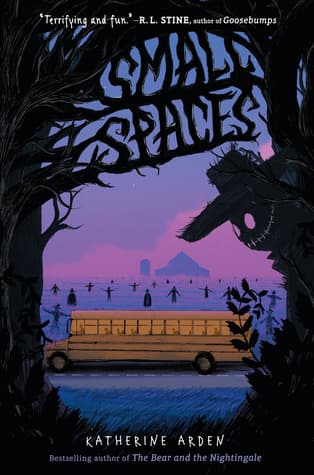
- Small Spaces
Katherine Arden
4.0 (12k) average on GoodreadsFantasyA middle-grade horror novel with a strong sense of atmosphere and a chilling supernatural threat.
- Harry Potter and the Sorcerer's Stone
J.K. Rowling
4.5 (7M) average on GoodreadsFantasyRescued from a miserable life under the stairs, an orphaned boy discovers he's a wizard destined for a magical school, where he uncovers a dangerous secret tied to the dark wizard who murdered his parents.
- The Hunger Games
Suzanne Collins
4.3 (6.4M) average on GoodreadsFantasyIn a future where children fight to the death on live television, Katniss Everdeen volunteers for the arena, turning a death sentence into a fight for survival and a spark of rebellion.
- 1984
George Orwell
4.2 (3.1M) average on GoodreadsPoliticsIn a future where surveillance and thought control are absolute, a man's search for truth clashes with the Party, showing that hope can be a form of rebellion.
- Divergent
Veronica Roth
4.2 (2.9M) average on GoodreadsFantasyIn a society divided by virtues, a sixteen-year-old's difference from the norm starts a rebellion that threatens her world.
- The Hobbit, or There and Back Again
J.R.R. Tolkien
4.3 (2.9M) average on GoodreadsFantasyA comfort-loving hobbit named Bilbo Baggins is whisked away by a mischievous wizard and a band of dwarves on an unexpected journey to reclaim stolen treasure from a fearsome dragon, discovering courage and a magical ring along the way.





Enjoyed the summary?
A summary gives you the shape of the book. The book itself has the detail, the examples and the voice.
Find Wait Till Helen Comes on AmazonAs an Amazon Associate, BookBrief earns from qualifying purchases. How we're funded