
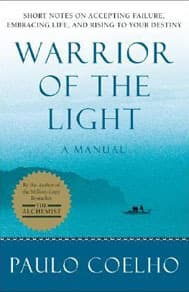
Synopsis
Covers the whole plot, including the ending.
- Difficulty
- Easy
- Pacing
- Variable
- Mood
- Inspirational, Reflective, Spiritual, Empowering
- Read it if
- You are looking for daily inspiration, philosophical reflections, or a spiritual guide to personal growth.
- Skip it if
- You prefer traditional narratives with strong plotlines and character development, or find self-help philosophies repetitive.
Warrior of the Light Plot Summary
Covers the whole plot, including the ending.
The Warrior's First Steps
The 'Manual of the Warrior of the Light' starts by introducing the Warrior. This figure is not a literal fighter but someone aware of their flaws who tries to improve and grow spiritually. The first sections state that everyone can be a Warrior, no matter their past or present. It tells readers to listen to their hearts, follow their own path, and conquer fears and doubts. The text suggests that the journey is not about being perfect but about always learning, adapting, and finding joy in the process. It sets the stage for a spiritual quest, urging readers to notice the signs that guide them.
Embracing Challenges and Defeat
The manual often discusses how challenges and defeats are unavoidable on the Warrior's path. It advises that a true Warrior accepts failure as a key part of learning. The text points out that moments of despair and doubt are not weaknesses but chances to renew commitment and find inner strength. It encourages Warriors to learn from mistakes, get up after falling, and keep moving with new resolve. The message is clear: setbacks are not endings but detours that lead to greater wisdom and resilience, which are essential for anyone trying to live a meaningful life.
The Importance of Solitude and Reflection
Solitude is an important tool for the Warrior of the Light. The manual explains that time alone lets the Warrior reconnect with themselves, listen to their intuition, and understand their true desires and fears. During these quiet times, the Warrior can process experiences, gain clarity, and make important decisions without outside distractions. While valuing human connection, the text also stresses the need to withdraw from the world periodically to recharge and gain perspective. This balance of engaging with the world and retreating for reflection helps maintain spiritual balance.
Living in the Present Moment
A main theme in the manual is the importance of living in the present. The Warrior is encouraged to fully experience each day, appreciate life's small wonders, and not worry about the future or regret the past. The text suggests that true happiness and fulfillment come only from fully engaging with the 'now.' It advises against putting off joy or waiting for perfect conditions, instead urging the Warrior to find beauty and purpose in their current situation. This focus on the present helps the Warrior act decisively and enjoy the journey, rather than just focusing on the end goal.
Understanding and Using Intuition
The manual often mentions the importance of intuition, calling it the 'voice of God' or the 'language of the world.' The Warrior learns to pay attention to instincts, subtle omens, and the 'signs' the universe provides. It states that rational thought alone is not enough to navigate life's complexities and that true wisdom often comes from intuitive understanding. The text encourages Warriors to develop their sensitivity to these unseen forces, trust their gut feelings, and follow inner guidance, even when it seems illogical to others. This trust in intuition unlocks one's true potential.
Overcoming Fear and Doubt
Fear and doubt are constant companions on the Warrior's path. The manual does not say Warriors are fearless, but that they choose to act despite their fears. It encourages the Warrior to recognize anxieties, understand where they come from, and then consciously decide not to let them paralyze them. The text states that courage is not the absence of fear, but overcoming it. It advises Warriors to face their inner demons, challenge self-limiting beliefs, and take risks for their dreams, knowing that growth often lies just beyond their comfort zone.
The Warrior and Love
Love, in its many forms, is a central theme. The manual discusses romantic love, self-love, love for humanity, and divine love. It teaches that the Warrior must first love and accept themselves, flaws and all, before they can truly love others. Love is a source of strength, courage, and understanding. The text advises Warriors to open their hearts, forgive, and be generous with affection, knowing that love heals, transforms, and connects people to something greater. It encourages Warriors to express love freely and without expectation.
Maintaining Humility and Simplicity
The manual stresses the importance of humility, reminding the Warrior not to become arrogant or overly pleased with achievements. It advises against seeking fame or recognition, instead focusing on personal growth and real contributions. Simplicity is also highlighted, suggesting the Warrior finds strength and clarity in an uncluttered life, free from excessive material desires or unnecessary complications. The text warns against the dangers of pride and self-importance, which can blind the Warrior to new lessons and hinder progress. Humility keeps the Warrior open to learning from everyone and everything.
The Warrior's Purpose and Legacy
Ultimately, the manual guides the Warrior to understand and fulfill their personal path. It suggests that each Warrior has a unique purpose and something to contribute to the world. The text encourages them to pursue dreams with passion and honesty, knowing that their actions, however small, can have a ripple effect. It discusses leaving a legacy, not necessarily through grand achievements, but through the positive impact they have on others and the example they set. The Warrior's journey is a quest to become their best self, inspiring others through their authenticity and courage.
The Warrior's Daily Practice
Beyond philosophical ideas, the manual offers practical advice for the Warrior's daily life. It covers habits like mindful observation, patience, kindness, and self-discipline. It encourages Warriors to find joy in everyday tasks, treat others with respect, and remain committed to self-improvement. The text emphasizes that the Warrior's path is not a single event but a continuous practice, a way of living that integrates spiritual principles into every part of existence. It reminds us that the biggest battles and wins often happen within ourselves, through consistent effort and a dedicated spirit.
Warrior of the Light Characters
The Warrior of the Light (Reader)
Protagonist
An archetype representing anyone striving for personal growth and spiritual enlightenment.
The Warrior of the Light is not a single character, but an archetype that the reader is invited to embody. They are someone who, despite their flaws and fears, chooses to face life's challenges with courage and integrity. They are driven by a desire for self-discovery, to fulfill their personal legend, and to live a life aligned with their deepest values. The Warrior is characterized by resilience, an open heart, and a willingness to learn from both success and failure. They are a seeker of truth and beauty, constantly striving to improve themselves and contribute positively to the world.
Relationships: The Universe/God (Seeks guidance and meaning from a higher power and the signs of the world.)
The Teacher/Narrator
Supporting
The guiding voice of the manual, offering wisdom and encouragement.
The Teacher, or the narrative voice of the manual, serves as a benevolent and wise guide. This entity provides the aphorisms, parables, and direct advice that form the core of the book. The Teacher is patient, understanding, and always encouraging, never judgmental. They possess deep insight into human nature and the spiritual path, having likely traversed similar journeys. Their role is to illuminate the way for the Warrior, offering clarity during moments of doubt and reminding them of their inherent strength and potential. The Teacher's wisdom is practical, profound, and universally applicable.
Relationships: The Warrior of the Light (Mentor and guide, offering wisdom and encouragement.)
The Adversary (Inner Doubt/Fear)
Antagonist
The internal forces that challenge the Warrior's resolve and progress.
The primary antagonist in 'Warrior of the Light' is not an external character but the internal forces of doubt, fear, and self-sabotage that every Warrior faces. This 'adversary' manifests as the voice that whispers discouragement, the hesitation that prevents action, and the pride that leads to complacency. It represents the psychological barriers that prevent individuals from reaching their full potential and living authentically. The manual constantly addresses how to recognize, confront, and ultimately overcome these internal struggles, emphasizing that the greatest battles are often fought within oneself.
Relationships: The Warrior of the Light (Internal conflict and source of challenges.)
The Others (Society/External World)
Supporting/Mentioned
Represents the external influences and judgments that the Warrior encounters.
'The Others' embody the external world, including society's expectations, judgments, and the opinions of friends, family, or strangers. While not inherently antagonistic, this 'character' can be a source of distraction, misunderstanding, or even criticism for the Warrior who chooses a path different from the norm. The manual advises the Warrior to be aware of external influences but not to be swayed from their true path by them. It highlights the importance of maintaining authenticity and inner conviction, even when faced with disapproval or misunderstanding from those around them.
Relationships: The Warrior of the Light (Source of external opinions, expectations, and occasional misunderstanding.)
Warrior of the Light Themes
Embracing Personal Legend
The main theme is the journey of finding and living one's unique purpose or 'Personal Legend.' The manual consistently encourages readers to listen to their hearts, identify dreams, and pursue them with strong dedication. It suggests that everyone has a special gift and a destiny to fulfill, and that true happiness comes from aligning one's life with this inner calling. This theme appears in passages urging the Warrior to ignore outside distractions and societal pressures to focus on their inner voice, as when it says, 'The Warrior of the Light believes. Because he believes, he can overcome any obstacle.'
“A warrior of the light knows that he has much to be grateful for. He never forgets the help he has received from others, and he thanks them for it.”
The Value of Failure and Perseverance
This theme emphasizes that setbacks and failures are not roadblocks but necessary parts of growth. The manual redefines failure as a chance to learn, reflect, and change direction, rather than a reason to quit. It teaches that true strength is resilience — the ability to get up after falling, learn from mistakes, and continue the journey with new determination. This is clearly shown when the text states that 'The warrior knows that the best way to learn is by doing. He makes mistakes, but he never gives up.' This theme promotes courage in the face of difficulty and a persistent spirit.
“A warrior of the light knows that he has much to be grateful for. He never forgets the help he has received from others, and he thanks them for it.”
Living in the Present Moment
The book repeatedly highlights the importance of fully engaging with the 'now.' It advises against dwelling on past regrets or future worries, stating that true life and joy are found in the present. The Warrior is encouraged to appreciate the small wonders of daily life, act decisively now, and find contentment in their current situation. This theme is seen in passages that warn against delaying happiness, such as when it suggests, 'He knows that life is a continuous lesson, and that the present is the only moment that matters.' It promotes mindfulness and a deep appreciation for how life unfolds.
“A warrior of the light knows that he has much to be grateful for. He never forgets the help he has received from others, and he thanks them for it.”
Trusting Intuition and Inner Guidance
A major theme is the development and reliance on intuition, often called 'the language of the world' or the 'voice of God.' The manual guides the Warrior to notice subtle signs, omens, and gut feelings, suggesting these inner prompts provide vital direction beyond rational thought. It encourages trusting one's inner wisdom, even when it goes against logic or outside advice. This theme is clear in many passages that urge the Warrior to 'listen to their heart' and to 'read the signs,' helping them make decisions based on a deeper, spiritual understanding of their path and purpose.
“A warrior of the light knows that he has much to be grateful for. He never forgets the help he has received from others, and he thanks them for it.”
The Battle Against Fear and Doubt
This theme explores the internal struggle against fear, doubt, and limiting beliefs. The manual acknowledges these are constant companions on the Warrior's journey, but it stresses that courage is not the absence of fear, but the willingness to act despite it. It offers ways to confront inner demons, challenge negative self-talk, and build resilience. This is a recurring idea, as the text often encourages the Warrior to 'take risks' and to 'fight for their dreams,' knowing that overcoming these internal foes is essential for spiritual and personal growth. It is a call to inner strength and mental toughness.
“A warrior of the light knows that he has much to be grateful for. He never forgets the help he has received from others, and he thanks them for it.”
Plot Devices & Literary Techniques
Aphorisms and Parables
Short, memorable statements and illustrative stories conveying moral truths.
The book is structured almost entirely as a collection of aphorisms and short parables. Each entry presents a distinct piece of wisdom or a brief narrative that illustrates a spiritual principle. This device allows for easy digestibility and encourages reflection on individual passages. For example, a short story about a Warrior encountering a challenge in the desert might be followed by a concise statement about perseverance. This fragmented, yet interconnected, structure allows the reader to engage with the text at their own pace and apply the lessons to their specific life circumstances, making the manual a timeless and adaptable guide.
Second-Person Address (Direct Address)
The narrator directly addresses the reader as 'the Warrior,' creating a personal, immersive experience.
A key plot device is the consistent use of second-person narration, directly addressing the reader as 'you' and implicitly as 'the Warrior of the Light.' This creates an immediate and deeply personal connection, making the reader feel as though the manual is specifically written for them and their journey. By placing the reader directly into the role of the protagonist, the book fosters introspection and self-identification with the challenges and triumphs described. This direct address transforms the act of reading into an active process of self-discovery and empowerment, blurring the lines between reader and character.
Archetypal Symbolism
Utilizes universal symbols and archetypes (Warrior, Light, Darkness, Path) to convey complex spiritual concepts.
The manual extensively uses archetypal symbolism to communicate its philosophical and spiritual messages. The 'Warrior of the Light' itself is an archetype, representing inner strength, courage, and spiritual striving. 'Light' symbolizes knowledge, truth, and divine guidance, while 'Darkness' represents fear, doubt, and ignorance. The 'Path' or 'Journey' is a universal symbol for life's progression and personal development. These archetypes resonate deeply with the collective unconscious, making the lessons universally relatable and timeless, transcending specific cultural or religious contexts to tap into fundamental human experiences and aspirations.
Didactic Tone
The narrative voice is instructive and advisory, aiming to teach and guide the reader.
The book employs a consistently didactic tone, meaning its primary purpose is to teach and instruct. The narrator acts as a wise mentor, offering guidance, warnings, and encouragement. Each passage is designed to impart a specific lesson about spiritual growth, self-discovery, or navigating life's challenges. This tone is not authoritarian but rather gentle and supportive, inviting the reader to reflect and apply the teachings. This direct instructional approach reinforces the manual's purpose as a guide for personal transformation, ensuring that its messages are clear, impactful, and actionable for the aspiring Warrior.
Warrior of the Light Quotes
“A warrior of light is never a coward.”
“The warrior of light knows that he has much to be grateful for.”
“A warrior of light is never afraid to make mistakes.”
“The warrior of light knows that the most important battles are those he fights within himself.”
“A warrior of light does not waste his time listening to provocations.”
“He knows that he cannot find the truth by trying to convince others.”
“The warrior of light never gives up on his dream.”
“He knows that life is a constant challenge, and for this reason, he must be attentive to the signs.”
“A warrior of light always remembers that everything he does, everything he experiences, has a purpose.”
“He is not afraid to weep, for he knows that tears are part of life.”
“The warrior of light shares with others what he knows and what he has.”
“He knows that a boat is safer in the harbor, but that is not what boats are made for.”
“A warrior of light does not try to be someone else.”
“He knows that faith is a practice, not just a theory.”
Quiz
10 questions on the plot and the characters. Each answer comes with a short explanation.
Question 1
According to the 'Warrior of the Light', what is one of the essential qualities a warrior must possess regarding their dreams?
- To hide them from others to prevent jealousy.
- To fight for them even when others say they are impossible.
- To change them frequently to avoid stagnation.
- To only pursue dreams that guarantee immediate success.
Show answer
B. To fight for them even when others say they are impossible. The 'Warrior of the Light' emphasizes persistence and courage in pursuing one's dreams, even in the face of skepticism or difficulty.
Question 2
What does the 'Warrior of the Light' advise regarding moments of doubt or fear?
- To ignore them and pretend they don't exist.
- To embrace them as part of the journey and learn from them.
- To seek constant external validation to overcome them.
- To stop their quest immediately until the feelings pass.
Show answer
B. To embrace them as part of the journey and learn from them. The book teaches that a warrior acknowledges and accepts fear and doubt as natural parts of their path, using them as catalysts for growth rather than roadblocks.
Question 3
How does the 'Warrior of the Light' view the concept of 'failure'?
- As a definitive end to any endeavor.
- As a sign that they were never meant for the path.
- As an opportunity for learning and growth.
- As something to be avoided at all costs through meticulous planning.
Show answer
C. As an opportunity for learning and growth. A core tenet of the 'Warrior of the Light' is to accept failure not as a defeat, but as a valuable lesson that contributes to one's journey and wisdom.
Question 4
What is the primary characteristic that distinguishes a 'Warrior of the Light' from others, according to the book?
- Their ability to predict the future with accuracy.
- Their unwavering certainty in every decision they make.
- Their appreciation for the miracle of being alive and commitment to their unique destiny.
- Their constant need for external approval and guidance.
Show answer
C. Their appreciation for the miracle of being alive and commitment to their unique destiny. The description of the 'Warrior of the Light' highlights an appreciation for life and a dedication to becoming the person they are meant to be, embracing their unique path.
Question 5
The book suggests that a warrior should always be prepared for which of the following?
- To always win every battle without effort.
- To encounter unexpected challenges and make difficult choices.
- To follow the crowd's opinion for safety.
- To avoid any situation that might lead to discomfort.
Show answer
B. To encounter unexpected challenges and make difficult choices. The 'Warrior of the Light' manual prepares readers for the uncertainties of life, emphasizing that unexpected challenges and choices are integral to the journey.
Question 6
What specific action does the 'Warrior of the Light' take when confronted with difficult truths about themselves?
- They deny these truths and project them onto others.
- They accept them and work to transform their weaknesses into strengths.
- They seek to forget these truths through distractions.
- They blame external circumstances for their flaws.
Show answer
B. They accept them and work to transform their weaknesses into strengths. A true Warrior of the Light practices self-awareness and self-acceptance, using difficult truths as opportunities for personal transformation and improvement.
Question 7
In what way does the 'Warrior of the Light' interact with the 'silence' of their journey?
- They fill it with constant noise to avoid introspection.
- They fear it as a sign of loneliness or abandonment.
- They use it for reflection, listening to their inner voice and the wisdom of the world.
- They interpret it as a lack of divine guidance.
Show answer
C. They use it for reflection, listening to their inner voice and the wisdom of the world. The book often speaks of the importance of solitude and silence for a warrior to listen to their inner wisdom and connect with the spiritual aspects of their path.
Question 8
What is the 'Warrior of the Light's' attitude towards the concept of 'time'?
- They are constantly worried about running out of time.
- They live fully in the present moment, understanding its power.
- They dwell excessively on past mistakes and future anxieties.
- They believe that time will solve all their problems without their intervention.
Show answer
B. They live fully in the present moment, understanding its power. The 'Warrior of the Light' manual encourages living in the present, recognizing that the power to act and change lies in the 'now'.
Question 9
How does the 'Warrior of the Light' typically react to public criticism or praise?
- They become overly dependent on praise and devastated by criticism.
- They seek constant public validation for their actions.
- They listen to it but remain focused on their own path and inner truth.
- They ignore all external opinions without consideration.
Show answer
C. They listen to it but remain focused on their own path and inner truth. A Warrior of the Light maintains an inner compass, not swayed excessively by external opinions, but still capable of discerning truth from criticism without losing their way.
Question 10
What is the ultimate goal of the 'Warrior of the Light's' quest, as described in the book?
- To accumulate great wealth and material possessions.
- To gain power and control over others.
- To become the person they want to be, fulfilling their unique destiny.
- To escape all challenges and live a life of ease.
Show answer
C. To become the person they want to be, fulfilling their unique destiny. The text explicitly states that the warrior's quest leads them to 'become the person he wants to be,' emphasizing personal growth and destiny fulfillment.
Warrior of the Light FAQ
What is the core purpose of 'Warrior of the Light: A Manual' and how does it relate to 'The Alchemist'?
'Warrior of the Light: A Manual' serves as an inspirational guide, offering short passages designed to motivate readers to pursue their dreams and embrace life's uncertainties. It acts as a philosophical companion to 'The Alchemist,' extending its themes of personal legend and spiritual journey into practical daily guidance for self-discovery.
Who is the 'Warrior of the Light' that the book refers to, and is it a specific character or an archetype?
The 'Warrior of the Light' is not a single character, but rather an archetype that Coelho invites every reader to embody. It represents an individual who acknowledges their dreams, accepts life's challenges, and strives to become their authentic self, appreciating the miracle of existence despite setbacks.
What kind of content can readers expect in terms of structure and style?
The book is structured as a collection of short, philosophical stories and parables, each offering a distinct piece of wisdom or insight. Coelho's inimitable style is characterized by its simplicity, poetic language, and direct address to the reader, making each passage feel like a personal reflection or piece of advice.
What are some of the key lessons or virtues emphasized for the 'Warrior of the Light'?
Key lessons include embracing uncertainty, accepting failure as a learning opportunity, appreciating the present moment, maintaining faith in one's path, and recognizing the inner strength to overcome obstacles. The manual consistently promotes courage, perseverance, and self-awareness as essential virtues.
Does the book contain a continuous narrative or is it purely a collection of discrete reflections?
While it lacks a continuous narrative with a developing plot or recurring characters in the traditional sense, the book maintains a thematic continuity. Each reflection builds upon the core concept of the 'Warrior of the Light,' guiding the reader through various aspects of their spiritual and personal journey, creating a cohesive manual for life.
Are there specific references or allusions within the 'Manual' that directly echo events or characters from 'The Alchemist'?
While not directly quoting characters or specific plot points, many passages in the 'Manual' echo the wisdom shared by Melchizedek or the lessons Santiago learns on his journey. The emphasis on listening to one's heart, understanding omens, and pursuing one's Personal Legend are direct thematic parallels.
How does Coelho's personal philosophy or spiritual journey manifest within the advice given to the Warrior?
Coelho's own experiences with doubt, faith, and the pursuit of his calling are woven into the fabric of the advice. The passages often reflect a synthesis of various spiritual traditions, emphasizing universal truths about human nature and the divine, drawing from his Catholic upbringing and later explorations into mysticism.
Does the book suggest a particular religious or spiritual path, or is its message universally applicable?
The book deliberately avoids endorsing a specific religious dogma, instead focusing on universal spiritual principles that transcend particular faiths. Its message is designed to be universally applicable, encouraging readers from any background to find their own inner truth and connect with a higher purpose, whatever form that takes for them.
How does the 'Warrior of the Light' deal with fear and doubt, psychologically speaking?
Psychologically, the 'Warrior of the Light' acknowledges fear and doubt not as weaknesses to be suppressed, but as natural parts of the human experience. The manual teaches that true courage lies in acting despite these feelings, seeing them as indicators of growth rather than reasons to retreat, thus transforming internal obstacles into motivators.
What is the psychological impact of embracing failure, as advocated by the book?
Embracing failure, from a psychological perspective, redefines it as a crucial learning opportunity rather than an end. This approach reduces the fear of trying new things, fosters resilience, and promotes a growth mindset, allowing the individual to extract wisdom from setbacks and continue their journey with renewed understanding.
How does the book encourage self-awareness and introspection in the reader?
The book encourages self-awareness through its reflective passages, prompting readers to consider their own lives, choices, and inner states. It often uses direct questions and scenarios that invite introspection, helping readers identify their strengths, weaknesses, and true desires, thus fostering a deeper understanding of self.
What role does intuition play in the psychological development of the 'Warrior'?
Intuition is presented as a vital inner compass for the 'Warrior,' guiding decisions and illuminating the path when logic falters. Psychologically, the book encourages trusting one's gut feelings and inner voice, suggesting that this connection to one's deeper self is essential for navigating life's complexities and fulfilling one's destiny.
Is the concept of the 'Warrior of the Light' an idealistic and potentially unattainable standard for the average person?
While the 'Warrior of the Light' represents an aspirational ideal, the book emphasizes that it is a journey, not a fixed destination. It acknowledges the struggles and imperfections of life, suggesting that anyone can embody the Warrior's spirit by simply striving to live authentically and courageously, making it attainable through consistent effort.
How might a cynical reader interpret the book's optimistic and spiritual tone?
A cynical reader might interpret the book's optimism as naive or overly simplistic, possibly dismissing its spiritual messages as platitudes. They might question the practicality of its advice in a complex world, viewing the emphasis on inner transformation as an evasion of external realities or systemic issues.
To what extent is the 'Warrior of the Light' concept influenced by Eastern philosophies, despite Coelho's Western background?
The 'Warrior of the Light' concept shows significant influence from Eastern philosophies, particularly in its emphasis on mindfulness, living in the present moment, accepting impermanence, and the journey of self-discovery through inner work. This fusion of ideas creates a universally resonant spiritual framework that transcends cultural boundaries.
Does the book advocate for isolation or engagement with the world for the Warrior?
The book strongly advocates for engagement with the world, not isolation. The Warrior of the Light is described as someone who lives fully in the present, interacts with others, faces challenges head-on, and contributes their unique gifts to the world. Their journey is one of action and experience, not withdrawal.
How does the book's message about destiny reconcile with the idea of free will?
The book reconciles destiny with free will by suggesting that while there might be a grander 'Personal Legend' or destiny, the individual's free will lies in their choice to pursue it, how they navigate its challenges, and whether they listen to their heart. Destiny is not a rigid fate, but a path chosen and walked with conscious effort.
About the author

Paulo Coelho de Souza is a Brazilian lyricist and novelist and a member of the Brazilian Academy of Letters since 2002. His novel The Alchemist became an international best-seller and he has published 30 more books since then.
Similar books
- THE ALCHEMIST
Paulo Coelho
3.6 (3k) average on GoodreadsFictionShares a similar philosophical and spiritual tone, focusing on personal legends and destiny.
- Jonathan Livingston Seagull
Richard Bach
3.8 (202k) average on GoodreadsFantasyA short, allegorical tale about self-discovery and pursuing one's true potential.
- Siddhartha
Hermann Hesse
4.0 (583k) average on GoodreadsHistorical FictionExplores a spiritual journey of self-discovery and enlightenment through a series of life experiences.
- The Four Agreements: A Practical Guide to Personal Freedom
Miguel Ruiz
4.2 (204k) average on GoodreadsBusinessWarrior of the Light shares thematic similarities with The Four Agreements in its focus on personal conduct and inner peace. However, Coelho's approach is more evocative and metaphorical, relying on parables, whereas Ruiz's book is more prescriptive, offering explicit rules and agreements for living.
- The Power of Now: A Guide to Spiritual Enlightenment
Eckhart Tolle
4.1 (211k) average on GoodreadsPsychologyBoth Coelho and Tolle emphasize the importance of living in the present moment. However, Tolle's The Power of Now provides a more systematic and explicit philosophical framework, drawing heavily from Eastern spiritual traditions and psychology to guide readers towards mindfulness. Coelho's book offers fragments of wisdom, leaving more to the reader's interpretation and personal application without a structured methodology.
- Harry Potter and the Sorcerer's Stone
J.K. Rowling
4.5 (7M) average on GoodreadsFantasyRescued from a miserable life under the stairs, an orphaned boy discovers he's a wizard destined for a magical school, where he uncovers a dangerous secret tied to the dark wizard who murdered his parents.




Enjoyed the summary?
A summary gives you the shape of the book. The book itself has the detail, the examples and the voice.
Find Warrior of the Light on AmazonAs an Amazon Associate, BookBrief earns from qualifying purchases. How we're funded