
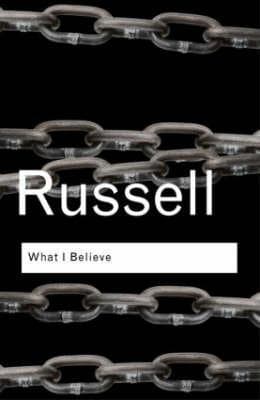
Core Idea
- Difficulty
- Medium
- Read it if
- You are interested in a foundational text of secular humanism, want to understand Bertrand Russell's personal philosophy on life, morality, and religion, or seek a concise argument for finding meaning in an indifferent universe.
- Skip it if
- You are looking for a detailed philosophical treatise, prefer spiritual or religious perspectives on life's meaning, or dislike direct challenges to traditional religious dogma.
Key Takeaways from What I Believe
Cosmic Indifference, Human Meaning
The universe cares not for our values, yet we must create them.
Russell says the universe has no purpose or design. It is a cold, indifferent space run by scientific laws, not divine will. This scientific view, far from being a reason for sadness, frees humanity from dogma and allows us to make meaning through our own values and actions. He argues that accepting the universe's indifference is necessary for true intellectual honesty and moral independence. Our hopes and fears are human ideas, projected onto a reality that does not change. This view encourages us to define our own good and evil instead of seeking outside validation or cosmic justice.
“The universe is what it is, not what we might wish it to be.”
In the book: Russell's entire essay is built upon a scientific and empirical understanding of the universe, rejecting supernatural explanations for natural phenomena and the origin of life and consciousness.
Try this: Embrace a worldview where personal and societal values are self-constructed rather than divinely ordained. Focus on creating a just and compassionate society based on human reason and empathy, rather than waiting for cosmic intervention or adhering to ancient prohibitions. Cultivate intellectual courage to face uncomfortable truths about existence.
Related ideas: atheism, cosmic-indifference, humanism, existentialism
The Pillars of a Good Life
Impulse, reason, and an unshakeable will to happiness define human flourishing.
Russell describes a good life that balances natural desires with reason. He points out two main human drives: love, which includes affection, creativity, and the wish for connection, and knowledge, which is the search for understanding and truth. The 'good life' is not strict or only intellectual; it is rich with these elements. It means accepting our natural abilities for joy and connection, while also using critical thought to understand the world, solve problems, and avoid harmful superstitions. This balance prevents both uncontrolled impulsiveness and dry intellectualism, leading to a fulfilling life and real contribution.
“The good life is one inspired by love and guided by knowledge.”
In the book: Russell explicitly states that 'what I mean by a good life is a happy life' and elaborates on the importance of both 'love' (in its broadest sense, including benevolence and creative impulse) and 'knowledge' (rational understanding and scientific inquiry) as its twin foundations.
Try this: Actively cultivate relationships and engage in creative pursuits that bring joy and connection (love). Simultaneously, commit to lifelong learning, critical thinking, and a fact-based understanding of the world (knowledge). Seek to integrate these two forces in daily decisions and long-term goals.
Related ideas: ethics, happiness, reason, empathy
Religion as a Hindrance
Superstition and fear, not virtue, are the true legacies of organized religion.
Russell criticizes organized religion directly, seeing it as a barrier to human progress, reason, and true morality. He argues that religious ideas, especially those promising eternal reward or punishment, come from fear—fear of the unknown, death, and life itself. This fear, in turn, creates superstition, intolerance, and cruelty, as shown by historical persecutions and strict rules. He believes that morality from divine command is flawed because it values obedience over real compassion and understanding. True goodness, for Russell, comes from human empathy and rational thought, not from the threat of hell or the promise of heaven.
“Fear is the main source of superstition, and one of the main sources of cruelty. To conquer fear is the beginning of wisdom.”
In the book: Russell cites the historical record of religious persecution and the suppression of scientific inquiry as direct consequences of religious dogma and fear-mongering. His later work, 'Why I Am Not a Christian,' expands on these arguments.
Try this: Approach ethical dilemmas and societal issues through a lens of human reason and empathy, rather than deferring to religious texts or authority. Actively challenge dogmatic thinking and superstition wherever it appears, advocating for evidence-based reasoning and critical inquiry in all aspects of life.
Related ideas: anti-clericalism, superstition, dogma, secularism
The Power of Human Impulse
Natural drives, when guided by reason, are forces for good, not evil.
Russell challenges the religious idea that human desires are sinful or need to be suppressed. Instead, he sees natural drives—like the desire for love, creative expression, and intellectual curiosity—as basic parts of a fulfilling life. When these desires are expressed healthily and guided by reason, they become strong forces for individual happiness and societal good. Repressing them, often under the guise of religious morality, causes unhappiness, frustration, and a lesser existence. The goal is not to remove them but to manage and direct these energies toward positive ends, supporting a strong human experience.
“I think that the good life is the happy life. I do not mean that if you are good you will be happy; I mean that if you are happy you will be good.”
In the book: Russell discusses the impulses of 'love' and 'knowledge' as primary drivers of human happiness and fulfillment, contrasting this with ascetic or repressive moral systems.
Try this: Identify and nurture your core human impulses for connection, creativity, and understanding. Rather than suppressing 'undesirable' feelings, explore their origins and seek healthy, constructive outlets, always applying reason to ensure they align with broader ethical principles and do not harm others. Prioritize joy and fulfillment as indicators of a well-lived life.
Related ideas: hedonism, psychology, self-actualization, rationalism
Knowledge as the Liberator
Scientific understanding dispels fear and paves the way for a rational society.
For Russell, knowledge, especially scientific knowledge, is not just academic but a tool for human freedom. It frees people from ignorance, superstition, and baseless fears that religious and political powers have used throughout history. By understanding the natural world through observation and reason, humanity can break down myths, question dogma, and find solutions to real problems. This dedication to knowledge forms the foundation of a progressive society, allowing for informed choices, promoting intellectual honesty, and leading to a more humane and rational way of living. It replaces blind faith with verifiable truth.
“The pursuit of knowledge, especially scientific knowledge, is one of the chief means by which men can escape from the tyranny of fear and superstition.”
In the book: Russell consistently champions the scientific method and empirical evidence throughout the essay, implicitly contrasting it with faith-based explanations for the universe and human experience.
Try this: Commit to a lifelong pursuit of knowledge, particularly in scientific and critical thinking disciplines. Question assumptions, seek evidence, and be willing to revise your beliefs in light of new information. Support education and scientific research as fundamental pillars of a free and prosperous society.
Related ideas: epistemology, scientific-method, empiricism, critical-thinking
No Afterlife, Just This Life
The rejection of immortality places ultimate value on present existence.
Russell clearly rejects the idea of personal immortality or an afterlife. This rejection is not about nihilism but a strong confirmation of the value and urgency of the present life. If this life is all we have, then it is most important to live it fully, ethically, and with purpose. The focus shifts from getting rewards in a future life to making the most of our limited time, helping others, and finding joy and meaning now. This view frees people from the worries and moral compromises often linked to seeking eternal salvation, encouraging a more grounded and responsible way of living.
“I cannot believe in the immortality of the soul, nor, therefore, in a personal God.”
In the book: Russell explicitly states his disbelief in the immortality of the soul as a core tenet of his philosophy, which naturally entails a focus on earthly life.
Try this: Shift focus from future spiritual rewards to maximizing your positive impact and personal fulfillment in the present. Engage deeply with the world, cultivate meaningful relationships, and pursue passions with the understanding that this is your only guaranteed existence. Practice gratitude for the finite gift of life.
Related ideas: mortality, secular-humanism, carpe-diem, meaning-of-life
Morality Without God
Ethics are a human construct, born from empathy and societal needs.
Russell firmly states that morality does not need divine commands or supernatural rules. Instead, ethical principles come from human nature, specifically from our ability to empathize and our rational understanding of what helps individual and group well-being. Actions are 'good' if they promote happiness, lessen suffering, and help society flourish, and 'bad' if they do the opposite. This human-centered morality is more flexible, adaptable, and ultimately more humane than strict, divinely-imposed rules, which often cause intolerance and cruelty. It encourages active and compassionate engagement with the world, driven by a desire for a better human experience, not fear of eternal damnation.
“The good life is one inspired by love and guided by knowledge.”
In the book: Russell's entire essay implicitly and explicitly argues for a morality based on human experience and reason, rather than divine decree, particularly in his discussion of what constitutes the 'good life.'
Try this: Develop your moral compass based on rational consideration of consequences and genuine empathy for others, rather than relying on external religious authority. Engage in critical ethical reasoning, always asking how actions impact human welfare and happiness. Advocate for policies and behaviors that promote universal well-being.
Related ideas: secular-ethics, utilitarianism, humanitarianism, moral-philosophy
The Quest for Happiness
Happiness is attainable through harmonious impulse and rational action.
For Russell, happiness is not a quick pleasure but a lasting state achieved through a balanced and rational approach to life. It comes from combining our natural desires (like love, creativity, and curiosity) with the guidance of reason. Importantly, this happiness does not rely on illusion or wishful thinking; it requires an honest acceptance of the universe's indifference and our own death. By letting go of superstitious fears and embracing a scientific worldview, people can develop a strong inner life and engage positively with the world. True happiness, then, is an active pursuit, built on knowledge, compassion, and a realistic understanding of our place in the cosmos.
“The secret of happiness is to face the fact that the world is horrible, horrible, horrible.”
In the book: Russell defines the 'good life' as the 'happy life,' and dedicates much of the essay to explaining the components necessary for achieving this, including the proper channeling of impulse and the guidance of knowledge.
Try this: Consciously work to balance your emotional and intellectual life, ensuring your passions are informed by reason and your reason is enlivened by genuine human feeling. Seek joy in intellectual discovery and meaningful connections. Cultivate a resilient mindset that accepts reality without succumbing to despair, finding purpose within your own life.
Related ideas: eudaimonia, well-being, rational-happiness, positive-philosophy
Freedom from Taboo
Unshackling from ancient prohibitions allows for genuine moral progress.
Russell supports freedom from the irrational rules and bans that often mark religious and traditional moral systems. He argues that many such rules, especially concerning sex and pleasure, are not based on rational thoughts of harm or benefit, but on old fears, ignorance, or a desire for control. These rules suppress natural human expression, cause unnecessary suffering, and hinder true moral development. By rejecting these baseless restrictions, society can move toward a more humane and rational ethical system, one that values individual freedom, mutual respect, and the pursuit of happiness, rather than following arbitrary commands. This freedom allows for a more honest and complete view of human nature.
“The moral codes of religions are often based on ancient superstitions and taboos, rather than on a rational assessment of human welfare.”
In the book: Russell's critique of religious morality and his emphasis on human impulse and knowledge implicitly challenge the validity of many traditional moral taboos.
Try this: Critically examine societal norms and personal beliefs, questioning whether they are based on reason, empathy, and evidence, or merely on inherited traditions and unfounded prohibitions. Advocate for individual freedom and autonomy in areas where no demonstrable harm is caused to others. Challenge moral hypocrisy and irrational judgment.
Related ideas: sexual-freedom, social-liberalism, autonomy, enlightenment
The Imperative of Love
Benevolence and affection are the highest human virtues.
Despite his image as a cold rationalist, Russell values 'love' greatly as a basic part of the good life. This 'love' is not just romantic; it includes a wide range of kind feelings: affection, compassion, creative drive, and a general wish for others' well-being. He argues that this ability to connect and empathize is essential for both individual happiness and building a humane society. Without it, knowledge can become sterile and power destructive. Love provides the emotional energy and moral direction that stops reason from becoming only a tool for self-interest, ensuring that our intellectual pursuits ultimately serve the greater good of humanity.
“The good life is one inspired by love and guided by knowledge.”
In the book: Russell explicitly states 'love' as one of the two foundational pillars of the good life, alongside 'knowledge,' throughout the essay.
Try this: Actively cultivate empathy and compassion in your interactions. Seek to understand and alleviate the suffering of others. Engage in creative and collaborative endeavors that foster connection and mutual benefit. Prioritize kindness and generosity in your personal and public life, recognizing their fundamental role in human flourishing.
Related ideas: altruism, compassion, social-cohesion, benevolence
What I Believe Quotes
“I cannot therefore accept the Christian doctrine that a man cannot be happy if he is wicked. That doctrine is a consoling one for the virtuous, but it is not true.”
“The good life is one inspired by love and guided by knowledge.”
“Every man, of course, is limited by his mortality, and if he is to be happy he must learn to live with this limitation.”
“I do not pretend to be able to prove that there is no God. I equally cannot prove that there are no Greek gods.”
“The greatest happiness of the greatest number is a maxim which has been much criticized, but it is one which, if properly understood, contains a large measure of truth.”
“It is not by believing in a future life that we can best prepare for it, but by living as we ought to live in this life.”
“The universe may have a purpose, but if so, it is hidden from us.”
“To be happy, a man must be able to forget himself, and to live in an impersonal way.”
“Man is a part of nature, not a power external to it.”
“The world needs a philosophy, or a religion, which will not seek to make men feel that they are worms, but will give them courage.”
“Happiness is not a gift of the gods, but a conquest.”
“It is not only what we do, but also what we think, that determines what we are.”
“Science can tell us how to achieve certain ends, but it cannot tell us what ends to choose.”
“The fundamental cause of trouble in the world today is that the stupid are cocksure while the intelligent are full of doubt.”
Quiz
10 questions on the main ideas. Each answer comes with a short explanation.
Question 1
In 'What I Believe,' Russell argues that the universe is fundamentally governed by which of the following?
- A benevolent divine will
- Blind physical forces
- An inherent moral order
- The collective consciousness of humanity
Show answer
B. Blind physical forces Russell explicitly states in 'What I Believe' that the universe, and all life within it, is the product of 'blind physical forces,' rejecting any notion of divine intervention or purpose.
Question 2
Russell defines the 'good life' primarily as one inspired by which two sentiments?
- Faith and obedience
- Love and knowledge
- Power and wealth
- Tradition and duty
Show answer
B. Love and knowledge Russell's 'What I Believe' famously posits that the good life is one inspired by love and guided by knowledge, emphasizing the importance of both emotional connection and rational understanding.
Question 3
What is Russell's stance on the existence of a personal God, as articulated in 'What I Believe'?
- He believes in a deistic God who created the universe but does not intervene.
- He finds the concept of a personal God to be illogical and unsupported by evidence.
- He accepts the possibility of a personal God but sees no practical implications.
- He argues for a pantheistic God immanent in nature.
Show answer
B. He finds the concept of a personal God to be illogical and unsupported by evidence. 'What I Believe' is a foundational text for Russell's atheism, where he explicitly rejects the concept of a personal God, deeming it to be without rational basis and often harmful.
Question 4
Russell critiques traditional morality for often being based on what, rather than on reason and human well-being?
- Democratic consensus
- Superstition and fear
- Economic necessity
- Aesthetic principles
Show answer
B. Superstition and fear In 'What I Believe,' Russell frequently criticizes traditional moral systems for deriving from fear, superstition, and ancient dogma rather than from a rational assessment of what promotes human happiness and reduces suffering.
Question 5
What role does Russell assign to science in shaping human beliefs and values?
- Science is useful for technological advancement but irrelevant to ethics.
- Science provides the factual basis upon which rational beliefs and a more enlightened morality can be built.
- Science is inherently limited and cannot address fundamental questions of meaning.
- Science should be subservient to religious doctrine in matters of truth.
Show answer
B. Science provides the factual basis upon which rational beliefs and a more enlightened morality can be built. Russell champions science as the primary tool for acquiring knowledge and understanding the world. He believes that a scientific outlook is crucial for dismantling superstitious beliefs and for constructing a more rational and humane ethical framework.
Question 6
Regarding the concept of 'sin,' Russell argues it should be replaced by what alternative concept?
- Divine judgment
- Mistakes or harmful actions that cause suffering
- Cultural taboos
- Personal weaknesses
Show answer
B. Mistakes or harmful actions that cause suffering Russell seeks to demystify moral failings, arguing that the concept of 'sin' with its religious connotations should be replaced by a more pragmatic understanding of actions that cause harm or suffering, which can be addressed through knowledge and compassion.
Question 7
Russell contends that fear is a primary source of what in human society?
- Artistic inspiration
- Religion, cruelty, and war
- Economic progress
- Philosophical inquiry
Show answer
B. Religion, cruelty, and war A central theme in 'What I Believe' is Russell's argument that fear—fear of the unknown, of death, of divine wrath—is a fundamental driver of irrational beliefs, including much of religion, and contributes significantly to human cruelty and conflict.
Question 8
Russell's essay 'What I Believe' was used as evidence in a 1940 court case to declare him unfit to teach college-level philosophy. What was the specific nature of the court's finding against him?
- He was found guilty of plagiarism.
- He was deemed morally unfit due to his controversial views on religion and morality.
- He was found to lack the necessary academic credentials.
- He was accused of political subversion.
Show answer
B. He was deemed morally unfit due to his controversial views on religion and morality. As noted in the book description, 'What I Believe' was indeed used in a 1940 court case where Russell was declared 'morally unfit' to teach philosophy, specifically due to the 'controversial, contentious and - to the religious - downright blasphemous' ideas expressed within it.
Question 9
How does Russell propose humanity should confront the inevitability of death and the apparent meaninglessness of a universe without divine purpose?
- By seeking comfort in traditional religious doctrines.
- By embracing a stoic acceptance and finding meaning in human relationships and pursuits.
- By denying the reality of death through spiritual transcendence.
- By focusing solely on scientific immortality.
Show answer
B. By embracing a stoic acceptance and finding meaning in human relationships and pursuits. Russell advocates for a courageous and rational acceptance of death as a natural endpoint. He suggests that meaning is to be found not in external divine purpose, but in the love we share, the knowledge we acquire, and the contributions we make to human well-being during our finite lives.
Question 10
Russell's 'What I Believe' argues that the primary impediment to human progress and happiness is not a lack of resources or intelligence, but rather:
- Insufficient technological advancement.
- Irrationality, superstition, and malevolent passions.
- Overpopulation and environmental degradation.
- Lack of strong governmental leadership.
Show answer
B. Irrationality, superstition, and malevolent passions. A core argument throughout 'What I Believe' is that humanity's greatest obstacles are internal: the persistence of irrational beliefs, superstitions, and destructive emotions like hatred and fear, which prevent us from applying our intelligence to solve real-world problems and achieve collective happiness.
What I Believe FAQ
What is the main argument of Bertrand Russell's 'What I Believe'?
'What I Believe' outlines Bertrand Russell's personal philosophy, emphasizing a scientific and rational worldview devoid of supernatural beliefs. He discusses his views on ethics, happiness, and the universe, advocating for reason and empirical evidence over religious dogma.
Does 'What I Believe' argue against the existence of God?
Yes, 'What I Believe' is a strong articulation of Russell's atheism, presenting arguments against traditional religious beliefs and the existence of God. He posits that there is no logical or empirical basis for such beliefs, advocating for a purely humanistic approach to morality and purpose.
What is Russell's view on morality and ethics in 'What I Believe'?
Russell argues for a secular, humanistic basis for morality in 'What I Believe,' asserting that ethics should stem from human needs, compassion, and the pursuit of collective well-being rather than divine command. He believes that a good life is achievable through reason and empathy, independent of religious doctrines.
How does 'What I Believe' differ from 'Why I Am Not a Christian'?
While both works express Russell's atheism, 'What I Believe' offers a broader, more comprehensive exposition of his entire philosophical outlook, covering ethics, politics, and the universe. 'Why I Am Not a Christian' focuses more specifically on critiques of Christian doctrines and the historical figure of Christ.
What role did 'What I Believe' play in the 1940 court case against Russell?
'What I Believe' was used as key evidence in a 1940 court case where Russell was deemed unfit to teach philosophy at City College of New York due to his controversial, non-theistic views. The court considered his expressed beliefs, particularly on marriage and religion, to be morally objectionable.
Is 'What I Believe' suitable for someone new to Russell's philosophy?
Yes, 'What I Believe' is widely considered an excellent concise introduction to Bertrand Russell's thought, offering a clear and direct summary of his core philosophical positions across various domains. Its brevity and directness make it accessible to new readers.
What are Russell's thoughts on the purpose of human life in this book?
In 'What I Believe,' Russell suggests that the purpose of human life is not divinely ordained but is found in human endeavors, such as the pursuit of knowledge, love, and the alleviation of suffering. He emphasizes creating meaning through rational action and compassion within a finite existence.
Does 'What I Believe' address the topic of science and its relation to belief?
Yes, Russell strongly advocates for a scientific approach to understanding the world in 'What I Believe,' arguing that beliefs should be based on empirical evidence and rational inquiry. He sees science as the most reliable path to knowledge, contrasting it with faith-based systems.
About the author
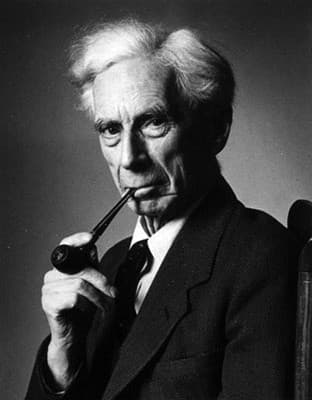
Bertrand Russell was a Nobel Prize-winning philosopher, logician, and social critic. A prolific writer, his works spanned logic, epistemology, metaphysics, ethics, and political philosophy. Notable books include 'The Problems of Philosophy,' 'A History of Western Philosophy,' and 'The Conquest of Happiness.' His contributions significantly influenced analytic philosophy and mathematics.
Similar books
- Sapiens: A Brief History of Humankind
Yuval Noah Harari
4.4 (502k) average on GoodreadsPsychologyExplores human meaning-making and societal constructs from a broad, secular perspective.
- Man's Search for Meaning
Viktor E. Frankl
4.4 (401k) average on GoodreadsBiographyWhile both Russell and Frankl grapple with the question of human meaning in a seemingly indifferent or even hostile world, their approaches diverge significantly. Russell, in "What I Believe," emphasizes meaning derived from rational thought, empirical knowledge, and the pursuit of a good life through love and happiness, free from religious dogma. He sees meaning as something humanity creates. Frankl, drawing from his experiences in concentration camps, posits that meaning is something to be discovered through responsibility, suffering, and the unique purpose each individual has in life. Frankl's work is more existential and psychologically focused, often suggesting a spiritual dimension to meaning, even if not explicitly religious, whereas Russell's is firmly rooted in a materialist, rationalist framework. Russell's focus is on what we should believe, while Frankl's is on how meaning emerges even in the direst circumstances.
- The God Delusion
Richard Dawkins
3.9 (231k) average on GoodreadsPsychologyBoth Russell's "What I Believe" and Dawkins' "The God Delusion" are powerful critiques of religion and strong arguments for a secular worldview. However, their tone and primary focus differ. Russell's book, while critical of religion as a hindrance, is ultimately constructive, outlining what he believes constitutes a good life and a meaningful existence without God. It's an exposition of a positive secular philosophy. Dawkins, conversely, is more explicitly polemical and focuses heavily on discrediting the existence of God through scientific and logical arguments, alongside highlighting the negative societal impacts of religion. While Russell aims to present an alternative framework for meaning, Dawkins is more engaged in a direct intellectual battle against religious belief itself. Russell's work is more philosophical and ethical, while Dawkins' is more scientific and argumentative.
- 1984
George Orwell
4.2 (3.1M) average on GoodreadsPoliticsIn a future where surveillance and thought control are absolute, a man's search for truth clashes with the Party, showing that hope can be a form of rebellion.
- Animal Farm
George Orwell
4.0 (2.7M) average on GoodreadsPoliticsA farm animals' rebellion against humans turns into a pig-led dictatorship, showing how power corrupts and revolutionary ideals are betrayed.
- Freakonomics: A Rogue Economist Explores the Hidden Side of Everything
Steven D. Levitt
4.0 (709k) average on GoodreadsBusinessThis book uses economic principles to reveal the surprising incentives behind everything from drug dealing and real estate to cheating teachers and the decline of crime.





Enjoyed the summary?
A summary gives you the shape of the book. The book itself has the detail, the examples and the voice.
Find What I Believe on AmazonAs an Amazon Associate, BookBrief earns from qualifying purchases. How we're funded