
Estimated read time: 6 min read
One Sentence Summary
A persuasive defense of the relevance and accuracy of Karl Marx's ideas in today's world.
Table of Contents
Introduction
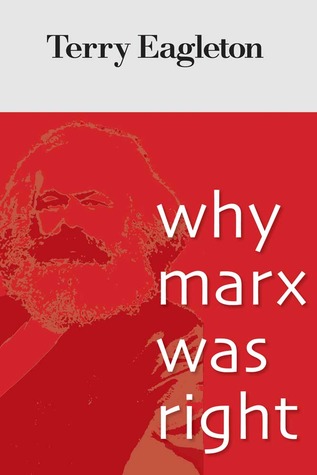
In "Why Marx Was Right," Terry Eagleton offers a compelling defense of Karl Marx's ideas and their continued relevance in today's world. This thought-provoking book challenges common misconceptions about Marx and his theories, providing a clear and accessible analysis of his key arguments. Eagleton argues that Marx's critiques of capitalism, class struggle, and societal inequality are not only valid but also crucial in understanding and addressing the social, economic, and political challenges of our time.
Brief Synopsis
"Why Marx Was Right" provides a comprehensive overview of Marx's ideas, exploring their historical context and examining their applicability to contemporary issues. Eagleton begins by setting the stage, delving into the political and economic climate in which Marx developed his theories. He then proceeds to dissect Marx's key concepts and arguments, such as the labor theory of value, historical materialism, and the inevitability of class struggle.
Throughout the book, Eagleton explores various aspects of Marx's thought, including his analysis of capitalism's contradictions and the alienation it engenders. He also addresses common criticisms of Marx, such as the idea that his theories led to totalitarian regimes or that they are no longer relevant in the modern world. Eagleton counters these objections, highlighting the enduring significance of Marx's insights into the nature of capitalism and the possibilities for a more just society.
Main Characters
| Character | Description |
|---|---|
| Karl Marx | A philosopher, economist, and political theorist who developed the foundations of Marxism. |
| Friedrich Engels | Marx's collaborator and co-author, who played a crucial role in developing and propagating Marxist ideas. |
Summary of Story Points
Chapter 1: Marx's Vision of History
Eagleton begins by examining Marx's conception of history, arguing that it is fundamentally different from traditional historical narratives. Marx views history as a series of class struggles shaped by economic forces, rather than a linear progression guided by ideas or individuals. This materialist understanding of history forms the basis of Marx's analysis of capitalism.
Chapter 2: Marx's Theory of Human Nature
Contrary to popular belief, Marx does not see human nature as fixed or unchangeable. Eagleton explores Marx's understanding of human nature as socially constructed, emphasizing the transformative potential of collective action and the possibility of creating a more egalitarian society.
Chapter 3: Marx's Theory of Alienation
Marx argues that capitalism alienates individuals from their labor, themselves, and their fellow human beings. Eagleton explains Marx's concept of alienation and its implications for understanding the dehumanizing effects of capitalism. He also addresses criticisms that Marx's theory of alienation overlooks the benefits of capitalist production.
Chapter 4: Marx's Theory of Exploitation
In this chapter, Eagleton explores Marx's analysis of exploitation under capitalism. He elucidates Marx's labor theory of value, which asserts that the value of a commodity is determined by the socially necessary labor time required to produce it. Eagleton also examines Marx's critique of the capitalist mode of production and the extraction of surplus value from workers.
Chapter 5: Marx's Views on Class Struggle
Marx argues that class struggle is inherent to capitalist societies and that it is the primary driver of historical change. Eagleton discusses Marx's understanding of class dynamics, the formation of a revolutionary proletariat, and the potential for a classless society.
Chapter 6: Marx's Critique of Capitalism
Eagleton delves into Marx's scathing critique of capitalism, highlighting its contradictions, instabilities, and inherent inequalities. He explores Marx's analysis of capital accumulation, crises, and the commodification of labor power.
Chapter 7: Marx's Legacy and Relevance Today
In the final chapter, Eagleton addresses the criticisms and misconceptions surrounding Marx's legacy. He argues that Marx's ideas remain indispensable in navigating contemporary issues such as economic inequality, environmental degradation, and the erosion of workers' rights. Eagleton contends that Marx's vision of a society based on cooperation, equality, and democratic control over resources is as relevant today as ever.
Main Events
- Marx and Engels publish "The Communist Manifesto," outlining their vision of a communist society and calling for the overthrow of the capitalist system.
- Marx's analysis of historical materialism and class struggle becomes the foundation of his magnum opus, "Capital."
- Marx's ideas gain traction among workers' movements and socialist organizations across Europe.
- The Russian Revolution of 1917 leads to the establishment of the first communist state, which claims to be building a society based on Marx's principles.
- The global spread of capitalism and the rise of neoliberalism challenge the relevance of Marx's ideas.
- The 2008 financial crisis and subsequent economic inequalities spark renewed interest in Marx's critique of capitalism.
Themes and Insights
- The critique of capitalism: Marx's analysis exposes the exploitative and alienating nature of capitalism, highlighting its contradictions and class divisions.
- Historical materialism: Marx's conception of history as driven by economic forces and class struggle offers an alternative framework for understanding societal change.
- Human nature and social transformation: Marx challenges essentialist notions of human nature, emphasizing the potential for individuals to shape society collectively.
- Class struggle and revolution: Marx argues that the working class has the potential to overthrow capitalism through revolutionary action and create a more just society.
- Relevance in the modern world: Eagleton argues that Marx's ideas remain relevant in addressing contemporary issues such as economic inequality, ecological crises, and the erosion of workers' rights.
Reader's Takeaway
"Why Marx Was Right" encourages readers to critically engage with Marx's ideas and consider their continued relevance in today's world. Eagleton skillfully challenges misconceptions surrounding Marx, providing a nuanced and accessible exploration of his key arguments. This book urges readers to question the status quo, confront the injustices of capitalism, and envision alternative paths toward a more equitable and sustainable society.
Conclusion
In "Why Marx Was Right," Terry Eagleton presents a persuasive case for the ongoing significance of Marx's ideas. By debunking common misconceptions and analyzing Marx's key concepts, Eagleton highlights the enduring relevance of Marx's critique of capitalism, class struggle, and societal inequality. This book serves as an essential resource for anyone seeking a deeper understanding of Marx's theories and their potential implications for contemporary social and political struggles.
Why Marx Was Right FAQ
Who is the author of 'Why Marx Was Right'?
The author of 'Why Marx Was Right' is Terry Eagleton.
What is the main topic of the book?
The main topic of the book is a defense and exploration of the ideas of Karl Marx.
Is this book an introduction to Marxism?
Yes, 'Why Marx Was Right' serves as an introduction to the key concepts and arguments of Marxism.
Does the book provide counterarguments to criticisms of Marx?
Yes, the book addresses common criticisms of Marx and provides counterarguments to defend his ideas.
What are some of the topics covered in the book?
The book covers various topics including capitalism, class struggle, historical materialism, alienation, and the relevance of Marx's ideas today.
Is this book suitable for readers with no prior knowledge of Marxism?
Yes, 'Why Marx Was Right' is accessible to readers with no prior knowledge of Marxism as it provides a clear and engaging introduction to the subject.
Does the author provide historical examples to support the arguments?
Yes, Terry Eagleton uses historical examples throughout the book to illustrate and support the arguments he presents.
Does the book discuss the influence of Marx's ideas on contemporary politics?
Yes, 'Why Marx Was Right' explores the influence of Marx's ideas on contemporary politics and examines their relevance in today's world.
Is this book suitable for academic study?
Yes, 'Why Marx Was Right' is suitable for academic study as it provides a comprehensive analysis of Marx's ideas and their significance.
Does the book offer a balanced view of Marx's ideas?
While the book is a defense of Marx's ideas, Terry Eagleton presents a balanced view by acknowledging criticisms and addressing them in his arguments.