

Synopsis
Covers the whole plot, including the ending.
- Difficulty
- Medium
- Pacing
- Moderate
- Mood
- Dark, Thought-provoking, Intense, Epic
- Read it if
- You enjoy epic stories spanning centuries, exploring themes of power, control, immortality, and the complex dynamics of abusive relationships within a unique blend of fantasy and science fiction.
- Skip it if
- You prefer fast-paced action or shy away from stories with morally ambiguous characters and themes of trauma and subjugation.
Wild Seed Plot Summary
Covers the whole plot, including the ending.
The First Encounter: Doro and Anyanwu in Africa
The story begins in 17th-century Africa. Doro, an immortal being who has lived for millennia by possessing human bodies until they die, meets Anyanwu, a woman with extraordinary power. Anyanwu is a shapeshifter who can heal herself and others, change her form, and live for centuries without changing bodies. Doro, intrigued and alarmed by her abilities, approaches her village. He tests her, discovering her strength and resilience, including her ability to absorb bullets. Doro has never met anyone like her. He decides she is too valuable to kill or leave behind. He manipulates her, convincing her to come with him to the New World, promising a life free from the cycle of birth and death she has observed.
A Forced Journey and a New Beginning
Under Doro's influence, Anyanwu leaves her home and family to travel with him. Doro constantly seeks and cultivates other latent psychics, or 'seed,' among humanity. He sees Anyanwu as the ultimate prize for his breeding experiments. During their journey across the Atlantic, Doro repeatedly asserts his dominance, at times forcing Anyanwu into sexual acts, though she resists and challenges him. They arrive in the New World, where Doro establishes a secluded community for his psychic 'children' in a place called Wheatley. Anyanwu learns about this new world and the various individuals Doro has gathered; many have abilities but are subservient to Doro.
Life in Wheatley and the Birth of Isaac
In Wheatley, Anyanwu feels trapped in Doro's world. She observes his methods, which include forced breeding, manipulation, and the killing of those who displease him or whose powers become dangerous. Anyanwu, despite her own power, feels constrained and disgusted by Doro's cruelty and disregard for human life. She forms a bond with some of Doro's 'children,' particularly Isaac, who is blind but has strong psychic abilities. Doro, wanting to propagate his line, eventually forces Anyanwu to bear children with him. Their first son, Isaac, is born with immense, uncontrollable powers that manifest as destructive energy bursts, leading to a tragic existence for the child.
Isaac's Tragic Life and Anyanwu's Grief
Isaac's life is one of constant pain and destruction. His uncontrolled energy bursts accidentally harm those around him and himself. Doro cannot cure Isaac, only contain him. Anyanwu is heartbroken by her son's suffering and tries to help him, often at great personal cost. Isaac's condition causes constant tension and grief between Anyanwu and Doro. Isaac's powers eventually overwhelm him, leading to his death. This loss deeply affects Anyanwu, strengthening her hatred for Doro's callousness and his willingness to sacrifice individuals for his genetic experiments. She blames Doro for Isaac's suffering and death, further solidifying her resolve to resist his control.
The Growth of the Community and Anyanwu's Influence
As decades turn into centuries, Anyanwu stays with Doro, constantly challenging his methods and morality. She becomes a matriarch and healer within the community, using her shapeshifting and healing abilities to help Doro's 'children.' Many of them suffer from the strange and often dangerous manifestations of their powers. While Doro continues his breeding programs, Anyanwu offers compassion and care, often mediating between Doro and his terrified subjects. She forms deep relationships with many of Doro's descendants, effectively becoming their protector. Her presence changes the dynamic of Doro's community, bringing a measure of humanity that Doro, in his ancient and detached state, often lacks or suppresses.
The American Revolution and Shifting Dynamics
The story moves through historical periods, including the American Revolution. During this time, the community faces external threats and internal strife. Anyanwu, tired of Doro's control and his genetic agenda, tries to leave him. She travels and experiences life outside his direct influence, but Doro, watchful and possessive, eventually tracks her down. Their reunion is tense; Anyanwu demands more autonomy and respect. Doro, though still dominant, begins to acknowledge her power and unique position, recognizing that he needs her for the stability and continuation of his 'seed' experiments. This period marks a subtle shift in their power dynamic, with Anyanwu gaining a stronger, though still contested, voice.
A New Threat: The Discovery of a Powerful Empath
As time continues, Doro and Anyanwu encounter a new type of psychic 'seed' – a powerful empath. This individual can feel and amplify the emotions of others, which is both a gift and a curse. Doro, always seeking to understand and control new abilities, finds this empath intriguing and potentially dangerous. The empath's abilities, if uncontrolled, could devastate Doro's community or Doro himself, as Doro's constant body-jumping makes him vulnerable to certain psychic attacks. Anyanwu, with her understanding of human nature, recognizes the empath's potential for both good and harm. She tries to guide Doro, advocating for a more compassionate approach than Doro's usual ruthless methods.
Confrontation and Doro's Vulnerability
The encounter with the empath ends in a critical confrontation where Doro is in a precarious position. The empath's uncontrolled abilities, or a deliberate act, cause Doro significant distress and threaten his current host body. This rare moment of vulnerability shows Doro's dependence on Anyanwu. Despite his power, Doro needs Anyanwu's healing and protective abilities to survive this psychic attack. This event further shifts the balance of power between them. Doro is forced to admit, even if implicitly, that Anyanwu is not just a tool for his experiments but an essential partner, perhaps his only true equal.
The Enduring Struggle for Control
Over centuries, the dynamic between Doro and Anyanwu remains a complex dance of power, love, and resentment. Anyanwu constantly pushes back against Doro's absolute authority, especially regarding the fate of their shared descendants. She works to protect them from Doro's brutal instincts and to encourage their individual growth, rather than seeing them as just genetic material. She often acts as a mother figure, healer, and moral compass for the community, contrasting Doro's cold, calculating approach. Her resistance is not always overt rebellion but often a stubborn refusal to conform to his will, subtly shaping the direction of his 'seed' and ensuring humanity within his evolving species.
A Precarious Partnership
By the end of the narrative, Doro and Anyanwu have a complex and almost symbiotic relationship. They are bound by their shared immortality, unique powers, and countless descendants. Doro, despite his ancient nature, has changed because of Anyanwu's presence, learning patience and even affection, though his ruthlessness remains. Anyanwu, while still resenting Doro's control and cruelty, has accepted their intertwined destiny, recognizing that she is the only one who can truly challenge and temper him. Their partnership, born of force and sustained by a strange blend of necessity and connection, continues as they navigate the evolving world and the future of their unique species.
Principal Figures
Doro
Antagonist/Protagonist
An ancient, body-jumping entity who seeks to breed a new race of psychics.
Doro is an immortal being, millennia old, who exists by possessing and burning through human bodies. He is a disembodied consciousness, a predatory spirit who has cultivated a vast 'family' of psychically gifted humans over centuries, breeding them to create a new, more powerful species. He is ruthless, manipulative, and detached from conventional human morality, viewing individuals as tools for his grand genetic experiment. His primary motivation is the survival and advancement of his unique lineage, and he will kill without hesitation to achieve his goals or eliminate perceived threats. He is fascinated by power and uniqueness, which is why Anyanwu becomes so central to his plans.
Relationships: Anyanwu (forced partner, lover, adversary, mother of his children); Isaac (son, genetic experiment); The 'Seed' (progeny, subjects, genetic experiments)
Anyanwu
Protagonist
A powerful African shapeshifter, healer, and immortal, forced into Doro's breeding program.
Anyanwu is an ancient, powerful shapeshifter from 17th-century Africa. She can change her form at will, heal herself and others, and possesses immense strength and resilience. She is deeply connected to nature and traditional African spiritual beliefs. Anyanwu values life, family, and community, and she possesses a strong moral compass that often clashes with Doro's nihilistic view. She is initially captured and coerced by Doro but consistently resists his control, fighting for her autonomy and the well-being of their descendants. She is a compassionate figure, often acting as a protector and healer for Doro's other 'children.'
Relationships: Doro (captor, forced partner, lover, father of her children, adversary); Isaac (son, deeply loved and mourned); Thomas (son); Mary (daughter)
Isaac
Supporting
Doro and Anyanwu's first son, born with uncontrollable, destructive psychic powers.
Isaac is the first son born to Doro and Anyanwu. He is blind and possesses immense, uncontrollable psychic powers that manifest as destructive energy bursts. His existence is one of constant pain and suffering, as his powers inadvertently harm those around him and himself. Doro sees him as a valuable, albeit flawed, experiment, while Anyanwu loves him deeply and grieves his suffering. Isaac's tragic life and death become a significant point of conflict and sorrow between his parents, highlighting the brutal consequences of Doro's genetic ambition.
Relationships: Doro (father, genetic experimenter); Anyanwu (mother, source of comfort and love)
Thomas
Supporting
One of Doro and Anyanwu's sons, a more stable and intelligent psychic.
Thomas is one of Doro and Anyanwu's subsequent children, representing a more successful outcome of Doro's breeding experiments compared to Isaac. He possesses significant psychic abilities, including telepathy and precognition, but unlike Isaac, his powers are more controlled and less destructive. Thomas is intelligent and serves as a bridge between Doro's ancient knowledge and the developing community. He is one of the many 'children' Anyanwu nurtures and protects, and he often acts as an observer and sometimes an advisor within the community.
Relationships: Doro (father); Anyanwu (mother); Mary (sister)
Mary
Supporting
One of Doro and Anyanwu's daughters, a powerful and sometimes troublesome psychic.
Mary is another daughter of Doro and Anyanwu. She is a powerful psychic, often described as volatile and difficult. Her abilities are strong, but her temperament makes her a challenging member of the community. She embodies some of the dangers and unpredictability inherent in Doro's genetic experiments. Anyanwu often has to intervene to manage Mary's behavior and protect her from Doro's harsher judgments, showcasing Anyanwu's maternal protectiveness over her children, even the difficult ones.
Relationships: Doro (father); Anyanwu (mother); Thomas (brother)
Nweke
Mentioned
Anyanwu's original husband in Africa, representing her past life.
Nweke is Anyanwu's husband in her original village in Africa. He represents the life and family Anyanwu is forced to leave behind when Doro takes her. He is a traditional African man, unaware of Anyanwu's true nature as a shapeshifter and immortal. His existence underscores the profound loss and displacement Anyanwu experiences at Doro's hands, anchoring her to a past she can never fully reclaim.
Relationships: Anyanwu (husband); Doro (rival/threat (unbeknownst to him))
The Empath
Supporting
A powerful psychic discovered later in the timeline, whose abilities challenge Doro.
The Empath is a powerful psychic discovered by Doro and Anyanwu centuries after their initial encounter. This individual possesses the ability to intensely feel and project emotions, which can be both overwhelming and dangerous. The Empath represents a new evolutionary step in Doro's 'seed' and poses a unique challenge to Doro's control, as their abilities can directly affect Doro's fragile, body-jumping existence. The Empath's presence forces Doro to confront his own vulnerabilities and further highlights Anyanwu's crucial role in mediating and understanding these new powers.
Relationships: Doro (experimenter/threat); Anyanwu (protector/guide)
Joseph
Supporting
One of Doro's early 'children,' a telepath who provides information.
Joseph is one of Doro's earlier 'children' and a telepath. He is part of the established community in Wheatley and serves as a source of information and a loyal, if somewhat fearful, subject of Doro. He represents the typical psychic Doro cultivates – useful, powerful in their own right, but ultimately subservient to Doro's will. Anyanwu often interacts with him, using her compassion to understand his fears and experiences within Doro's system.
Themes & Insights
Power and Control
The central theme is power and control, seen in Doro's dominance over his psychic 'seed' and Anyanwu's struggle for autonomy. Doro uses his ancient knowledge, immortality, and willingness to kill to control individuals and shape their evolution. Anyanwu, despite her great personal power, is initially subjugated, but she consistently resists, asserting her will and protecting those Doro exploits. The theme explores the moral implications of unchecked power and the desire for freedom and self-determination.
“He always killed them when he tired of them or when they became dangerous to his current plans. He was a god, a monster, a murderer. And she was his property.”
Identity and Self-Discovery
Both Doro and Anyanwu deal with their identities as ancient, powerful beings interacting with transient humanity. Anyanwu, forced from her African culture, must create a new identity within Doro's community. She questions her role as a mother, healer, and captive. She tries to maintain her sense of self against Doro's attempts to mold her. Doro seeks to define himself through his 'seed,' trying to create a legacy and purpose that goes beyond his predatory existence. The novel explores how identity is shaped by relationships, power dynamics, and the passage of long amounts of time.
“She was not human, not truly, but she was more human than Doro would ever be.”
Survival and Evolution
Doro's millennia-long project is the survival and evolution of a new species of psychically gifted humans. He is a geneticist, driven to create a stronger, more resilient 'seed' that can endure. This theme examines the ethics of forced evolution, the sacrifices made for species survival, and the definition of 'fitness.' Anyanwu is also a survivor, adapting to new environments and enduring Doro's cruelty, ensuring the survival of her children and, indirectly, tempering Doro's species.
“He was a gardener, cultivating humanity for his harvest. And he would prune away the weak, the useless, the dangerous.”
Love, Family, and Loss
Despite the harsh, often violent setting, love, family, and loss are explored. Anyanwu's love for her children, especially Isaac, is a powerful force, contrasting sharply with Doro's detached, utilitarian view of his offspring. The novel shows Anyanwu's grief from losing her original family and the tragic death of Isaac. It looks at the complex, often painful, bonds formed within Doro's unusual 'family,' where affection and loyalty exist alongside fear and resentment. These human emotions persist even across vast spans of time and power differences.
“She loved them, these strange children of hers, even the ones who feared her, even the ones who feared Doro more.”
Immortality and Time
The novel explores the implications of immortality for Doro and Anyanwu. Their long lifespans let them witness centuries of human history, from 17th-century Africa to later periods in the New World. This perspective shapes their understanding of humanity, power, and morality. Doro's ancient existence has made him detached and ruthless, while Anyanwu, though ancient, keeps a connection to human empathy. The theme shows how time can both harden and refine, and how an extended lifespan makes one re-evaluate what truly matters.
“Centuries had passed, but in Doro's mind, they were merely moments, steps in his endless journey.”
Plot Devices & Literary Techniques
Body Jumping (Doro's Immortality)
Doro's method of achieving immortality and exerting control.
Doro's unique form of immortality, where his consciousness inhabits and eventually burns out human bodies, is a central plot device. It allows him to exist across millennia, experience different eras, and maintain his detached, predatory nature. This ability is the source of his power and fear, as it makes him virtually unkillable in a conventional sense, but also exposes his vulnerability to certain psychic attacks, as his true form is a disembodied spirit. It directly drives his need for a 'seed' to house his consciousness and his fascination with Anyanwu's ability to maintain a single body for centuries.
Shapeshifting (Anyanwu's Power)
Anyanwu's primary ability, symbolizing her adaptability and connection to nature.
Anyanwu's ability to shapeshift is a crucial plot device, defining her character and her interactions. It allows her to heal, defend herself, and adapt to various situations. Her ability to change form reflects her deep connection to the natural world and her resilience. It also makes her uniquely valuable to Doro, as her ability to maintain a single body for centuries and heal herself contrasts sharply with his body-jumping. Her shapeshifting is a symbol of her freedom and defiance, even when she is physically constrained by Doro.
Forced Breeding Program
Doro's centuries-long project to create a new psychic species.
Doro's systematic and often brutal forced breeding program is the driving force behind much of the narrative. It is the reason he gathers psychics, the source of conflict between him and Anyanwu, and the means by which he attempts to achieve his evolutionary goals. This device explores themes of control, eugenics, and the ethics of manipulating life for a grander purpose. It creates a constant stream of new characters with unique powers, populating Doro's world and providing Anyanwu with individuals to protect and nurture.
The 'Seed' (Psychic Offspring)
The term for Doro's psychically gifted descendants, representing his legacy.
The 'seed' refers to Doro's psychically gifted offspring and descendants, who form the core of his evolving species. This device illustrates the results of Doro's experiments, showcasing a wide range of psychic abilities, from telepathy and precognition to more destructive powers. The 'seed' are both Doro's creations and Anyanwu's adopted family, creating a complex dynamic where Anyanwu often acts as a protector against their own creator. Their diverse abilities and struggles highlight the unpredictability and ethical dilemmas inherent in Doro's project.
Historical Backdrop (17th Century to American Revolution)
The use of historical periods to ground the fantastical elements and show the passage of time.
The novel uses various historical periods, starting in 17th-century Africa and moving through significant periods in the New World, including the American Revolution. This device grounds the fantastical elements of Doro and Anyanwu's immortality in a tangible timeline, allowing the reader to perceive the vast passage of time and its impact on the characters. The changing social and political landscapes provide context for the evolution of Doro's community and the challenges faced by his 'seed,' highlighting how their powers and existence interact with human history.
Wild Seed Quotes
“I am not a thing. I am not a person. I am a force.”
“You are a child of my blood, a child of my will, a child of my spirit. You are mine.”
“Survival is a kind of power. And it is a power you have.”
“He chose not to kill me. He chose to make me his. There is a difference.”
“To be able to create, to be able to give life, that is the greatest power.”
“He was a god, of sorts, a god of his own making, and he had made her, too.”
“Sometimes, the only way to survive is to pretend you are not yourself.”
“He wanted to see what she could do, what she would become, what she would make.”
“She was a seed, wild and strong, planted in alien soil.”
“Love was a luxury she could not afford, a weakness she could not permit herself.”
“He thought he owned her, but he did not own her spirit.”
“The price of immortality was loneliness, a terrible, endless loneliness.”
“She was learning to be a predator, because Doro had taught her that nothing else would do.”
“He harvested souls. She harvested life.”
Quiz
10 questions on the plot and the characters. Each answer comes with a short explanation.
Question 1
What is Doro's primary method of prolonging his existence?
- He consumes the life force of plants and animals.
- He regenerates his own body cells over centuries.
- He transfers his consciousness into new human hosts, killing the previous one.
- He uses a complex ritual involving blood sacrifice to extend his life.
Show answer
C. He transfers his consciousness into new human hosts, killing the previous one. Doro survives by moving his consciousness from one human body to another, a process that invariably results in the death of his previous host. This is a central aspect of his character and power.
Question 2
What unique ability does Anyanwu possess that makes her a threat to Doro's usual dominance?
- She can control minds and force others to do her bidding.
- She is a shapeshifter who can heal herself and others, making her difficult to kill.
- She has precognitive visions that allow her to anticipate Doro's moves.
- She can absorb Doro's psychic energy, weakening him with each encounter.
Show answer
B. She is a shapeshifter who can heal herself and others, making her difficult to kill. Anyanwu is a powerful shapeshifter with immense healing capabilities, able to absorb bullets and recover from injuries that would kill others. This resilience and her ability to heal others, even Doro's victims, challenge Doro's typical methods of control and survival.
Question 3
Where does Doro first encounter Anyanwu?
- In ancient Egypt, disguised as a pharaoh.
- In a burgeoning settlement in the New World.
- In an African village, where she lives among her people.
- During the transatlantic slave trade, aboard a ship.
Show answer
C. In an African village, where she lives among her people. Doro finds Anyanwu in an African village, where she has been living for centuries, nurturing her people and using her abilities to heal and protect them. This initial meeting sets the stage for their complex relationship.
Question 4
What is Doro's primary motivation for seeking out and collecting 'his children' (other sensitives)?
- He genuinely cares for their well-being and wants to protect them from persecution.
- He wants to understand and replicate their unique powers for his own use.
- He seeks to breed a powerful race of psychically gifted individuals to serve him.
- He believes they are a threat to his existence and must be kept under control.
Show answer
C. He seeks to breed a powerful race of psychically gifted individuals to serve him. Doro's long-term project is to breed a new race of psychically gifted individuals, 'his children,' who will possess powerful abilities. He orchestrates their pairings and lives, seeing them primarily as tools for his grand design.
Question 5
Why does Anyanwu initially agree to go with Doro to the New World, despite her apprehension?
- She is fascinated by Doro's power and wants to learn from him.
- Doro threatens to destroy her village and kill her people if she refuses.
- She is curious about the new lands and seeks adventure.
- She believes Doro can help her achieve true immortality.
Show answer
B. Doro threatens to destroy her village and kill her people if she refuses. Anyanwu initially resists Doro, but he forces her hand by threatening the lives of her village and the people she cares for. This coercion highlights Doro's ruthless nature and Anyanwu's deep protective instincts.
Question 6
What is the primary source of conflict between Doro and Anyanwu throughout their centuries together?
- Their differing opinions on the best way to govern their communities.
- Doro's disregard for human life and Anyanwu's deep compassion and respect for it.
- Their competition for the loyalty and affection of their shared 'children'.
- Anyanwu's desire for independence versus Doro's need for her shapeshifting abilities.
Show answer
B. Doro's disregard for human life and Anyanwu's deep compassion and respect for it. The core conflict stems from Doro's casual cruelty and willingness to sacrifice human lives for his long-term breeding project, contrasted with Anyanwu's profound empathy and desire to protect and heal, even those Doro considers expendable.
Question 7
How does Doro's 'eating' of a host body typically manifest to an observer?
- The host body rapidly ages and turns to dust.
- The host body suffers an immediate, violent seizure and death.
- The host body simply falls unconscious and slowly wastes away.
- The host body undergoes a visible physical transformation.
Show answer
B. The host body suffers an immediate, violent seizure and death. When Doro changes hosts, the previous body typically dies violently, often seizing or collapsing dramatically, as Doro's essence leaves it. This is a recurring and often disturbing detail in the book.
Question 8
What is the most significant consequence of Anyanwu's decision to leave Doro at one point, even temporarily?
- Doro's breeding experiments completely fail without her guidance.
- She encounters another powerful entity who challenges Doro's authority.
- She experiences profound loneliness and eventually chooses to return to him.
- Doro unleashes a devastating plague upon the land in retaliation.
Show answer
C. She experiences profound loneliness and eventually chooses to return to him. Despite her hatred for Doro's methods, Anyanwu finds that her immense age and unique nature make her profoundly lonely without him and 'their' children. Her return highlights the complex and almost codependent nature of their relationship, even amidst their conflict.
Question 9
How does Doro primarily control his 'children' and maintain his lineage throughout the centuries?
- Through direct psychic commands that compel obedience.
- By establishing a strict hierarchical religion with himself as a god-figure.
- By manipulating their lives, arranging marriages, and instilling fear and dependence.
- He implants devices in their brains that allow him to track and influence them.
Show answer
C. By manipulating their lives, arranging marriages, and instilling fear and dependence. Doro's control is primarily exercised through manipulation, fear, and carefully orchestrated lives. He arranges marriages, dictates where his 'children' live, and uses his immense power and long lifespan to ensure they serve his breeding goals, often instilling a deep, almost religious, fear in them.
Question 10
What is the ultimate, long-term goal that Doro is striving for with his breeding program?
- To create a perfect host body that he can inhabit permanently.
- To develop a new species of psychically powerful beings that can survive without hosts.
- To breed a race of beings with psychic abilities strong enough to allow him to transfer between hosts without killing them.
- To cultivate a society where his 'children' can live in peace and harmony, free from human persecution.
Show answer
C. To breed a race of beings with psychic abilities strong enough to allow him to transfer between hosts without killing them. Doro's ultimate desire is to evolve a line of his 'children' whose psychic abilities are so refined that he can transfer his consciousness into a new host without causing the host's death. This would free him from the constant cycle of murder and allow him to live more peacefully.
Wild Seed FAQ
What is Wild Seed about?
Wild Seed tells the story of Doro, an ancient, parasitic entity who possesses human bodies, and Anyanwu, an immortal African shapeshifter. Doro seeks to breed a powerful race of psychically gifted humans, and he encounters Anyanwu, who is thousands of years old and possesses incredible healing and shapeshifting abilities. Their intertwined fates span centuries, from West Africa to the antebellum American South, as they navigate a complex, often violent, relationship marked by control, defiance, and a shared, unnatural longevity.
Why should I read Wild Seed?
You should read Wild Seed for its unique blend of fantasy, historical fiction, and science fiction, exploring themes of power, subjugation, immortality, and the nature of humanity. Octavia E. Butler masterfully crafts a compelling narrative with deeply complex characters in Doro and Anyanwu, offering a thought-provoking examination of their abusive yet symbiotic relationship and the legacy they create across generations, all set against a backdrop of rich historical detail.
What is the background/setting of Wild Seed?
The story begins in 17th-century West Africa, primarily in the Igbo region, where Anyanwu lives as a revered elder. It then follows Doro and Anyanwu's journey across the Atlantic to the New World, particularly the American colonies and later the antebellum South. The settings are crucial, depicting the brutal realities of the slave trade and the establishment of Doro's hidden communities, providing a stark contrast to Anyanwu's natural, ancient existence.
What are the most memorable quotes?
Some memorable quotes include Anyanwu's defiant assertion, 'I am not your woman. I am myself.' and Doro's chilling declaration of his nature, 'I am a seed. I plant myself in people.' These lines encapsulate the core struggle between their wills and Doro's manipulative, parasitic existence, highlighting the power dynamics at play.
What writing style does the author use?
Octavia E. Butler employs a direct, unvarnished prose style that is both evocative and unsparing. Her writing is characterized by its psychological depth, unflinching portrayal of violence and power dynamics, and a keen focus on character interiority. She uses vivid imagery and a matter-of-fact tone to ground the fantastical elements in a gritty, realistic historical context.
What minor details add significant meaning?
The detail of Doro's 'children' often suffering from mental instability or physical deformities, referred to as 'seed-sickness,' subtly underscores the inherent violence and unnaturalness of his breeding program. It highlights that even his 'successful' creations are fundamentally broken by his interference, emphasizing the cost of his pursuit of power and a 'perfect' lineage.
What are some subtle foreshadowing moments?
Early descriptions of Doro's casual cruelty and Anyanwu's deep empathy subtly foreshadow the inevitable conflicts and the enduring, painful nature of their relationship. For instance, Doro's almost reflexive killing of hosts, even when not strictly necessary, hints at his fundamental lack of regard for individual life, predicting the many lives he will sacrifice in his quest and the suffering he will inflict upon Anyanwu.
What unexpected character connections exist?
An unexpected connection is how some of Doro's 'children' from different eras, despite their diverse appearances and abilities, share a collective, often genetic, memory or instinct, forming a complex, albeit often dysfunctional, extended family under Doro's control. This creates a vast, interconnected network bound by Doro's ancient lineage, leading to surprising familial ties across centuries and continents.
What are unspoken character motivations?
Doro's unspoken motivation, beyond simply breeding powerful psychics, is a profound and ancient loneliness. His constant search for new hosts and his desire to create a lasting lineage can be interpreted as an attempt to fill an existential void and find a form of companionship or legacy that transcends his own parasitic existence, even if his methods are horrific.
What psychological complexities do characters exhibit?
Anyanwu exhibits a profound psychological complexity in her struggle between her inherent desire for peace, love, and family, and her fierce will to survive and protect herself and her loved ones from Doro's tyranny. She continually grapples with the moral compromises she makes to coexist with Doro, showcasing incredible resilience alongside deep emotional scars.
What are the major emotional turning points?
A major emotional turning point is Anyanwu's decision to accept Doro's 'gifts' of children and her eventual, albeit reluctant, commitment to staying with him. This marks a shift from pure resistance to a complex negotiation of her own survival and desire for family, even within the confines of Doro's control, fundamentally changing her path and shaping generations.
How do relationship dynamics evolve?
The relationship dynamics between Doro and Anyanwu evolve from initial captivity and fierce resistance to a centuries-long, deeply abusive yet codependent partnership. While Doro always maintains ultimate power, Anyanwu gradually learns to exert her influence through subtle defiance and by becoming indispensable to his breeding program, transforming their dynamic into a twisted form of collaboration where she holds significant, if often painful, sway.
Which parts remain ambiguous or open-ended?
The ultimate fate and purpose of Doro's 'seed' children remain somewhat ambiguous. While he successfully creates a powerful line of psychics, the long-term societal impact and whether they truly achieve a collective destiny free from Doro's influence are left open to interpretation, paving the way for further exploration in the Patternist series.
What are controversial scenes or decisions?
One controversial decision is Anyanwu's repeated choice to stay with Doro, despite his horrific acts of violence, manipulation, and the forced breeding of her children. While explained by her deep love for her offspring and her profound loneliness, her continued presence alongside her oppressor sparks debate about agency, survival, and the nature of complicity.
Wild Seed ending explained: how it ends & what it means
Wild Seed ends with Doro and Anyanwu continuing their complex, centuries-long existence, having established a vast, interconnected family of psychically gifted individuals. Anyanwu, though still under Doro's thumb, has achieved a fragile peace and a measure of influence, having secured her children's safety and her own place within Doro's world. The ending signifies not a resolution, but an ongoing, evolving struggle for power and survival, setting the stage for the wider Patternist universe where their descendants will play crucial roles in humanity's future, forever shaped by their founders' twisted legacy.
About the author
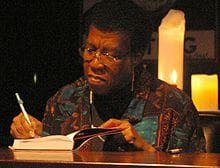
Octavia E. Butler was an American science fiction writer known for her exploration of complex themes such as race, gender, and identity. Her notable works include "Kindred," a time-travel narrative addressing slavery, and the "Patternist" series, which begins with "Mind of My Mind." Other significant titles in her catalog include "Parable of the Talents," "Wild Seed," "Adulthood Rites," and "Bloodchild and Other Stories."
Similar books
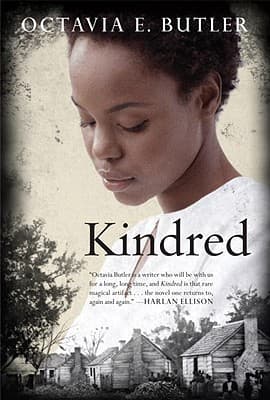
- Kindred
Octavia E. Butler
4.1 (5k) average on GoodreadsFantasyExplores complex power dynamics and historical settings with a speculative twist.
- The Immortalists
Chloe Benjamin
3.7 (152k) average on GoodreadsLiterary FictionDeals with themes of mortality, destiny, and the long-term impact of unique lives.
- American Gods
Neil Gaiman
4.1 (758k) average on GoodreadsFantasyFeatures ancient, powerful beings interacting with human society and mythology.
- Binti
Nnedi Okorafor
3.9 (47k) average on GoodreadsFantasyWhile both Wild Seed and Okorafor's Binti series are foundational to Afrofuturism and feature powerful African protagonists, Binti focuses more on cultural identity and belonging within a galactic context, with a more optimistic tone regarding interspecies communication and integration. Wild Seed, in contrast, delves into the darker, more visceral aspects of power, survival, and the enduring legacy of trauma, often presenting a more brutal and intimate struggle for autonomy.
- Harry Potter and the Sorcerer's Stone
J.K. Rowling
4.5 (7M) average on GoodreadsFantasyRescued from a miserable life under the stairs, an orphaned boy discovers he's a wizard destined for a magical school, where he uncovers a dangerous secret tied to the dark wizard who murdered his parents.
- The Hunger Games
Suzanne Collins
4.3 (6.4M) average on GoodreadsFantasyIn a future where children fight to the death on live television, Katniss Everdeen volunteers for the arena, turning a death sentence into a fight for survival and a spark of rebellion.




Enjoyed the summary?
A summary gives you the shape of the book. The book itself has the detail, the examples and the voice.
Find Wild Seed on AmazonAs an Amazon Associate, BookBrief earns from qualifying purchases. How we're funded