

Synopsis
Covers the whole plot, including the ending.
- Difficulty
- Medium
- Pacing
- Moderate
- Mood
- Thought-provoking, Poignant, Reflective, Somber, Witty
- Read it if
- You appreciate character-driven stories that explore themes of mortality, human connection, and the re-evaluation of life's priorities through a sharp, intellectual lens. Also if you enjoy plays that are both emotionally profound and intellectually stimulating.
- Skip it if
- You prefer fast-paced, action-oriented plots or are looking for a light, escapist read. This play deals with serious themes of illness and death, which may be difficult for some readers.
Wit Plot Summary
Covers the whole plot, including the ending.
The Diagnosis
The play starts with Dr. Vivian Bearing, a 50-year-old professor of 17th-century English poetry, speaking directly to the audience. She immediately announces her diagnosis of Stage IV metastatic ovarian cancer. With dry, intellectual humor, she describes the moment Dr. Harvey Kelekian, Chief of Medical Oncology, gave her the news. Vivian says her first reaction was analytical, focusing on the words and the doctor's clinical distance rather than the emotional impact. She agrees to an aggressive, experimental chemotherapy treatment, seeing it as a challenge to meet with her usual intellectual strictness. She thinks about her life of academic success, especially her deep study of John Donne's Holy Sonnets, and how this intellectual approach has shaped her response to her coming death.
Treatment Begins
Vivian begins her tough eight-cycle chemotherapy treatment. She describes the physical effects—nausea, hair loss, tiredness—with a distant, almost academic interest, often adding literary analysis, especially of John Donne's complex use of language and themes of death and salvation. She watches the medical staff, particularly Dr. Jason Posner, a former student of hers who is now a research fellow on her case. Jason is brilliant but just as distant, more interested in the cancer as a research subject than in Vivian as a person. Vivian remembers a past lecture where she analyzed Donne's 'Holy Sonnet VI,' focusing on its intellectual complexity over emotional meaning, which parallels her current situation.
Flashback: Professor Ashford's Influence
A flashback takes the audience to Vivian's graduate school days. As a promising but overly intellectual student, Vivian presents her analysis of Donne's 'Holy Sonnet X' ('Death be not proud') to her mentor, Professor E.M. Ashford. Vivian focuses on a text variation involving a semicolon, arguing for its academic importance. Professor Ashford, however, gently but firmly encourages Vivian to consider the poem's deeper emotional and spiritual meaning, specifically the idea of 'wit' as intelligence combined with feeling, and the simple beauty of a child's story. This scene shows where Vivian's intellectual strictness came from and her initial avoidance of emotional depth, a trait Professor Ashford tried to soften.
Jason's Research and Vivian's Decline
As Vivian's chemotherapy continues, her physical condition worsens dramatically. She becomes very weak, suffering from extreme pain, mouth sores, and incontinence. Jason Posner continues to visit her, mainly to collect data for his research on her cancer. His conversations with Vivian are almost entirely clinical, without empathy. He talks about the cell mechanisms of her disease with great excitement, often using complex medical terms that further distance Vivian. She notices his intellectual curiosity, recognizing a younger version of herself, but also feels the painful lack of human connection. Her thoughts on Donne's poetry continue, but they are now mixed with a growing awareness of her own death and isolation.
Susie Monahan's Compassion
Susie Monahan, Vivian's main nurse, acts as a contrast to the emotionally distant doctors. Susie provides practical care with real kindness and empathy. She helps Vivian manage her pain, offers her popsicles, and talks to her about simple, human things, rather than just her medical condition. Susie explains 'comfort care' versus aggressive treatment and helps Vivian understand her options as her condition becomes terminal. Vivian, at first resistant to such open displays of care, begins to appreciate Susie's warmth and humanity, recognizing it as something she has largely ignored in her own life. Susie represents the compassionate side of care that Vivian desperately needs.
The Code Status Discussion
Susie talks to Vivian about her 'code status' – whether she wants to be brought back to life if her heart stops. Vivian, at first confused by the medical terms, tries to apply her intellectual strictness to the decision. Susie patiently explains the harsh reality of CPR, stressing the chance of broken ribs and more suffering. Vivian eventually chooses 'Do Not Resuscitate' (DNR), a decision that shows her acceptance of her coming death and a desire for a peaceful end. This moment is a significant turning point, as Vivian moves from fighting her disease intellectually to accepting her death with a new sense of peace, guided by Susie's kind explanation.
Flashback: The Graduate Student's Plea
Another flashback shows Vivian's stern academic personality. A graduate student, crying and upset, asks Vivian for an extension on a paper because of a death in the family. Vivian, unsympathetic, lectures the student on the importance of deadlines and academic strictness, denying the extension. She dismisses the student's emotional distress, putting intellectual discipline above everything else. This memory serves as a painful self-reflection for Vivian, showing her past insensitivity and the intellectual arrogance that has defined her career. It highlights the theme of kindness versus intellectual achievement, a lesson she is now learning firsthand as a vulnerable patient.
Jason's Revelation and Vivian's Solitude
Jason visits Vivian and, in a rare personal moment, admits that he chose oncology because of his fascination with cell biology, but also because he admired Vivian's work on John Donne. He confesses that he took her class and that her intellect inspired him. However, even this admission is framed within an intellectual context, not an emotional one. Vivian is touched but also keenly aware of his continued emotional distance. She feels very alone, despite the presence of medical staff. She reflects on Donne's 'Holy Sonnet IX,' which deals with the soul's relationship with God, finding comfort in its intellectual structure while longing for a more human connection.
Professor Ashford's Visit
In a deeply moving scene, Professor E.M. Ashford, now very old, visits Vivian in her hospital room. Professor Ashford, who is physically frail herself, sits with Vivian and reads her a children's story, 'The Story of the Little Brown Bear,' which features a bear who simply wants to sleep. This simple act of kindness and the calming rhythm of the story bring Vivian immense comfort, a comfort she has rarely experienced. Professor Ashford's presence and the childlike innocence of the story contrast sharply with the intellectual battles Vivian has fought throughout her life and her illness, offering a moment of pure, unadulterated human connection and peace.
The Final Decline and Code Blue
Vivian's condition quickly worsens. She becomes unresponsive. Dr. Kelekian and Jason enter, and Jason, forgetting her DNR status, calls a 'Code Blue.' The medical team rushes in, preparing for resuscitation. Susie steps in, reminding them of Vivian's DNR order and physically stopping Jason from continuing. In her final moments, Vivian experiences a deep spiritual and emotional awakening, shedding her intellectual armor. She removes her hospital cap, showing her baldness, and takes off her gown, revealing her emaciated body. She embraces the vulnerability and humanity she had long denied, finding a kind of grace in her complete surrender.
Vivian's Death and Transcendance
As Susie prevents the resuscitation, Vivian dies peacefully. In a final, symbolic act, Vivian rises from her bed, shedding her physical form and all earthly attachments. She walks towards a bright light, naked and unburdened, experiencing a moment of pure transcendence. Her final words to the audience, delivered earlier, echo the themes of simplicity and kindness. The play ends with Vivian's peaceful departure, leaving the audience to think about the true meaning of life, death, and human connection, and the ultimate victory of grace and simplicity over intellectual pride and isolation. Her journey from intellectual superiority to humble acceptance is complete.
Wit Characters
Vivian Bearing, Ph.D.
Protagonist
A brilliant, emotionally detached professor of 17th-century English literature.
Vivian Bearing is a 50-year-old professor specializing in John Donne's Holy Sonnets. She is highly intelligent, articulate, and fiercely independent, valuing intellectual rigor above all else. Her life has been defined by academic achievement and a meticulous, analytical approach to language and thought, which she initially applies to her cancer diagnosis. She is emotionally reserved, even cold, having prioritized her career over personal relationships. Her wit is sharp and often used as a defense mechanism or a way to maintain control.
Relationships: Dr. Harvey Kelekian (Her primary oncologist; professional and detached.); Dr. Jason Posner (Her former student and research fellow; shares her intellectual drive but lacks empathy.); Susie Monahan (Her primary nurse; provides compassionate care and human connection.); Professor E.M. Ashford (Her graduate school mentor; provided early guidance and a counterpoint to Vivian's intellectualism.)
Dr. Harvey Kelekian
Supporting
Vivian's Chief of Medical Oncology, clinical and focused on research.
Dr. Kelekian is the head of the oncology department and Vivian's primary physician. He is highly intelligent and professionally competent but utterly devoid of bedside manner. His focus is on the scientific challenge of Vivian's cancer and the data it provides for research, rather than on her as a suffering individual. He speaks in complex medical jargon and treats Vivian as a case study, embodying the impersonal nature of advanced medical science.
Relationships: Vivian Bearing (Her treating physician; professional and emotionally distant.); Dr. Jason Posner (His research fellow; shares a similar scientific, detached approach.)
Dr. Jason Posner
Supporting
A former student of Vivian's, now a research fellow in oncology, mirroring her intellectual detachment.
Jason is a young, brilliant medical doctor and research fellow working under Dr. Kelekian. He was a student in Vivian's 17th-century poetry class and deeply admired her intellect. Like Vivian, he is intensely focused on intellectual pursuits – in his case, the intricacies of cancer cells and research. He is socially awkward and lacks empathy, treating Vivian more as a scientific specimen than a patient. He represents the potential for intellectual brilliance to overshadow human compassion.
Relationships: Vivian Bearing (His former professor and current patient; a source of intellectual inspiration but also an object of scientific study.); Dr. Harvey Kelekian (His superior and mentor in oncology; shares a similar research-driven approach.)
Susie Monahan, R.N.
Supporting
Vivian's compassionate and practical primary care nurse.
Susie is a registered nurse who provides most of Vivian's direct care. She is kind, empathetic, and pragmatic, serving as a stark contrast to the emotionally distant doctors. Susie focuses on Vivian's comfort and dignity, explaining complex medical procedures in simple terms and offering genuine human connection. She understands the emotional and physical suffering Vivian endures and advocates for her wishes, particularly regarding the DNR order. Susie represents the crucial human element of care.
Relationships: Vivian Bearing (Her primary nurse; provides direct care and emotional support.); Dr. Harvey Kelekian (Medical colleague; often challenges his detached approach.); Dr. Jason Posner (Medical colleague; often challenges his detached approach.)
Professor E.M. Ashford
Supporting
Vivian's wise and compassionate graduate school mentor.
Professor Ashford is Vivian's former graduate school professor and a distinguished scholar of John Donne. She is portrayed as intelligent but also deeply humane, having tried to instill in a young Vivian the importance of emotional understanding alongside intellectual rigor. In her later years, she is physically frail but retains her sharp mind and gentle spirit. Her visit to Vivian in the hospital provides a crucial moment of comfort and connection, reminding Vivian of the simple joys of life and storytelling.
Relationships: Vivian Bearing (Her former mentor; a source of early intellectual and moral guidance, and later, profound comfort.)
Wit Themes
The Conflict Between Intellect and Emotion
The play deeply explores the conflict between intellectual ability and emotional understanding. Vivian Bearing has spent her life on academic strictness, using her intellect to protect herself from vulnerability. Her analysis of John Donne's complex poetry, especially the tiny text details, shows this. However, her illness forces her to face the limits of pure intellect when dealing with suffering and death. The distant, clinical approach of Dr. Kelekian and Jason Posner mirrors Vivian's own past intellectual arrogance, showing how too much focus on the mind can lead to a deep lack of empathy and human connection. Vivian only finds true peace when she drops her intellectual defenses.
“It is not the time for... for wit. For poetry. Now is the time for simplicity. Now is the time for, dare I say it, kindness.”
Mortality and the Search for Meaning
At its heart, 'Wit' explores death and what makes life meaningful when facing it. Vivian's terminal cancer diagnosis makes her re-evaluate her life's achievements and what she considers important. At first, she faces death with intellectual analysis, much like Donne's Holy Sonnets. But as her body deteriorates, she grapples with the big questions of human existence and the fear of nothingness. The play suggests that real meaning is found not in academic awards or scientific discoveries, but in human connection, simple kindness, and accepting one's own vulnerability. Her journey toward a peaceful death is a search for a 'grace' that goes beyond earthly achievements.
“I thought being a professor was the only thing I could do. It was the only thing I was good at. Now I'm just… an object.”
The Importance of Human Connection and Kindness
This theme contrasts sharply with Vivian's initial intellectual isolation and the medical team's clinical distance. Susie Monahan, the kind nurse, shows pure kindness. Her simple actions—offering popsicles, clearly explaining medical procedures, and ensuring Vivian's comfort—become very important. Professor Ashford's visit, where she reads a children's book, provides the most touching example of the power of gentle human connection. These interactions highlight that in moments of extreme vulnerability, intellectual brilliance is less important than the comfort and dignity offered by real human empathy. Vivian's ultimate peace comes from embracing this connection.
“You know, I can't take this anymore. You're a human being.”
Language and Interpretation
As a scholar of John Donne, Vivian is very aware of the power and subtleties of language. The play itself is rich with literary references and self-aware comments on language. Vivian analyzes Donne's poetry, focusing on text variations and intellectual interpretations. However, the medical jargon used by Kelekian and Jason becomes another intellectual barrier, separating Vivian from her own condition. The play contrasts this academic and medical language with Susie's simple, direct language and the comforting, childlike language of the story Professor Ashford reads. This suggests that while language can analyze, it can also hide or simplify, and sometimes the simplest words convey the deepest meaning.
“It is not a dash. It is a colon. It is a semicolon. It is a very complicated punctuation mark.”
Plot Devices & Literary Techniques
Breaking the Fourth Wall
Vivian directly addresses the audience, providing narration and commentary.
Vivian Bearing frequently breaks the fourth wall, speaking directly to the audience throughout the play. This device serves multiple functions: it allows Vivian to narrate her own story, provide personal reflections, offer literary and medical explanations, and articulate her inner thoughts and feelings. It creates an intimate connection between Vivian and the audience, making them her confidantes. This direct address also underscores her intellectual control, even as her physical control diminishes, and allows for humor and pathos to coexist in her observations.
Flashbacks
Scenes from Vivian's past reveal her character development and past choices.
The play uses several flashbacks to illuminate Vivian's past. These include scenes with her graduate school mentor, Professor Ashford, and an interaction with a distraught student. These flashbacks are crucial for understanding Vivian's character arc, showing her as a young, ambitious scholar and later as a stern professor. They highlight her past intellectual arrogance and emotional detachment, providing context for her current struggles and making her eventual transformation more impactful. The juxtaposition of past and present underscores her journey of self-discovery.
Literary Allusion (John Donne's Holy Sonnets)
John Donne's poetry serves as a constant thematic and structural reference point.
John Donne's Holy Sonnets are central to the play, serving as a primary source of intellectual engagement for Vivian and a rich vein of thematic exploration. Vivian's academic life revolves around these poems, which grapple with themes of death, salvation, and the soul. Her interpretations of Donne's 'wit' and his confrontation of mortality parallel her own journey. The sonnets provide a framework for her intellectual processing of her illness, but ultimately, the play contrasts Donne's complex theological arguments with the simpler, more profound truths Vivian learns about human kindness and unconditional love.
Medical Jargon vs. Plain Language
The contrast in language highlights the differing perspectives of doctors and nurses.
The play deliberately contrasts the highly specialized and often impenetrable medical jargon used by Dr. Kelekian and Jason Posner with the plain, empathetic language of Susie Monahan. The doctors' language alienates Vivian and reduces her to a collection of symptoms and data points. Susie's language, however, is clear, compassionate, and focuses on Vivian's comfort and understanding. This linguistic divide underscores the theme of intellectual detachment versus human connection, and how communication style can either build or dismantle empathy and dignity in a medical setting.
Wit Quotes
“I can't go on. I will go on.”
“It is not my intention to give away the plot.”
“I am a professor of English literature, specializing in the Holy Sonnets of John Donne.”
“My treatment was highly successful.”
“There is no stage direction for how to play a patient with a life-threatening illness. There is no manual. I am a pioneer.”
“I'm a scholar. I'm a teacher. I am a person.”
“The play of the mind. The play of words. The play of life. The play of death.”
“It was a paper on a critical edition of John Donne's Holy Sonnets. I was reading the critical apparatus. I was in heaven.”
“I have been heavy with thee, and thou hast been heavy with me.”
“It is not the time for... for... for... small talk.”
“I would prefer to have some privacy, if you don't mind.”
“Oh, God. It is so humiliating.”
“I think I'm a little tired.”
“You were a student of mine, weren't you?”
Quiz
10 questions on the plot and the characters. Each answer comes with a short explanation.
Question 1
What is Vivian Bearing's profession?
- Oncologist
- Seventeenth-century poet
- Professor of English literature
- Medical researcher
Show answer
C. Professor of English literature Vivian Bearing is a renowned professor of English who specializes in the Holy Sonnets of John Donne.
Question 2
Which poet's works has Vivian Bearing spent years studying and teaching?
- William Shakespeare
- John Milton
- John Donne
- Andrew Marvell
Show answer
C. John Donne Vivian Bearing's academic focus has been on the intricate, difficult Holy Sonnets of the seventeenth-century poet John Donne.
Question 3
What type of cancer is Vivian Bearing diagnosed with at the beginning of the play?
- Lung cancer
- Advanced ovarian cancer
- Breast cancer
- Brain tumor
Show answer
B. Advanced ovarian cancer As the play begins, Vivian Bearing is diagnosed with advanced ovarian cancer.
Question 4
What is Vivian's initial approach to her illness and treatment?
- She seeks emotional support from family and friends.
- She adopts a highly rational and methodical approach, similar to her academic career.
- She becomes immediately overwhelmed and gives up hope.
- She tries alternative medicine exclusively.
Show answer
B. She adopts a highly rational and methodical approach, similar to her academic career. Vivian, confident of her ability to stay in control, brings to her illness the same intensely rational and painstakingly methodical approach that has guided her stellar academic career.
Question 5
According to the playwright, Margaret Edson, what is the play primarily 'about'?
- Doctors and cancer
- The triumph of science over disease
- Kindness and compassion, despite showing arrogance and insensitivity.
- The pursuit of intellectual achievement above all else.
Show answer
C. Kindness and compassion, despite showing arrogance and insensitivity. Margaret Edson states, 'The play is not about doctors or even about cancer. It’s about kindness, but it shows arrogance. It’s about compassion, but it shows insensitivity.'
Question 6
What does Vivian begin to question as her disease and treatment progress?
- The validity of John Donne's poetry.
- The importance of her academic achievements.
- The single-minded values and standards that have always directed her.
- Her doctor's medical expertise.
Show answer
C. The single-minded values and standards that have always directed her. As her disease and its excruciatingly painful treatment inexorably progress, she begins to question the single-minded values and standards that have always directed her.
Question 7
What overarching human experience does the play explore through Vivian's journey?
- The pursuit of wealth
- The joy of academic success
- Mortality, and the vital importance of human relationships.
- The challenges of medical research.
Show answer
C. Mortality, and the vital importance of human relationships. The play examines what makes life worth living through its exploration of one of existence’s unifying experiences—mortality—while it also probes the vital importance of human relationships.
Question 8
Which of the following awards did 'Wit' NOT win, according to the provided text?
- Pulitzer Prize
- Tony Award
- Drama Desk Award
- New York Drama Critics Circle Award
Show answer
B. Tony Award The text lists the Pulitzer Prize, the New York Drama Critics Circle Award, the Drama Desk Award, the Outer Critics Circle Award, the Lucille Lortel Award, and the Oppenheimer Award, but not a Tony Award.
Question 9
What is the ultimate lesson the audience is intended to take away from the drama, concerning life and death?
- Death can be conquered by scientific advancement.
- Life's value is determined by intellectual achievements.
- While death is real and unavoidable, our lives are ours to cherish or throw away.
- Human relationships are secondary to academic pursuits.
Show answer
C. While death is real and unavoidable, our lives are ours to cherish or throw away. The audience takes away a keener sense that, while death is real and unavoidable, our lives are ours to cherish or throw away—a lesson that can be both uplifting and redemptive.
Question 10
How does Vivian's understanding of life evolve by the end of the play?
- She reaffirms her belief in the supremacy of intellectual rigor.
- She becomes solely focused on extending her life through any means possible.
- She comes to understand the aspects of life that make it truly worth living, beyond her previous academic focus.
- She develops a deep resentment towards her doctors and caregivers.
Show answer
C. She comes to understand the aspects of life that make it truly worth living, beyond her previous academic focus. She finally comes to understand the aspects of life that make it truly worth living, moving beyond her initial single-minded values.
Wit FAQ
What is the central premise of 'Wit'?
The play centers on Dr. Vivian Bearing, a brilliant but emotionally detached English professor specializing in John Donne's Holy Sonnets, who is diagnosed with stage IV metastatic ovarian cancer. It chronicles her journey through aggressive experimental chemotherapy, forcing her to confront her mortality and re-evaluate her life's priorities, particularly the balance between intellectual achievement and human connection.
Who is Vivian Bearing, and what is her academic background?
Vivian Bearing is a renowned professor of 17th-century English literature, specifically an expert on the metaphysical poet John Donne. Her academic life has been defined by rigorous intellectual pursuit, meticulous scholarship, and a demanding, often cold, approach to her students and colleagues.
What role do John Donne's Holy Sonnets play in the narrative?
Donne's Holy Sonnets, particularly his explorations of death, salvation, and the relationship between body and soul, serve as a constant thematic backdrop and a mirror to Vivian's own struggles. Her academic understanding of them is contrasted with her lived experience of mortality, revealing the limitations of purely intellectual engagement with profound human experiences.
Who are Dr. Harvey Kelekian and Jason Posner, and what is their relationship with Vivian?
Dr. Kelekian is the chief of oncology and Vivian's primary physician, overseeing her experimental treatment with a detached, clinical demeanor. Jason Posner is one of Kelekian's fellows, a former student of Vivian's, whose primary interest in her case is academic research into cancer, mirroring Vivian's own past intellectual detachment.
How does Susie Monahan, the nurse, differ from the doctors in her approach to Vivian?
Susie Monahan is a compassionate and empathetic oncology nurse who provides Vivian with genuine human kindness and practical comfort, contrasting sharply with the doctors' intellectual and clinical focus. She represents the human element of care, prioritizing Vivian's well-being and dignity over scientific data.
What is the significance of the repeated phrase 'It is not my intention to give away the plot'?
This phrase, spoken by Vivian directly to the audience, serves as a meta-theatrical device, highlighting her control over her narrative even in her weakened state. It also ironically underscores that despite her academic prowess, she cannot control the ultimate plot twist of her own death.
How does the play use Vivian's flashbacks to reveal her character development?
Flashbacks show Vivian's interactions with her mentor, Professor E. M. Ashford, and her students, revealing her past intellectual arrogance and emotional distance. These memories provide context for her current isolation and highlight the stark contrast between her youthful academic zeal and her later yearning for human connection.
What is the symbolism of the child's book, 'The Runaway Bunny,' read by Professor Ashford?
Professor Ashford reads 'The Runaway Bunny' to Vivian in a crucial flashback, symbolizing the simple, unconditional love and comfort Vivian lacked and now desperately needs. The book's theme of a mother's unending pursuit of her child contrasts with Vivian's solitary life and highlights the profound human need for connection beyond intellectual pursuits.
How does Vivian's use of language evolve throughout the play?
Initially, Vivian uses language as a tool for intellectual dominance and precise analysis, often deploying complex vocabulary and literary allusions. As her illness progresses, her language becomes simpler, more direct, and emotionally vulnerable, reflecting her shift from intellectual pride to a desire for basic human understanding and comfort.
Discuss Vivian's initial coping mechanism for her illness.
Vivian initially approaches her cancer with the same intellectual rigor and detached analytical framework she applies to literature. She sees it as a problem to be studied and understood, even referring to herself as a 'research subject,' rather than a personal crisis, attempting to maintain control through intellect.
How does Vivian's relationship with her body change as her disease progresses?
Vivian, who previously lived primarily in her intellect, becomes acutely aware of her physical body as it deteriorates under the ravages of cancer and chemotherapy. The intense pain and physical indignities force her to confront the physical reality of her existence, breaking down her intellectual defenses and connecting her to a more primal human experience.
What is the significance of Vivian's final act of stripping away her hospital gown?
This act symbolizes Vivian shedding all external trappings – her academic identity, her clothes, her pride – to reveal her raw, vulnerable, and ultimately human self. It represents her acceptance of her mortality and a final, unadorned embrace of her humanity before death.
Does Vivian find redemption or peace by the end of the play?
While she doesn't experience a miraculous cure, Vivian finds a profound sense of peace and understanding, particularly through Susie's kindness and Professor Ashford's earlier lesson on simplicity and human connection. She gains wisdom about what truly matters in life, moving beyond her intellectual arrogance to embrace compassion and vulnerability.
How does 'Wit' challenge the traditional view of intellectual achievement?
'Wit' critiques the singular pursuit of intellectual achievement when it comes at the expense of human connection and empathy. Vivian's journey suggests that while intellect is valuable, it is insufficient for navigating life's deepest challenges and that kindness and compassion ultimately hold greater significance.
What is the play's stance on the role of science and medicine?
The play portrays science and medicine as powerful but often dehumanizing forces. While acknowledging their ability to extend life and provide knowledge, it critiques their tendency to reduce patients to mere data points, highlighting the critical need for compassion and humanistic care alongside scientific rigor.
How does the play use humor despite its serious subject matter?
Vivian's sharp wit and dry humor, often directed at herself or the medical staff, serve as a coping mechanism and a way for her to maintain intellectual control. This dark humor provides moments of levity and underscores her intelligence, even as her physical condition deteriorates, making her more relatable.
What is the ultimate lesson Vivian learns about 'kindness' and 'insensitivity' as described by the playwright?
Vivian learns that her own arrogance and insensitivity, born from her intellectual focus, have isolated her. She comes to understand the profound importance of simple human kindness and compassion, recognizing that these qualities, exemplified by Susie, are far more valuable than any academic achievement in the face of mortality.
How does the play comment on the relationship between life and death?
The play emphasizes that understanding and accepting death is crucial for truly living. Vivian's confrontation with her mortality forces her to re-evaluate her life, ultimately concluding that human relationships and simple acts of kindness are what make life worth cherishing, rather than intellectual conquests or professional accolades.
About the author

Margaret Edson is an American playwright best known for her play "Wit," which explores themes of mortality and the human experience through the story of a professor diagnosed with cancer. The play received the Pulitzer Prize for Drama in 1999 and has been widely performed and studied. Edson's work often delves into complex emotional and philosophical issues.
Similar books
- The Fault in Our Stars
John Green
4.2 (3.6M) average on GoodreadsYoung AdultExplores themes of illness, mortality, and finding meaning in life, though 'Wit' is more academic and less romantic.
- A Man Called Ove
Fredrik Backman
4.4 (569k) average on GoodreadsFictionFeatures a curmudgeonly protagonist who undergoes a transformation through human connection, though 'Wit' is more focused on end-of-life reflection.
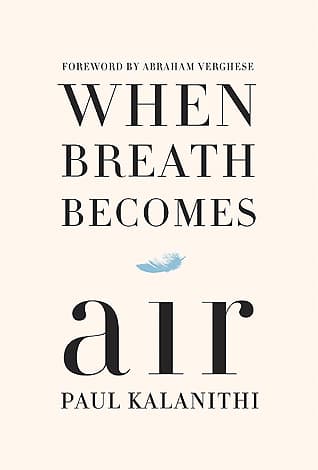
- When Breath Becomes Air
Paul Kalanithi
4.4 (415k) average on GoodreadsBiographyA non-fiction account by a doctor facing terminal illness, offering a similar perspective on mortality and the medical system.
- The Immortal Life of Henrietta Lacks
Rebecca Skloot
4.1 (587k) average on GoodreadsBiographyWhile Skloot's non-fiction work also critiques medical ethics and the dehumanization of patients, it does so through a historical and investigative lens, focusing on systemic issues and the exploitation of marginalized communities. Wit, conversely, offers a deeply personal, fictionalized account of a single patient's experience, using Vivian's intellectual prowess to frame the ethical questions. Wit is a direct, first-person dive into the patient's consciousness, whereas Skloot's book is an external examination of a historical wrong.
- My Sister's Keeper
Jodi Picoult
4.1 (1.1M) average on GoodreadsYoung AdultPicoult's novel, like Wit, explores medical ethics and family dynamics in the context of a severe illness. However, My Sister's Keeper focuses on the legal and moral complexities of genetic engineering and sibling relationships, often employing a more accessible, melodramatic narrative style with multiple perspectives. Wit is far more concentrated on the internal journey of the dying patient, using sophisticated literary and philosophical discourse. While both elicit emotional responses, Wit's intellectual rigor sets it apart from the more emotionally driven and plot-heavy narrative of Picoult's work.
- Nineteen Eighty-Four
George Orwell
4.2 (5.5M) average on GoodreadsFictionWinston Smith dreams of truth and rebellion in a world where Big Brother watches all, but he confronts the terrifying power of a regime that controls not just actions, but thoughts.





Enjoyed the summary?
A summary gives you the shape of the book. The book itself has the detail, the examples and the voice.
Find Wit on AmazonAs an Amazon Associate, BookBrief earns from qualifying purchases. How we're funded