
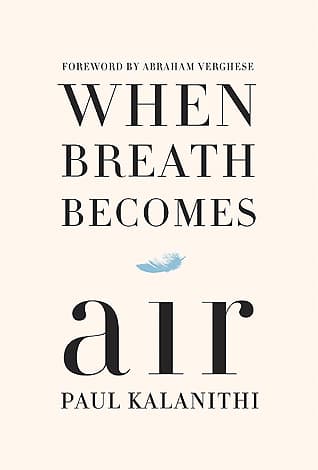
Core Idea
- Difficulty
- Medium
- Read it if
- You are interested in deeply personal reflections on mortality, the meaning of life, the doctor-patient dynamic, and finding purpose in the face of terminal illness.
- Skip it if
- You are looking for a lighthearted read, or are currently struggling with grief and prefer to avoid emotionally intense narratives about death and dying.
Key Takeaways from When Breath Becomes Air
Identity Beyond Profession
Illness forces a re-evaluation of who you are when your life's work is stripped away.
Kalanithi's story shows the shock of losing one's professional identity, especially when it is tied to purpose and self-worth. As a neurosurgeon, his work was a calling, a direct involvement with human life and death. His diagnosis didn't just end his ability to practice; it broke his idea of himself. This forced him to face the truth that identity, especially in modern society, often comes from achievement and profession. The memoir argues that true identity must be strong enough to exist without external roles, a key lesson for anyone facing major life changes or retirement.
“I had come to see my life as a physician as a moral commitment, an act of love. But now, it was just a job, and I couldn't do it. My identity as a doctor, as a surgeon, was gone. And I had no idea who I was without it.”
In the book: Kalanithi's struggle to find meaning and purpose after being unable to return to the operating room, leading him to question whether he was still 'Paul' without his surgeon's scrubs.
Try this: Actively cultivate aspects of your identity outside of your professional life—hobbies, relationships, personal values, and intellectual pursuits. Regularly reflect on what truly defines you beyond your job title or achievements.
Related ideas: identity-crisis, purpose-after-career, self-worth
The Doctor as Patient
Experiencing illness from the other side fundamentally changes one's perspective on medicine and empathy.
Kalanithi's position as both a trained neurosurgeon and a terminally ill patient offers insight into the medical system. He critiques the disconnect between doctor and patient, often a result of medical training that values objectivity over empathy. His experience shows how easily doctors can become insensitive to the human experience of illness, focusing on disease rather than the person. The book suggests that true healing requires doctors to not just treat illnesses but to engage with the patient's experience, fears, and hopes. This dual perspective highlights the need for compassion and understanding in medical practice, advocating for a more human approach to healthcare.
“As a doctor, I had been taught to be objective, to distance myself from the suffering of my patients. But as a patient, I was the suffering. And I realized that the distance I had cultivated was a barrier, not a shield.”
In the book: Kalanithi's frustration with doctors who treated his scans and symptoms rather than acknowledging his existential dread, and his appreciation for those who engaged with him as a person.
Try this: If you are a medical professional, actively practice empathy by imagining yourself in your patient's shoes. If you are a patient, advocate for yourself and seek out doctors who treat you as a whole person, not just a collection of symptoms.
Related ideas: doctor-patient-relationship, medical-empathy, humanistic-medicine
Confronting Mortality, Living Fully
Facing death can paradoxically illuminate what truly makes life meaningful.
The memoir is a meditation on death, seeing it not as an end, but as a way to understand life more deeply. Kalanithi struggles with the human challenge of accepting limits, at first seeing death as the ultimate defeat. However, his journey shows that awareness of limited time does not necessarily lead to despair, but can sharpen one's focus on what truly matters. He navigates the tension between planning for a future that might not happen and living authentically in the present. This challenges the modern avoidance of discussing death, arguing that acknowledging it is essential for a full life, allowing us to prioritize relationships, purpose, and genuine connection over fleeting achievements.
“I began to realize that coming face to face with my own mortality, in a sense, had changed nothing and everything. Seven words from Samuel Beckett began to repeat in my head: 'I can't go on. I'll go on.'”
In the book: Kalanithi's decision to have a child, Cady, despite his terminal diagnosis, viewing it as an act of hope and a commitment to life amidst impending death.
Try this: Engage in regular reflection on your values and priorities. Consider what you would do if you had a limited time frame, and then strive to incorporate those priorities into your daily life now. Don't wait for a crisis to live meaningfully.
Related ideas: mortality-awareness, meaning-of-life, carpe-diem
The Weight of Prognosis
Medical prognoses are not just data; they are deeply personal narratives that shape a patient's remaining life.
Kalanithi, as both a doctor who gave prognoses and a patient who received them, offers a nuanced view of their impact. He understands the scientific need to predict outcomes but also the devastating psychological weight these predictions carry. A prognosis is not just a clinical assessment; it is a story patients internalize, shaping their decisions about treatment, future plans, and how they see their remaining time. The book highlights doctors' ethical responsibility to deliver these predictions with sensitivity, acknowledging the human story behind the statistics. It is a reminder that while data is important, it must always be seen within the individual's unique life and hopes.
“The tricky part of illness is that, as a patient, you are not a statistic. You are a person. And a prognosis, no matter how accurate, is still just a prediction, not a decree.”
In the book: Kalanithi's internal debate about whether to pursue aggressive treatment or focus on quality of life, heavily influenced by the varying prognoses he received and his own medical understanding.
Try this: If you are a patient, understand that prognoses are probabilities, not certainties. Seek clarity, but also empower yourself to make choices aligned with your values. If you are a doctor, remember that your words carry immense weight; deliver prognoses with empathy and an understanding of their profound human impact.
Related ideas: medical-ethics, patient-autonomy, prognosis-impact
Love as a Sustaining Force
The unwavering support of loved ones provides essential strength in the face of terminal illness.
Amid medical complexities and existential crises, the memoir consistently shows the importance of human connection, especially family love. Paul's relationship with his wife, Lucy, is a central support, providing emotional support, shared purpose, and a reason to fight. Their decision to have a child, Cady, despite his terminal diagnosis, shows the power of love and hope. This highlights that while individual strength is vital, it often comes from strong relationships. Love, in this context, is not just an emotion but an active, sustaining force that provides comfort, meaning, and continuity when facing life's biggest challenges.
“My wife, Lucy, was my anchor, my confidante, my partner in crime. Her love was a constant, a force that held me together even when I felt like I was falling apart.”
In the book: Lucy's steadfast presence throughout Paul's illness, her sacrifices, and her unwavering commitment to their shared life and future, even as it became uncertain.
Try this: Actively nurture and prioritize your most important relationships. Invest time and effort into building strong bonds with loved ones, as these connections will be invaluable during times of adversity.
Related ideas: marital-support, family-strength, love-in-adversity
The Pursuit of Meaning Through Language
Literature and writing offer a unique pathway to understanding and articulating the human condition.
Kalanithi's background in literature and his passion for writing are central to his ability to process and express his experiences. He sees literature not just as an academic pursuit but as a tool for exploring life, death, and meaning. His memoir itself shows how language can turn personal suffering into universal insight. This highlights the value of the humanities in an increasingly scientific and technical world. It suggests that while science can explain 'how' we live and die, literature helps us understand 'why' and 'what it means,' offering ways to process complex emotions and existential dilemmas that medical science alone cannot address.
“I had gone to medical school to understand the body, but I had gone to literature to understand the soul.”
In the book: Kalanithi's extensive literary references throughout the book, his early academic pursuits in English literature, and his eventual decision to write his memoir as a way to find meaning in his illness.
Try this: Engage with literature, philosophy, and other humanities. Use writing as a tool for self-reflection and to process challenging experiences. Consider how storytelling can help you understand your own life and connect with others.
Related ideas: literature-and-meaning, humanities-value, writing-as-therapy
The Inevitable Sacrifice of Parenthood
Bringing new life into the world while facing one's own mortality is an act of profound hope and sacrifice.
The decision to have a child, Cady, despite Paul's terminal diagnosis, is perhaps the most poignant and courageous act in the memoir. It captures the paradox of life and death, hope and despair. This explores the emotional and ethical complexities of parenthood in such circumstances. It highlights the selfless love in bringing a child into the world, knowing you might not see them grow. Kalanithi struggles with the 'why' of it—why create a new life when your own is fading? His conclusion is that it is an act of faith, a continuation of hope, and a statement of the human spirit to create and nurture, even in the shadow of loss. It is a statement on the ultimate sacrifice and beauty of parental love.
“I had expected to be a father for thirty years. Now, I might be a father for thirty days. What was the point of bringing a child into the world if I couldn't be there to raise her?”
In the book: Paul and Lucy's difficult conversations and ultimate decision to conceive Cady, and Paul's later reflections on Cady's future and the meaning she brought to his final months.
Try this: Reflect on the legacy you wish to leave, whether through children, mentorship, or your contributions to the world. Embrace acts of creation and hope, even when faced with uncertainty.
Related ideas: parenthood-mortality, legacy-building, hope-in-grief
Redefining Success in the Face of Limitations
True success shifts from external achievement to the quality of one's remaining life and relationships.
Kalanithi's initial definition of success was based on his ambition to become a top neurosurgeon, a path of rigorous training, intellectual challenge, and saving lives. His illness forces a redefinition. When external markers of success—career advancement, professional awards, future plans—become impossible, he must find new ways to measure it. This explores the painful but ultimately freeing process of shifting from a future-oriented, achievement-driven model of success to one focused on presence, relationships, and the value of each remaining moment. It challenges the idea that success is only about external accomplishments, urging us to consider what truly makes a 'good life' when external achievements are no longer possible.
“Before, success meant achieving my surgical goals. Now, success was about living a meaningful day, connecting with my family, and finding a way to contribute, however small.”
In the book: His shift from desperately trying to return to surgery to finding fulfillment in writing, spending time with his family, and preparing for Cady's arrival.
Try this: Regularly evaluate your definition of success. Is it solely based on external achievements, or does it incorporate personal growth, meaningful relationships, and inner peace? Be prepared to redefine success as life circumstances change.
Related ideas: redefining-success, quality-of-life, presence-over-achievement
The Unspoken Burden of the Caregiver
Terminal illness places an immense and often invisible burden on the primary caregiver.
While the memoir is primarily Paul's story, it shows the overlooked burden on the primary caregiver, his wife, Lucy. She handles the emotional toll of seeing her husband decline, manages medical logistics, acts as his advocate, and grieves the future they had planned—all while trying to maintain some normalcy. This calls attention to the need to recognize and support caregivers, who often experience their own silent suffering and exhaustion. It emphasizes that illness affects the whole family, and the caregiver's well-being is important to the patient's experience and family's strength.
“Lucy bore the lion's share of the burden. She was my advocate, my nurse, my emotional support. And she did it all while grieving the future we had lost.”
In the book: Paul's descriptions of Lucy taking on increasing responsibilities, making difficult decisions, and coping with her own grief while remaining his steadfast support.
Try this: If you are a caregiver, seek out support systems and allow yourself to receive help. If you know a caregiver, offer specific, practical assistance and emotional support. Recognize that their needs are significant and often unspoken.
Related ideas: caregiver-burden, grief-support, family-resilience
When Breath Becomes Air Quotes
“I had come to see the world as a place of infinite complexity, its problems never simple, its solutions never perfect.”
“You can’t ever reach perfection, but you can believe in an arc of improvement that will always pull you upwards.”
“Science may provide the most accurate way to determine what is, but it offers no guidance on what should be.”
“Before my illness, I saw death as an intellectual concept. When it became a real, tangible possibility, it altered everything.”
“The secret to my success, if there is any, is that I have always been a hard worker. I have always pushed myself.”
“Human knowledge is never contained in a single brain.”
“What makes life meaningful enough to go on living?”
“Even if I'm not a surgeon, I can still be a doctor. Even if I'm not a doctor, I can still be a human being.”
“You can't ever reach perfection, but you can believe in an arc of improvement that will always pull you upwards.”
“I began to understand that the brain is no more than a meat puppet.”
“There is a gap between the patient's experience of illness and the doctor's understanding of it.”
“The fact of death is not what matters, but how we face it.”
“God, I hope I'm not a doctor who kills people.”
“I started to understand that when I was a surgeon, I was not just fixing brains; I was fixing people.”
Quiz
10 questions on the main ideas. Each answer comes with a short explanation.
Question 1
At what age was Paul Kalanithi diagnosed with stage IV lung cancer?
- 28
- 36
- 42
- 30
Show answer
B. 36 Paul Kalanithi was diagnosed with stage IV lung cancer at the age of thirty-six, just as he was nearing the completion of his neurosurgery training.
Question 2
Before his diagnosis, what was Kalanithi's primary professional role?
- Medical student
- Philosophy professor
- Neurosurgeon
- Oncologist
Show answer
C. Neurosurgeon The memoir describes Kalanithi's transformation from a medical student into a neurosurgeon at Stanford, working in the brain, before becoming a patient.
Question 3
What central question did Paul Kalanithi grapple with throughout his life and especially after his diagnosis, as stated in the book's description?
- How can one achieve financial success in medicine?
- What makes a life worth living?
- What is the most effective treatment for lung cancer?
- How does the brain process pain?
Show answer
B. What makes a life worth living? The core theme of the book, highlighted in the description, is Kalanithi's attempt to answer the question 'What makes a life worth living?'
Question 4
Kalanithi worked in neurosurgery at which prominent university?
- Harvard
- Yale
- Stanford
- Johns Hopkins
Show answer
C. Stanford The book explicitly mentions Kalanithi as a neurosurgeon at Stanford, working in the brain.
Question 5
The memoir describes Kalanithi's journey through three main phases. Which of the following accurately represents these phases?
- Medical student, neurosurgeon, father
- Naïve medical student, neurosurgeon, patient and new father
- Philosopher, doctor, writer
- Researcher, teacher, patient
Show answer
B. Naïve medical student, neurosurgeon, patient and new father The description details his transformation from a 'naïve medical student' into a 'neurosurgeon at Stanford' and finally into 'a patient and new father'.
Question 6
Paul Kalanithi died in what year, while still working on the book?
- 2014
- 2015
- 2016
- 2017
Show answer
B. 2015 The text states, 'Paul Kalanithi died in March 2015, while working on this book.'
Question 7
Which playwright's seven words did Kalanithi find repeating in his head after his diagnosis?
- William Shakespeare
- Samuel Beckett
- Arthur Miller
- Tennessee Williams
Show answer
B. Samuel Beckett Kalanithi wrote, 'Seven words from Samuel Beckett began to repeat in my head: 'I can't go on. I'll go on.''
Question 8
The book explores the concept of the future flattening out. What does Kalanithi mean by 'the future, no longer a ladder toward your goals in life, flattens out into a perpetual present'?
- He lost interest in career advancement and focused on daily tasks.
- His terminal illness removed the possibility of long-term planning and goal-setting, forcing him to live in the immediate moment.
- He decided to pursue a more relaxed lifestyle without ambitious future plans.
- He felt that medical progress had stalled, making future cures unlikely.
Show answer
B. His terminal illness removed the possibility of long-term planning and goal-setting, forcing him to live in the immediate moment. This phrase encapsulates the profound impact of a terminal diagnosis, where the traditional linear progression of life towards future goals is replaced by an indefinite, immediate present, devoid of a clear future trajectory.
Question 9
How did Kalanithi's perspective on mortality change after his diagnosis, as suggested by his own reflection?
- He became terrified of death and sought to avoid discussing it.
- He felt that confronting his mortality 'had changed nothing and everything' simultaneously.
- He believed his medical knowledge made him immune to the emotional impact of his diagnosis.
- He found that his medical training had fully prepared him for being a patient.
Show answer
B. He felt that confronting his mortality 'had changed nothing and everything' simultaneously. Kalanithi directly states, 'I began to realize that coming face to face with my own mortality, in a sense, had changed nothing and everything.' This reflects a complex, nuanced understanding of his situation.
Question 10
The memoir's description highlights Kalanithi's role as both a doctor and a patient. What unique insight does this duality offer to the reader?
- It demonstrates how doctors are better equipped to handle illness than laypeople.
- It provides a rare perspective on the doctor-patient relationship from both sides, enriching the understanding of illness, empathy, and mortality.
- It suggests that medical training is insufficient for dealing with personal tragedy.
- It focuses primarily on the technical aspects of neurosurgery and cancer treatment.
Show answer
B. It provides a rare perspective on the doctor-patient relationship from both sides, enriching the understanding of illness, empathy, and mortality. The description explicitly notes the book's reflection 'on the relationship between doctor and patient, from a brilliant writer who became both,' implying that this dual perspective is a key strength and offers unique insights into the human experience of illness.
When Breath Becomes Air FAQ
What is 'When Breath Becomes Air' about?
'When Breath Becomes Air' is a memoir by Paul Kalanithi, a neurosurgeon diagnosed with terminal lung cancer. It chronicles his journey from doctor to patient, exploring profound questions about life, death, meaning, and identity.
Does 'When Breath Becomes Air' offer hope despite its focus on death?
Yes, while confronting mortality head-on, the book is ultimately life-affirming. Kalanithi's reflections on what makes life meaningful, even in its brevity, offer a profound sense of hope and a guide for living fully.
What is the central question Paul Kalanithi explores in the book?
Kalanithi wrestles with the fundamental question: 'What makes a life worth living?' He explores this from multiple perspectives – as a medical student, a neurosurgeon, a patient, and a new father facing his own impending death.
How does 'When Breath Becomes Air' differ from other medical memoirs?
Unlike many medical memoirs, Kalanithi's unique perspective as both a highly trained neurosurgeon and a terminal patient offers an unparalleled dual insight into the healthcare system, the human body, and the philosophical implications of life and death. His literary background also imbues the narrative with profound philosophical depth.
Is 'When Breath Becomes Air' a difficult read emotionally?
Given its subject matter, the book can be emotionally challenging and deeply moving. However, Kalanithi's eloquent prose and profound insights make it a powerful and ultimately enriching experience rather than solely a sad one.
What is the significance of the title 'When Breath Becomes Air'?
The title alludes to the transition from life to death, from the physical act of breathing to the intangible 'air' that remains. It encapsulates the book's exploration of the fleeting nature of existence and the ultimate surrender to mortality.
Will I enjoy 'When Breath Becomes Air' if I liked books by Atul Gawande or Anne Lamott?
Readers who appreciate Atul Gawande's medical insights and philosophical depth, or Anne Lamott's candid reflections on life and faith, will likely find 'When Breath Becomes Air' deeply resonant. It combines rigorous intellectual inquiry with profound personal vulnerability.
What lessons can readers take away from 'When Breath Becomes Air'?
Readers can gain invaluable insights into confronting mortality, finding meaning in the face of suffering, the importance of human connection, and the ethical complexities of medicine. It encourages reflection on one's own values and priorities.
About the author

Paul Kalanithi was a neurosurgeon and writer known for his memoir, When Breath Becomes Air, which reflects on his experiences with terminal cancer and the intersection of life and medicine. His work explores themes of mortality, purpose, and the human condition, gaining significant attention for its poignant insights. Kalanithi's writing continues to resonate with readers seeking understanding of life and death.
Similar books
- Being Mortal: Medicine and What Matters in the End
Atul Gawande
4.4 (132k) average on GoodreadsPsychologyExplores end-of-life care and the medical profession's approach to mortality, from a physician's perspective.
- The Last Lecture
Randy Pausch
4.3 (303k) average on GoodreadsBiographyA professor's reflections on life, dreams, and leaving a legacy after a terminal cancer diagnosis.
- Tuesdays with Morrie
Mitch Albom
4.1 (782k) average on GoodreadsBiographyA student's weekly lessons with his dying former professor on life, death, and meaning.
- The Diary of a Young Girl
Anne Frank
4.2 (2.7M) average on GoodreadsBiographyDuring the Nazi occupation, a teenage girl's diary, written from a secret annex, shares observations on humanity, hope, and the wait for freedom.
- Eat, Pray, Love
Elizabeth Gilbert
3.6 (1.5M) average on GoodreadsLifestyleA heartbroken writer leaves her conventional life for a year-long global search for pleasure in Italy, spiritual devotion in India, and unexpected love and balance in Bali.
- Night
Elie Wiesel
4.3 (970k) average on GoodreadsBiographyIn the darkness of Auschwitz and Buchenwald, a teenage Elie Wiesel faces the extermination of his family, the loss of his faith, and the lasting scars of humanity's deepest cruelty.




Enjoyed the summary?
A summary gives you the shape of the book. The book itself has the detail, the examples and the voice.
Find When Breath Becomes Air on AmazonAs an Amazon Associate, BookBrief earns from qualifying purchases. How we're funded