
Synopsis
Covers the whole plot, including the ending.
- Difficulty
- Easy
- Pacing
- Moderate
- Mood
- Heartwarming, Uplifting, Gentle, Reflective
- Read it if
- You are a child (or a parent reading to a child) who struggles with self-esteem, feeling different, or being influenced by others' opinions. This book offers a gentle, spiritual message about inherent worth.
- Skip it if
- You prefer secular stories or object to overt religious themes (specifically Christian spirituality).
You Are Special Plot Summary
Covers the whole plot, including the ending.
The World of the Wemmicks and the Sticker System
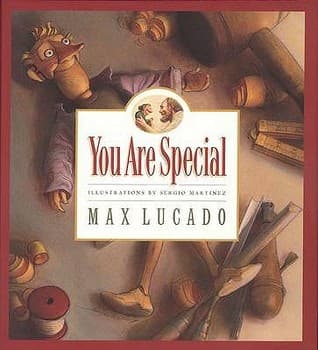
In Wemmicksville, small wooden people called Wemmicks are made by a woodworker named Eli. These Wemmicks spend their days giving each other either gold star stickers for achievements and talents, or grey dot stickers for mistakes, clumsiness, or flaws. Punchinello, the main character, often gets grey dots. He isn't as shiny as some, his paint is chipped, and he often stumbles. Other Wemmicks, especially those with many stars, look down on him. Even Wemmicks with many grey dots tend to add more to Punchinello. He feels increasingly worthless and starts to believe he deserves the grey dots.
Punchinello's Growing Burden of Grey Dots
Days turn into weeks, and Punchinello is covered in grey dots. Every time he tries to earn a star, it seems to go wrong, resulting in more dots. If he tried to jump high like others, he would fall and get a dot. If he tried to sing, his voice would crack, earning another dot. Soon, he has so many grey dots that other Wemmicks avoid him, fearing they might 'catch' his dot-ness. He begins to believe the negative labels, feeling ugly and useless. He stops trying new things, preferring to stay home and avoid others' judgment. This only makes him feel more worthless and alone.
Encountering Lucia, the Wemmick Without Stickers
One day, Punchinello sees a Wemmick named Lucia. She has no stickers at all — no stars or dots. This puzzles Punchinello, as every other Wemmick he knows is covered in them. He watches her interact with other Wemmicks; when they try to give her stars, they fall off. When they try to give her dots, they also fall off. Lucia seems unaffected by what others think. She has a quiet confidence and peace that Punchinello deeply wants. He is curious and wonders how she stays unmarked.
Lucia's Advice: Visit Eli
Punchinello, feeling curious, asks Lucia how she manages to have no stickers. Lucia simply says she visits Eli every day. She explains that when she spends time with Eli, the stickers do not stick to her anymore. She encourages Punchinello to do the same, telling him that Eli loves him just as he is. This idea gives Punchinello a bit of hope. He has never thought about speaking directly to his creator, though he knows Eli exists. He is unsure but decides to take her advice, feeling he has nothing left to lose.
Punchinello's Journey to Eli's Workshop
With Lucia's words in his mind, Punchinello starts his walk to Eli's workshop, a place high on a hill above Wemmicksville. He feels both worried and eager. The path is new to him, and his many grey dots make him feel more self-conscious as he walks. He wonders what Eli will think of him, a Wemmick covered in so many marks of failure. Despite his fears, the hope from Lucia's example pushes him on. He climbs the winding path, determined to find the reason for Lucia's peace and perhaps a way to escape his own burden of stickers.
Meeting Eli, the Master Woodcarver
Punchinello finally arrives at Eli's workshop. To his surprise, Eli, a large man with a long beard, greets him by name. Eli does not seem to notice Punchinello's grey dots, or if he does, he does not mention them. Eli expresses his happiness at Punchinello's visit, telling him he is glad to see him. Punchinello is surprised by Eli's warmth and acceptance. He tries to explain his problem with the stickers, but Eli gently stops him, already knowing the situation. This meeting is unlike any Punchinello has had in Wemmicksville, where judgment is constant.
Eli's Message of Unconditional Love
Eli listens as Punchinello talks about his sadness over the grey dots and his inability to earn stars. Eli then tells Punchinello that the stickers do not matter to him. He explains that he does not care if Punchinello has stars or dots, only that Punchinello is his creation and that he loves him just the way he is. Eli says Punchinello's worth comes from being made by him, not from what other Wemmicks think. He tells Punchinello to ignore the stickers and to trust his creator's love, reminding him, 'You are special because I made you.'
The Stickers Begin to Fall Off
As Eli speaks these words of affirmation and love, something happens. Punchinello notices a grey dot falls off his arm. Then another, and another. He is surprised. Eli explains that the stickers only stick when Punchinello believes what other Wemmicks say about him more than what Eli says. By choosing to believe Eli's truth — that he is special and loved — the stickers lose their power. Punchinello feels lighter than he has in a long time. The weight of judgment starts to lift, and he begins to understand the truth Eli is sharing with him.
Punchinello's Transformation and Renewed Hope
Punchinello leaves Eli's workshop with a lighter step and fewer grey dots. He still has some, but they no longer feel heavy or define him. He understands that his worth is within him, given by his creator, and not based on the changing opinions of other Wemmicks. As he walks back into Wemmicksville, other Wemmicks try to give him stickers, but they do not stick as easily as before. He realizes that by focusing on Eli's love and visiting him often, he can stay free from judgment. Punchinello looks forward to returning to Eli's workshop, knowing he is truly special.
You Are Special Characters
Punchinello
Protagonist
A clumsy Wemmick burdened by the negative judgments of his peers.
Punchinello is a small wooden Wemmick who struggles with feelings of inadequacy and worthlessness. He is not particularly graceful or talented by Wemmicksville standards, leading him to accumulate many grey dot stickers. His self-esteem is heavily influenced by the opinions of others, causing him to become withdrawn and believe the negative labels placed upon him. He represents anyone who feels judged or undervalued by society, seeking acceptance and understanding.
Relationships: Eli (Creator and source of unconditional love); Lucia (Mentor and inspiration); Other Wemmicks (Judges and sources of validation/condemnation)
Eli
Supporting
The benevolent and wise woodcarver, creator of all Wemmicks.
Eli is the master woodcarver who lovingly creates every Wemmick. He embodies unconditional love, wisdom, and acceptance. He sees beyond the stickers and external judgments, valuing each of his creations simply for who they are, not for what they do or what others think of them. He serves as a father figure, guiding Punchinello to understand his true worth. Eli's workshop is a place of peace and truth, free from the judgment prevalent in Wemmicksville.
Relationships: Punchinello (Creator and beloved creation); Lucia (Creator and beloved creation, who regularly visits him); All Wemmicks (Creator of all)
Lucia
Supporting
A serene Wemmick who is unaffected by stickers and guides Punchinello to Eli.
Lucia is a unique Wemmick in Wemmicksville because she has no stickers – neither stars nor dots – on her body. She radiates a quiet confidence and peace, unperturbed by the judgments or praises of other Wemmicks. She is the catalyst for Punchinello's journey to Eli, sharing the secret of her freedom from the sticker system: regular visits to their creator. She represents a state of spiritual maturity and unwavering self-worth, demonstrating the possibility of living free from external validation.
Relationships: Punchinello (Guide and friend); Eli (Creator, whom she visits regularly)
Other Wemmicks
Supporting
The judgmental inhabitants of Wemmicksville who apply stars and dots.
The 'Other Wemmicks' represent society's tendency to judge, label, and categorize individuals based on their perceived talents, flaws, and achievements. They are quick to give stars for success and dots for failure, creating a hierarchical and often cruel social structure. They are driven by their own need for validation and often reinforce the negative self-perceptions of those like Punchinello. Their collective behavior creates the oppressive atmosphere that Punchinello must learn to overcome.
Relationships: Punchinello (Judges and accusers); Lucia (Attempt to label, but stickers fall off)
You Are Special Themes
Self-Worth and Identity
The main theme is understanding one's value, separate from external opinions or achievements. Punchinello's journey shows how believing negative judgments from others can hurt self-esteem. Eli's message says the opposite, stating that true worth comes from being a loved creation, not from earning stars or avoiding dots. The falling stickers show the shedding of a false identity based on societal approval and the acceptance of an identity rooted in the creator's love. This theme encourages readers to look past surface evaluations to find their inherent specialness.
“The stickers only stick if you let them. They only stick if you care what they think.”
Unconditional Love and Acceptance
Eli's character shows love and acceptance. Unlike the Wemmicks who judge and label each other, Eli loves Punchinello just as he is, regardless of his clumsy nature or his many grey dots. His workshop is a safe place where Punchinello experiences grace and no judgment. This theme highlights the importance of a love that is not earned or based on performance. It offers comfort and reassurance that everyone is loved and valued by their creator, flaws and all. It contrasts with the conditional acceptance in Wemmicksville.
“I'm glad you came... It doesn't matter to me what the other Wemmicks think of you.”
Overcoming External Validation
The sticker system in Wemmicksville is a picture of how people seek validation from others and let external opinions define their self-worth. Punchinello's initial sadness comes from his reliance on stars and his fear of dots. Lucia's freedom from stickers and Eli's teachings show Punchinello how to break this cycle. The theme encourages readers to stop giving power to the 'stickers' others try to place on them. Instead, they should find their validation in a deeper, more reliable source, which helps build inner strength and peace.
“The stickers only stick if you let them. The more you trust my love, the less you'll care about their stickers.”
The Creator-Creation Relationship
This theme explores the bond between a creator and their creation, saying that the creator's view is the final truth about the creation's value. Eli's love for Punchinello, simply because he made him, supports the idea that our worth is given by our maker, not by our performance or the world's judgment. It suggests a spiritual side where understanding and connecting with one's creator helps in finding self-acceptance and purpose, much like Punchinello's change happens only after he visits Eli.
“You are special because I made you. And I don't make mistakes.”
Plot Devices & Literary Techniques
The Sticker System
A symbolic system of judgment representing societal approval and disapproval.
The gold star and grey dot stickers are the central plot device, serving as a powerful metaphor for how society labels and judges individuals based on perceived achievements, talents, and failures. The stickers physically manifest the weight of external opinion on Punchinello, illustrating how such judgments can diminish self-worth and lead to despair. Their ability to stick or fall off directly reflects Punchinello's internal state and his belief in Eli's love versus the world's opinions, making them a tangible representation of emotional and spiritual burdens.
Eli's Workshop
A sanctuary representing a place of truth, unconditional love, and spiritual connection.
Eli's workshop, situated high on a hill, functions as a sacred space, distinct from the judgmental environment of Wemmicksville. It is a place of refuge where Punchinello encounters truth and unconditional acceptance. The workshop symbolizes a spiritual 'safe space' or a connection with a higher power, where one can find solace, clarity, and reaffirmation of their inherent worth, free from the world's criticisms. It is the setting where Punchinello's transformation truly begins, guided by Eli's wisdom and love.
Lucia's Sticker-Free State
A living example and catalyst for Punchinello's journey to self-acceptance.
Lucia's unique state of being entirely free from stickers serves as a crucial plot device. She is not merely a character but a living demonstration of the possibility of living unburdened by external judgment. Her existence sparks Punchinello's curiosity and provides him with the concrete evidence that freedom from the sticker system is achievable. Her simple advice to 'go see Eli' directly propels Punchinello into the central conflict and resolution of the story, making her an indispensable guide and role model.
You Are Special Quotes
“You are special because I made you. And I don't make mistakes.”
“The stickers only stick if you let them.”
“Who are they to give stars or dots? They're Wemmicks just like you.”
“You matter to me.”
“The more you trust my love, the less you care about the stickers.”
“I made you, and I don't make mistakes.”
“Stars and dots, they all fall off in my workshop.”
“You are special because you're mine.”
“The only way you can feel good about yourself is to forget what they think and remember what I think.”
“I don't care how many stars or dots you have.”
“You are wonderfully made.”
“Come to me every day, and let me remind you how much I care.”
“Remember, you are special because I made you.”
Quiz
10 questions on the plot and the characters. Each answer comes with a short explanation.
Question 1
Who is the creator of Wemmicksville and all the Wemmicks?
- Punchinello
- Lucia
- Eli
- Splint
Show answer
C. Eli Eli is the creator figure in the story who made Wemmicksville and all its unique inhabitants, representing God's role in the allegory.
Question 2
What happens to Punchinello when he strays away from Eli?
- He becomes more popular with other Wemmicks
- He starts having problems and loses his way
- He gains special abilities
- He forgets who he is completely
Show answer
B. He starts having problems and loses his way The book shows that when Punchinello distances himself from Eli, he encounters difficulties and confusion, highlighting the importance of staying close to the creator.
Question 3
What is the main lesson children learn from this story?
- How to make friends in a new town
- That everyone should look the same to be happy
- Regardless of how the world sees them, God loves each of them just as they are
- That material possessions bring true happiness
Show answer
C. Regardless of how the world sees them, God loves each of them just as they are Max Lucado's central message is that children are special and loved by God exactly as they are, not based on others' opinions or worldly standards.
Question 4
Which of these characters is NOT mentioned as one of Punchinello's friends?
- Lucia
- Splint
- Chip
- Eli
Show answer
D. Eli While Eli is Punchinello's creator and guide, he is not listed among Punchinello's friends Lucia, Splint, and Chip in the book description.
Question 5
What does Eli help Punchinello understand about himself?
- How to be more like the other Wemmicks
- That he needs to earn his specialness through good deeds
- How special he is—no matter what other Wemmicks may think
- That he should avoid all other Wemmicks
Show answer
C. How special he is—no matter what other Wemmicks may think Eli teaches Punchinello that his worth comes from being created by Eli (God), not from the opinions or judgments of other Wemmicks.
Question 6
In what type of setting does the story primarily take place?
- A modern city
- A magical forest
- Wemmicksville
- Eli's workshop
Show answer
C. Wemmicksville The story is set in Wemmicksville, the land created by Eli where all the Wemmicks live and have their adventures.
Question 7
What perspective does Max Lucado want children to understand their value from?
- The world's perspective
- Their friends' perspective
- God's perspective
- Their own achievements
Show answer
C. God's perspective Lucado emphasizes that children should understand their worth from God's perspective rather than the world's standards or opinions.
Question 8
How are the Wemmicks described in terms of their appearance and personality?
- They are all identical in looks and behavior
- They are created uniquely, each with its own look and personality
- They change appearance based on their mood
- They have no distinct personalities
Show answer
B. They are created uniquely, each with its own look and personality Eli creates each Wemmick uniquely with individual looks and personalities, reflecting God's creation of diverse human beings.
Question 9
What enables Punchinello to clearly see how to walk through his life in Wemmicksville?
- Following the crowd's opinions
- Staying close to Eli
- Avoiding all problems
- Becoming friends with everyone
Show answer
B. Staying close to Eli The story shows that only when Punchinello maintains a close relationship with Eli does he gain clarity and direction for his life.
Question 10
What literary genre best describes 'You Are Special' based on its themes and setting?
- Historical fiction
- Science fiction
- Fantasy allegory with spiritual themes
- Realistic drama
Show answer
C. Fantasy allegory with spiritual themes The book uses a fantasy setting (Wemmicksville) with allegorical characters (Eli as God) to convey spiritual lessons about self-worth and divine love.
You Are Special FAQ
What is 'You Are Special' about?
The book follows Punchinello, a wooden Wemmick who lives in Wemmicksville, a land created by Eli. Punchinello struggles with feeling inferior because other Wemmicks give him gray dots (representing criticism) instead of gold stars (representing praise). Through his journey, Eli helps him understand that his worth comes from his creator's love, not from others' opinions.
Why should I read 'You Are Special'?
This book offers a gentle, allegorical introduction to spiritual concepts for children, teaching that self-worth comes from unconditional love rather than external validation. Through Punchinello's relatable struggles and Eli's wise guidance, it provides comfort and a foundation for discussions about identity, bullying, and divine love in an accessible fantasy setting.
What is the background/setting of 'You Are Special'?
The story takes place in Wemmicksville, a whimsical land inhabited by wooden puppet-like creatures called Wemmicks, each uniquely crafted by Eli. This fantasy setting serves as an allegory for the human experience, where Wemmicks constantly judge each other by giving stars or dots, mirroring how people seek approval in society.
What are the most memorable quotes?
Key quotes include Eli telling Punchinello, 'You are special because I made you. And I don't make mistakes,' and 'The stickers only stick if you let them.' These lines encapsulate the book's core message about inherent worth and the power of perspective in facing criticism.
What writing style does the author use?
Max Lucado employs simple, lyrical prose with repetitive structures ideal for young readers, blending fantasy elements with clear allegorical meaning. The narrative is conversational and heartwarming, using vivid imagery of Wemmicksville to make abstract spiritual concepts tangible and engaging for children.
What minor details add significant meaning?
The physical details of Wemmicks—being wooden, having painted smiles, and moving stiffly—subtly emphasize their created nature and vulnerability. Additionally, the fact that stickers only stick if a Wemmick believes in them highlights how internalizing criticism or praise shapes one's self-perception.
What are some subtle foreshadowing moments?
Early scenes show Punchinello avoiding Eli's workshop, hinting at his eventual need to reconnect. Lucia's lack of stickers foreshadows her role in guiding Punchinello toward understanding that worth isn't tied to others' opinions, setting up the revelation about Eli's unconditional love.
What unexpected character connections exist?
Lucia, who appears initially as just another Wemmick, becomes pivotal by demonstrating that stickers don't stick to those who spend time with Eli. This reveals a deeper connection: she embodies the peace that comes from aligning with one's creator, indirectly guiding Punchinello toward his own transformation.
What are unspoken character motivations?
Punchinello's desire for gold stars stems from a deep-seated need for acceptance and fear of rejection, mirroring real-world social anxieties. Eli's patience in waiting for Punchinello to seek him out reflects a divine motivation of unconditional love that doesn't force itself but invites connection.
What psychological complexities do characters exhibit?
Punchinello shows cognitive dissonance, believing he's worthless due to gray dots while secretly yearning for Eli's affirmation. The Wemmicks who give stickers exhibit herd mentality, judging based on superficial traits without understanding intrinsic value, illustrating how social pressures can distort self-worth.
What are the major emotional turning points?
Key moments include Punchinello's despair when covered in gray dots, his courageous decision to visit Eli's workshop, and the climactic scene where Eli reminds him of his specialness. Each shift moves him from shame to hope, culminating in the emotional release of realizing stickers no longer stick.
How do relationship dynamics evolve?
Punchinello's relationship with Eli transforms from distant avoidance to intimate trust, symbolizing spiritual reconciliation. His interactions with other Wemmicks shift from seeking their approval to finding solidarity with Lucia and others who understand true worth, moving from isolation to community.
Which parts remain ambiguous or open-ended?
The book leaves ambiguous whether all Wemmicks eventually learn to reject stickers, or if some remain trapped in the cycle of judgment. It also doesn't specify how Punchinello will navigate future criticisms, leaving room for readers to imagine his ongoing journey toward self-acceptance.
What are controversial scenes or decisions?
Some readers debate Eli's passive role, questioning why he doesn't intervene more actively to stop the Wemmicks' harmful sticker system. Others critique the allegory's simplicity, arguing it might oversimplify complex issues of self-esteem or not resonate with non-religious audiences.
'You Are Special' ending explained: how it ends & what it means
The story ends with Punchinello leaving Eli's workshop, realizing that stickers no longer stick to him because he believes in his creator's love. This symbolizes spiritual liberation and self-acceptance, showing that true worth is internal and unchanging, regardless of external judgments.
About the author

Max Lucado is an American author known for his inspirational writing, primarily in the genre of fiction. His notable works include "You Are Special," a children's book that conveys themes of self-worth, and "When God Whispers Your Name," which explores personal faith and spirituality. Lucado's books often blend storytelling with messages of hope and encouragement.
Similar books
- The Giving Tree
Shel Silverstein
4.4 (906k) average on GoodreadsFantasyA classic children's book with a deep, allegorical message about unconditional love and self-sacrifice.
- Stellaluna
Janell Cannon
4.2 (108k) average on GoodreadsFantasyFeatures a character who feels out of place and learns to embrace their unique identity.
- Harry Potter and the Sorcerer's Stone
J.K. Rowling
4.5 (7M) average on GoodreadsFantasyRescued from a miserable life under the stairs, an orphaned boy discovers he's a wizard destined for a magical school, where he uncovers a dangerous secret tied to the dark wizard who murdered his parents.
- The Hunger Games
Suzanne Collins
4.3 (6.4M) average on GoodreadsFantasyIn a future where children fight to the death on live television, Katniss Everdeen volunteers for the arena, turning a death sentence into a fight for survival and a spark of rebellion.
- 1984
George Orwell
4.2 (3.1M) average on GoodreadsPoliticsIn a future where surveillance and thought control are absolute, a man's search for truth clashes with the Party, showing that hope can be a form of rebellion.
- Divergent
Veronica Roth
4.2 (2.9M) average on GoodreadsFantasyIn a society divided by virtues, a sixteen-year-old's difference from the norm starts a rebellion that threatens her world.




Enjoyed the summary?
A summary gives you the shape of the book. The book itself has the detail, the examples and the voice.
Find You Are Special on AmazonAs an Amazon Associate, BookBrief earns from qualifying purchases. How we're funded