

Synopsis
Covers the whole plot, including the ending.
- Difficulty
- Medium
- Pacing
- Fast
- Mood
- Absurdist, Humorous, Energetic, Playful
- Read it if
- You enjoy experimental, language-driven novels with a strong sense of humor and a playful, anarchic spirit.
- Skip it if
- You prefer traditional narratives, clear plot structures, or find extensive wordplay and phonetic games distracting.
Zazie in the Metro Plot Summary
Covers the whole plot, including the ending.
Arrival in Paris and the Metro Strike
Young Zazie arrives at the Gare de Lyon in Paris from the countryside, escorted by her mother, Jeanne. Jeanne promptly hands her over to her uncle, Gabriel. Zazie's sole ambition for her trip is to ride the Metro, a desire she states repeatedly. However, when Gabriel attempts to take her, they discover the Metro is on strike. This unexpected turn, a major disappointment for Zazie, sets the stage for her chaotic Parisian adventure, forcing her to seek other forms of entertainment and exploration in the bustling city.
Gabriel's Dual Life and Zazie's Curiosity
Gabriel, Zazie's uncle, works as a female impersonator in a cabaret. Zazie quickly uncovers this, much to her amusement and slightly scandalous fascination. He lives with his lover, Marceline, who is quiet and almost catatonic. Zazie, undeterred by the Metro strike, decides to explore Paris on her own. She wanders through the streets, observing the city's inhabitants and absorbing its unique atmosphere, often engaging in precocious and challenging dialogue with anyone she encounters. This shows her independent and rebellious spirit.
The Flea Market and Trouscaillon
During her solo wanderings, Zazie finds herself in a flea market, a chaotic hub of Parisian life. Here, she meets Charles Trouscaillon, a man with a suspicious aura, who tries to entice her. Trouscaillon, a character of dubious morality, represents a certain Parisian underbelly. His interaction with Zazie highlights her naive yet street-smart nature. Zazie, with her characteristic bluntness, manages to fend off his advances, demonstrating her resilience and an early sign of her ability to navigate the complexities of the adult world despite her youth.
The Cafe and Fédor's Taxi
Gabriel takes Zazie to a local cafe, where she meets his eccentric friends, including the taxi driver Fédor, the cafe owner Turandot, and the parrot Laverdure. This gathering introduces Zazie to the bohemian and unconventional side of Parisian life. Later, Zazie takes a ride in Fédor's taxi, experiencing the city from a different perspective. During this ride, she continues to question and challenge the adults around her, particularly regarding their language and understanding of the world, further establishing her as a disruptive yet insightful observer.
The Eiffel Tower and the Tourist Trap
Gabriel, attempting to show Zazie a Parisian landmark, takes her to the Eiffel Tower. There, they encounter a group of tourists, and Zazie, with her usual directness, confronts them about their shallow appreciation of the monument. This scene satirizes tourism and the often superficial way people engage with cultural sites. Zazie's unpretentious and honest reaction contrasts with the performative enthusiasm of the tourists, further highlighting her unique perspective and her refusal to conform to societal expectations, even those of a simple sightseeing trip.
The Night Out and the Dance Hall
As the evening progresses, Gabriel takes Zazie to a dance hall, a lively and somewhat raucous establishment. The night becomes increasingly wild and drunken, with various characters from Gabriel's circle participating in the festivities. Zazie, despite her youth, observes the adult revelry with a mix of fascination and disdain. The atmosphere of unrestrained hedonism and blurred morality further immerse Zazie in the unconventional Parisian experience, challenging her preconceptions about adult behavior and societal norms.
The Brawl and the Police
The drunken revelry at the dance hall escalates into a full-blown brawl, involving many of Gabriel's friends and other patrons. The chaotic fight attracts the attention of the police, who intervene to restore order. This incident shows the anarchic and unpredictable nature of the Parisian underworld Zazie has stumbled into. Zazie remains a detached observer, witnessing the absurdity and violence of the adult world without fully participating, maintaining her innocent yet shrewd perspective amidst the pandemonium.
Gabriel's Performance and Marceline's Secret
Zazie finally witnesses her uncle Gabriel's performance as a female impersonator at the cabaret, a spectacle that both amuses and slightly bewilders her. Meanwhile, a significant revelation occurs: Marceline, Gabriel's seemingly quiet and unassuming lover, is discovered to be a man named Marcellin, who also performs as a female impersonator. This disclosure adds another layer of gender fluidity and deception to the already unconventional world Zazie inhabits, challenging traditional notions of identity and appearance and further blurring the lines between reality and performance.
The Turkish Baths and the Pursuit
Trouscaillon, still pursuing Zazie, attempts to corner her in the Turkish baths. What ensues is a farcical chase, with Zazie cleverly eluding her pursuer through the steamy, labyrinthine corridors of the baths. This comical pursuit highlights Zazie's resourcefulness and her ability to navigate dangerous situations with a surprising degree of self-possession. The scene is imbued with Queneau's characteristic wordplay and absurdity, transforming a potentially threatening situation into a humorous and energetic escapade.
The Final Feast and Departure
Before Zazie's departure, a grand feast is held by Gabriel and his friends, a final celebration of her chaotic visit. Despite all the adventures and experiences, Zazie's initial desire to ride the Metro remains unfulfilled. As she prepares to leave, her mother, Jeanne, returns to collect her. Zazie, having experienced a whirlwind of Parisian life, remains largely unchanged in her core desire, yet she carries with her the indelible impressions of her extraordinary, if un-metropolitan, journey.
Principal Figures
Zazie
Protagonist
A precocious, foul-mouthed, and fiercely independent young girl from the countryside.
Zazie is a spirited and uninhibited young girl, about twelve years old, whose primary desire upon arriving in Paris is to ride the Metro. She is characterized by her blunt speech, her use of slang, and her unwavering curiosity. Zazie challenges authority, questions social norms, and possesses a shrewd, almost cynical, understanding of the adult world. Despite her youth, she navigates the chaotic Parisian landscape with surprising self-possession, often outsmarting or confounding the adults around her. Her directness and lack of pretension make her a unique and memorable observer.
Relationships: Gabriel (Uncle and temporary guardian, a complex and confusing figure for Zazie); Jeanne (Mother, who entrusts Zazie to Gabriel); Marceline/Marcellin (Gabriel's lover/partner, a source of gender confusion for Zazie); Trouscaillon (A suspicious man who attempts to lure Zazie, whom she deftly avoids)
Gabriel
Supporting
Zazie's uncle, a male cabaret performer who impersonates women.
Gabriel is Zazie's uncle and her temporary guardian in Paris. He leads a double life: a seemingly ordinary man by day, and a celebrated female impersonator in a cabaret by night. Gabriel is kind-hearted but also somewhat overwhelmed by Zazie's presence and the chaos that follows her. He is part of a bohemian and unconventional social circle, and his profession challenges traditional gender roles, reflecting the novel's themes of identity and appearance. He genuinely tries to entertain Zazie, despite his own eccentricities.
Relationships: Zazie (Niece, whom he cares for and tries to entertain); Marceline/Marcellin (Lover/partner, whose true identity is also concealed); Turandot (Friend and cafe owner); Fédor (Friend and taxi driver)
Marceline/Marcellin
Supporting
Gabriel's quiet lover, later revealed to be a man and fellow performer.
Initially presented as Marceline, Gabriel's quiet and somewhat reclusive female lover, this character later undergoes a significant revelation. Marceline is discovered to be Marcellin, a man who also performs as a female impersonator. This character embodies the novel's playful subversion of gender and identity. Marceline/Marcellin's dual nature adds a layer of complexity to Gabriel's world and further challenges Zazie's understanding of appearances versus reality. The character's quiet demeanor often serves as a foil to the boisterousness of the other characters.
Relationships: Gabriel (Lover/partner, sharing a profession and a life); Zazie (Brief interactions, initially seen as Gabriel's female companion)
Trouscaillon
Antagonist/Supporting
A suspicious, morally ambiguous man who attempts to lure Zazie.
Trouscaillon is a shadowy and somewhat sinister character, a man of dubious intentions who repeatedly attempts to entice or abduct Zazie. He represents the seedier, more dangerous side of Paris, a stark contrast to the bohemian charm of Gabriel's circle. Despite his menacing undertones, his attempts are often rendered comical by Zazie's resilience and the absurd situations that arise. He is a recurring figure, adding a touch of suspense and farce to Zazie's adventures, embodying the potential dangers of the unsupervised city.
Relationships: Zazie (Pursuer and pursued, a cat-and-mouse dynamic)
Fédor
Supporting
A taxi driver and friend of Gabriel, known for his philosophical ramblings.
Fédor is a taxi driver and a loyal friend of Gabriel. He is a verbose character, prone to philosophical pronouncements and lengthy monologues about life, work, and the nature of existence. He often transports Zazie around Paris, providing her with a unique perspective on the city and its inhabitants. Fédor embodies a certain working-class intellectualism, and his lengthy speeches contribute to the novel's rich dialogue and exploration of language. He is a colorful and endearing figure within Gabriel's eccentric circle.
Relationships: Gabriel (Close friend); Zazie (Driver and philosophical conversationalist)
Turandot
Supporting
The owner of the cafe where Gabriel and his friends gather.
Turandot is the proprietress of the bustling Parisian cafe that serves as a central meeting point for Gabriel and his eclectic group of friends. She is a no-nonsense, practical woman who runs her establishment with efficiency and a keen eye for the eccentricities of her clientele. Turandot provides a stable, if sometimes chaotic, backdrop to the characters' adventures. Her cafe is a microcosm of Parisian life, reflecting the diverse and often absurd interactions that occur within the city's social fabric.
Relationships: Gabriel (Friend and regular customer); Zazie (Brief interactions as a customer in her cafe)
Laverdure
Supporting
A talking parrot in Turandot's cafe, often interjecting with unexpected comments.
Laverdure is a talking parrot residing in Turandot's cafe. This avian character serves as a unique and often humorous commentator on the events unfolding around him. His interjections, often nonsensical or surprisingly pertinent, add to the novel's playful use of language and its surreal atmosphere. Laverdure's presence blurs the line between human and animal communication, reflecting Queneau's experimental approach to dialogue and narrative voice. He is a symbolic figure of the novel's absurdity.
Relationships: Turandot (Owner); Gabriel and friends (Observers of their conversations)
Jeanne
Mentioned/Supporting
Zazie's mother, who leaves her in Gabriel's care.
Jeanne is Zazie's mother, who brings Zazie to Paris and entrusts her to Gabriel for the duration of her visit. She is a background character, primarily serving as the catalyst for Zazie's Parisian adventure. Her brief appearances bookend the story, marking Zazie's arrival and departure. Jeanne represents the more conventional world from which Zazie originates, and her decision to leave Zazie with Gabriel sets the stage for the girl's immersion into the unconventional Parisian milieu.
Relationships: Zazie (Mother); Gabriel (Brother, Zazie's uncle)
Themes & Insights
The Subversion of Language and Meaning
Queneau relentlessly deconstructs and plays with language throughout the novel, using phonetic spellings, neologisms, and dialect to challenge conventional grammar and syntax. Zazie's own foul-mouthed and direct speech, often contrasted with the more verbose and philosophical ramblings of characters like Fédor, highlights this theme. The constant questioning of word meanings and the deliberate blurring of linguistic rules reflect a deeper skepticism towards established systems of meaning, mirroring the novel's broader subversion of social norms and expectations. For example, Zazie's persistent questioning of the meaning of 'hormosessuel' (homosexual) exposes the absurdity and arbitrary nature of language and social labels.
“Don't give a damn,' says Zazie, 'what I wanted was to go in the metro.”
Appearance vs. Reality / Identity
A central theme is the constant blurring of lines between how things appear and what they truly are, particularly concerning identity and gender. Gabriel's profession as a female impersonator, and the later revelation of Marceline as Marcellin (also a male performer), directly challenges rigid notions of gender identity. Zazie herself, with her precocious yet innocent demeanor, often sees through superficial appearances to a deeper, more complicated truth. The characters' fluid identities and the frequent misinterpretations of their roles underscore the idea that identity is often a performance, and reality is far more complex than it seems on the surface.
“You're a hormone, you are,' says Zazie. 'A hormosessuel.”
The Absurdity of Existence
The entire narrative is steeped in an atmosphere of the absurd, where logical consequences are often ignored, and events unfold in a chaotic, dreamlike fashion. The Metro strike, Zazie's unfulfilled desire, the farcical chases, the drunken brawls, and the highly stylized dialogue all contribute to a sense of meaninglessness and randomness in human experience. The characters often engage in philosophical discussions that lead nowhere, or in mundane actions that take on exaggerated significance. This theme reflects a post-war existentialist sensibility, where traditional values and structures have collapsed, leaving individuals to navigate a world without inherent meaning.
“To live is to be', said Fédor. 'To be is to live.”
The City as a Labyrinth
Paris itself is a major character and a thematic element, presented as a sprawling, chaotic, and unpredictable place. Zazie's initial desire to navigate the structured, underground Metro is thwarted, forcing her to explore the city's surface, which is anything but orderly. The streets, cafes, flea markets, and even the Turkish baths become sites of unexpected encounters, chases, and revelations. The city's winding paths and diverse inhabitants mirror the novel's complex narrative structure and the characters' often circuitous journeys, symbolizing the difficulty of finding direction or meaning in a world without clear paths.
“Paris is very big,' said Zazie. 'Bigger than Montargis.”
Plot Devices & Literary Techniques
Pastiche and Parody
The novel imitates and satirizes various literary styles and genres.
Queneau employs pastiche and parody by mimicking and playfully subverting established literary forms, narrative conventions, and even philosophical discourse. The rapid-fire dialogue, the exaggerated character types, and the farcical plot elements often echo popular fiction, detective stories, and even classical drama, only to twist them into something absurd and uniquely Queneau's. This device allows the author to critique and comment on literature itself, while simultaneously creating a highly original and entertaining narrative that defies easy categorization.
Stream of Consciousness / Interior Monologue
Characters' thoughts and perceptions are presented in a fluid, often unfiltered manner.
While not strictly stream of consciousness in the Joycean sense, Queneau frequently allows characters' thoughts, feelings, and often rambling observations to spill onto the page with minimal filtering. Fédor's philosophical digressions, Zazie's blunt internal assessments, and even the collective consciousness of the Parisian crowd are presented in a fluid, associative manner. This technique provides insight into the characters' inner lives and contributes to the novel's overall sense of spontaneity and psychological realism, despite its outwardly absurd plot.
Metafiction / Authorial Intrusion
The narrator occasionally breaks the fourth wall, acknowledging the story's constructed nature.
Queneau occasionally employs metafiction, where the narrator directly addresses the reader or comments on the act of storytelling itself. These authorial intrusions serve to remind the audience that they are reading a constructed narrative, playfully undermining the illusion of reality. This device reinforces the novel's thematic concerns about appearance versus reality and the subversion of conventional literary forms, inviting the reader to be an active participant in the deconstruction of the story.
Repetition and Variation
Key phrases, desires, and events are repeated with subtle or significant changes.
The novel frequently uses repetition, particularly Zazie's insistent desire to ride the Metro, which becomes a recurring motif. However, these repetitions are often accompanied by subtle variations or new contexts, highlighting the futility of her desire or the changing nature of her experiences. This device creates a rhythmic quality in the prose and underscores the cyclical, often stagnant, nature of certain desires, while also demonstrating how language and meaning can shift with each reiteration.
Zazie in the Metro Quotes
“Doukipudonktan?”
“Tu causes, tu causes, c'est tout ce que tu sais faire.”
“Mon cul!”
“Je suis un ange. Un ange de la mort.”
“La réalité, c'est comme le rêve, ça ne s'explique pas.”
“Le métro, c'est pour les adultes.”
“Paris est tout petit pour ceux qui ont le cœur gros.”
“Il y a des jours où on se sent plus vache que d'autres.”
“On ne voit pas ce qu'on voit, on voit ce qu'on pense.”
“La vie, c'est un peu comme le cinéma. On est assis, on regarde, et à la fin, on rentre chez soi.”
“Les jeunes filles, c'est comme les fleurs, ça se fane vite.”
“On est tous des fantômes, des ombres. On passe, et puis on s'en va.”
“Le langage, c'est comme une bicyclette. On peut faire des acrobaties avec, mais il faut savoir tenir en équilibre.”
“Je suis un peu fatigué de ne rien faire.”
Quiz
10 questions on the plot and the characters. Each answer comes with a short explanation.
Question 1
What is Zazie's primary desire upon arriving in Paris?
- To visit the Eiffel Tower
- To ride the Métro
- To meet her Uncle Gabriel's friends
- To go shopping for new clothes
Show answer
B. To ride the Métro Zazie repeatedly expresses her wish to ride the Métro, only to find it closed due to a strike.
Question 2
Why is Zazie unable to fulfill her primary desire immediately after arriving?
- Her uncle forbids it
- She gets lost on the way
- There is a transportation strike
- She runs out of money
Show answer
C. There is a transportation strike The Métro is shut down due to a strike, which is a key plot point preventing Zazie from riding it.
Question 3
Who is Zazie's uncle in Paris?
- Charles
- Gabriel
- Trouscaillon
- Pidou
Show answer
B. Gabriel Zazie comes to Paris to stay with her uncle, Gabriel, who works as a female impersonator.
Question 4
What is Uncle Gabriel's profession that Zazie discovers?
- Taxi driver
- Waiter
- Female impersonator/dancer
- Shop owner
Show answer
C. Female impersonator/dancer Zazie discovers that her Uncle Gabriel performs as a female impersonator in a cabaret.
Question 5
What does Zazie buy with her uncle's money that she considers very important?
- A new pair of shoes
- Blue jeans
- A fancy hat
- A souvenir of the Eiffel Tower
Show answer
B. Blue jeans Zazie is very keen on buying a pair of blue jeans, which she eventually does with money from Gabriel.
Question 6
Which character is constantly mistaken for different people, leading to confusion and identity play?
- Zazie
- Gabriel
- Trouscaillon
- Mado P'tits Pieds
Show answer
C. Trouscaillon Trouscaillon frequently changes identities and is accused of being various people, including a murderer and a police inspector, embodying the theme of fluid identity.
Question 7
What literary device is Raymond Queneau particularly known for employing in 'Zazie in the Metro'?
- Extensive use of third-person omniscient narration
- Detailed historical realism
- Word play, phonetic games, and neologisms
- Long, descriptive passages about nature
Show answer
C. Word play, phonetic games, and neologisms The book is celebrated for its innovative use of language, including phonetic spelling, puns, and invented words, reflecting Queneau's experimental style.
Question 8
What happens to Zazie at the very end of the novel?
- She finally rides the Métro alone
- She decides to stay in Paris permanently
- She falls asleep in a taxi and is taken back to the station
- She gets into a fight and is arrested
Show answer
C. She falls asleep in a taxi and is taken back to the station After a chaotic night, Zazie falls asleep in a taxi and is brought back to the station, having technically ridden a form of public transport, but not the Métro as she intended.
Question 9
The novel satirizes which aspect of Parisian life or society?
- The romantic idealization of Paris and adult hypocrisy
- The efficiency of its public transportation system
- The solemnity of its intellectual circles
- The quiet nature of its nightlife
Show answer
A. The romantic idealization of Paris and adult hypocrisy Zazie's innocent yet crude perspective exposes the absurdities, pretenses, and hypocrisy of the adults and the city around her, contrasting with the romanticized image of Paris.
Question 10
How does the novel challenge traditional narrative structure and character development?
- By adhering strictly to a linear plot and psychological realism
- By focusing on a single, unchanging protagonist's internal monologue
- Through episodic, chaotic events, fluid identities, and a lack of clear resolution
- By employing an unreliable narrator who constantly lies to the reader
Show answer
C. Through episodic, chaotic events, fluid identities, and a lack of clear resolution The novel's plot is a series of seemingly random, often absurd encounters, with characters like Trouscaillon changing identities, and Zazie herself not undergoing significant 'growth,' emphasizing playfulness over traditional narrative arcs.
Zazie in the Metro FAQ
What is Zazie's primary goal upon arriving in Paris, and why is it thwarted?
Zazie's singular desire is to ride the Paris Métro, a fascination she holds from her rural upbringing. However, her ambition is immediately frustrated by a city-wide transportation strike, forcing her to seek alternative forms of entertainment and adventure during her stay.
Who is Gabriel, and what is his unusual profession hinted at in the story?
Gabriel is Zazie's uncle and her guardian during her visit to Paris. While he presents himself as a nightclub dancer, various subtle clues and his late-night activities strongly suggest he might also be a drag queen or involved in a more unconventional profession than initially stated.
Describe the general tone and style of the novel, particularly concerning its language.
The novel is characterized by its playful, anarchic, and often absurd tone, mirroring Zazie's youthful rebellion. Queneau extensively employs phonetic spelling, slang, puns, and neologisms, challenging traditional French grammar and reflecting the spoken language of the time, creating a unique and vibrant linguistic landscape.
What significant event marks the climax of Zazie's Parisian adventure?
The climax occurs during a chaotic brawl at the 'Turbigo' bar, involving many of the eccentric characters Zazie has encountered. This drunken melee culminates in a general state of disarray and confusion, with Zazie eventually falling asleep amidst the chaos, only to wake up without a clear memory of the resolution.
How does the novel conclude for Zazie, despite her initial desires?
Despite her entire trip being about riding the Métro, Zazie ultimately leaves Paris having never experienced it. She is put on a train back home by Gabriel, still in a daze from the previous night's events, and her only memory is of sleeping, rather than fulfilling her grand Parisian ambition.
What is the significance of the recurring phrase 'Doukipudonktan'?
The phrase 'Doukipudonktan' (phonetically 'D'où qu'ils puent donc tant?') translates to 'Where do they stink so much?'. It is a key example of Queneau's phonetic wordplay, highlighting the novel's linguistic experimentation and playfully questioning the source of various unpleasant odors encountered by the characters, often linking to the general 'stench' of Parisian life or human nature.
Are there any subtle indications that Gabriel's 'dancing' profession is a euphemism?
Yes, several details hint at Gabriel's true nature. His effeminate mannerisms, his late-night excursions often involving 'female' attire, and the general ambiguity surrounding his work all suggest he might be a drag queen or involved in cross-dressing performances, rather than simply a male dancer.
What role does the character of Trouscaillon play, and what is his true identity?
Trouscaillon is a mysterious and menacing figure who repeatedly attempts to seduce or assault Zazie. He claims various identities throughout the book, including a police inspector and a widower, but his true identity remains ambiguous, serving as a symbol of the predatory elements Zazie encounters in the city.
How does Zazie's cynical and precocious nature contrast with her youthful appearance?
Zazie, despite being a young girl, exhibits a world-weary cynicism and a sharp, often vulgar, wit that belies her age. Her foul language and direct questioning of adult hypocrisies create a stark contrast with her innocent façade, making her a uniquely rebellious and memorable character.
Analyze the psychological impact of Zazie's unfulfilled desire to ride the Métro.
Zazie's persistent longing for the Métro, despite its inaccessibility, symbolizes her desire for an idealized, perhaps unattainable, vision of Paris and adulthood. Its constant denial contributes to her growing disillusionment with the city, highlighting the gap between expectation and reality, and shaping her cynical worldview.
How does Gabriel's ambiguous identity reflect a psychological theme in the novel?
Gabriel's fluid identity, oscillating between a 'normal' uncle and a potential drag queen, reflects themes of hidden selves, societal performance, and the search for authentic identity. His secrecy and the acceptance by those around him suggest a critique of conventional appearances and a celebration of individual expression.
Discuss the psychological motivations behind Zazie's persistent use of profanity.
Zazie's profanity is a deliberate act of rebellion against adult authority and societal norms. It serves as a defensive mechanism, allowing her to assert control in unfamiliar situations and express her frustration and contempt for the perceived absurdities and hypocrisies of the adult world around her.
Is the ending of the novel meant to be a tragedy, a comedy, or an absurdist statement?
The ending, where Zazie leaves Paris without having ridden the Métro and with no clear memory of the final chaotic events, is most fittingly an absurdist statement. It playfully undermines expectations, suggesting that the journey itself, with all its chaotic encounters, was more significant than the destination, and that life often concludes without neat resolutions.
How does Queneau use the Métro strike as a metaphor within the narrative?
The Métro strike serves as a central metaphor for the breakdown of order and expectation, not just in transportation, but in society and language itself. It forces Zazie and the reader to confront alternative, often chaotic, realities, symbolizing the disruption of conventional norms that the entire novel embraces.
What is the significance of the dream sequences and surreal elements in the book?
The dream sequences, particularly Zazie's final one, blur the lines between reality and imagination, contributing to the novel's overall surreal and anarchic atmosphere. They suggest that much of what Zazie experiences is filtered through her own subjective and often distorted perception, making the 'truth' of events ambiguous.
To what extent is 'Zazie in the Metro' a critique of modern Parisian society?
'Zazie in the Metro' offers a satirical and often scathing critique of modern Parisian society, exposing its hypocrisies, its grimy underbelly, and the absurdity of its inhabitants. Through Zazie's innocent yet cynical eyes, Queneau highlights the disconnect between the romanticized image of Paris and its chaotic reality.
How does the novel challenge traditional narrative structure and character development?
The novel subverts traditional narrative by prioritizing wordplay and episodic encounters over a linear plot or deep character arcs. Characters like Zazie and Gabriel remain somewhat enigmatic, their 'development' less about internal change and more about their interactions within the chaotic, linguistically experimental world Queneau creates.
What is the lasting appeal of 'Zazie in the Metro' for contemporary readers?
Its lasting appeal lies in its timeless themes of youthful rebellion, the search for identity, and the clash between innocence and experience, all wrapped in Queneau's brilliant, innovative linguistic style. The novel remains fresh due to its playful anarchy and its sharp, often absurd, commentary on human nature and society.
About the author

Raymond Queneau was a French novelist, poet, critic, editor and co-founder and president of Oulipo, notable for his wit and cynical humour.
Similar books
- One Hundred Years of Solitude
Gabriel García Márquez
4.1 (753k) average on GoodreadsLiterary FictionShares a magical realist tone and a focus on eccentric characters within a contained world.
- A Confederacy of Dunces
John Kennedy Toole
3.9 (231k) average on GoodreadsLiterary FictionFeatures a memorable, unconventional protagonist navigating a series of absurd encounters.
- The Hitchhiker's Guide to the Galaxy
Douglas Adams
4.2 (1.4M) average on GoodreadsFantasyKnown for its satirical humor, surreal situations, and witty dialogue.
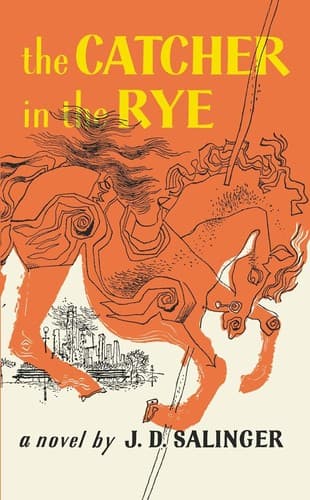
- The Catcher in the Rye
J.D. Salinger
3.8 (2.7M) average on GoodreadsYoung AdultBoth novels feature disaffected adolescent protagonists navigating complex urban environments and critiquing adult society. However, Zazie's rebellion is expressed through overt defiance and a desire for specific experiences (like riding the Metro), while Holden Caulfield's alienation in The Catcher in the Rye is more internal, characterized by his cynical observations and struggle with authenticity. Queneau's style is highly experimental and detached, emphasizing linguistic play, whereas Salinger employs a more direct, first-person narrative voice that prioritizes psychological realism and emotional introspection. Zazie's journey is a physical romp through Paris, while Holden's is an internal odyssey through his own disillusionment.
- Nineteen Eighty-Four
George Orwell
4.2 (5.5M) average on GoodreadsFictionWinston Smith dreams of truth and rebellion in a world where Big Brother watches all, but he confronts the terrifying power of a regime that controls not just actions, but thoughts.
- The Frozen River
Ariel Lawhon
4.4 (600k) average on GoodreadsFictionIn 1789 Maine, a heroic midwife's diary helps her expose a murder and get justice in a town that wants to silence her.




Enjoyed the summary?
A summary gives you the shape of the book. The book itself has the detail, the examples and the voice.
Find Zazie in the Metro on AmazonAs an Amazon Associate, BookBrief earns from qualifying purchases. How we're funded