
Core Idea
- Difficulty
- Hard
- Read it if
- You are deeply interested in the historical and cultural impact of Zen Buddhism on Japan, from its martial arts to its art and philosophy, and seek an authoritative, comprehensive exploration of this relationship.
- Skip it if
- You are looking for a practical, step-by-step guide to Zen meditation, a light introduction to Buddhism, or a book that avoids academic depth and historical analysis.
Key Takeaways from Zen and Japanese Culture
Zen's Primitive Simplicity
The core of Zen lies in its direct, unadorned apprehension of reality.
Suzuki explains that Zen's core is its deep simplicity, moving away from intellectual ideas. It aims to remove layers of learned thought and social rules to reach a raw, immediate view of the world. This is not a simple way of thinking, but a complex rejection of needless complexity, promoting a direct, intuitive grasp of 'things as they are.' This focus on basic simplicity has deeply influenced Japanese aesthetics, favoring natural shapes, imbalance, and 'wabi-sabi'—the beauty of imperfection and change. It calls for experiencing life directly, without our existing ideas, which helps create a state of mindful presence.
“Zen is not a system of philosophy, nor a doctrine, nor a religion in the ordinary sense of the word. It is the direct experience of reality, unmediated by intellect or dogma.”
In the book: Suzuki frequently references the Zen preference for natural materials, unpolished wood, and the unadorned beauty found in rustic objects, contrasting it with more ornate or artificial aesthetics.
Try this: Practice 'direct seeing' in daily life: observe a tree, a cup of tea, or a simple action without labeling, judging, or intellectualizing. Focus on the sensory experience itself.
Related ideas: wabi-sabi, direct-experience, mindfulness
Self-Effacement as Liberation
True freedom in Zen emerges from the transcendence of the ego.
Self-effacement in Zen is not about denying oneself in a harsh way, but about freeing oneself from the ego's control. Suzuki shows how constantly trying to assert oneself, get approval, and control things causes suffering. By letting go of the 'I' that demands and holds on, one opens up to a larger, connected reality. This means developing humility, being open to being a channel rather than a controller, and understanding that individual life is part of a bigger, complete whole. This idea is central to practices like swordsmanship and the tea ceremony, where the person must become one with the action.
“The Zen master's mind is like a mirror, reflecting all that comes before it without attachment or judgment. This is the state of no-mind, where the self is effaced.”
In the book: Suzuki details the concept of 'no-mind' (mushin) in martial arts, where a swordsman acts instinctively without conscious thought or egoic intervention, achieving a state of flow.
Try this: During daily tasks, consciously try to diminish the 'I' behind the action. Focus on the task itself, rather than how well 'you' are performing it or what it says about 'you.'
Related ideas: no-mind, ego-transcendence, humility
Zen and the Samurai Spirit
Zen provided the philosophical bedrock for the warrior's discipline and fearlessness.
Suzuki offers an interesting, though sometimes debated, look at Zen's strong impact on the samurai. He argues that Zen's focus on living in the moment, overcoming the fear of death, and achieving 'no-mind' were vital for warriors. Facing death, the samurai found comfort and strength in Zen's teaching that life and death are two sides of the same coin, and that holding onto life creates fear. This allowed them to act quickly, without hesitation or strong feelings, being fully present in the moment of action. It was not about seeking death, but about living and dying with complete freedom and honesty.
“Zen and the art of swordsmanship are not two separate things. They are two aspects of the same discipline, aiming at the perfect integration of body and mind.”
In the book: Suzuki discusses the concept of 'fudōshin' (immovable mind) and 'zanshin' (lingering mind) in martial arts, where the samurai cultivated a mental state impervious to fear and distraction.
Try this: When facing a difficult or intimidating task, practice 'no-mind' by focusing purely on the action required, detaching from anxieties about outcomes or personal failure.
Related ideas: bushido, fudoshin, zanshin, martial-arts
The Art of Doing Nothing
Zen's embrace of inactivity as a path to profound insight.
Suzuki explores the surprising Zen value of 'doing nothing'—not as being lazy, but as a purposeful practice of stillness and openness. This idea is best seen in zazen, seated meditation, where one simply sits and observes, letting thoughts pass without engaging them. This 'inaction' is actually a very active mental state, building deep awareness and intuition. It means letting go of the constant need to 'do' and 'achieve,' creating room for insights to appear naturally. This idea extends to various Japanese arts, where pauses, empty spaces, and quiet moments are as important as the active parts.
“To sit quietly, doing nothing, spring comes, and the grass grows by itself.”
In the book: The practice of zazen (seated meditation) is central to Zen, where the 'doing nothing' is the primary 'action' for cultivating enlightenment.
Try this: Integrate short periods of intentional 'doing nothing' into your day. Sit silently for 5-10 minutes, observing your breath and thoughts without judgment or action.
Related ideas: zazen, meditation, mindful-pauses, contemplation
Nature's Silent Teacher
Zen finds ultimate truth and beauty in the natural world.
For Suzuki, the Japanese love of nature, closely linked to Zen, comes from seeing nature's inherent wisdom and its ability to show ultimate truth. Zen does not look for God or enlightenment in an external, spiritual realm, but within the everyday world, especially in nature's raw, unfiltered expressions. The changing seasons, rustling leaves, flowing water—these are not just pretty backgrounds but important teachers. This view fosters deep respect for the environment and an understanding of humans as an inseparable part of the natural order, influencing garden design, poetry, and daily life.
“The Zen artist sees the universe in a grain of sand, and eternity in a wild flower. Nature is the greatest of all Zen masters.”
In the book: Suzuki highlights haiku poetry, which often captures a single, fleeting moment in nature, revealing a profound truth or emotion, such as Bashō's famous 'old pond' haiku.
Try this: Spend time in nature with a mindful, observant attitude. Try to perceive the intricate details and patterns without intellectualizing, simply experiencing its presence.
Related ideas: haiku, nature-connection, immanence, ecological-awareness
The Sacred in the Mundane
Everyday actions become vehicles for spiritual awakening.
Suzuki stresses that Zen does not limit spiritual practice to temples or formal meditation. Instead, it elevates the ordinary, turning everyday actions into chances for deep spiritual insight. The tea ceremony (chado) is a prime example: a seemingly simple act of preparing and serving tea becomes a highly ritualized, meditative practice, full of deep philosophical meaning. This view encourages people to bring full awareness, intent, and respect to every action, no matter how small, thus removing the artificial line between the sacred and the everyday. Life itself becomes the path to enlightenment.
“When you drink tea, drink tea. When you eat rice, eat rice. This is Zen.”
In the book: The elaborate yet simple rituals of the tea ceremony (chado) are described as a concentrated form of Zen practice, where every gesture holds significance.
Try this: Choose one routine daily activity (e.g., washing dishes, walking, eating) and perform it with complete, undivided attention, noticing every sensation and movement.
Related ideas: chado, mindful-living, ritual, everyday-enlightenment
Beyond Dualism
Zen transcends the conventional distinctions that limit human perception.
A key part of Zen, as Suzuki explains, is its complete rejection of dualistic thinking. Human intellect naturally tends to categorize and divide the world into opposing pairs: self/other, good/bad, beautiful/ugly, life/death. Zen aims to break down these artificial divisions, revealing the underlying unity and connection of all things. This does not mean ignoring differences, but understanding them as complementary parts of a larger whole. This non-dualistic view promotes compassion, reduces judgment, and opens the mind to a more complete understanding of existence, leading to deep peace.
“Zen is not concerned with good or evil, right or wrong, life or death, but with the reality that underlies all these distinctions.”
In the book: Suzuki references koans, paradoxical riddles designed to exhaust the rational mind and force a leap into non-dualistic understanding, such as 'What is the sound of one hand clapping?'
Try this: When you find yourself making rigid judgments or categorizations, pause and consider the opposite perspective or how the seemingly opposing elements might be interconnected.
Related ideas: non-duality, koan, interconnectedness, paradox
The Power of Emptiness (Sunyata)
Emptiness in Zen is not nothingness, but boundless potential.
Suzuki clearly explains that Zen's idea of emptiness (sunyata) is often misunderstood in the West. It is not nihilism or a void, but rather the lack of a fixed, separate existence. Everything lacks a permanent, independent self; all things depend on each other and constantly change. This 'emptiness' is therefore full of potential, a dynamic source from which all things arise. It is the space in a room that allows for activity, the silence in music that gives meaning to notes. Embracing this idea frees one from clinging to fixed notions and opens the mind to the fluid, ever-changing nature of reality, fostering creativity and adaptability.
“The concept of emptiness (sunyata) in Zen is not a void or a nihilistic abyss, but a dynamic, pregnant field of infinite possibilities.”
In the book: Suzuki explains how the 'empty space' in Japanese art (ma) is not merely negative space but an active element that defines and enhances the forms within it.
Try this: When faced with a challenge, instead of clinging to a single solution, consider the 'emptiness' of possibilities – the infinite ways a situation could unfold or be approached.
Related ideas: sunyata, ma, impermanence, potentiality
Intuition Over Intellect
Zen prioritizes direct, intuitive understanding over analytical thought.
Suzuki consistently highlights Zen's doubt about purely intellectual understanding. While intellect has its place, Zen ultimately seeks a deeper, intuitive grasp of reality that goes beyond logical reasoning. This 'prajna' or wisdom is not stored knowledge but a direct, immediate insight that comes from a state of 'no-mind.' Koans, which are paradoxical riddles, are specifically designed to bypass the rational mind, forcing a leap into intuitive understanding. This does not mean being against intellect, but rather acknowledging the limits of conceptual thought in grasping ultimate truth, advocating for a more complete, embodied way of knowing.
“Zen does not depend on words and letters. It points directly to the human heart.”
In the book: The use of koans in Rinzai Zen, which cannot be solved by logical deduction but require a sudden 'satori' (enlightenment) experience, exemplifies this principle.
Try this: When facing a complex problem, after gathering information, take a break from active thinking and allow for intuitive insights to arise, trusting your gut feelings more.
Related ideas: prajna, satori, koan, intuition
Zen's Living Legacy
The enduring influence of Zen on Japanese culture is a testament to its practical wisdom.
Suzuki's main point ends by showing how Zen is not just an abstract philosophy or religion, but a living force that has deeply shaped Japanese culture. From precise swordsmanship to the delicate art of flower arrangement (ikebana), from the meditative quality of haiku to the calm beauty of rock gardens, Zen principles are embedded in the national consciousness. This widespread influence shows Zen's practical use and its ability to fill daily life with depth, meaning, and aesthetic sense. It is a philosophy that encourages direct experience and inner awareness, rather than strict rules, proving its lasting relevance.
“The spirit of Zen, though often subtle and unstated, permeates the very fabric of Japanese life and art, shaping its aesthetics, its ethics, and its unique way of being.”
In the book: Suzuki meticulously traces Zen's influence across diverse cultural elements: architecture (e.g., simple teahouses), calligraphy, painting (sumi-e), and even the etiquette of daily interactions.
Try this: Seek to identify and appreciate the underlying philosophical or spiritual principles in the art, rituals, and practices of other cultures, recognizing their deeper meaning.
Related ideas: ikebana, sumi-e, cultural-influence, aesthetics
Zen and Japanese Culture Quotes
“Zen, in all its ramifications, is an art, an art of seeing into the nature of one's own being, and it is because of this that it has been so closely associated with the artistic life of the Japanese people.”
“The object of Zen is to make one taste the meaning of every act, every thought, every feeling, and not to let them pass by unnoticed and unappreciated.”
“When we speak of Zen, we must remember that it is not a system of philosophy, nor a body of knowledge, nor a set of doctrines, but a spiritual experience.”
“The spirit of Zen is not to be found in any particular form of art, but in the spirit that animates all forms of Japanese art, from landscape gardening to flower arrangement, from the tea ceremony to swordsmanship.”
“To be a Zen artist means to have an intuitive grasp of the ultimate reality, and to express it in the most direct and unadorned manner.”
“The tea ceremony is not a mere aesthetic pastime; it is a spiritual discipline based on the principles of Zen, aiming at the purification of the mind and the attainment of tranquility.”
“Swordsmanship, when understood in its deepest sense, is not merely a technique of fighting, but a spiritual exercise, a way of realizing one's true self.”
“The emptiness of Zen is not a void, but a fullness, a boundless potentiality from which all forms emerge.”
“Zen is concerned with life itself, not with its logical formulations. It is the experience of life, not its intellectual analysis.”
“The great contribution of Zen to Japanese culture lies in its emphasis on the direct, intuitive grasp of reality, unmediated by concepts or doctrines.”
“In Zen, the ultimate truth is not something to be sought outside oneself; it is to be realized within one's own being.”
“The beauty of a Zen garden lies in its suggestion, its evocation of vastness and mystery within a limited space, inviting the viewer to complete the picture in their own mind.”
“Zen teaches us to live in the present moment, to embrace each moment with full awareness and appreciation, for it is the only moment we truly possess.”
“The awakening of Zen is the awakening of the spirit of freedom, a freedom from all conventional bonds and limitations.”
Quiz
10 questions on the main ideas. Each answer comes with a short explanation.
Question 1
According to Suzuki, what is one of the core principles of Zen that has significantly influenced Japanese aesthetics?
- Elaborate ornamentation and grandiosity
- Primitive simplicity and self-effacement
- Strict adherence to complex rituals
- Emphasis on intellectual debate and scholasticism
Show answer
B. Primitive simplicity and self-effacement Suzuki repeatedly highlights how Zen's emphasis on primitive simplicity and self-effacement are foundational to the unique aesthetics found across various aspects of Japanese culture.
Question 2
Which traditional Japanese art form does Suzuki specifically link to Zen in his exploration, showcasing its contemplative nature?
- Kabuki theater
- Ukiyo-e woodblock prints
- The tea ceremony (Chanoyu)
- Noh drama
Show answer
C. The tea ceremony (Chanoyu) Suzuki dedicates significant discussion to the tea ceremony, illustrating how its meticulous yet understated ritual embodies Zen principles of mindfulness, simplicity, and communion with nature.
Question 3
How does Suzuki portray the relationship between Zen and the philosophy of the samurai?
- Zen discouraged the samurai's martial pursuits, advocating for pacifism.
- Zen provided a spiritual foundation for the samurai's discipline, fearlessness, and detachment from life and death.
- The samurai largely rejected Zen in favor of Shinto animism.
- Zen was primarily adopted by the samurai for its artistic and poetic expressions, not its martial applications.
Show answer
B. Zen provided a spiritual foundation for the samurai's discipline, fearlessness, and detachment from life and death. Suzuki explores the 'surprising role of Zen' in the samurai philosophy, detailing how it instilled a sense of immediate action, detachment, and fearlessness essential for their way of life.
Question 4
Suzuki argues that the Japanese love of nature, as expressed in its culture, is deeply intertwined with Zen. What aspect of Zen primarily fosters this connection?
- Zen's emphasis on complex theological doctrines about creation.
- Zen's focus on direct experience and the unity of all things, including the natural world.
- Zen's historical origins in agrarian communities.
- Zen's use of nature as a metaphor for human suffering.
Show answer
B. Zen's focus on direct experience and the unity of all things, including the natural world. The book illustrates how Zen's direct, non-dualistic approach to reality encourages an intimate connection and appreciation for nature, seeing it as an immediate manifestation of truth.
Question 5
Which literary form, characterized by its brevity and seasonal imagery, does Suzuki connect with Zen's aesthetic principles?
- Tanka
- Noh chants
- Haiku
- Monogatari (prose narratives)
Show answer
C. Haiku Suzuki explicitly discusses the relationship between Zen and haiku, highlighting how its concise form, suggestive power, and focus on capturing a moment reflect Zen's directness and intuition.
Question 6
Suzuki often uses the term 'satori' in the context of Zen. What does 'satori' refer to?
- A complex philosophical treatise on Buddhist ethics.
- A state of sudden enlightenment or awakening to one's true nature.
- A specific type of Zen meditation posture.
- A ceremonial tea bowl used in the tea ceremony.
Show answer
B. A state of sudden enlightenment or awakening to one's true nature. Satori is a central concept in Zen, representing the moment of sudden, intuitive insight or enlightenment that transcends intellectual understanding, a concept Suzuki frequently alludes to.
Question 7
When discussing Zen and swordsmanship, what quality, fostered by Zen, does Suzuki emphasize as crucial for the swordsman?
- A detailed knowledge of historical sword fighting techniques.
- The ability to analyze an opponent's weaknesses intellectually.
- A state of no-mind (mushin), allowing for spontaneous, unhindered action.
- Reliance on brute strength and aggressive tactics.
Show answer
C. A state of no-mind (mushin), allowing for spontaneous, unhindered action. Suzuki explains that Zen cultivates 'mushin' or 'no-mind,' a state where the swordsman acts without conscious thought or hesitation, allowing for perfect, spontaneous execution, free from attachment or fear.
Question 8
Suzuki describes Zen language as 'simple, often poetic.' What is the underlying reason for this linguistic style in conveying Zen principles?
- To appeal to an uneducated audience.
- Because Zen concepts are inherently straightforward and require no deep analysis.
- To bypass the limitations of logical, discursive thought and point directly to an experience.
- To demonstrate the literary prowess of Zen masters.
Show answer
C. To bypass the limitations of logical, discursive thought and point directly to an experience. Zen language, as Suzuki illustrates, is not meant for intellectual understanding but for direct pointing, using paradoxes, koans, and poetic brevity to shock the mind out of its usual patterns and toward intuitive insight.
Question 9
What does Suzuki imply about the 'primitive simplicity' found in Zen-influenced Japanese art and life?
- It suggests a lack of sophistication or technical skill.
- It is a deliberate stripping away of the superfluous to reveal essential truth and beauty.
- It reflects a historical period when Japan lacked access to complex materials.
- It is primarily an aesthetic trend copied from ancient Chinese art.
Show answer
B. It is a deliberate stripping away of the superfluous to reveal essential truth and beauty. Suzuki emphasizes that Zen's 'primitive simplicity' is not a deficiency but a cultivated aesthetic choice to remove distractions and highlight the intrinsic nature of things, revealing a profound and understated beauty.
Question 10
Suzuki's discussion is enhanced by various elements. Which of the following is NOT listed as enhancing his contemplative discussion?
- Anecdotes and poetry
- Illustrations showing silk screens and calligraphy
- Detailed historical timelines of Zen patriarchs
- Examples of architecture
Show answer
C. Detailed historical timelines of Zen patriarchs The book description mentions anecdotes, poetry, and illustrations (silk screens, calligraphy, architecture) as enhancing Suzuki's discussion, but not detailed historical timelines of patriarchs.
Zen and Japanese Culture FAQ
What is Zen Buddhism as described by Daisetz T. Suzuki?
Suzuki describes Zen as a unique form of Buddhism emphasizing direct experience and enlightenment (satori) over scripture and dogma. It focuses on meditation, intuition, and a profound connection to the present moment, influencing various aspects of Japanese life and art.
Does Zen Buddhism advocate for a specific deity or god?
No, Zen Buddhism, as presented by Suzuki, is not a religion centered around a personal deity. Instead, it focuses on self-realization and the direct experience of reality, often transcending dualistic thinking, rather than the worship of an external god.
How did Zen influence the samurai and Japanese martial arts?
Zen profoundly influenced the samurai by instilling qualities like discipline, fearlessness in the face of death, and a focus on intuitive action. This mindset was crucial for swordsmanship and other martial arts, fostering a state of no-mind (mushin) essential for combat.
What is the relationship between Zen and the Japanese tea ceremony?
The Japanese tea ceremony (chanoyu) is deeply imbued with Zen principles, particularly the emphasis on simplicity, mindfulness, reverence, and harmony. It serves as a meditative practice that cultivates aesthetic appreciation and spiritual discipline in everyday acts.
How is Zen different from other forms of Buddhism?
Zen distinguishes itself from other Buddhist schools by its strong emphasis on direct personal enlightenment through meditation (zazen) and intuitive understanding, often downplaying scriptural study or ritual. It values practical experience over theoretical knowledge, seeking sudden awakening.
Does 'Zen and Japanese Culture' include practical instructions for meditation?
While the book explains the principles and impact of Zen, it is not a 'how-to' guide for meditation. Instead, it provides a comprehensive philosophical and cultural exploration of Zen, showing its pervasive influence on Japanese aesthetics and way of life.
What role does nature play in Zen and Japanese culture?
Zen fosters a deep appreciation for nature, seeing it as a direct manifestation of truth and a source of spiritual insight. This reverence for nature is reflected throughout Japanese culture, from garden design and haiku poetry to the aesthetics of simplicity and impermanence.
Is 'Zen and Japanese Culture' suitable for beginners to Zen?
Yes, despite its depth, Suzuki's work is considered accessible for beginners due to its clear, often poetic language and rich anecdotes. It provides a foundational understanding of Zen's core concepts within its cultural context, making it an excellent starting point.
About the author

Daisetz Teitaro Suzuki was a prolific Japanese author and Buddhist scholar who introduced Zen Buddhism to the Western world. His seminal work, "Zen and Japanese Culture," remains a foundational text for understanding Zen philosophy and its influence on Japanese aesthetics and society. Suzuki's extensive writings and lectures played a pivotal role in shaping global perceptions of Zen in the 20th century.
Similar books
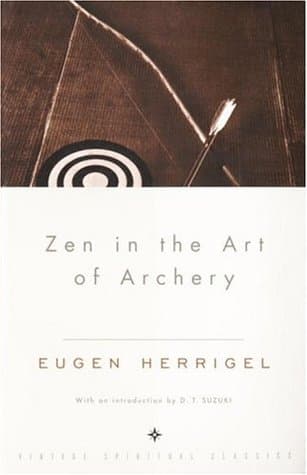
- Zen in the Art of Archery
Eugen Herrigel
4.0 (11k) average on GoodreadsPsychologyExamines the practical application of Zen principles within a specific Japanese art form, focusing on intuitive mastery.
- Musashi
Eiji Yoshikawa
4.5 (15k) average on GoodreadsHistorical FictionA fictionalized biography of Miyamoto Musashi, illustrating the samurai spirit and Zen-influenced martial arts philosophy.
- Zen and the Art of Motorcycle Maintenance: An Inquiry Into Values
Robert M. Pirsig
3.8 (200k) average on GoodreadsPsychologyPirsig's philosophical novel, while not a direct academic competitor, contrasts by exploring 'Quality' as a bridge between rational and intuitive understanding, echoing some of Suzuki's themes of 'Intuition Over Intellect' and 'Beyond Dualism'. However, Pirsig's work is a Western philosophical inquiry using Zen-like concepts as a framework for personal quest, whereas Suzuki's is a scholarly exposition of Zen within Japanese culture. Pirsig is more concerned with metaphysics of technology and self, while Suzuki is focused on the historical and cultural diffusion of Zen.
- Eat, Pray, Love
Elizabeth Gilbert
3.6 (1.5M) average on GoodreadsLifestyleA heartbroken writer leaves her conventional life for a year-long global search for pleasure in Italy, spiritual devotion in India, and unexpected love and balance in Bali.
- Educated
Tara Westover
4.5 (796k) average on GoodreadsBiographyRaised in the Idaho mountains by fundamentalist survivalists, a young woman forges her own path to education, battling fierce family loyalty and personal demons to discover a world beyond her isolated upbringing.
- The Poisonwood Bible
Barbara Kingsolver
4.1 (659k) average on GoodreadsLiterary FictionA zealous missionary's rigid faith clashes with the Belgian Congo's wilderness and people, unraveling his family through the eyes of his five unforgettable women.





Enjoyed the summary?
A summary gives you the shape of the book. The book itself has the detail, the examples and the voice.
Find Zen and Japanese Culture on AmazonAs an Amazon Associate, BookBrief earns from qualifying purchases. How we're funded